
13 min 09 sec
Available in: English
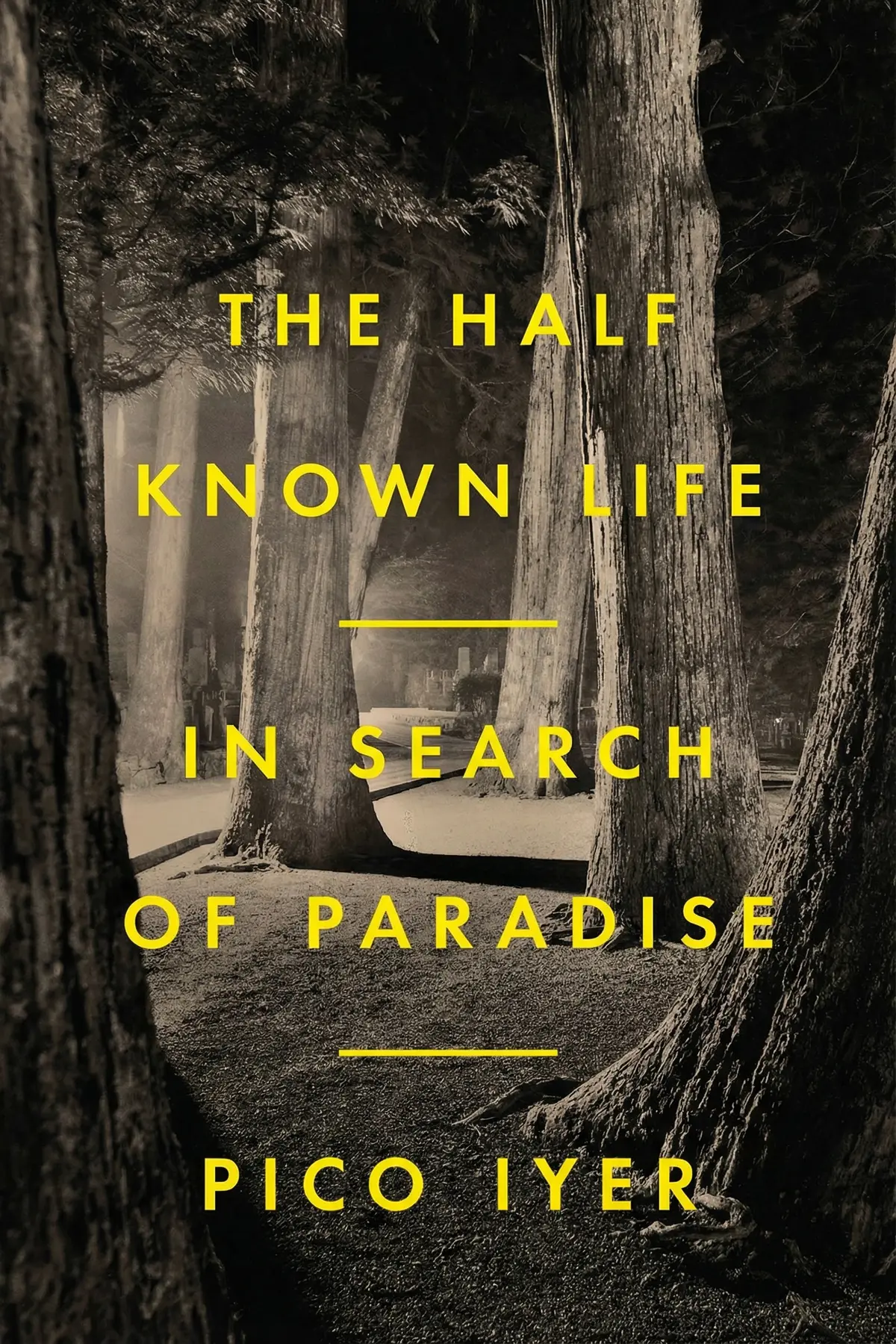
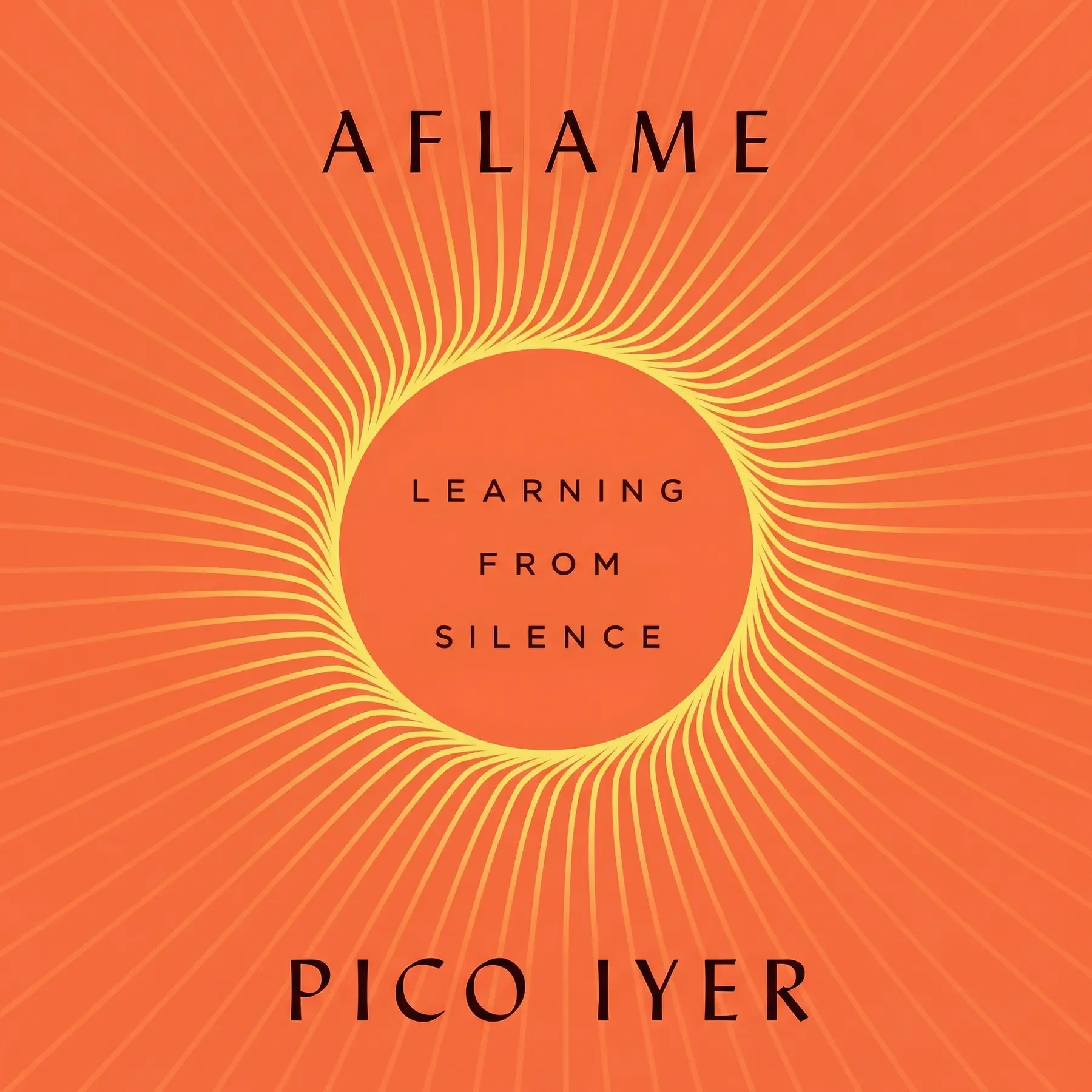
Aflame: Learning from Silence
By Pico Iyer
After a wildfire took his home, Pico Iyer found refuge in a Benedictine hermitage. He shows how stretches of silence can clear away noise and send you back to work and family more attentive and less self-absorbed.

Table of Content
1. Introduction
1 min 02 sec
If your days are full of screens, deadlines and the version of yourself you perform for others, Pico Iyer offers an unexpected cure: go somewhere silent, and you will come back more useful. In Aflame, the travel writer describes how a wildfire destroyed his family home in California and sent him, almost by accident, to a Catholic hermitage on the cliffs of Big Sur. He is not religious and admits he would make a poor monk. Yet he has kept returning ever since.
His argument is that stepping back from the world is a way of going toward it. Silence, in Iyer’s telling, strips away what doesn’t matter, so you return to the people you love with clearer eyes and more to give. He learns this from Benedictine monks, from Leonard Cohen caring for his old teacher, and from the Dalai Lama’s surprising answer about his proudest moment. The reward is a way to think about rest that serves others, plus a few habits of attention for a crowded week.
2. Let a loss clear space for something new
1 min 47 sec
A wildfire left Iyer sleeping on friends’ floors with almost nothing. The place he ended up was the last one his family expected, and what it offered had nothing to do with replacing what he had lost.
3. Hear yourself again once the chatter stops
1 min 40 sec
At the Hermitage, silence did not cut Iyer off from the world. Instead it changed what he could see, and it eased a burden most people carry all day without noticing they carry it.
4. Step away so you come back less selfish
1 min 42 sec
A friend accused Iyer of abandoning the people who needed him to sit alone by the sea. His reply rests on Thoreau, a family in a cramped apartment, and one monk’s remark about where stillness is really tested.
5. Measure a life by the people you lift
1 min 55 sec
One of the most honored men alive was asked about his greatest achievement, and he passed over the Nobel Prize. His answer, and a rock star scrubbing floors, reveal what solitude does to a sense of proportion.
6. Build inner reserves that money cannot buy
1 min 57 sec
When his father was dying, nothing Iyer had achieved helped him face it. What did help came from somewhere he never thought of as productive, and it changed how he judged his own failures.
7. Hold steady while the fires come close
1 min 56 sec
The monks insist they do nothing at all, while fewer of them remain each year and wildfires burn right up to their fence. Their way of meeting that threat offers a model for anyone facing upheaval.
8. Conclusion
1 min 10 sec
Aflame is finally a book about direction. The bravest move, Iyer suggests, is often a step back, because distance gives you clear eyes for the world and for yourself. Silence is how he takes that step. A fire took his home and sent him to a trailer above the Pacific. What he found there sent him back to his girlfriend, her children, his mother and the strangers Cyprian points to, with more attention and less concern for himself.
The title holds the image he keeps returning to: you can be set alight from within even while the world around you burns. Big Sur is not required. Set aside a regular stretch of real quiet, without screens, and treat it as care for the people who rely on you, not an escape from them. Keep a private record of the moments you helped one person, the way the Dalai Lama treasures one meeting with a hopeless man from Johannesburg above a Nobel Prize. And when a hard day ends, look first at the pain you caused.
Iyer is no monk. He simply took one monk’s advice to heart: the real place to sit still is the world.
About this book
What is this book about?
Many busy people feel guilty about stepping away. A quiet weekend or a morning without screens can look like self-indulgence while others depend on them. Pico Iyer argues the opposite. Time in silence, in his experience, is the very thing that makes him less selfish when he returns. His story begins with loss. A wildfire destroyed his family home in Santa Barbara, and he barely escaped. A friend pointed him to the Camaldoli Hermitage, a Catholic monastery on the cliffs of Big Sur. He is not religious and admits he would make a poor monk, yet he has kept going back ever since. There he learns from the Benedictine monks, from Leonard Cohen's years as a Zen monk and from the Dalai Lama's surprising answer about his proudest moment. Aflame turns these encounters into a way of seeing rest as a form of service. Readers get a clear account of what silence does to attention, empathy and a sense of proportion. They also get a few practical habits to bring home: a regular stretch of quiet, a new way to measure their achievements, and a steadiness that can hold when life catches fire.
Book Information
Who it's for
Professionals uneasy about resting
Busy professionals who feel guilty about taking time away and want a reason to see rest as service.
Those rebuilding after hardship
People rebuilding after a loss, burnout or upheaval who are looking for steadiness.
Fans of contemplative voices
Readers drawn to Thoreau, Leonard Cohen or the Dalai Lama who want silence without religious pressure.
About the Author
Pico Iyer
Pico Iyer was born in Oxford to parents from India, grew up in California and studied at Eton, Oxford and Harvard. He has been based in western Japan since 1987 and has traveled to places such as Bhutan, Easter Island and North Korea. His writing has appeared in The New York Times, Time, Harper's and The New York Review of Books. He has written liner notes for Leonard Cohen and given three TED talks, and his recent work asks how people can regain stillness and focus when devices pull at their attention.
Ratings & Reviews
Ratings at a glance
What people think
Listeners find this work deeply reflective, with one listener describing it as a meditative masterpiece. The book's pacing is captivating, and listeners value its emphasis on pursuing holiness through quietude. Additionally, one listener remarks on the author's use of fire as a metaphor for life.
Top reviews
Naomi
A profound invitation to look at the world differently, this book serves as a luminous guide to the interior landscape. Pico Iyer manages to transform the tragic loss of his home in a California wildfire into a powerful metaphor for shedding the non-essential. The pursuit of holiness through quietude is not just a theme here; it is the very pulse of the writing. I found his reflections on the Benedictine monks of Big Sur to be incredibly moving, especially the way he frames silence as a presence rather than a void. Truth is, we all need this kind of recalibration in an age of constant noise. The pacing is deliberate and engaging, mirroring the slow rhythm of the Hermitage itself. It is truly a meditative masterpiece that asks us to value presence over possessions. I will likely return to these pages whenever the world feels a bit too loud.
Show moreChee
Ever wonder if your life is just too loud? This book provides the perfect antidote to the cacophony of the 21st century. Pico Iyer writes with such grace about the simple acts of living—cooking, walking, and being still—that turn ordinary life into something radiant. I loved the connection between Leonard Cohen’s later music and his time in the monastery; it added a layer of depth to the theme of acceptance. The pursuit of holiness through silence is explored with such humility that it never feels preachy. In my experience, very few books actually manage to make you feel the stillness they describe, but this one does. The metaphor of the fire is handled with great sensitivity, showing how we can find gain in our greatest losses. It’s a short read, but one that demands you stop and breathe between every few pages. Absolutely luminous.
Show moreLuckana
What a quiet, luminous masterpiece this turned out to be. Pico Iyer captures the subtle power of stillness better than almost anyone else writing today. His reflections on how joy is the opposite of pleasure, and how freedom arises from embracing limits, are lessons I will carry with me for a long time. The pursuit of holiness is a heavy topic, but he handles it with a lightness of touch that is incredibly refreshing. I was particularly moved by the stories of the monks and their ability to find sacredness in ordinary tasks. The fire that destroyed his home serves as a hauntingly beautiful backdrop to his journey toward inner peace. Every sentence feels intentional, despite what some critics might say about the organization. If you’re looking for a book that offers a genuine sense of renewal and clarity, this is it. It’s a beautiful, fragile flame of a book that deserves to be read slowly.
Show moreFang
Finally got around to finishing this, and I’m still letting the silence sink in. Iyer captures the essence of the Camaldoli Hermitage with such specific, sensory detail—you can almost smell the lavender and hear the sea against the Big Sur cliffs. The way he describes the monks’ daily rituals highlights a kind of simple devotion that is rare today. My favorite sections were those where he admits he is not a monk himself but finds a home in their stillness regardless. Personally, I found the fire metaphor particularly poignant, showing how destruction can plant seeds of new hope. Some chapters, especially 'Into the Boiler Room,' were a bit of a slog to navigate, but the overall message resonates. It's a quiet book that demands a quiet mind. If you are looking for a fast-paced narrative, this isn't it, but for those seeking internal clarity, it’s a beautiful resource.
Show morePruet
The way Iyer uses the destruction of his family home to explore what truly matters is stunning. He moves away from traditional travel writing to explore the landscapes of the soul, and the result is a thought-provoking study on minimalism. I was fascinated by the contrast between the chaotic modern world and the blue-and-gold silence of the monastery. Not gonna lie, the name-dropping of famous friends can be a bit much at times, but the core message about the pursuit of holiness remains intact. The book highlights how silence is not just an absence of noise, but a way of sharpening our ability to serve others. I particularly liked the sections on how solitude actually makes us less self-centered in the long run. It’s a gentle, rhythmic read that encourages a slower pace of life. A few sections felt a bit too abstract, but the emotional core is very strong.
Show moreRungtip
Pico Iyer has always been a master of travel, but here he travels into the soul. This isn't a book about destinations; it's about the destination we find when we stop moving. I was struck by his observations of the monks in Big Sur and how their silence creates a safe space for empathy to bloom. Gotta say, the section about listening to Bach in a quiet corner of an airport really hit home for me. It’s about finding those small pockets of peace amidst the chaos of travel and responsibility. While the writing style is a bit fragmented, it mirrors the way we often experience memory and reflection. There are moments of 'tell, don't show' that can be a bit frustrating, but the insights into solitude are worth it. It’s a book that rewards a slow, patient reader. Definitely an engaging exploration of what it means to be truly present.
Show moreSakura
Picked this up on a whim after seeing it mentioned in the New Yorker, and I found it surprisingly moving. The theme of fire as a metaphor for rebirth is woven throughout the narrative in a way that feels both personal and universal. Iyer’s time at the Hermitage sounds like an absolute dream, and he describes the environment with a poet’s eye for detail. I did find the non-linear structure a bit confusing at first, but once I settled into the rhythm, it started to make sense. It’s less of a story and more of a series of meditations on what we lose when we don't make space for silence. To be fair, some of the interactions with 'famous' figures felt a little out of place, but they didn't ruin the overall experience. It’s a thoughtful, engaging book that makes you want to turn off your phone and just sit for a while. A solid 4-star read.
Show moreTod
Look, I appreciate the sentiment, but the middle sections felt like a total slog. Pico Iyer is undoubtedly a talented writer, yet here he seems to be 'telling' rather than 'showing' us the value of his experiences. While his descriptions of flowers as blueberry ice cream are charming, other parts of the book feel repetitive and unusually slow. There is a lot of focus on his 30-year history of retreats, but I didn't always feel like I was learning alongside him. To be fair, his interactions with the monks are interesting, and the book succeeds as an unintentional ethnography of monastic life. However, the fragmented structure made it difficult to stay grounded in the narrative. I enjoyed the themes of surrendering to 'not knowing,' but I wish the editing had been tighter. It’s a decent read if you have the patience, though it won't be for everyone.
Show moreGoy
Is it just me, or is this incredibly disjointed? I wanted to love a book about the power of stillness, but the actual execution felt like an amateur year-end letter filled with humble-brags. The constant name-dropping of figures like Leonard Cohen and the Dalai Lama felt less like spiritual insight and more like an attempt to elevate his own status. Frankly, the writing is far too non-linear for my taste, leaving me flummoxed by sentences that seem to strive for profundity but land on 'fake deep' instead. It’s essentially 'Eat, Pray, Love' without the engaging plot or the relatable growth. For a book that champions silence, it sure spends a lot of time talking about the author’s elite social circle. I struggled to see the relevance of the random, unnamed acquaintances interjected throughout the text. It just felt pompous and poorly edited.
Show moreWit
To be fair, I expected a lot more from a writer of Iyer’s stature. This book felt like a jumbled mess of half-formed thoughts and random anecdotes that never quite coalesced into a meaningful story. He talks about silence while constantly filling the pages with the noise of his own ego and elite connections. As a former monk myself, I found his portrayal of the Benedictine lifestyle to be somewhat superficial and even slightly mocking at times. He benefits from the monks' hospitality but doesn't seem to truly engage with the depth of their Rule or philosophy. The writing is incredibly non-linear, which makes it feel like he’s just searching for pages rather than providing profoundness. Even the editing felt sloppy—some sentences were so awkward they pulled me right out of the meditation. It’s a thirty-dollar book that could have been a short essay. Disappointing.
Show moreQuestions about this book
What is Aflame by Pico Iyer about?
Aflame tells how a wildfire destroyed Pico Iyer’s family home in Santa Barbara and led him to the Camaldoli Hermitage, a Benedictine monastery at Big Sur. He kept returning for years. The book argues that silence clears away needless noise, sharpens attention and sends you back to the people who need you with more clarity and less selfishness.
Is it selfish to go on a silent retreat?
Iyer faced exactly this objection from a friend. His answer is that a retreat is not selfish if it is what makes you less selfish. He points to Thoreau, who believed his own good lay in serving the public, and to the monks, who live bound to one another’s care. Silence, for him, is preparation for returning to others.
What do Leonard Cohen and the Dalai Lama teach in Aflame?
Cohen, who became a Zen monk in the 1990s, spent his time caring for his aging teacher and found a peace beyond the endless back and forth of questions and answers. The Dalai Lama told Iyer that helping one hopeless man from Johannesburg under apartheid meant more to him than his Nobel Prize. Both show the sense of proportion that solitude builds.
How can I apply the ideas in Aflame without visiting a monastery?
Set aside regular quiet time with no screens and treat it as care for the people who depend on you. Walk without your phone and notice what you see. Keep a record of moments when you made a real difference to one person. At the end of a hard day, look first at the pain you caused, as the monks suggest, before the pain you endured.
Do you need to be religious to get something from Aflame?
No. Iyer was raised without religion and says years of compulsory school prayers left him wary of it. The monks he describes made no attempt to convert him, and their prior keeps books on Hinduism, Buddhism and Islam. The book’s focus is on what silence does to attention, empathy and steadiness, which matters to anyone.
Featured in
Readers also enjoyed


A Force for Good: The Dalai Lama's Vision for Our World
Daniel Goleman

A Return to Love: Reflections on the Principles of a Course in Miracles
Marianne Williamson

Abundance: The Inner Path to Wealth
Deepak Chopra

Alcoholics Anonymous
Alcoholics Anonymous World Services

A New Earth: Awakening to Your Life’s Purpose
Eckhart Tolle

Be Here Now
Ram Dass
AUDIO SUMMARY AVAILABLE
Listen to Aflame in 15 minutes
Get the key ideas from Aflame by Pico Iyer, plus 5,000+ more nonfiction titles.
- 5,000+ titles
- Listen as much as you want
- 7-day free trial
- Cancel anytime









