

15 min 07 sec
Available in: English
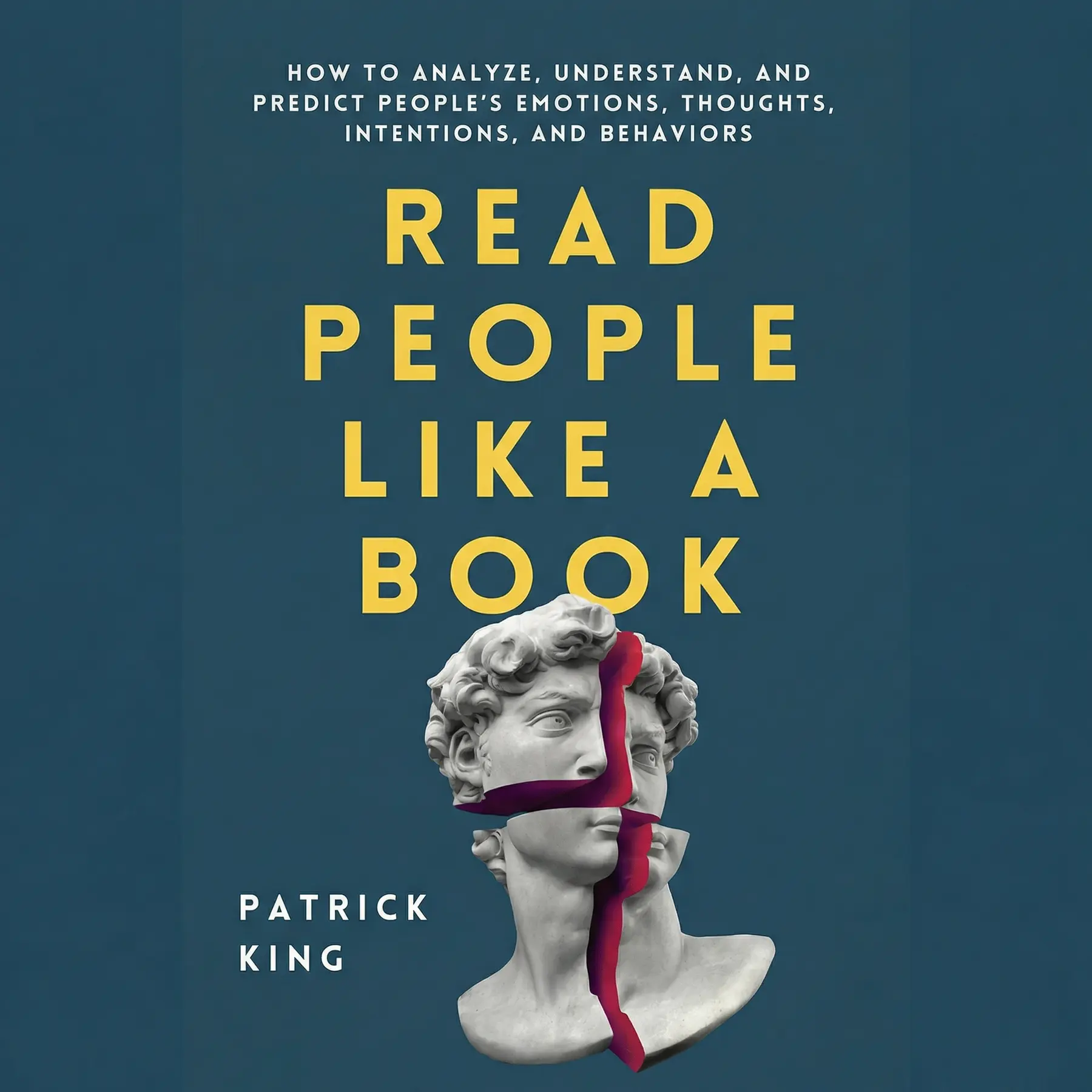
Read People Like a Book: How to Analyze, Understand, and Predict People’s Emotions, Thoughts, Intentions, and Behaviors
By Patrick King
A practical guide to understanding what people feel, want and hide, using motives, facial and body signals, personality patterns, lie-testing questions and the clues people leave in emails, homes and online profiles.
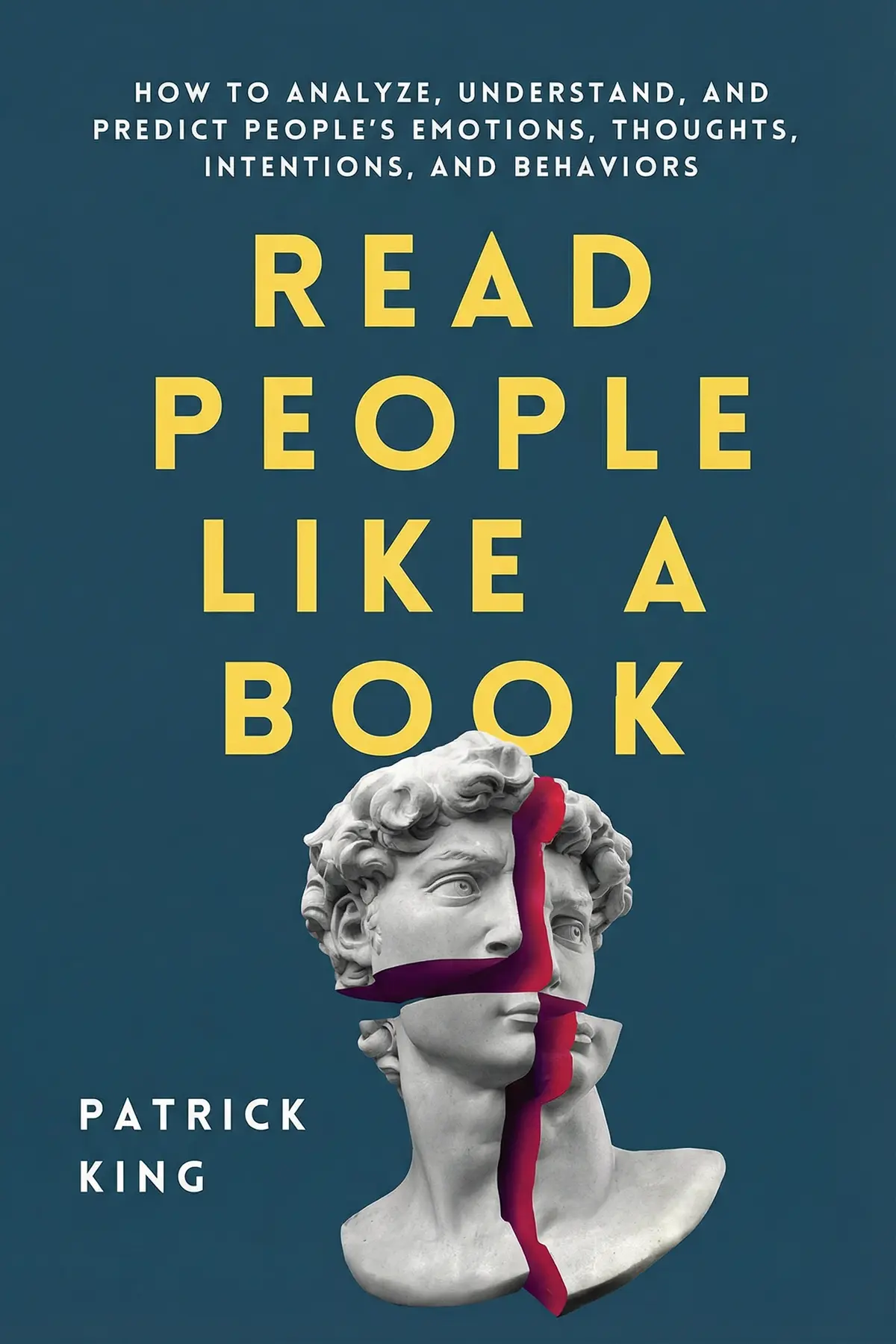
Table of Content
1. Introduction
1 min 08 sec
Most people trust their gut about others, and Patrick King’s first lesson is that the gut only gives you a starting guess. In Read People Like a Book, the social interaction coach argues that understanding what others think, feel and intend is a skill anyone can learn. It is no gift reserved for a lucky few. Psychologists call the ability theory of mind: we build a working model of another person’s mindset inside our own head. King’s warning is that this model is always rough. Every person is shaped by a different mix of experience, belief and emotion, so instinct alone will mislead you.
His answer is to read people the way a careful detective would, gathering signals and checking them before reaching a verdict. Those signals come from hidden motives, faces and bodies, personality patterns, shaky stories and the traces people leave in emails, homes and online profiles. Learn to read them, and a colleague’s sudden tears or an interviewer’s evasive manner stop being mysteries and become clues you can work with.
2. Find the hidden need behind a strange reaction
2 min 09 sec
A model student starts partying past curfew. A coworker cries over mild feedback. Both reactions look out of proportion, until you know which of three hidden forces is really doing the talking.
3. Catch the feelings a face lets slip
1 min 51 sec
Some of the most honest signals in a conversation last only seconds and escape the speaker’s control entirely. A pioneering emotion researcher and a former FBI agent show where to look for them.
4. Know someone's normal before you judge a gesture
1 min 49 sec
Crossed arms and a glance away can mean almost anything. A four-step method turns these stray signals into real evidence, starting with something most people never bother to learn about the people around them.
5. Use personality maps without boxing people in
2 min 28 sec
Three well-known frameworks promise to explain why some people take over a room while others stay in the corner. King shows how to use them, and why the labels they produce should never be final.
6. Make a false story collapse under its own weight
2 min 11 sec
Shifty eyes and stammering are what most people watch for, and they are poor guides. King describes three conversational tests that put a made-up story under strain until it starts to give way.
7. Read character from emails, rooms and profiles
2 min 15 sec
A job candidate senses something wrong within minutes of meeting an interviewer. What happened next shows how a fast hunch, followed by careful checking, can protect you from a decision you would regret.
8. Conclusion
1 min 16 sec
King’s title carries his argument. People are like books: some lie open on the table, others take patience to follow, and each one is a story still being written. The skill lies in reading slowly enough to get that story right. A first impression, a single gesture or a neat personality label is only the opening page.
What holds the method together is humility about the model in your head. Theory of mind gives everyone a rough sketch of other people, and King’s tools exist to correct that sketch with evidence: the motive behind an outburst, the change from someone’s normal, the account that grows thinner under gentle questions, the late-night email that hints at how someone really lives.
You can begin with the people already around you. Learn the baseline of one colleague, so that a real change will register when it comes. When someone overreacts, ask whether an old hurt or an unmet need is speaking before you take it personally. When a story sounds too polished, ask one more open question and listen for where the detail runs out. Each time, a guess becomes a reading, and the people around you become stories you can actually follow.
About this book
What is this book about?
Most of us judge other people on instinct, and instinct often gets it wrong. A colleague's tears, a friend's sudden anger or an interviewer's strange manner can leave us confused, hurt or exposed. Patrick King argues that understanding others is a skill anyone can build, and that it starts with admitting that the picture of another person in our head is only ever a rough sketch. His approach is to read people the way a detective does: collect signals, compare them with what is normal for that person and check them before reaching a verdict. King draws on Carl Jung's shadow and the inner child, Maslow's hierarchy of needs, Paul Ekman's work on microexpressions, former FBI agent Joe Navarro's body-language tells, and frameworks such as the Big Five, Myers-Briggs and David Keirsey's four temperaments. Readers get concrete methods: a four-step way to read nonverbal signals, three ways to test a story that may be false, and quick techniques for judging character from texts, clothing, homes and online profiles. The result is fewer snap judgments, fewer reactions taken personally and better decisions about whom to trust.
Book Information
Who it's for
Professionals wanting accurate reads
Professionals who want to judge colleagues, clients and interviewers more accurately.
Leaders taking emotions personally
Managers and team leads who keep taking emotional reactions personally.
Worried about being misled
Anyone who worries about being lied to or misled and wants practical ways to test a story.
About the Author
Patrick King
Patrick King is a social interaction and conversation coach based in San Francisco and a bestselling author on dating, relationships and communication. He describes himself as a former shy introvert, attended three years of law school, and combines research with his coaching experience to give practical advice on dealing with people. His work has appeared in Forbes, GQ and NBC News, and his other books include Better Small Talk and How to Speed Read People.
Ratings & Reviews
Ratings at a glance
What people think
Listeners find this work informative and well-researched, noting that scientific studies effectively support the material. They appreciate how the content aids in decoding human thoughts and actions while boosting emotional intelligence. Furthermore, the advice proves highly applicable and beneficial for both career and personal life, and listeners find the text straightforward and easy to navigate. Conversely, the writing style draws varied reactions; some consider it well-crafted, whereas others report that it is poorly formatted. Perceptions of the book's value also differ, with some believing it is a worthwhile investment and others feeling it is overpriced.
Top reviews
Niramai
Wow. I am absolutely in love with this book and how it has changed my perspective on social interaction. I used to feel lost in large groups, but now I have a toolkit for understanding what people are actually thinking versus what they're saying. The information is backed by studies and feels very credible, yet it is written in a casual tone that's easy to follow. I felt like a completely different person after finishing the chapters on value-based questioning. It is a must-read for anyone who wants to sharpen their intuition and navigate the world with more confidence. Truly life-changing stuff for those of us who weren't born with high social IQ!
Show moreJan
The truth is, most people are blind to the signals they are sending, and this book is the perfect antidote to that ignorance. It covers everything from facial expressions to the subtle ways we reveal our morals through word choice. I found the practical exercises extremely helpful for building my own emotional intelligence and reading the room during high-stakes negotiations. Every page is packed with useful insights that you can start using immediately in your personal and professional life. It is well-written, engaging, and worth every penny if you are serious about self-mastery. I will definitely be keeping this on my shelf as a permanent reference for future social interactions.
Show moreSawit
Picked this up to help with my sales job and I have already noticed a difference in how I read my clients. The breakdown of facial expressions and body language cues is practical and very easy to apply in real-time conversations. Frankly, I don't get the harsh reviews saying it's for 'stupid people' because sometimes the most obvious things are what we miss most often. It is well-researched and provides a great framework for anyone looking to boost their emotional intelligence or social standing. I especially liked the part about analyzing hypothetical questions to uncover someone's true mindset and values. Definitely worth the time for the practical applications alone.
Show morePear
Ever wonder why some people just seem to get others instantly? This book attempts to bridge that gap by offering actionable steps to decode human behavior. While some parts are a bit basic, the overall structure is logical and the advice is grounded in real-world scenarios. I appreciated how King didn't just focus on one method but looked at word choice, social media, and physical posture. It is an engaging read that kept me interested from start to finish. My only real gripe is that the formatting could be cleaner, but the content itself is solid for anyone wanting to improve their people skills in a casual way.
Show moreNuk
This book was a great tool for analyzing people in my daily life. I liked the focus on macro and micro-expressions, which helped me understand my coworkers' underlying tensions during meetings. The author presents the information in a way that isn't overly academic, making it accessible for someone without a PhD in psychology. It is a functional guide that provides immediate value, especially if you struggle with social cues. While it does quote a lot of other experts, I found those references helpful for further reading later on. A solid four stars for the clarity and ease of use, despite some of the formatting issues mentioned by others.
Show moreSomsak
As someone who already has a basic grasp of psychology, I found this book to be a decent, if surface-level, refresher course. Most of the revelations here are common sense wrapped in academic-sounding terminology, but there are a few nuggets of wisdom regarding trivial questions that reveal core values. Look, it’s a quick read—I finished the whole thing in a single afternoon—which makes it accessible for people who hate dense literature. However, it lacks the scientific rigor I was hoping for and feels a bit too much like an entry-level primer. It is a solid 3-star book for high schoolers or someone just starting their self-improvement journey without much prior knowledge.
Show moreLucas
The chapter on social media behavior was surprisingly insightful, even if the rest of the book felt a bit uneven. King does a good job of breaking down complex behavioral cues into bite-sized pieces that anyone can understand. On the flip side, the writing style is occasionally clunky and the author relies far too much on quoting other, more established psychologists. I didn't hate it, but I didn't feel like a different person after finishing it either. It works best as an introduction to the topic for beginners. Not gonna lie, I expected a bit more depth given the bold title, but it serves its purpose as a basic guide.
Show moreAurora
Finally got around to reading this and I have mixed feelings about the overall value. On one hand, the research cited is interesting and provides a good foundation for understanding non-verbal communication in professional settings. On the other hand, the physical quality of the book is lacking; the font is huge and the margins are weirdly wide. It almost feels like a self-published blog series that was rushed to print without a proper editor. Is it useful? Sure, for some people who lack social intuition. Is it a masterpiece of behavioral science? Not even close. I would recommend it only if you can find it on sale or at the library.
Show moreArnav
After hearing so much hype about Patrick King, I finally picked this up, but the experience was disappointing. Some of the tips about micro-expressions were okay, but the rest of the book leaned heavily into manipulative tactics rather than genuine empathy. The advice on steering conversations to catch liars felt more like social gaming than actual connection. It is definitely written for a very specific type of person—someone who wants an edge at work but doesn't have much natural social awareness. The layout is also quite poor, making it a chore to read through the repetitive sections that offer very little new information for the price.
Show moreNong
Not what I expected at all. To be fair, it feels like the author just spent a weekend reading Wikipedia and cobbled together a bunch of random psychological studies into a single PDF. The formatting on the physical copy is atrocious, with giant font sizes that seem designed to mask the lack of actual substance or depth. I found the section on personality tests particularly insulting to my intelligence because it felt like something out of a middle-school magazine. If you want real insight into the human psyche, go read Jung or a proper textbook instead of this glorified blog post. It is essentially a collection of quotes from smarter people without any original synthesis to back it up.
Show moreQuestions about this book
What is the main idea of Read People Like a Book?
Patrick King argues that reading people is a learnable skill. Everyone builds a mental model of what others think and feel, which psychologists call theory of mind, but that model is only an approximation. King’s method is to sharpen it with evidence: understand hidden motives, watch faces and bodies against a person’s normal behavior, use personality frameworks, test stories that may be false, and read the traces people leave behind.
How does Patrick King suggest reading body language?
King offers four steps. First, learn a person’s baseline, meaning their everyday gestures and expressions. Second, watch for departures from it, such as a calm person who starts nervously twisting her hair. Third, collect evidence and consider context instead of judging from one gesture. Fourth, look for mirroring, since someone who unconsciously copies your movements often agrees with you and wants rapport.
How can you tell if someone is lying, according to the book?
King says one gesture rarely reveals a lie; it usually takes a full conversation. He suggests asking gentle open questions, since liars often give rich detail at first and falter when pressed. Surprise also helps, because invented stories are hard to keep straight without warning. For practiced liars, raise their mental effort by adding a false detail, asking questions you know the answers to, or returning to inconsistencies.
Which personality frameworks does Read People Like a Book cover?
King covers the Big Five, which measures openness, conscientiousness, extroversion versus introversion, agreeableness and neuroticism; the Myers-Briggs Type Indicator, based on Jung, with types such as ESTJ and INFP; and David Keirsey’s four temperaments of guardian, artisan, idealist and rational. He stresses that personality changes with experience and surroundings, so these labels describe patterns, not permanent facts.
How can I apply the book's ideas at work?
Learn the normal behavior of the colleagues you see daily so real changes stand out. When someone reacts strongly to feedback, consider whether an old wound or unmet need is involved before taking it personally. Before an important meeting, review the person’s emails and online presence, then check those impressions in person. If a job interview feels wrong, follow the hunch with a second meeting and research.
Readers also enjoyed

A Liberated Mind: How to Pivot Toward What Matters
Steven C. Hayes


Acting with Power: Why We Are More Powerful Than We Believe
Deborah Gruenfeld


Age of Propaganda: The Everyday Use and Abuse of Persuasion
Anthony Pratkanis





AUDIO SUMMARY AVAILABLE
Listen to Read People Like a Book in 15 minutes
Get the key ideas from Read People Like a Book by Patrick King, plus 5,000+ more nonfiction titles.
- 5,000+ titles
- Listen as much as you want
- 7-day free trial
- Cancel anytime









