

15 min 06 sec
Available in: English
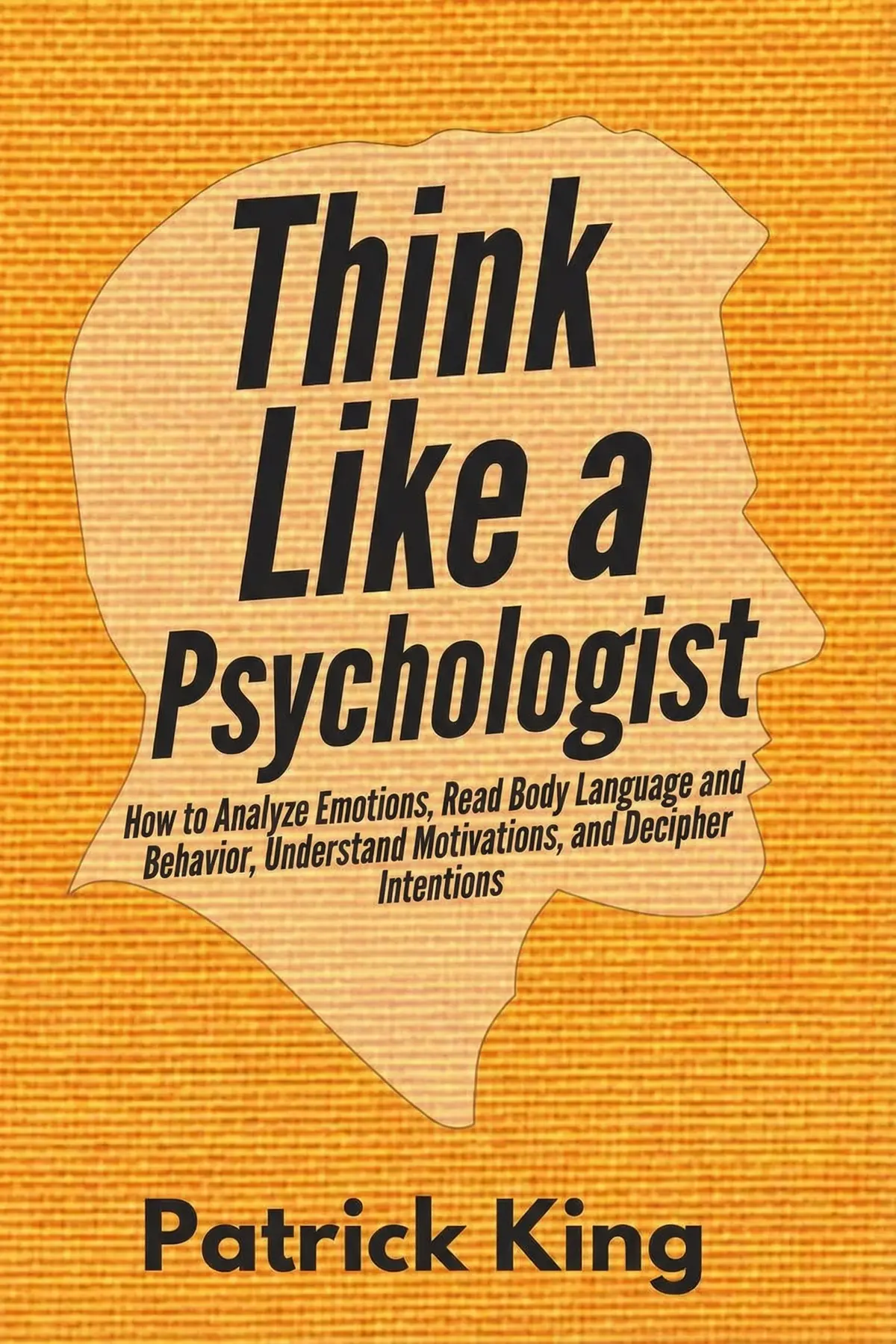
How to Speed Read People: Think Like a Psychologist, Analyze Human Behavior, and Decode Emotions
By Patrick King
A practical guide to reading people by combining facial cues, body language, emotional subtext, motives and childhood patterns, so you can understand what others feel and need, and see your own tendencies more clearly.
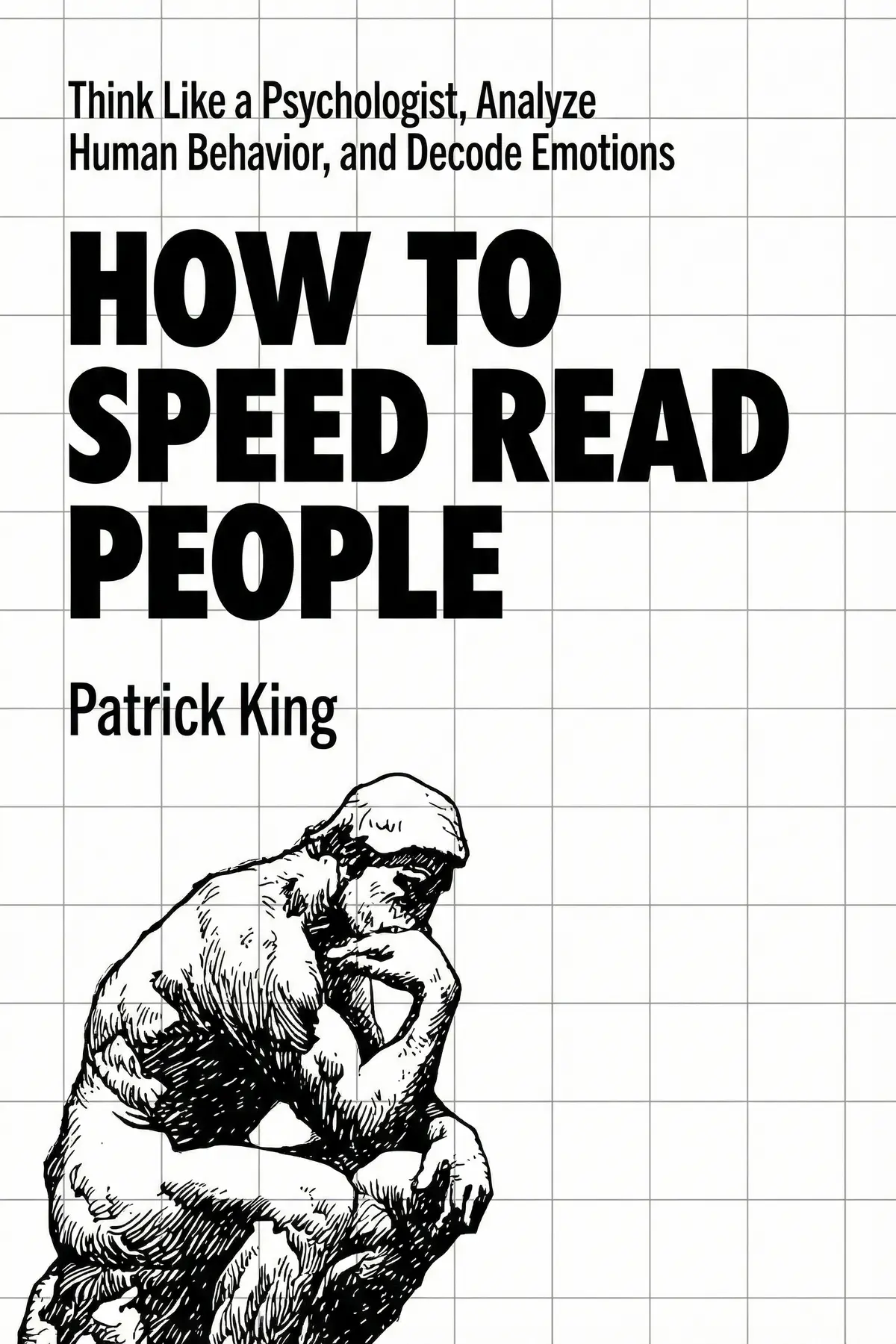
Table of Content
1. Introduction
58 sec
Most of us read people on instinct, and instinct is easily fooled by a polite smile or a flat reply that everything is fine. In How to Speed Read People, coach and author Patrick King argues that no single gesture tells you much on its own. Fidgeting in a meeting means little from a restless person and a great deal from someone who is usually calm.
King’s case is that people become readable when you stack layers of evidence: the signals of the face and body, the feeling under the words, the needs pushing them, the childhood behind them and the stories they choose to tell. Each layer checks the others, and the same reading shows you your own patterns.
What follows is a working toolkit with habits worth trying at work tomorrow: where to look before judging anyone, how to hear what a short answer hides, which questions draw out what someone values, and how much weight a personality test deserves.
2. Spot what a face and body give away
1 min 58 sec
People show you mostly what they choose to show, yet their faces and feet keep leaking information. The catch is that the same gesture can mean almost nothing in one person and a great deal in another.
3. Hear what people mean beneath their words
2 min 08 sec
A coworker asks for your opinion on something you could not care less about. The answer that wins their trust has little to do with honesty about the question they actually asked.
4. Understand what is really driving someone's choices
2 min 06 sec
A runaway truck, a chest of treasure and a plate of nachos all reveal the same rule about human choices. It also explains why some people blame everyone but themselves.
5. See how childhood still shapes the adults around you
2 min 20 sec
The partner who needs constant reassurance and the friend who backs away from closeness may be reacting to something that happened decades ago. King maps the early patterns that keep showing up in adult life.
6. Ask sideways questions that reveal what people value
2 min 01 sec
Ask people what they want from life and you get vague answers. A method that helped veterans after a world war shows a better route, and it works on you as well as on others.
7. Use personality tests as rough maps of people
2 min 20 sec
From ancient theories about bodily fluids to brain scans and sixteen four-letter types, people have long tried to sort personality. King weighs how much any of these systems can actually tell you.
8. Conclusion
1 min 15 sec
Patrick King’s toolkit rests on one discipline: never trust a single clue. A smile can cover frustration, a confident explanation can be a defense, and a personality type can shift after a bad morning. Read across layers, though, and the picture sharpens. The face shows a flicker, the words carry a need, the need points to a motive, the motive often has a history, and a well-chosen question brings that history into view.
The same layers turn back on you. Knowing whether people or solitude recharge you, which need drives you hardest and which defenses you reach for under pressure lets you avoid needless stress and choose relationships that fit.
Start small. In your next meeting, notice one person’s baseline before you judge any gesture. When someone tells you everything is fine, listen to how they say it. And this week, list the accomplishments you are proudest of, keep seven, and see which theme keeps coming back.
Derek’s comment about a haircut cost him nothing and earned a colleague’s trust. Much of reading people well is noticing what someone needs before they have to ask for it.
About this book
What is this book about?
Most of us judge other people in seconds, from a smile, a tone of voice or a pair of crossed arms. Those snap readings often miss what someone actually feels or wants, and the misreadings cost us at work and at home. Patrick King, a coach on social interaction, argues that reading people is a skill built from layers. He starts with what the face and body give away, including the fleeting microexpressions studied by Paul Ekman. He moves on to the needs hidden beneath what people say, drawing on Daniel Goleman's emotional intelligence, and to the drives described by Maslow and McClelland. From there he turns to the attachment styles and parenting patterns that shape adults, and to indirect questions such as the Seven Stories exercise that bring values to the surface. Readers get a toolkit they can use the same week: learn a person's baseline before judging a gesture, listen for the need beneath a short answer, and treat personality tests as rough sketches. The same tools turn inward, showing readers their own tendencies.
Book Information
Who it's for
Managers and team leads
Managers and team leads who want to understand what their people feel but will not say.
Needing to read rooms
Professionals in sales, client work or interviews who need to read a room quickly and accurately.
Shy or analytical types
Naturally shy or analytical people who want a clear method for making sense of others and themselves.
About the Author
Patrick King
Patrick King is a San Francisco based coach who helps people with social interaction and conversation, and a bestselling author on dating, relationships and communication. A self-described former shy introvert who spent three years in law school, he mixes research with coaching experience to give practical advice on dealing with people. His work has appeared in Forbes, GQ and NBC News, and his other books include Better Small Talk and The Art of Witty Banter.
Ratings & Reviews
Ratings at a glance
What people think
Listeners find that perspectives differ on the material's depth, as some feel the content centers too much on standard personality assessments found online, while many value the book’s concise integration of psychological systems like the Big Five and attachment styles. They also appreciate the actionable guidance on interpreting non-verbal signals, such as "pacifying behaviors" and microexpressions, to better detect concealed emotions. Additionally, listeners emphasize the benefit of the reflective activities, with one listener describing the "Seven Stories" technique as a premier resource for uncovering primary motivations and values. Finally, they suggest the book acts as a useful introductory guide for sharpening self-perception and improving social interactions.
Top reviews
Supaporn
Wow, this really changed how I look at my friends and family during our weekly dinners! I never paid attention to things like 'pacifying behaviors' before, but now I’m constantly noticing when people rub their temples or touch their necks when they’re stressed. Patrick King does a fantastic job of blending old-school theories like Greek humorism with modern concepts like Daniel Goleman’s emotional intelligence framework. Personally, I found the section on microexpressions to be the most fascinating part because it shows how much we reveal without saying a word. The book is short but packed with observations that you can start using immediately to build better connections. It’s an eye-opening guide that makes the complex world of human psychology feel accessible and even fun to learn about.
Show morePaiboon
This book manages to turn the daunting task of 'reading people' into a manageable skill that anyone can practice with enough patience. King’s exploration of the Keirsey Temperament Sorter was a revelation for me because it simplified the complex MBTI into four easy-to-understand categories. I love how he emphasizes that understanding others is both an art and a science, requiring both intuition and a solid grasp of psychological frameworks. The advice on using indirect questions to uncover what people truly value is a game-changer for anyone in a leadership position. In my experience, the book is worth it just for the insights into how our childhood experiences and parenting styles shape our adult defenses. It’s a comprehensive, engaging, and deeply practical look at what makes us tick.
Show moreWatcharaporn
Picking this up was a fantastic decision for my personal growth because it gave me a concrete system to follow during social interactions. Instead of just worrying about what people think of me, I’m now busy looking for clues about their temperament and emotional state. The chapter on humor styles was particularly eye-opening—I never realized that sarcasm could actually be a sign of a cynical or defensive nature. Not gonna lie, most people are just trying to seek pleasure and avoid pain, and this book gives you the tools to see which one is driving them in the moment. It’s a great resource for anyone who wants to improve their social awareness and build more authentic relationships. I feel much more confident in my ability to navigate different personalities.
Show moreThanakorn
Finally got around to reading King's take on human behavior, and the 'Seven Stories' technique alone made the purchase worthwhile. It’s a clever way to dig into your own history to figure out what actually drives you, rather than just guessing. Frankly, I expected more 'secret agent' tricks, but the focus on core motivations like achievement and power was a pleasant surprise. The writing is snappy and easy to digest, though some of the personality test summaries felt a bit like a refresher course for stuff I already knew from college. If you're looking for a quick primer to understand why your coworkers act the way they do, this hits the mark without getting bogged down in too much academic jargon. It’s practical, slightly surface-level at times, but definitely useful for real-world interactions.
Show moreSayan
After hearing a lot of buzz about Patrick King, I decided to see if his methods for 'speed reading' actually worked in practice. The breakdown of the OCEAN acronym and how it correlates to specific brain regions like the orbitofrontal cortex was a highlight for me. It’s interesting to see the biological basis for why some of us are more extroverted or conscientious than others. To be fair, the book moves very quickly through complex topics like Freud’s id and ego, which might leave some readers wanting more depth. But as a manual for improving your own self-awareness, it’s actually quite effective because it forces you to look at your own tendencies first. I’ve started applying the 'reflective exercises' to my daily routine, and I can already feel a difference.
Show moreClaire
As someone who works in sales, I’m always looking for ways to better understand my clients, and this book provided a solid foundation for that. It covers a lot of ground, from attachment styles to how birth order influences our adult personalities. Look, it’s not a revolutionary text, but it’s a very well-organized synthesis of existing psychological models that helps you categorize behaviors quickly. I appreciated the chapter on humor styles and how sarcasm can actually be a defense mechanism for certain types of people. My only gripe is that it occasionally feels like a list of definitions rather than a cohesive narrative. However, the actionable tips on social awareness and self-management are gold for anyone trying to navigate tricky office politics or improve their personal relationships.
Show morePop
Ever wonder why some people just seem to 'get' others instantly while the rest of us struggle to read the room? This book attempts to bridge that gap by teaching you to spot the subtle signs that most people miss, like feet pointing toward the door when someone wants to leave. I found the sections on attachment styles—secure vs. anxious—to be particularly insightful for my own dating life. Got to say, the book is a bit of a mixed bag; some chapters are brilliant and others feel like filler material about the history of psychology. It’s definitely a useful primer if you’re new to the subject, but don’t expect to become a human lie detector overnight. It’s more about building empathy and understanding the underlying motivations that drive human behavior.
Show moreTee
To be fair, King is a great writer who knows how to keep things moving, but I struggled with how much of this book was focused on tests. I was expecting more focus on microexpressions and real-time observation, yet a lot of the chapters were just summaries of the Enneagram or the Myers-Briggs types. While these are useful frameworks, they don't really help you 'speed read' someone you just met in a coffee shop. The parts about 'pacifying behaviors' and body language patterns were definitely the strongest sections and I wish there had been more of that. It’s a decent book for self-reflection, and I did learn a lot about my own 'Achiever' tendencies, but it’s not exactly the field guide I was hoping for. It’s okay.
Show moreAria
The content here feels a bit like a curated collection of Wikipedia articles on psychology rather than a deep dive into 'speed reading' people. I was hoping for more advanced body language analysis, but instead, I spent a lot of time reading about the Big Five and MBTI, which most people have already encountered. Truth be told, if you’ve spent any time on self-improvement blogs, you’ve likely seen this all before in various forms. The pacing is fast, but it lacks the 'aha!' moments I was looking for in a book with such a bold title. It isn't a bad introduction for a complete beginner, but for anyone who has read even one book on personality types, it’s going to feel repetitive. I finished it in one sitting because it’s quite light, but I didn't walk away with much new information.
Show moreAey
Not what I expected at all, and frankly, I was quite disappointed by the lack of original research in these pages. A huge chunk of the book is dedicated to ancient concepts like the four bodily fluids—yellow bile and phlegm—which felt incredibly dated and irrelevant to modern life. I was looking for tactical advice on reading people in the moment, but instead, I got a surface-level overview of the Enneagram and other tests I could take for free online. The writing style is fine, but the substance just isn't there for someone who wants more than a basic introduction to personality traits. It felt more like a summary of other people's work than a new contribution to the field. Save your money and just search for 'Big Five personality traits' instead.
Show moreQuestions about this book
What is the main idea of How to Speed Read People?
Patrick King argues that no single gesture or test reveals who someone is. People become readable when you combine several layers: facial expressions and body language, the emotional needs beneath their words, their motivations, the childhood patterns behind them and the stories they tell about their proudest moments. Each layer checks the others, and the same tools help you understand your own tendencies and make choices that suit you.
How do you read body language according to Patrick King?
King says to watch the whole person and judge against their baseline. Microexpressions, studied by Paul Ekman, flash real emotions even when someone hides them. Pacifying behaviors such as rubbing the temples or touching the neck suggest stress, feet tend to point toward what someone is engaged with, and restless eyes can signal anxiety. A gesture matters most when it departs from how that person usually behaves.
What is the Seven Stories exercise?
It is a reflection tool King describes for uncovering values. You list 25 accomplishments you are proud of, narrow them to the seven most meaningful, then tell each as a short story covering what happened, why it mattered and what quality it shows, such as resilience or creativity. Read together, the stories tend to repeat themes that reveal the core of a person’s identity.
Are personality tests like Myers-Briggs reliable?
King treats them as useful but not definitive. He notes that critics say Myers-Briggs results can vary with a person’s mood or environment, and that fixed types overlook people who fall between extremes. He favors the Big Five, where each trait is a spectrum, and recommends pairing any framework with careful observation of how people actually behave.
Who should read How to Speed Read People?
It suits people who deal with others all day and want to misread them less often: managers, salespeople, interviewers and anyone handling tricky relationships at work or at home. It also helps readers curious about themselves, since the same frameworks for motivation, attachment and personality explain their own reactions, strengths and blind spots.
Featured in
Readers also enjoyed

A Liberated Mind: How to Pivot Toward What Matters
Steven C. Hayes


Acting with Power: Why We Are More Powerful Than We Believe
Deborah Gruenfeld


Age of Propaganda: The Everyday Use and Abuse of Persuasion
Anthony Pratkanis





AUDIO SUMMARY AVAILABLE
Listen to How to Speed Read People in 15 minutes
Get the key ideas from How to Speed Read People by Patrick King, plus 5,000+ more nonfiction titles.
- 5,000+ titles
- Listen as much as you want
- 7-day free trial
- Cancel anytime









