
13 min 22 sec
Available in: English
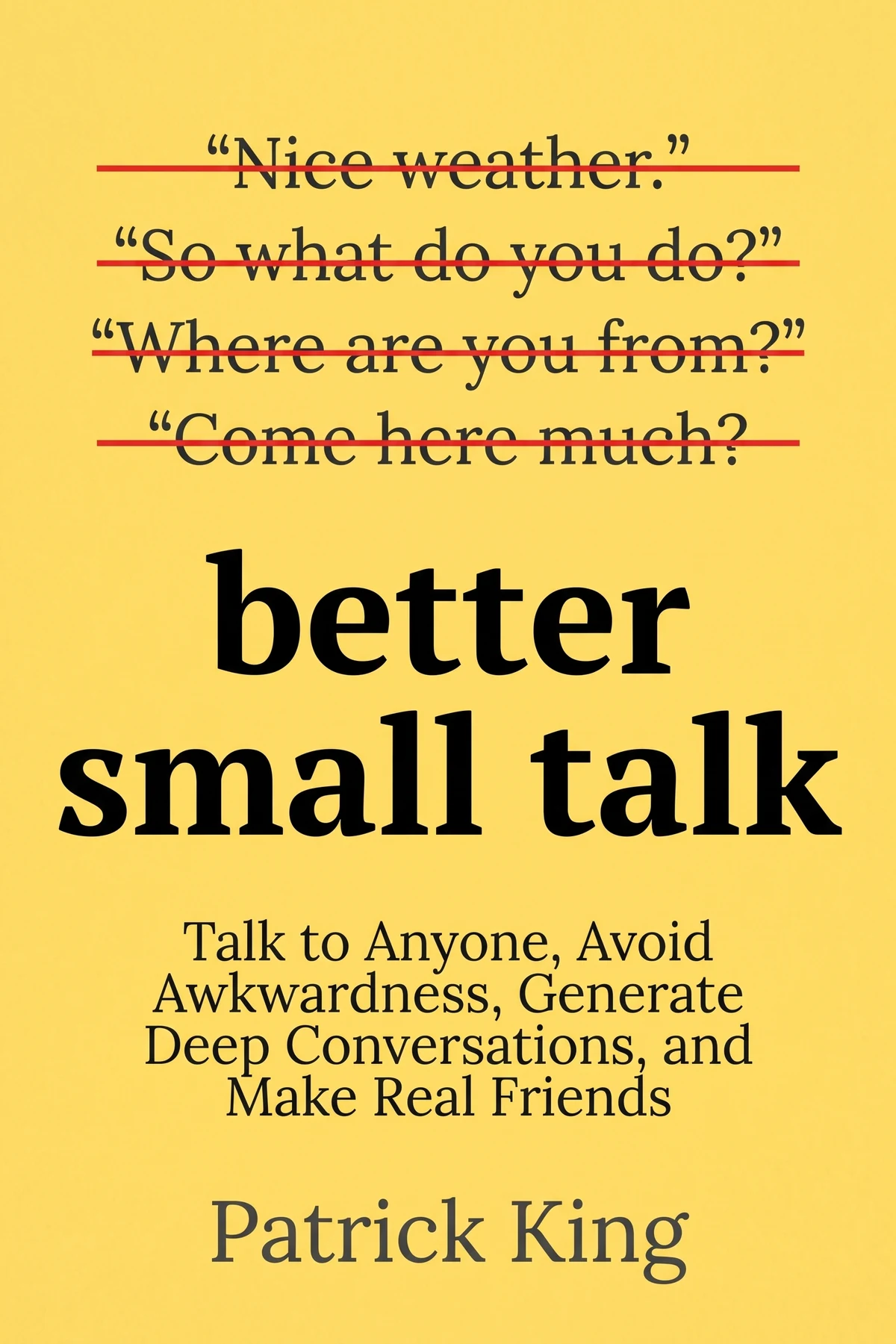
The Science of Getting Started: How to Beat Procrastination, Summon Productivity, and Stop Self-Sabotage
By Patrick King
Shows why people put off work they know matters and offers small, specific ways to start: two-minute openings, simpler choices, if-then plans and a rule against days with no progress.
Table of Content
1. Introduction
1 min 05 sec
If you keep meaning to start something and end up cleaning the bathroom instead, the problem is probably not laziness. In The Science of Getting Started, coach and author Patrick King argues that delay runs on a predictable loop, and that the fastest way out is a first step so small it barely feels like work. Before King was born, his father promised to build a shelf for the baby. The job took almost eight years. It got done only when his father stopped facing the whole project and took it a weekend at a time: nails one weekend, measurements another, lumber in small batches.
That shelf carries the book’s argument. Procrastination is a pattern your brain falls into, and you break it by shrinking the start, shaping your surroundings and deciding ahead of time, so that action arrives before motivation does. What follows is a set of tools for the couch moment: ways to catch the loop, take the first small step, and keep any day from ending with nothing done.
2. Spot the loop that keeps you delaying
1 min 38 sec
Reaching for the remote instead of the work rarely comes down to laziness. A dirty car and a freshly scrubbed bathroom reveal a five-step pattern that makes putting things off feel almost productive.
3. Fix your state before you judge your willpower
1 min 35 sec
Some days the task itself is not what stops you. A four-letter check and a list of nine mental abilities point to what is actually tipping you toward distraction, and much of it can be addressed.
4. Make the first step too small to refuse
1 min 39 sec
A shelf promised before its owner was born took nearly eight years to build. A law from physics explains the delay, and a two-minute habit explains how such delays finally end.
5. Aim your effort and clear the noise
1 min 41 sec
Three small jobs, one chatty office and a stack of grant applications show how effort leaks away. The fix borrows from physics and asks you to make certain decisions before you need them.
6. Turn guilt and dread into reasons to begin
1 min 45 sec
Shame about yesterday, dread of a big project and a cost you cannot see all keep tasks untouched. A tea ceremony and a picture of a later version of you offer a way through.
7. Decide ahead so the moment needs no willpower
1 min 25 sec
The moment you choose between work and something nicer is exactly when willpower is weakest. One simple sentence structure moves that choice earlier, and the studies King cites say it pays off.
8. Never end a day at zero
1 min 24 sec
Two sentences of writing can count as a good day. The rule behind that, plus a week counted hour by hour, turns scattered effort into a steady string of progress.
9. Conclusion
1 min 10 sec
King’s father did not need a better shelf design or a sudden surge of motivation. He needed a smaller next step, and eight years of delay ended once he had one. That is the heart of King’s case. Procrastination is a habit loop built on the brain’s taste for quick pleasure, and it gives way to moves that are too small, too clear or too settled in advance to argue with. Motivation, in his account, shows up as the reward for starting.
The practical side is modest. When you catch yourself reaching for the remote, check first whether you are hungry, angry, lonely or tired, then name the excuse you were about to use. Give the task you dread a two-minute opening, like a title on a blank page. Tie tomorrow’s hardest job to a set time with an if-then plan. And before bed, make sure the day held at least one step forward, even two sentences.
Done often enough, those small starts stop feeling like tricks and start looking like the way you work. The shelf got built a weekend at a time, and most things worth doing are built the same way.
About this book
What is this book about?
Most people who procrastinate know exactly what they should be doing. The trouble is getting from the couch to the first minute of work, and then doing it again tomorrow. Patrick King argues that delay is a predictable loop more than a character flaw, fed by a brain that favors quick pleasure over slow, effortful planning. King maps that loop in five stages and then works through the tools that break it. He borrows Newton's laws of motion to explain inertia, focus and the forces that help or hinder you. He covers the two-minute rule, the paradox of choice, self-forgiveness, omission bias, picturing your future self, if-then plans and the habit of never letting a day pass with nothing done. Readers get a toolkit built around one idea: motivation follows action. Shrink the start, simplify the choices, decide in advance, and the drive to keep going tends to arrive once the work is underway.
Book Information
Who it's for
Distracted students and professionals
Students and professionals who know what they should be doing but keep drifting to their phones or the TV.
Freezing at the start
People facing a big project or deadline who freeze at the start and wait for the right mood.
Tired of self-blame
Anyone tired of blaming themselves for delay who wants small, concrete tools instead.
About the Author
Patrick King
Patrick King is a coach based in San Francisco who helps people with social interaction and conversation, and a bestselling author on dating, relationships and communication. A self-described former shy introvert who spent three years in law school, he combines research with his coaching experience to give practical advice. His work has appeared in Forbes, GQ and NBC News, and his other books include Better Small Talk and How to Speed Read People.
Ratings & Reviews
Ratings at a glance

What people think
Listeners describe the book as a brief and skillfully composed guide, packed with actionable strategies and methods for overcoming procrastination. Furthermore, they value its clear layout, logical structure, and overall cost-effectiveness, with one listener mentioning that the content is relevant to various aspects of daily living. Additionally, the quality of the prose earns praise, as one listener points out the author’s effective use of brief summaries at the end of every chapter.
Top reviews
Boss
Finally got around to finishing this, and the STING method alone was worth the price of admission. King takes concepts like the 40-70 rule and makes them feel immediately applicable rather than just theoretical fluff. The way he breaks down the psychology of why we delay—the whole struggle between the limbic system and the prefrontal cortex—really clicked for me. It’s organized like a manual you can keep coming back to when you're stuck. I appreciated how each chapter ends with a quick summary to reinforce the main points. It’s concise and doesn't waste time on flowery prose. If you’re drowning in half-finished projects, this provides a clear ladder out.
Show morePaisley
As a chronic procrastinator, I’ve tried every app and planner under the sun, but this book actually addresses the mental battle. King explains the paradox of choice perfectly; sometimes having too many options is exactly why I end up doing nothing at all. The structure of the book is fantastic, allowing you to jump to specific challenges you're facing. I particularly liked the section on setting low thresholds for starting. Writing just the titles of slides instead of a whole presentation sounds simple, but it works. This is one of those rare books that provides actual value for money.
Show moreYuki
Ever wonder why you can’t just start the thing you know you need to do? This book breaks down that exact frustration into five manageable stages. King’s advice on self-interrogation and living by a calendar has already helped me clear out a backlog of emails that’s been haunting me for months. It’s a very practical guide that doesn’t get bogged down in unnecessary academic jargon. I’ve read a lot of Patrick King’s work, and this feels like his most organized effort to date. The 40-70 rule for decision-making is a total game changer for overthinkers.
Show moreNiphon
The chapter on 'zero days' changed my entire perspective on how I schedule my work week. Instead of aiming for perfection, the book encourages just moving the needle, which lowers the barrier to entry significantly. King’s writing style is punchy and direct, avoiding the bloat found in most business books. I did feel some of the strategies, like the HALT method, were a bit basic. However, the sheer variety of tools—from the Eisenhower Matrix to if-then statements—means there is something for everyone. It’s an easy read that you can get through in a weekend. I’ve already started using the two-minute rule with great success.
Show moreSofia
Picked this up because I was stuck in a cycle of avoidance and feeling the consequences. The 'Science' aspect is simplified, which makes it very readable for the average person. I loved how the author suggests reducing distractions as a way to fight the limbic system’s impulses. The if-then planning strategy has helped me automate some of my more tedious morning tasks. My only gripe is that it feels a little bit like a listicle at times, jumping from one tool to the next quite rapidly. Still, the summaries at the end of each chapter are helpful for a quick refresher.
Show moreCameron
Gotta say, Patrick King has a knack for taking complex psychological concepts and distilling them into actionable steps. The book isn't long, which is a blessing because who wants to read a 400-page book on how to stop wasting time? It gets straight to the point. I found the section on Newton's third law—the balance of productive and unproductive forces—to be a very helpful visual. While some of the advice feels familiar, the way it’s structured makes it much easier to implement than other productivity guides. It’s definitely worth a read if you need a kickstart.
Show moreCha
After hearing about the 'Science of Getting Started' on a podcast, I decided to give it a shot. The truth is, I’m someone who struggles with 'analysis paralysis,' and the focus on the paradox of choice hit home for me. King provides a lot of 'if-then' scenarios that take the guesswork out of my day. I do wish there was more depth regarding the biological components he mentions, as it stays fairly surface-level. But as a tactical manual for daily life, it’s quite effective. It’s the kind of book you keep on your desk and flip through for a quick boost.
Show moreWittaya
This book is a solid toolkit for anyone feeling stuck in a rut. I especially appreciated the focus on the 'two-minute rule' and breaking down projects into micro-tasks. King doesn't just tell you to 'be better,' he explains the internal struggle between the rational prefrontal cortex and the pleasure-seeking limbic system. My main critique is the structure; it can feel a little bit like a collection of summaries rather than a cohesive narrative. However, the value of the individual strategies is high enough that it doesn't matter much. It’s an efficient, helpful read that pays for itself quickly.
Show moreZanya
To be fair, most of the information in here isn't exactly groundbreaking if you've read any other productivity books in the last decade. King relies heavily on familiar analogies like Newton’s laws of motion to explain human behavior, which felt a bit repetitive for me. While the 'Science' in the title is there, it's more like a collection of existing summaries rather than new research. I found the anecdotes about his father building a shelf a little dry. However, the organization is solid. It’s a decent entry point for someone who has never touched a self-help book, but seasoned readers might find it redundant.
Show moreJack
Not what I expected after seeing all the five-star hype on social media. I opted for the audiobook during my morning commute, and frankly, the narrator’s monotonous tone made it difficult to stay engaged with the more technical sections. The book identifies different styles of procrastination, which was interesting, but I didn't see myself in many of the categories. It assumes procrastination is always a choice to seek pleasure over work, ignoring those of us who face actual executive dysfunction. It’s a bit of a 'just do it' manual wrapped in psychological terminology. Useful for some, but it felt a bit narrow in scope.
Show moreQuestions about this book
What is the main idea of The Science of Getting Started?
Patrick King argues that procrastination is a repeating cycle more than a sign of laziness. It moves from an unhelpful assumption to discomfort, an excuse, an avoidance activity and finally consequences, and it is driven by a brain that prefers quick pleasure to effortful planning. His central claim is that motivation follows action, so the way out is to make starting so small and so pre-decided that it needs little willpower.
What is the two-minute rule in The Science of Getting Started?
King’s two-minute rule asks you to begin a task within two minutes of thinking of it. The opening action can be tiny, such as writing the title and objectives of a report. He ties it to Newton’s first law: a person at rest tends to stay at rest, but once moving tends to keep going, so breaking the initial inertia is what matters most.
What is a zero day?
A zero day, in King’s book, is a day on which you do nothing to move your goals forward. He urges readers never to have one, and he sets the bar low: writing two sentences of a project or reading one paragraph related to your research counts. Stringing small steps together breaks the procrastination cycle and builds a run of productive days.
How do if-then plans help beat procrastination?
An if-then plan links a specific action to a specific moment, such as starting a task when the clock reaches 3:00 p.m. Because the decision is made in advance, there is nothing to debate when the moment comes. King cites studies showing that people who use these plans are much more likely to succeed, since less willpower is needed on the spot.
Readers also enjoyed



AUDIO SUMMARY AVAILABLE
Listen to The Science of Getting Started in 15 minutes
Get the key ideas from The Science of Getting Started by Patrick King, plus 5,000+ more nonfiction titles.
- 5,000+ titles
- Listen as much as you want
- 7-day free trial
- Cancel anytime









