
14 min 52 sec
Available in: English
Lovingkindness: The Revolutionary Art of Happiness
Sharon Salzberg shows how four Buddhist practices, lovingkindness, compassion, sympathetic joy and equanimity, can be trained through simple meditations, so happiness rests on a steady heart instead of on changing circumstances.
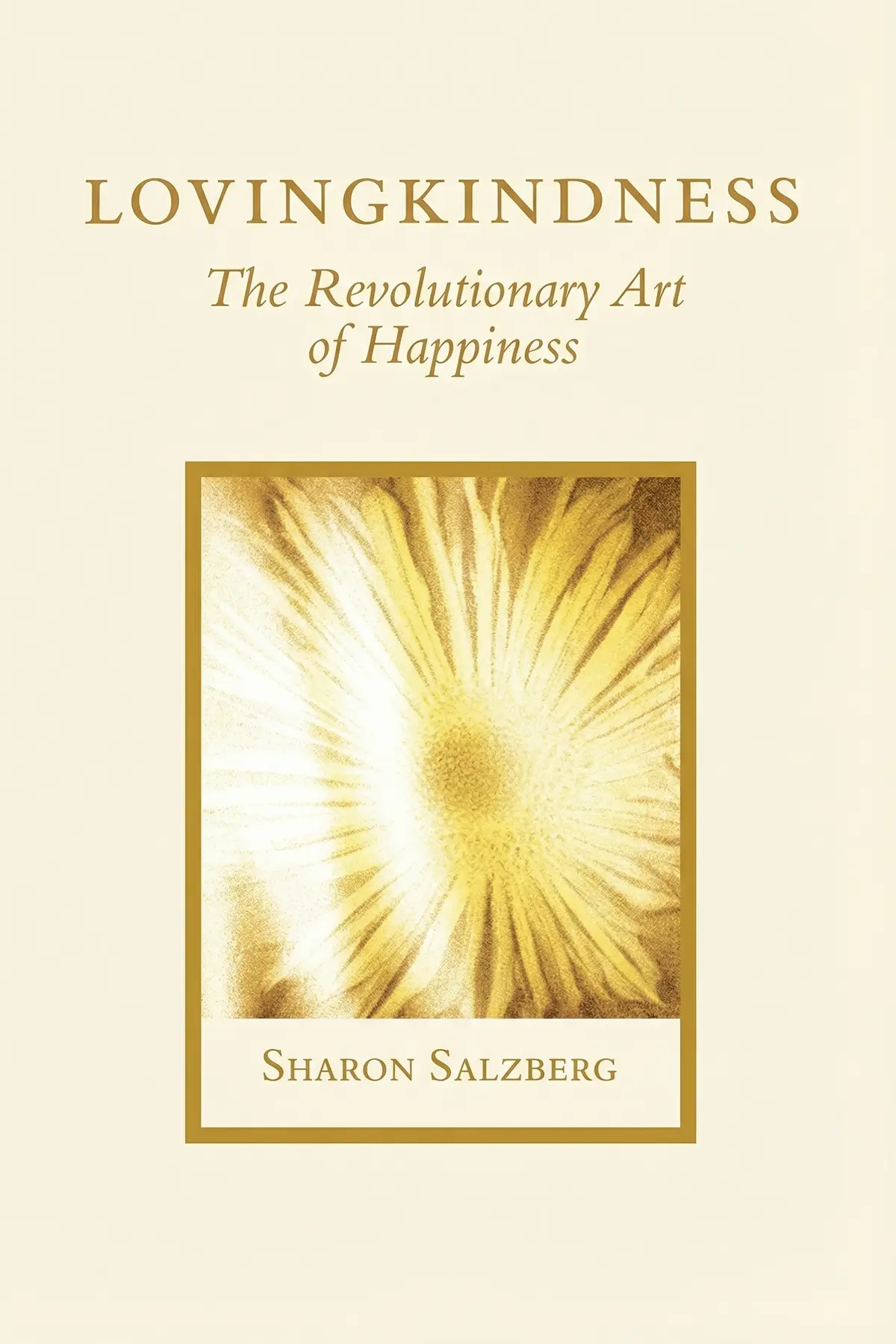
Table of Content
1. Introduction
57 sec
If your happiness depends on a good week, a new romance or an exciting job offer, it will keep slipping away, because those things never stay put. In Lovingkindness, meditation teacher Sharon Salzberg offers a steadier source: a heart trained, through simple daily practice, to meet everything with warmth. Even a little of that training shows up in research she cites, where one 20-minute lovingkindness meditation cut migraine sufferers’ pain by a third.
Salzberg’s argument, drawn from Buddhist teaching, is that lasting happiness grows from within once you stop clinging to good moments and pushing away bad ones. Love, compassion, gladness for others and calm can all be cultivated like skills. Ahead are the habits of mind that block those states, the short meditations that build each one, and a way to check whether any of it is working.
2. Make room for pain so happiness lasts
1 min 27 sec
Most people treat sadness as a sign of failure and try to push it out of sight. An ancient symbol and a migraine study suggest that this very effort is what keeps happiness from lasting.
3. Start your kindness practice with yourself
1 min 37 sec
Before you can offer anyone real warmth, Salzberg says, you have to aim it somewhere most people never think to start. The practice takes fifteen minutes and ends with the person you like least.
4. Find the feeling behind what you crave
1 min 35 sec
The promotion or the house was supposed to settle things, and somehow it never does. Salzberg names two hidden habits that come with every strong want, and a simple question that weakens their hold.
5. Let anger pass through like a rainstorm
1 min 39 sec
Anger has real uses, and Salzberg admits it. Yet Buddhist psychology singles out one trait that makes it dangerous, and offers a surprising way to watch it come and go without being swept along.
6. Ease another's pain just by staying present
1 min 31 sec
You cannot fix most people’s pain, and trying can feel hopeless. Salzberg shows what compassion asks instead, and why something as small as a greeting or your own breath belongs in the practice.
7. Feel glad for others and free your mind
1 min 46 sec
A monkey caught in tar makes every escape attempt worse. Many of our moods work the same way, and the way out involves the one thing envy makes hardest: being glad for someone else.
8. Stay steady when life swings between extremes
1 min 44 sec
Some days swing from delight to grief before lunch. The last of Salzberg’s four practices promises calm without coldness, and it begins with a sentence about who is really responsible for other people’s happiness.
9. Build lasting joy by making generosity your foundation
1 min 32 sec
Meditation alone, Salzberg warns, cannot carry you if the rest of your day pulls the other way. Her personal rule about giving shows where the practice needs to reach beyond the cushion.
10. Conclusion
1 min 04 sec
Lovingkindness treats happiness as something you grow through daily practice, the way a skill grows. The four heavenly abodes work as a set: kindness, compassion for pain, gladness at others’ good fortune, and the calm that keeps the three in proportion, all resting on generosity and honest conduct. Behind them stands the realization Salzberg keeps returning to, that you are deeply connected to everyone and everything around you.
The practice needs little: ten or fifteen minutes, a seat and a few phrases, offered to yourself, a friend, a stranger and someone you struggle with. When a goal grips you, name the feeling you really want. When anger visits, let it pass like weather.
Salzberg warns that results can be slow and hard to see, so trust the process, and check in now and then. Notice how you act when you meet a stranger, and how you speak to yourself after a mistake. When those answers soften, the happiness she describes has already begun.
About this book
What is this book about?
Most of us tie happiness to things outside ourselves: a new relationship, a better job, a good week. Those things change, and when they do, fear and stress move back in. Sharon Salzberg, who has taught Buddhist meditation for decades, argues that a steadier happiness can be built from within. Her method rests on four states known as the heavenly abodes, or brahma-viharas: metta or lovingkindness, compassion, sympathetic joy and equanimity. Each comes with a short meditation built on repeated phrases. It begins with kindness toward yourself and widens to friends, neutral people, enemies and all beings. Along the way she explains what blocks these states, from attachment, with its constant seeking and guarding, to anger that burns like a forest fire. She also cites research in which a single lovingkindness session eased migraine pain. Readers get practices they can start in ten to fifteen minutes and ways to relate to desire and anger without being ruled by them. They also get a grounding in generosity, ethics and karma that carries the practice off the cushion and into daily life.
Book Information
Who it's for
Swayed by outside events
People whose mood rises and falls with work news, relationships or a good or bad week.
New to meditation
Beginners who want a short, phrase-based meditation they can start tonight.
Struggling with harsh feelings
Anyone struggling with envy, anger or self-criticism who wants a gentler way to respond.
About the Author
Sharon Salzberg
Sharon Salzberg, born in 1952, teaches Buddhist meditation in the West. In 1974 she co-founded the Insight Meditation Society in Barre, Massachusetts, with Jack Kornfield and Joseph Goldstein. Her teaching draws on the vipassana, or insight, and metta, or lovingkindness, practices of the Theravada tradition, and she has led retreats around the world for several decades. Lovingkindness was published in 1995, and her later book Real Happiness reached a New York Times bestseller list in 2011. She also hosts the podcast The Metta Hour.
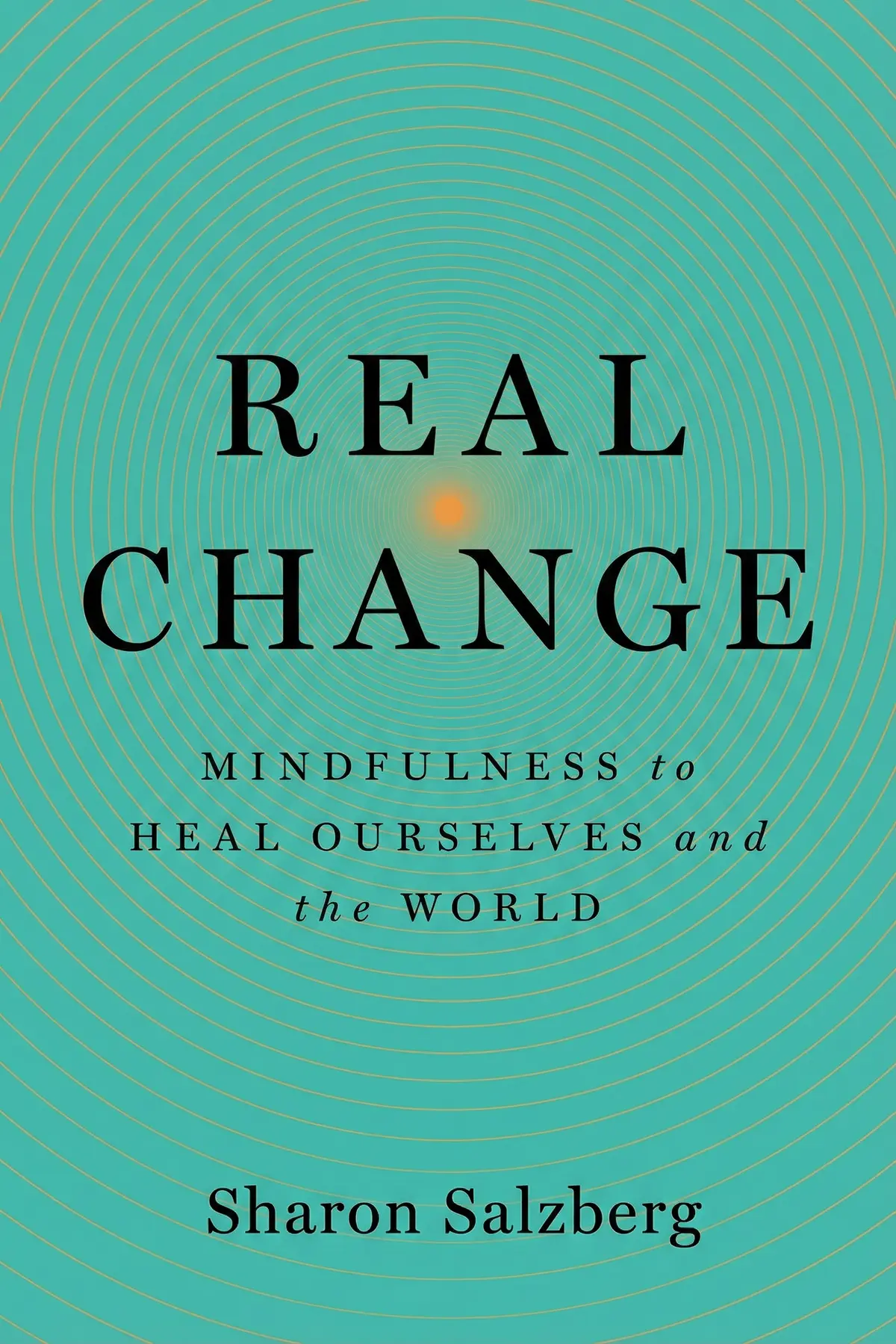
Real Change: Mindfulness to Heal Ourselves and the World
Sharon Salzberg
Real Love: The Art of Mindful Connection
Sharon Salzberg
Ratings & Reviews
Ratings at a glance
What people think
Listeners consider this work a superb starting point for lovingkindness meditation, valuing its presentation of Buddhist principles and practical mindfulness advice. The prose is organized effectively and is straightforward to understand, utilizing clear language that ensures accessibility. Listeners characterize the content as moving and motivational, with one listener highlighting its specific utility during periods of distress. They treasure its ability to transform lives, with one listener explaining how its teachings can be integrated into a daily routine.
Top reviews
Jai
This book is a masterclass in shifting your internal landscape. Salzberg manages to distill complex Buddhist concepts into something that feels immediately applicable to my messy, modern life without stripping away the historical significance of the four 'heavenly abodes.' I was particularly moved by the sections on metta, or lovingkindness, which she describes as the ground of all mindfulness. It isn't just fluffy sentimentality; it’s a rigorous practice of non-grasping and clarity. The guided meditations at the end of each chapter are incredibly practical for anyone struggling to move beyond theoretical knowledge into actual experience. Frankly, I think this should be required reading for everyone navigating the stress of the 21st century. It has genuinely helped me find a sense of radiant joy even on my hardest days.
Show moreJoshua
Ever wonder how to actually practice forgiveness when your heart feels like a closed fist? This book provides the roadmap I didn't know I was looking for. Salzberg explains how fear, anger, and grief are the 'enemies' of metta, but she does so with so much compassion that you don't feel judged for having those feelings. I found the guided practices at the end of the chapters to be the most valuable part of the experience. They are simple enough for a beginner but deep enough for someone who has been meditating for years. Not gonna lie, I cried a few times while reading this because it hit so close to home. It’s an inspiring, life-changing work that teaches us how to find connection in a world that often feels incredibly isolated and cold.
Show moreSombat
After hearing my yoga teacher mention 'metta' for months, I finally decided to dive into the source material, and I’m so glad I did. This book is a beautiful exploration of how we can cultivate love and joy through intentional practice. My husband and I actually ended up reading sections of this aloud to each other at night, and it sparked some really deep conversations about our relationship and how we view the world. It’s rare to find a book that is both intellectually stimulating and emotionally resonant. The author shows how we can move past judgment and envy to find a core goodness in everyone. Truly, this is the kind of book you keep on your bedside table and return to whenever you feel your heart starting to harden.
Show moreSaengdao
Finally, a spiritual guide that doesn't feel like it's gatekeeping enlightenment or talking down to the reader! This book is an absolute gem for anyone who feels like they’ve lost their way in the hustle of modern life. Salzberg’s stories about her time in India add a wonderful layer of authenticity and depth to the instructions. I found the concept of the 'four heavenly abodes'—love, compassion, joy, and equanimity—to be a life-changing framework for my daily interactions. It taught me that kindness isn't a weakness; it’s a profound strength that requires immense courage. This is one of those rare books that you don't just read; you experience it. It has helped me become more present and significantly more forgiving of my own flaws and those of others.
Show moreThanit
As someone who has always struggled with self-criticism, Salzberg’s approach to self-love was a breath of fresh air. She reminds us that to be truly kind to others, we must first 'reteach a thing of its loveliness' regarding ourselves. I loved the distinction she made between being compassionate and being a doormat; you can have a heart of gold without condoning harmful actions. The prose is beautiful and flowing, making it a very quick read despite the depth of the subject matter. My only minor gripe is that some of the wisdom stories felt a bit dated, but the core message remains timeless. It’s a wonderful resource for anyone feeling disconnected or anxious in their daily life, providing a sturdy framework for emotional resilience through simple, heart-lifting exercises.
Show moreA
The chapter on equanimity alone makes this worth the purchase, providing a sturdy framework for staying balanced amidst the chaos of life. Salzberg’s writing is well-structured and accessible, avoiding the dense jargon that often plagues spiritual texts. I particularly liked how she integrated the Dalai Lama’s philosophy that kindness is a religion in itself. It’s a book that invites you to breathe and make room for clarity of heart. I did find that some of the meditation instructions were a bit repetitive across chapters, but perhaps that’s the point—repetition is how we learn. If you are going through a distressing period, this book offers a gentle hand to hold. It’s a peaceful, quick read that left me feeling significantly more grounded and patient with the people around me.
Show moreThongchai
Look, I’ve read a lot of books on Buddhism, and many of them feel like they’re written for monks in a cave, but this one is for the rest of us. Sharon Salzberg has a way of making high-level spiritual concepts feel like common sense. She addresses the hindrances like impatience and disappointment with such insight that you feel like she’s been reading your private journal. To be fair, if you’re looking for a rigorous academic text, this isn’t it. It’s much more of a practical guide for the heart. I’ve started incorporating the metta phrases into my morning commute, and I’ve noticed a significant drop in my road rage and general anxiety. It’s a small, powerful book that emphasizes that the power to change our happiness lies entirely within ourselves.
Show moreRungrat
Picked this up after hearing it was the gold standard for lovingkindness meditation, and while it has some good moments, I struggled with the pacing. In my experience, the concepts are beautiful but the presentation felt a little too 'out there' at times for a secular reader. I appreciated the simple language and the focus on overcoming the ego, but I found myself wanting more psychological depth and less traditional storytelling. It’s a meaningful book, certainly, and I can see why it’s a classic in the mindfulness community. However, without a teacher to guide you through the actual meditation sittings, it’s easy to understand the theory while failing to implement the practice. It's a solid 3-star read for me—good information, but it didn't quite set my world on fire.
Show moreRod
Truth be told, I have mixed feelings about this one. On one hand, the message of universal kindness is exactly what the world needs right now, and Salzberg is clearly a very wise and experienced teacher. On the other hand, the book felt a bit too simplistic in its approach to complex emotions like deep-seated anger or grief. I felt like the 'just send them love' advice was a bit of a stretch in certain situations where boundaries are more important than affection. That said, the prose is easy to digest and it’s a very fast read. If you’re brand new to meditation, this is a perfect starting point. If you’re looking for something with a bit more grit or psychological complexity, you might find it a little too light.
Show moreNarut
Not what I expected based on the rave reviews. While the writing is undeniably simple and easy to follow, I found the tone frustratingly dogmatic and lacking in real-world nuance. Why don’t these mindfulness authors ever address systemic power dynamics or the reality of oppression? The book suggests that if we just meditate on kindness, everything will magically shift, which feels a bit dismissive of people dealing with genuine external trauma. To be fair, the exercises are okay if you want a basic introduction to Buddhist thought, but for me, it felt way too black and white. It became so repetitive that I actually started using it as a sleep aid before bed because I couldn't stay engaged with the 'do this, get that' formula. It just didn't click for me.
Show moreQuestions about this book
What is the main idea of Lovingkindness by Sharon Salzberg?
Salzberg argues that happiness tied to outside events like romance or a job cannot last, because those things change. Lasting happiness comes from training the heart in four states from Buddhist teaching: lovingkindness, compassion, sympathetic joy and equanimity. Each is built through a short meditation using repeated phrases, and all of them are supported by generosity and ethical conduct in daily life.
How do you practice metta meditation?
Sit comfortably, close your eyes and set aside analysis for ten to fifteen minutes. Recall a time you were kind or generous, then silently repeat phrases such as may I be free from danger and may I have mental happiness. Next, widen the circle to a benefactor, a neutral person and finally someone who stirs anger or fear. If unworthiness arises, breathe and return to the phrases.
What does Sharon Salzberg say causes suffering?
Following Buddhist teaching, she names attachment as the root. Attachment brings seeking, always leaning toward the next moment, and guarding, trying to hold on in a world that keeps changing. Her suggestion is to ask what mental state you really want once basic needs are met. Someone chasing money, she notes, often wants security, power or free time.
Is there scientific evidence for lovingkindness meditation?
Salzberg cites a study from the journal Pain Management Nursing in which migraine sufferers did one guided 20-minute lovingkindness meditation and then reported 43 percent less emotional tension and 33 percent less pain. She also mentions researchers who taught the practice to people with chronic back pain and saw big gains in both pain and stress.
How can I tell if lovingkindness practice is working?
Salzberg warns that the effects are not always obvious and advises trusting the process. Every so often, check in with yourself: notice how you behave when you meet a stranger, and how you talk to yourself after a mistake. Over time, she suggests, those answers may change even if you never feel flooded with love.
Featured in

Readers also enjoyed

Aflame: Learning from Silence
Pico Iyer


A Force for Good: The Dalai Lama's Vision for Our World
Daniel Goleman


A Return to Love: Reflections on the Principles of a Course in Miracles
Marianne Williamson

Abundance: The Inner Path to Wealth
Deepak Chopra

Alcoholics Anonymous
Alcoholics Anonymous World Services

A New Earth: Awakening to Your Life’s Purpose
Eckhart Tolle

AUDIO SUMMARY AVAILABLE
Listen to Lovingkindness in 15 minutes
Get the key ideas from Lovingkindness by Sharon Salzberg, plus 5,000+ more nonfiction titles.
- 5,000+ titles
- Listen as much as you want
- 7-day free trial
- Cancel anytime









