


14 min 40 sec
Available in: English
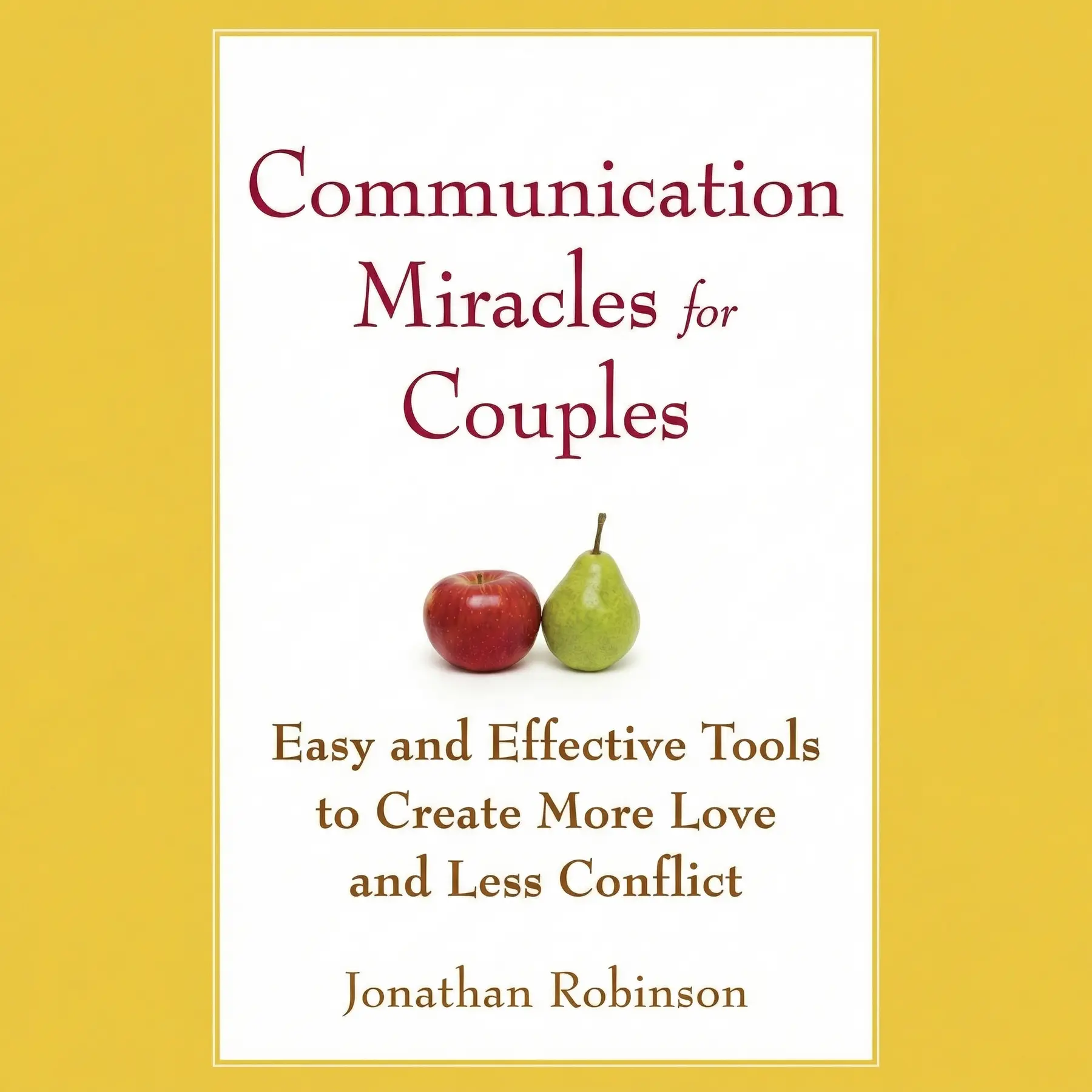
Communication Miracles for Couples: Easy and Effective Tools to Create More Love and Less Conflict
A psychotherapist's practical toolkit for couples who keep having the same fights: exact phrases, short wordless exercises and weekly habits that cool conflict, rebuild trust and keep both partners feeling valued.
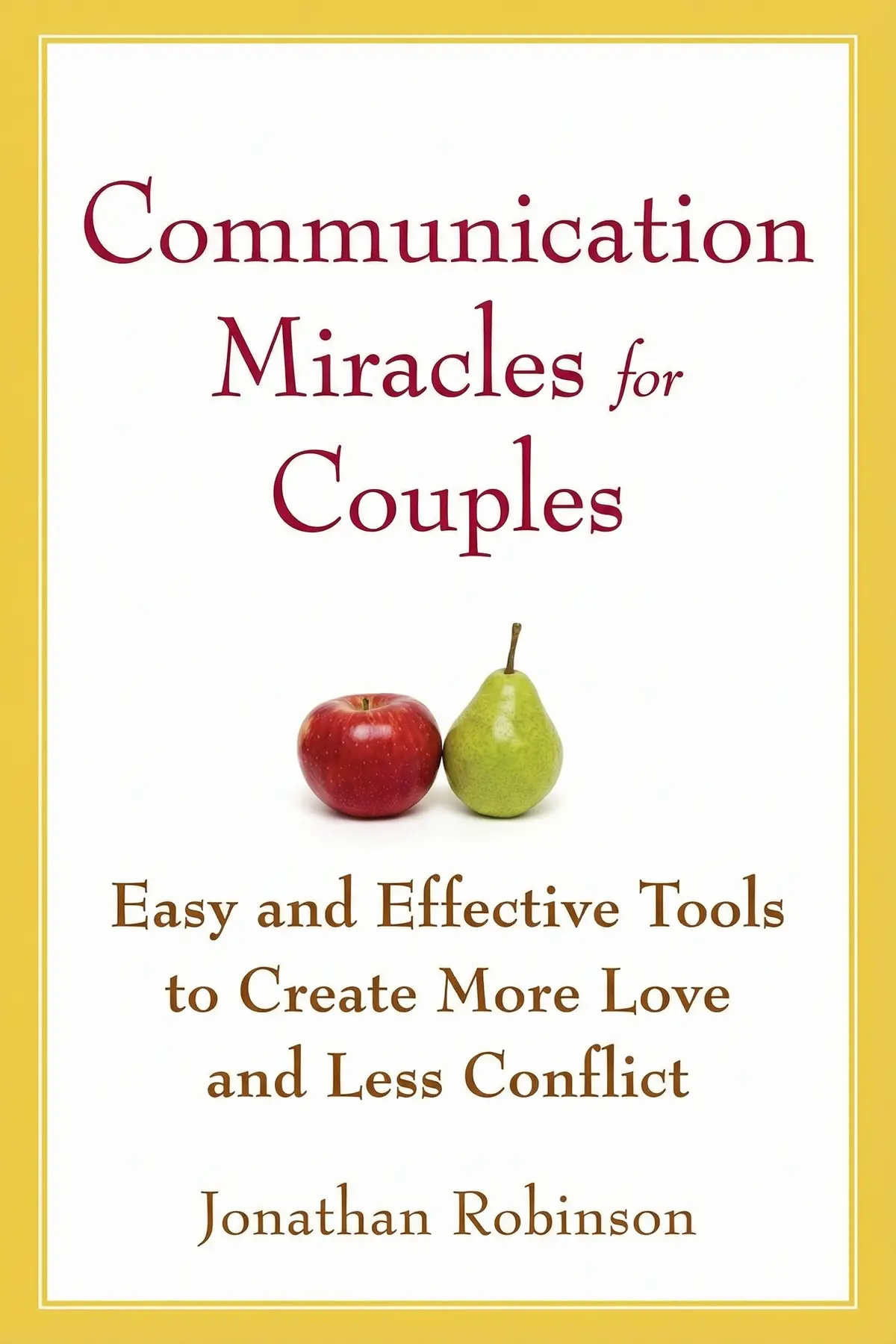
Table of Content
1. Introduction
1 min 04 sec
Most couples who fight are not short of love. What they lack is a few habits that keep each partner feeling valued when tempers rise. In Communication Miracles for Couples, psychotherapist Jonathan Robinson argues that many arguments begin when one person’s sense of worth gets bruised, and that small shifts in wording, tone, touch and listening can cool them fast. He has watched couples walk into counseling hoping to be declared right, and he finds that breakthroughs almost never come from settling who is to blame.
His case runs through every tool he offers: love lasts when both partners feel safe and appreciated, and that safety is built from small, repeated choices instead of grand gestures. Even better, the tools work if only one of you uses them. Expect specific sentences to say in the middle of an argument, a four-minute exercise that ends a standoff without talking, a way to ask for change that does not sound like nagging, and a single number for checking trust.
2. Keep your partner's self-worth account in credit
1 min 52 sec
A complaint about dishes can become a cold war by bedtime. Robinson traces the spiral to something missing that has little to do with dishes, and gives a three-part sentence that stops it early.
3. Choose closeness over winning the argument
1 min 42 sec
You have reminded them several times, and they are still not ready to leave. You are right, and you know it. Robinson explains what that certainty costs and offers three questions that change the next ten minutes.
4. Turn a complaint into a request they can grant
1 min 48 sec
Telling a partner to be more caring almost never makes them more caring. Robinson shows what to say instead, plus two tools for the heated moment, one of which needs no words at all.
5. Say more with a hug than a speech
1 min 46 sec
Some of the fastest ways to make a partner feel understood involve no talking at all. One of them has a provocative name and takes only a few minutes of sitting still together.
6. Ask for change so your partner wants to help
1 min 49 sec
Nagging rarely changes anyone, yet most of us still ask for change in ways that sound exactly like it. Robinson lays out a sequence that makes a partner feel like a collaborator instead of a defendant.
7. Rebuild broken trust one kept promise at a time
1 min 53 sec
After a betrayal, the most sincere explanation can make things worse. Robinson offers a one-to-ten rating that tells you when repair must come before everything else, and a sequence for doing that repair.
8. A weekly check-in that keeps resentment small
1 min 38 sec
Relationships rarely end with one big blow. Robinson describes how they wear thin instead, and the two modest habits, one of them a short weekly conversation, that keep small irritations from hardening.
9. Conclusion
1 min 08 sec
Robinson makes an unglamorous promise. Couples do not need a perfect match or a dramatic breakthrough to stop hurting each other. They need a steady supply of small signals that each person is worth listening to: a feeling named back, a specific thank-you, a ten-second hug, a request that can actually be granted. Fights shrink when nobody’s self-worth is under attack, and closeness grows when deposits outnumber withdrawals.
That also means the work can begin with one person. The next time an argument heats up, ask yourself whether you would rather be right or feel loved, and look for your own share before pointing at your partner’s. Turn the complaint you repeat most into a concrete request. Ask for a trust number from one to ten, and if it comes back low, repair that before anything else. Then keep one evening a week for asking when your partner felt closest to you.
None of these takes more than a few minutes. Each one tells your partner the same thing: you are on their side, and you intend to stay there.
About this book
What is this book about?
Many couples who argue still love each other. What they lack is a reliable way to talk when one of them feels hurt, ignored or blamed. Psychotherapist Jonathan Robinson has seen partners arrive in counseling hoping to be declared right, and he argues that real progress almost never comes from deciding who is at fault. His alternative is a set of small, concrete tools. Each one protects your partner's sense of worth, which Robinson pictures as a self-esteem bank account that kind words fill and criticism drains. He gives a three-part sentence for acknowledging feelings, three questions to ask yourself when you badly want to win, a four-minute breathing exercise done lying together, a way to turn complaints into requests your partner can grant, and a step-by-step method for asking someone to change. The book also covers trust, with a simple one-to-ten rating that tells you when repair must come first, and the everyday upkeep that keeps love from wearing thin. Readers get things to say and do in the middle of a fight, and Robinson stresses that the tools work even when only one partner uses them.
Book Information
Who it's for
Couples stuck arguing
Couples stuck in the same argument every week who want words that calm it.
Partners rebuilding trust
Partners repairing trust after a broken promise or a slow drift apart.
Partner won't read along
Anyone whose partner will not read a relationship book, since these tools work when one person starts.
About the Author
Jonathan Robinson
Jonathan Robinson is a psychotherapist and professional speaker based in Northern California. He has written 14 books on happiness, relationships and spiritual growth, and Communication Miracles for Couples became a New York Times bestseller. He has appeared on The Oprah Winfrey Show and CNN, has spoken at companies including Microsoft and Google, and co-hosts the podcast Awareness Explorers.
Ratings & Reviews
Ratings at a glance
What people think
Listeners find the content accessible and straightforward, providing realistic strategies that are applicable to daily life. They value the book’s ability to improve partner dialogue and mend relationships, with one listener highlighting its specific utility in their professional sessions with couples. It also earns praise as a thoughtful gift, as it is designed for both people in the relationship to explore together.
Top reviews
Amelia
This book was a total game-changer for my husband and me during a period where we felt like we were speaking different languages. Robinson’s concept of the 'self-esteem bank account' is brilliant because it simplifies the complex emotional labor of a relationship into something manageable. We started making small 'deposits' through specific, graphic appreciations rather than just saying 'thanks,' and the atmosphere in our house shifted almost overnight. It is incredibly easy to read and the chapters are short enough to digest before bed. While some might find the tone a bit light, the actual application of the tools is where the real value lies. It doesn't assume you're on the brink of a breakup, which I found refreshing compared to other marriage manuals. Highly recommend for any couple wanting to deepen their connection.
Show morePrayoon
As someone who works in the mental health field, I’m always on the hunt for resources that aren't overly clinical or dry for my clients. Robinson hits it out of the park here by streamlining the complicated subject of intimacy into usable, bite-sized tools. He describes his points richly so that you really get it at a gut level, especially the sections on non-verbal cues like a warm smile or open body language. The idea is that by not resisting your mate's feelings, you make it impossible for them to stay in an adversarial position. It's subtle but powerful stuff. I’ve started recommending this as a gift for newlyweds because it’s proactive rather than reactive. Truly a standout in a genre that is usually filled with fluff and psychobabble.
Show moreNatalie
Finally got around to reading this after hearing several friends rave about how it saved their relationships. I was skeptical, but the 'miracles' described are actually just very high-quality communication habits. The focus on making 'deposits' into your partner’s self-esteem is such a healthy way to look at interaction. Instead of focusing on what’s wrong, it teaches you how to build up enough good will that the 'wrong' things don't matter as much. The book is a quick read, but the impact is lasting if you actually do the exercises. We’ve started giving copies of this to our friends when they get engaged because it’s the kind of practical wisdom that schools just don't teach. It’s definitely worth the shelf space for any couple.
Show moreSeksan
Look, if you’re tired of the same old circular arguments, just buy the book. It’s one of the few relationship guides that actually gives you things to do rather than just things to think about. The idea of not resisting your partner's feelings—even when you think they’re wrong—is a total game changer. It creates an opening for them to move past their anger and into the actual cause of the problem. Robinson writes with a lot of warmth and his how-to's are very doable for busy people. I particularly loved the section on how a simple, warm smile can communicate more than a thousand words. It sounds simple, maybe even 'cutesy,' but it works. This is easily the most practical book on partnership I’ve ever owned.
Show morePatcharaporn
Picked this up during a rough patch, and I have to say, Robinson's approach is surprisingly grounded for a book with 'miracles' in the title. What I liked most was that many of the strategies don’t require your partner’s buy-in to start seeing results. For instance, the chapter on seeking to understand instead of justifying yourself changed our dynamic within a week. It’s hard to keep an argument going when one person refuses to be an adversary! The writing style is very accessible, though I did find some of the non-verbal techniques a little 'woo-woo' for my taste. Still, the core message about making your partner feel fully accepted is something every couple needs to hear. It’s a solid, practical guide that avoids the doom-and-gloom tone of most marriage books.
Show moreSuphan
The chapter on listening without interrupting really hit home for us because we had fallen into such a bad habit of talking over one another. Robinson explains that couples often become 'cheap' with their investment in listening, and that resonated deeply. The book is packed with these little 'aha' moments that are easy to remember even when you're stressed. One minor critique is that it makes the process seem a bit too easy at times; real change takes a lot more sweat than the book suggests. However, the specific advice on giving your partner two choices for solutions was a revelation for our decision-making process. It’s a readable, mostly-not-annoying book that actually provides a roadmap for better days. I’d suggest reading it slowly so the tips don't get jumbled.
Show moreWararat
To be fair, the title is a bit hyperbolic, but the actual content is solid gold for anyone wanting to stop the constant bickering. I appreciated that Robinson doesn’t assume his readers are on the verge of divorce; it’s just as useful for a healthy couple that wants to get even better. The advice on being specific and graphic with your appreciation was a standout for me. I realized I was being way too general with my praise, which made it feel hollow to my wife. The book is organized well, with end notes that serve as a great refresher when you don't want to re-read the whole chapter. My only gripe is the occasional 'miracle' branding, but if you can look past the marketing, the tools are genuinely effective for everyday life.
Show moreJoy
Ever wonder if these relationship guides actually work for real-world arguments where tempers are high? Robinson offers some decent advice, but I struggled with the presentation. The constant repetition of the phrase 'now that’s a communication miracle' started to feel a bit gimmicky and grated on my nerves after the third chapter. To be fair, the tips themselves—like offering two solutions instead of one—are very practical and don't require your partner to have read the book to be effective. However, the sheer volume of techniques eventually became a bit disorganized in my mind. I appreciated the end-of-chapter summaries, as they helped me keep track of what I was supposed to be practicing. It’s a helpful resource, but it definitely oversimplifies how difficult these habits are to break in the heat of the moment.
Show moreRatree
It’s a bit of a mixed bag, though I can see why it’s popular among therapists. On one hand, the tips for avoiding the 'adversarial position' are brilliant and have helped me stay calm during heated moments. On the other hand, the book is so packed with different techniques that it can feel a little disorganized. I found myself forgetting the 'miracles' from chapter two by the time I reached chapter five. Truth is, some of the dialogue examples feel a bit stilted and unnatural, like a script from a 90s sitcom. If you can adapt the ideas into your own natural way of speaking, there is a lot of value here. It’s a decent primer on empathy, but don’t expect it to fix deep-seated issues without a lot of extra work.
Show moreGor
Not what I expected based on the glowing recommendations I’ve seen online. This is just another book filled with cutesy communication tricks that feel incredibly forced in a real-life setting. Frankly, if I tried half of these 'miracles' while my partner was actually angry, it would probably push them over the edge. Some of the techniques involve a level of passivity that feels more like patronizing your spouse than communicating with them. I read it in two sittings, but by the time I finished, I could barely recall the specific steps because they all blended into a mush of toxic positivity. If you enjoy the 'self-help' aesthetic where everything is fixed with a smile and a bank account metaphor, you might like it. For me, it felt unrealistic and occasionally annoying.
Show moreQuestions about this book
What is the main idea of Communication Miracles for Couples?
Jonathan Robinson argues that most couple conflict grows when one partner’s sense of worth feels threatened, and that winning the argument only makes it worse. He offers small, practical tools in words, touch and listening that keep both partners feeling acknowledged, appreciated and accepted. Repeated over time, these habits lower conflict and build closeness, and Robinson says they work even if only one partner uses them.
What is the self-esteem bank account in Communication Miracles for Couples?
Robinson pictures each partner as having a self-esteem bank account. Validating feelings and noticing what your partner does well are deposits. Blame and criticism are withdrawals. When the balance runs low, your partner has less capacity to listen or empathize, so arguments escalate. Keeping the account in credit through acknowledgment, specific appreciation and acceptance makes honest conversation possible.
What is the Spoon Tune exercise?
The Spoon Tune is one of Robinson’s tools for calming a heated moment without talking. For about four minutes, both partners lie in a spooning position, breathing in rhythm with each other. The physical closeness and shared breathing bring tension down and remind both people that they are on the same side, which makes the conversation afterward easier.
How do you ask your partner to change without nagging?
Robinson suggests choosing a relaxed moment, opening with sincere appreciation and stating a positive intention, such as wanting a calmer home. Describe the issue gently and share your own reasons for being upset by it. Then ask your partner how they would solve it, offering several ideas only if they want them. For sensitive topics, a thoughtful letter can work better than a conversation.
How do you rebuild trust according to Jonathan Robinson?
Start by asking your partner to rate their trust from one to ten; below six, repair comes before anything else. After a clear broken promise, take responsibility without excuses, apologize for the impact, ask what your partner needs and make a new promise you keep. When trust has worn down slowly, affirm their feelings first and ask how they understood your words.
Featured in
Readers also enjoyed





AUDIO SUMMARY AVAILABLE
Listen to Communication Miracles for Couples in 15 minutes
Get the key ideas from Communication Miracles for Couples by Jonathan Robinson, plus 5,000+ more nonfiction titles.
- 5,000+ titles
- Listen as much as you want
- 7-day free trial
- Cancel anytime









