Burnout: The Secret to Unlocking the Stress Cycle
Emily Nagoski
 English
Shows couples whose desire has faded why enjoyment matters more than constant wanting, and how to map what turns them on and off, talk without blame and build contexts where pleasure comes easily.
1 min 10 sec
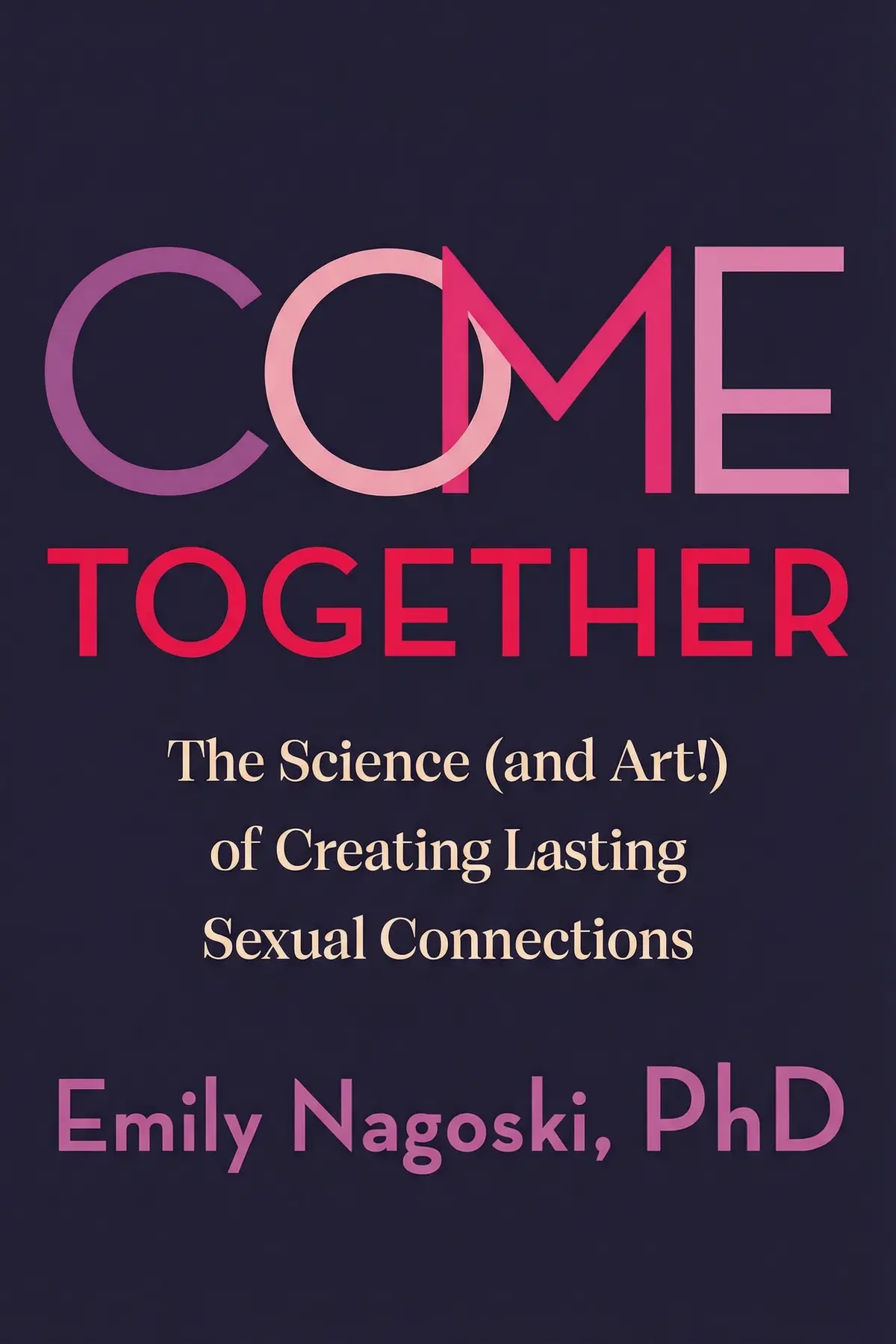
If desire has faded in a long relationship, it is easy to decide something is broken, in you or in your partner. In Come Together, Emily Nagoski argues that the worry starts from the wrong measure: what keeps a sexual connection alive over years is pleasure, the enjoyment of the sex you actually have, far more than constant wanting. She learned this the hard way. Back when she was writing Come As You Are, her earlier work on sexual well-being, she thought about sex all day, every working day, and still discovered that her own marriage held no desire for it.
Stress, illness, parenting and plain worry about the world put up barriers like that for many people, and the usual advice to spice things up with something new rarely reaches the cause. Nagoski’s alternative is to understand what makes sex worth having for you, then build the conditions where pleasure comes easily. Along the way you get words for talking with a partner without blame, and a way to read a dry spell as useful information about context.
1 min 54 sec
Couples who schedule intimacy often assume they have already failed. Nagoski thinks they are keeping score with the wrong number, and one expecting couple shows what happens when the scorecard changes.
1 min 51 sec
The same situation can thrill one person and shut another down completely. Learning which is which for you begins with a question most people have never honestly asked themselves.
2 min 01 sec
Losing interest in sex may say less about your libido than about where you spend your days emotionally. A busy mother of three found her shortest route back in a surprising place.
1 min 57 sec
Most people carry unspoken rules about what real sex is and who should want what. Nagoski’s test for normal is so short it fits in one breath, and it clears away a lot.
2 min 04 sec
Aging, illness and trauma change what intimacy can look like, and a wound caused by a partner can linger for years. Nagoski offers a four-step talk that keeps blame out of the room.
1 min 58 sec
A cold drink on a hot day and a crowd singing together can open the same door as the most intense intimacy. Nagoski calls the way through it the magic trick.
1 min 13 sec
Come Together adds up to a change of question. Asking how to want sex more leads couples toward pressure and blame. Asking what makes sex enjoyable for us, here and now, leads toward curiosity, and curiosity is something two people can practice together. Nagoski’s own dry spell, in the middle of writing about sex every day, showed that knowledge alone does not produce desire. Context does, and context can be built.
The book supports a few concrete moves. Retire desire as your scorecard and ask after intimacy whether both of you enjoyed it. Recall a time pleasure came easily and name the accelerators and brakes from that period. Sketch your emotional floor plan and tell your partner the shortest route from where you usually are to where lust lives, the way Ama asked for joking around. When an old hurt returns, set it between you as a third thing and end the talk with something you admire.
None of this needs a new trick or a perfect body. Two people who can say what they need without shame already hold most of what lasting intimacy asks for.
Many people in long relationships notice that desire has faded and decide something must be wrong with them, their partner or the relationship. Emily Nagoski hit the same wall herself: while writing a whole book about sexual well-being, she found she had no desire for sex in her own marriage. The usual advice to add novelty, she argues, rarely touches the real causes. Her answer is to change the measure. What keeps a sexual connection healthy over time is pleasure, the enjoyment of the sex you actually have, and pleasure depends on context: setting, mood, stress and the state of your inner world. Nagoski gives readers tools to read that context, including accelerators and brakes, an emotional floor plan of seven rooms, blanket permission and the third thing conversation for old hurts. Readers get a clearer sense of why sex matters to them, a short and freeing definition of normal sex, ways to meet aging, illness and trauma with warm curiosity, and practices for savoring that can deepen connection, illustrated through two couples who rebuilt their intimacy.
Partners in long relationships who feel desire has faded and fear something is wrong.
Couples juggling work, children, illness or aging who want intimacy that fits their real lives.
People who want a kinder, less rule-bound way to understand their own sexuality.
Emily Nagoski holds a PhD in Health Behavior and a master's degree in Counseling from Indiana University, and during her master's studies she did a clinical placement at the Kinsey Institute's sexual health clinic. She has taught graduate and undergraduate courses on human sexuality, stress management, sex education, relationships and communication, and she directed wellness education at Smith College, where she taught a course on women's sexuality. Her stated aim is to help women feel confident and joyful in their own bodies.
Emily Nagoski
Listeners find the material very easy to read and full of helpful information that offers clarity and perspective. They also consider it a fantastic resource for couples, appreciating the actionable tips, while one listener pointed out its super-easy-access structure. Additionally, there is praise for the precision of the maps, with one listener characterizing them as very detailed. However, the overarching theme and language choices draw mixed opinions from listeners.
Picked this up because I wanted to understand why things feel different after years together. Frankly, Nagoski has a way of making complex psychological concepts feel like a conversation with a smart friend. The structure is super-easy to access, and the way she reframes pleasure as the goal rather than just ticking a box for desire is life-changing. I especially appreciated the focus on the emotional "brakes" that slow us down when life gets heavy with chores and stress. It’s a very detailed guide for anyone looking to maintain a real connection without the pressure of performance.
Show moreWow. Reading this felt like being wrapped in a warm blanket of compassion and understanding. Nagoski doesn't just talk about the mechanics of sex; she explores the "why" behind our intimacy in a way that feels incredibly safe. I loved the emphasis on post-sex cuddling being the ultimate predictor of satisfaction because it validates that emotional intimacy is just as vital as the physical act. Her inclusive approach to the LGBTQ+ community makes this a rare, essential read for everyone. It truly changed how I view my own body and my partner's needs in a long-term context.
Show moreEver wonder why sexual connection seems to ebb and flow despite still loving your partner? This book provides a detailed map of exactly how those internal shifts happen and how to navigate them together. The focus on pleasure rather than performance is exactly what modern couples need to hear right now. Nagoski writes with such humor and clarity that even the heavy psychological stuff feels approachable. It is an amazing resource that I will probably return to whenever I feel my own connection needs a tune-up. It makes the complicated feel simple and the stressful feel manageable.
Show moreThis book is a masterclass in modern intimacy and communication. Nagoski manages to bridge the gap between hard science and the "art" of connection without making it feel like a dry textbook. I loved how she addressed the reality of life—fatigue, kids, and work—as legitimate factors rather than personal failings. The structure makes it easy to jump around to the parts you need most, and her inclusive language is a breath of fresh air. It is easily one of the most useful relationship books on my shelf, offering map accuracy that actually reflects real-world experiences.
Show moreThe chapter on mapping your brain into a floor plan was a total lightbulb moment for me. Truth is, I struggled with some of the more metaphorical language later on, but that initial concept of finding which doors lead to pleasure is brilliant. It’s much more practical than her first book because it treats sex as a team sport rather than a solo journey. The advice about sharing housework to lower stress levels might seem blindingly obvious, but seeing the science behind why it works helps. It is a solid resource for couples, even if some parts feel a bit loose.
Show moreFinally got around to finishing this, and I’ve got to say, the focus on "responsive desire" is a total game-changer for long-term relationships. Too often we compare our current lives to the "honeymoon phase" and feel like something is broken when urgency fades. Nagoski proves that is not the case at all. The book is highly readable and moves at a great pace, even if some of the metaphors felt a bit repetitive by the end. If you want a resource that prioritizes joy over performance and helps you understand your partner's internal map, this is definitely the one.
Show moreAs someone who found "Come As You Are" revolutionary, I was curious how she would handle the relational side of things. This follow-up is even more useful because it moves beyond the individual experience to look at the space between partners. The "floor plan" exercise is a fantastic tool for communication, even if it feels a little "loosey-goosey" at times. I did find myself wishing for more citations in certain sections to back up the anecdotes, but Nagoski’s warmth and inclusive perspective make up for the occasional lack of technical density. It is practical and deeply human.
Show moreAfter hearing so many people recommend this, I was worried it wouldn't live up to the expectations, but it really did. The biggest takeaway for me was the myth of the "skilled lover." Realizing that the only true skill is paying attention to yourself and your partner simultaneously takes so much pressure off. Some parts of the house-plan metaphor dragged a bit, and I didn't love every single case study, but the core message is vital. It is a compassionate guide that treats readers like whole, complicated human beings rather than just biological machines meant to perform.
Show moreTo be fair, this book has some incredible insights buried under a lot of strange word choices and "woo-woo" analogies. Look, the idea that curiosity is the antidote to reactivity is a great point, but I didn't need the whole anagram explanation to get there. It felt like she was reaching for profound moments that did not always land with the same weight as her previous work. That said, the practical advice on identifying "brakes" and "accelerators" in a relationship context is genuinely helpful. It is a bit of a mixed bag, but the good parts are worth the read.
Show moreNot what I expected after all the hype. While I appreciate the inclusivity, the narrative often feels like it is trying too hard to please every modern sensibility while ignoring basic biological drivers. There’s a noticeable lack of hard research compared to her previous work, replaced instead by anecdotes that felt a bit stereotypical and contradictory. I did enjoy the brief section on brain mapping, but the rest felt like a lot of "woo" and platitudes. If you are looking for a strictly fact-based clinical study, this probably isn’t it. It felt more like a social commentary than a science book.
Show moreNagoski argues that the health of a long-term sexual relationship should be measured by pleasure, meaning how much both partners enjoy the sex they have, rather than by constant spontaneous desire. Pleasure depends on context, such as setting, mood and stress, so couples can improve their intimacy by understanding and building the contexts that make pleasure easy, and by talking about them with curiosity instead of blame.
The desire imperative is Nagoski’s name for the belief that a healthy relationship means a constant, spontaneous, almost obsessive craving for your partner. She says it makes couples who schedule sex or rarely feel sudden urges think they are failing. In her view, low desire often means the sex itself is not pleasurable, so the fix is to focus on enjoyment rather than on wanting more.
It is a way of picturing your inner world as seven rooms. Lust, play, seeking and care make pleasure easier to reach, while panic and grief, fear, and rage make it harder. Mapping how the rooms connect shows your routes into desire. Ama, a mother of three, discovered that play was her quickest path to lust and asked her partner Di for joking around.
Nagoski suggests the third thing conversation, which treats a wound as a shared project outside both partners. Each person voices hard feelings without judging the other, and then both approach those feelings with a calm, warm curiosity. Either partner, or both, may acknowledge what was said or suggest a way forward, and the conversation closes with a statement of admiration or confidence in the relationship.
Her definition has two conditions: the sex is mutually consensual, and there is no unwanted physical or emotional pain. If both hold, including pain someone genuinely enjoys, it is normal. She pairs this with blanket permission, the freedom to explore your sexuality in traditional or unusual ways and also to decline or modify any sexual activity.

bell hooks

Katherine Woodward Thomas
AUDIO SUMMARY AVAILABLE
Get the key ideas from Come Together by Emily Nagoski, plus 5,000+ more nonfiction titles.