

14 min 43 sec
Available in: English
 ไทย
EnglishไทยHow to Become a Straight-A Student: The Unconventional Strategies Real College Students Use to Score High While Studying Less
By Cal Newport
Shows students how top performers earn high grades in fewer hours, using short focused study bursts, smart note formats, a calm exam routine and a paper-writing process that knows when to stop researching.
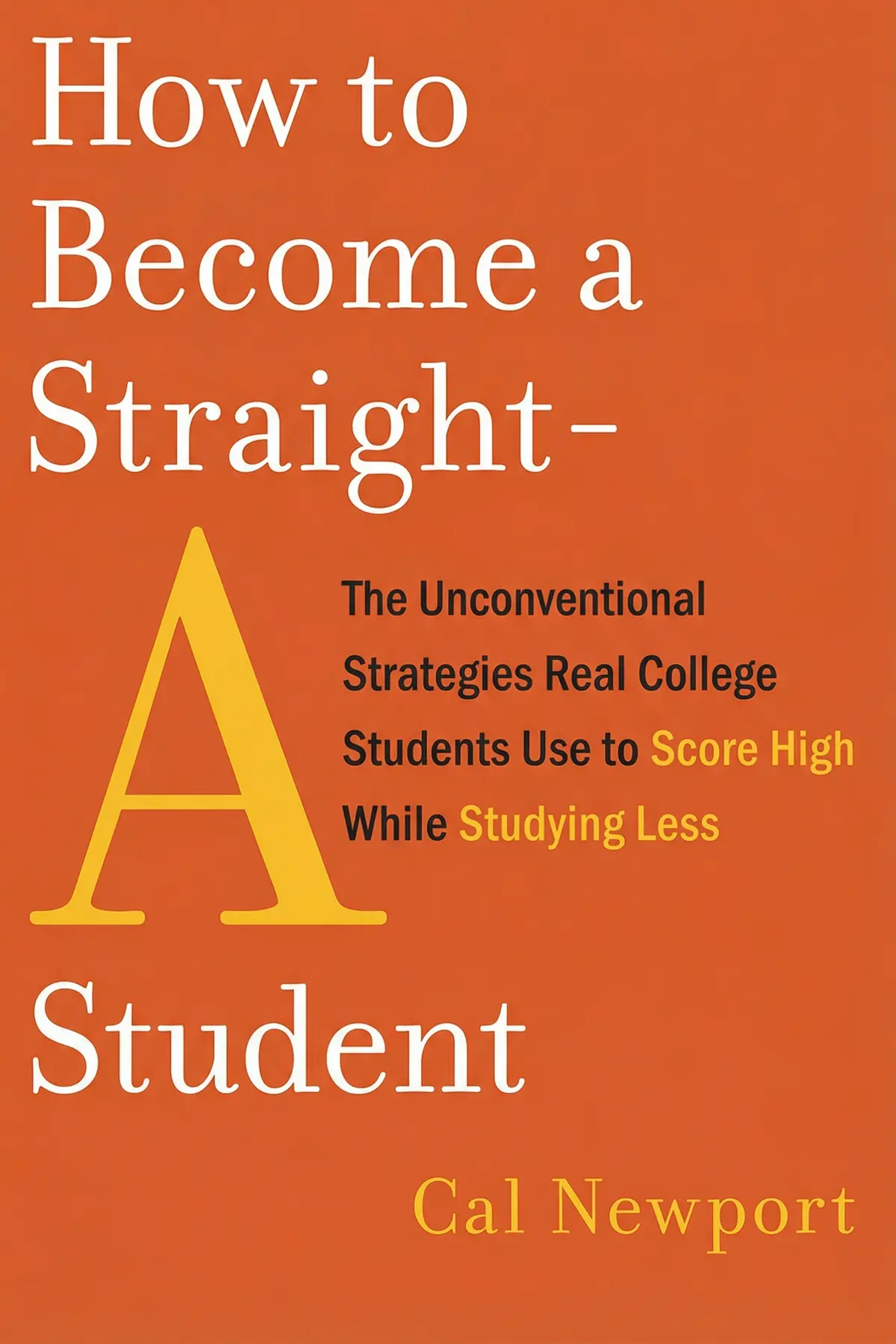
Table of Content
1. Introduction
54 sec
If you spend late nights in the library and still worry about your grades, the problem may be how you study rather than how much. In How to Become a Straight-A Student, computer science professor Cal Newport gathers the methods of top students from many majors across American colleges, and their first lesson is an equation: the work you get done equals your hours multiplied by how hard you focus. Ten distracted hours can produce no more than three sharp ones.
That idea runs through the whole book. The best students, as Newport presents them, win with better technique, from planning a week to taking notes, sitting an exam and building a research paper. What follows is a working kit: a way to see through your own excuses, a note format for any lecture, a three-step routine for exam day and a stopping rule for research that gives your weekends back.
2. Do in three hours what takes others ten
1 min 37 sec
An all-nighter feels like the hardest work a student can do. Newport argues it may be close to useless, and a simple piece of arithmetic shows where the missing hours of a busy week are hiding.
3. Catch your own excuses in writing
1 min 23 sec
Even the best students feel the pull to put things off until the last night. What separates them is a small daily habit that makes the same excuse almost impossible to believe twice.
4. Choose the hour and place that protect focus
1 min 36 sec
A Friday night in the library looks like dedication. Newport sees it as a planning mistake, and his fix involves the clock, a handful of hidden corners around campus and a glass of water.
5. Turn every lecture into notes you can use
1 min 41 sec
Showing up is the advice everyone ignores, and showing up is still not enough. Newport explains why a history lecture and a mathematics lecture call for completely different kinds of notes.
6. Study only what the exam will test
1 min 27 sec
Trying to learn everything feels responsible, and it wastes time. Newport offers a narrower approach, plus a cheap form of protection against the moment every student fears: the exam question you cannot answer.
7. Stay calm and score high on exam day
1 min 32 sec
Dry mouth, shaking hands and a paper face down on the desk. Newport’s routine for that moment fits in three words, and the last one is the step most students skip entirely.
8. Find a thesis worth writing before you write
1 min 42 sec
Most students pour their effort into the writing itself. Newport moves the real work to the start, and adds a precise test for the moment you should stop reading sources and close the library tab.
9. Write and polish a paper without burning out
1 min 46 sec
A pile of sources is not an argument yet. Newport’s route from research to a finished paper includes doing the dishes, ignoring dreams of literary fame and reading your own work out loud.
10. Conclusion
1 min 05 sec
What the straight-A students in Newport’s book share is a refusal to confuse suffering with progress. The all-nighter, the Friday in the library, the endless hunt for one more source and the attempt to memorize everything all feel like hard work, and all of them produce less than a shorter, sharper effort with a clear plan behind it. Grades, in this account, follow from intensity and procedure, and the reward is time: evenings and weekends that belong to you again.
The easiest place to start is your next study session. Cap it at about 50 minutes, in a quiet spot away from your usual desk, with a clear idea of what the coming exam will ask. Before bed, write down what you finished and why anything was left undone, and reread yesterday’s excuse before you accept a new one. When the exam arrives, plan your time in the margin and keep ten minutes for checking.
Three focused hours can match ten tired ones. The other seven are yours to spend.
About this book
What is this book about?
Many students treat long hours as proof of effort: all-nighters, Fridays in the library, rereading everything before an exam. Yet the grades often fail to match the time spent, and the stress keeps rising. Cal Newport argues that the problem is technique, not dedication. Drawing on the methods of straight-A students from many majors at colleges across the United States, Newport builds his case on one equation: the work you get done equals the time you spend multiplied by how intensely you focus. From there he lays out practical routines for every part of student life, from a journal that exposes procrastination excuses and a rotating set of quiet study spots to note formats for technical and nontechnical classes. Readers also get a three-step method for exam day, a precise rule for when to stop researching a paper, and a three-pass review process for finished writing. The promise is better grades with fewer hours, and evenings and weekends that belong to the student again.
Book Information
Who it's for
Students frustrated by grades
College and university students who study long hours but feel their grades do not reflect the effort.
Procrastinators
Procrastinators who finish every paper the night before it is due.
Students short on time
College students juggling coursework, activities and a social life who feel short on hours.
About the Author
Cal Newport
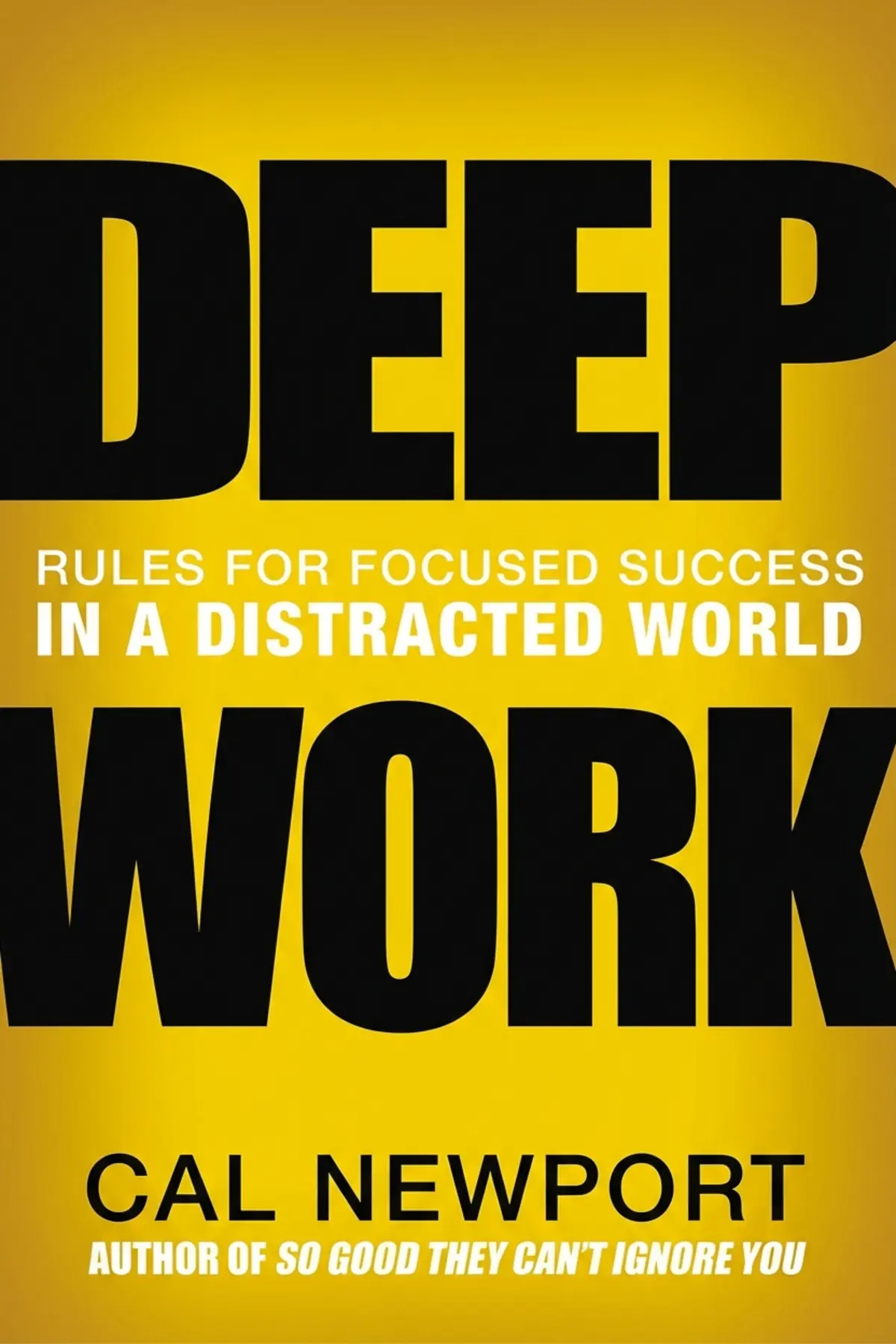
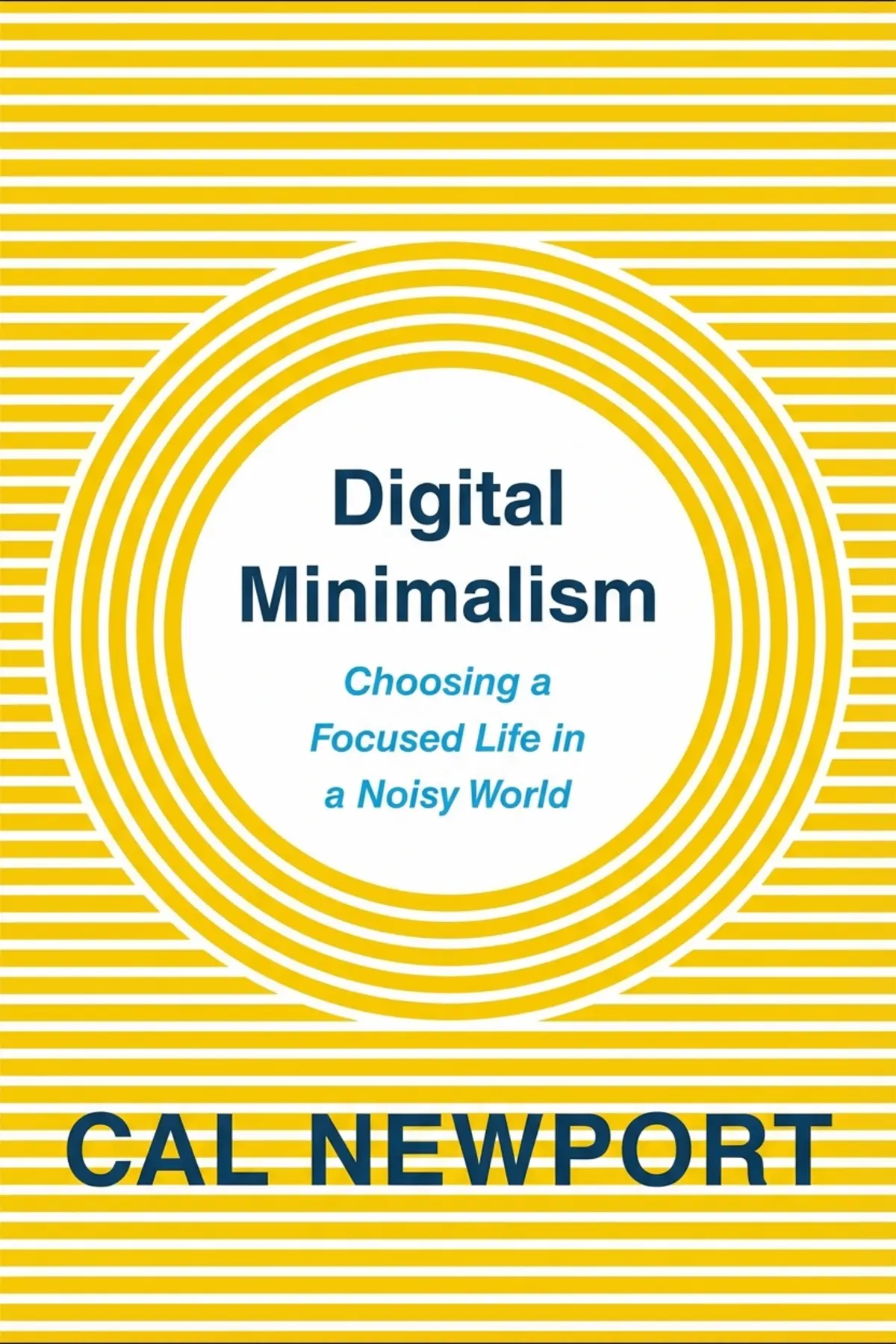
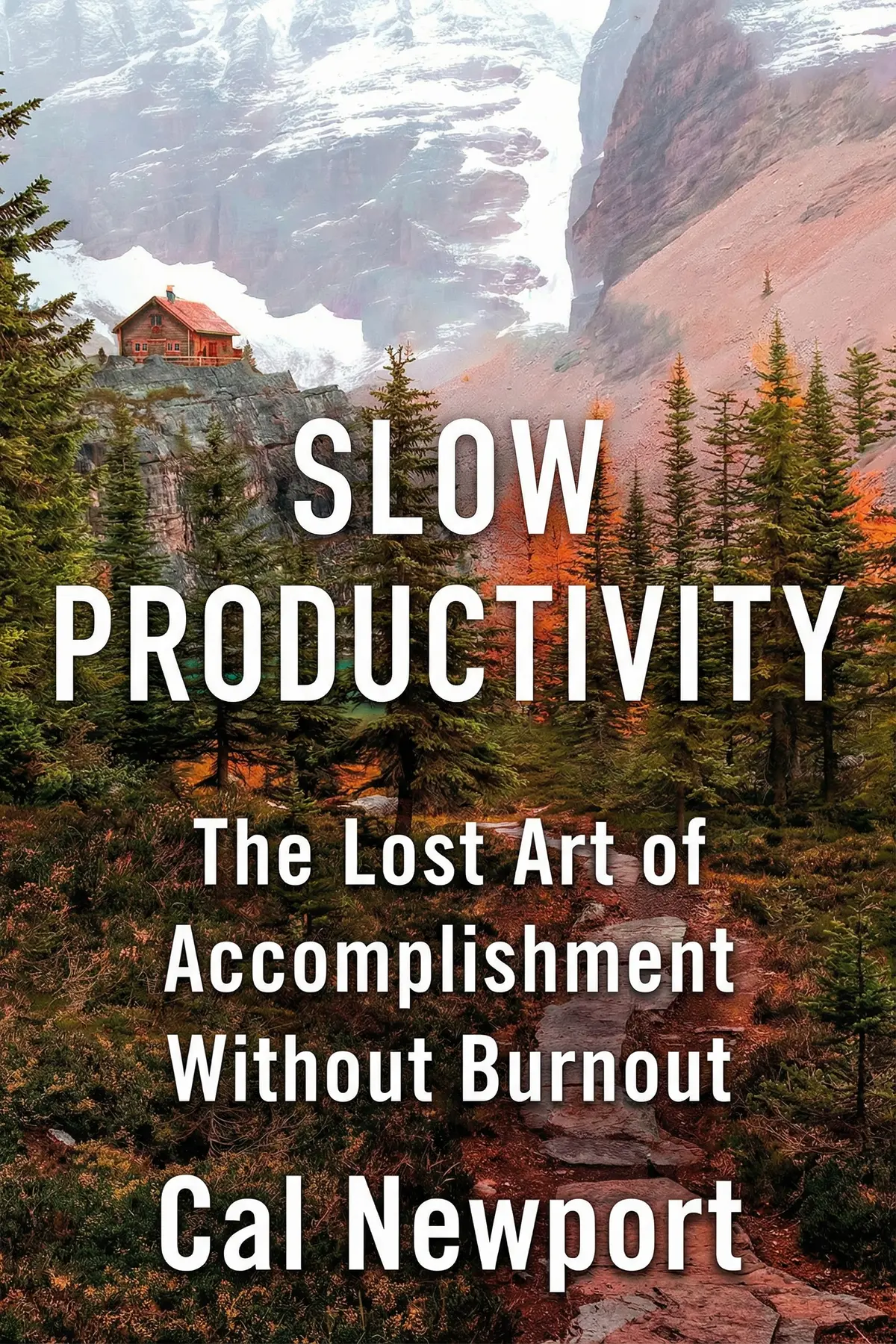
Cal Newport is an American author and a professor of computer science at Georgetown University. He writes about how digital technology shapes culture and how people can use it to support what they care about. He started the Study Hacks blog, has contributed to The New Yorker, The New York Times and Wired, and hosts a weekly podcast. His best-selling books include Deep Work, Digital Minimalism and Slow Productivity.
Ratings & Reviews
Ratings at a glance
What people think
Listeners find that this guide offers transparent directions for earning top marks in university while spending less time studying, including functional tips that assist in ending procrastination. Furthermore, the prose is accessible and engaging, with one listener highlighting that it is crafted specifically for students entering full-time college for the first time. Additionally, listeners value the direct methodology, techniques for managing time, and the overall return on investment.
Top reviews
Matteo
This book is a total game-changer for anyone entering college who feels overwhelmed by the sudden lack of structure. Newport breaks down the elusive "secret" of high achievers into manageable, bite-sized strategies that actually make sense. I particularly loved the section on "declaring war" on procrastination because it treats the issue as a tactical battle rather than a character flaw. While some of the advice about using a laptop for notes feels a bit dated in the era of constant digital distractions, the core logic remains solid. It’s not just about getting better grades, but about reclaiming your free time so you can actually have a social life without the constant guilt of unfinished assignments hanging over your head. If you follow the schedule-making tips, you'll find yourself finishing work by early evening while your peers are pulling all-nighters. It is straightforward, practical, and incredibly encouraging for students who want to excel without burning out.
Show moreAlice
As a parent, I’m always skeptical of "self-help" books for teens, but the proof is in the pudding with this one. I bought this for my son before his freshman year, and he actually sat down and read the whole thing during his summer break. He’s now halfway through his junior year with a GPA I could only dream of, and more importantly, he’s not a stressed-out wreck. He specifically mentioned that the "Quiz-and-Recall" method changed how he prepares for exams, moving him away from mindless re-reading to actual active learning. It’s written in a way that speaks to students without being condescending or overly "parental" in tone. Even though some of the tech advice is old, the strategy of treating school like a 9-to-5 job is timeless. It’s probably the most practical gift I’ve ever given him for his education.
Show moreValentina
Gotta say, the "Quiz-and-Recall" method is the single most effective study technique I’ve ever used. For years, I was just highlighting my textbooks and wondering why I couldn't remember anything during the actual test. This book explained why that doesn't work and gave me a better alternative that actually saves time. The advice on how to write a 10-page paper without the usual "writer's block" drama was also worth the price of the book alone. It breaks the process down into such small steps that it’s almost impossible to fail. Sure, it was written a while ago, but the psychology of how we learn and how we waste time hasn't changed that much. I’d recommend this to anyone who wants to stop being a "harried" student and start actually enjoying their college experience while maintaining a 4.0.
Show moreSkylar
Ever wonder why some people seem to ace every exam while barely spending any time in the library? This guide attempts to deconstruct those habits, and for the most part, it succeeds brilliantly. The Q/E/C (Question, Evidence, Conclusion) method for note-taking was a revelation for my humanities courses, though I'll admit it's harder to apply to my calculus homework. Newport’s writing style is refreshingly direct; he doesn’t waste time with academic jargon or fluff, preferring instead to give you the "cheat sheet" version of productivity. Some critics might say the advice is common sense, but common sense is surprisingly hard to implement when you're staring at a fifteen-page syllabus. To be fair, some of the specific technology recommendations haven't aged perfectly since the mid-2000s, but the mindset shift is what matters. It's a great investment for a first-year student looking to build a foundation.
Show moreRatchanee
Wow, I wish I had discovered these techniques during my first semester instead of my last. The book focuses heavily on efficiency—doing the maximum amount of high-quality work in the minimum amount of time. I appreciated the specific "Academic Disaster Insurance" section, which provides a safety net for those moments when you feel completely lost in a course. The tone is very "no-nonsense," which I found motivating, though the formatting can feel a bit cluttered with all the sidebars and case studies. Look, you probably won't use every single tip, and some of the laptop-usage advice is definitely controversial given how much we know about digital distraction now. However, if you even adopt 20% of what Newport suggests, you'll be more organized than 90% of your classmates. It’s a solid 4-star read for any student who feels like they’re drowning.
Show moreMikael
After hearing so many people rave about Cal Newport's later work, I decided to go back to where it started. This book provides a very clear roadmap for navigating the transition to university-level academics. The "Cheat Sheet" summaries at the end of each part are incredibly useful for quick reference when you're actually in the middle of a busy week. One minor criticism: I think the book underestimates how much the "digital world" has changed since it was written. Advising students to bring laptops to every class might have been revolutionary in 2007, but now it’s often a recipe for distraction. Still, the logic of "low-intensity" versus "high-intensity" studying is a concept that every student needs to understand. It transformed the way I look at my calendar and helped me stop feeling guilty about taking nights off.
Show moreWeera
Finally got around to reading this, and I’m struck by how simple yet effective the writing style is. Newport doesn't try to sound like a genius; he just presents the habits of successful people in a way that feels achievable for the rest of us. The focus on "Marshal Your Resources" was particularly helpful for me, as I usually just dive into studying without a plan. Having a structured way to organize material before an exam definitely lowered my stress levels this past month. My only real gripe is that the book contains a fair amount of "fluff" in the form of student testimonials that don't always add much value. You can skim those parts and still get the benefit. It's a great value for the money, especially if you're a first-time college student who wants to score high with less stress.
Show morePacharapol
Picked this up after loving Deep Work, but I have to say, it’s clearly an earlier, less polished version of Newport’s philosophy. The book is packed with anecdotes from "real straight-A students" that start to feel repetitive after the first fifty pages. While the time management strategies are helpful, they feel somewhat out of touch with the reality of 2024, where our distractions aren't just "renting a movie" but a constant stream of notifications. Frankly, the advice to skip certain readings felt a bit risky for my particular major, where every detail seems to end up on the midterm. I also found the section on essay writing to be a bit too formulaic for upper-level university work. It’s a decent starting point if you have zero organizational skills, but if you’ve already been through a few semesters of rigorous study, you might find much of this to be stuff you've already figured out the hard way.
Show moreMattanee
The chapter on technical courses felt like a bit of an afterthought compared to the extensive sections on writing papers. As an engineering student, I was hoping for more specific insights into problem-set heavy workloads, but Newport seems much more at home discussing history or philosophy. Don’t get me wrong, the "Study Basics" section on time management is universally applicable and quite helpful for avoiding the procrastination trap. But once the book moves into specific exam prep, the advice feels a bit lopsided toward liberal arts majors. I also found myself rolling my eyes at the suggestion that creating flashcards is a "mindless" activity; in my experience, if you aren't thinking hard while making them, they won't help you on the exam. It’s a helpful book if you’re a humanities student, but STEM majors might find better specialized resources elsewhere.
Show moreMai
Not what I expected given the author's current reputation for "Digital Minimalism." In this book, he actually encourages laptop use in class, which I found to be terrible advice for my own focus. I've found that taking notes by hand forces me to process the information much better than just transcribing the professor's words on a screen. Additionally, the book’s attitude that studying is just a hurdle to get over so you can go party feels a bit cynical. I’m at university because I actually want to master my field, not just find the fastest way to get an A and forget everything. That said, the procrastination-busting tips are genuinely useful, and the layout makes it easy to digest in a single afternoon. It’s okay, but it lacks the depth and nuance of his later books like Deep Work.
Show moreQuestions about this book
What is the main idea of How to Become a Straight-A Student?
Cal Newport argues that good grades depend on the intensity and efficiency of studying, not the number of hours. He frames it as an equation: work accomplished equals time spent multiplied by focus. Three intense hours can match ten distracted ones. Drawing on the methods of straight-A students, he shows how to manage time, fight procrastination, take notes, sit exams and write papers so that students score higher while studying less.
How long should a study session be according to Cal Newport?
Newport recommends short, intense bursts rather than long marathons. He points to studies suggesting that the best learning period is roughly 50 minutes, so a session should last no more than an hour before a break. Long stretches, such as all-nighters, lead to pseudo-working, where concentration fades and the hours feel productive without being so. Breaks at least once an hour, plenty of water and regular meals keep energy up.
How does Newport suggest beating procrastination?
He recommends a work progress journal. Each morning, list the day’s important tasks, from exams to errands. Each evening, record what you finished and write down the reason for anything left undone. Seeing the same weak excuse appear night after night makes it hard to keep believing it, and Newport argues the urge to procrastinate weakens as a result.
What is the best way to take an exam according to the book?
Newport describes three steps: planning, proceeding and proofreading. First skim the whole exam, then keep ten minutes as a safety buffer and divide the remaining time evenly among the questions. Answer the easiest questions first and work up in difficulty. Finally, use the buffer and any spare time to check every answer, staying until the last minute, since he sees proofreading as what separates average students from top ones.
How do you know when to stop researching a paper?
Newport gives a clear rule to avoid what he calls research recursion syndrome, the endless search for one more source. Break your thesis into chunks and research each one. Stop once every topic central to the thesis has at least two good sources and every helpful but optional topic has at least one. After that, any extra reading is wasted effort, however tempting it feels.
Featured in
Readers also enjoyed



AUDIO SUMMARY AVAILABLE
Listen to How to Become a Straight-A Student in 15 minutes
Get the key ideas from How to Become a Straight-A Student by Cal Newport, plus 5,000+ more nonfiction titles.
- 5,000+ titles
- Listen as much as you want
- 7-day free trial
- Cancel anytime









