
14 min 19 sec
Available in: English
 ไทย
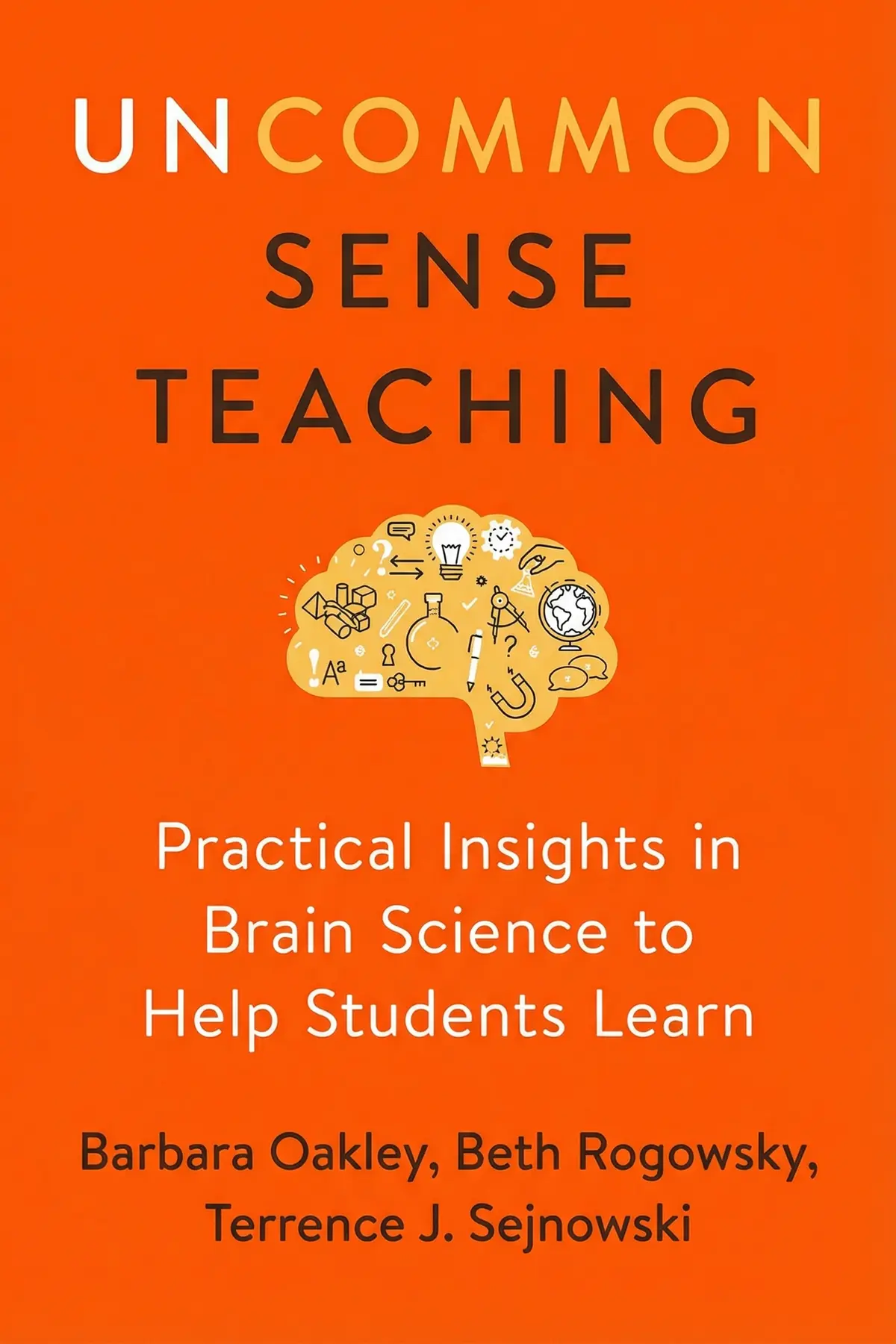
EnglishไทยA Mind for Numbers: How to Excel at Math and Science (Even if You Flunked Algebra)
Shows how anyone, including people who struggled with numbers at school, can learn math and science by alternating focus with rest, recalling instead of rereading, testing themselves and getting past procrastination with small, practical tricks.
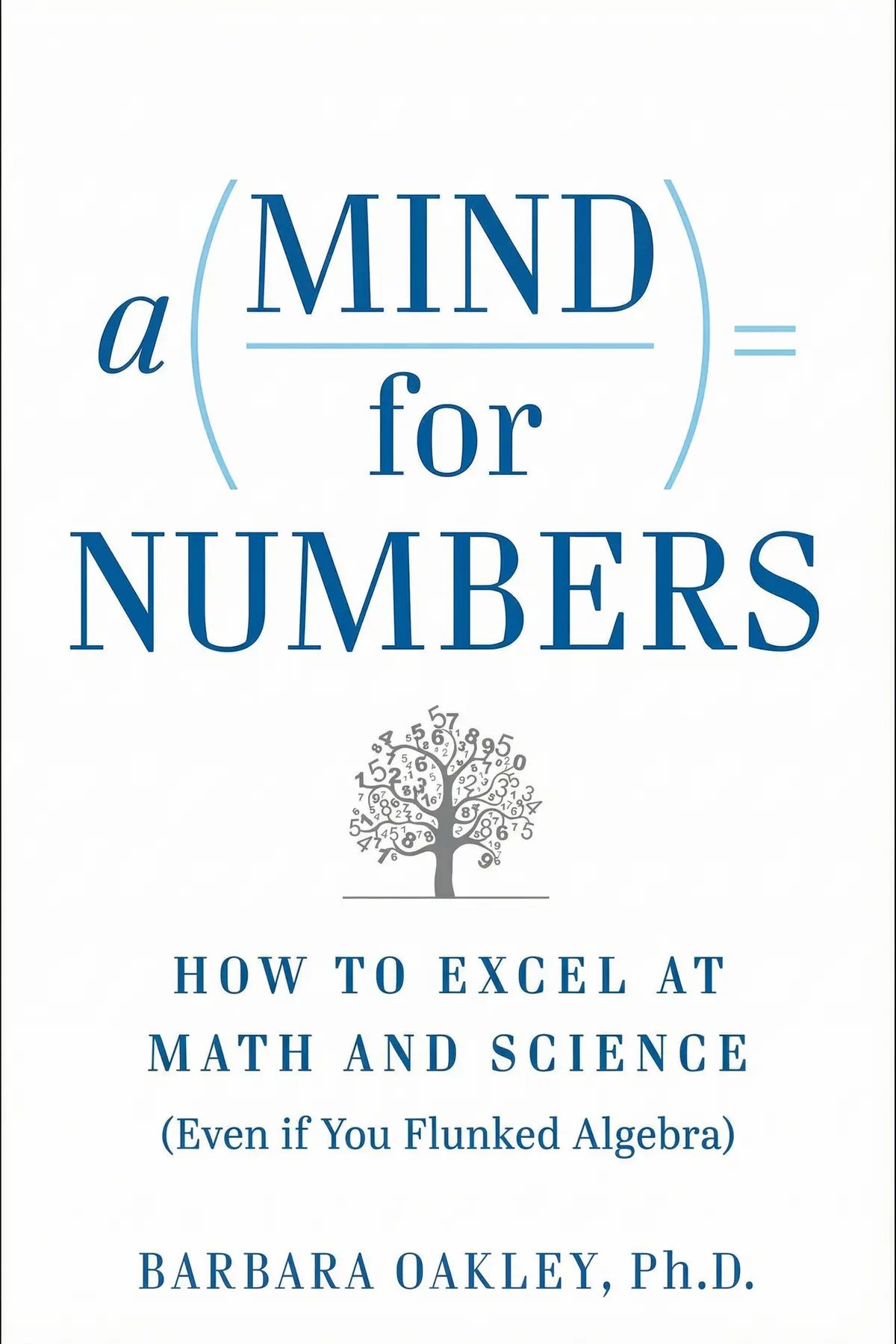
Table of Content
1. Introduction
57 sec
If math and science make you feel slow, Barbara Oakley opens with good news: your brain keeps working on hard problems while you are not trying. In A Mind for Numbers, the engineering professor explains that the mind has two modes, a tight focus and a relaxed wandering, and that real learning needs both. Oakley disliked and sometimes failed these subjects in school. She joined the army after high school and studied Russian, and only later found that the career she wanted demanded the very skills she had avoided.
Her case is that anyone can master difficult technical material by alternating short bursts of focus with real rest, and by regularly pulling knowledge back out of memory. She adds practical tricks for procrastination, slippery formulas and exam nerves. By the end, a page of equations should look like a pile of bricks you can lay one short session at a time.
2. Switch your mind between two settings on purpose
1 min 23 sec
A sentence with three errors hides one that careful reading will never catch. The way you spot it reveals a second kind of thinking that most students switch off exactly when they need it most.
3. Let rest and sleep finish the hard thinking
1 min 31 sec
Hours of grinding at a stuck problem often get you nowhere. Weightlifters already know why, and the explanation points to the most underused study tool you have, one that happens every single night.
4. Turn scattered facts into chunks you can recall
1 min 36 sec
The most popular way to study feels productive and leaves little behind. Three letters forming a tiny word show how experts actually store what they know, and how you can start building that store yourself.
5. Test yourself to remember more and panic less
1 min 28 sec
In a 2009 experiment, people quizzed during a slideshow beat those who simply watched it. The more surprising finding concerns what happens when your answers on those quizzes are wrong.
6. Beat procrastination by committing to twenty minutes
1 min 28 sec
Cramming fails for the same reason nobody can train for a marathon in one night. A small change in what you promise yourself makes the dreaded problem set far easier to begin.
7. Set up a place and plan that make starting easy
1 min 29 sec
The highest performers may not have more discipline than anyone else. A study spot, a simple countdown and a planned hour of fun can do the work that willpower so often fails to do.
8. Make formulas stick with odd pictures and metaphors
1 min 39 sec
A flying mule and a box of crackers can hold a physics law or a list of plants in memory. The trick is turning dry symbols into something that actually means something to you.
9. Steady practice can beat natural brilliance
1 min 39 sec
A big working memory sounds like a pure advantage in any classroom. It can also trip up gifted students, and it helps explain why slower learners sometimes end up the more creative ones.
10. Conclusion
1 min 09 sec
Oakley’s own path is the best argument for her methods. A student who disliked and sometimes failed math and science ended up teaching engineering. Her approach treats learning like training a body, with effort, rest and repetition in the right rhythm. The flashlight needs both beams, the bricks need time to dry, and the muscle grows between sessions.
What follows for anyone facing hard material is concrete. Study in short, focused stretches, and when you get stuck, walk away or sleep on it so the wandering mind can take its turn. Swap rereading for recall: close the book, explain the idea, try the problem cold, and quiz yourself even when you expect mistakes. When you cannot face the work, commit to twenty minutes and leave the finished product out of your thoughts. And when exam nerves arrive, call them excitement and breathe slowly.
None of this requires a gift. It asks for many small sessions, and trust in the rest between them.
About this book
What is this book about?
Plenty of capable adults still freeze at the sight of an equation, convinced they simply lack a head for numbers. Barbara Oakley was one of them. She disliked and sometimes failed math and science at school, then discovered that the career she wanted required both. Now an engineering professor, she argues that practice and persistence often matter more than intelligence. Her approach rests on how the brain learns. It moves between a focused mode for careful work and a diffuse mode that finds the big picture while you rest, and sleep clears the brain and helps lock in what you studied. Knowledge settles into chunks through recall and self-testing, and a 2009 study by Julie Campbell and Richard Meyer found that quizzes during a lesson improved later exam results. The book turns that science into tools: twenty-minute sessions aimed at process to defeat procrastination, a dedicated place to work, short to-do lists and planned play, absurd images and metaphors for formulas, and simple ways to turn exam nerves into energy. Oakley also argues that steady practice and persistence can carry an average learner as far as a gifted one.
Book Information
Who it's for
Adults now needing math
Adults who avoided math at school and now need it for a new career or degree.
Science and engineering students
Students in science or engineering courses who cram, reread and still forget.
Professionals learning technical skills
Professionals learning technical skills who procrastinate or freeze under test pressure.
About the Author
Barbara Oakley
Barbara Oakley is an engineering professor at Oakland University and McMaster University, and her online courses on learning are among the most popular MOOCs, or massive open online courses, in the world. A Mind for Numbers accompanies her course Learning How To Learn. Her route into engineering was unusual: she joined the US Army after high school, studied Russian and became a captain, translated Russian aboard Soviet fishing trawlers in the Bering Sea, and worked one season as the radio operator at the South Pole Station. Her Ph.D., in Systems Engineering, came in 1998. Her opinion writing has appeared in The New York Times and The Wall Street Journal.
Ratings & Reviews
Ratings at a glance
What people think
Listeners consider this work exceptionally educational and clear, authored by an engineering professor who provides thoroughly described methods that simplify complex learning. Furthermore, it functions as an excellent supplement to existing study skills training, assisting audiences in reaching their objectives and radically transforming their approach to education. Listeners also value how accessible the material is, with one listener describing it as a casual read that successfully broadens perspectives on various ideas.
Top reviews
Sayan
As a lifelong humanities student who always viewed calculus with a sense of dread, this book was a complete revelation. Dr. Oakley, an engineering professor who once struggled with math herself, writes with an accessible and encouraging voice that immediately lowers your defenses. The core concept of toggling between focused and diffuse modes of thinking explained why I often had my best breakthroughs while walking the dog rather than staring at my notes. Personally, I found the breakdown of 'chunking' information to be the most practical takeaway for my own study habits. This isn't just about numbers; it's a blueprint for opening your mind to subjects you previously thought were out of reach. It's a casual read but contains deeply impactful strategies that have completely changed how I approach difficult material.
Show moreManop
Dr. Oakley has a gift for taking dense neuroscientific concepts and translating them into actionable habits that any student can implement immediately. I’ve read plenty of productivity books, but the way she frames the 'Einstellung effect'—the idea that your initial perspective can actually block a better solution—really resonated with me. This book helped me realize I was trying too hard in a way that was actually counterproductive. The chapters are tiny and digestible, which is perfect for someone who is already feeling overwhelmed by their coursework. Frankly, the advice on test-taking alone is worth the price of the book. It’s incredibly informative and well-written, acting as the perfect complement to any hard science course. My study sessions are much more efficient now that I’ve stopped cramming and started using the diffuse mode correctly.
Show moreThida
Wow, I wish I had this back in high school when I was convinced I just wasn't a 'math person.' Oakley pitches this perfectly at anxious learners, treating mental blocks as normal problems with normal solutions rather than personal failings. I love that she accounts for human variance; she explicitly states that learning slowly can actually lead to deeper understanding than your fast-thinking peers. That one insight alone dissolved half of my academic anxiety! The book is filled with great metaphors, like comparing focused mode to bricks and diffuse mode to mortar. It’s an easy-to-read, humanistic approach to a subject that is usually presented as cold and rigid. If you struggle with procrastination or a lack of confidence in STEM, this will completely change your perspective on what you're capable of.
Show moreAlice
Look, the science here might be simplified for a general audience, but the pedagogical value of toggling between focused and diffuse thinking is undeniable. As an engineering professor, Oakley knows exactly where students trip up—usually it's in the persistence and the belief that they should 'just get it' instantly. The central theme of the paradoxical nature of learning—that focusing too hard can actually prevent you from solving a problem—is something every educator should teach. This book is exceptionally good at showing you your own flaws in a way that feels helpful rather than judgmental. It’s informative, it’s practical, and it makes the daunting task of sculpting your brain feel entirely under your control. Highest recommendations for anyone looking to go back to school or pick up a difficult new hobby.
Show moreChanpen
After hearing so much hype on social media, I was surprised by how conversational and readable the prose actually was. It’s not a dry textbook at all; it’s more like a friendly mentor guiding you through the messy process of learning. The tips on how to prepare for tests and why study groups can sometimes be a waste of time were particularly eye-opening for me. I’ve started using the recall method at the end of every chapter I read, and my retention has skyrocketed compared to my old habit of just rereading the text. It’s a fantastic resource for anyone who wants to work knowledgeably with their brain's natural default settings. Truly, this book makes the most difficult subjects feel manageable and even a little bit fun. It's a must-read for students of all ages.
Show moreNathan
Finally got around to reading this after finishing the Coursera 'Learning How to Learn' course, and it serves as a solid companion piece for overhauling your brain’s workflow. The techniques are carefully explained, particularly the use of recall over the passive rereading or highlighting that most students default to. I’ll admit, the constant 'success story' testimonials in the sidebars give the book a slightly kitschy, infomercial feel that I didn't love. It can feel a bit unscientific to only sample the success stories while ignoring the failures. However, the actual advice regarding the Pomodoro technique and spaced repetition is rock solid. It’s a well-written guide that makes complex cognitive processes easy to understand for the average student. Definitely worth it if you need to build better academic discipline.
Show moreHunter
Not what I expected, but in a good way. While the title suggests it's specifically for STEM, I suspect the math and science focus is largely a marketing ploy because these tools work for any subject. The truth is, I’m actually passing some of these 'chunking' tricks on to my friends who are learning new languages. I loved the mental exercises at the start, though I do think the book gets a little bit draggy in the middle chapters on procrastination. Still, Oakley makes math feel less like a monster and more like poetry. It’s a very casual, readable book that doesn’t take itself too seriously while still providing plenty of 'aha' moments. It has definitely helped me feel more mindful about my behavior when I sit down to work.
Show moreWararat
Picked this up during a productivity kick and, while some of it felt like reminders of things I already knew, the specific framework for 'memory palaces' was brilliant. I’d heard of the technique before, but the way she explains using it for abstract concepts in science was a total game-changer for me. Gotta say, the book is a bit repetitive, but she probably does that intentionally to help the reader internalize the ideas. It's a great tool for anyone who doesn't have a solid relationship with long-term learning. While it falls into the classic self-help trap of using too many anecdotes, the core advice is genuinely solid. It serves to prime you for the work you need to do, making it much easier to actually execute your study plan without the usual frustration.
Show moreAurora
The title is a bit of a marketing gimmick because the advice applies to learning almost anything, from history to macrame. If you’re looking for a book that actually talks specifically about mathematical truths or the 'love' of numbers, you’d be better off with Lockhart’s 'A Mathematician’s Lament.' Oakley focuses more on how to 'get by' or 'get an A' rather than the beauty of the field itself. It’s 90% general study skills with some lackluster tie-ins to science. Look, the advice on avoiding highlighting and using flash cards instead is common sense, but I guess it’s useful if you’ve never thought about it before. It’s an okay introductory book, but it lacks the inspiration I was hoping for. It feels more like a manual for passing exams than a guide for loving math.
Show moreJirapat
Is it just me, or is this basically a collection of generic study center brochures expanded into nearly 300 pages of fluff? I found the book to be shockingly repetitive, especially the section where she spends about thirty pages just telling you that you need to sleep and relax to learn better. We know. It’s a thousand-year-old piece of advice, yet she repeats it as if it’s a groundbreaking neuroscientific discovery. To be fair, her personal story about transitioning from a linguist to an engineer is mildly interesting, but the actual 'math' tips are just standard productivity hacks you can find anywhere else for free. It feels like a lot of dancing around the fact that math just takes hard work. If you're looking for deep mathematical insight, skip this and find something less bloated.
Show moreQuestions about this book
What is the main idea of A Mind for Numbers?
Barbara Oakley argues that anyone can learn math and science with the right methods, even after failing at school. The brain needs both focused work and relaxed, wandering thought, plus rest and sleep. Knowledge is built into chunks through recall and self-testing, not rereading. Add simple tricks against procrastination and creative memory aids, and steady practice can take an average learner as far as a gifted one.
What are focused and diffuse thinking in A Mind for Numbers?
Oakley compares the brain to a flashlight with two settings. Focused mode is the tight beam, used for careful, analytical work on familiar material, like multiplying numbers. Diffuse mode is the wide beam that switches on when attention relaxes and gives you the big picture and fresh insight. You are never consciously in both at once, so learning depends on moving back and forth between them.
How does Barbara Oakley suggest beating procrastination?
She advises focusing on the process, a set stretch of time such as 20 minutes of study, instead of the product, such as a finished assignment. Big outcomes can feel so daunting that we avoid them. Oakley also recommends a dedicated place to work, mindfulness practice, reframing negative thoughts, short weekly or daily to-do lists, a planner journal and scheduling play as carefully as work.
Why does Oakley say testing yourself helps you learn?
Recalling information strengthens it, a result known as the testing effect. In a 2009 study by Julie Campbell and Richard Meyer, people who answered quiz questions during a PowerPoint presentation did better on a final exam than those who only watched. Oakley notes the benefit appears even when practice answers are wrong or no feedback is given, so frequent self-quizzing pays off.
Who should read A Mind for Numbers?
It suits anyone who finds math or science intimidating: students facing technical courses, adults returning to study, and career changers who suddenly need numbers for their work. Oakley wrote from experience, having struggled with these subjects herself before becoming an engineering professor, and her advice ranges from napping on hard problems to remembering formulas with absurd images.
Featured in
Readers also enjoyed

AUDIO SUMMARY AVAILABLE
Listen to A Mind for Numbers in 15 minutes
Get the key ideas from A Mind for Numbers by Barbara Oakley, plus 5,000+ more nonfiction titles.
- 5,000+ titles
- Listen as much as you want
- 7-day free trial
- Cancel anytime









