

14 min 26 sec
Available in: English
 ไทย
EnglishไทยDigital Minimalism: Choosing a Focused Life in a Noisy World
By Cal Newport
Shows why tweaking phone settings fails against apps built to be addictive, and how a thirty-day declutter and a simple value test let you keep only the technology that serves what you care about.
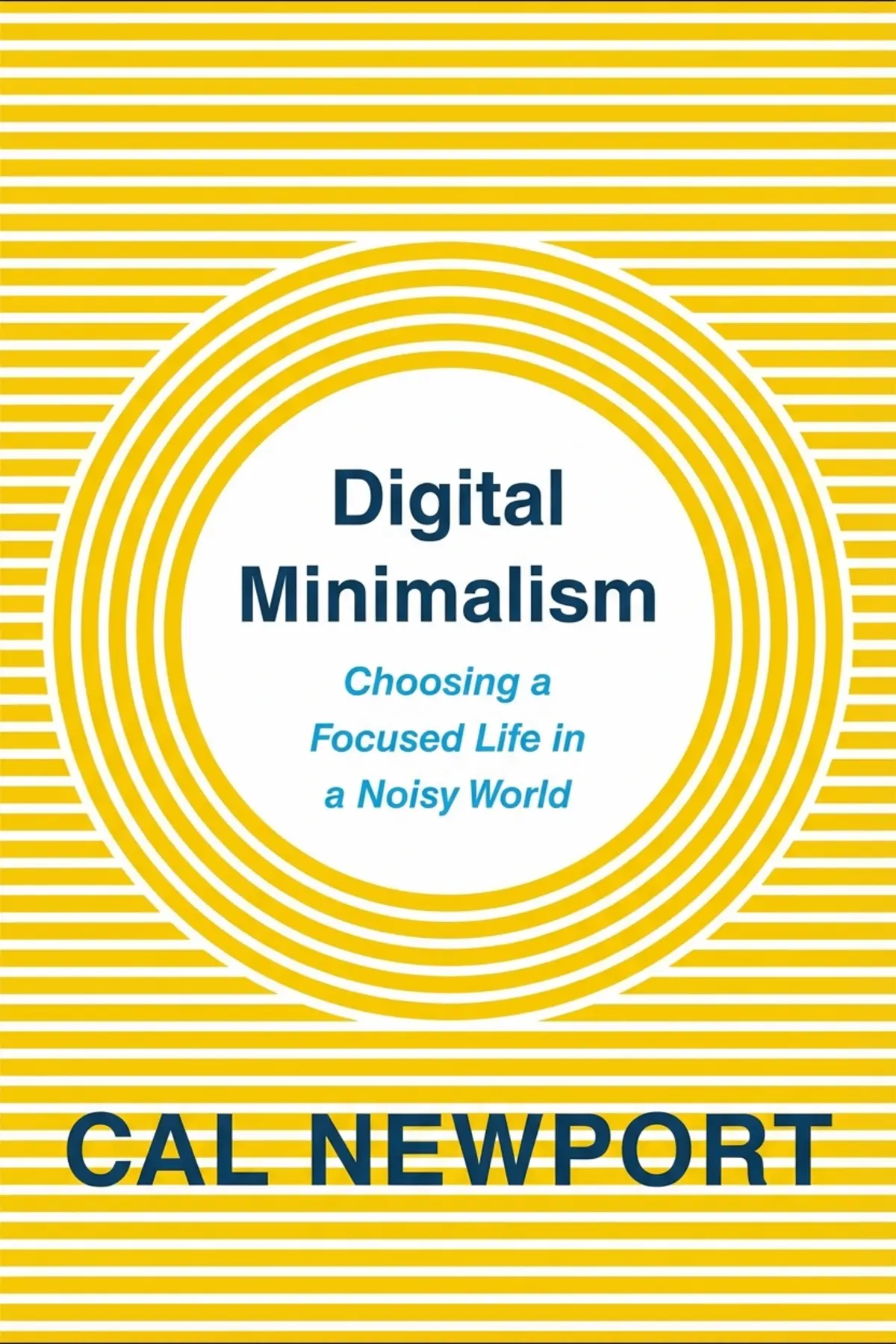
Table of Content
1. Introduction
1 min 00 sec
That reflex to check your phone before you have even decided to is no accident: engineers designed products to produce it. In Digital Minimalism, Georgetown computer science professor Cal Newport argues that switching off a few notifications cannot win against that design. What works is a clear philosophy, which he tested with 1,600 volunteers who stepped away from optional technology for a month.
His case runs like this. Treat every app and service as a cost that must earn its place by serving something you value, clear the clutter, let back only what passes, and fill the reclaimed hours with what screens cannot give: solitude, real conversation and leisure that takes effort. Thoreau, Aristotle and the Amish all help make the argument. What you take from it is a plan for the next thirty days and a test to apply to every new tool after that.
2. See how your phone was built to hook you
1 min 40 sec
When the first iPhone launched, even its creator saw no future for apps. Within a few years, a music player with a phone attached had become something many people cannot put down, and that was no accident.
3. Count the full cost of every app you keep
1 min 55 sec
One writer proudly switched off notifications on more than a hundred apps and missed the real issue. A nineteenth-century thinker, a car factory and an Amish community offer a sharper way to judge every tool you own.
4. Clear out for thirty days, then choose deliberately
1 min 55 sec
A month away from optional technology sounds like a detox, but Newport insists it is something else entirely. What happens when the month ends matters even more, and one volunteer’s year afterward shows why.
5. Give your mind time alone again
1 min 43 sec
A generation raised on smartphones shows striking rises in anxiety and depression. The remedy Newport proposes costs nothing, works on a crowded train and was a favorite of several famous philosophers.
6. Trade likes for real conversations and feel less alone
1 min 35 sec
Constant connection should make people feel less alone, yet the evidence points the other way. A Silicon Valley executive found a simple habit that turns endless text threads into conversations that actually satisfy.
7. Weekends that leave you with more energy
1 min 39 sec
An evening of scrolling rarely leaves anyone rested. An ancient philosopher, a British writer and the author of a book called Craftsman help explain why some free time is more rewarding than other free time and can even leave you feeling energized.
8. Step outside the attention economy and keep your focus
1 min 50 sec
Attention has become a commodity worth more than oil, and the companies trading it play to win. A growing group of people is fighting back with tools as plain as an old phone.
9. Conclusion
1 min 09 sec
Digital Minimalism is finally a book about ownership. Your attention is among the most valuable things you have, and Newport argues it has been quietly claimed by companies that profit from keeping you looking, while the evidence ties heavy use to loneliness and anxiety. Settings menus cannot reverse a pull built by design. A philosophy can, because it flips the default: nothing gets your time unless it serves something you care about, in the best way available, on your terms.
The path starts with a month away from optional technology, spent discovering what you would rather do. After it, let each tool return only if it survives Newport’s three questions, and begin with your phone by sending social apps to the browser. Then hand the recovered hours to things that ask something of you: a walk with nothing in your ears, a set time when friends know they can call, a hobby with a deadline and real materials in your hands.
A year after closing his accounts, Tyler could see no reason to go back. That is the test worth running on your own life.
About this book
What is this book about?
Most people never decided to spend hours a day on their phones. The habit crept up on them, helped along by engineers who studied what keeps users coming back. Cal Newport, a computer science professor, argues that switching off notifications or trimming screen time cannot match that design. What works is a clear philosophy of technology use. He calls it digital minimalism. Every app and service is treated as a cost in time and attention, allowed into your life only if it supports something you deeply value better than the alternatives. Newport tested the approach with 1,600 volunteers, who took a thirty-day break from optional technology and then went through a careful reintroduction period, screening tools against three simple questions. The book then shows what to do with the hours that come back: protect solitude, swap likes and texts for calls and visits, and choose demanding, hands-on hobbies while scheduling the mindless kind. It closes with tactics from a wider movement pushing back against the attention economy, from basic phones to blocking software. Readers get a plan for the next month and a test for every tool after it.
Book Information
Who it's for
Professionals wanting focus back
Professionals who reach for their phone between every task and want their focus back.
Lonely despite being online
People who feel lonely despite being online all day and want deeper friendships.
Raised on smartphones
Students and young workers who grew up with smartphones and want hobbies and habits screens cannot replace.
About the Author
Cal Newport
Cal Newport is an American author and computer science professor at Georgetown University. His work examines the way digital technology shapes culture and how people can make these tools serve what matters to them. He started the Study Hacks blog, has written for The New Yorker, Wired and The New York Times, and hosts a weekly podcast. He is a New York Times best-selling author. Among his books are Deep Work, Slow Productivity and Digital Minimalism.
Ratings & Reviews
Ratings at a glance
What people think
Listeners find this work to be essential reading that provides deep perspective through its research and actionable advice. The writing is intelligent and captivating, and listeners value the stimulating material that promotes purposeful habits and authentic social bonds. They describe it as transformative, assisting in the restoration of quality of life, and express admiration for its carefully developed concepts.
Top reviews
Maja
Wow. This was exactly the wake-up call I needed to stop the endless scrolling. Newport provides a compelling argument for why our brains weren't built for the constant social validation of 'likes' and 'retweets.' It’s not just about deleting apps; it’s about a radical shift in how we value our limited attention. I found the concept of 'solitude deprivation' particularly haunting because I realized I haven't been alone with my thoughts in years. While the 30-day detox sounds intimidating, the practical suggestions for reclaiming leisure—like actually building things with your hands—felt incredibly grounded. This book helped me restore a level of focus I thought I’d lost forever in the digital noise. It’s smart, research-backed, and truly life-changing for anyone feeling burnt out by their phone.
Show moreDylan
After hearing several people rave about this on podcasts, I finally decided to give it a shot and I'm glad I did. The truth is, we are being manipulated by Silicon Valley designers who treat our attention like a slot machine. Newport doesn't just complain about technology; he offers a sophisticated framework for intentional living. I especially loved the section on 'reclaiming conversation' versus 'connection.' Sending a heart emoji isn't the same as a phone call, and this book reminded me why that distinction matters so much for our mental health. It’s a smart, engaging read that avoids being a Luddite manifesto while still challenging the status quo. If you feel like your phone has become an extra limb that you didn't ask for, buy this immediately. It provides the tools to build a genuine, focused life in an increasingly distracted world.
Show morePraepimon
Ever wonder why you feel so drained despite being 'connected' to everyone all the time? This book answers that question with brutal honesty and brilliant research. Cal Newport argues that we need a philosophy of technology use, not just a few tips and tricks, and I think he's absolutely right. The 30-day digital declutter he proposes is the most effective thing I've done for my mental health in a decade. I stopped mindlessly tapping icons and started actually engaging with my community and my hobbies again. It’s rare to find a book that offers both deep theoretical insight and a clear, step-by-step plan for action. This is a required read for the modern age, helping us move from being products of the attention economy to being intentional humans. My quality of life has improved drastically since finishing this.
Show moreNook
Finally got around to reading this and I'm genuinely impressed by the depth of research Newport provides. He goes way beyond the usual 'social media is bad' tropes to explain the neurology of addiction and the history of solitude. This isn't a book for Luddites; it's a book for people who want to use technology to serve their goals rather than the other way around. I loved the emphasis on demanding leisure activities over passive consumption. It’s much more satisfying to fix something in the house than it is to scroll through a feed for three hours. The book is well-structured and the advice is actually sustainable if you're willing to do the work. It really helped me reclaim my time and focus on what truly matters in my real, physical life. Highly recommended for every smartphone owner.
Show moreAdam
This book should be required reading for anyone born after 1990. We are living through a public health crisis of over-stimulation, and Newport is one of the few voices offering a real way out. His concept of 'digital minimalism' is about being a craftsman of your own life rather than a passive consumer of digital junk. I found the sections on the 'social-validation feedback loop' to be incredibly eye-opening regarding my own behavior. The strategy to turn your phone into a single-purpose tool is brilliant and has saved me hours of wasted time every single week. It’s a well-thought-out, smart, and engaging book that provides a clear path back to genuine human connection. If you want to take back control of your brain and your time, this is the manual you've been looking for.
Show moreTantipat
As someone who works in digital marketing, I found Newport's insights into the 'attention resistance' incredibly timely and necessary. He does a fantastic job of explaining the psychological hooks that keep us glued to our screens. Not gonna lie, some of the leisure suggestions felt a bit dated, but the underlying principle of 'high-quality leisure' is a game changer. I've already started implementing his 'conversation office hours' and it has significantly reduced my daily anxiety levels. The book is well-thought-out and provides a much-needed philosophical foundation for why we should care about our digital habits in the first place. I did feel that some chapters dragged on with unnecessary stories about rock-paper-scissors championships, but the core message remains powerful. It’s a smart, engaging guide for anyone looking to live more deliberately.
Show moreDiego
Picked this up during a particularly bad mental health slump where I felt trapped by my smartphone. Newport’s writing is very academic and precise, which I appreciated, even if it felt a bit dry in the middle sections. He makes a great case for why 'likes' are a cheap substitute for real human interaction. I did find the sections on 'handiness' a bit difficult to relate to as a renter with limited space, but the general idea of doing difficult things is solid. Personally, I think the advice on dumbing down your smartphone is the most practical part of the whole book. It’s a thought-provoking read that encourages you to question your relationship with every app you own. While some parts felt like fluff to fill the pages, the overall impact was very positive for me. I’m definitely living more intentionally now.
Show moreHana
Look, I appreciate the core philosophy here, but Newport definitely has some blind spots regarding his own privilege. The advice to just go out and learn welding or spend thousands on high-end hobby equipment felt totally out of touch for a regular person working a nine-to-five. Not everyone has the luxury to just take a long walk in the middle of a workday or leave their phone at home while raising kids. To be fair, his points about 'conversation office hours' and consolidating texts are actually useful and practical for a busy professional. However, the author’s tone can be quite smug, especially since he constantly reminds us he has never even used social media himself. It’s hard to take advice on digital addiction from someone who has never been in the trenches of a Twitter feed. It's a decent read with some okay tips, but it's bogged down by circular prose and elitist anecdotes.
Show moreSam
To be fair, the advice is solid, but the tone can feel a bit condescending at times. Newport is a computer scientist who has never had a social media account, which makes his 'solutions' feel a bit like a doctor telling a patient to 'just be healthy.' He doesn't seem to fully grasp the importance of digital spaces for marginalized groups or people with rare medical conditions who find their only community online. The chapter on Thoreau was a bit much, and the welding anecdote felt like it was plucked from a different century. However, I did get value out of the sections on scheduling low-quality leisure and the importance of single-purpose computers. It’s an okay book that could have been half the length. I'd recommend it for the practical tips, but be prepared to skim through the more pretentious philosophical tangents.
Show moreTippawan
The truth is, this whole book could have been a long-form essay or a simple Twitter thread. For a book about minimalism, Newport sure does waste a lot of time on pretentious musings and filler. I was particularly annoyed by his weird shilling for the Mouse Book Club, which felt like a total gimmick. Most of the 'groundbreaking' advice boils down to stuff we already know: go outside, read a book, and stop clicking 'like.' Frankly, the author comes off as incredibly out of touch when he uses Henry David Thoreau as his primary case study for modern digital habits. I struggled to finish this because the writing style is so repetitive and condescending toward anyone who actually finds value in online communities. If you want something practical, go read Atomic Habits instead; this is just a collection of anecdotes about wealthy people who have the time to build decks and take three-hour walks.
Show moreQuestions about this book
What is the main idea of Digital Minimalism by Cal Newport?
Newport argues that social media and smartphone apps are designed to be addictive, so small fixes like disabling notifications rarely last. He proposes digital minimalism instead: a philosophy in which every app and service must earn its place by supporting something you deeply value better than any alternative. You clear out optional technology for thirty days, reintroduce only what passes, and fill your free time with solitude, real conversation and demanding hobbies.
How does the thirty-day digital declutter work?
For a month, you stop using every technology you do not truly need for work and daily life, while working out what you value and enjoy offline. Newport stresses that it is not a detox, since you are not meant to return to old habits. Afterward, each tool comes back only if it supports a deep value, is the best way to serve that value, and can be used with clear limits.
What does Newport recommend doing instead of scrolling?
He suggests replacing screen time with richer activities. Protect solitude by sometimes leaving your phone at home and walking without earbuds. Trade likes and long text threads for calls and visits, for example by setting a regular hour when friends can phone you. Choose effortful, hands-on hobbies such as carpentry or learning songs on guitar, and give low-quality screen time fixed slots instead of quitting it overnight.
Who should read Digital Minimalism?
It suits anyone who checks their phone by reflex and feels worse for it: professionals whose focus is scattered, people who feel lonely despite being always online, and students or young workers who grew up with smartphones. Newport writes for readers who want a full rethink of their technology habits, backed by a month-long experiment with 1,600 volunteers, rather than a list of settings to change.
What is the quickest way to apply Digital Minimalism?
Newport’s most concrete advice is to delete social media apps from your phone. If you have a good reason to stay on a platform, use it only through a web browser. That extra step limits casual checking, and many people discover they never needed the service. Those who keep it tend to become efficient users who log in for a purpose and leave, freeing time for better activities.
Readers also enjoyed




A High-Performing Mind: Strengthen Your Mind and Live Your Best Life
Andrew D. Thompson




Abundance: The Inner Path to Wealth
Deepak Chopra


AUDIO SUMMARY AVAILABLE
Listen to Digital Minimalism in 15 minutes
Get the key ideas from Digital Minimalism by Cal Newport, plus 5,000+ more nonfiction titles.
- 5,000+ titles
- Listen as much as you want
- 7-day free trial
- Cancel anytime









