

11 min 04 sec
Available in: English
 ไทย
EnglishไทยDeep Work: Rules for Focused Success in a Distracted World
By Cal Newport
Shows why switching between tasks and staying always connected leave your best work half done, and how planned focus blocks, simple rituals, mental training and scheduled evenings let you concentrate on one thing at a time.
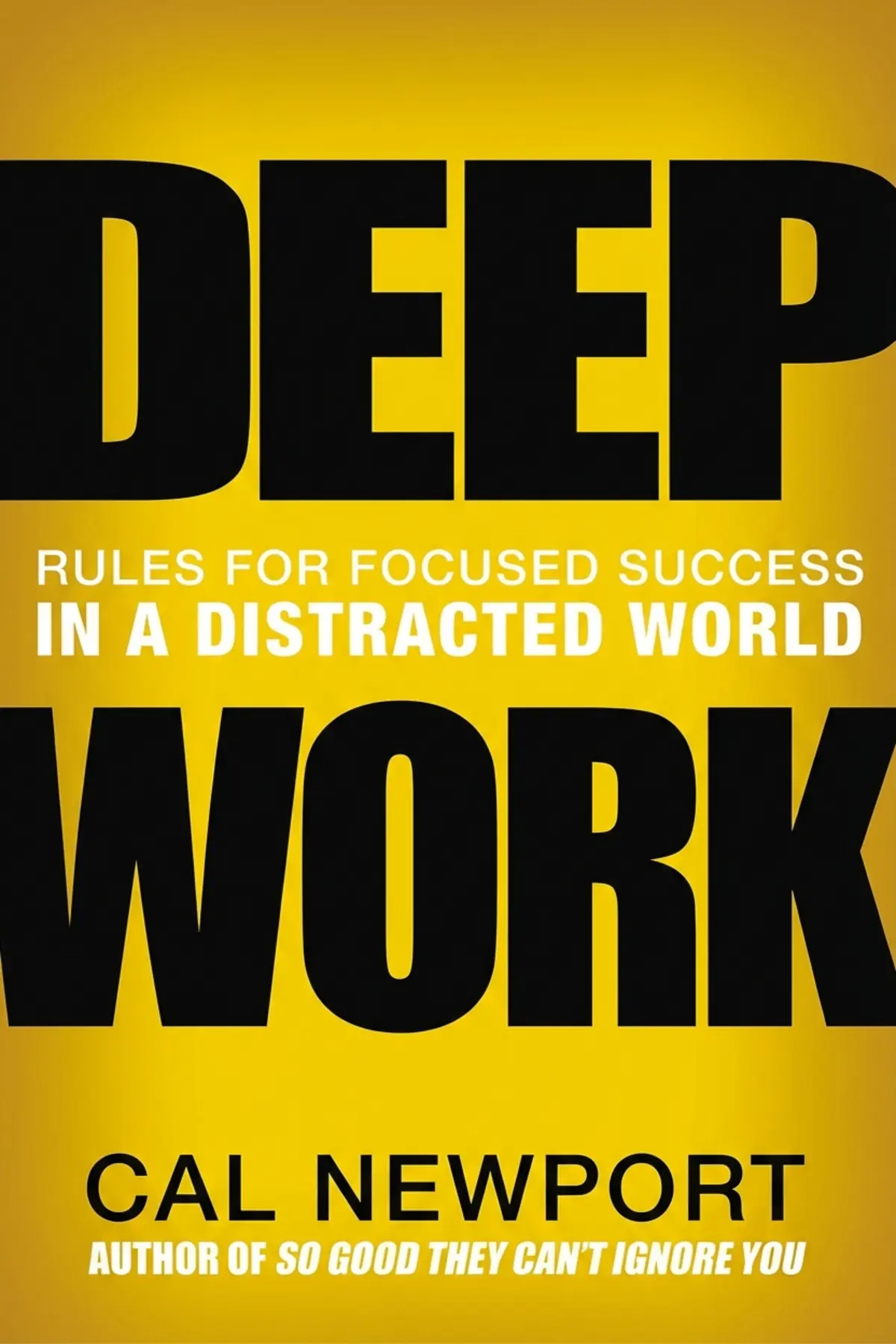
Table of Content
1. Introduction
1 min 04 sec
If your days fill up with messages and still end without real progress, the problem may be the switching itself. In Deep Work, computer science professor Cal Newport argues that every jump between tasks leaves part of your mind behind, so the next task gets only half of you. His answer is deep work: long stretches of focus on one task, with nothing pulling at your attention.
Newport treats that kind of focus as something you design, not something you wait for. Attention drains away through constant switching and connection, and it returns when you protect single-task time, train your mind to hold one problem, and plan your rest as carefully as your work.
Along the way you will meet a hiring experiment, a famous novelist in a hotel room and a 30-day test for social media. What you get is a set of choices: which focus pattern fits your life, which rituals start it, and how to finish the day with energy to spare.
2. Finish one task before starting the next
1 min 28 sec
Two groups solved the same word puzzles and then made the same hiring decisions. One small difference in how they moved between the tasks changed how well they judged the candidates.
3. Spot the busywork that only feels like progress
1 min 25 sec
Workers say they have never been busier, and the numbers seem to agree. Yet most of that busy week goes somewhere surprising, and the feeling of getting things done may be part of the trap.
4. Choose a focus pattern that fits your life
1 min 32 sec
Not everyone can disappear for a month to think. Newport describes four very different ways to make room for focused work, and the right one depends on how much control you have over your days.
5. Build rituals that switch your focus on
1 min 28 sec
Being in the zone feels wonderful, but it tends to arrive by accident and often late. Newport separates that lucky state from something you can start on purpose, with help from an unusual hotel booking.
6. Train your attention on walks and commutes
1 min 39 sec
Our brains were shaped to notice every flicker, which made sense for our ancestors and causes trouble at a desk. Newport offers a way to use the shower and the commute to rebuild focus.
7. Evenings that give your energy back
1 min 24 sec
Doing nothing after work sounds like the perfect rest, yet many people go to bed more tired than when they came home. Newport’s fix looks strict on paper and turns out to be surprisingly forgiving.
8. Conclusion
1 min 04 sec
Newport’s case comes down to one change in how you see attention. It is a resource that leaks with every switch and every alert, and it refills only when someone decides to protect it. The interrupted puzzle solvers in Leroy’s study never chose to judge their candidates poorly; the unfinished task did that for them. Most workdays are built the same way, full of half-finished things tugging at the mind.
What the book supports is a handful of deliberate choices. Pick the focus pattern that matches your work, whether that means long seclusion, a fixed split, a daily 90-minute block or any free hour you can catch. Give it a ritual: a place, a boundary and something to keep your body going. Use the shower or the commute to hold one problem steadily in mind. And plan the evening with the same care as the morning, keeping the internet inside slots you have written down on paper.
Rowling went to a hotel to finish a book. Most people only need to close a tab and decide what the next hour is for.
About this book
What is this book about?
Many people end the day exhausted from messages, tabs and quick replies, yet with little real progress on the work that matters. Cal Newport argues that this busyness comes at a hidden cost. Every jump between tasks leaves part of the mind behind, and even a notification you ignore can break your concentration. His answer is deep work: long, intentional stretches of focus on a single task. Newport describes four ways to fit it into a life, from monk-like seclusion to grabbing unexpected free hours. He explains why deep work differs from the lucky state of being in the zone, and why it needs rituals: a defined space, firm boundaries and enough fuel for the body. The book also offers ways to retrain an easily distracted brain, a 30-day test for social media and a method for planning both workdays and evenings in blocks. Readers get practical choices for protecting their attention and ending the day with energy left over.
Book Information
Who it's for
Office workers stuck replying
Office workers who answer messages all day and still feel their real work never moves forward.
Students and young workers
Students and young professionals who want to concentrate longer without relying on luck or late-night panic.
Founders and independent workers
Founders and freelancers who control their calendars and want a simple system for protecting focused hours.
About the Author
Cal Newport
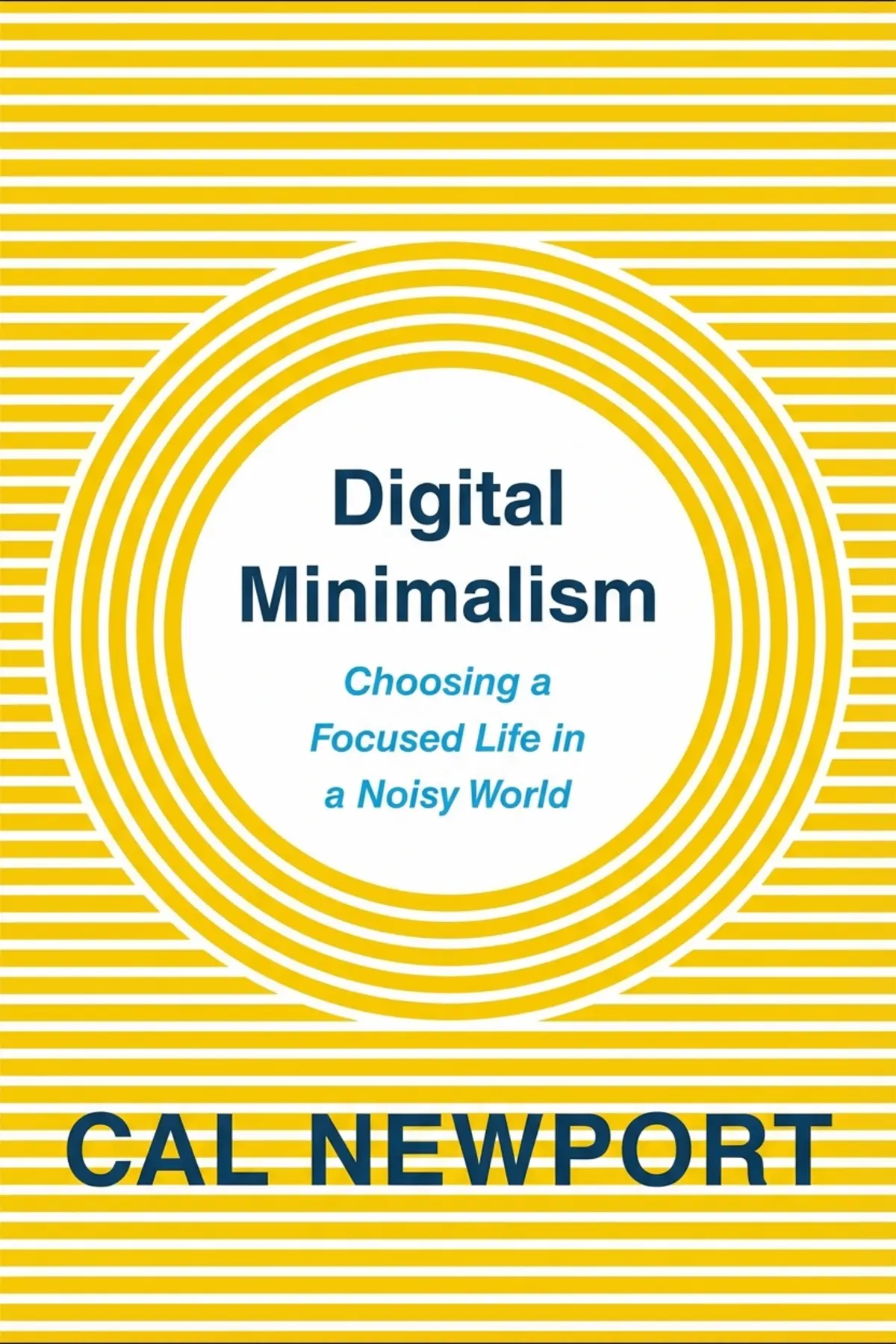
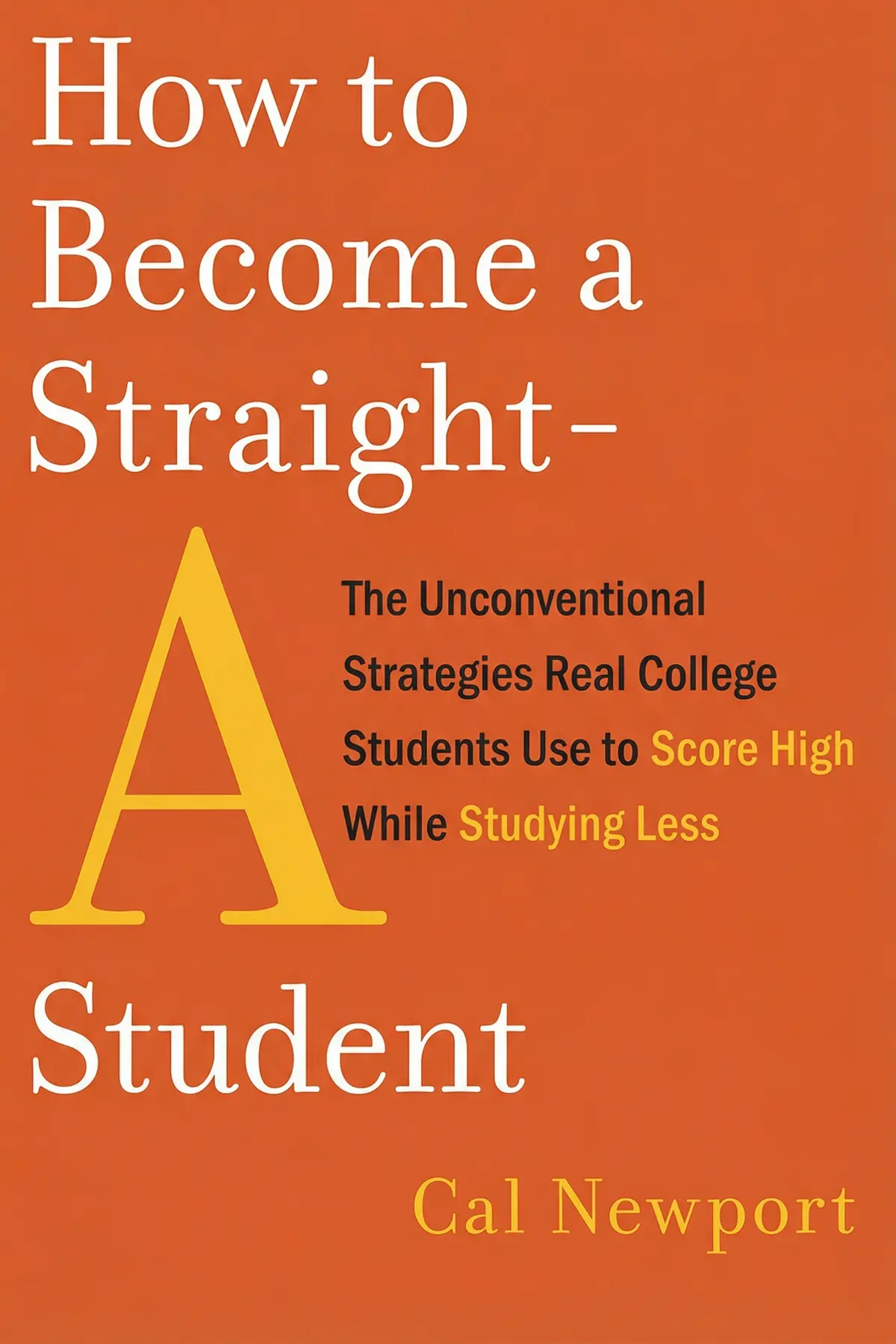
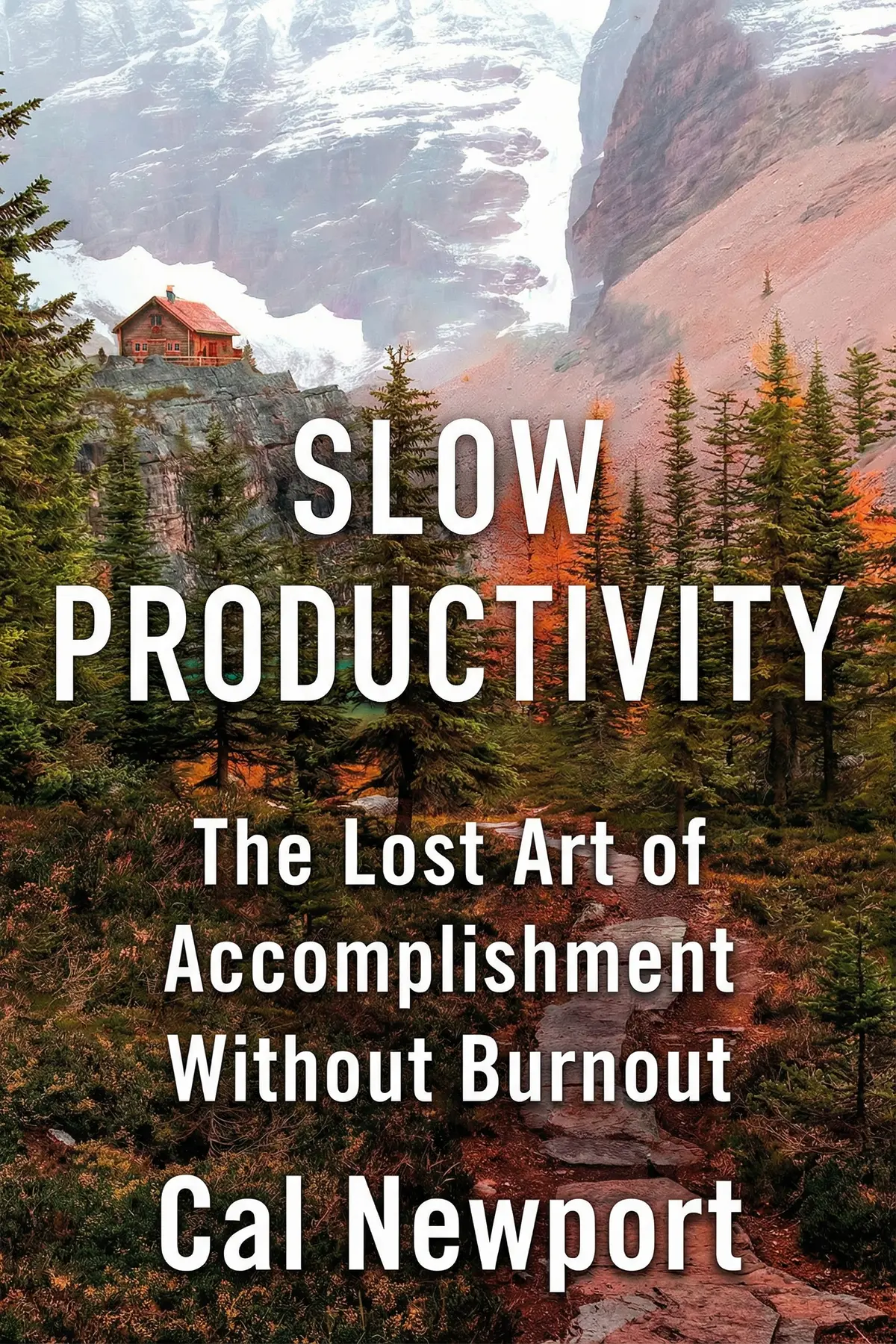
Cal Newport is an American author and a professor of computer science at Georgetown University. He writes about how digital technology shapes culture and how people can use these tools to support what they care about. He started the Study Hacks blog, has written for The New Yorker, The New York Times and Wired, and hosts a weekly podcast. His best-selling books include Deep Work, Digital Minimalism and Slow Productivity.
Ratings & Reviews
Ratings at a glance

What people think
Listeners find this book accessible and very enlightening, with one listener calling it a captivating look into the concept of deep work. The text offers numerous techniques and tips, assisting listeners in increasing their productivity and reaching major goals. Furthermore, listeners value how it aids their understanding of concentration and time management, making it especially beneficial for students finishing dissertations. Additionally, listeners characterize the book as deeply impactful and transformative, mentioning that it encourages them to be more intentional regarding their professional routines.
Top reviews
Sakura
Picked this up while struggling with my final dissertation and it was exactly the kick in the pants I needed. I’ve been drowning in 'shallow' tasks like formatting and endless emailing, but Newport helped me realize that real progress only happens in that state of flow. It’s written in a way that’s very easy to read, yet the insights into how our brains atrophy from constant distraction are quite sobering. I’ve started implementing the 'productive meditation' while walking to campus, and it’s helping me solve complex problems I used to just stare at my screen over. Personally, it’s life-changing for students who need to produce high-quality work on a deadline. A must-read for anyone in academia who feels like they are on a treadmill.
Show moreChiw
Wow, I didn't expect a productivity book to feel this profound, but Newport hits on something deeper than just 'getting things done.' He treats focus as a superpower, which, in today’s economy, it probably is. The writing style is clear and engaging, making complex ideas about neurological plasticity accessible to anyone. I loved the stories about Bill Gates and Carl Jung—they really illustrate how isolation can spark genius. In my experience, some of the advice feels a bit out of reach for people in entry-level positions who don't have control over their schedules. However, the mindset shift alone is worth the price of the book. It makes you way more conscious of how you spend every minute of your day.
Show moreFord
To be fair, I was skeptical about the ‘no social media’ rule at first, but the results speak for themselves. After implementing the 4-hour deep work law, my output at the office has doubled while my stress levels have plummeted. It’s a life-changing approach for anyone who feels like they’re just treading water in a sea of notifications. Cal Newport writes with a sense of urgency that really hits home if you're worried about your career being replaced by automation. The strategies for 'batching' shallow tasks like email are simple but incredibly effective. I wish I had read this years ago. It’s easily one of the most insightful books on professional success I’ve ever encountered.
Show moreSing
In my experience, most self-help books are 90% fluff, but Deep Work actually delivers on its promise. It’s a profound look at how we’re losing our ability to concentrate and what we can do to win it back. I’ve already started using the 'sender filter' for my emails and it has saved me hours of mindless back-and-forth. The book is easy to read and the chapters are organized in a way that makes the advice actionable immediately. My favorite part was the discussion on 'attention residue'—it explains exactly why checking your phone for 'just a second' ruins your focus for twenty minutes. If you want to achieve significant results in your field, you need to read this.
Show moreGabriel
Finally got around to reading this after hearing everyone in my tech circle rave about it for years. It’s a fascinating exploration of why we’ve lost the ability to focus in a world obsessed with 'connectivity.' I really liked the practical suggestions for managing your schedule, like the idea of a 'shutdown ritual' to let your brain recharge. My only gripe is that it feels a little repetitive toward the middle, but the core message is vital for knowledge workers. I’ve actually deleted two social media apps since finishing it, and the mental clarity is noticeable. Not gonna lie, I was a bit of a skeptic, but Newport makes a compelling case for being ruthless with your time. High value here.
Show moreAisha
Ever wonder why you feel exhausted at 5 PM despite not actually finishing any major projects? This book answers that question by exposing the myth of multi-tasking and the danger of shallow work. Cal Newport provides a framework that is both profound and surprisingly easy to implement if you have the willpower. I particularly appreciated the distinction between 'knowing' a concept and actually *knowing* it through practice. The book feels like a manual for reclaiming your cognitive abilities in a distracted age. To be fair, the section on quitting social media was the most challenging but ultimately the most rewarding part of the experience. It’s not just about productivity; it’s about doing work that actually matters.
Show moreYui
As someone who thrives on multi-tasking, this was a hard pill to swallow. The truth is, I’ve been confusing being 'busy' with being 'productive' for most of my career. Newport’s argument that deep work is rare and valuable really resonated with me, even if his tone can be a bit smug at times. I found the section on 'productive meditation' particularly helpful for my morning commute. However, I do think the book relies a bit too heavily on anecdotes rather than rigorous new scientific studies. It feels a lot like a remix of Flow and Getting Things Done, but tailored for the digital age. It’s a solid 4-star read that will definitely make you rethink your relationship with your smartphone.
Show moreOrm
The chapter on the shutdown ritual changed my evening routine entirely. For years, I’ve been 'constantly on,' checking Slack at 9 PM and wondering why I felt so burnt out. Newport explains why your brain needs that definitive cutoff to truly recharge. While some of the academic examples he uses felt a bit repetitive, the overall message is incredibly powerful. It’s a fascinating exploration of why some people achieve so much more than others despite having the same amount of time. I’m currently recommending this to all my colleagues who complain about being 'too busy' to think. It’s not a magic trick, but it is a very effective roadmap for anyone willing to do the hard work.
Show moreKasemsan
Frankly, I found Newport’s focus on academic rigor slightly alienating for those of us in fast-paced corporate environments. While the concept of 'Deep Work' is fascinating, the book ignores the reality of managers who must be responsive to survive. It's easy for a professor with tenure to suggest abandoning email, but in the private sector, that’s a quick way to get fired. Truth is, the anecdotes about his own productivity felt a bit like bragging after a while. I appreciate the push toward meaningful concentration, yet I wish there was more for the 'shallow work' cadre who can't just go into isolation for weeks. Still, the strategies for scheduling blocks of time are useful if you can actually get your boss to respect them.
Show moreSuwit
While the central thesis is undeniably important, this entire book could have been a three-page PDF or a decent blog post. Newport spends way too much time padding the chapters with repetitive stories about famous figures and his own academic accolades. It’s ironic that a book about being efficient with your time wastes so much of the reader’s. Look, we all know that social media is a distraction and that focus is good. Do we really need 200+ pages of pseudo-scientific anecdotes to tell us to put our phones away? I found the tone a bit arrogant, especially when he dismisses the complexities of modern business roles. If you want real productivity advice, just read David Allen and skip the fluff here.
Show moreQuestions about this book
What is the main idea of Deep Work by Cal Newport?
Newport argues that multitasking and constant connection damage productivity, because attention stays stuck on the previous task and even unanswered notifications break concentration. His answer is deep work: intentional, uninterrupted focus on a single task. He presents it as a skill you plan for, with a chosen pattern of focus, rituals that prepare the mind, mental training and a schedule that leaves room for real rest.
What are the four approaches to deep work?
Newport describes four. The monastic approach removes all distraction and keeps you secluded like a monk. The bimodal approach sets one clearly defined long period for focused work and leaves the rest free. The rhythmic approach builds a habit of regular blocks, such as 90 minutes, tracked on a calendar. The journalistic approach uses any unexpected free time for deep work. Each is a deliberate method.
What is productive meditation in Deep Work?
Productive meditation means using time that would otherwise be wasted, such as walking the dog, showering or commuting, to think about one problem without letting your mind change subject. You start by identifying the separate issues inside the problem, then move to action questions about what you need to reach your goal. Newport compares it to a demanding workout that strengthens your ability to focus.
How can I apply Deep Work in my daily routine?
Start by planning each workday in blocks of at least 30 minutes, including breaks and email time, and adjust the blocks when plans change. Protect one focus block with a ritual: a quiet place, your phone off, and food or coffee nearby. Avoid email after a set hour, and try an internet sabbath, writing down the specific times you may go online and staying offline otherwise.
Readers also enjoyed





AUDIO SUMMARY AVAILABLE
Listen to Deep Work in 15 minutes
Get the key ideas from Deep Work by Cal Newport, plus 5,000+ more nonfiction titles.
- 5,000+ titles
- Listen as much as you want
- 7-day free trial
- Cancel anytime









