

13 min 39 sec
Available in: English
 ไทย
EnglishไทยHow Successful People Think: Change Your Thinking, Change Your Life
Shows how to stop borrowing the crowd's opinions and build better thinking habits instead: checking the facts, weighing more options, learning from every day, working with others and measuring success by what you give.
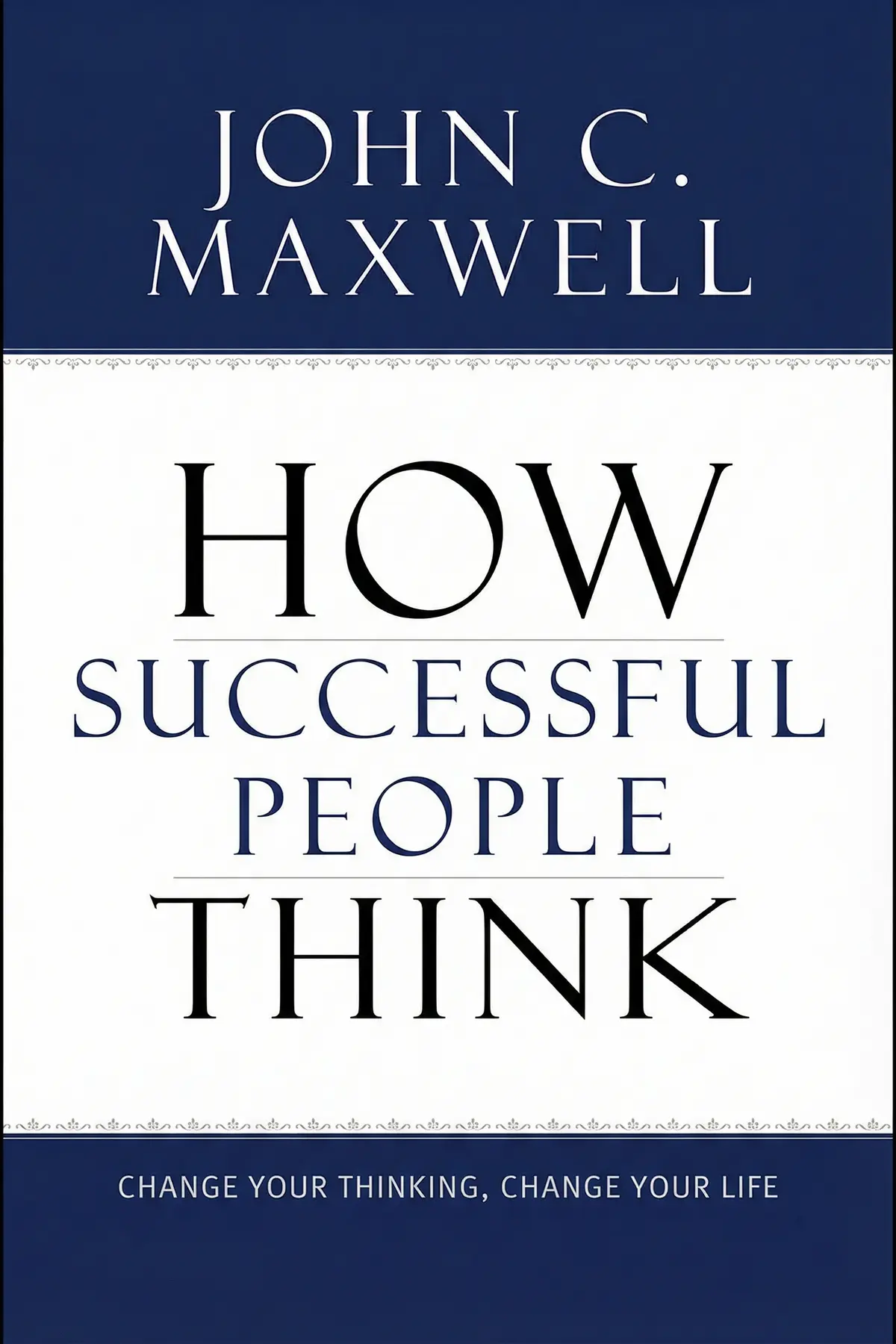
Table of Content
1. Introduction
1 min 02 sec
If your opinions usually match whatever the room already believes, you have plenty of company, and that is the problem. In How Successful People Think, leadership author John C. Maxwell argues that the people who get furthest share one habit: they think for themselves and are willing to leave the accepted path. His encouraging claim is that this can be learned. You do not have to be an Einstein or a Galileo, only to practice a few techniques.
Maxwell’s case runs through six ways of thinking, and they all point the same way. In his view, successful thinking keeps turning outward: toward hard facts, toward more options than the first one, and toward other people’s needs and ideas. The stories range from Copernicus and a surgeon who insisted on clean instruments to Alfred Nobel reading his own obituary. Each one comes with a small habit to try this week, from a two-minute morning look at your schedule to a new rule for your next meeting.
2. Question the crowd and find what others miss
2 min 02 sec
Almost everyone once agreed on things that turned out to be wrong, and some of those beliefs cost lives. A family trip taken when nobody else wanted to travel shows what going against the crowd can be worth.
3. Plans that hold up against hard facts
1 min 59 sec
A cheerful, confident leader can still steer a company toward failure. Maxwell explains what optimism leaves out, and why some of the best thinking you will ever use may already have been done by someone else.
4. Find better answers by widening your options
1 min 58 sec
Creativity sounds like a gift for geniuses, yet Maxwell’s first technique for it is almost ordinary. He also explains why creative people tend to draw others toward them, in any line of work.
5. Turn an ordinary day into a lesson
1 min 46 sec
A dinner with a football coach became a crash course in teamwork, because Maxwell had prepared for it that morning. His short daily routine shows how to spot what your own calendar could teach you.
6. Think with others to think better
1 min 48 sec
The image of the lone genius is appealing and, Maxwell argues, mostly false. Two famous partnerships and a tip from a business author show what it takes to get good ideas from unexpected people.
7. Give more to others and feel more successful
1 min 50 sec
One morning a famous inventor opened the newspaper and found his own obituary. What he read there changed how he wanted to be remembered, and it points to a different way of measuring success.
8. Conclusion
1 min 14 sec
Maxwell’s book is about attitude, and he means something sturdier than positive thinking. The successful thinker he describes keeps turning outward: away from the crowd’s comfortable beliefs, toward hard facts, toward more options than seem necessary, and toward other people as teachers, partners and the reason for the work. Nobel’s mistaken obituary is the clearest picture of the whole argument. One newspaper page showed him what a lifetime of narrow thinking would leave behind, and he still had time to change it.
The habits are small enough to start tomorrow. Before you agree with a group, work the question out alone and check the facts yourself. When you have a good idea, ask how it could be better, and keep a second one ready. Spend two minutes each morning looking for what your day could teach you, and open each month by deciding what matters over the next thirty days. In your next meeting, add to a colleague’s idea instead of competing with it.
Copernicus stood alone with his numbers. Most of us will do our best thinking alongside others and for others, and that is where Maxwell finds success.
About this book
What is this book about?
Most people take their opinions from the room around them. It feels safe, and disagreeing rarely makes you popular. John C. Maxwell argues that the people who get furthest have one thing in common: they are willing to think for themselves and leave the accepted path. He also insists you do not need to be an Einstein to do it. Good thinking, in his view, is a set of techniques that improve with practice. Maxwell describes six ways of thinking that successful people rely on. They question popular beliefs, face reality with a plan, widen their options before choosing, keep learning so they see the bigger picture, think together with others, and put other people's needs alongside their own. He illustrates each one with stories that run from Copernicus and Joseph Lister to Alfred Nobel's shock at reading his own obituary. Readers get a short set of habits they can try right away. These include a two-minute morning look at the day's learning chances, a monthly review of what matters most and a new rule for meetings: add to a colleague's idea instead of trying to beat it.
Book Information
Who it's for
Hoping to think independently
Professionals who tend to go along with the room and want the confidence to think for themselves.
Leaders wanting better meetings
Managers and team leads who want sharper plans and meetings where people build on each other's ideas.
Wanting simple thinking habits
Ambitious early-career readers looking for simple daily and monthly thinking habits.
About the Author
John C. Maxwell
John C. Maxwell is an American author, speaker and pastor, born in 1947 in Garden City, Michigan. Most of his books are about leadership, and several have been New York Times best sellers. He founded EQUIP, a non-profit that works on leadership development, and his organizations also include Maxwell Leadership and the Maxwell Leadership Foundation. His Amazon author bio says he has sold more than 40 million books, and he has received the Horatio Alger Award.

Developing the Leader Within You
John C. Maxwell
Leadership 101: What Every Leader Needs to Know
John C. Maxwell


No Limits: Blow the CAP Off Your Capacity
John C. Maxwell
Ratings & Reviews
Ratings at a glance

What people think
Listeners find the material very accessible and value the deep insights into success-oriented thinking, as one listener points out how practical the concepts are for those in leadership roles. Additionally, the content serves as an effective source of inspiration for oneself and others, and listeners view it as a great value. However, perspectives on engagement vary; while some find it captivating, others feel it becomes dull.
Top reviews
Luckana
Finally got around to finishing this, and I have to say, it’s exactly what I needed to hear right now. Maxwell has this way of breaking down complex mental hurdles into manageable shifts that actually feel doable. I particularly loved the section on 'Possibility Thinking' and the idea of dreaming one size bigger than your current comfort zone. Some might call it basic, but for me, it was a necessary jolt of inspiration that made me reevaluate my daily habits. Is it ground-breaking philosophy? Probably not. But as a motivational tool to get your head in the game, it’s top-tier. I finished the book feeling recharged and ready to tackle my business goals with a much clearer vision. Definitely a solid addition to any leader's library who wants to inspire themselves and their team.
Show moreMatteo
Wow, I actually found myself highlighting more pages than I expected. The chapter on 'Shared Thinking' really changed how I view collaboration; the analogy of two horses pulling a wagon together is simple but effective. Maxwell is a master motivator, and even if some of the ideas aren't brand new, the way he packages them makes them stick. I’ve started applying the 'Realistic Thinking' methods to my current project, and it’s helped me identify potential pitfalls I would have otherwise ignored in my rush to be optimistic. It’s a quick, punchy read that focuses on shaping your thoughts to align with the life you want to build. Look, it’s well worth the price just for the mental clarity it provides during a busy week.
Show moreBoy
Maxwell has delivered a concise, impactful guide that really makes you hyper-aware of your own mental patterns. I’ve read a lot of mindset books, but the way this one categorizes different 'thinking styles' helped me identify exactly where my own process was lacking. I realized I was great at 'Creative Thinking' but terrible at 'Realistic Thinking,' which explains why I’ve struggled to finish projects in the past. To be fair, it’s more of a motivational piece than a step-by-step manual, but sometimes that’s exactly what you need to shift your perspective. I’ve already recommended it to a few colleagues who are feeling stuck in their current roles. It’s an easy, inspiring read that provides plenty of food for thought regarding personal growth and success.
Show moreThanit
Not what I expected, in a good way! I thought this would be another dry business book, but it’s actually quite engaging and filled with practical insights. The '10-80-10' rule has already changed how I delegate tasks to my assistant, saving us both a lot of time and frustration. I also loved the advice to eliminate negative thoughts if you can't jump straight into positive ones; it feels like a more realistic approach for those of us who are naturally a bit cynical. The book flows well and the chapters are short enough to read during a commute or a lunch break. If you're looking for a way to sharpen your focus and improve your decision-making, this is a fantastic resource that I’ll likely return to.
Show moreGin
As someone who has been in management for a decade, I found the 10-80-10 principle for delegation to be the most valuable takeaway here. Maxwell explains that being present for the initial vision and the final polish is where a leader adds the most value, and that resonated with my own experiences. The book is an easy read, which makes it accessible, though I did find some of the anecdotes, like the one about the discounted Broadway show after 9/11, to be in somewhat poor taste. Despite those minor gripes, the core strategies for 'Focused Thinking' are excellent reminders. It’s a great book to keep on your desk for a quick mental reset when you’re feeling bogged down by the mundane aspects of your role. It definitely helps in shaping a better leadership perspective.
Show moreNong
Picked this up after hearing a lot of hype, and I’d say it mostly lives up to the reputation as a solid leadership primer. The structure is very clear—eleven methods of thinking that you can implement immediately. I appreciated the balance between 'Questioning Popular Thinking' and 'Possibility Thinking,' as it encourages both critical analysis and optimism. My only real complaint is that it’s a bit repetitive in the middle chapters; he tends to drive a point home, then give three examples that say the exact same thing. Still, the practical concepts for leadership positions are hard to argue with. It’s a helpful guide for anyone looking to refine their mental discipline and lead their team more effectively without getting lost in the weeds of daily tasks.
Show moreStella
After listening to the audiobook version, I can see why Maxwell is such a popular figure in the self-help world. He has a very conversational style that makes these concepts feel accessible to everyone, regardless of their current level of success. I found the section on 'Focused Thinking' particularly relevant, especially the advice to withdraw from the crowd to think deeply while staying accessible enough to lead. It’s a delicate balance that he explains very well. While there are definitely some clichés scattered throughout the text—like 'look at the big picture'—the overall message is strong and actionable. It’s a good reminder that our internal dialogue is the primary architect of our external reality, and it’s worth the time to fix it.
Show moreRafael
Ever wonder why some people just seem to 'get' it while others spin their wheels? This book tries to answer that, though the results are mixed. On one hand, Maxwell provides a clean framework for different types of thinking, like 'Creative' and 'Realistic' approaches. On the other hand, the content lacks the social justice framework needed to address systemic inequalities that actually hinder success for many. He suggests that survival-based thinking is a choice of the 'unsuccessful,' which ignores the reality of many who are struggling in oppressive systems. It’s a very privileged perspective that assumes everyone starts on a level playing field. If you can look past that, there are some decent motivational nuggets, but it's far from a comprehensive guide to success in the real world.
Show moreManika
This book unfortunately felt like an overstretched blog post that could have been summarized in ten minutes. While I agree with the core premise that mindset dictates success, Maxwell’s writing style is incredibly verbose and leans heavily on a constant stream of quotes. At times, it felt like I was reading a collection of famous sayings rather than original insights from the author himself. The repetitive nature made it a struggle to stay engaged, especially when the advice boils down to clichéd phrases like 'think big' or 'be creative.' I was hoping for more actionable steps or deep psychological analysis, but instead, I found a lot of flowery language and surface-level anecdotes. It might work for someone brand new to personal development, but for seasoned readers, it feels redundant and, frankly, a bit boring.
Show morePensuda
The truth is, I struggled to get through this because it felt so disconnected from the modern reality of the workforce. Maxwell’s tone is quite masculine and sometimes borders on condescending, particularly when he discusses how his wife, Margaret, handles 'mundane' tasks so he can focus on important thinking. Not everyone has a partner willing to take on every domestic burden so they can be a 'successful' thinker! Also, the sheer volume of quotes from various figures—from Hitler to Hepburn—felt forced and distracting. It felt like the book was trying too hard to seem profound through the words of others rather than providing new, substantive content. It’s not a bad book per se, but it definitely feels like a relic of a different era of corporate thinking.
Show moreQuestions about this book
What is the main idea of How Successful People Think?
John C. Maxwell argues that successful people stand out because of how they think. They are willing to question popular beliefs and take their own path. He describes several ways of thinking that can be learned: realistic, creative, big picture, shared and unselfish thinking. In his view, a happy and fulfilled life comes from thinking with others and for others, and not only about getting ahead yourself.
How can I become a big picture thinker, according to John Maxwell?
Maxwell’s method is to keep learning. Each morning he checks his schedule, picks the meetings most likely to teach him something and reminds himself to stay alert. Before a dinner with NFL coach Dave Wannstedt, he prepared questions about teamwork and left with new insights. He also suggests starting each month with a calendar review to set projects, goals and time for family and friends.
What does Maxwell mean by realistic thinking?
Maxwell defines reality as the gap between what you want and how the world really is. Realistic thinkers set clear targets and make a plan to reach them, while optimists without a strategy put their organizations at risk. His advice is to do your homework. Ask what you would do if revenue dried up or a market collapsed, check the facts yourself and study how others handled similar situations.
Why does Maxwell say collaboration beats solo thinking?
Maxwell argues that breakthroughs rarely come from lone geniuses. He points to Einstein crediting the work of others, and to partnerships such as Pierre and Marie Curie or Paul McCartney and John Lennon. To collaborate well, stay open to good ideas from any source, even a taxi driver or your children. Then aim to complete other people’s ideas instead of competing with them.
Who should read How Successful People Think?
It suits readers who want practical thinking habits more than theory: professionals who tend to follow the group, leaders who need realistic plans, and team members who want better meetings. Maxwell’s ideas come with small actions, such as thinking a question through before going along with others, widening your options before choosing and looking for ways your work can serve other people.
Readers also enjoyed

59 Seconds: Change Your Life in Under a Minute
Richard Wiseman





A Guide to the Good Life: The Ancient Art of Stoic Joy
William B. Irvine


A High-Performing Mind: Strengthen Your Mind and Live Your Best Life
Andrew D. Thompson


Abundance: The Inner Path to Wealth
Deepak Chopra
AUDIO SUMMARY AVAILABLE
Listen to How Successful People Think in 15 minutes
Get the key ideas from How Successful People Think by John C. Maxwell, plus 5,000+ more nonfiction titles.
- 5,000+ titles
- Listen as much as you want
- 7-day free trial
- Cancel anytime









