
13 min 08 sec
Available in: English
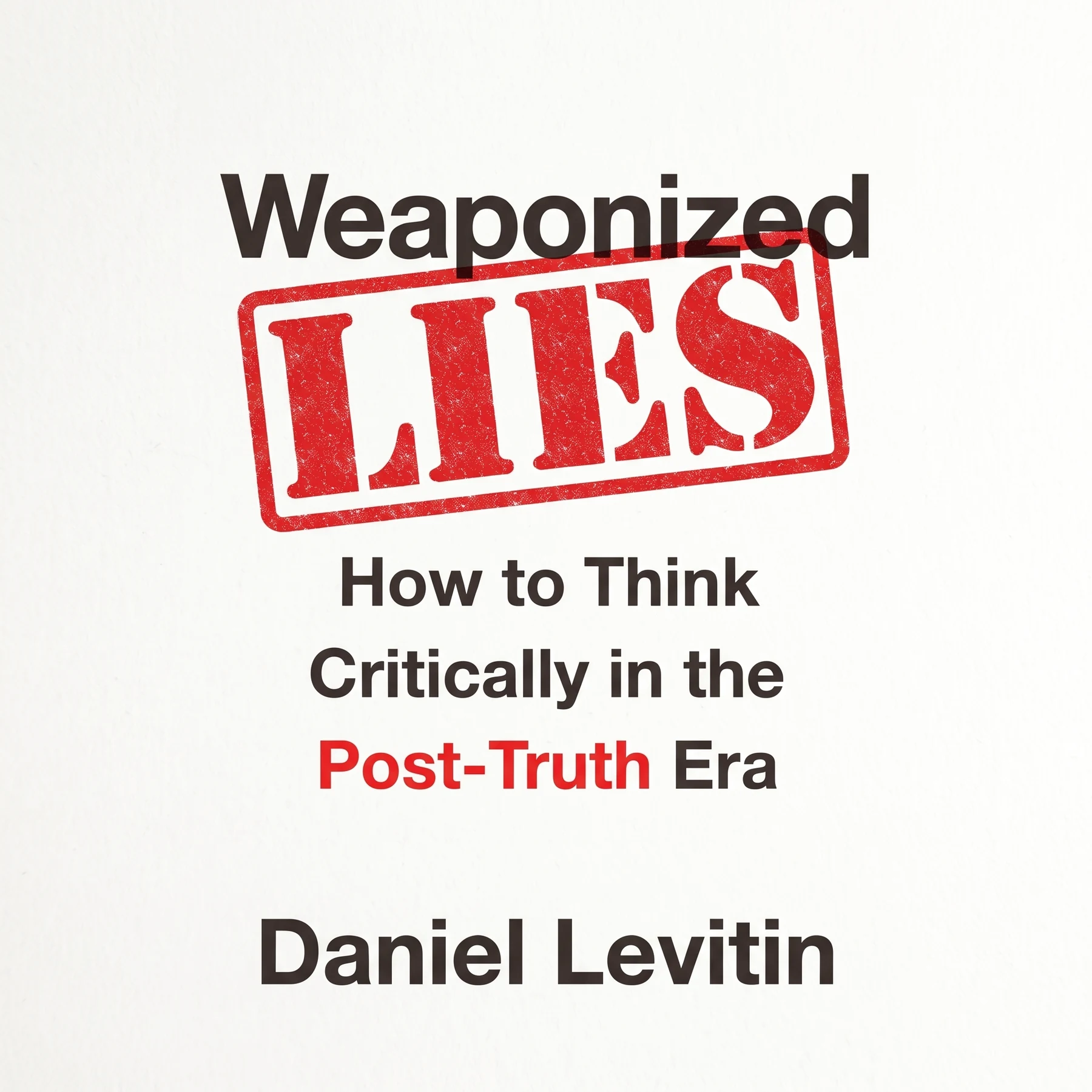
Weaponized Lies: How to Think Critically in the Post-Truth Era
Shows how to check the claims you read before you believe or share them: test sources and links, question averages and graphs, look for missing context, judge experts, and match your doubt to how surprising a claim is.
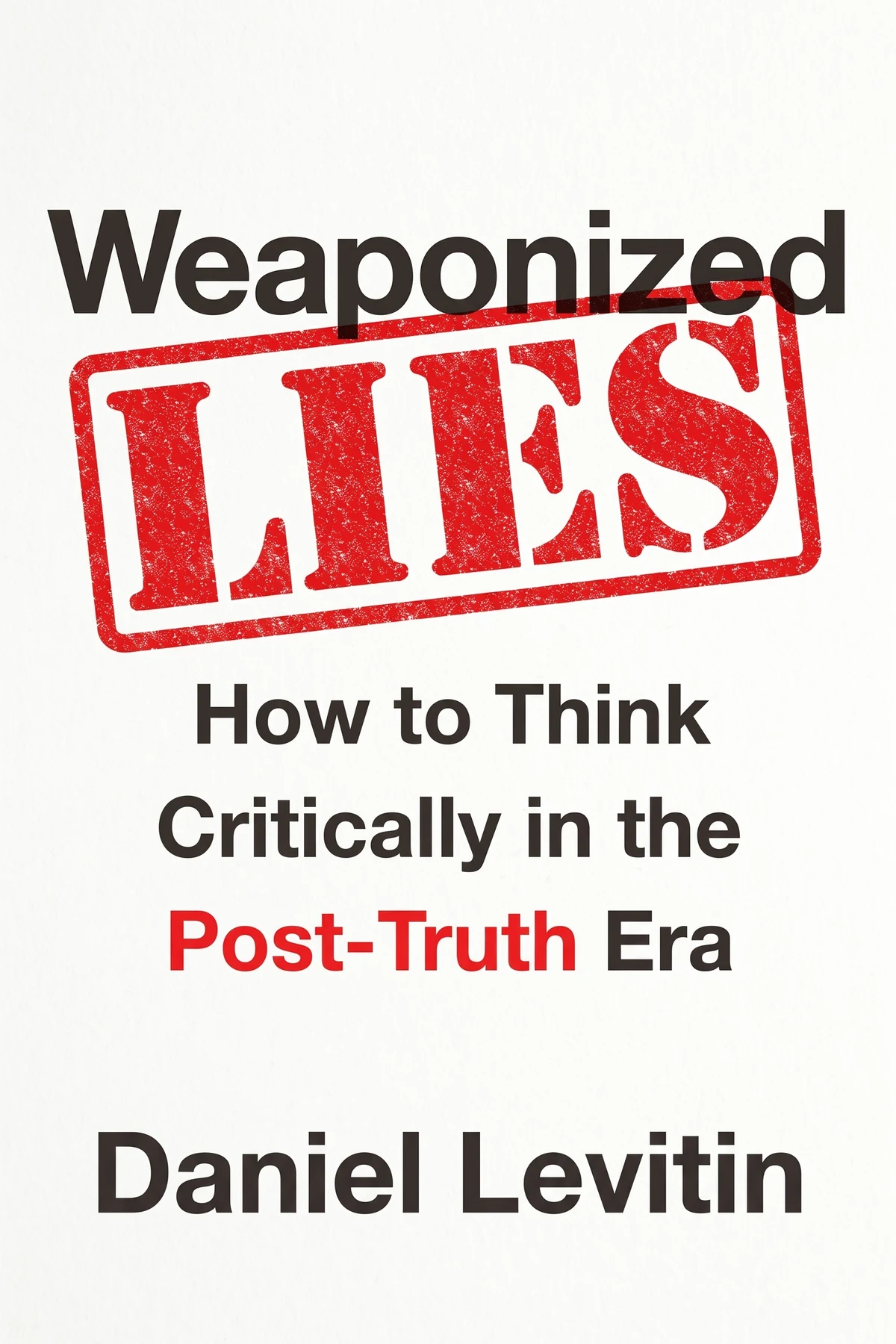
Table of Content
1. Introduction
55 sec
If you have ever repeated a striking statistic at dinner and later wondered whether it was true, you already know the gap this book addresses. In Weaponized Lies, cognitive psychologist Daniel Levitin shows that no source is safe from error, and that even a word as plain as average can mean three different things. His claim is that truth has become the reader’s job. The internet has no editor, famous newspapers get fooled, and charts can be drawn to say whatever their makers want.
Levitin’s answer is a set of checking habits held together by one rule: the more a claim clashes with what we already know, the more evidence it needs before we believe it. Along the way come a fake civil rights website, a pie chart that adds up to more than 100 percent and a debunked vaccine scare. Each case ends in a question worth asking the next time a headline wants your trust.
2. Read past the link and the label
1 min 46 sec
Citation links make an article look solid, and writers know almost nobody opens them. A website named after a famous civil rights leader shows how easily a respectable surface can hide the opposite message.
3. Treat a famous masthead as the first check
1 min 38 sec
A Pulitzer Prize winner at one of the world’s best-known newspapers once wrote about a politician who did not exist. The way it happened reveals where even careful reporting is weakest.
4. Ask which average before you trust a number
1 min 55 sec
An election result seemed to show wealthy states turning against the party of the wealthy. The surprise came from a single word in the statistic, one most readers never stop to question.
5. Spot what a survey or story leaves out
1 min 52 sec
A poll can be skewed before a single answer is counted, simply by the way people were contacted. And a news story can be accurate in every detail while hiding the picture that matters most.
6. Tell a real expert from a borrowed title
1 min 54 sec
Some false beliefs refuse to die even after they are disproved. Levitin traces their strength to two things: a story we enjoy too much and an authority who looks right but isn’t.
7. Match your doubt to how strange the claim is
1 min 59 sec
Checking every sentence you read is impossible, and checking none is reckless. An eighteenth-century statistician offers a way to decide which claims deserve your scrutiny and how much proof to demand.
8. Conclusion
1 min 09 sec
Levitin’s book adds up to a change in who is responsible for the truth. With no editor standing at the door, belief can no longer be handed over to a website, a famous newspaper, a confident chart or a doctor speaking outside his field. Each of them can be wrong by accident or bent on purpose, and a falsehood that lands first tends to stay.
Doubting everything equally would be exhausting and useless. The better move is to spend doubt where it pays. Save the hardest checks for claims that clash with what is well established, the way you would demand mountains of proof before giving up water. When a number appears, ask which average it is and read the axes before the line. When an expert appears, ask whether the training fits the claim. And before you forward anything, open at least one of its links.
Skip these checks and the risk goes beyond being fooled yourself. You become the next person who carries the lie along, at a dinner table, in a meeting or online. Levitin’s wager is that careful readers are much harder to turn into weapons.
About this book
What is this book about?
We have more information than any generation before us, and it has never been harder to tell fact from fiction. Online, anyone can publish anything, citation links go unclicked, and even famous newspapers sometimes print stories built on fakes. Cognitive psychologist Daniel Levitin argues that trust can no longer be handed to a source. Checking what we absorb has become each reader's job. Levitin walks through the places where misinformation hides. A word as ordinary as average can carry three meanings. A graph can change its scale halfway across, and a survey can lean toward whoever was easiest to reach. Counterknowledge, his term for falsehoods that many people accept, spreads through conspiracy stories and borrowed expertise, and it is hard to shake once it lands. His unifying tool is the Bayesian method: weigh every claim against what is already well established, and demand more evidence the stranger the claim is. Readers get lessons for weighing news, charts and experts, drawn from cases such as a disguised propaganda website, a pie chart that adds up to more than 100 percent and a fact-check of a rally claim.
Book Information
Who it's for
Professionals who share statistics
Professionals who share articles and statistics at work and want to stop passing on errors.
Students using online sources
Students who build arguments from online sources, charts and surveys.
Unsettled by competing claims
Anyone unsettled by conspiracy theories and confident experts who wants a simple way to weigh them.
About the Author
Daniel Levitin
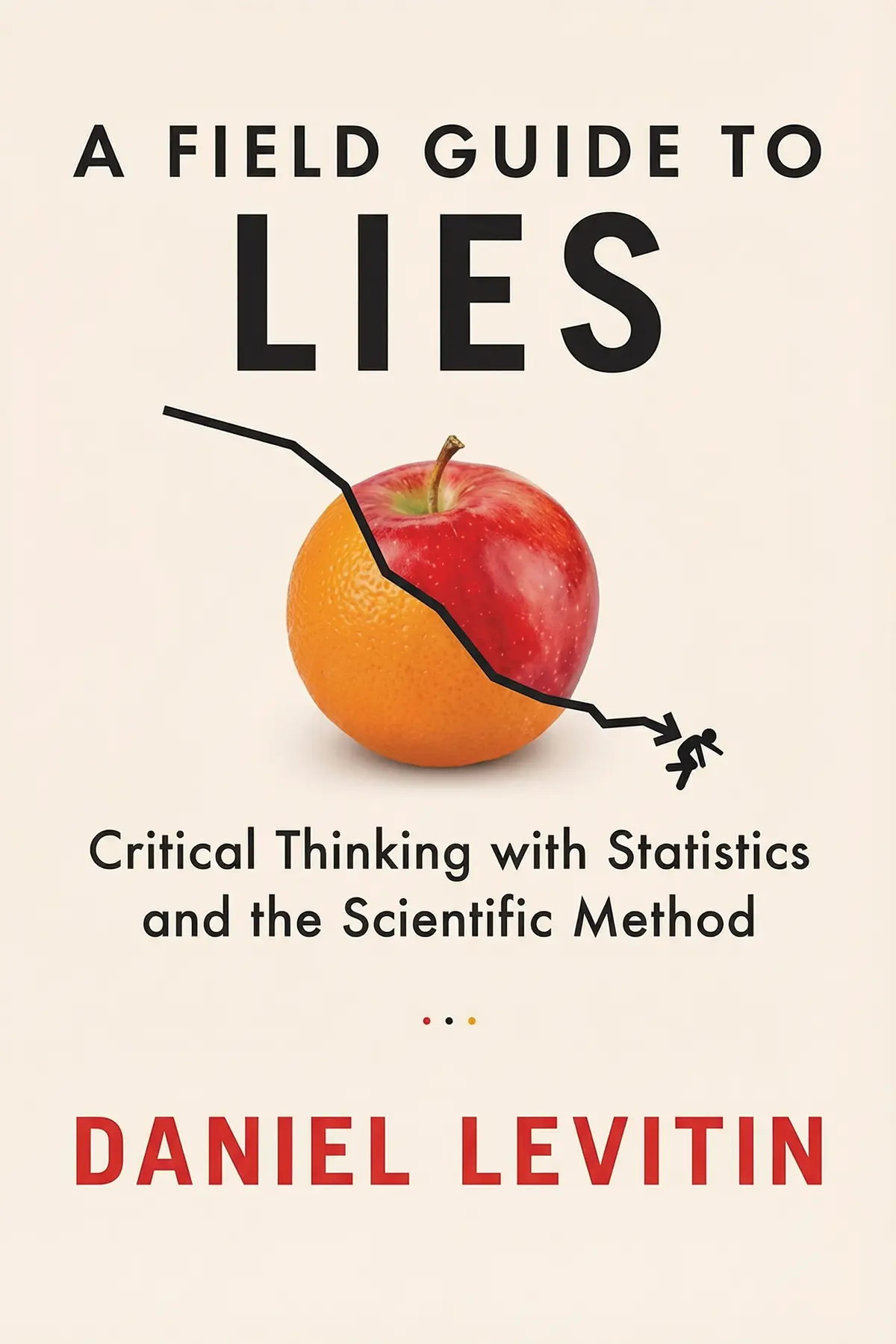
Daniel Levitin is a cognitive psychologist, neuroscientist, writer and musician. He is a professor emeritus at McGill University in Montreal and was a founding dean at Minerva University in California. Before science, he worked as a session player, sound engineer and record producer on projects involving Stevie Wonder, Steely Dan and Joni Mitchell. His books include This Is Your Brain on Music, which has sold more than 1.5 million copies, and Successful Aging. Weaponized Lies is the paperback edition of A Field Guide to Lies.
Ratings & Reviews
Ratings at a glance
What people think
Listeners find this work highly educational and skillfully composed, offering comprehensive insights into the art of critical thought. They further value its approachability, with one listener mentioning it feels like a college preparatory course, and its entertainment quality, with one person describing it as a captivating textbook on logic. The author earns praise for their sincere and well-meaning style. However, the section on statistics gets a mixed reception, as several listeners point out that statistics are not neutral.
Top reviews
Nongnuch
Picked this up because I felt my BS detector needed a serious tune-up in this age of digital noise. Levitin has created what feels like an essential college preparatory course for real life, breaking down complex logical fallacies into something digestible. Frankly, the way he explains how 3 out of 4 dentists can be a misleading stat is both eye-opening and entertaining. I particularly appreciated the deep dive into 'axis shenanigans' on graphs; I'll never look at a corporate earnings chart the same way again. The book is dense but accessible, moving from simple averages to the more daunting world of Bayesian probability without losing the reader. It is a necessary toolkit for anyone who spends time on social media. We are constantly blasted with information, and this book provides the shield we didn't know we needed.
Show moreNang
The section on Bayesian thinking and the case study about his own dog’s cancer treatment really brought the theoretical stuff home for me. It is one thing to talk about probabilities in a vacuum, but seeing how they apply to life-and-death medical decisions is powerful. Levitin demystifies the 'expert testimony' that we see in courtrooms and newsrooms, showing us that even the best-intentioned people make errors in probability. For example, his breakdown of why doctors often struggle with positive cancer screens was a total lightbulb moment. Truth is the default position for most of us, and this book teaches you why that’s a dangerous way to navigate the modern world. The writing is clear, the examples are vivid, and the takeaway is clear: question everything. It’s a brilliant guide to maintaining your sanity in an era of weaponized lies.
Show moreNora
Wow, I wish every high school student was handed a copy of this book before they were allowed to graduate. It covers everything from how numbers are collected to the slippery nature of language and the way we rely on secondhand knowledge. The chapter on 'Knowing What You Don't Know' is particularly humbling and helpful for anyone trying to navigate the internet wisely. Levitin explains deduction and induction with such clarity that I finally feel like I can explain them to someone else. He manages to be both serious and encouraging, which is a hard balance to strike when you're telling people their brains are essentially wired to be fooled. This is a 5-star resource for the modern age. It is a fantastic bridge between academic logic and everyday common sense.
Show moreYindee
Finally got around to finishing this, and I gotta say, it’s one of the most useful books on my shelf right now. Levitin manages to make 'bimodal distributions' and 'Frequentist Probability' feel like tools you can actually use to win an argument or make a better investment. The book is essentially a survival guide for a society based on conspicuous consumption and misinformation. I found the section on how to identify true expertise—and how to spot a 'snow job'—to be worth the price of admission alone. It reminds me a bit of 'Psy-Q' but with a more serious, urgent tone that fits our current times perfectly. Whether he’s talking about autism claims or the probability of a coin toss, Levitin keeps things grounded in reality. This isn't just a book about lies; it's a book about how to think straight.
Show moreEnd
Ever wonder how people can look at the same set of numbers and reach completely opposite conclusions? This book is a masterclass in uncovering those hidden levers of manipulation, specifically focusing on how statistics are never truly neutral. Levitin writes with a well-meaning tone that makes even the driest talk of bimodal distributions feel relevant to our current political climate. Personally, I found the section on 'counter-knowledge' and how conspiracy theories like 9/11 truthers gain traction to be the most fascinating part. The authorial voice is a bit like a first-year textbook at times, which might bore some, but the information is too vital to ignore. It is a timely read for anyone weary of the constant skewing of facts during election cycles. My only gripe is that it occasionally skips over some of the deeper philosophical implications of 'truth' to stay on the path of cold logic.
Show moreSurasit
After hearing so much about the 'post-truth' era, I found this to be a surprisingly grounding and necessary read. The book is broken into three distinct sections, but the chapters on evaluating words and identifying expertise were where I found the most value. We often forget that expertise is narrow; a doctor's opinion on a car is just an opinion, not an expert diagnosis. Levitin’s explanation of how the 2016 election campaign lacked any sense of statistical nuance was spot on. Look, the math gets a bit heavy toward the end when he hits Bayes' Rule, but he uses enough real-world anecdotes to keep you afloat. It’s a bit dry in spots, but the payoff for your mental clarity is worth the effort. It should be required reading for anyone before they are allowed to post a political meme on Facebook.
Show moreYuki
As someone who deals with data daily, I still found plenty of new ways to look at 'axis shenanigans' and reporting hijinks in this book. Levitin is very good at pointing out the common errors we all make, like confusing correlation with causation or falling for framing effects. The book moves at a brisk pace, though the transition from simple percentages to complex conditional probability can be a bit jarring for the uninitiated. I liked the inclusion of Donald Trump quotes and Fox News polls to illustrate how these tricks are used in the wild. It’s a very practical book. While it might not have the stylistic flair of a novel, it provides a functional toolkit for deconstructing the news. If you want to stop being a victim of clever marketing and political spin, you need to read this. It matters.
Show moreJong
To be fair, this reads much more like a dry first-year logic textbook than the engaging popular science book I was expecting. While the content is undeniably important, the presentation often feels a bit clinical and repetitive. I did enjoy the sections on logical fallacies and how the reversal of logical statements can trick our brains into seeing patterns where none exist. However, the author seems to jump from topic to topic too quickly without ever really putting the biggest conspiracy theories to bed. It’s a solid introduction if you’ve never studied statistics, but for those already familiar with 'Bad Science' or 'The Half-life of Facts,' this might feel like a redundant review. It’s a decent book for a specific audience, but it lacks the 'fun' that other authors bring to the world of skepticism and probability.
Show moreSuphan
Not what I expected from someone with Levitin’s academic pedigree, as the book feels deeply skewed toward orthodox explanations. He dismisses anything outside the mainstream as 'counter-knowledge' without giving much room for the nuance that many modern debates require. As an academic, he seems a bit too beholden to the system that pays him, which makes his 'field guide' feel like it's just protecting the status quo. The statistics section is okay, but he ignores the fact that statistics themselves are rarely neutral and are often framed by the questions we choose to ask. It’s a bit of a snow job disguised as a manual for critical thinking. I was hoping for a more rebellious look at how truth is constructed, but instead, I got a fairly standard lecture on why we should trust the established gatekeepers. There are better books out there for true skeptics.
Show moreSawit
Levitin’s central premise is a shambolic mess because he can't even maintain consistency within his own chapters. On page 20, he correctly explains that average life expectancy is up because child mortality is down, not because we’ve conquered aging. Then, inexplicably, he bases an entire argument on page 175 on the flat-out false claim that 'people are living longer.' Did he even read his own book? It’s frustrating because he positions himself as a gatekeeper of critical thinking while failing to apply it to his own writing. The book tries to teach the entire population to think scientifically, yet it feels deeply beholden to the very systems of information it should be questioning. If you want real insights into how numbers lie, stick to the classics like 'How to Lie with Statistics' and skip this self-contradictory fluff. It is a major disappointment.
Show moreQuestions about this book
What is the main idea of Weaponized Lies by Daniel Levitin?
Levitin argues that no source of information deserves blind trust, not even respected newspapers or public figures. Readers have to check claims themselves. He shows how websites, citation links, averages, graphs, surveys and so-called experts can mislead, and he offers the Bayesian method as a unifying rule: the more a claim contradicts well-established knowledge, the more evidence it needs before you accept it.
What does Levitin mean by counterknowledge?
Counterknowledge is Levitin’s term for false information that many people still believe is true. Conspiracy theories are its most common form, because people enjoy a compelling story. It is hard to remove once it settles in, since we tend to defend our beliefs and dislike admitting we were fooled. It often spreads through false expertise, as in Andrew Wakefield’s debunked claim linking vaccination and autism.
How can averages and graphs be misleading?
Average can mean the mean, the median or the mode, and writers often pick whichever suits their message. The mean is most easily distorted by extreme values, which is how a few very rich residents made some states look wealthier in the 2004 election. Graphs can change their scale partway along an axis, and Levitin notes a 2012 Fox News pie chart whose slices totaled over 100 percent.
How do you apply the Bayesian method to the news?
Weigh each claim against what is already well established. A statement backed by plenty of existing knowledge needs little extra proof, while one that contradicts it needs a great deal. In practice, this means spending your checking effort on the most surprising claims and using fact-checking services such as Politifact, which found no evidence for a 2015 rally claim about celebrations after the World Trade Center fell.
Readers also enjoyed


Acting with Power: Why We Are More Powerful Than We Believe
Deborah Gruenfeld


Age of Propaganda: The Everyday Use and Abuse of Persuasion
Anthony Pratkanis




59 Seconds: Change Your Life in Under a Minute
Richard Wiseman

AUDIO SUMMARY AVAILABLE
Listen to Weaponized Lies in 15 minutes
Get the key ideas from Weaponized Lies by Daniel Levitin, plus 5,000+ more nonfiction titles.
- 5,000+ titles
- Listen as much as you want
- 7-day free trial
- Cancel anytime









