

14 min 14 sec
Available in: English
 ไทย
EnglishไทยThis Is Your Brain on Music: Understanding a Human Obsession
Daniel Levitin explains how the brain turns a few basic elements of sound into emotion, groove and memory, and why familiarity, practice and genes shape the music we love and how well we play it.
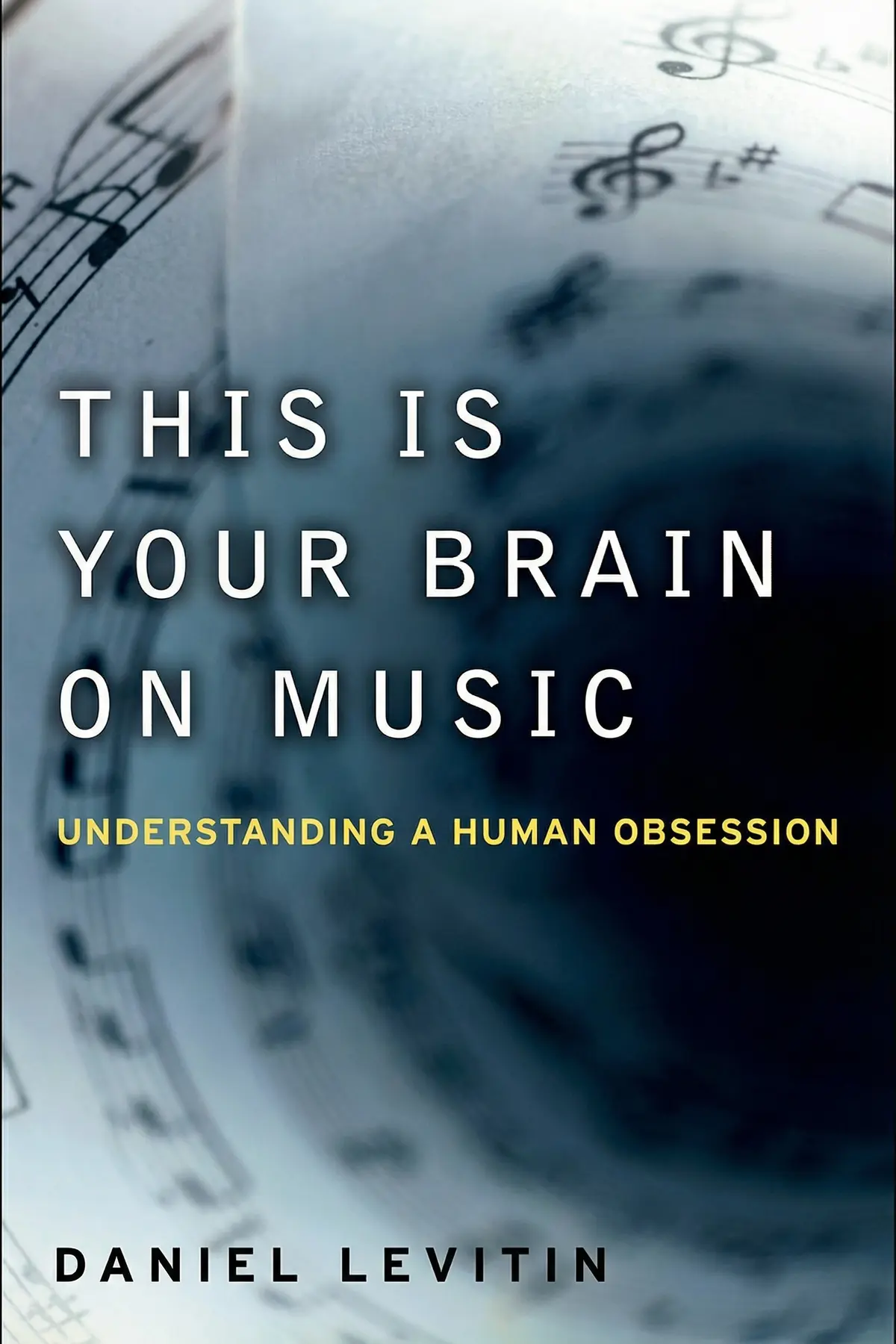
Table of Content
1. Introduction
57 sec
Most of us know exactly which songs make us cry, dance or remember a summer, yet almost nobody can explain why. In This Is Your Brain on Music, cognitive psychologist and former record producer Daniel Levitin shows that the answer lies in prediction: music moves us because the brain is constantly guessing what comes next, and composers decide when to prove it right and when to surprise it.
That idea runs through everything Levitin describes. Music is built from a handful of simple sound elements, and almost every part of the brain helps put them together. Expectation explains the tears at weddings and the pull of a good groove. The same brain cells that hear a song later replay it, which is why an old tune can bring back a faded childhood memory.
By the end, you will hear your favorite songs as a conversation between a composer and your own expectations, and know why even humming along is good for your brain.
2. Hear the building blocks hiding inside every song
1 min 55 sec
A children’s nursery tune and a Beach Boys hit each strip music down to a single moving part. Between them they reveal what separates a song from noise, and how many brain regions it takes to hear one.
3. Discover how a wedding march makes strangers cry
1 min 51 sec
Guests who sat through the ceremony dry-eyed often reach for tissues the moment the music starts. The reason lies in a game composers play with your brain, and a single word in a famous chorus shows it.
4. What makes a beat impossible not to move to
1 min 49 sec
A rhythm played with machine precision often leaves listeners standing still. A region of the brain built for coordinating the body turns out to care about feelings too, and evolution may explain the overlap.
5. Use old songs to reopen lost memories
1 min 43 sec
Imagining a song and actually hearing it look almost the same inside your head. That finding explains why an old tune on the radio can return you to a moment you thought you had lost.
6. Understand where your musical taste really comes from
1 min 38 sec
Babies a year old already showed a favorite song, and it was one they could not have chosen. Their preference hints at why some music feels like home while other music sounds like noise.
7. See what practice and genes each give a musician
1 min 40 sec
Students at a music conservatory were secretly ranked by how gifted their teachers thought they were. Years later, the best performers turned out to share something else entirely, though genes still had their say.
8. Learn how music may predate speech itself
1 min 32 sec
One leading scientist calls music a pleasant side effect of language. Most researchers disagree, and their alternatives involve our pre-human ancestors, a peacock’s tail and the question of who looked like a good partner.
9. Conclusion
1 min 09 sec
What Levitin describes is a brain that never stops guessing. It breaks sound into pitch, rhythm, timbre and the rest, assembles those pieces across nearly every region it has, and then waits to see whether the next note or beat lands where it predicted. A blues band that suddenly drops out, a drummer who lets the tempo lean, a chorus that leaps on its second note: each one is playing with that habit of prediction. And the neurons that first heard a song stand ready to replay it, along with the moment it belonged to.
None of this requires training. The book’s advice is to stay a dabbler: a little foot-tapping to a favorite track, or humming a tune you love, engages brain areas tied to learning and well-being. When a piece gives you chills, look for the moment it broke your expectations. When a new style sounds like noise, give it enough listens to become predictable. And when you want to find your way back to a half-forgotten year, start with what you were playing then.
The music was never only in the speakers. Most of it happens inside the person listening.
About this book
What is this book about?
Music has marked weddings and funerals for as long as people have gathered, yet few listeners can say why a song moves them or why an old tune revives a vivid memory. Daniel Levitin, a neuroscientist who once produced records, answers with what brain research has learned about music. His central idea is prediction. Music combines basic elements such as pitch, rhythm, timbre and tempo, and nearly every region of the brain helps process them. As a piece unfolds, the brain keeps forecasting what comes next, and composers and drummers stir emotion by meeting or bending those forecasts. Songs are stored in the same neurons that first heard them, which is why they can bring back faded memories. Levitin also looks at where musical taste begins, with a study of babies exposed to songs in the womb. He weighs how much skill comes from practice and how much from genes, and why most researchers think music had an evolutionary role, perhaps as a step toward speech or a sign of fitness to mates. Readers learn to hear music differently, and why even humming along is good for the brain.
Book Information
Who it's for
Music fans
Music lovers who want to know why certain songs give them chills or bring back old memories.
Students and professionals
Students and knowledge workers curious about how the brain handles sound, emotion and prediction.
Adults learning an instrument
Adults learning an instrument who wonder how much practice and talent each really count.
About the Author
Daniel Levitin
Daniel Levitin is a neuroscientist and cognitive psychologist who is also a writer and a musician. He is a professor emeritus at McGill University in Montreal and was a founding dean at Minerva University in California. Before his scientific career, he played on sessions, engineered sound and produced records, and his credits include work with Stevie Wonder, Steely Dan and Joni Mitchell. His research has covered absolute pitch and music cognition. This Is Your Brain on Music has sold more than 1.5 million copies, and his other books include Successful Aging and A Field Guide to Lies.
Ratings & Reviews
Ratings at a glance
What people think
Listeners find this work to be an intriguing listen that delivers a comprehensive investigation into music neuroscience, with references to popular musical works throughout. The writing style is expertly composed, and listeners value how it introduces many avenues for new concepts. The book provides excellent depth on neurological function and expands their understanding, making it highly recommended for musicians.
Top reviews
Araya
This book is a masterclass in how our grey matter handles a melody. Daniel Levitin manages to bridge the gap between technical neuroscience and the pure, raw emotion we feel when we hear a favorite song. As a casual listener, I was enthralled by the explanation of how our brains are essentially prediction machines, constantly looking for patterns and finding joy when those expectations are subverted. The references to artists like the Beatles and Stevie Wonder make the complex science feel grounded and relatable. I particularly loved the section on 'earworms'—it finally explains why certain choruses just won't leave my head! While some of the music theory at the beginning was a bit dense, it provided a necessary foundation for the fascinating chapters on memory and emotion that followed. It’s a must-read for anyone who has ever felt moved by a piece of music.
Show moreNatnicha
Wow, what an eye-opening journey into the auditory cortex. I’ve always known that music was powerful, but I didn't realize how much of my brain was 'lighting up' just by tapping my foot to a beat. Levitin's explanation of the 10,000-hour rule for mastery was particularly enlightening, as it debunks the myth of 'pure talent' and highlights the role of dedication and neural plasticity. I found the discussion on how we establish musical preferences in our teens to be eerily accurate—it explains why I still listen to the same three grunge albums I loved at sixteen! The writing is sophisticated yet accessible enough for a layman to grasp. This book hasn't just expanded my understanding of the brain; it has genuinely changed the way I listen to my daily playlists. Truly fascinating stuff from start to finish.
Show moreSatit
Finally got around to finishing this, and I feel like I've gained a new superpower for my ears. The way Levitin describes music as 'auditory cheesecake' (borrowing from Steven Pinker) is such a vivid way to think about how we process sound. This book is a fascinating read because it treats the listener as an expert, acknowledging that our brains are doing incredible work every time we hit play on a song. I loved the deep dives into how the cerebellum—once thought to only be for motor control—is actually a key player in our emotional response to rhythm. The writing style is well-crafted, and the references to pop culture keep it from feeling like a dusty textbook. For any musician or music lover, this provides the scientific validation for why we feel so connected to sound.
Show moreJeeranan
Ever wonder why a specific song can make you cry or dance? Levitin dives deep into the cerebellum and the amygdala to show how sound waves become something meaningful. Truth is, the first few chapters on music theory—pitch, timbre, and scales—felt a little like sitting through a freshman lecture, but once he gets into the cognitive stuff, the book really takes off. I was fascinated by the idea that music likely predates language in our evolutionary history. The anecdote about how we can distinguish a piano from a flute just by the 'attack' of the note was a real eye-opener for me. It’s well-crafted and provides a thorough exploration of the musical brain, even if it gets bogged down in jargon occasionally. If you can push through the dryer technical bits, the psychological insights are well worth the effort.
Show moreDing
Picked this up on a recommendation and I'm glad I did, though it’s not exactly a light beach read. Levitin does an excellent job of explaining how music communicates through the 'systematic violation of expectations,' which is a concept that has stuck with me long after closing the back cover. Frankly, some of the neuro-anatomy—listing various Brodmann areas and specific sub-cortical regions—flew right over my head, but the broader points about human evolution and social cohesion were brilliant. It’s a thorough exploration of music neuroscience that somehow stays grounded in the art itself. I did find myself wishing for more on the psychology of lyrics, but as a study of sound and the mind, it’s hard to beat. Highly recommended for musicians who want to know the 'why' behind the 'what' of their craft.
Show moreBond
In my experience, the best science books are the ones that make you look at your everyday life differently, and this one succeeded. I now find myself analyzing the timbre of my morning coffee maker or the rhythm of the city around me. Look, the book isn't perfect; it can be repetitive, and Levitin has a tendency to name-drop his famous friends in the industry. However, the core message about our innate musicality is powerful. The chapter on how we perceive pitch and why an octave sounds 'the same' across different frequencies was a highlight for me. It provides many paths to new ideas about how our species evolved. It’s a solid 4-star read that offers great insight into brain function without being entirely inaccessible to the average person. Just be prepared for some heavy lifting in the middle chapters.
Show moreGame
Gotta say, the audiobook version of this is probably the way to go, as I found the written musical examples a bit hard to visualize. That said, the content is stellar. Levitin tackles some huge questions: is music a biological adaptation or an evolutionary accident? Why do we have different tastes? While he doesn't have all the answers, the journey through the research is thrilling. I was particularly struck by the section on how music can help people with neurological disorders, which shows the true depth of its impact on our biology. There were a few moments where the author went on a bit too long about his own research trials, but his passion is infectious. It’s a solid piece of scholarship that manages to be both informative and deeply respectful of the art form it investigates.
Show morePetch
As someone who has played guitar for twenty years, I found this to be a bit of a mixed bag. On one hand, the science is clearly top-tier, and the author's background as a producer adds a level of credibility you don't always get in academic writing. On the other hand, the prose can be incredibly dry, reading more like a dissertation than a popular science book at times. To be fair, he covers a lot of ground, but the constant jumping between folksy anecdotes and heavy-duty brain mapping felt disjointed. I also felt that his dismissal of certain music notation complexities was a bit shortsighted. It’s an interesting read for the curious, but I think I would have preferred a documentary version where I could actually hear the musical examples he describes in such excruciating detail. It's informative but definitely an uphill climb.
Show moreLillian
Not what I expected, but still worth the time if you're a fan of cognitive science. I went in looking for a psychological look at why we love music, but I got a very biology-heavy breakdown of brain regions instead. Personally, I think the book would have worked better as an interactive medium. Reading about the difference between a major and minor key is one thing, but hearing it while the science is explained would be much more effective. Some of the trivia is great—like the bit about infants remembering music they heard in the womb—but the prose style is a bit inconsistent. It oscillates between being very casual and very clinical. It’s a decent overview, but I think I’ll try Oliver Sacks next for a more narrative approach to musical dysfunction and the mind.
Show morePraepimon
The truth is, I struggled to get through the first third of this volume. While I appreciate the author's ambition to combine cognitive science with music theory, the execution felt pedantic and often contradictory. He claims to want to make the work accessible, yet he litters the pages with dense jargon that even a seasoned musician might find tedious. I also took issue with his broad generalizations; as a classically trained flautist, I found his assertions about instrument identification to be overly simplistic. He spends so much time on the 'where' in the brain that he loses the 'why' in the soul. It felt like he was trying to explain a sunset by analyzing the physics of light—accurate, perhaps, but it misses the entire point of the experience. It was far too academic for my taste and lacked the emotional resonance I expected.
Show moreQuestions about this book
What is the main idea of This Is Your Brain on Music?
Daniel Levitin argues that music is deeply built into the brain. It combines basic elements such as pitch, rhythm and timbre, and nearly every brain region helps process them. Music stirs emotion because the brain keeps predicting what comes next, and composers and drummers decide when to meet or break those predictions. Songs are also stored in the same neurons that first heard them, which links music closely to memory.
Why do old songs bring back memories, according to Levitin?
Levitin describes studies in which brain activity looked indistinguishable whether people listened to music or only imagined it. Hearing a song activates a specific group of neurons, and remembering it recruits that same group. The multiple-trace memory model holds that these traces store both a song’s general shape and its specific details, which is why hearing a song again can revive a faded childhood memory.
Does musical skill come from practice or talent?
Both, in Levitin’s account. He reports research suggesting expertise takes at least 10,000 hours of practice, and a conservatory study found that the best performers were those who practiced most, whatever talent group their teachers had placed them in. Genes still play a part, through traits like large hands or persistence, and scientists’ best guess is that genes and environment each account for about half.
How can I apply the ideas in This Is Your Brain on Music?
The book’s advice is that you don’t need training to benefit: tapping along to a favorite song or humming a melody engages brain areas linked to learning and well-being. You can also listen for the exact moment a song breaks your expectations, give unfamiliar styles repeated listens until they feel more predictable, and use old music to revisit memories from an earlier period of your life.
Readers also enjoyed



A Life Decoded: My Genome: My Life
J. Craig Venter

59 Seconds: Change Your Life in Under a Minute
Richard Wiseman
A Planet of Viruses
Carl Zimmer

A Short History of Nearly Everything
Bill Bryson


A Thousand Brains: A New Theory of Intelligence
Jeff Hawkins

AUDIO SUMMARY AVAILABLE
Listen to This Is Your Brain on Music in 15 minutes
Get the key ideas from This Is Your Brain on Music by Daniel Levitin, plus 5,000+ more nonfiction titles.
- 5,000+ titles
- Listen as much as you want
- 7-day free trial
- Cancel anytime









