
14 min 03 sec
Available in: English
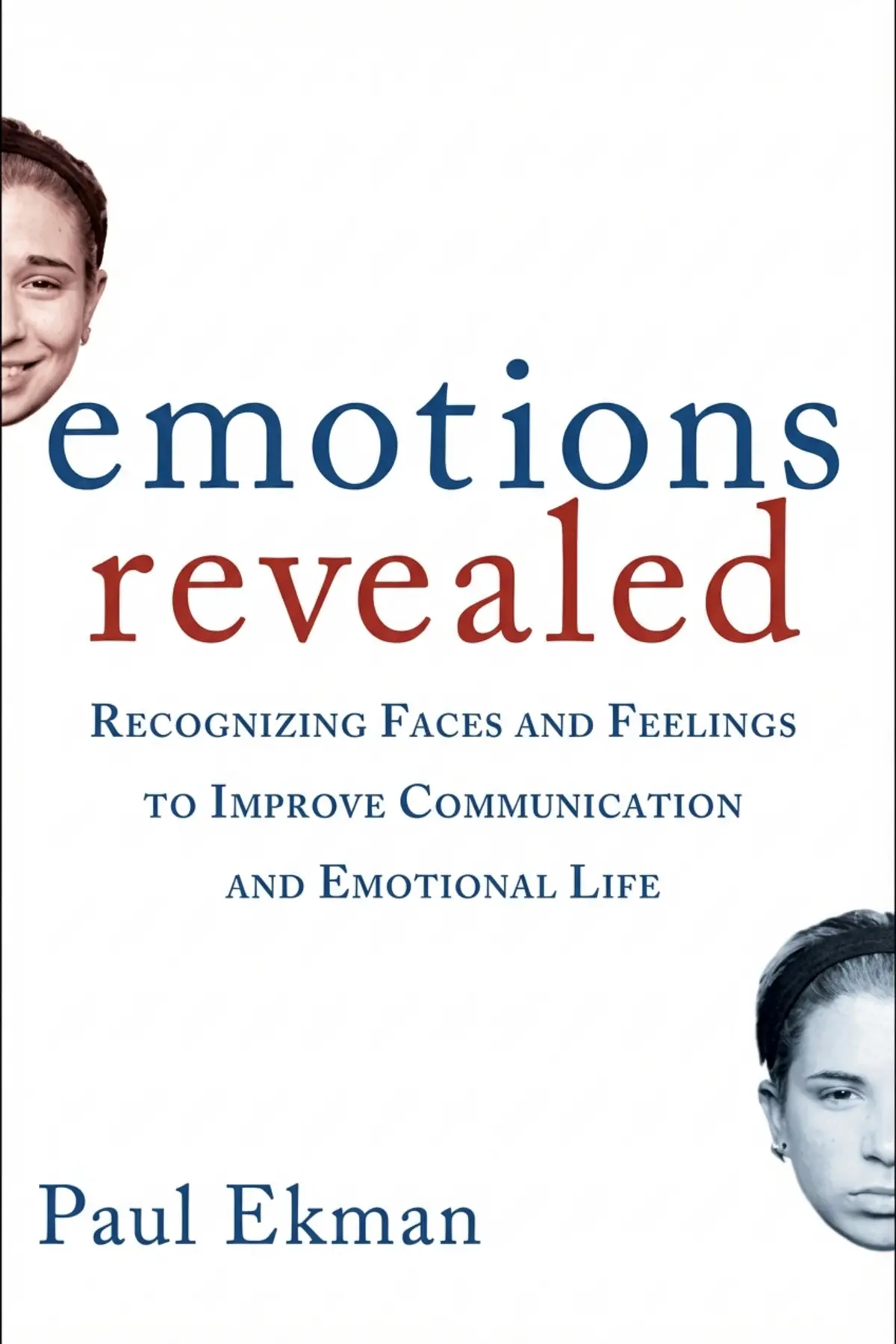
Unmasking the Face: A Guide to Recognizing Emotions From Facial Expressions
Shows how to recognize surprise, fear, disgust, anger, happiness and sadness from the eyebrows, eyes and mouth, spot expressions that are faked, and find out how your own face comes across to other people.
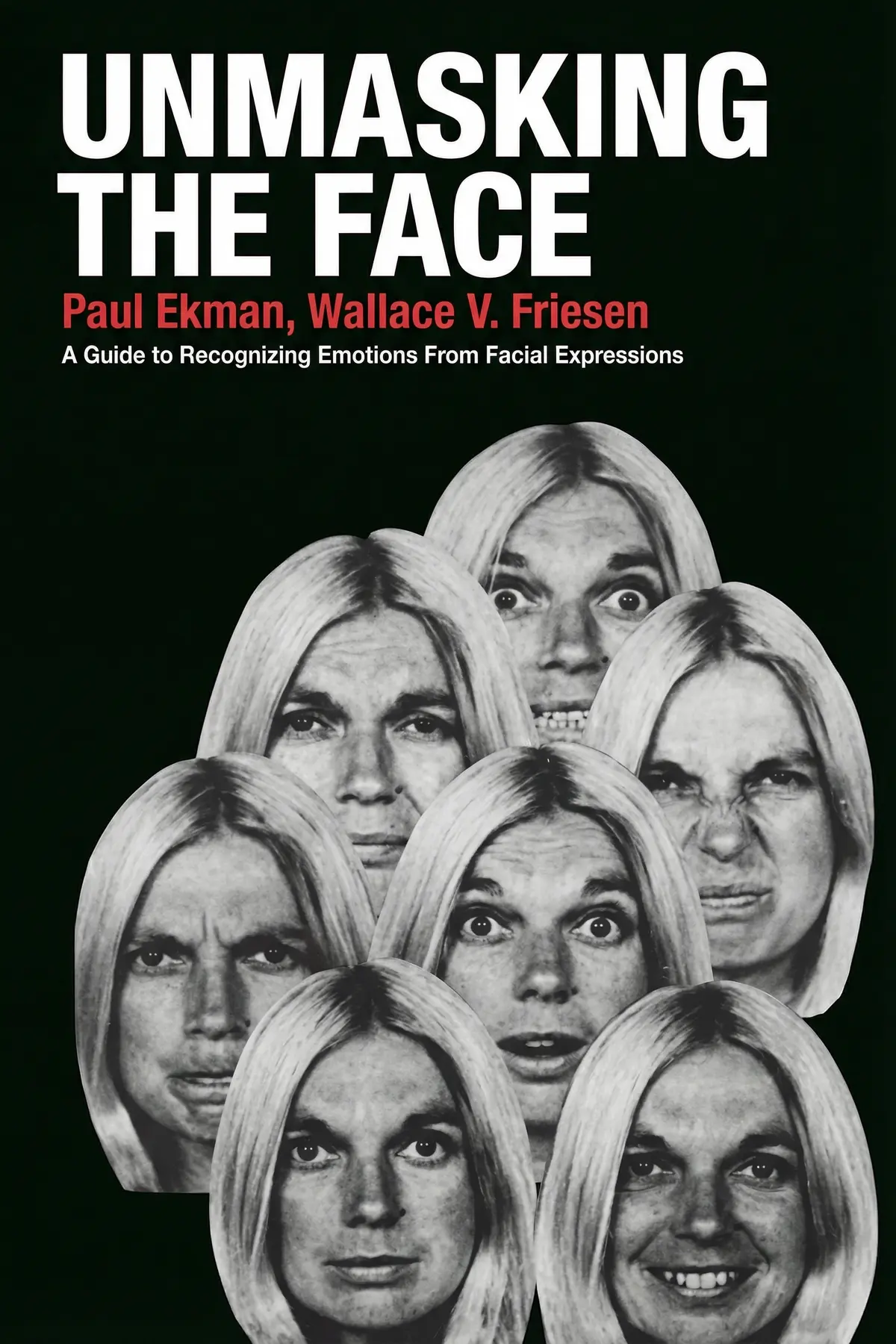
Table of Content
1. Introduction
1 min 00 sec
Most of us read faces all day and still get them wrong: the colleague’s polite smile, the partner’s blank look, the client whose tension we never caught. In Unmasking the Face, psychologists Paul Ekman and Wallace V. Friesen show that the clues sit in three places, the eyebrows, the eyes and the mouth. A brief tightening of the lips, which most people overlook, often means the other person is tense or disagrees, even when they say nothing.
The authors’ case is that each basic emotion, from surprise to sadness, leaves its own pattern across those three regions. People also carry personal styles that bend those patterns. Learn both and you read others more accurately, and you finally understand why others sometimes misread you.
What follows is a working map of six emotions, the signs that give away a faked one, and a simple test that reveals what your own face tells people.
2. Read feelings from brows, eyes and mouth
1 min 30 sec
Some of the most honest signals a person sends last less than a second. Others are impossible to miss and still get misread. Knowing which is which starts with where you point your attention.
3. Tell surprise and fear apart in seconds
1 min 44 sec
Surprise and fear use the same facial areas and look alike at first glance. But surprise can be pleasant, follows an event and passes quickly, while fear is always unpleasant, can anticipate and lasts longer. Three details tell them apart.
4. Spot disgust and anger before they escalate
1 min 42 sec
One feeling makes people want to step back; the other makes them want to step forward. Seeing which one you face, and how strong it is, can tell you whether to soften your words or simply leave.
5. Know a real smile from a polite one
1 min 41 sec
The most familiar expression on earth is also the one most often used to cover something else. A few small lines around the eyes and nose separate genuine joy from a smile doing a different job.
6. Catch a masked feeling by its timing
1 min 32 sec
People manage their faces on purpose more often than we think, especially when stakes are high. But a controlled expression usually leaves a trace, and sometimes the trace is simply a matter of a second too long.
7. Find out how your own face misleads people
1 min 48 sec
Some people get accused of lying when they are telling the truth, or called cold by partners they love. The cause may have nothing to do with character and everything to do with how their faces work.
8. Test what your face tells others
1 min 46 sec
Most people have never seen their own expressions the way others do. A set of photos and a handful of near strangers can reveal the gap, and explain conflicts that keep coming back.
9. Conclusion
1 min 20 sec
The face, in Ekman and Friesen’s account, speaks a language that is both shared and personal. The shared part is the grammar of brows, eyes and mouth that marks surprise, fear, disgust, anger, happiness and sadness in everyone. The personal part is the accent each of us brings to it: the withholder’s stillness, the revealer’s open book, the frozen-affect expressor’s permanent frown. Reading people well means knowing both, and remembering that one feature, like raised eyebrows, rarely tells the full story.
That gives you a few things to practice. In conversation, let your attention travel across all three regions, and notice a quick tightening of the mouth when you make a point. When a smile or a laugh arrives slightly late or lasts slightly long, treat it as a question worth asking. Before you judge someone cold or dishonest, consider that their style may be misleading you. And at least once, ask a partner for those 14 photos, so you learn what ten near strangers see when you believe you look afraid.
The poker player guards the face to hide a bluff. Most of us have the harder task: learning what our faces already say, and reading others with the same patience.
About this book
What is this book about?
We read faces every day, at home, at work and across the negotiating table, and we still miss a great deal. A polite smile hides fear. A blank look gets taken for coldness. A quick tightening of the lips signals disagreement that nobody puts into words. Psychologists Paul Ekman and Wallace V. Friesen argue that the clues are there for anyone who knows where to look. Each basic emotion shows up as a distinct pattern in three regions of the face: the eyebrows, the eyes and the mouth. The authors explain how to tell surprise from fear, disgust from anger, and a real smile from a mask. They also cover how blends of feeling look, and how mismatched regions and bad timing give away a forced expression. They also turn the lens around. People have personal expressor styles, eight in all, that can make their faces mislead others without any intent. Two simple tests help readers find their own style, so they can understand why others sometimes misread them and handle close relationships with more care.
Book Information
Who it's for
Spotting mixed signals
Managers, interviewers and negotiators who need to know when words and feelings do not match.
Judging feelings at work
Doctors, teachers, counselors and lawyers who must judge how people really feel.
Puzzled by others' reactions
Anyone who is often called cold, angry or dishonest and wants to know why.
About the Author
Paul Ekman
Paul Ekman (1934 to 2025) was an American psychologist and professor at the University of California, San Francisco, whose work helped return psychology to the study of emotion and nonverbal communication. He consulted for police and security offices and advised Pixar on facial emotion. Wallace V. Friesen was a research psychologist at UCSF and Ekman's longtime co-investigator, later studying emotion in old age at the University of Kentucky. Together they produced the Facial Action Coding System, an atlas for measuring facial behavior.
Ratings & Reviews
Ratings at a glance
What people think
Listeners find the material accessible and educational, noting that the thorough information caters well to those already familiar with the topic. The work offers great perspectives on how emotions are displayed on the face, featuring numerous images of different expressions, and listeners value its practicality in professional environments. They appreciate how the guide assists in interpreting human reactions, with one listener highlighting that it provides useful tools for describing characters. The quality of the writing receives varied reviews, as some listeners consider it well-crafted while others believe it could be improved.
Top reviews
Game
Wow, this book totally changed how I look at people when I'm out in public or in meetings. Ever since I became interested in body language, I've wanted a resource that actually uses scientific data instead of just guessing. This book is the actual blueprint for understanding micro-expressions and the universality of human emotion. Ekman's research is groundbreaking and honestly quite mind-blowing when you see the evidence for universal signals like disgust and surprise. I loved the practical exercises and the way the authors separate the face into different zones to make the learning process easier. It requires some intense focus, but the payoff for your social intelligence is well worth the effort. If you want to know what someone is actually thinking behind their 'polite' mask, you need to read this immediately.
Show moreLily
Essential reading for anyone interested in uncovering the truth in their personal and professional relationships. This is hands down one of the most useful books on my shelf because it provides the literal keys to unlocking human emotion. While some critics might say it's just 'common sense,' the level of precision regarding specific combinations of muscle movements is unmatched. It is a rigorous, scientific look at the face that remains accessible enough for a general audience to understand. I found the chapters explaining why we mask our feelings—the cultural and personal display rules—to be incredibly revealing. It’s not just a book; it’s a toolkit for navigating the complexities of social interaction. This masterpiece of behavioral psychology is something I recommend to everyone who wants to communicate more effectively.
Show moreAva
After seeing Dr. Ekman’s name in so many research papers, I had high expectations for this classic text. I was not disappointed, as the book serves as a comprehensive guide to the nuances of facial anatomy and emotional signaling. The authors do a fantastic job of explaining how micro-expressions occur when a person is either deliberately or unconsciously concealing a feeling. I found the section on 'message control' particularly fascinating because it reframes the idea of lying into something more complex and human. Even though the photos are old, they clearly illustrate the points being made in the text. This book is foundational for a robust understanding of human behavior at a much deeper level than standard pop-psychology. It is a brilliant resource that I find myself returning to again and again for my studies.
Show moreLucas
This book is a fascinating deep dive into the silent language we all speak every single day. Truth is, most of us go through life completely blind to the subtle cues that the people around us are giving off. Ekman and Friesen provide the facial schematics that enable you to read emotions like happiness, fear, and anger with high accuracy. I appreciated the academic rigor and the way they addressed the psychological reasons why people carry out the actions they do. It’s written with a level of detail that satisfies the intellectual mind while remaining practical for everyday use. If you’ve ever wondered why some people are so much better at 'reading the room,' this book contains the answers. It’s an eye-opening experience that makes you realize how much you’ve been missing in your conversations.
Show moreKenji
Finally got around to reading what many consider the 'bible' of facial expressions and micro-expressions. Dr. Ekman breaks down the mechanics of the human face in a way that is incredibly detailed and easy to follow if you are patient. I work in sales, and being able to identify those fleeting reactions has definitely given me an edge in understanding my clients. The book provides a solid framework for recognizing happiness, fear, and anger before a person even realizes they are showing it. To be fair, the writing quality is a bit hit-or-miss; some chapters feel like they belong in a technical manual. Despite the dated aesthetic of the photographic examples, the core information remains top-tier for anyone serious about human behavior. It is a vital skill to have in any high-stakes professional setting today.
Show moreSelin
An excellent, though somewhat clinical, guide to the hidden language of human behavior and emotion. If you can get past the dry, academic tone, there is a massive wealth of knowledge buried inside these pages. Ekman and Friesen provide a very detailed look at how to spot subtle shifts in a face that betray someone's true feelings. I found the section on 'facial deceit' and the four reasons why people control their expressions particularly enlightening for my work. It helps to have a structured, scientific way to look at something as fluid and confusing as human emotion. The only reason I am not giving it five stars is that the layout is a bit dated and the photo quality is poor. Still, the content itself is vital for anyone who works with people and needs to understand what isn't being said out loud.
Show moreSamira
I decided to pick this up for professional development after hearing it inspired the television show 'Lie to Me.' The book is essentially a training manual that teaches you how to decode the human face like it's a second language. Personally, I found the breakdown of the 'Atlas of Facial Expressions' to be the most useful part of the entire volume. It's not just about catching liars; it's about becoming more empathetic by truly seeing the pain or joy others are experiencing. Not gonna lie, some of the technical descriptions of muscle movements can get a bit tedious after a while. However, if you stick with it, you'll start seeing these patterns everywhere in your daily life. It is a fascinating study that remains relevant decades after its original publication date.
Show moreFrida
The ebook version of this text is a total mess that clearly needs a serious redesign for digital formats. I really wanted to enjoy this, especially after seeing Ekman's name everywhere in the field of body language studies. However, reading this on a Kindle was a frustrating experience because you have to constantly flip back and forth between the text and the reference images. The photos themselves look like they were taken with a low-quality camera and haven't been updated since the seventies. It reads more like a dry, clinical research paper than a compelling guide for the general public. While some of the information on facial deceit is admittedly interesting, the delivery is so incredibly sluggish that I struggled to stay engaged. If you absolutely must read it, track down a physical copy so you can actually see the diagrams clearly.
Show moreSook
As a writer looking for tools to describe characters more vividly, this was a helpful but ultimately flawed resource. There are some gems here regarding how emotions actually manifest in specific muscle groups, which is great for descriptive prose. I particularly appreciated the sections on 'display rules' and how different cultures or professions manage their outward expressions. But look, the pacing is all over the place and the tone is frequently repetitive. One moment it is fascinating, and the next, it is repeating the same point about brow movements for the tenth time. It lacks the engaging, narrative flow found in Ekman's other works like 'Telling Lies,' which I found much more digestible. It is a decent reference manual to keep on the shelf, but it is not something I would sit down and read for pleasure again.
Show moreCholada
Don't fall for the hype if you are looking for deep, groundbreaking psychological revelations. It is mostly common sense packaged as elite science, which feels like a bit of a grift to sell expensive consulting services. The text completely ignores the fact that people aren't robots; neurodivergent individuals often express and understand emotions in ways this book doesn't even acknowledge. Honestly, just go people-watching at a busy mall for twenty minutes and you will likely learn more than these pages could ever teach you. The photos are grainy, dated, and frankly quite distracting from the actual message the authors are trying to convey. I was hoping for something transformative, but it felt like a sluggish slog through obvious observations. Save your money and buy a better, more modern textbook on human behavior instead.
Show moreQuestions about this book
What is the main idea of Unmasking the Face?
Paul Ekman and Wallace V. Friesen argue that emotions show up as distinct patterns in three regions of the face: the eyebrows, the eyes and the mouth. Surprise, fear, disgust, anger, happiness and sadness each have their own pattern. People also have personal expressor styles that can make their faces mislead others. Learning both helps you read people more accurately and understand how you come across.
How do you tell surprise from fear on someone's face?
Both raise the eyebrows and widen the eyes, but the details differ. In surprise the brows lift and curve, the lower eyelids stay relaxed and the mouth hangs slack. In fear the brows are drawn closer together, the lower eyelid tenses and the lips are tight. Surprise also passes very quickly and is soon replaced by another expression, while fear lasts longer.
How can you tell if a facial expression is fake?
The authors point to two clues. The first is a mismatch between regions, such as firm lips hiding sadness that still shows in the eyes and brows. The second is timing: an expression that appears a little too late or lasts too long, like a delayed smile or an overly long laugh at a joke, suggests the person is showing a feeling they do not have.
What are the eight expressor styles in Unmasking the Face?
They are withholders, revealers, unwitting expressors, blanked expressors, substitute expressors, frozen-affect expressors, ever-ready expressors and flooded-affect expressors. Each describes a habitual way a face shows or hides feeling. A withholder may be wrongly suspected of lying, while a blanked expressor may seem cold to a partner despite feeling deeply.
How can I find out my own expressor style?
Ask someone to photograph your face 14 times, twice neutral and twice for each of six emotions, then have ten near-strangers name the feeling in each shot. Gaps between what you meant and what they saw point to your style. Alone, you can copy a typical angry face from an online picture in a mirror and notice whether it feels natural or foreign.
Readers also enjoyed

Acting with Power: Why We Are More Powerful Than We Believe
Deborah Gruenfeld


Age of Propaganda: The Everyday Use and Abuse of Persuasion
Anthony Pratkanis






59 Seconds: Change Your Life in Under a Minute
Richard Wiseman

AUDIO SUMMARY AVAILABLE
Listen to Unmasking the Face in 15 minutes
Get the key ideas from Unmasking the Face by Paul Ekman, plus 5,000+ more nonfiction titles.
- 5,000+ titles
- Listen as much as you want
- 7-day free trial
- Cancel anytime









