
14 min 39 sec
Available in: English
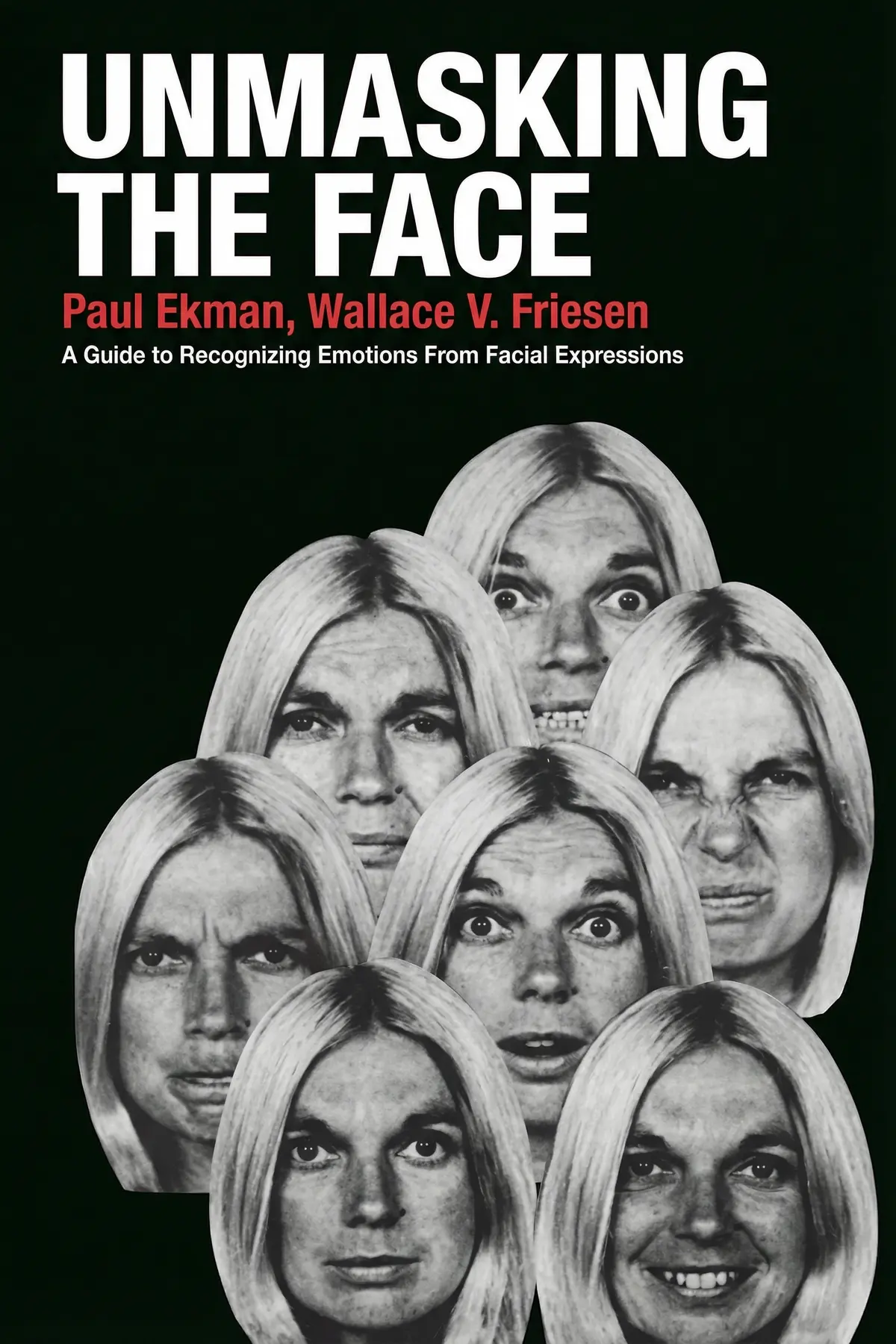
Emotions Revealed: Recognizing Faces and Feelings to Improve Communication and Emotional Life
By Paul Ekman
Shows where our emotions come from and how to read sadness, anger, fear, surprise and real happiness in the face, using the involuntary muscle movements that give away feelings people try to hide.
Table of Content
1. Introduction
1 min 05 sec
Most of us read faces by instinct and get it wrong more often than we think, mistaking a grieving smile for a happy one or missing anger until it boils over. In Emotions Revealed, psychologist Paul Ekman shows that the face keeps telling the truth even when its owner tries to hide it, because several key muscles simply refuse to obey. Lips can thin even before a person knows they are angry. The ring of muscle around the eye will not fake joy.
Ekman’s argument runs in two steps. Our emotions are inherited, still tuned to the dangers our ancestors faced, which is why they surge in ways logic cannot stop. And because they are automatic, they leak through a handful of involuntary signals that anyone can learn to see. What you gain is practical and personal: where to look for sadness, anger, fear and real happiness, how a lie can show itself in a twelfth of a second, and why reading feelings well should make you kinder rather than more suspicious.
2. Know which fears your ancestors handed you
1 min 38 sec
Yet people took as long to fear the gun image as they did the flower. Yet one simple laboratory test showed which of the two the human brain learns to fear faster, and the answer says a lot about where feelings come from.
3. Trace an outsized reaction back to its source
1 min 46 sec
A university dean stays perfectly calm when colleagues reject his hard work, then loses his temper in traffic. His case and a boy’s bicycle lessons explain why some anger is out of all proportion.
4. Spot sadness even when it looks like a smile
1 min 41 sec
A grieving mother’s photograph shows a sign so automatic that it appears even when people fight to hide their sorrow. It also explains why deep sadness is so often mistaken for its opposite.
5. Catch anger before the other person feels it
1 min 45 sec
One small change in the mouth can appear before someone even realizes they are angry. Reading it correctly, though, depends on knowing what their face looks like at rest and where they grew up.
6. Tell fear from surprise by the lower eyelids
1 min 48 sec
Two men on a balcony watched a woman fall past them, and a photographer caught their faces. Their wide eyes look like terror at first glance, but one detail around the eye says otherwise.
7. Separate a real smile from a polite one
1 min 49 sec
A nineteenth-century doctor used electricity to make his patients smile, and their faces still looked unhappy. What changed when they heard a joke reveals the one muscle a fake smile cannot recruit.
8. A lie can flash in a twelfth of a second
1 min 47 sec
A patient convinced her doctors she was well enough to go home, then confessed she had lied. Hours of slow-motion study found the moment her face told the truth, three times over.
9. Conclusion
1 min 20 sec
What Ekman offers is a way to see feelings people carry whether they mention them or not. Our emotions come from ancestors who feared spiders and fought for room to move, and they surface through muscles that ignore our wishes: the lifted inner brow of grief, lips that thin with anger, tense lower lids in fear, and the ring around the eye that only real joy can tighten. Reading these signs can expose a false smile or a lie. Ekman’s larger point is gentler. Recognizing the emotions all humans share builds empathy.
The skill also turns inward. If you have spent years swallowing sadness or anger to avoid looking vulnerable, Ekman suggests reconnecting with those feelings and letting them show. Practicing the expressions until you can tell you have them right can help you feel your emotions again and break the habit of bottling them up.
Start this week with what is in front of you. When someone smiles through bad news, check their brows and cheeks. When a discussion heats up, watch their lips against their normal shape. And when a feeling of your own surges out of proportion, ask what older danger it is answering.
The face was our first language. It is still fluent, and it is still talking.
About this book
What is this book about?
People often say less than they feel, and the face fills the gap. Before words existed, faces and bodies were how humans communicated, and much of that old language still works. Most of us have simply lost the habit of reading it carefully. Paul Ekman, a psychologist who spent his career studying emotion and nonverbal communication, argues that our feelings are inherited from our ancestors and still respond to their dangers. That is why fear of a spider sticks faster than fear of a gun, and why a traffic jam can provoke rage. Because these reactions are automatic, they show up in facial muscles that ignore our wishes: the lifted inner brows of sadness, lips that thin with anger, tense lower eyelids in fear and the ring of muscle around the eye in a genuine smile. Ekman builds his case on press photographs, laboratory experiments and his own frame-by-frame study of a filmed psychiatric interview. Readers learn where to look on a face, how to tell similar emotions apart and how micro-expressions can betray a lie, along with a gentler goal: understanding shared emotions well enough to respond with empathy and to stop bottling up their own.
Book Information
Who it's for
Managers and team leads
Managers and team leads who want to notice frustration or distress before it surfaces in words.
Interviewers, salespeople and carers
Professionals in interviews, sales or care work who need to judge whether a reassuring answer is true.
Bottling up hard feelings
Anyone who bottles up sadness or anger and wants a healthier relationship with their own feelings.
About the Author
Paul Ekman
Paul Ekman (1934 to 2025) was an American psychologist and professor at the University of California, San Francisco. His work helped bring psychology back to the study of emotion and nonverbal communication, and he did early research on the physiology of emotions. In 2002 the Review of General Psychology ranked him 59th among the 100 most eminent psychologists of the last century. He consulted for police departments and security offices, and advised Pixar Studios on how animated characters can show emotion through their faces.
Ratings & Reviews
Ratings at a glance
What people think
Listeners find the material highly educational, as it breaks down different human emotions and provides images for each, serving as a valuable asset for both school and personal life. The writing itself earns positive marks, and one listener mentions the author is a former FBI agent. Perspectives on readability and accessibility are split, with listeners labeling it both a challenging read and easy to grasp. Impressions of the visual content are also varied, with several listeners remarking that the book features few illustrations.
Top reviews
Soontorn
Ever wonder why you can't help but feel a certain way when someone scowls at you? Paul Ekman’s 'Emotions Revealed' is a masterclass in decoding the silent language of the face. After seeing the show 'Lie to Me,' I expected something sensationalized, but this is grounded in decades of rigorous field research. The section on micro-expressions is absolutely fascinating, though you really have to pay attention to the subtle cues. Truth is, the book changes how you look at every person in the grocery store or the boardroom. I loved the photographic examples, even if some of the poses by his daughter felt a bit exaggerated or 'hammy' as some reviewers say. It’s an essential guide for anyone wanting to improve their emotional intelligence and understand the universal nature of human feeling. Highly recommended for those who aren't afraid of a slightly technical read.
Show morePot
After hearing so much about the real-life 'Cal Lightman,' I finally got around to reading the source material. This is deep, insightful, and incredibly thorough. Ekman doesn't just tell you what an emotion looks like; he explains the evolutionary utility behind why our eyebrows move the way they do when we're sad or scared. The New Guinea study is legendary for a reason, and seeing the data behind universal expressions is a thrill for any science nerd. Look, it’s not a light 'beach read' by any means. It’s dense, technical, and requires you to actually look in a mirror and practice the movements. But if you want to understand the mechanics of the human face, there is simply no better authority. It’s transformed how I handle difficult conversations at work and with my family.
Show moreWichai
Finally, a book that actually explains why we feel what we feel. I’ve read a lot of body language books, but most of them are just guesswork and 'pop' psych. Ekman brings the real science. From his work with the Dalai Lama to his adventures in New Guinea, his life’s work is summarized here in a way that feels both authoritative and deeply human. Gotta say, the tips on recognizing the subtle signs of contempt helped me navigate a very tricky situation at work last week. It’s not just about lie detection; it’s about understanding the suffering and joy of the people around you. Some might find the prose a bit stiff, but the content is so valuable that I can easily overlook the academic dry spells.
Show moreKung
Picked this up to better understand my coworkers, and it’s been eye-opening. Ekman does a great job explaining how emotions aren't just things that happen to us; they are evolved responses with specific triggers. The chapter on anger was particularly helpful, especially the concept of the 'Othello Error'—the danger of misinterpreting someone's fear as guilt. Personally, I found the inclusion of the Dalai Lama's perspectives to be a refreshing touch, even if it felt a bit out of place with the hard science at times. The photos are helpful, though I wish there were more of them to illustrate the subtle differences in the 'partial' expressions he mentions. It’s a bit of a dense read, so don't expect to fly through it in one sitting. Still, the practical value for everyday interactions makes it worth the effort.
Show moreElena
The chapter on 'the' emotions—anger, sadness, fear, and the rest—is worth the price of admission alone. Ekman breaks down how these states are brief, involuntary, and universal across all human groups. I found the distinction between moods and emotions to be particularly useful for managing my own reactions. In my experience, most people think they’re good at hiding their feelings, but this book proves how much we 'leak' through micro-expressions. My only gripe is that the book can be a bit repetitive, and some of the stories about his travels felt like filler content to justify the page count. However, the core message is powerful and the advice on how to respond when you detect a hidden emotion is incredibly mature and wise. It’s about building empathy, not just 'catching' people.
Show moreNarong
Wow. This was a lot more academic than I anticipated, but in a way that felt authoritative rather than just boring. As someone who enjoys psychology, I appreciated the depth, but the tone frequently shifted between a self-help book and a cold research paper. One moment he's giving advice on parenting, and the next he's using terminology that feels a bit behind the times. I also struggled with the way he dismissed things like jealousy or love as 'plots' rather than emotions. It felt a bit like he was trying to fit the entire human experience into a very small box that only includes things with a clear facial signal. The photos were helpful for the exercises, but they did look a bit forced. It’s a solid resource for students, but maybe slightly too dry for a casual reader.
Show moreBenjamin
As someone who has always been fascinated by non-verbal communication, I found 'Emotions Revealed' to be a treasure trove of information. Paul Ekman is a legend for a reason, and his work on the universality of facial expressions is foundational to the field. I especially liked the section on 'fiero' and the other sixteen enjoyable emotions that don't always get enough attention in psychological texts. The truth is, most of us are walking around blind to the signals others are sending. This book provides the glasses to finally see them. While it can be a bit of a slog through the middle chapters where he repeats his methodology, the practical application in the final sections is gold. It’s a book that demands you take your time and actually study the faces provided.
Show morePim
Direct opinion: this is an important book that could have used a much better editor. The information on facial cues and the physical triggers of emotion is fascinating, but it’s often buried under mountains of anecdotes and repetitive explanations. I was hoping for more of a 'how-to' guide for spotting micro-expressions in real-time, but instead, I got a lot of stories about people Ekman knows. To be fair, the images are a great addition, even if there aren't as many as I expected from the cover's promises. I also found his rigid definitions of what 'counts' as an emotion to be a bit limiting and occasionally frustrating. It’s a good reference for a psychology class, but for the average person, a summarized version would probably be more effective.
Show moreSophia
This book is definitely a mixed bag for me. While Ekman is clearly a pioneer in the field, the prose is painfully dry and feels like a slog through academic papers rather than a cohesive narrative. To be fair, the information on the seven universal emotions is groundbreaking, and I appreciated the practical tips for recognizing fear versus surprise. However, the pacing is quite slow and the author repeats himself more than necessary. It felt like a 50-page manual stretched out into a full-length book with far too many anecdotes about his colleagues. Not gonna lie, I almost put it down halfway through because the 'Stone Age' terminology and the way he talks about different 'cultures' felt dated and a bit condescending. If you can push through the dense parts, there’s good stuff here, but it requires serious patience.
Show morePongpan
Not what I expected given the hype surrounding Ekman’s work as a supposed ex-FBI agent. Frankly, the writing style is archaic and frustratingly repetitive. He spends chapters building up to points that could have been summarized in a few bullet points. I bought this specifically to learn how to spot lies, but it’s more of a textbook on the philosophy of emotion than a practical guide. The photos provided are low-quality and often feature the same faces, making it hard to see how these expressions translate to real-world diversity. Also, I noticed several factual errors—like the bizarre claim about AIDS not being a virus—which made me question the overall accuracy of the text. It’s a tough read that lacks the 'punch' you’d expect from such a famous social scientist. I’d suggest just watching a few YouTube summaries instead.
Show moreQuestions about this book
What is the main idea of Emotions Revealed by Paul Ekman?
Ekman argues that emotions are inherited from our ancestors and still react to their dangers, which is why they can feel irrational. Because these reactions are automatic, they show up in facial muscles people cannot fully control. Learning those involuntary signs lets you recognize sadness, anger, fear, surprise and genuine happiness, notice hidden feelings and, most importantly in Ekman’s view, respond to others with more empathy.
How can you tell a real smile from a fake one?
Look at the eyes. Drawing on the nineteenth-century experiments of neurologist Duchenne de Boulogne, Ekman explains that the lip muscle behind a smile can be moved at will, but the ring of muscle around the eye, the orbicularis oculi, cannot be tightened on purpose. It joins in when enjoyment is real. The voice also helps you tell which kind of pleasure someone feels.
How do you tell fear from surprise on someone's face?
Raised upper eyelids appear in both, so they are not enough. Ekman points to the lower eyelids: when they are tense and make the eyes look big and frozen, the person is afraid. In surprise the eyelids rise, but not as high as they would in fear. Because lower-lid tension is beyond conscious control, it gives fear away even when someone hides it.
What are micro-expressions in Emotions Revealed?
Micro-expressions are very brief facial movements that reveal a feeling someone is trying to conceal. In a filmed interview with a suicidal patient named Mary, who lied about feeling better, Ekman found a look of anguish lasting one twelfth of a second, covered at once by a smile, and it appeared three times. He spent more than 100 hours studying the 12-minute film to find it.
How can I apply Emotions Revealed in daily life?
Check the inner eyebrows and cheeks when someone smiles through bad news, since raised inner brows signal sadness. Watch for lips growing thinner than usual as an early sign of anger, keeping cultural differences in mind. When your own reaction feels far too strong, ask what old trigger it answers. Ekman also encourages letting your sadness and anger show instead of bottling them up.
Featured in
Readers also enjoyed



A Liberated Mind: How to Pivot Toward What Matters
Steven C. Hayes


Acting with Power: Why We Are More Powerful Than We Believe
Deborah Gruenfeld


Age of Propaganda: The Everyday Use and Abuse of Persuasion
Anthony Pratkanis



AUDIO SUMMARY AVAILABLE
Listen to Emotions Revealed in 15 minutes
Get the key ideas from Emotions Revealed by Paul Ekman, plus 5,000+ more nonfiction titles.
- 5,000+ titles
- Listen as much as you want
- 7-day free trial
- Cancel anytime









