

Abortion: Our Bodies, Their Lies, and the Truths We Use to
Jessica Valenti
 English
 ไทย
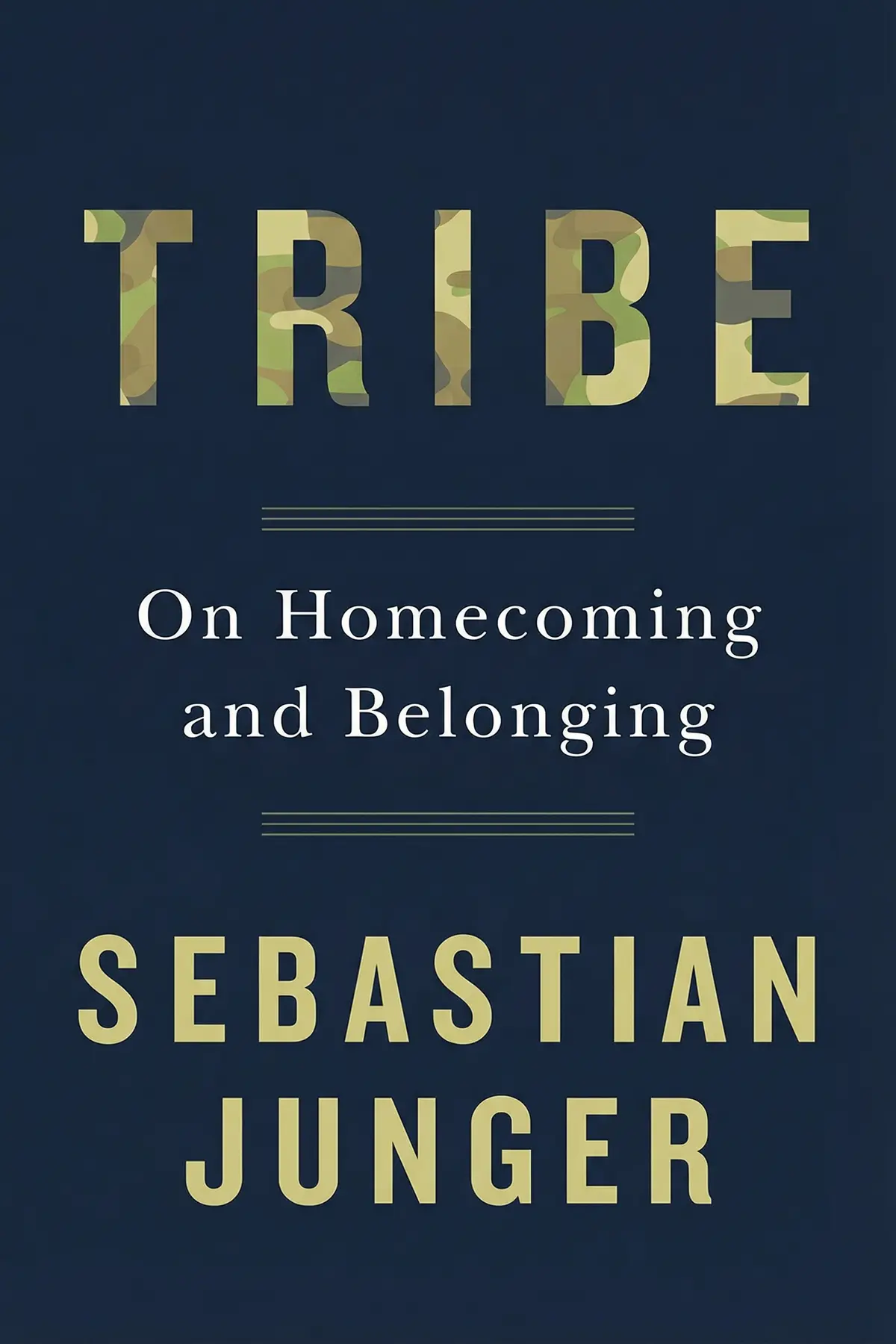
Sebastian Junger explains why people often feel better during wars and disasters than in comfortable peace, why soldiers struggle to come home, and how communities can rebuild the belonging that humans need.
1 min 06 sec
Many people today enjoy more comfort and independence than any generation before them, and still feel alone. In Tribe, war reporter Sebastian Junger argues that this is no accident: humans evolved to live in small, equal groups that depend on each other, and modern wealth has stripped those groups away. His evidence is striking. When German bombs fell on London in 1940, the city’s psychiatric wards emptied instead of filling up.
Junger’s throughline is easy to state and hard to forget. We do best when we belong to a group that shares danger, work and reward, and when that bond disappears, loneliness moves in. He follows it through colonial settlers who preferred tribal life, hunter-gatherers in the Kalahari, earthquake survivors in Peru and soldiers coming home from Afghanistan. Along the way you get a clear explanation of why crisis can feel oddly good, why homecoming can hurt, and what a community can do to offer belonging before the next emergency arrives.
1 min 58 sec
In colonial America, people raised in the modern world kept running toward tribal life, and almost nobody ran the other way. Even freed captives slipped back to the tribes that had taken them. Something was missing at home.
1 min 45 sec
A young woman taken by the Seneca hid from the search parties sent to save her. Her reasons were partly about comfort and leisure, but the biggest draw was something colonial society could not offer at any price.
1 min 40 sec
Kalahari nomads worked a fraction of an office worker’s week and shared everything they gathered. Junger argues that our genes still expect their kind of life, and that the gap between the two carries a heavy cost.
1 min 48 sec
The British government expected bombing to fill psychiatric hospitals with millions of patients. The opposite happened, and researchers in France and Belfast had seen the same strange pattern. War, it seems, answers a need peace ignores.
1 min 54 sec
After a catastrophic earthquake in Peru, survivors cut off from the world shared everything and forgot about race and class. Then the rescue helicopters arrived, and something nobody expected happened to their solidarity.
1 min 54 sec
Months after surviving a rocket barrage in Afghanistan, Junger collapsed into panic on a New York subway platform. His diagnosis was familiar, but the deeper reason so many soldiers struggle at home is far less obvious.
1 min 47 sec
Native American tribes treated a returning warrior’s recovery as everyone’s business, through a ritual lasting more than two weeks. Junger draws a practical idea from it that almost any town could try on a single day each year.
1 min 12 sec
Tribe ends up describing a strange trade. Modern Western life has given people wealth, comfort and the freedom to go their own way, and in return it took away the small, equal groups humans lived in for most of their history. Most days we hardly notice the loss. Then a bombing raid or an earthquake brings the tribe back for a while, and people become calmer, more purposeful and more generous with each other. When the danger passes, the bond goes, and loneliness returns, hardest of all for the soldiers who knew that bond most closely.
Junger’s answer is to build belonging on purpose, in peacetime, instead of waiting for disaster to do it. That can start small. Look at the groups you belong to and ask whether every member can earn standing in them, the way any Seneca hunter could. Make room for people who come back from hardship to speak and be heard by more than their own families, as a Veterans Day town hall would allow. And when a comfortable stretch of life feels empty, count how many people truly rely on you.
The survivors of Yungay shared everything until the helicopters landed. The work is to keep sharing after they do.
Modern Western life offers wealth, comfort and the freedom to pursue your own goals. Yet many people inside it feel alone, and mental illness is common. Sebastian Junger, a reporter who covered the war in Afghanistan for over ten years, argues that the problem lies in a mismatch between how we live and how we evolved. His evidence ranges widely. Colonial settlers kept choosing to live with Native American tribes. The !Kung of the Kalahari needed about 12 hours of work a week. Psychiatric wards in London emptied during the Blitz, and survivors of a Peruvian earthquake shared everything until rescuers arrived. Junger adds his own story of a panic attack after combat, and the voices of soldiers who miss the closeness of their units. The result is a clear account of why hardship can bring people together, why returning to ordinary life can hurt so much, and what communities can do, from shared rituals to open town halls, to give people a tribe without waiting for a crisis.
Professionals who have comfort and independence yet feel lonely, and want to understand why.
Veterans, their families and anyone supporting someone who has come home from war or crisis.
Team leads and community organizers who want people to feel they truly belong.
Sebastian Junger, born in Boston in 1962, is the author of The Perfect Storm, War, Fire and A Death in Belmont. He reported on the war in Afghanistan for more than ten years, and with Tim Hetherington he directed Restrepo, which was nominated for an Academy Award and won the Grand Jury Prize at Sundance. A contributing editor to Vanity Fair, he has received a National Magazine Award.

Listeners find this work remarkably insightful and evocative, causing them to reevaluate their perspectives on life and society. The prose is expertly crafted with detailed explanations, and one listener notes how it touches on psychological and sociological hot points. Furthermore, the book features a compelling premise and well-received, thorough research. Regarding length, while some find it short but deep, others wish it were longer.
Sebastian Junger manages to distill a massive societal problem into a lean, punchy narrative that stays with you long after the final page. He argues that our modern obsession with individualism has actually crippled our mental health, creating a culture where we are physically safe but emotionally adrift. While his research on the Blitz and various Native American cultures is fascinating, the core strength lies in how he reframes PTSD not just as a reaction to violence, but as a crisis of belonging. We’ve built a world where no one feels necessary anymore, and that’s a terrifying thought. Some might find his lack of formal academic footnotes frustrating, but the prose is so evocative that the logic feels almost intuitive. It’s a slim volume, yet it packs more intellectual weight than books three times its size.
Show morePicked this up because I’ve been feeling a general sense of burnout and disconnection, and man, did this hit the nail on the head. Junger explains so clearly why we feel so lonely despite being more "connected" via technology than ever before. We aren't designed to live in little boxes by ourselves; we are designed to share food, wood, and danger. The stories about white settlers refusing to leave Native American tribes were a total eye-opener for me. It’s a quick read, but it’s dense with ideas that make you question every luxury you think you need. Truly, this book changed how I look at my neighborhood and my workplace. We don't need more stuff; we need more people who actually count on us.
Show moreWow. This is a tiny book with a massive soul. Junger doesn’t waste a single word as he dissects the rot at the heart of modern civilization—the fact that we’ve traded belonging for comfort. He argues that we are evolved to survive together, and when we take away the "together," the "survive" part becomes a psychological nightmare. The chapter on the Balkan war was particularly haunting, showing how people actually felt better when they were huddling in basements sharing bread than when they were safe and alone later. It’s a total shift in perspective that makes you realize why our "thank you for your service" culture is so hollow. If you want a book that will make you rethink your entire lifestyle in under two hours, this is it.
Show moreThis book is a vital call to action for anyone who feels like something is fundamentally "off" about the way we live today. Junger explores the idea that we aren't just suffering from individual chemical imbalances, but from a "disorder of integration" where we’ve lost our place in the group. By looking at how soldiers and indigenous peoples find meaning through sacrifice, he highlights the emptiness of our self-centered, affluent lives. The writing is beautiful, balancing raw reporting with deep philosophical inquiry. It’s a short, intense read that challenges the idea that progress is always better. It reminded me that building community isn't just a nice thing to do—it’s a biological necessity for our survival. Absolutely brilliant.
Show moreEver wonder why people sometimes remember disasters or war with a strange kind of fondness? Junger dives deep into this paradox, suggesting that the "tribal" connection formed during crises is what humans are actually evolved for. Frankly, it’s a jarring perspective because it implies that our peaceful, affluent society is actually making us miserable by stripping away our need for each other. I found the sections on the psychological integration of returning veterans particularly enlightening, as he moves away from clinical definitions toward a more sociological explanation for their struggle. However, I do wish he had expanded more on how these tribal dynamics could exist in modern, non-catastrophic settings without the need for a war. Still, it’s a highly insightful look at the cost of our current independence.
Show moreAs someone who has always been fascinated by the military experience, I found Junger’s analysis of PTSD to be the most compelling part of this work. He suggests that the "disorder" isn't just about what happened "over there," but about the isolation veterans face when they come home to a society that doesn't need them to survive. This shift from a high-stakes, communal environment to a lonely cubicle is a trauma in its own right. The writing is crisp and professional, which is what you’d expect from the author of The Perfect Storm. My only gripe is that it’s almost too brief; I wanted more data to support his claims about the rising rates of depression in affluent nations. Nevertheless, it makes a very strong case for why we need to rethink how we support our troops and each other.
Show moreFinally got around to reading this after hearing so much buzz, and I have to say, it’s a fascinating, if slightly flawed, piece of work. Junger is at his best when describing the intense bonds formed in the military—the "tribe" that makes the individual feel both protected and essential. He draws a sharp contrast between that and the "greed" of modern capitalism, which he blames for our current epidemic of loneliness. While I agree with the sentiment, his portrayal of indigenous tribes feels a bit like a "noble savage" trope, glossing over the darker aspects of those cultures to make a point. It’s a very male-centric book, focusing almost entirely on the brotherhood of soldiers and laborers. Still, the prose is well-crafted and the central message about our need for community is undeniable.
Show moreThe truth is, this feels more like a long-form magazine article than a fully fleshed-out book, though the ideas are undeniably provocative. Junger makes some bold claims about how human-made disasters actually improve social cohesion and mental health, citing the Blitz in London as a primary example. While the anecdotes are powerful, I kept waiting for more empirical evidence or perhaps a deeper dive into the neurobiology he hints at. He mentions hyperarousal and brain chemistry but then moves on before really explaining the "why" behind it. It’s a bit of a "hand-waving" approach to science that left me feeling slightly skeptical. However, his critique of how we over-pathologize veterans instead of giving them a purpose is a conversation we absolutely need to have.
Show moreJunger writes with incredible authority, but I found myself constantly questioning his logic during the more "evolutionary" arguments. He tries to use biology to explain altruism, yet he seems to pick and choose examples that fit his narrative while ignoring solitary mammals or the complexities of group selection. Look, the guy is a world-class storyteller, and his experiences as a war correspondent give him a unique perspective that is truly valuable. I just wish he hadn't tried to dress up his personal philosophy as hard science. It’s a great bar conversation—rugged, insightful, and a bit rowdy—but it lacks the footnotes needed to be a definitive text on human behavior. It’s worth the read for the questions it asks, even if the answers are a bit too simplistic.
Show moreNot what I expected at all, and to be fair, I found the book’s premise deeply problematic in its narrowness. Junger’s "tribe" seems to be an exclusively male club where bonding only happens through shared trauma, manual labor, or combat. Where are the women in this narrative? Even when discussing the Bosnian war or indigenous cultures, the female experience is either sidelined or framed entirely through a male lens. His romanticization of "Stone-Age" living feels like a New Age fantasy that ignores the brutal realities of those societies, including the lack of individual agency. The book is short enough to finish in an afternoon, but the sweeping generalizations and lack of scientific rigor make it hard to take as a serious sociological study. It feels more like a nostalgic manifesto for a masculinity that never really existed.
Show moreJunger argues that humans evolved to live in small, equal groups that share work, danger and reward. Modern Western societies give people wealth and independence but strip away those groups, which he links to widespread loneliness and mental illness. That is why wars and disasters, which force people to depend on each other, can improve mental health, and why returning to ordinary life can be so hard.
He points to evidence such as London’s psychiatric wards emptying during the Blitz, Emile Durkheim’s observation that French psychiatric hospitals emptied in wartime, and a 50 percent fall in suicide attempts during the 1969 Belfast riots. Sociologist Charles Fritz, after interviewing over 9,000 disaster survivors, argued that crises simplify life and revive the social bonds modern life wears away.
Junger argues that combat creates deep bonds between equals who trust each other with their lives, as artillery soldier Win Stracke described. Home offers small, isolated families with little communal spirit. According to the studies he cites, a lack of social support doubles the chance of PTSD, so everyday life at home, and not just combat, often injures returning soldiers.
Junger draws on Native American traditions, where returning warriors went through a 16-day purification ritual that the whole community joined. He suggests secular communities create events that heal everyone together, for example opening town halls on Veterans Day so soldiers can talk about their service. More broadly, he urges people to build tribal belonging in peacetime instead of waiting for a crisis.
Jessica Valenti



Johny Pitts


bell hooks

Fay Bound Alberti

Daniel Goleman

AUDIO SUMMARY AVAILABLE
Get the key ideas from Tribe by Sebastian Junger, plus 5,000+ more nonfiction titles.









