

Afropean: Notes From Black Europe
Johny Pitts
 English
 ไทย
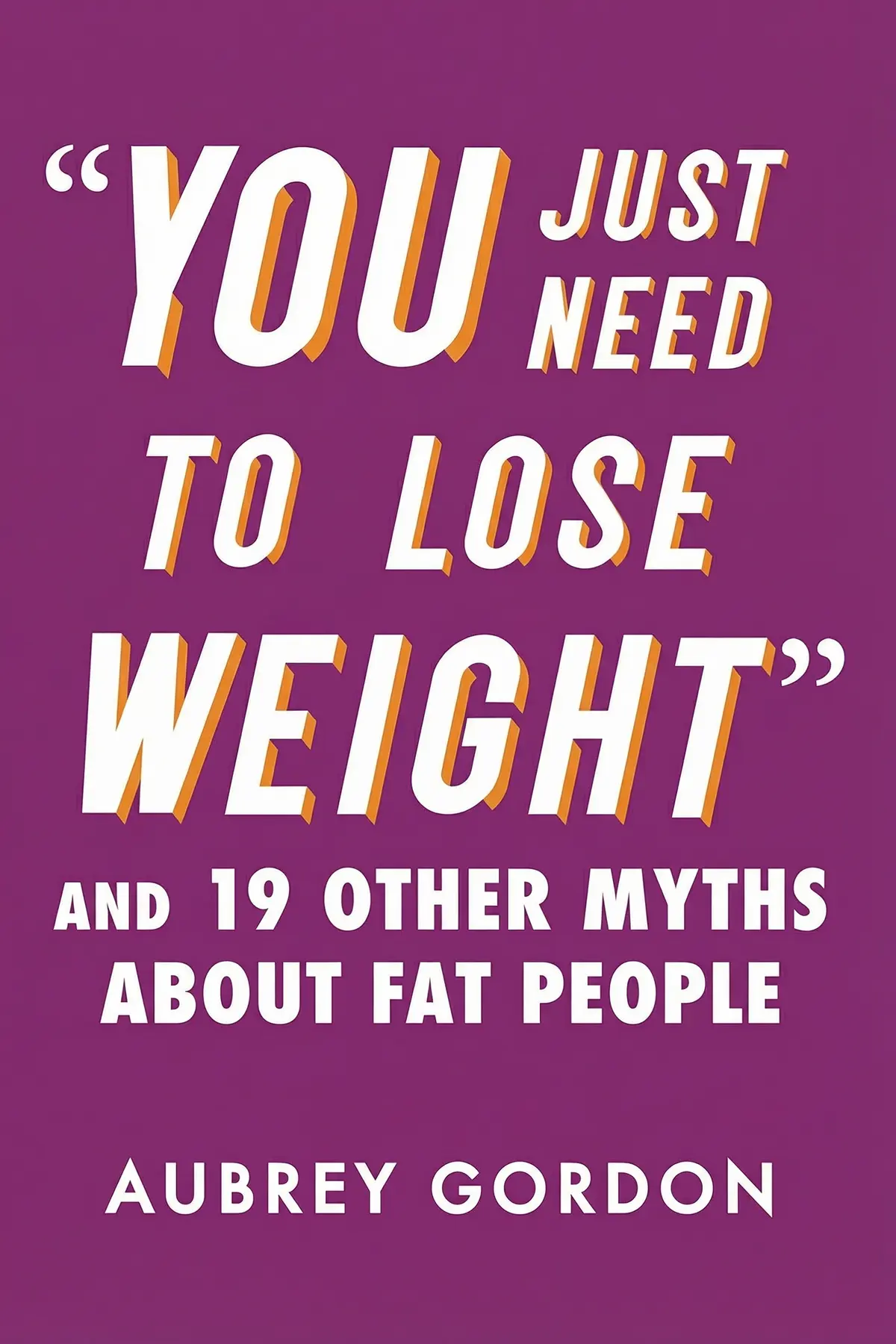
Aubrey Gordon takes apart the most repeated myths about fat people, from willpower and BMI to the obesity epidemic, and shows how to spot the bias behind them and respond fairly.
1 min 03 sec
If you have ever said that someone could just lose weight, you were repeating a myth that has outlived decades of evidence against it. In You Just Need to Lose Weight, author, podcaster and activist Aubrey Gordon takes that claim apart, along with others like it, from the idea that fat people are always unhealthy to the charge that supporting them glorifies obesity.
Her case is that these beliefs persist because they confirm a bias many people already carry. Check them against their history and they fall apart. The body mass index was designed by a mathematician who never studied medicine, and one famous death toll leaned partly on data from 1951.
Gordon builds her argument from her own encounters and from the numbers behind a public panic. Follow it through and you will have the history to answer a weight myth in conversation, a way to catch your own reflexes, and a clearer idea of how to stand beside people whose bodies get judged every day.
1 min 45 sec
A child’s blunt remark in an airport line upset her mother far more than it upset the woman she described. Gordon explains why the polite workaround can cut deeper than an open insult.
1 min 57 sec
Eat less, move more: the advice sounds like simple arithmetic. A study of reality show contestants and a set of medical conditions suggest the sum leaves out most of what decides a person’s weight.
1 min 57 sec
Medicine has long relied on one ratio, treating it as a gold standard for measuring health. Its inventor never trained as a doctor, and he warned against using it the way it is used now.
1 min 59 sec
American bodies did not suddenly change in the late 1990s, yet the news began describing an epidemic. A shift in definitions and one disputed study help explain where the sense of crisis came from.
1 min 49 sec
A teenager shares one rare good moment with her own body and is accused of promoting something dangerous. Swap in a thin person and the same picture draws compliments. Gordon asks what that gap reveals.
1 min 49 sec
Being called too thin and being called too fat can both sting. Gordon explains why only one of them reaches beyond the individual into a web of institutional and cultural bias.
1 min 05 sec
What Gordon’s book finally teaches is how a myth survives. None of the ones she examines lasted because the evidence held. They lasted because they flattered a belief people already had, that thin means good and fat means failing. A statistician’s average became a medical verdict. A change of cutoff became an epidemic. A happy teenager in a swimsuit became a threat.
The habits her argument supports are modest and can start today. Let fat be a plain word. Before giving anyone weight advice, assume they know more about their own body than you do. Read any weight statistic by asking where the data came from and how old it is. And when a fat person is treated fairly and someone calls it glorification, ask where the discomfort is really coming from, including when it comes from you.
Think back to the girl at airport security and Gordon’s calm reply: “It’s okay. I am fat.” Those few words take the shame out of the word and leave only a description, which is all it ever needed to be.
Few beliefs feel as obvious as this one: if someone does not want to be fat, they can simply lose weight. Aubrey Gordon argues that this idea, and many like it, survive because they match what people already assume about bodies, not because the evidence holds up. Drawing on her own encounters, from a child's remark at airport security to a nurse's careful euphemism to a wave of online abuse at eighteen, Gordon examines where weight myths come from. She traces the body mass index back to a nineteenth-century mathematician who built it from data on French and Scottish men. She shows how a change in definitions and a disputed 2004 study helped turn rising weights into a national panic. And she explains why fat shaming and skinny shaming, though both wrong, are not equal. Readers get the history and the numbers needed to answer weight myths in conversation, a way to notice their own reflexes, and practical ways to support people whose bodies are judged every day.
People who want facts to answer weight myths raised by family, friends or colleagues.
Managers, teachers and health workers who want to treat fat people fairly and catch their own assumptions.
Fat readers tired of defending their bodies who want the history behind BMI and the obesity epidemic.
Aubrey Gordon, born in 1983, is an author, podcaster and activist who also writes under the pen name Your Fat Friend. She is a columnist for SELF magazine and co-hosts the podcast Maintenance Phase, which examines the weak science behind health and wellness fads. Her writing has been translated into nineteen languages.

Listeners find the work informative and well-researched, offering clear and concise details throughout. They value its readability, with one listener noting it can be read start to finish, and consider it thought-provoking, as one review highlights its investigation of societal myths. The book earns praise for its writing quality, humor, and attention to anti-fat bias, and listeners appreciate the author’s approach. The pacing receives mixed reactions.
A searing, immensely necessary takedown of cultural conditioning. Gordon dismantles twenty pervasive falsehoods with surgical precision and surprising wit, transforming what could have been dry sociological research into a compelling, accessible handbook. The breakdown of the BMI's deeply racist origins and how routine medical neglect harms patients in larger bodies hit particularly hard. I especially appreciated the reflection prompts provided at the end of each section, which turn passive reading into an active interrogation of our own ingrained anti-fat biases. Frankly, this text should be required reading in medical schools and public health seminars across the country.
Show moreAs a healthcare worker who witnesses clinical bias firsthand, this book felt like a bucket of ice water. Gordon lays bare the horrifying reality of patients whose real symptoms are routinely ignored because practitioners fixate solely on their weight. We are conditioned to treat fatness as an inherent moral and physiological failure, yet this book systematically exposes how thinness has become conflated with virtue and wellness. Gordon’s dry humor balances the heavy emotional weight of the testimonies, making the arguments remarkably readable from start to finish. Looking back on my own clinical interactions, I realized how often subtle biases color professional judgment without us even noticing. The chapter detailing how doctors delay diagnostic testing for heavier individuals ought to haunt every practicing clinician. It is uncomfortable, rigorous, and completely vital work.
Show moreFew cultural critiques manage to be this rigorously researched while remaining thoroughly engaging and laugh-out-loud funny. Gordon deftly cuts through decades of diet-industry propaganda, exposing how the endless cycle of intentional weight loss damages metabolisms while lining corporate pockets. Her dismantling of the myth that any fat person can just diet their way to thinness is supported by compelling longitudinal data, not just wishful thinking. What truly elevates the writing is her refusal to let readers settle for superficial body positivity; she demands political liberation and tangible structural accommodation instead. The historical context tracing anti-fatness back through racial and class hierarchies deepens the entire thesis. It took me two sittings to finish because the prose is just that fluid.
Show moreAfter spending my entire adult life trapped in cycle after cycle of restrictive dieting, reading this brought immense relief. Gordon articulates the quiet shame and constant social policing that fat individuals endure with staggering clarity. Seeing twenty of the most common, hurtful myths laid out in black and white—and systematically debunked with documented evidence—felt like having a massive weight lifted off my shoulders. The book does not ask readers to celebrate unhealthy habits; rather, it demands that society recognize bodily autonomy and extend basic human decency to everyone regardless of size. Her prose is direct, warm, and delightfully devoid of academic jargon. I finished this feeling empowered to advocate for myself in spaces that have historically made me feel invisible or unwelcome.
Show moreThe myth of the benevolent concern troll has never been dissected more brilliantly. We all know people who claim their relentless scrutiny of fat bodies stems purely from compassion, and Gordon mercilessly strips away that facade. She shows how unsolicited health advice is rooted in disgust, privilege, and social conformity rather than genuine care. What stands out most is her intersectional lens, acknowledging how race, gender, and disability compound physical marginalization. Listening to Gordon narrate the audiobook version added even more emotional resonance; her deadpan comedic delivery makes heavy, infuriating material digestible. It completely changes how you perceive public health rhetoric and casual dinner-table conversations about food.
Show morePicked this up after listening to Aubrey Gordon's podcast, and her distinctive voice shines through on every page. She methodically takes apart the pervasive cultural script that body size is simply a matter of willpower and moral virtue. Her analysis of how society weaponizes diet culture under the benevolent guise of concern for public health is both brilliant and deeply unsettling. My only real critique lies in the book's pacing. Toward the final chapters, the structure grows somewhat formulaic, and the recommended action steps feel repetitive rather than groundbreaking. Even so, it serves as a lucid, eye-opening primer for anyone ready to unlearn decades of toxic conditioning.
Show moreNot what I expected from a standard non-fiction release on body image. Instead of serving up gentle self-love platitudes, Gordon presents an unvarnished political manifesto challenging societal bigotry at institutional levels. She systematically disproves the notion that shame is an effective health motivator, illustrating how stigma itself breeds chronic illness and depression. The writing is punchy, sarcastic, and unapologetic. My single hesitation is that while she rightly critiques corporate diet schemes, the book could have dug deeper into the broader capitalist machinery that profits from keeping people chronically insecure. Still, it's a remarkably clarifying read that forced me to reconsider dozens of casual assumptions I make every day.
Show moreFinally got around to this after seeing it everywhere on book clubs and social feeds. It is exceptionally well-structured, treating each widespread myth like a discrete puzzle to be solved. Gordon does a stellar job illustrating how arbitrary metrics like the BMI were never intended for individual clinical diagnostic use. While some chapters feel a bit rushed compared to the deeply detailed essays on healthcare discrimination, the overall narrative flow remains crisp. The prose is approachable without dumbing down the sociopolitical intricacies. A solid, educational read that will undoubtedly shift perspectives for anyone willing to engage with an open mind.
Show moreThe textbook-style organization gives this volume a strong pedagogical spine, but it comes at the expense of organic narrative momentum. Splitting the content across twenty distinct myths makes it easy to reference specific topics like airline seating or the validity of the obesity epidemic. However, reading it straight through reveals significant structural repetition. The suggested action items often stall out at basic recommendations to read more literature, which feels anti-climactic given the urgency of the subject. In my experience, Gordon’s first book packed a stronger personal punch. This one functions well as a basic 101 manual for beginners, though seasoned advocates may find themselves skimming familiar territory.
Show moreCan we have an honest conversation about public health without reducing complex biology to ideological talking points? Gordon's indignation is completely understandable—no human being deserves social ostracization or medical mistreatment based on their physical frame. Yet beneath the rhetorical fire, this book leans heavily on cherry-picked citations while glossing over established physiological realities. Sweeping away the health risks associated with visceral adiposity or dismissing energy balance principles entirely feels intellectually disingenuous. To be fair, she makes salient arguments regarding systemic bias in clinical settings, but building a thesis on selective data undermines her credibility. It preaches to an existing echo chamber rather than convincing skeptical outsiders.
Show moreGordon argues that common myths about fat people, such as the belief that anyone can simply lose weight or that supporting fat people glorifies obesity, persist because they confirm existing bias rather than because evidence supports them. She examines where these ideas came from, including the history of the body mass index and a disputed 2004 study on deaths from excess weight, and shows how each falls apart under scrutiny.
Gordon explains that the body mass index was created about 200 years ago by Adolphe Quetelet, a Belgian mathematician and statistician with no medical training. He built it from data on men of French and Scottish descent and intended it to describe populations, not individuals. Today it is used to judge personal health, and Gordon notes it overstates risk for Black people and understates it for Asian communities.
Gordon argues the sense of sudden crisis was driven partly by definitions and flawed studies. In 1995 the World Health Organization adopted the BMI and lowered its thresholds for overweight and obese, without any sudden rise in weight. A 2004 study claiming 400,000 yearly American deaths from excess weight used data reaching back to 1951 and has been widely discredited, though researchers still debate weight and mortality.
Gordon says all body shaming is wrong and none of it changes anyone’s weight. But she draws a distinction: skinny shaming is an individual act of aggression, while fat shaming is systemic, part of institutional, cultural and personal bias that can affect whether fat people meet basic needs. That is why she considers fat shaming significantly more harmful.
Start by using fat as a neutral description instead of reaching for euphemisms. Hold back unrequested weight advice, since body size depends on genetics, health conditions and more than willpower. Question weight statistics by checking the age of the data and whether definitions changed. And if you are not fat, speak up when you see body shaming and examine your own discomfort with fat people being treated fairly.
Johny Pitts


bell hooks

Fay Bound Alberti

Daniel Goleman


Virginia Woolf

Tracy Rosenthal

Jessica Valenti

AUDIO SUMMARY AVAILABLE
Get the key ideas from “You Just Need to Lose Weight” by Aubrey Gordon, plus 5,000+ more nonfiction titles.









