

17 min 04 sec
Available in: English
 ไทย
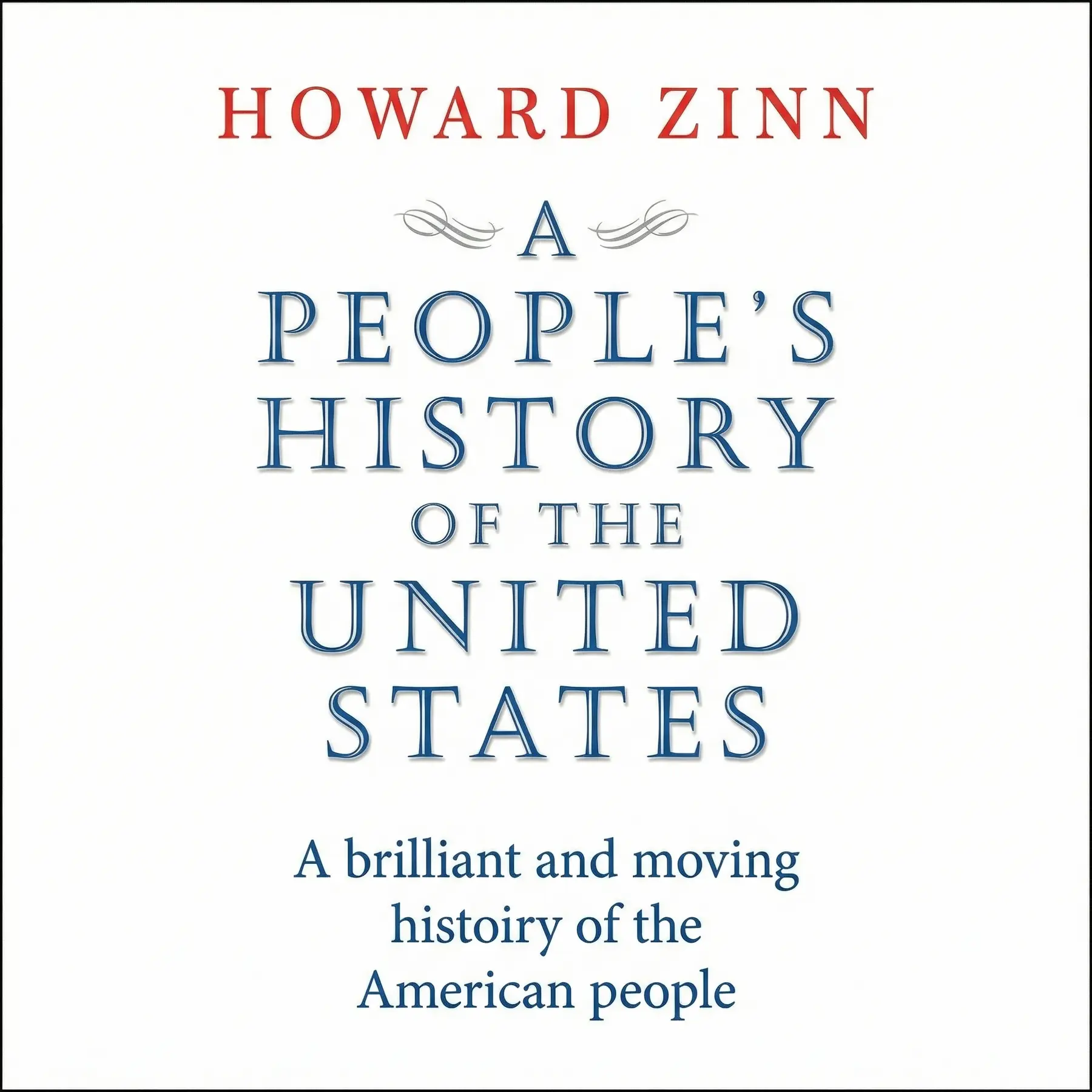
EnglishไทยA People’s History of the United States: 1492 to Present
By Howard Zinn
Howard Zinn retells American history from the side of native nations, the enslaved, women and workers, showing how a wealthy few shaped government and how ordinary people won their freedoms by organizing.

Table of Content
1. Introduction
1 min 01 sec
Most of us learned our country’s past from the top down: explorers, founders and presidents making brave choices. In A People’s History of the United States, historian Howard Zinn starts instead with Christopher Columbus’s own journal, which records a plan to conquer the people who met him. From there Zinn retells American history through those usually left out: native nations, the enslaved, servants, women, strikers and soldiers.
His argument is blunt. From the first colonies on, he says, a wealthy few built and steered the government to protect their property, while ordinary Americans pushed back again and again through uprisings, strikes and organized resistance.
Following that thread from 1492 to the wars of recent decades leaves you with a way of reading any official story: asking who benefits, whose voice is missing, and what it took for people at the bottom to be heard.
2. Ask who wrote the history you were taught
1 min 48 sec
A national holiday honors him, and generations of schoolchildren learned his name as a hero. Columbus’s own journal tells a darker story, and the gap between the two reveals how history usually gets written.
3. Learn how the rich kept poor people divided
2 min 16 sec
Starving settlers, native farmers who shared their land, and white servants crossing the ocean beside enslaved Africans. Zinn finds in the early colonies a fear among the rich that shaped American law for centuries.
4. See who paid the price of a growing nation
2 min 15 sec
A state’s name that meant rest, a war that started on a riverbank, and a promise of 40 acres. Zinn follows the cost of a growing nation to the people who paid it.
5. What servant girls and tenant farmers teach about power
2 min 16 sec
Servant girls, mill workers and tenant farmers held almost no power on paper. A sheriff’s posse in 1839 discovered what happened when they stopped facing the powerful alone.
6. Learn what the great strikes won and cost
1 min 58 sec
A railroad strike ended with 100 workers dead, yet it changed how workers across the country thought. A union that welcomed everyone showed why owners feared it more than any other.
7. Follow the money behind a declaration of war
2 min 06 sec
An ocean liner, a White House meeting and a contract list of 56 companies. Zinn sets the speeches that launched two world wars beside the money that moved underneath them.
8. Read official stories with open eyes
2 min 19 sec
A naval clash that was not what it seemed, a march toned down before it began, and a poll result that doubled. Zinn shows the public slowly learning to doubt what it was told.
9. Conclusion
1 min 05 sec
Zinn’s history is, at bottom, an argument about where freedom comes from. In his telling, the people at the top rarely gave it away. From the founders’ property rules to the contracts handed to 56 corporations, government served those who already owned the most and kept everyone else divided by race, sex and trade. What moved the country forward were the Iroquois women who could replace a bad leader, the mill workers who struck, the crowd of 100,000 on Boston Common.
You can weigh each of Zinn’s verdicts for yourself and still keep his method. When you read about a hero, a war or a reform, ask whose voice is absent and who profited. When an official reason sounds noble, compare it with where the money went, as Zinn did with the Lusitania’s cargo.
And when a group of ordinary people looks powerless, remember the Anti-Renters of 1839. Alone, a tenant could be evicted with a single sheet of paper. Together, they burned it.
About this book
What is this book about?
Most history lessons follow explorers, founders and presidents. Howard Zinn asks what the same events looked like to the people on the receiving end: the Arawaks who met Columbus, the Cherokee forced west, enslaved Africans, servant girls, tenant farmers, mill workers and the soldiers sent to fight. His argument is pointed. Zinn holds that from the first colonies onward, a wealthy minority built and steered the American government to protect its property, keeping poorer people divided by race, sex and trade. He reads the Constitution, the war with Mexico, the Civil War and the world wars through that lens, and he sets leaders' public reasons beside the private interests and profits he finds behind them. Running through the book is a second story, of resistance: slave revolts, the Anti-Renters, the women's rights movement, railroad and textile strikes, the civil rights movement and the protests against the war in Vietnam. Readers get a sweep of American history from 1492 to recent decades and a sharper way of questioning official accounts of any country's past.
Book Information
Who it's for
Learners wanting overlooked voices
Students and lifelong learners who want American history told from the side of workers, women, native nations and the enslaved.
Looking behind the headlines
Readers who follow news about war, inequality or protest and want the long background behind it.
Organizers and union members
Organizers and union members looking for the history of collective action.
About the Author
Howard Zinn
Howard Zinn was born in Brooklyn in 1922 and grew up in a working-class immigrant family. He worked in a shipyard at 18, flew bomber missions in World War II and later earned a doctorate in history from Columbia. He led Spelman College's department of history and social sciences, where he joined the civil rights movement, then taught political science at Boston University until 1988. He wrote more than 20 books on civil rights, antiwar movements and labor history, and died in 2010 at 87.
Ratings & Reviews
Ratings at a glance
What people think
Listeners view this title as the top history of the United States, loaded with data and rigorously documented content. Additionally, they deem it vital for all Americans, with one listener highlighting its status as required reading in every high school. The narrative is captivating and straightforward, delivering an educational outlook and sharing the unvarnished truth.
Top reviews
Jin
Picked this up after a friend mentioned it was required reading in their high school, and I can see why. This isn’t the sterilized, patriotic narrative we all memorized for standardized tests. Zinn digs deep into the exhaustive archives to foreground the voices of the disenfranchised, from the Arawaks meeting Columbus to the labor strikers at Ludlow. Frankly, it’s a lot to process because the sheer density of information can feel overwhelming at times. However, the writing remains remarkably engaging and accessible for such a massive scholarly undertaking. It forces you to confront the reality that many of our rights were paid for in blood and struggle, not just handed down by benevolent leaders. Every American needs to grapple with this perspective to understand our current political climate. Even if you don’t agree with every conclusion, the documented facts about corporate influence and military intervention are undeniable.
Show moreUbolrat
Wow, what a wake-up call for anyone who grew up on the standard textbook version of history. Zinn takes off the rose-colored glasses and presents an unvarnished look at how power actually functions in the United States. I was particularly struck by the section explaining how the 14th Amendment was used to protect corporations long before it served actual human beings. It’s infuriating and enlightening all at once. The truth is, the book makes a compelling case that our history is defined by class struggle and the suppression of grassroots movements. While the tone is admittedly heavy-handed and leans into its bias, the amount of research provided makes it hard to dismiss. It feels like essential reading for anyone trying to navigate the propaganda of the modern era. We cannot move forward without acknowledging the deaths of millions in our name across the globe.
Show morePick
The chapter on the industrial era alone makes this worth the cover price. Zinn masterfully reconstructs the lives of factory workers and miners who were often treated as expendable by the ruling elite. Look, we all know history is written by the winners, but this book gives a megaphone to the losers and the outsiders. It’s an exhaustive account that manages to stay readable and deeply emotional. I found the analysis of how military projects drain resources from social welfare programs to be incredibly relevant to today’s debates. Some might find the cynical tone depressing, but I found it refreshing to read something that doesn't shy away from our national scars. This is the kind of history that makes you think critically about every news headline you see. It isn't just a book; it's a tool for civic engagement. Highly recommended for any serious student of American politics.
Show moreNoo
Direct action is the heart of this book, and Zinn’s passion for grassroots change is infectious. He manages to weave together centuries of struggle into a cohesive narrative that feels both urgent and timeless. I found the analysis of the Civil Rights movement particularly moving, especially how it distinguishes between government-sanctioned progress and the raw anger of the streets. The book provides an unvarnished truth that is often uncomfortable but absolutely necessary for a healthy democracy. Some of the sentence structures are a bit academic and dense, which might slow down casual readers. However, the payoff is a much more nuanced understanding of how power structures maintain themselves through nationalism. It’s an exhaustive look at the American project that refuses to settle for easy answers or patriotic platitudes. I truly believe every high school senior should be assigned this text. It changes the way you see the world.
Show moreBee
After hearing so much about this book’s polarizing nature, I finally decided to dive in and see for myself. It’s clearly not meant to be a neutral survey, but rather a necessary counter-weight to the 'great man' theory of history. Zinn’s depiction of Columbus as a wealth-obsessed figure of genocide rather than a hero is jarring but well-supported by primary sources. To be fair, there are moments where the author seems to ignore exculpatory evidence just to maintain his narrative arc of oppression. This can make the book feel a bit like a one-sided indictment rather than a holistic history. Still, the prose is vivid and moves at a brisk pace despite the 700-page length. I came away with a much deeper appreciation for the anonymous activists who actually moved the needle on civil rights and labor laws. It’s a dense read, but one that provides a perspective you won't find in traditional classrooms.
Show moreAnucha
Ever wonder why certain stories never make it into your 8th-grade social studies curriculum? Zinn provides the answers in this massive, enlightening volume. I loved the anecdotes about early female activists like Elizabeth Blackwell, which highlight the absurdity of the obstacles they faced. The writing is surprisingly engaging, making it easier to digest the heavy subject matter than I expected. My only real gripe is that the later chapters on the Vietnam War and Iraq feel a bit rushed compared to the earlier sections. To be fair, the book is already quite long, so I understand the need to condense things. It’s a powerful reminder that history is made by ordinary people taking extraordinary risks. While the author’s bias is clear, it’s a refreshing change of pace from the typical hagiography of the Founding Fathers. This belongs on everyone’s shelf, if only to spark a much-needed conversation about where we’ve been.
Show moreMarasri
Finally got around to reading this classic, and it’s every bit as controversial as they say. Zinn doesn't just tell history; he interrogates it. The section on the Trail of Tears and the systemic betrayal of Native American tribes is gut-wrenching and meticulously documented. Gotta say, it makes you look at the landscape of this country in a completely different way. While I found his critique of the 'national interest' to be sharp and often correct, there are times when he seems to dismiss any positive development as merely a cynical move to prevent revolution. This lack of pragmatism can be a bit grating after a while. Nevertheless, the book remains a critical assessment of the United States that everyone should read at least once. It’s an enlightening view that balances out the propaganda we are fed from a young age. Just be prepared for a long slog through some very dark chapters of our past.
Show moreYaowares
This book definitely lives up to its reputation as a radical text, though I have mixed feelings about the execution. On one hand, the information regarding the staggering wealth disparity of the 1920s is eye-opening and well-documented. On the other hand, Zinn’s relentless focus on conflict often obscures the moments of genuine cooperation and progress within the American system. Not gonna lie, the 'ruling-class conspiracy' angle feels a bit repetitive after several hundred pages of the same theme. It’s like he’s trying to fight one bias with an equal and opposite bias, which leaves the reader somewhere in the middle. I appreciate the focus on people's movements, yet I wish there was more nuance regarding the difficult choices leaders had to make. It serves as a great supplementary text to a standard history book, but I wouldn't rely on it as my sole source. It’s informative but feels more like an extended polemic than a balanced historical study.
Show moreNarong
As someone who appreciates a good debate, I found Zinn’s approach to be frustratingly one-dimensional. While it's true that the US has many skeletons in its closet, this book paints every single event with the same brush of imperialistic greed. Personally, I think his dismissal of the motivations behind World War II is particularly weak. Suggesting that the fight against the Fascist war machine wasn't worth the cost is a massive stretch that ignores the reality of the time. The book feels like a collection of anecdotes cherry-picked to fit a pre-existing Marxist conclusion rather than a genuine search for truth. It’s packed with information, yes, but much of it is presented without the necessary context. If you’re looking for a balanced view of American history, look elsewhere. This is more of a political manifesto disguised as a textbook. It’s interesting as a cultural artifact of the 70s, but as a credible history? I have my doubts.
Show moreTeng
Reaction to this book usually falls into two camps, but I find myself somewhere in the middle. The sheer amount of information Zinn has gathered is impressive, and his focus on the working class is a vital contribution to the field. However, his reliance on secondary sources and the occasional omission of counter-evidence—like the statistics on African American draft evasion—makes me question some of his broader conclusions. It's a bit like a legal brief for the prosecution: compelling and well-argued, but not exactly the whole story. Frankly, the tone can be quite bleak, and it feels like he’s determined to find the worst possible motive for every historical actor. It’s a useful read if you want to understand the radical perspective on American history, but it shouldn't be the only book you read on the subject. Engaging? Yes. Exhaustively researched? Mostly. But it’s also a deeply biased work that requires a lot of critical thinking from the reader.
Show moreQuestions about this book
What is the main idea of A People's History of the United States?
Howard Zinn retells American history from the viewpoint of those usually left out: native nations, enslaved Africans, servants, women, workers and soldiers. He argues that from the colonies onward a wealthy few shaped government to protect their property and kept poorer people divided, while most real gains in freedom came from ordinary people organizing, striking and protesting.
What does Howard Zinn say about Christopher Columbus?
Zinn points to Columbus’s own journal, where he wrote that 50 men could subjugate the Arawak people of the Bahamas. Zinn describes forced searches for gold, enslavement, mutilation and the deaths of 7,000 children in three months, with a population of 250,000 gone by 1650. He contrasts this with a 1954 biography, Christopher Columbus, Mariner, which tells the story as a romantic adventure.
How does Zinn view Lincoln and the Civil War?
Zinn sees the war as a clash of economic interests between Northern bankers and manufacturers and Southern planters. He argues Lincoln’s main aim was preserving the Union and its institutions, and that the Emancipation Proclamation was a tactic to weaken the South. After the war, he writes, former slaveholders were compensated while freed people got little, and President Andrew Johnson gave land General Sherman had reserved for black families to white Southern voters.
Who should read A People's History of the United States?
It suits students and general readers who want American history from the bottom up, people interested in labor, civil rights or antiwar movements, and anyone who follows debates about war and inequality. Its stories range from the Cherokee on the Trail of Tears and the 1839 Anti-Renters to the 1912 Lawrence strike and the protests against the war in Vietnam.
What can readers apply from Zinn's history?
The book trains a habit of reading. With any heroic account, ask whose voice is missing. When leaders give a noble reason for war, compare it with who profits, as Zinn does with the Lusitania’s hidden cargo and the 56 companies that won wartime contracts. And when people seem powerless, remember his examples of collective action, from 1,800 farmers turning back a sheriff to mill workers holding a month-long strike.
Readers also enjoyed

A History of Iran: Empire of the Mind
Michael Axworthy

Afropean: Notes From Black Europe
Johny Pitts
A History of the World in 6 Glasses
Tom Standage


A Long Way Gone: Memoirs of a Boy Soldier
Ishmael Beah

All About Love: New Visions
bell hooks


AUDIO SUMMARY AVAILABLE
Listen to A People’s History of the United States in 15 minutes
Get the key ideas from A People’s History of the United States by Howard Zinn, plus 5,000+ more nonfiction titles.
- 5,000+ titles
- Listen as much as you want
- 7-day free trial
- Cancel anytime









