

Abortion: Our Bodies, Their Lies, and the Truths We Use to
Jessica Valenti
 English
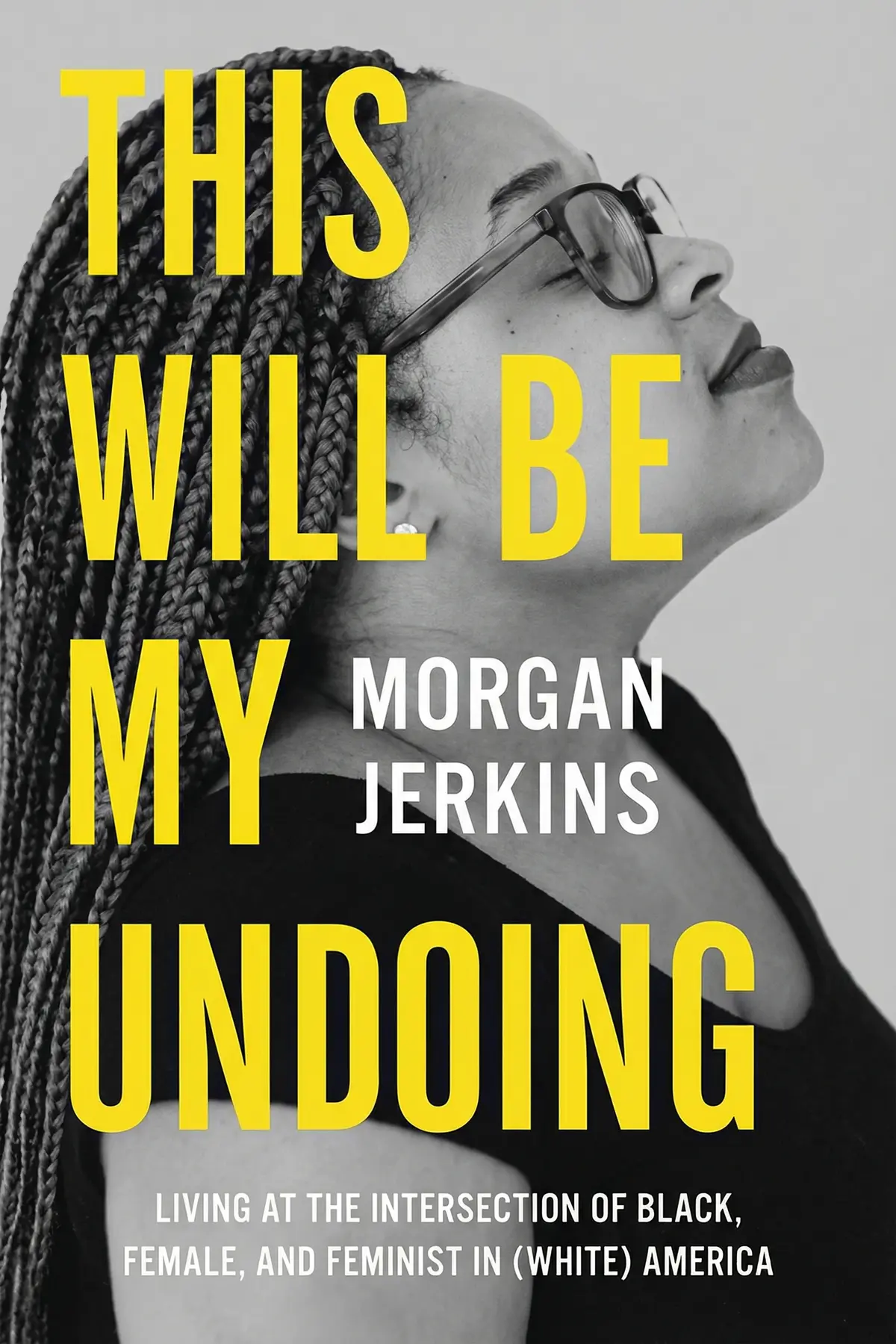
Morgan Jerkins shows how everyday habits, from praising a Black woman for seeming less Black to touching her hair, deny her full humanity. She also explains what others, and Black women themselves, can do differently.
1 min 03 sec
Many people want to support Black women but stay silent for fear of saying the wrong thing, or say the wrong thing because nobody showed them better. In This Will Be My Undoing, writer and journalist Morgan Jerkins shows that the harm often starts with a compliment: telling a Black woman she is not like other Black women. Jerkins, who studied at Princeton and worked in publishing, has heard that line, and she argues it carries a hidden claim that being Black and being fully human cannot go together.
Her essays, drawn from her own life, trace that claim through the places it hides: the pressure to blend in, the habit of not seeing color, hands reaching for hair, a feminism built around white women, and praise handed out unevenly. Her answer has two parts. See Black women whole, and let their successes lift each other. Each section that follows ends with something specific to stop doing or start noticing.
1 min 58 sec
A white man once told a Princeton-educated writer she wasn’t really a Black woman, and he meant it kindly. The logic behind his remark reaches far beyond one conversation, and it shapes how Black girls learn to present themselves.
1 min 56 sec
Saying you don’t see color sounds like the fair thing to do. Jerkins argues it hides something important, and she explains whose standard is really being passed off as universal.
2 min 15 sec
A woman put on display in South Africa two centuries ago and a friendly request at a party have more in common than most people think. Jerkins draws the line between them.
1 min 52 sec
A director insisted her film about a Black French girl was really about any girl. Jerkins shows why that generous-sounding claim leaves Black girls out, and what white women can do instead.
1 min 51 sec
Two pop stars perform the same dance and get opposite reactions. The difference reveals a pattern that also decides whose hairstyle is acceptable at school or in the office.
1 min 58 sec
An old image of crabs in a barrel teaches Black women to protect their own place. Jerkins argues the image misses what happens when the climbers start pulling together.
1 min 06 sec
The essays keep returning to one demand made of Black women: undo part of yourself to be accepted. The girl in Gap clothes avoiding Black classmates, the Princeton graduate told she is not really a Black woman, the student whose cornrows count as a distraction. Each is offered acceptance at the price of half her identity. Jerkins refuses the trade. She claims to be Black and human, both at once, with nothing subtracted.
For everyone else, the book points to small changes you can test this week. Stop praising Black women for seeming less Black. See color, and check whether a judgment rides along with it. Keep your hands off hair that is not yours, and when a style looks exciting on a white celebrity, remember who gets punished for wearing it. If you are a Black woman who has made it partway out, reach back for someone still climbing.
The barrel only holds because everyone inside believes there is room for just one. Jerkins asks her readers to stop believing it.
Many people want to stand with Black women but are unsure where to begin, and some well-meant habits make things worse. Morgan Jerkins, writing from her own life as a Black woman in the United States, explains why. Her essays follow one pressure through many places: the demand that Black women give up part of themselves to be accepted. She describes changing her hair and clothes as a teenager and toning down her mannerisms as an adult, being seen by a white man as not a typical Black woman partly because she went to Princeton, and watching white celebrities win praise for dances and hairstyles that get Black women criticized. She takes on color-blindness, the urge to touch Black women's hair, and a feminism that treats white women's lives as everyone's. Readers get a clear account of how dehumanization works in ordinary moments, along with concrete changes: see color without judging, respect physical boundaries, tell other women's stories with humility, and, for Black women, lift each other up instead of guarding a single spot.
Managers and colleagues who want to support Black women at work without falling back on well-meant mistakes.
Feminists and activists asking whether their movement speaks for women of every background.
Black women weighing how much of themselves to tone down, and whether to reach back for others.
Morgan Jerkins, born in 1992, is an American writer, editor and journalist who has twice won the National Magazine Award. Her work has appeared in The New Yorker, Vanity Fair, Vogue and Rolling Stone. She studied at Princeton University and the Bennington Writing Seminars and has taught at Princeton, Columbia, The New School and Leipzig University. This Will Be My Undoing, published in 2018, was her first book; she later wrote the memoir Wandering in Strange Lands, along with Caul Baby and Zeal.

Listeners describe the writing as exceptionally accessible and eloquent, noting that the excellent essays spark deep thought and offer fresh perspectives. They value the work's raw truth and personal vulnerability, with one listener highlighting how effectively it portrays the cultural spirit of Harlem. The collection earns praise for being both potent and relatable, as listeners report feeling a broad spectrum of emotions throughout the listening experience.
Jerkins' prose hits like a physical weight, pulling you into her specific memories of Harlem and the complicated beauty of her own skin. I felt a range of emotions—anger, sadness, and eventually a sense of shared humanity—as she navigated the suffocating expectations of a religious household. To be fair, her honesty about wanting to be seen by the male gaze is uncomfortable to read, but that's exactly why it works. The book doesn't try to make her a saint; it makes her a person trying to find her footing in a world that rarely gives her a soft place to land. It’s an incredibly intimate look at how we are shaped by the words our mothers whisper and the looks strangers give us on the street. Truly a powerful debut that stays with you long after you’ve closed the cover.
Show moreFinally got around to reading this and I’m frankly blown away by the way Jerkins deconstructs pop culture icons like Beyonce and Michelle Obama. She doesn't just praise them; she uses their public personas to map out the restrictions placed on black female bodies in America. The essay on 'Lemonade' was a standout for me because it challenged me to think about power and responsibility in a totally new way. Some of the personal anecdotes about her time in Japan were a little confusing and felt out of place compared to the sharp cultural analysis elsewhere. However, her ability to weave the political with the deeply personal is a rare gift that most writers take decades to master. It’s an essential text for anyone trying to understand the intersectional nature of modern feminism and the weight of being human.
Show moreJerkins' debut establishes her as a deft cartographer of the soul, tracing the scars left by a society that refuses to see black women in their full complexity. The way she describes the cultural essence of Harlem is so vivid you can almost smell the air and hear the noise of the streets. Not gonna lie, some of the chapters on her religious upbringing and the fear of 'becoming a victim' were hard to get through because they felt so visceral. She captures that specific brand of anxiety that comes from being told your body is a target before you even know what it means to be a woman. It’s a beautifully written, raw, and at times frighteningly honest look at what it takes to survive when you feel like you’re your own undoing. I’m officially a fan.
Show moreWow. This book is a gut-punch of honesty that refuses to look away from the messy parts of black girlhood. Jerkins is so incredibly vulnerable about her own disdain for her blackness during her youth, which is a conversation we rarely get to see in print. To be fair, it’s a difficult read, but it feels essential for normalizing the complicated relationship many women have with their bodies and their heritage. I loved the way she connected her personal experiences to larger political movements, proving that the personal really is the political. Whether she’s talking about the politics of hair or the impact of 'black girl magic,' her voice is assured, refined, and completely unique. This is the kind of book you buy for your friends and then spend hours discussing over coffee.
Show morePicked this up after seeing a few threads on my timeline, and I think Jerkins does a great job exploring the Ivy League experience through a lens of racial isolation. The chapters about Princeton and the feeling of being 'unprepared' for the realities of dating and sexuality resonated with me on a deep level. Frankly, I think we need more books that admit to the confusion and fear of early adulthood instead of pretending everyone has it figured out. I did find her broad generalizations about 'white women' as a monolith to be a bit simplistic, as it ignores the nuances of class and queer identity. But as a personal memoir of coming-of-age, it’s incredibly compelling and offers a necessary perspective on the fetishization of black hair and beauty. A solid 4-star read.
Show moreEver wonder how much of our identity is just a reaction to the trauma our parents handed down to us? Jerkins explores this with a level of intimacy that feels almost voyeuristic, especially when she’s talking about her mother’s strict rules and her own sexual awakening. The truth is, I’ve never read anything that captures the specific fear of street harassment quite like this—the deli scene was heart-pounding. I appreciated that she didn't try to make herself look like a hero who always has the perfect 'clap back.' Instead, she shows the quiet, terrifying reality of just trying to get a sandwich without being abused. My only complaint is that the ending felt a bit rushed, like she came to a sudden peace that didn't feel fully earned. Regardless, it's an important addition to the feminist canon.
Show moreThe last line of this collection says, 'You should've known I was coming,' and personally, I believe her. Jerkins is a writer to be reckoned with, blending high-level social commentary with the raw details of her own coming-of-age. I particularly liked the way she used 'Incidents in the Life of a Slave Girl' to provide historical context for her own experiences. It added a layer of depth that made the modern anecdotes feel even more significant. Some of the transitions between essays were a bit clunky, and I wasn't always a fan of the listicle format she used in a few places. But those are minor gripes in an otherwise stellar debut. It’s an insightful, provocative, and deeply human collection that challenges the reader to look at race and gender through a much sharper lens.
Show moreI really wanted to love this, but I found myself questioning the author’s perspective on her own community quite often. There’s a section about her high school classmates that felt unnecessarily hostile, including a fantasy about police violence that left a bad taste in my mouth. While she tries to reclaim 'black girl magic,' it often feels like she’s looking down on women who don’t share her Princeton-educated, well-to-do background. The writing itself is occasionally jumbled, especially when she uses second-person narration that feels more like a gimmick than a stylistic choice. Look, she is clearly brilliant and has a lot to say about pop culture, but the politics here feel a bit undisciplined. I’m hoping her future work shows a bit more grace toward the very people she claims to represent.
Show moreIn my experience, essay collections are usually hit or miss, and this one lands somewhere in the middle. The intellectual rigor is there, especially when she's talking about the history of black women's bodies as sexual objects. However, I struggled with the orientalist tone of the Japan chapter, which seemed to treat another culture as a mere backdrop for her own self-discovery. It felt a bit hypocritical given how much she critiques the appropriation of black culture throughout the rest of the book. Also, some of the essays felt a bit meandering, jumping from one story to the next without a clear through-line. Still, there’s no denying that she is a fierce and talented writer who isn't afraid to put her own privilege on the table. It’s worth a read for the pop culture analysis alone.
Show moreWhat book were the rest of you reading? This collection felt like a series of screeching halts and unfinished thoughts that never quite reached a satisfying conclusion. To be fair, she is an articulate writer, but the way she speaks about other black women—particularly those she deems 'louder' or 'less helpful'—is deeply problematic. I found the list-style essays to be a bit lazy, and the tone often fluctuated between elitist superiority and a desperate need for validation. One minute she’s critiquing the white gaze, and the next she’s mourning the fact that she didn’t have the privilege of certain beauty standards. It’s a confusing, contradictory mess that feels like it needed a much more rigorous editor to help bridge the gaps in her logic. I didn't feel enlightened or moved; I just felt tired.
Show moreMorgan Jerkins argues that Black women in America are repeatedly asked to give up part of themselves to be accepted. Through essays drawn from her own life, she shows how assimilation pressure, color-blindness, fetishization, a feminism centered on white women and cultural appropriation all deny Black women their full humanity. Her remedy is to see Black women whole and for Black women to support one another’s success.
Jerkins argues that refusing to see a person’s Blackness also means ignoring the systemic racism she faces and the rich culture she belongs to. In her view, noticing race is not racist; racism starts with a negative judgment based on skin color. She adds that the supposedly universal standard behind color-blindness is really a white North American and European outlook presented as if it included everyone.
Jerkins explains that even a kind request treats a Black woman as an object for someone else’s enjoyment and crosses a personal boundary white people rarely have to defend. She links it to a long history of putting Black women’s bodies on display, such as the Hottentot Venus in early 1800s South Africa. Natural hair also carries cultural and political meaning that touching trivializes.
It is an image of crabs climbing out of a barrel, where anyone who escapes is advised never to pull another up in case they are dragged back down. Jerkins sees it as a survival mentality born of scarce opportunities for Black women. She argues the opposite: helping other Black women makes everyone stronger, and working together can remove the barrel entirely.
It suits readers who want to understand the daily experience of Black women in the United States and act on it, including white women who see themselves as feminists, men, managers and Black women themselves. Its lessons are concrete: drop the compliment that someone is not like other Black women, see color without judging, respect physical boundaries and notice whose culture gets praised.
Jessica Valenti


Johny Pitts


bell hooks

Fay Bound Alberti

Daniel Goleman

AUDIO SUMMARY AVAILABLE
Get the key ideas from This Will Be My Undoing by Morgan Jerkins, plus 5,000+ more nonfiction titles.









