
15 min 13 sec
Available in: English
 ไทย
EnglishไทยThe Total Money Makeover: A Proven Plan for Finance Fitness
By Dave Ramsey
Shows why a steady job and a mortgage often hide real financial risk. It lays out a strict sequence of seven steps for clearing debt, building a cushion, saving for later and finally owning everything outright.
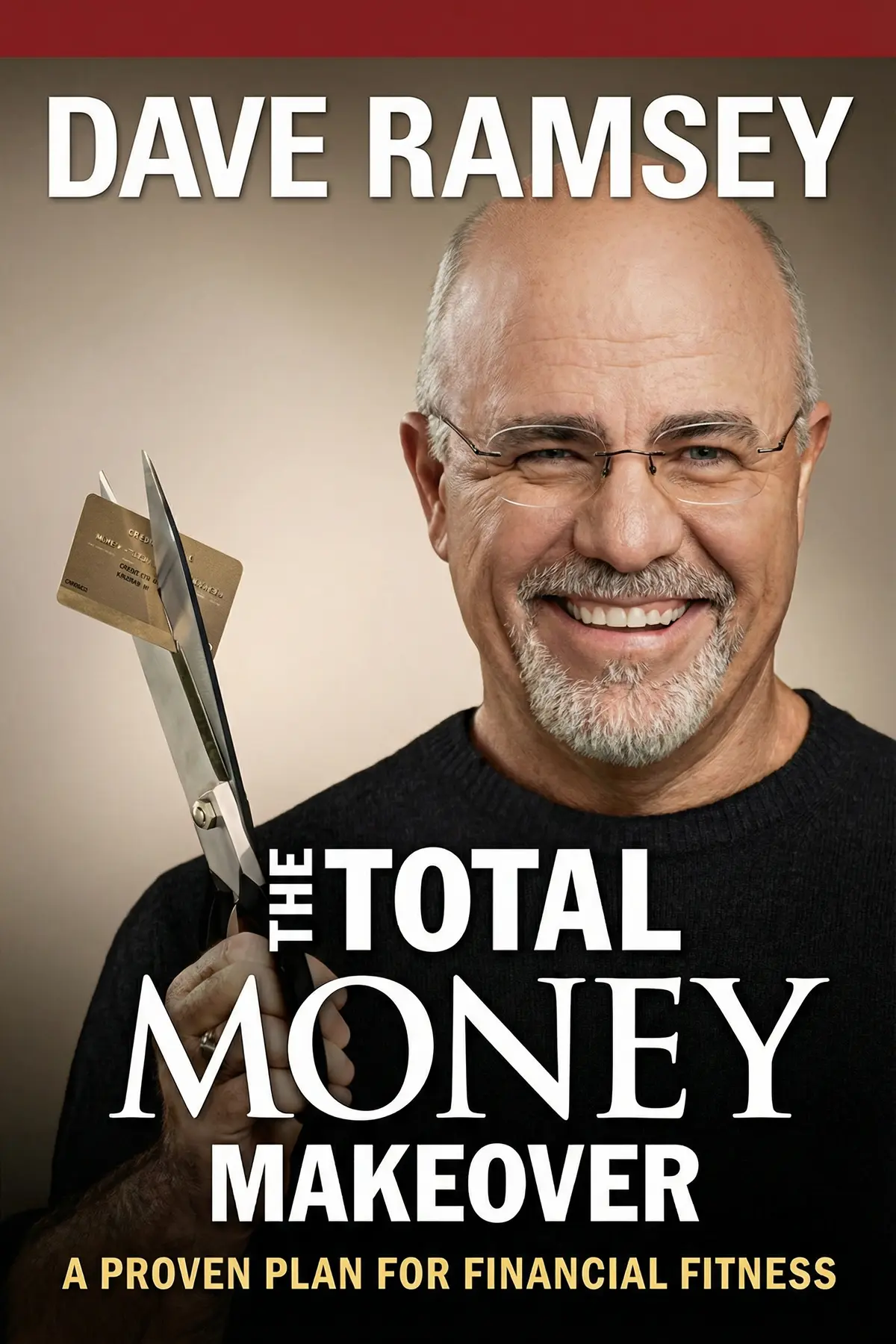
Table of Content
1. Introduction
59 sec
Plenty of people with a steady job, a car and a mortgage feel financially safe, and Dave Ramsey believes many of them are one bad month away from trouble. In The Total Money Makeover, the radio host and founder of Ramsey Solutions argues that this comfort usually rests on debt, and that the way out is a plain sequence of seven small steps taken in strict order.
His case is simple: handle one money goal at a time, never borrow to reach the next one, and security builds on itself. The steps run from a $1,000 emergency cushion through clearing every debt, saving for retirement and college, and finally paying off the house.
Along the way come a married couple who nearly lost their home, a snowball of shrinking debts and a mortgage comparison worth $150,000. By the end, the question of where your next spare dollar should go has a clear answer.
2. Test whether your money could survive a lost job
1 min 31 sec
A married couple with a solid joint income and few debts felt comfortable enough to take on a big mortgage. One piece of news at work showed how little that comfort was worth.
3. Wealthy people avoid debt, and you can too
1 min 32 sec
Borrowing has become so ordinary that a six-figure balance can feel normal. Yet the people and companies with the most money behave in a way that runs against everything the advertisements suggest.
4. Start with a small cushion for bad surprises
1 min 36 sec
The urge to fix every money problem at once feels responsible, but it tends to end in failure. Ramsey’s alternative involves an elephant, a modest sum and one statistic about the next ten years.
5. Clear your smallest debt first and gain momentum
1 min 44 sec
Most people in debt know roughly what they owe but have never looked at it in one place. Ramsey’s method for paying it down starts with the smallest number on the page, and the reason is more emotional than mathematical.
6. Fund a dignified retirement with 15 percent of income
1 min 43 sec
Saving for old age competes with every other goal, from tuition to an early mortgage payoff. Ramsey sets a single figure for it and explains why the house and the children should not come first.
7. Pay for college without burying your child in debt
1 min 52 sec
Parents often assume a degree is worth any loan it takes. Ramsey offers a savings comparison that nearly doubles the money available, and then raises a harder question about whether college is needed at all.
8. Own your home outright years sooner
1 min 39 sec
Two popular pieces of mortgage advice sound sensible and keep people paying for decades. Ramsey runs the numbers on both, and one comparison leaves a family $150,000 better off.
9. Spend and give freely once the money is real
1 min 31 sec
After years of discipline, the final step looks surprisingly indulgent: expensive watches, fast cars and big homes are all allowed. The condition attached to them is what separates it from the way most people spend.
10. Conclusion
1 min 06 sec
What The Total Money Makeover adds up to is a different idea of what looking wealthy means. Ramsey’s clients felt secure with large mortgages and heavy card balances, and the friends who seem to be doing well may be in exactly the same position. Debt lets people appear better off than they are, he argues, and eventually the appearance gives way, as it did for Sarah when one salary disappeared.
The seven steps are his answer, and their strength lies in their order. Nothing starts until the step before it is done, so effort never spreads thin and progress stays visible.
The first move is also the smallest. Put aside $1,000 and treat it as untouchable except in a real emergency. Then write your debts on one page, smallest first, and pay down the top line until it is gone. And stop measuring yourself against your peers, whose comfortable lives may be built on borrowed money.
Ramsey’s picture of wealth is simple: everything you own, and everything you give away, already paid for.
About this book
What is this book about?
Many people with a decent salary, a car and a house believe their finances are fine. Dave Ramsey argues that this comfort is often an illusion held up by credit cards, car loans and large mortgages, and that a single lost paycheck can bring it down. His answer is a plan of seven baby steps taken in strict order, so that effort is never spread too thin. It begins with a $1,000 emergency cushion and a debt snowball that clears the smallest balances first. Next come a bigger reserve covering several months of expenses, 15 percent of income set aside for retirement, a debt-free route to college and an early end to the mortgage. Only then does Ramsey turn to building wealth, enjoying it and giving it away. Readers get a clear order of priorities for every spare dollar, worked examples on mortgages and education savings, and a blunt case, backed by bankruptcy figures and the habits of the very rich, for living without debt.
Book Information
Who it's for
Salaried with little saved
Salaried workers with a mortgage, car payments or card balances who feel secure but have little saved.
Young professionals and graduates
Young professionals and graduates deciding what to do with their first spare money.
Parents weighing money priorities
Parents weighing college savings, retirement and an early mortgage payoff against each other.
About the Author
Dave Ramsey
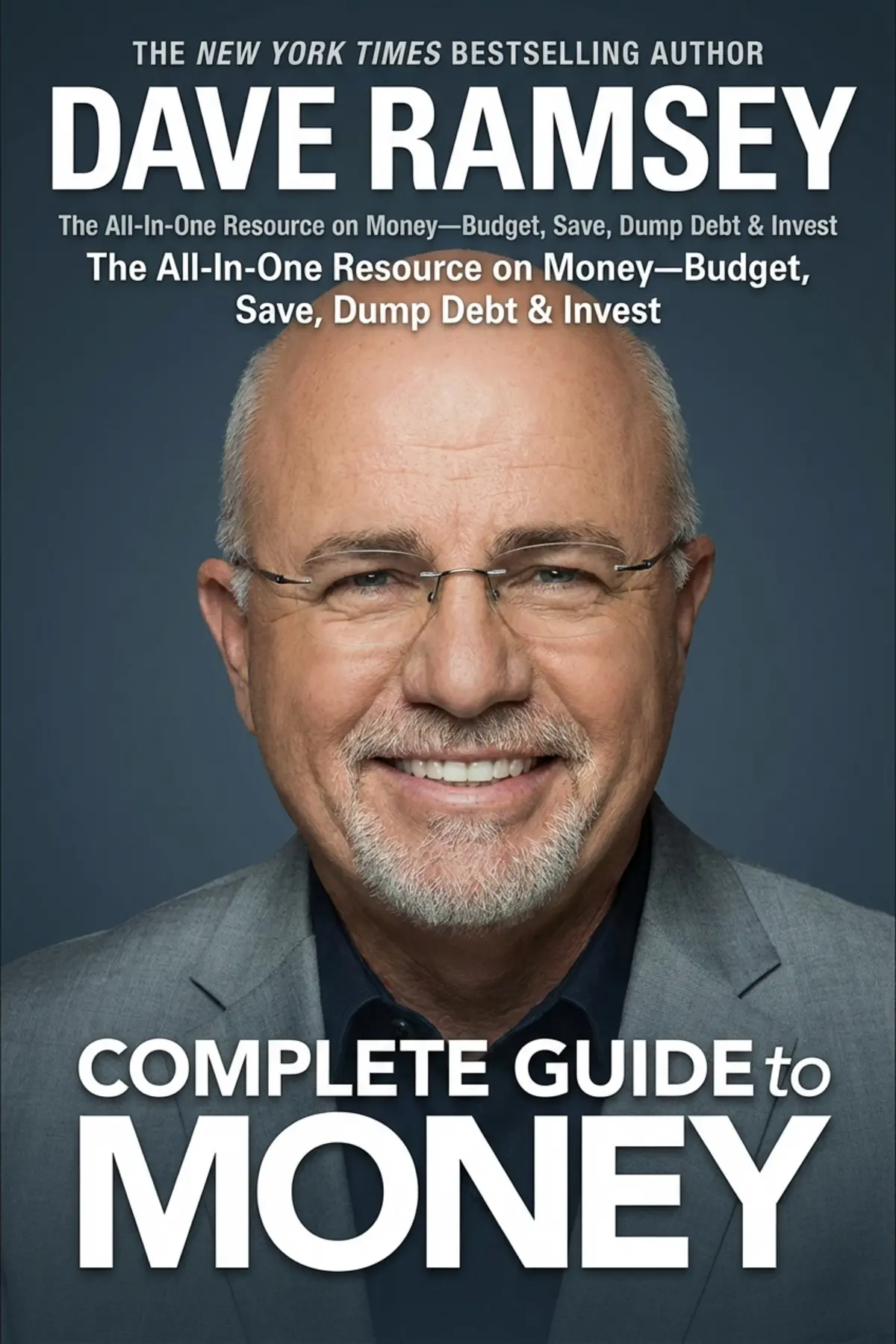
Dave Ramsey was born in 1960 in Antioch, Tennessee. Since 1992 he has worked to help people take control of their money and build wealth. He co-hosts The Ramsey Show, a syndicated radio program heard across the United States, and is the founder and CEO of Ramsey Solutions. From 2007 to 2010 he also hosted a show on the Fox Business television channel. His books include The Total Money Makeover, a New York Times bestseller, and Baby Steps Millionaires.

Ratings & Reviews
Ratings at a glance
What people think
Listeners find this financial guide captivating and accessible, offering actionable tips for avoiding debt and attaining fiscal freedom. They value the transparent explanations and methodical strategy, while one listener points out that it functions as a daily reference. Listeners characterize the material as life-changing—one specifically shares how it transformed their paycheck-to-paycheck lifestyle—and they believe it is a highly valuable investment.
Top reviews
Cholada
This manual literally saved my marriage from the brink of financial disaster. We were drowning in a paycheck-to-paycheck cycle that felt impossible to break until we implemented the first few Baby Steps. The $1,000 emergency fund seemed small at first, but it provided a psychological safety net we never had before. Dave’s writing is punchy and direct, forcing you to stop making excuses for your consumer debt and start taking ownership of your future. It’s a total shift in mindset more than a math lesson. By following the debt snowball, we’ve already cleared two credit cards and a car loan in under a year. Truth is, if you are willing to live like no one else now, you really will live like no one else later.
Show moreWacharapol
Look, if you want a warm hug and someone to tell you it isn't your fault, go buy a different book. Ramsey is the drill sergeant of the financial world, and he doesn't care about your feelings or your desire for a new SUV you can't afford. This book provides a ruthless, effective framework for building wealth from nothing. I loved the emphasis on becoming 'gazelle intense' during the debt payoff phase because it creates a sense of urgency that most other finance books lack. We followed the plan to the letter and just finished Baby Step 3. The freedom of having a fully funded emergency account is better than any luxury purchase I’ve ever made. This is essential reading for anyone tired of being broke.
Show moreMaja
After hearing about the Baby Steps for years from friends, we finally buckled down and did the work ourselves. The transformation in our bank account has been nothing short of miraculous. We used to argue about money every single week, but now we have a shared vision and a specific plan for every dollar. Moving through the debt snowball felt like winning a series of mini-battles that kept us motivated to reach the finish line. It’s not just about the money; it’s about the peace of mind that comes from being totally debt-free, including the house. If you are struggling with student loans or a mountain of credit cards, this book provides the exact roadmap you need. We are currently on Step 4 and feeling more optimistic about retirement than ever.
Show morePrinya
Every high school graduate should be handed a copy of this along with their diploma to avoid the traps of the modern lending industry. Dave breaks down complex topics like mutual funds and mortgage interest into simple, digestible pieces that anyone can understand. He isn't trying to sell you a get-rich-quick scheme; he's selling you a path of hard work and delayed gratification. I especially appreciated the section on the 'Pinnacle Point' where your money starts making more than you do. It gave me a clear target to aim for in my 40s. While some of the numbers in his examples are a bit optimistic, the underlying principles of living within your means are timeless. This book is well worth the investment for anyone ready to change their family tree.
Show morePatcharaporn
Wow, what a reality check! This book forced me to realize that I was 'acting' rich while actually being broke. I was the person driving the nice car with a massive loan and zero savings, just trying to keep up with the Joneses. Dave’s 'Total Money Makeover' plan is the cold water in the face that I desperately needed to wake up. The steps are easy to follow, and the logic of paying cash for everything is so simple it’s brilliant. We’ve stopped all our retirement contributions temporarily just to kill our remaining debt, and for the first time, I feel like I'm in control of my paycheck. Building wealth isn't a mystery anymore; it's just a matter of following the plan and staying disciplined.
Show moreSaowalak
Dave’s plan is fundamentally about psychology over math, which is both its greatest strength and its primary weakness. He acknowledges that personal finance is 80% behavior and only 20% head knowledge, which resonated with me as a chronic overspender. I found the step-by-step approach to be incredibly clear and easy to navigate for a beginner. However, I have to be fair and mention that his strict anti-debt stance is a bit rigid for my taste. For example, he completely dismisses the utility of credit card rewards, even for those who pay their balance in full every month. While I disagree with his views on 15-year mortgages being the only 'right' way, the core message of discipline is undeniable. It’s a solid reference that I still flip through during my monthly budget meetings.
Show moreNikolai
Finally got around to reading the 'financial bible' everyone talks about at church, and I was pleasantly surprised by how engaging it was. Personal finance usually puts me to sleep, but Ramsey’s anecdotes and the constant testimonials kept me turning the pages. I do think the book is a bit heavy on the 'sales pitch' side, as he constantly mentions his live events and other products. Despite that, the practical advice on term life insurance and avoiding whole life policies was worth the price of the book alone. It serves as a great daily reference for staying on track with your goals. I took off one star because the audiobook version can be a bit much with all the yelling, but the content itself is life-changing if you actually apply it.
Show moreNatnicha
As someone who once felt buried by credit card interest, the snowball method was a psychological game-changer for me. I know the math says to pay the high-interest rates first, but seeing those small balances disappear gave me the win I needed to keep going. Ramsey’s focus on behavior modification is exactly what most people in debt actually need. I struggled a bit with the chapter on insurance because it felt a bit like a sales pitch for his endorsed providers, but the core logic of high deductibles makes sense. Not gonna lie, the guy is loud and opinionated, but it’s hard to argue with the results. My net worth has increased significantly since I stopped using debt as a tool and started treating it like a danger.
Show moreFort
Is it effective? Yes. Is it annoying? Also yes. Ramsey’s tone is definitely polarizing, and he often groups everyone into the same category of 'undisciplined' regardless of their circumstances. I found myself skipping over the endless pages of gushing testimonials just to get to the actual financial principles. The advice on 15% retirement investing and saving for college using ESAs is sound, but it’s buried under a lot of fluff and repetitive stories. I also find his absolute rejection of credit scores to be a bit dangerous for people who might need to rent an apartment or get insurance in the real world. It’s a decent starting point for the financially illiterate, but don’t expect a nuanced or sophisticated take on wealth management.
Show moreWoramet
While I appreciate the 'get out of debt' sentiment, the advice here feels incredibly dated and frankly out of touch with the modern economy. Ramsey uses examples of young people making $50,000 and paying $250 for rent, which is a complete fantasy in almost every major city today. His claim that there is 'no excuse' to retire without dignity feels arrogant when you consider people facing medical tragedies or systemic poverty. To be fair, the snowball method works for motivation, but the math of ignoring interest rates is objectively inefficient. If you’re a disciplined person who understands how to leverage credit or has a complex financial situation, you’ll find this book condescending. I'd suggest looking into Suze Orman for a perspective that includes a bit more compassion and updated economic reality.
Show moreQuestions about this book
What is the main idea of The Total Money Makeover?
Dave Ramsey argues that most people’s financial security is an illusion propped up by debt, and that a sudden job loss can expose it. His fix is seven baby steps taken in strict order: a $1,000 emergency fund, paying off debts smallest first, a fund covering three to six months, 15 percent of income for retirement, debt-free college, paying off the mortgage, then building and giving wealth.
What is the debt snowball in Dave Ramsey's plan?
The debt snowball is Ramsey’s second step. You list every debt from the smallest balance to the largest and pay off the smallest first, then move up the list. He compares it to a small ball of snow that grows into a boulder as it rolls. Its main benefit is motivation: watching small debts vanish gives people the energy to tackle the bigger ones.
How much should I save for emergencies according to Ramsey?
Ramsey sets two targets. First, a starter fund of $1,000 before paying down debt, because Money Magazine estimates 78 percent of people face a major negative event in any ten-year period. Later, once debts are cleared, he grows it to cover three to six months of expenses, often between $5,000 and $25,000. A family earning $3,000 a month should aim for $10,000 or more.
Does Dave Ramsey think a 15-year mortgage is better?
Yes. Ramsey says almost nobody who takes a 30-year mortgage meaning to repay it in 15 actually keeps up the extra payments, because everyday costs get in the way. Compared with a 30-year loan at 7 percent, he says a 15-year mortgage saves $150,000 over its life. He also warns against borrowing against your home to invest, since taxes and fees shrink the gain to around $1,000.
Who should read The Total Money Makeover?
It suits people who earn a decent income but carry car loans, card balances or a big mortgage and have little saved. It also helps young earners deciding what to do with spare money, and parents torn between college funds, retirement and the house. Its value is a clear order of priorities, from a $1,000 cushion to paying off the home.
Featured in
Readers also enjoyed




AUDIO SUMMARY AVAILABLE
Listen to The Total Money Makeover in 15 minutes
Get the key ideas from The Total Money Makeover by Dave Ramsey, plus 5,000+ more nonfiction titles.
- 5,000+ titles
- Listen as much as you want
- 7-day free trial
- Cancel anytime









