
13 min 51 sec
Available in: English
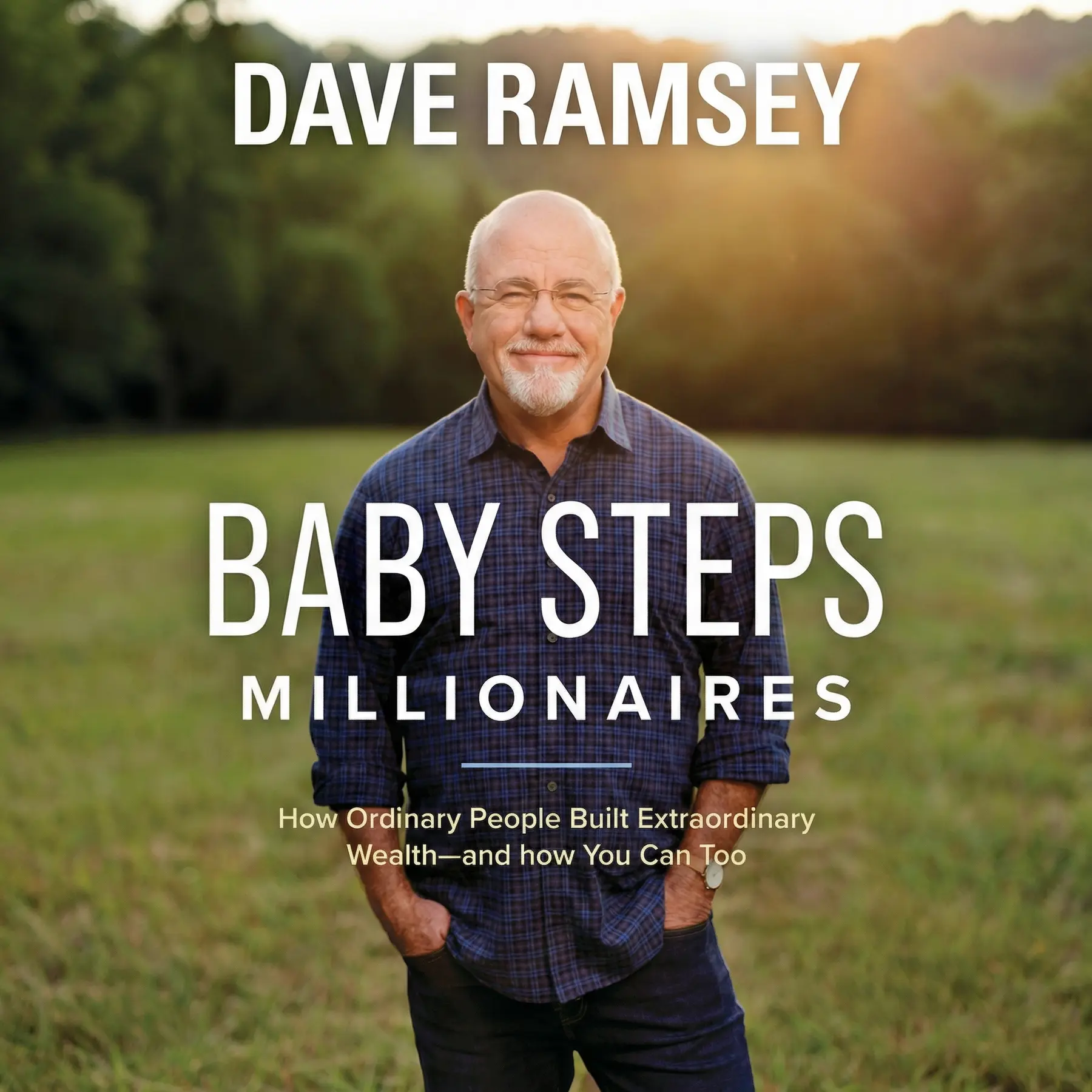
Baby Steps Millionaires: How Ordinary People Built Extraordinary Wealth-and how You Can Too
By Dave Ramsey
Shows why a million-dollar net worth is within reach of teachers, engineers and single parents, and lays out Ramsey's seven ordered steps from a $1,000 cushion to a paid-off home.
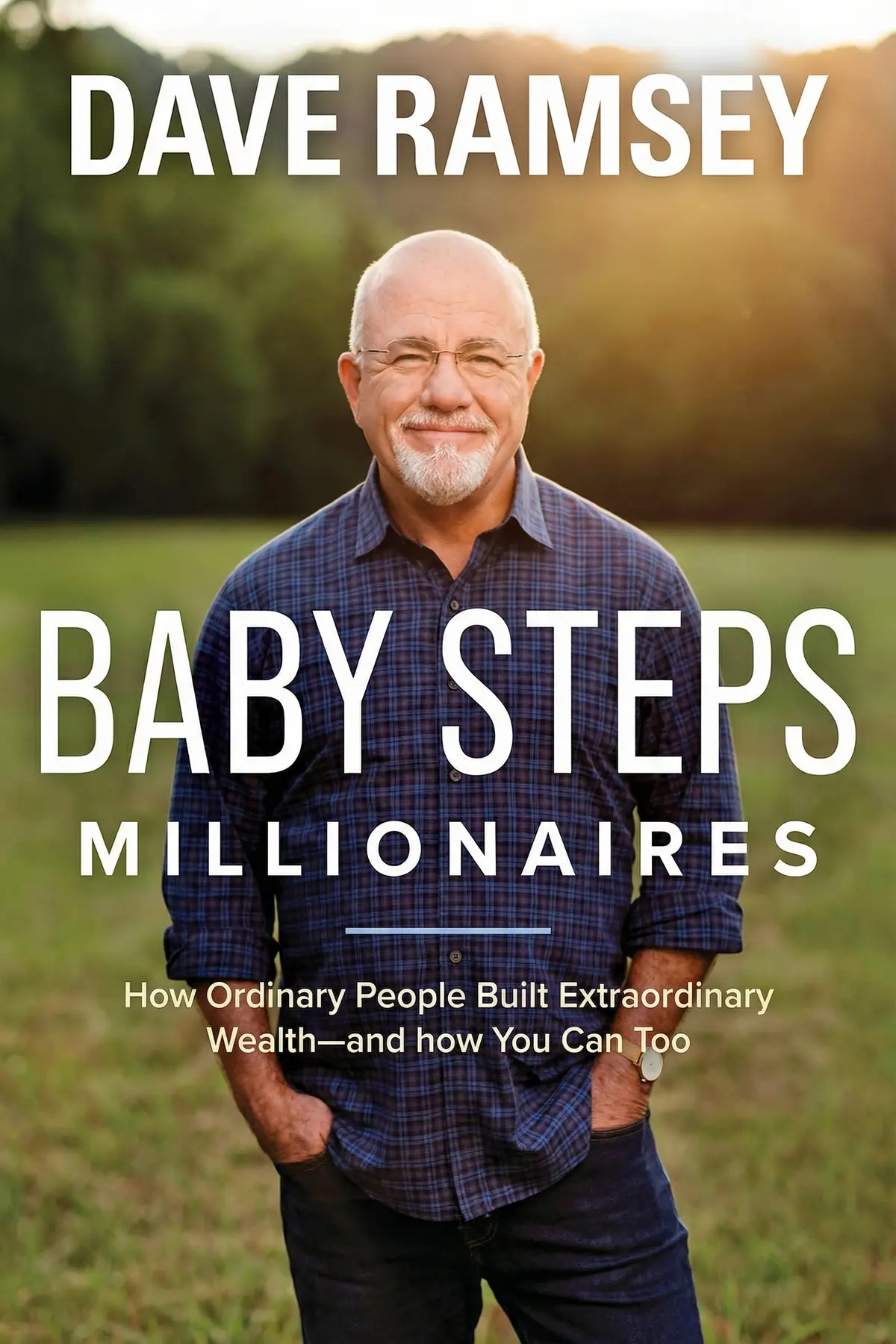
Table of Content
1. Introduction
1 min 09 sec
If your paycheck seems gone before the month is, a seven-figure net worth probably feels like someone else’s life. In Baby Steps Millionaires, radio host and Ramsey Solutions founder Dave Ramsey argues that it belongs to ordinary people far more often than we assume: his company surveyed 10,000 millionaires and found teachers, engineers and accountants who still clip coupons.
Getting there, he says, takes two things. First, believe it is possible for someone like you. Second, follow seven Baby Steps in strict order: a small cash cushion, every debt except the mortgage gone, a full emergency fund, 15 percent of income invested for retirement, savings for children’s college, the house paid off, and finally generosity. The path is slow, about 17 years on average, and that slowness is part of the design.
What follows is the order of the steps, the reasoning behind each one, and four people who started with debt, low pay or no safety net and still crossed a million.
2. Swap the billionaire picture for a realistic one
1 min 47 sec
Ask people to picture a millionaire and most imagine the same two famous faces. A survey of thousands of real ones paints a very different scene, and it changes what saving a little each month seems worth.
3. Stop letting your starting point decide the ending
2 min 14 sec
Poverty, divorce, immigration and heavy debt sound like reasons to give up on real wealth. Two people in the book faced several of them at once, and their numbers decades later tell another story.
4. Clear every debt except the house first
1 min 50 sec
The plan’s first move asks you to pause investing and give up holidays and nights out. It sounds backward for someone chasing wealth, until you see what Ramsey expects that sacrifice to set in motion.
5. A full emergency fund keeps setbacks from becoming debt
1 min 42 sec
Freshly out of debt, most people want to start investing at once. Ramsey asks them to wait a little longer, and a single mother living on ramen shows why the patience pays.
6. Invest 15 percent and let time do the work
2 min 03 sec
New investors often freeze while hunting for the perfect fund. Ramsey’s rule for retirement saving is simpler than that, and a teenager with a lawnmower shows how far it can go.
7. Own your home outright, then give freely
1 min 48 sec
Ramsey ranks saving for your children’s college below your own retirement, a choice many parents find uncomfortable. His reasoning, and what most millionaires did with their mortgages, reshapes the later years of the plan.
8. Conclusion
1 min 18 sec
What Ramsey offers is less a clever strategy than a fixed order of operations that ordinary people can actually keep. Debt goes before investing, safety goes before growth, your own retirement goes before your children’s college, and generosity comes last, when it no longer costs you anything you need. The millionaires at the end of that road are a single mother who once lived on ramen, an immigrant boy whose family relied on government help, a teenager with a lawnmower.
The first move is the same for nearly everyone. Work out which step you are on today, how much you owe and whether $1,000 sits between you and the next surprise. If it does not, that is this month’s job. If it does, write down your debts from smallest to largest and start paying off the first one.
When the 17-year horizon feels too long, remember that Tiffany, Jackie, Ben and Courtney, and Rafael and JoBeth all began exactly there, with one small step that looked like nothing at the time.
The steps are called baby steps for a reason. Taken in order, and kept up for long enough, they carry ordinary people a very long way.
About this book
What is this book about?
Most people treat becoming a millionaire as a fantasy for the lucky, the well-connected or the highly paid. Dave Ramsey disagrees. His company surveyed 10,000 millionaires and found engineers, accountants and teachers living in ordinary neighborhoods, driving two cars and still using coupons. They came from many races, levels of education and backgrounds. Ramsey's argument has two parts. First, change what you believe: stop confusing millionaires with billionaires, and stop letting your starting point rule you out. Second, follow the Baby Steps in order. Build a $1,000 starter fund, clear every debt except the mortgage, grow a full emergency fund, invest 15 percent of income for retirement, save for children's college, pay off the house, and then give generously. He is frank that the average path takes about 17 years. Readers get the sequence, the reasoning behind each step and four real stories, from a single mother earning $30,000 with $60,000 of debt to an immigrant family that once depended on government help, each of whom passed a million.
Book Information
Who it's for
Paycheck-to-paycheck workers
Workers living paycheck to paycheck who assume a million is out of reach for people like them.
Single parents, young couples
Single parents and young couples carrying credit card, car or student debt who want a clear order of priorities.
New to investing
New investors unsure how much to save for retirement and what to do about the mortgage.
About the Author
Dave Ramsey
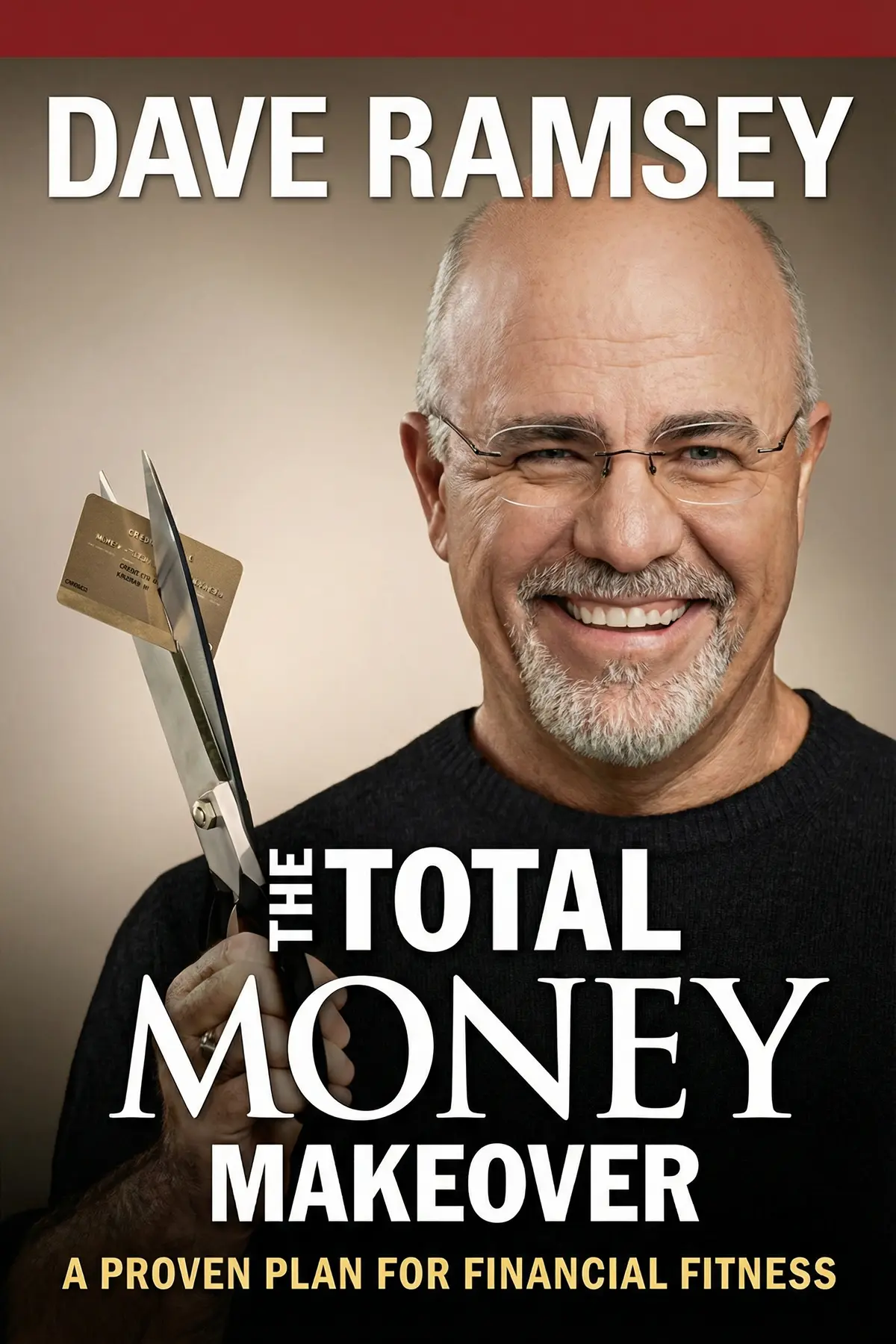
Dave Ramsey, born in 1960 in Antioch, Tennessee, has spent his career since 1992 helping people take control of their money and build wealth. He co-hosts The Ramsey Show, a syndicated radio program heard across the United States, and he founded Ramsey Solutions, where he serves as CEO. From 2007 to 2010 he also hosted a show on the Fox Business television channel. His other books include The Total Money Makeover, which became a New York Times bestseller.

Ratings & Reviews
Ratings at a glance
What people think
Listeners find the material in this book useful and clearly composed, commending the direct path it outlines for achieving millionaire status. Furthermore, they value the inspiring themes, with one listener explaining how it inspires ongoing development and advancement, while another shares that it assisted them in getting out of debt. The work earns favorable reviews for its guidance on managing finances, with one listener emphasizing its perspectives on building a budget. On the other hand, perspectives vary concerning the worth for the price and the narrative elements, as some enjoy the actual life case studies whereas others feel the inspirational tales are lacking.
Top reviews
Yui
Ever wonder why teachers and accountants show up on the list of millionaires more often than high-earning doctors? This book breaks down that exact phenomenon with a lot of heart and some very compelling statistics. It’s a motivational powerhouse for those of us who feel like a seven-figure net worth is a pipe dream. Dave makes the argument that consistency is the real "secret sauce," and I found that incredibly empowering. Not gonna lie, I was feeling a bit stuck in the "middle" steps, but reading the success stories of ordinary people who stayed the course gave me a second wind. It’s practical, it’s well-written, and it provides a clear vision of what the finish line looks like.
Show morePun
Finally, a roadmap that feels doable for those of us without a six-figure salary! This book is a refreshing antidote to the "get rich quick" schemes saturating social media right now. Dave focuses on the reality that building wealth is 80% behavior. That resonated with me. We have been working our way through the steps, and seeing the data on how others reached the summit was the push we needed. The stories of immigrants and everyday workers becoming wealthy through discipline are deeply moving. It’s not just about the money; it’s about the character you build along the way. Highly recommend it for anyone needing a dose of reality and hope.
Show moreStella
Truth is, most of us are our own worst enemies when it comes to finances. This book tackles that head-on. I loved the emphasis on how "ordinary" the path to wealth actually is. It doesn't require a lottery win or a massive inheritance; it requires a budget and a spine. The writing is clear and the chapters move quickly. I especially appreciated the section on parenting and how to raise children who understand the value of a dollar. It’s a holistic approach to wealth that includes family, faith, and hard work. For our family, this was exactly the motivation we needed to keep pushing toward our goals.
Show moreSumalee
Picked this up because I wanted more than just the basic budgeting advice Dave is known for. While he definitely leans into his usual "pull yourself up by your bootstraps" philosophy, the actual data in the millionaire study is quite eye-opening. It’s a straightforward look at how the tortoise usually beats the hare in the financial race. I appreciated the focus on persistence over luck. Some parts felt a bit like a lecture on generational differences, which was annoying, but the core financial planning advice is rock solid. It’s less about the numbers and more about the psychological shift required to actually keep your money. If you can ignore the occasionally preachy tone, there’s a lot of value here for anyone on Baby Step 4.
Show moreDimitri
The statistical appendix in the back is actually the best part of this whole experience. It provides a deep dive into the habits of over 10,000 millionaires, proving that inheritance is rarely the key. Personally, I found the breakdown of top careers—like teachers being in the top three—to be the most fascinating part of the data. Dave’s tone is definitely more "stern father" here than "encouraging coach," which might rub some the wrong way. However, the logic is hard to argue with. If you want a straightforward, no-nonsense look at how to reach the finish line, this is it. It’s a solid manual for continuous improvement.
Show moreWachira
After hearing Dave talk about this for months, I finally sat down with the copy a friend gifted me. It’s a well-written summary of the Ramsey philosophy with a heavy emphasis on the "middle" years of wealth building. While some might find the religious undertones a bit much, the financial planning advice is objectively sound. The book excels at deconstructing the myths we tell ourselves about why we can't be wealthy. It’s about the long game. I did find some of the stories a bit repetitive, but the overall message of discipline is one that more people need to hear. It’s a solid four-star read for the motivation alone.
Show moreSirinat
Frankly, the logic here is impossible to ignore. You don't need a high-frequency trading algorithm to become a millionaire; you need a 401k and some patience. I finished this in two sittings and felt more empowered than I have in a long time. There is a lot of talk about "believing" it is possible, which sounds a bit cheesy, but the data Dave presents actually backs it up. My only gripe is that it feels a bit light on "new" information for long-time fans. Still, it’s a great gift for someone just starting their career or anyone who thinks they are "too poor" to ever save.
Show morePooja
Not quite what I anticipated after following the Baby Steps for a few years. While the information is practical, a large portion of the book is dedicated to justifying why millionaires aren't the "bad guys." I didn't really need the political defense of wealth; I just wanted more tactical advice on the later steps. Truth is, if you’ve read Chris Hogan’s Everyday Millionaires, you might find this content a bit redundant. The writing style is vintage Dave—blunt, opinionated, and very "common sense" oriented. It’s a decent motivational tool, but it lacks the depth of his earlier work. I’d give it a three because the appendix is genuinely interesting even if the main text feels thin.
Show moreTakeshi
As someone who has been debt-free for years, I was looking for a more advanced guide on investing. This wasn't it. The book is heavily focused on the mindset of the "millionaire next door" type, which is great for beginners, but it lacks technical depth. Look, Dave is great at the "how-to" of budgeting, but here he spends a lot of time proselytizing and complaining about "participation trophy" culture. It’s a short read, which I liked, but I felt like I was being sold a lifestyle more than a strategy. It’s okay if you need a kick in the pants, but don't expect a Masterclass on the stock market.
Show moreAiden
This book is essentially a long-form brochure for the Ramsey ecosystem. To be fair, I respect the debt-free message, but this specific volume feels incredibly repetitive if you have ever listened to his podcast for more than ten minutes. It’s half-filled with a survey that could have been a PDF, and the other half is heavily laden with Christian capitalist rhetoric that won't land with everyone. He spends a lot of time arguing that billionaires are misunderstood and that Gen Z just doesn't want to work. It felt more like a political manifesto at times than a practical guide to building wealth. I’d suggest sticking to The Total Money Makeover instead of spending money on this one.
Show moreQuestions about this book
What are Dave Ramsey's seven Baby Steps?
In Ramsey’s plan, you first save a $1,000 starter emergency fund, then pay off all debt except the mortgage using the debt snowball. Next you build a full emergency fund of three to six months of minimum living costs. Then you invest 15 percent of pre-tax household income for retirement, save for children’s college, pay off the home early, and finally give generously.
How long does it take to become a millionaire with the Baby Steps?
Ramsey says the average is about 17 years, and he presents that slowness as a feature, not a flaw. The first three steps, which cover the starter fund, the debt payoff and the full emergency fund, usually take two and a half to three years. His study also found most millionaires paid off their homes in just over 11 years instead of 30.
What is the main idea of Baby Steps Millionaires?
Ramsey argues that becoming a millionaire is realistic for ordinary people. His company’s study of 10,000 millionaires found engineers, accountants and teachers who live in regular neighborhoods and still use coupons, from many races and backgrounds. What they share is a belief that they can do it and a steady, ordered plan: clear debt, build safety, invest consistently and pay off the house.
Should I save for retirement or my kids' college first?
Ramsey puts retirement first. You will certainly retire, he reasons, while your children may skip college, pay for it themselves or have already finished. So Baby Step 4, investing 15 percent of income for retirement, takes priority, and Baby Step 5, saving through an Education Savings Account or a 529 plan, gets what your situation allows. Leaving it partly funded is acceptable.
How do I start the Baby Steps if I have a lot of debt?
Start by setting aside $1,000 as a small emergency cushion. Then direct every spare dollar, including money for outings, holidays and new investing, at your debts other than the mortgage. Pay the smallest balance off first and work upward. Tiffany began with $60,000 of debt on a $30,000 salary and two children, and two decades later was worth $1.85 million.
Readers also enjoyed





AUDIO SUMMARY AVAILABLE
Listen to Baby Steps Millionaires in 15 minutes
Get the key ideas from Baby Steps Millionaires by Dave Ramsey, plus 5,000+ more nonfiction titles.
- 5,000+ titles
- Listen as much as you want
- 7-day free trial
- Cancel anytime









