

16 min 07 sec
Available in: English
Big Mistakes: The Best Investors and Their Worst Investments
Shows how legendary investors such as Warren Buffett, Charlie Munger and Benjamin Graham lost huge sums, and turns each failure into a plain rule for protecting your own money from the same errors.
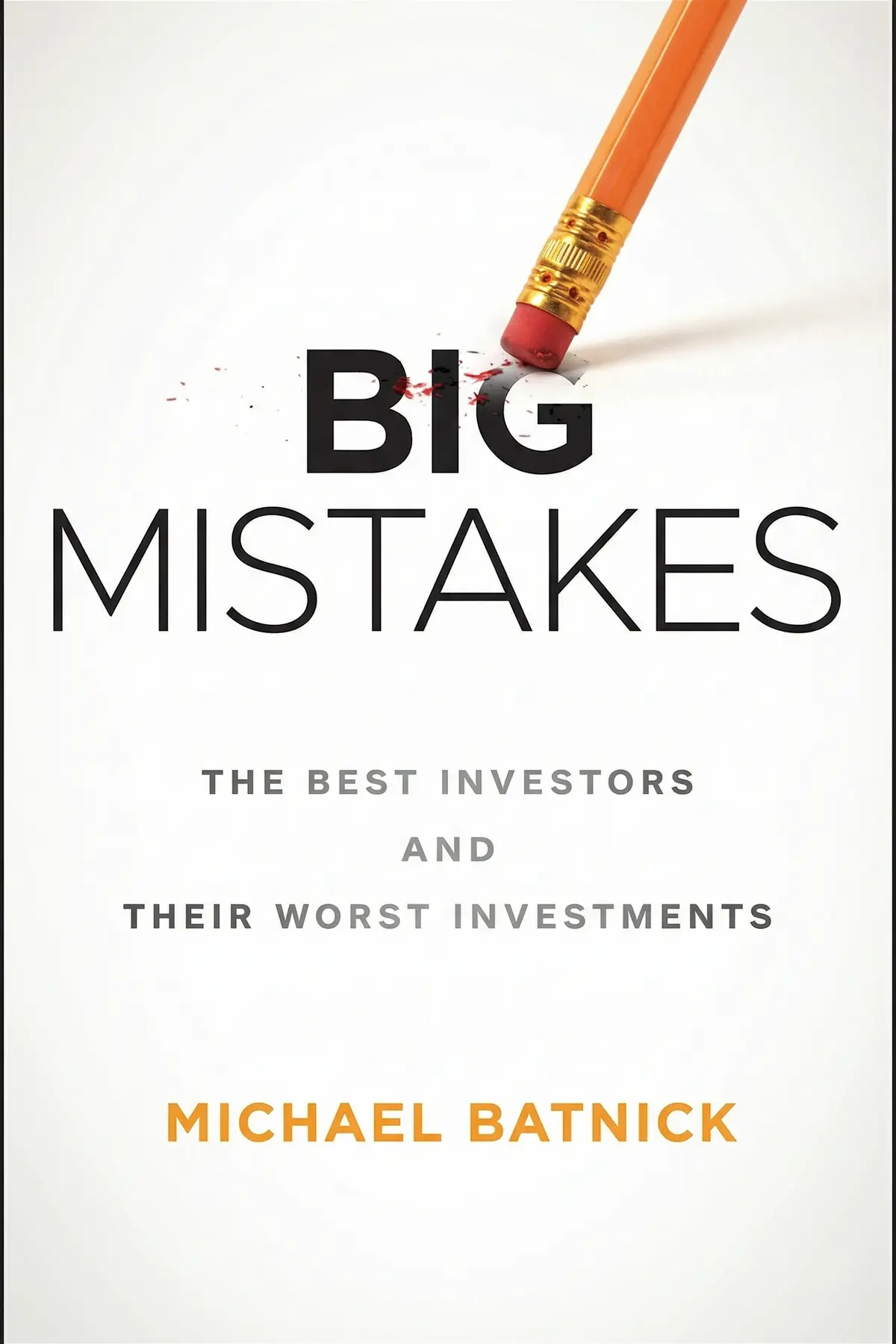
Table of Content
1. Introduction
52 sec
Investors the world treats as geniuses have lost fortunes, and usually for ordinary human reasons rather than bad luck. In Big Mistakes, Michael Batnick, director of research at Ritholtz Wealth Management, walks through the worst bets of famous names such as Warren Buffett, Charlie Munger and Benjamin Graham.
His argument is that a handful of errors repeat across a century of markets: trusting a formula too far, ignoring risk, betting too much on one idea, letting feelings decide, and mistaking a good run for skill. Studying them costs nothing. Repeating them can cost everything.
If you hold savings in stocks, or plan to, these stories show what a lost fortune looks like up close. Each one leaves behind a simple rule for protecting your own money before the market tests it.
2. Treat value as a guide, never a guarantee
1 min 40 sec
The man who taught the world to buy companies for less than they are worth judged that the soaring prices of the 1920s had come loose from real value. His timing still cost him most of his portfolio, for a reason every bargain hunter should know.
3. Size every bet so one loss can't end you
1 min 39 sec
He is quoted to this day for his market wisdom, and he once held a fortune worth over a billion dollars. Then the market’s historic rebound of 1932 showed what his brilliance could not protect him from.
4. Spread your money before a star holding collapses
1 min 46 sec
A fund that turned ten thousand dollars into four million let one pharmaceutical stock grow into its biggest bet. A drug price, a campaign promise and a fraud report did the rest.
5. Set your loss limit before emotion sets it
1 min 47 sec
One of America’s great novelists was offered shares in the telephone, at a discount, by the inventor himself. What made him refuse had nothing to do with the telephone and everything to do with an earlier deal.
6. Tell a rising market apart from your own skill
1 min 53 sec
He was the first celebrity fund manager, and investors lined up ten times deeper than expected to hand him money. Within a few years his fund ranked near the very bottom, and the reason was the decade itself.
7. Owning something makes you trust it too much
1 min 50 sec
Warren Buffett told his shareholders a new purchase needed no fixing at all. Five years later it was in freefall, and an imagined soccer bet helps explain how even he missed the warning signs.
8. Win by avoiding mistakes you choose to make
1 min 47 sec
A star manager decided tech stocks were overpriced in 1999, and he was eventually right. He still lost about half a billion dollars, because of what he did after watching younger colleagues get rich.
9. Sit through a drop without selling in panic
1 min 40 sec
Charlie Munger once watched each thousand dollars in his company shrink to under five hundred while investors deserted him. What happened next turned a near disaster into some of Berkshire’s most prized businesses.
10. Conclusion
1 min 13 sec
Big Mistakes reads like a casebook of famous names, but its real subject is the investor in the mirror. Each of these people lost money to something ordinary: a formula trusted too far, a bet sized too large, a grudge against inventors, a lucky decade, the warm glow of ownership, envy of younger colleagues. Batnick’s case is that fear, anger, envy and greed are the worst enemies a portfolio has, and that the cheapest place to learn this is someone else’s loss.
For a newer investor, that means playing to avoid errors rather than to land the big win, and treating any win as a reason for extra care. Trade far less than feels natural. Research every company exhaustively before buying, and be ready to walk away. Batnick passes on a suggestion from Buffett: act as if you were allowed only 20 trades in your entire career. Fix your maximum loss before you buy, and keep the rule about panic selling where you will see it on a bad day.
The greatest investors paid hundreds of millions of dollars for these lessons. You can have them for the cost of remembering a few names.
About this book
What is this book about?
We tend to treat famous investors as financial wizards who rarely get it wrong. Michael Batnick, a Chartered Financial Analyst and director of research at Ritholtz Wealth Management, argues the opposite: the best in the business have made enormous mistakes, and the causes were strikingly human. Batnick tells the stories of a select group of investors and their worst bets. Benjamin Graham lost 70 percent of his portfolio during the Great Depression. Jesse Livermore went broke more than once. The Sequoia Fund rode Valeant Pharmaceuticals to a 90 percent loss, Mark Twain refused to buy into the telephone, and Warren Buffett paid $433 million for a shoe company that soon collapsed. Each case points to one error: faith in formulas, unmanaged risk, concentration, emotion, overconfidence, unforced mistakes or panic. Readers get the benefit of hard-won lessons without the price tag. The book closes on practical habits: avoid errors before chasing big wins, research every company thoroughly, trade rarely, set loss limits in advance and stay calm when prices fall.
Book Information
Who it's for
New to investing
New investors who want to learn the classic mistakes before making them with real money.
Seasoned savers feeling confident
Experienced savers who feel confident after a strong run in the markets.
Investing on emotion
Anyone who has panic-sold after a drop or held one favorite stock far too long.
About the Author
Michael Batnick
Michael Batnick is a Chartered Financial Analyst from Merrick, New York, and director of research at Ritholtz Wealth Management, where he sits on the investment committee, leads the firm's internal research and builds portfolio and risk strategies for clients. He writes the daily blog The Irrelevant Investor, which aims to teach people about investing, and co-hosts the podcasts Animal Spirits and The Compound and Friends.
Ratings & Reviews
Ratings at a glance
What people think
Listeners find the writing both entertaining and high-quality, calling it an essential read for investors that provides intriguing anecdotes and a top-tier recap of market history. They value its supportive tone and brief format, with one listener mentioning how effectively it translates difficult topics. While some listeners think the purchase is justified, others disagree with the $20 price tag. Overall, the work gets varied reviews concerning the quality of its insights.
Top reviews
Joseph
Picked this up on a whim after seeing it on a 'must-read' list for new investors and I am so glad I did. Batnick has a real knack for taking complex financial history and boiling it down into these punchy, digestible narratives that don't make your eyes glaze over. It is fascinating to see how legends like Jack Bogle or even Mark Twain fell into the same psychological traps we all do, proving that high intelligence does not necessarily protect you from common human biases in the heat of a market crash. The writing is snappy and the tone is refreshingly humble compared to your typical dry finance tome. While some might argue the information is available online, having it curated this way offers a unique perspective on the 'behavior gap.' It's a quick read, but the lessons on surviving a bear market stick with you long after you close the cover. If you are looking for a deep technical manual, look elsewhere; this is about the human side of money.
Show moreRay
After hearing Michael on his podcast for years, I finally got around to reading his book and it was exactly what I hoped for. It definitely feels like an extension of his personality—accessible, witty, and deeply honest about his own failures as a young trader. The highlights for me were the sections on Stanley Druckenmiller and the housing market short by John Paulson. Batnick doesn't just list what happened; he explores the 'why' behind the mistakes, which is where the real value lies for anyone trying to build a portfolio. Some of the chapters felt a little brief, almost like a collection of high-quality blog posts, but the overarching theme of managing your own expectations is powerful. It’s not a $200 masterclass, but it’s an entertaining walk through market history that encourages you to stay disciplined. Perfect for a weekend read when you need a reminder that even the geniuses get humbled by the market.
Show moreBoss
The chapter on the author’s own career path is actually the most compelling part of the entire book and makes the price of admission worth it. Most finance authors want to sound like they have it all figured out, but Batnick’s willingness to share his '3x levered ETF' disasters makes him incredibly relatable. To be fair, if you have already read 'The Snowball' or 'Reminiscences of a Stock Operator,' a lot of the anecdotes about Buffett and Livermore will feel like a recap. I noticed a few spots where the editing felt a bit rushed, with some sentences feeling slightly disjointed or thrown together. Still, the core message about portfolios needing to survive the owner’s worst impulses is a vital lesson for retail traders. It’s a great starting point for beginners, though seasoned traders might find it a bit light on new data. I’d recommend it as a gift for someone just starting their first brokerage account.
Show moreNutnicha
Ever wonder how the smartest people in the room manage to lose billions of dollars in a single trade? Batnick explores this through a series of historical case studies ranging from Benjamin Graham’s value traps to Bill Ackman’s public battle with Herbalife. The storytelling is engaging, and it’s a relief to see a book that focuses on what not to do for a change. However, the price point for the paperback felt a bit steep considering how quickly you can breeze through the chapters. I finished the whole thing in under four hours during a rainy afternoon. It’s a great summary of market history, but it lacks the deep, granular analysis you might find in something like the 'Market Wizards' series. It’s a solid B+ read that serves as a necessary ego-check for anyone who thinks they can outsmart the indexes through sheer willpower. It makes complicated concepts accessible for the average person.
Show moreJackson
Wow, this was a surprisingly emotional read for a finance book and I did not expect that going in. While most of the text covers famous figures like Charlie Munger and John Keynes, the real heart of the book is the final section. Michael’s honesty about his early struggles in the industry and his 'illusion of control' is something every young professional needs to read before they start trading. Looking at the book as a whole, it’s a hodgepodge of anecdotes that serves as a cautionary tale against overconfidence. I did find some of the earlier chapters a bit repetitive, especially if you’re already familiar with the story of Long-Term Capital Management. Regardless, the writing style is conversational and far from dry. It makes the world of finance feel less like a math problem and more like a psychological battleground for investors. Definitely worth a look if you enjoy behavioral economics and want to learn from the greats.
Show moreAmelia
Finally got around to this one and I have mixed feelings about the depth versus the delivery. On one hand, Batnick is a great storyteller and the book is genuinely entertaining throughout. He makes the mistakes of people like Mark Twain feel current and relevant to today’s retail investors who are chasing the next big thing. On the other hand, it’s a very short read for the money, and much of the info is easily found with a quick search on 'famous trading losses.' I enjoyed the perspective on 'value investing not being a panacea' because it challenges the usual dogmas. But I wanted more technical meat to chew on—maybe some deeper data on the 'Value at Risk' models that failed LTCM. It’s a good book to spark interest in financial history, but it shouldn't be your only resource. If you want something that covers similar ground with more grit, you might prefer the 'Chat with Traders' podcast. Four stars for the effort and the great writing style.
Show moreKomsan
This book serves as a solid introduction to the pitfalls of the stock market, though it doesn't always go deep enough for my taste. The summaries of figures like Jesse Livermore and his struggle to cut losses are classic, but they have been told better in their original biographies. Frankly, the value here is in the aggregation; it’s convenient to have all these 'anti-success' stories in one place to see the common threads. My main gripe is that it occasionally feels like a series of rewritten articles rather than a cohesive narrative. Some of the conclusions drawn at the end of each chapter are pretty basic, like 'don't trade too much' or 'know when you are wrong.' If you have been in the industry for five years, you won't find much incremental value here. However, for an amateur who is first getting introduced to the concept of a 'moat,' this is a goldmine. It's an easy-to-read, high-level overview that keeps things light and moving.
Show moreErn
Frankly, I expected more depth given the hype surrounding this title in the finance community lately. While the book is well-written and the tone is pleasant, it feels like it’s skimming the surface of history without offering new insights. Each chapter follows a predictable pattern: a brief bio, the big mistake, and a quick moral of the story. It reminds me of a high school essay in terms of structure—it gets the job done but lacks the 'aha!' moment I was hoping for. The specific examples like Buffett’s Dexter Shoes or Paulson’s gold bet are common knowledge if you follow the financial media even casually. I didn't feel like my time was wasted, but I also didn't feel like I learned anything I couldn't have found on a blog. It’s a decent coffee table book for a casual investor, but not an essential addition to a serious library. It is resourceful but just a bit too basic for my needs.
Show moreJom
Not what I expected, but still a decent addition to my shelf for the historical context it provides. Most investing books are about the path to riches, but Batnick focuses on the 'disappearing acts of wealth' that happen when ego takes over. The way he frames Bill Ackman’s Herbalife short as a reputational trap rather than just a financial one was a great insight into activist investing. It’s a very accessible read, though I agree with others that it feels a bit 'bloggy' at times with its short, punchy chapters. Sentence lengths vary enough to keep the pace moving, and the tone never feels condescending to the reader. My only real complaint is that some of the legends, like Michael Steinhardt, get much less space than others. I would have loved to see even more focus on modern-day mistakes rather than re-hashing Graham and Munger again. Still, it’s a helpful reminder that 'concentrating to get rich' is a double-edged sword.
Show morePrinya
Look, I'm going to be honest here: this was a disappointment. It reads like a collection of previously published stories that haven't been analyzed thoroughly or given fresh life by the author. The writing is fine, but the content is extremely thin for a book at this price point. I finished it in one sitting and realized I could have just read the author's Twitter feed or blog for the same information. It’s a 'me-too' book in a category that already has giants like 'Market Wizards.' There’s almost no original research here; it's a rehash of Alice Schroeder’s 'Snowball' and other famous biographies. Unless you have absolutely no experience in the stock market and need a very basic primer on who the 'gurus' are, you should probably skip this. It’s just too steeply priced for something that offers zero incremental value to a seasoned reader. Save your money and buy a copy of 'The Intelligent Investor' instead. It’s basically a summary of other better books.
Show moreQuestions about this book
What is the main idea of Big Mistakes by Michael Batnick?
Batnick argues that even legendary investors such as Warren Buffett, Charlie Munger and Benjamin Graham have suffered huge losses, usually from human errors like overconfidence, emotional attachment, poor risk control and concentrated bets. By studying their worst investments, ordinary investors can absorb the lessons without paying the price. Each story in the book connects one famous failure to one rule for protecting your money.
What was Warren Buffett's big mistake in Big Mistakes?
In 1993, after a long run of successes, Berkshire Hathaway paid $433 million for the Dexter Shoe Company. Buffett told shareholders the company needed no fixing. Within a few years, competition from manufacturing powers such as China and Taiwan crushed the domestic US shoe market. Dexter’s revenue fell 18 percent by 1999, and it ended US production in 2001. Batnick links the error to overconfidence and the endowment effect.
What investing advice does Big Mistakes give beginners?
Batnick tells newer investors to focus on avoiding unforced errors rather than chasing big wins, and to stay humble after a win. He warns against over-trading and urges thorough research on every company, with a willingness to walk away. He also passes on Buffett’s suggestion to act as if you could make only 20 trades in your entire career, which keeps attention on high-quality decisions.
Why does diversification matter according to Big Mistakes?
With money split across ten stocks, one collapse costs a tenth of your savings; across 100 companies, it costs one percent. Batnick shows what happens without that protection through the Sequoia Fund, which let Valeant Pharmaceuticals become its largest holding and then sold it at a 90 percent loss. Jesse Livermore’s repeated bankruptcies make the same point about unmanaged risk.
Who should read Big Mistakes?
It suits people who invest their own savings or plan to, especially beginners who want to learn from famous failures before making their own. It also serves experienced investors who have enjoyed a strong market and may be crediting their skill too much. Its stories, from Mark Twain refusing the telephone to Charlie Munger holding through a steep loss, make the lessons easy to remember.
Readers also enjoyed


AUDIO SUMMARY AVAILABLE
Listen to Big Mistakes in 15 minutes
Get the key ideas from Big Mistakes by Michael Batnick, plus 5,000+ more nonfiction titles.
- 5,000+ titles
- Listen as much as you want
- 7-day free trial
- Cancel anytime









