
12 min 23 sec
Available in: English
Smart Money Smart Kids: Raising the Next Generation to Win with Money
A father and daughter explain how to raise children who handle money well, from paying toddlers for chores to giving teens their own budget and planning a debt-free path through college.
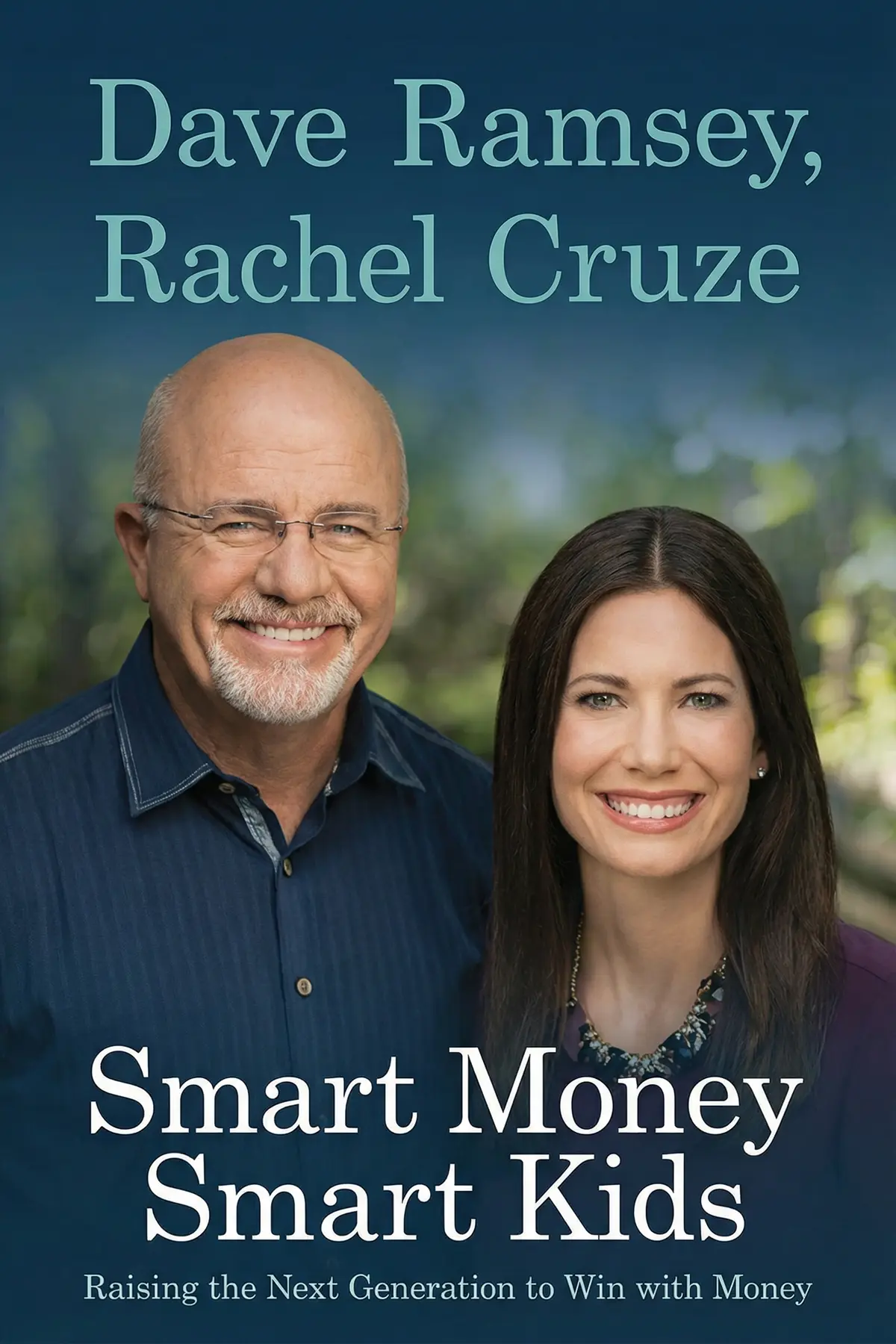
Table of Content
1. Introduction
58 sec
Most parents want their children to handle money better than they did, yet few were ever taught how themselves. In Smart Money Smart Kids, radio host Dave Ramsey and his daughter Rachel Cruze argue that the lessons work best when they start around age three, with a few dollars paid for a finished chore. Ramsey speaks from experience. At twenty-eight, with a toddler and a newborn at home, he and his wife filed for bankruptcy. They rebuilt, and their children grew up to become wealthy in their own right.
The book’s case is that children learn money by handling it, early and often, while a parent leads by example and lets small mistakes happen under a safety net. That runs from a jar of dollar bills at three, to a teenager’s own checking account, to a college plan that needs no loans. Along the way come the practical moves for each age: when to drop the allowance, what a budget looks like to a five-year-old, and the summer-job arithmetic that can nearly cover a year of tuition.
2. Pay for chores and skip the allowance
1 min 38 sec
The weekly allowance feels like the responsible way to give children money. Ramsey and Cruze think it teaches the wrong lesson, and their alternative starts with a glass jar and a stack of very small bills.
3. Teach spending first, with three envelopes
1 min 40 sec
Most parents assume the first money lesson should be about saving. The authors start somewhere else entirely, and their simplest rule for young shoppers takes nothing more than a good night’s sleep.
4. Know whether your child is a saver or a spender
1 min 41 sec
Some children hoard every coin while others spend it before they reach home. The authors see no problem in either, as long as one thing is in place, and Cruze uses herself as the proof.
5. Budget your own money where children can see
1 min 51 sec
Parents can explain budgeting perfectly and still raise children who never do it. The authors locate the problem much closer to home, and their fix starts with a pen, a page and one short phrase.
6. Let teenagers run a real budget and fail small
1 min 40 sec
A teenager drains the emergency fund for concert tickets, then breaks a phone the same night. What a parent does next, the authors argue, may teach more than years of careful explanations.
7. A debt-free path through college, planned early
1 min 51 sec
Tuition is the money worry that keeps many parents awake. The authors begin by lifting a burden most parents assume is theirs, then show the arithmetic that lets a student pay their own way.
8. Conclusion
1 min 04 sec
What runs through the whole book is the picture of a safety net. Ramsey began his own family’s money story with a bankruptcy filing at twenty-eight, and he and Cruze treat money as neutral, good or bad depending on who uses it. Their aim is a child who uses it well, and the only route they see is practice, years of it, while a parent is still close enough to catch the fall.
That gives the parent two roles at once. You are the model, budgeting every dollar where the children can watch and saying no to your own wants when the month’s plan says no. And you are the net that sometimes stays folded, letting a teenager live with a cracked screen because the lesson costs far less now than it will later.
Start wherever your child is today. For a toddler, that may be a clear jar and a dollar bill handed over the moment the toys are back in their basket. For a teenager, it may be an honest talk tonight about what you can pay toward college, and a first scholarship application this week. Be patient, repeat the lessons as they grow, and let the small mistakes happen now, while you are still there to help them up.
About this book
What is this book about?
Most parents want their children to do better with money than they did, but few were ever taught the basics themselves. Dave Ramsey knows the cost firsthand: he and his wife filed for bankruptcy at twenty-eight with two small children, then rebuilt and raised kids who became wealthy in their own right. In Smart Money Smart Kids, Ramsey and his daughter Rachel Cruze set out an age-by-age plan. Toddlers earn dollars for finished chores instead of receiving an allowance. Older children split money into giving, saving and spending envelopes and learn to wait before buying. Parents budget every dollar where children can see, and teenagers get a checking account, a $500 emergency cushion and the freedom to make their own mistakes. The book ends on the largest bill many families face. The authors argue that parents are not obliged to pay for college, and they show how early planning, a public university in the home state, steady scholarship applications and work during school breaks can get a student through without debt.
Book Information
Who it's for
Toddler parents rethinking allowance
Parents of toddlers who want to replace the allowance with something that teaches work.
Ready for teen budgets
Parents of teenagers ready to hand over a real budget and an emergency fund.
Families worried about tuition
Families worried about tuition who want a college plan that avoids student loans.
About the Author
Dave Ramsey
Dave Ramsey founded Ramsey Solutions, where he is CEO, and co-hosts The Ramsey Show, a syndicated radio program. Since 1992 he has helped people take control of their money and build wealth, and his books include The Total Money Makeover and Baby Steps Millionaires. His daughter Rachel Cruze joined Ramsey Solutions in 2010 and teaches budgeting, saving and staying out of debt, drawing on what she learned growing up in the Ramsey household. She is also part of The Rachel Cruze Show, and her other books include Love Your Life, Not Theirs and Know Yourself, Know Your Money.
Ratings & Reviews
Ratings at a glance
What people think
Listeners find this guide an essential resource for instructing children on financial habits, specifically highlighting the idea that it is never too early to begin financial education. The content is crafted clearly and simply, making it an excellent choice for both parents and their kids. Additionally, listeners value the actionable tips provided; one review points to the detailed coverage of useful skills and another notes the emphasis on saving up for significant purchases.
Top reviews
Phichai
This book provides an invaluable roadmap for any parent wanting to break the cycle of financial illiteracy in their home. I particularly loved the concept of 'commissions' instead of a standard allowance because it links work directly to reward, which is a lesson most kids miss today. While Dave's tone can be a bit blunt at times, Rachel's perspective softens the edges and makes the advice feel very attainable for a modern family. We’ve already started the three-jar system with our seven-year-old, and the shift in his attitude toward chores has been night and day. Truth be told, it’s about more than just dollars; it’s about building character and teaching gratitude in a world that pushes constant consumption. If you want your children to understand the value of a dollar before they head off to college, this is the resource you need. It’s simple, actionable, and doesn't get bogged down in complex jargon.
Show moreNoppadol
Picked this up after realizing my teenagers had zero concept of what it actually costs to run a household. The writing style is incredibly accessible, making it a quick read that doesn't feel like a dry textbook on economics. What resonated most was the emphasis on contentment and fighting back against the 'I want it now' culture that plagues our society. By having my kids save for their own big purchases, like their first cars, they are learning a level of responsibility I never had at their age. Look, some people might find the religious undertones a bit much, but the underlying wisdom regarding hard work and sacrifice is universal. It’s rare to find a book that addresses both the technical side of money and the emotional behavior behind it. We are now using the envelope system for their clothing budgets, and it’s been a massive eye-opener for them.
Show moreBunyarit
Wow, I wish my parents had this book when I was growing up! Rachel Cruze shares some wonderful anecdotes about 'growing up Ramsey' that really humanize the financial principles her father has preached for decades. It’s one thing to hear a guy on the radio tell you what to do, but seeing how those lessons played out in a real household is far more impactful. The chapter on college was particularly enlightening, especially the suggestion to have high school seniors treat scholarship applications like a part-time job. My daughter is currently working through the 'budgeting for teens' section, and she’s actually excited to have control over her own spending money for the first time. The book is well-written and avoids the 'bible thumper' vibe that some of Dave's other work is criticized for. It’s just practical, common-sense advice that empowers parents to lead by example.
Show moreDing
After hearing Dave on the radio for years, I finally bought this book to help guide our three boys. The shift from an 'allowance' to a 'commission' system has been a game-changer for our household dynamic. Now, when they want a new video game, they don't beg us; they go find extra work to do around the house. Personally, I think the dual-author approach works perfectly here because you get the perspective of the parent and the child. It helps you see that these boundaries aren't just about being strict; they are about preparing your kids for the real world. We’ve already seen a massive increase in their gratitude and a decrease in the 'gimmies' during trips to the store. This is a must-read for any parent who wants to raise responsible, independent adults.
Show moreKom
Not what I expected, but in a good way! I thought this would be a dry manual on savings accounts, but it’s actually more of a parenting book focused on character building. The way Rachel and Dave explain the 'Give, Save, Spend' categories makes it so easy for a child to grasp the concept of money management. We started implementing the 'Save' goal visuals for our ten-year-old, and she is so proud watching her progress toward buying her own bike. The book is well-written and the chapters flow logically from early childhood through the college years. Not gonna lie, I even learned a few things about my own spending habits while reading it. It's a wonderful tool for any family looking to get on the same page financially and raise kids who understand that money is a tool, not a master.
Show moreMalee
Ever wonder why we wait until our kids are eighteen to explain how a checking account works? This collaboration between Dave and Rachel answers that by providing a clear, step-by-step guide to raising money-savvy children from the toddler years through graduation. To be fair, if you are already a long-time listener of Dave’s show or have read 'The Total Money Makeover,' much of this will feel like a retread of familiar principles. The core message of avoiding debt and paying cash remains the same, though the specific 'age-and-stage' advice for teens is helpful. I did find some of the life advice regarding blended families a bit out of place, as I was looking for purely financial strategies. However, the dual perspective of father and daughter adds a layer of authenticity that his previous books lacked. It’s a solid, easy-to-read manual that serves as a great starting block for families new to the Ramsey way of life.
Show moreOksana
The chapter on the war for your child’s heart was worth the price of the book alone. In an age of social media envy, teaching kids to be grateful for what they have while working for what they want is a vital skill. My husband and I appreciated the specific chore charts and the breakdown of how to handle money at different ages, from five to twenty-five. I'll admit that the tone can occasionally veer into being a bit judgmental toward those who don't follow the Ramsey plan perfectly. Also, for those who have been in the 'Ramsey-verse' for a while, there isn't a huge amount of brand-new information here. But seeing the concepts applied specifically to parenting makes it a worthwhile addition to our bookshelf. It’s easy to understand and provides a great foundation for families who want to raise children who aren't entitled.
Show moreMichael
Finally got around to reading this, and I’m glad I did despite some of the negative things I’d heard about the tone. While Dave can definitely be a bit of a 'bible thumper' at times, the core financial advice is incredibly solid for beginners. My kids are mostly grown, but I still found the sections on helping adult children in crisis to be very relevant and helpful. The truth is, many parents of Millennials never talked about money, and this book breaks that silence in a healthy way. I do agree with other reviewers that the college advice seems slightly out of touch with current tuition realities in certain states. However, the emphasis on avoiding student loan debt at all costs is a message more young people need to hear. It’s a quick, easy read that sparked some great conversations at our dinner table.
Show moreBo
As someone who works in the financial sector, I found the advice here to be a bit of a mixed bag. On one hand, the foundational principles of giving and saving are excellent for young children who need a simple framework to follow. On the other hand, the dogmatic 'no-debt-ever' stance feels increasingly delusional in today's economy, especially when it comes to student loans or leveraging credit responsibly. Dave seems to ignore how a lack of credit history can negatively impact insurance rates and future housing options for these kids. Furthermore, the content is very basic; it assumes the reader has almost no financial literacy to begin with. It’s a decent introductory tool for parents who are struggling themselves, but if you’re looking for technical depth or investing strategies like 529s, you’ll be disappointed. Frankly, they should have spent more time on the math and less on the 'life coaching' aspect.
Show moreWan
This book felt like a glorified pamphlet stretched out into a full-length hardback just to ask for another $15. If you have any semblance of financial common sense, you won't find anything revolutionary here; it's mostly common knowledge like 'don't buy things you can't afford.' The authors spend a lot of time giving life advice to single parents and blended families that felt patronizing and out of their lane. I was hoping for more technical guidance on investing for kids, but instead, I got told that credit cards are the devil. The world is more complex than 'envelopes of cash' in 2024, and this advice feels stuck in a Tennessee bubble from twenty years ago. It’s very basic, almost to the point of being condescending to the reader's intelligence. I expected much more depth regarding time value of money or actual investment vehicles.
Show moreQuestions about this book
What is the main idea of Smart Money Smart Kids?
Dave Ramsey and Rachel Cruze argue that children learn money by handling it from an early age, guided by parents who practice good habits themselves. The book moves from paying toddlers for chores, to dividing money into giving, saving and spending, to teenagers running their own budget, and finally to getting through college without debt. Letting children make small mistakes while parents can still help is central to the approach.
Should I give my child an allowance, according to Dave Ramsey?
Ramsey and Cruze prefer what they call commission. Instead of a fixed allowance, children earn money for specific chores and are paid right after finishing. From about age three, simple jobs like putting toys away or making the bed earn a few dollars, paid in single bills into a clear jar so the child can see the money grow. The goal is to tie earning directly to work.
How do you teach a teenager to budget?
The authors suggest adding up what you already spend on your teen each month for clothes, school supplies and basics, then depositing that amount in a checking account in their name. Teach them how the bank and budgeting work, ask them to build a $500 emergency cushion, and let them manage the month. If they misuse the cushion, consider letting them live with the consequence rather than bailing them out.
Do parents have to pay for their children's college?
Ramsey and Cruze say parents are not morally obliged to pay. If you can, that is fine, but if you cannot, a student can still graduate without debt. They recommend planning early, being clear about what help you can offer, choosing an in-state public university, applying for many scholarships, and working full time during summer and winter breaks, which by their arithmetic can come close to a year’s average in-state cost.
Who should read Smart Money Smart Kids?
It suits parents of children from toddler age to the late teens who want a practical, age-by-age plan for teaching money. It is especially useful for parents who are still building their own budgeting habits, since the authors stress learning alongside your children, and for families anxious about paying for college who want a route that avoids student loans.
Readers also enjoyed







AUDIO SUMMARY AVAILABLE
Listen to Smart Money Smart Kids in 15 minutes
Get the key ideas from Smart Money Smart Kids by Dave Ramsey, plus 5,000+ more nonfiction titles.
- 5,000+ titles
- Listen as much as you want
- 7-day free trial
- Cancel anytime









