
Blink: The Power of Thinking Without Thinking
Malcolm Gladwell
 English
 ไทย
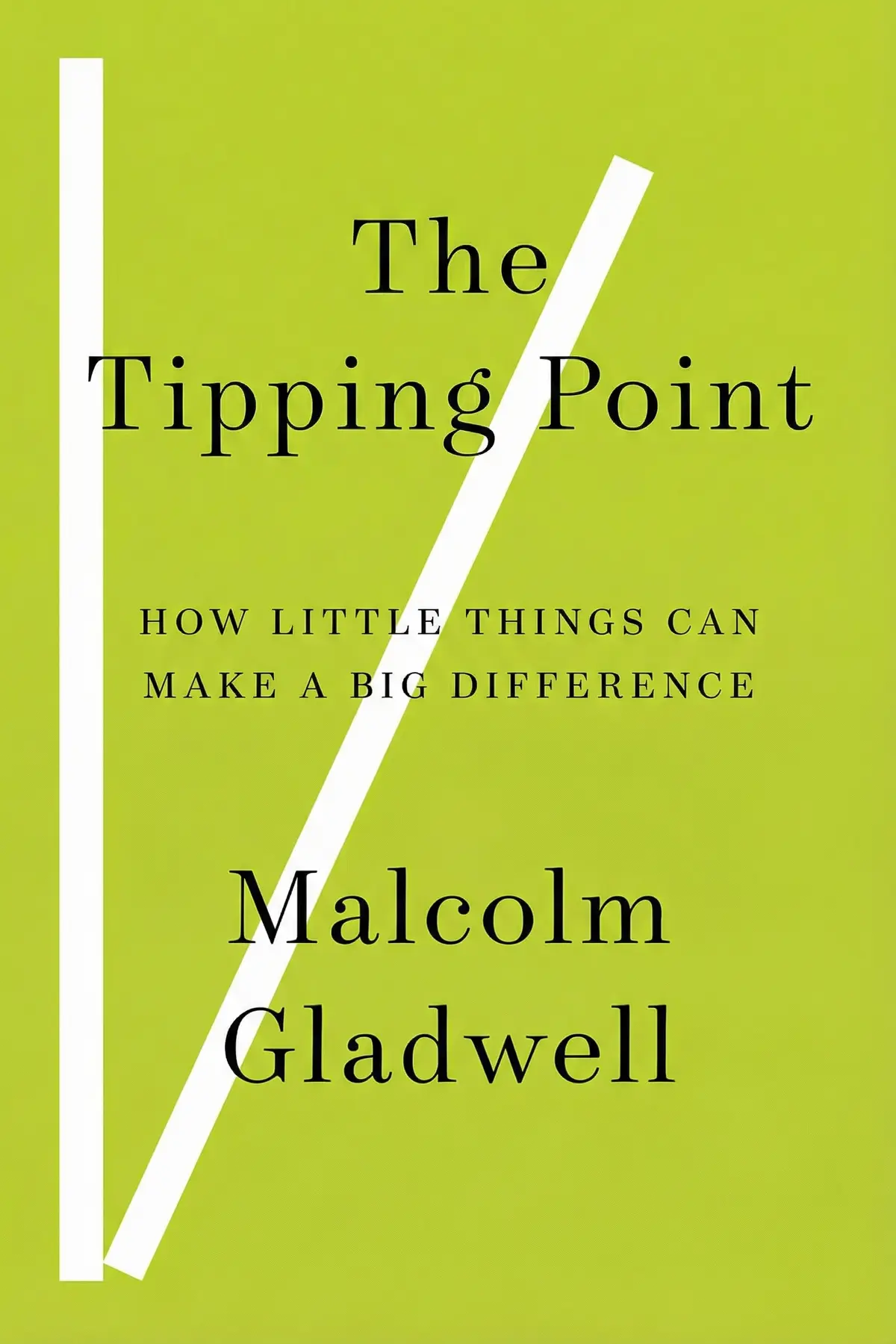
Explains why some ideas, products and behaviors creep along for years and then spread suddenly, and shows how a few key people, a memorable message and small changes in context push a trend past its tipping point.
59 sec
If you have pushed an idea, a product or a change at work and watched it go nowhere, the idea itself may not be the problem. In The Tipping Point, writer Malcolm Gladwell argues that ideas and behaviors spread the way a virus does: slowly for a long time, then all at once. For years a suede shoe called Hush Puppies barely sold. Then, with no help from the company, sales leaped from 30,000 pairs to 430,000 in one year, and to about two million the next.
Gladwell’s case is that jumps like this are not luck. They come from three small levers: a few unusual people who carry the message, a detail that makes the message stick, and a setting that tilts behavior one way or another. Each lever is easy to spot once you know its shape. By the end, you will be able to look at any stalled effort and name the lever it is missing.
1 min 37 sec
Some products sell steadily for years without anyone noticing, then suddenly everyone has to own one. The shift has a recognizable shape, and seeing it changes how you judge any slow start.
1 min 34 sec
A shoe brand’s comeback started without its marketing team, and a virus’s early path ran largely through one man. Both point to an imbalance that shows up almost everywhere people gather.
1 min 37 sec
A tight circle of loyal friends feels like the best audience for a new idea. It turns out the people who start epidemics rely on something looser, and far wider.
1 min 36 sec
Two people can make the same case in the same words, and only one of them changes minds. The difference sits mostly in signals neither speaker is consciously sending.
1 min 29 sec
The person with the most influence over what your friends buy may have a modest network and no wish to sell anything. What they have instead makes their word unusually hard to ignore.
1 min 37 sec
A grammar mistake helped a cigarette brand reach the top, and a children’s show changed one habit of its own format. Both reveal where the real power of a message often hides.
1 min 36 sec
A group of students on their way to give a talk passed a man who had collapsed, and most of them walked on. What separated those who stopped from those who did not was almost nothing.
1 min 38 sec
Facing a crime wave, one city’s authorities ignored the obvious big targets and went after details that seemed almost trivial. What happened next suggests where to look when a team or a place goes wrong.
1 min 01 sec
The Tipping Point makes sudden change feel less mysterious. A shoe that sat on shelves for years, a fax machine that grew slowly before it soared, a city overwhelmed by crime: each turned when a few small things lined up. The right handful of people carried the message, the message had a detail that made it memorable, and the setting nudged people in one direction. In the case of Hush Puppies, the company did nothing at all.
That gives you a way to read any idea that is stuck. Ask who has heard it so far, and whether a Connector, a Salesman or a Maven is among them. Look at how it is presented and try one small change, the way the makers of Sesame Street moved the Muppets onto the street. Then check the surroundings: the time pressure, the visible signals, the size of the group.
Most efforts stall on the flat part of the curve. The ones that tip are usually the ones where someone fixed the small things first.
Some ideas take off and most never do. A suede shoe sits unsold for years and then sells millions of pairs. A fax machine grows slowly, then becomes something everyone must own. Malcolm Gladwell argues that these sudden jumps follow the same pattern as a viral outbreak: slow growth, then a threshold, then rapid spread that is hard to stop. Gladwell's angle is that the forces behind such epidemics are small and easy to recognize. A handful of people do most of the spreading: Connectors who link different social worlds, Salesmen who persuade through rhythm and emotion, and Mavens whose expert advice friends follow. The message itself has to stick, often thanks to one small tweak, as a cigarette slogan and Sesame Street show. And the setting matters far more than we assume, from rushed students ignoring a collapsed man to a city that cut crime by cleaning graffiti. Readers get a practical way to look at any stalled idea, product or change at work and see which lever is missing.
Founders and marketers whose product or idea is growing slowly and who want to know what makes things suddenly spread.
Managers trying to change habits on a team who suspect the setting matters more than speeches.
Curious readers who want to understand why trends, fashions and even crime rise and fall so fast.
Malcolm Gladwell was born in England in 1963 and grew up in rural Ontario. He worked as a reporter at the Washington Post before joining The New Yorker. His books include The Tipping Point and Outliers, and his writing often draws on research from sociology and psychology. He co-founded the podcast company Pushkin Industries and was appointed to the Order of Canada in 2011.
Malcolm Gladwell
Malcolm Gladwell
Listeners consider this work an absorbing experience filled with deeply researched observations and stimulating ideas. The caliber of the prose receives acclaim, as one listener points out its use of anecdotes, and the facts provided are thorough and significant. They value the intriguing topics covered, with one review emphasizing its ability to link disconnected occurrences, and find the narrative style captivating, as one mentions its success in weaving various tales together to support its premise.
Ever wonder why some ideas just take off while others fizzle out instantly? This book offers a brilliant exploration of that exact phenomenon through what Gladwell calls the tipping point. I was absolutely floored by how he uncovers hidden links between seemingly disparate events, like the sudden resurgence of Hush Puppies shoes and the dramatic drop in New York City’s crime rate. The 'Power of Context' chapter is particularly intellectually resonant, explaining how our immediate environment shapes our actions more than we’d like to admit. Personally, I found the prose to be captivating and the research to be presented in a way that feels both accessible and deeply investigated. It’s rare to find a book that manages to be this informative while reading like a fast-paced mystery. Even if some critics find his theories a bit oversimplified, the sheer number of 'aha!' moments makes this a mandatory read for anyone who wants to understand modern culture.
Show moreWow, Gladwell has this incredible ability to make complex sociological concepts feel like a page-turning thriller from start to finish. I was particularly gripped by the discussion on 'transactive memory' and how we use our partners as extensions of our own brains. It’s an intellectually stimulating observation that explains so much about human relationships and why we feel so lost when they end. The book is filled with these kinds of revelations that make you stop and look at your daily life differently. From the way he explains the spread of smoking among teens to the logistics of Paul Revere's midnight ride, the storytelling is top-notch. He connects the dots between psychology, history, and economics in a way that feels completely seamless. Some might call it pop-science, but if pop-science is this engaging and well-researched, then I’m all in. I finished it in two sittings and immediately started recommending it to everyone I know.
Show moreThis book changed the way I look at the world around me by highlighting the invisible forces that drive social change. I loved the 'Law of 150' and the idea that our social groups have a natural ceiling before they start to lose their cohesion. It explains so much about why small companies feel different from large corporations. Gladwell’s ability to weave together stories about syphilis epidemics, children's TV, and colonial history is nothing short of genius. The book provides a detailed and relevant framework for understanding how a tiny push in the right place can cause a massive shift in the status quo. I found the storytelling to be incredibly engaging, and the 'stickiness' concept has stuck with me long after closing the back cover. It’s an essential read for anyone who wants to understand the 'whys' behind the trends that define our lives.
Show moreFinally got around to this classic, and I can see why it sparked so much conversation back in the day. Gladwell has a gift for taking dense sociological concepts and turning them into a narrative drive that keeps you turning pages. His breakdown of the 'Law of the Few'—specifically how Connectors and Mavens operate—really changed how I look at my own professional network. While some of the technology references feel a bit dated now that we’re in the age of TikTok and instant virality, the core psychology remains granular and applicable. To be fair, he does rely heavily on a story-first approach that sometimes glosses over the harder data in favor of a good hook. The section on the 'stickiness factor' using Sesame Street and Blue’s Clues was a highlight for me, offering a deep look into how small changes create massive impacts. It’s a compelling read for anyone interested in the mechanics of human behavior, even if you have to take the anecdotal evidence with a grain of salt.
Show moreAs someone who works in digital marketing, Gladwell's insights into the 'stickiness factor' are absolutely fascinating and surprisingly relevant. He explains why certain messages stick in our brains while others are forgotten immediately, using the evolution of children's television as a primary example. The way he compares the testing methods of Sesame Street versus Blue’s Clues provided a great framework for understanding audience engagement. Look, the book isn't perfect—it definitely shows its age when discussing how information spreads, as 'word of mouth' has changed so much since the year 2000. However, the fundamental idea that a small, targeted group of 'Salesmen' can swing public opinion is still a powerful concept to grasp. It’s a thought-provoking piece of work that forced me to rethink my own strategies. The writing style is punchy and direct, though a few chapters felt like they were stretching a single point a bit too thin.
Show morePicked this up on a recommendation, and I was immediately sucked into the narrative about how trends propagate through a population. The way Gladwell explains the 'Law of the Few' really resonated with me, especially the idea that a handful of specific people hold all the social power. It makes you realize that most of our choices are influenced by 'Mavens' we don't even know we're following. I did find the section on the 'Power of Context' regarding the NYC subway cleanup to be one of the most compelling parts of the book, even if later studies have debated those specific findings. The writing is incredibly polished, making even the more technical parts of the 'stickiness' experiments feel like an exciting discovery. My only real gripe is that he occasionally treats his hypotheses as absolute certainties, which can feel a bit patronizing. Still, the overarching themes are brilliant and definitely worth the time.
Show moreGladwell is a master at finding the hidden threads that tie our social behaviors together in ways we rarely notice. I was especially interested in the 'Salesmen' personality type and how subtle cues like facial expressions and emotional mimicry can tip a conversation in their favor. The research into Peter Jennings' facial gestures during news broadcasts was a standout example that really proved his point. In my experience, the book is at its best when it's diving into these specific, granular psychological studies. It does get a little repetitive toward the end, and the conclusion felt slightly rushed compared to the build-up of the earlier chapters. However, the afterword in the newer editions is a great touch, as it shows Gladwell is willing to refine his thinking as the world changes. It’s a solid 4-star read that offers a unique lens through which to view the 'epidemics' of everyday life.
Show moreI've been thinking about the 'tipping point' concept ever since I finished the final chapter last night. Gotta say, Gladwell knows how to close a deal and make his theories feel nearly undeniable while you're reading them. The way he links the 'stickiness factor' to the success of Blue's Clues was particularly eye-opening for me as a parent. It’s a compelling read that manages to be both informative and entertaining, which is a rare feat for non-fiction. To be fair, some of the conclusions feel a bit like they were built on a foundation of anecdotes rather than ironclad scientific laws, but the questions he raises are still incredibly valuable. It’s the kind of book that makes you want to go out and start your own minor epidemic just to see if the rules of Mavens and Connectors actually work in the real world. Despite being over twenty years old, the core message still carries a lot of weight.
Show moreThe truth is, this book feels like a long-form magazine article that was stretched into a full volume to satisfy a publishing contract. Gladwell is undeniably a master of the anecdote, and I enjoyed the stories about the 'Broken Windows' theory and the 'Law of 150' in corporate structures. But after the first hundred pages, the pattern becomes a bit too predictable: a surprising story, a catchy name for a theory, and then a quick move to the next topic. It’s a snappy little book for a weekend trip, but it lacks the depth I was hoping for in a serious sociological study. To be fair, the 'Connectors' concept is quite useful for understanding social dynamics, but I found myself wanting more data and fewer metaphors. It’s good food for thought, yet I can’t help feeling that the book’s own success is the best example of the marketing 'tipping point' it describes.
Show moreNot what I expected given all the hype surrounding this title for the last two decades. Frankly, I felt like I was being sold a collection of half-truths and clever marketing slogans disguised as actual science. Gladwell is a talented writer, but his arguments often fall into the trap of assuming correlation implies causation without providing the rigorous proof to back it up. The story about the 1950s HIV epidemic felt especially speculative and left me questioning the validity of his other case studies. It’s a very well-crafted book, but it seems more concerned with being 'sexy' and provocative than being factually sound. By the time I got to the section on Paul Revere, I was tired of the redundant examples that all seemed to point toward the same shaky conclusion. If you’re looking for a breezy read that makes you feel smart at a dinner party, this is it, but don't look too closely at the underlying logic.
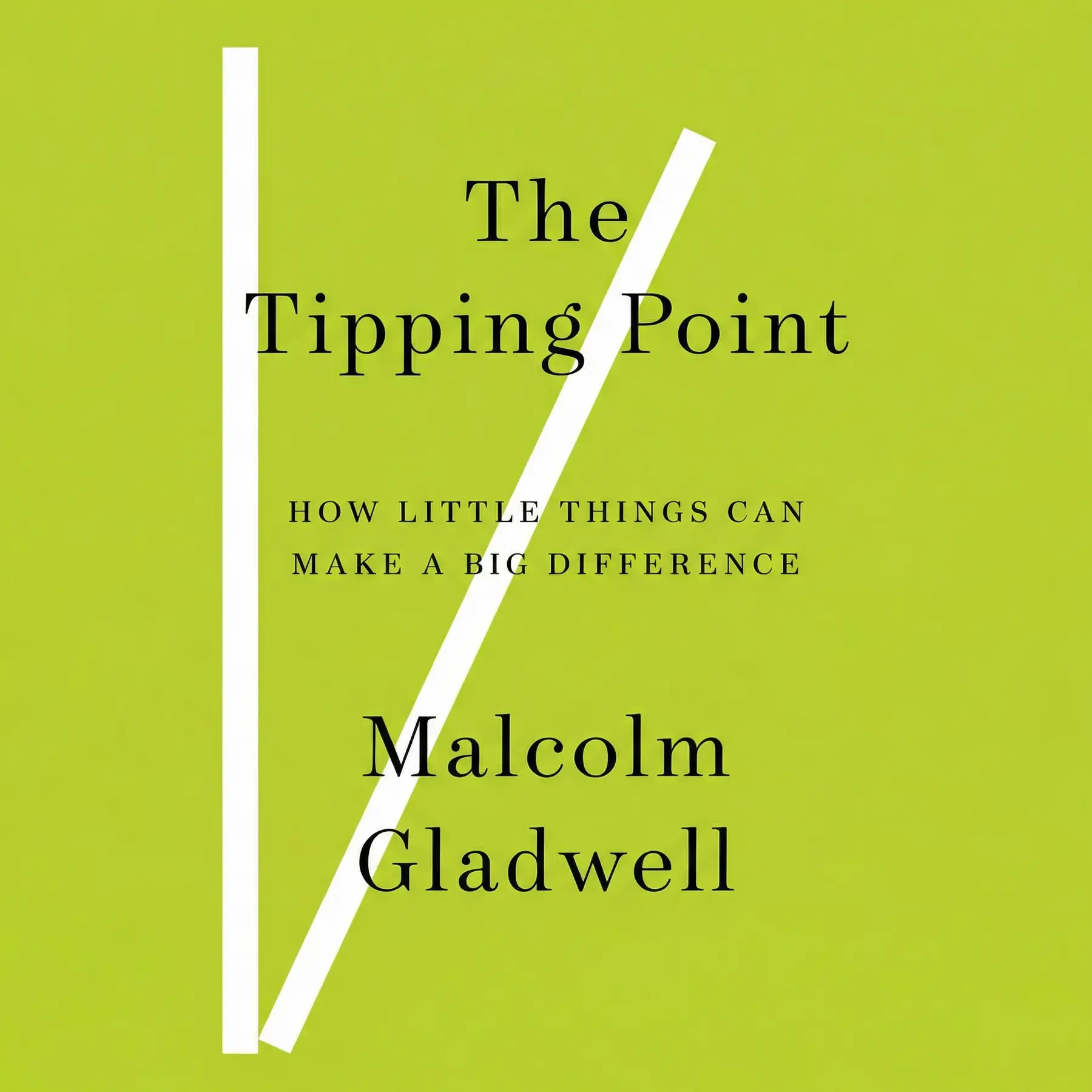
Show moreMalcolm Gladwell argues that ideas, products and behaviors spread like viral epidemics: slowly at first, then suddenly once they cross a threshold he calls the Tipping Point. What pushes them across is small and recognizable. A few key people carry the message, the message has a detail that makes it stick, and the surrounding context nudges behavior. The Hush Puppies revival and the rise of the fax machine are two of his examples.
They are Gladwell’s three types of people who drive social epidemics. Connectors know many people across different social worlds and rely on weak ties, so ideas jump between groups through them. Mavens collect information about products, trends and prices and share it to help others, so their recommendations are trusted. Salesmen persuade through energy, emotion and nonverbal rhythm, falling into step with others and carrying them along.
Gladwell argues that surroundings shape behavior more than we think. In one study, students told not to be late stopped to help a collapsed man only 10 percent of the time, against 63 percent of those with time to spare. In New York City in the mid-1990s, authorities removed graffiti and punished fare evasion, and crime fell rapidly in the following years.
Look at any stalled idea through three questions. Has it reached a Connector, a Salesman or a Maven who can carry it? Is there one small change in how it is presented that would make it stick, as Sesame Street did by mixing Muppets with real actors? And do the setting, the signals and the group size support the behavior you want? Gladwell suggests keeping groups at no more than about 150 people.




Richard Wiseman





Steven C. Hayes

AUDIO SUMMARY AVAILABLE
Get the key ideas from The Tipping Point by Malcolm Gladwell, plus 5,000+ more nonfiction titles.









