

Abundance: The Inner Path to Wealth
Deepak Chopra
 English
 ไทย
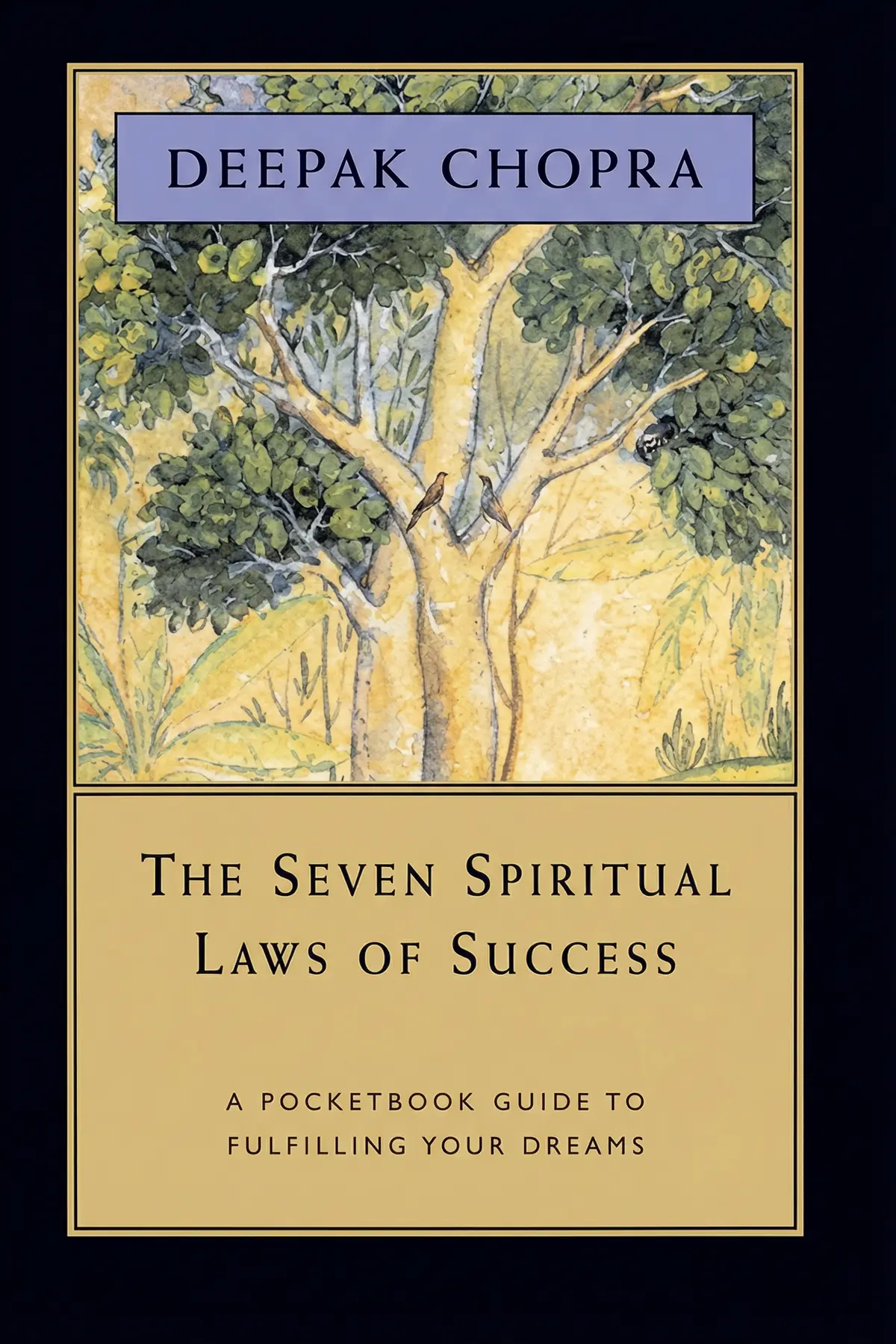
Chopra argues that success comes from loosening your grip: quieting the ego, accepting where you are, giving freely and releasing attachment, so the energy he believes connects everyone can carry your goals forward.
1 min 01 sec
If success feels like a constant fight for status, money and approval, Deepak Chopra offers a very different route. In The Seven Spiritual Laws of Success, he argues that you are part of one connected field of energy rather than a lone ego in a hostile world, and that the harder you grasp, the more you block what you want. Even guarding your savings too closely, he claims, works against you.
That idea runs through every law in the book. Quiet the ego, accept where you are, give freely, choose with care, hold clear intentions, release the outcome and find work that serves others. Each one, in Chopra’s view, keeps energy moving.
What follows is a set of small practices to try this week: a few minutes of silent breathing, a disagreement you no longer need to win, a negative thought traded for a real accomplishment, and a sign that tells you whether your work fits you.
1 min 34 sec
Status, comparison and the fear of falling behind can feel like the price of ambition. Chopra traces all three to one mistaken belief about who you are, and he offers a few quiet minutes as the way out.
1 min 32 sec
Some problems follow you from one situation to the next, and some debates leave everyone angrier than before. Chopra suggests the energy drain comes from the same habit in both cases.
1 min 33 sec
A supermarket trolley, a birthday invitation you would rather skip and a stinging insult all hide the same moment of decision. Chopra argues most of us pass through it without ever noticing.
1 min 43 sec
Careful saving earns admiration from almost everyone. Chopra makes the unusual case that a growing bank balance can keep you stuck, and that the same rule applies to love and friendship.
1 min 39 sec
Disliking your home or doubting yourself at work can feel like honest realism. Chopra claims those thoughts do more damage than you think, and he gives a small daily exercise to redirect them.
1 min 35 sec
Wanting something badly seems like the surest way to get it. Chopra argues the opposite, using a dream car, a market crash and a long search for love to show where intense wanting leads.
1 min 24 sec
Some people work long days and leave energized, while others feel empty after a few hours. Chopra offers a simple signal for telling which group you are in, and what to do if it is the wrong one.
1 min 03 sec
Chopra’s book asks for a change of stance more than a set of tactics. Each law is a version of the same move: loosening a grip. The ego’s grip on feeling separate, the grip on being right, on money, on a dream car or a dream partner, even on a career that does not suit you. In his telling, whatever you hold too tightly stops flowing, and whatever flows comes back.
How literally to take his idea that the universe answers our thoughts is up to each listener. The habits he builds on it are modest and easy to test. Sit with your breath for a few still minutes before the day begins. When a harsh story about yourself starts up at work, stop and name one thing you actually did well. And give to everyone you meet, which Chopra makes literal: bring flowers or a small token when someone invites you into their home, or simply greet people with warmth and care.
The smallest of these is the gift at the door, and that is where Chopra would have you begin.
Many people chase success by fighting for it: saving every cent, winning every argument, staying fixed on the job or partner they want. Deepak Chopra argues that this grasping is the very thing that keeps success away. His starting point is spiritual. Each of us, he says, belongs to one boundless field of energy that connects everyone and everything. The ego hides that connection and leaves us fearful and fixated on status. His laws are ways to reconnect: silent meditation, accepting difficult situations, dropping the need to be right, letting money and kindness circulate, making conscious choices, holding positive intentions, detaching from outcomes and finding the work you are meant to do. Readers get a short, practical set of habits built on that view. They include a breathing meditation, a way to handle a hard roommate or a heated debate, a method for replacing self-critical thoughts at work and a simple test for whether a job fits. The book also offers a daily practice of giving to everyone you meet.
Professionals worn down by status, comparison and the urge to win every argument.
People questioning whether their current job is the work they are meant to do.
Readers drawn to meditation and spiritual ideas who want simple daily practices.
Deepak Chopra was born in New Delhi in 1946 and studied medicine in India before moving to the United States in 1970, where he trained in internal medicine and endocrinology. In 1996 he co-founded the Chopra Center for Wellbeing. He also founded The Chopra Foundation, a non-profit supporting well-being research and humanitarian work, and hosts the podcast Daily Breath. His books have appeared in more than forty-three languages, and many have been New York Times bestsellers. Some of his health ideas have drawn criticism from medical and scientific professionals.
Deepak Chopra
Deepak Chopra
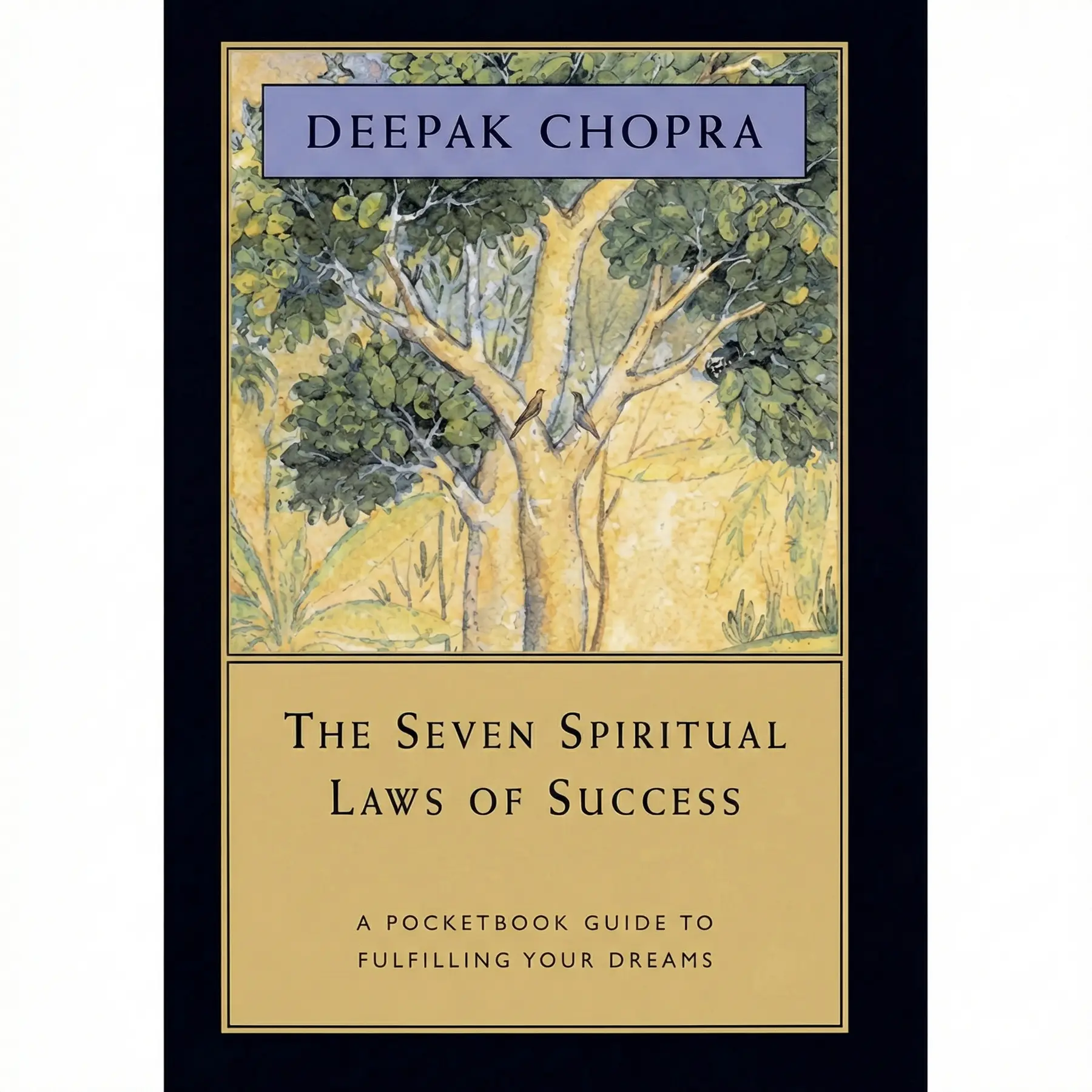
Listeners find this book to be an extraordinary, fast read that is simple to grasp, containing clearly articulated concepts and actionable guidance. They value the spiritual substance, characterizing it as spiritually insightful and deep, and find it to be transformative because it allows them to view existence from a new perspective.
Deepak Chopra has a way of distilling ancient wisdom into something you can actually use while drinking your morning coffee. This book is a phenomenal quick read that doesn't waste time on filler, focusing instead on how we can align our internal state with the rhythms of the universe. The Law of Dharma really hit home for me because it shifts the focus from 'what can I get' to 'how can I serve.' I’ve started practicing the daily silence and meditation he suggests, and the mental clarity is undeniable. Truth is, success isn't just about the bank account; it's about that enthusiasm for life he describes so well. It’s a profound little manual that helps you see your daily struggles in a completely different, more spiritual way. I keep it on my nightstand for constant reminders.
Show moreWow, I didn't expect such a tiny book to carry this much weight. The Seven Spiritual Laws of Success is a life-changing guide for anyone feeling lost in the modern rat race. I loved how Chopra defines success not as power or money, but as the ability to fulfill desires with effortless ease. The chapter on the Law of Pure Potentiality taught me the value of commune with nature, which I’d been neglecting for years. It's written in a very accessible way, making profound concepts feel like common sense. Some might call it simplistic, but I find there's a lot of beauty in that simplicity. If you're looking for spiritual enlightenment that fits in your pocket, this is it. It has genuinely helped me transform how I view my daily interactions.
Show moreThe chapter on the Law of Giving completely shifted my mindset regarding success and abundance. Chopra suggests that if you want joy, give joy; if you want money, help others get it. It sounds counterintuitive in a competitive world, but practicing it brings a strange sense of peace. Personally, I found the Law of Karma explanation very clear—it’s just about conscious choice-making. This book is a remarkable companion for anyone wanting to co-create their life with the universe rather than fighting against it. Every day offers a new opportunity for growth, and this book provides the roadmap. It’s light, inspiring, and full of wisdom that sticks with you long after you close the cover. Truly a gem.
Show moreEver wonder why some people seem to move through life with such effortless ease while others struggle for every inch? This book explains that mystery through the Law of Intention and Desire. Chopra shows us how to release our intentions into the 'gap' of meditation and let the universe handle the details. It sounds mystical, and it is, but the results in my own life have been quite tangible. I feel more energized and less frustrated by minor obstacles. The writing style is very amena and poetic, which makes it easy to digest. It’s a tiny book, but the ideas on Dharma and purpose are absolutely massive. It has helped me see life as a series of gifts rather than a series of problems to be solved.
Show moreTo be fair, you have to go into this with an open mind and a willingness to look past the occasional 'mystical' jargon to find the real treasures. This book is a phenomenal resource for anyone who feels stuck in the material world and needs a reminder of their inner potential. I particularly appreciated the Law of Pure Potentiality and the emphasis on being non-judgmental toward others. It’s a quick read, but I find myself returning to the summaries at the end of the chapters whenever I feel stressed. The focus on serving others as the ultimate path to success is a message our society desperately needs right now. It’s life-changing if you actually commit to the practices. Simple laws, but they hold incredibly in-depth meaning for those willing to listen.
Show morePicked this up during a particularly stressful month, and while some parts felt a bit airy-fairy, the core message resonated deeply. The Law of Least Effort is a game-changer if you’re someone who constantly burns out by trying to control every single outcome. Chopra explains that nature doesn't struggle to grow, so why should we? My only gripe is the occasional slip into what some might call psychobabble—all that talk about 'infinite correlation' in the quantum field felt a bit muddled. However, the practical advice on being non-judgmental and practicing detachment is incredibly grounded. It’s a brief, amena read that manages to bridge the gap between Eastern spirituality and Western goals. Definitely worth the hour it takes to read through it.
Show moreFinally got around to reading this classic, and it’s essentially a manual for living with less friction. I’ve been trying to apply the Law of Detachment lately, especially when things don't go according to plan at work. It’s about letting go of the rigid idea of how things 'should' be and remaining open to all possibilities. Not gonna lie, some of the phrasing is a bit repetitive, and the book is so short it feels more like a long essay. However, the practical steps at the end of each chapter make it more than just a theory book. It’s an easy-to-understand guide that encourages you to witness your choices rather than just reacting. Even if you aren't 'spiritual,' the psychological benefits of these habits are hard to deny.
Show moreAfter hearing so much about Chopra, I expected something more dense, but this is a surprisingly quick and accessible read for the average person. He takes complex Vedic concepts and translates them into a Western style that emphasizes fulfillment and creative freedom. I enjoyed the guide to daily activities, like spending time in stillness to connect with our inner selves. My only criticism is that he makes 'unlimited wealth' sound a bit too easy, which might mislead some readers into thinking this is a 'manifesting' book. But if you look past that, the spiritual content is genuinely enlightening. It helped me realize that hard work and struggle are often signs that we are out of alignment. It's a solid 4-star read for anyone needing a mental reset.
Show moreAs much as I appreciate the shift in perspective this book offers, I found myself rolling my eyes at the pseudo-scientific terminology used throughout the chapters. Frankly, the constant references to the 'quantum field' as a synonym for consciousness felt like a bit of a stretch and lacked actual substance. Chopra is a talented writer, but he often cloaks simple, good advice—like being kind or staying present—in thick layers of vague mysticism. I also felt the emphasis on 'unlimited wealth' was a bit much, almost pandering to a Western audience that wants to be spiritual without sacrificing materialism. That said, the sections on the Law of Giving and the Law of Karma are genuinely insightful. It’s a decent introductory text, but don't expect a rigorous philosophical or scientific treatise.
Show moreLook, the basic tenets like being non-judgmental and practicing silence are great, but the execution here feels incredibly commercial and shallow. It felt like Chopra was pandering to people who want a 'quick fix' for their souls while still being obsessed with accumulating money. He mentions that abundance isn't just about cash, yet the word 'wealth' appears constantly, which felt contradictory. Some of the logic is just bizarre; for instance, the idea that a broken leg is a message from the universe rather than just an accident. To be fair, the Law of Giving is a nice sentiment, but you can find better versions of these ideas in traditional Zen or Stoic texts without the 'woo-woo' marketing. It’s a very polished product, but it lacks the heart I was looking for.
Show moreDeepak Chopra argues that people are not isolated egos but part of one boundless field of energy connecting everything in the universe. Recognizing this, he says, lets you draw on that energy to reach personal and professional goals. His laws are ways back to that connection: meditation, acceptance, giving, conscious choice, positive intention, detachment from outcomes and finding your purpose.
Chopra believes the universe runs on giving and receiving, and hoarding money interrupts that flow. He notes that the word currency comes from a Latin root meaning to circulate or flow. His example contrasts a minimum-wage worker who banks most of each paycheck and never gets rich with one who invests in education and eventually runs a business, gaining far more in return.
Chopra argues that clinging to desires shows distrust of the universe and leads to anxiety, while desires come true when you let go of them. He points to single people who search for a partner for hours every day and often meet the right person only after they give up. The practical step is to set a clear intention, then stop forcing the outcome.
Start with a few minutes of silent breathing each morning. In disagreements, share your view without needing to win. When you catch yourself thinking you are not contributing enough, stop and find one real accomplishment, even a well-written email. And watch which tasks leave you energized, since Chopra treats nearly endless energy as the sign that you have found the right work.
It suits readers who feel drained by competing for status and approval and want a calmer approach to their goals. People rethinking their career will find Chopra’s ideas on purpose useful, and those interested in meditation and spirituality will find simple daily practices, such as giving something to everyone they meet.


Eckhart Tolle
Marianne Williamson

Pico Iyer

Richard Wiseman

Alcoholics Anonymous World Services




AUDIO SUMMARY AVAILABLE
Get the key ideas from The Seven Spiritual Laws of Success by Deepak Chopra, plus 5,000+ more nonfiction titles.









