Abundance: The Inner Path to Wealth
Deepak Chopra
 English
Deepak Chopra argues that everyday reality is a mental construction made of sense data, inherited labels and shared stories. He offers simple awareness exercises for loosening those filters and reaching a larger sense of self and creativity.
57 sec
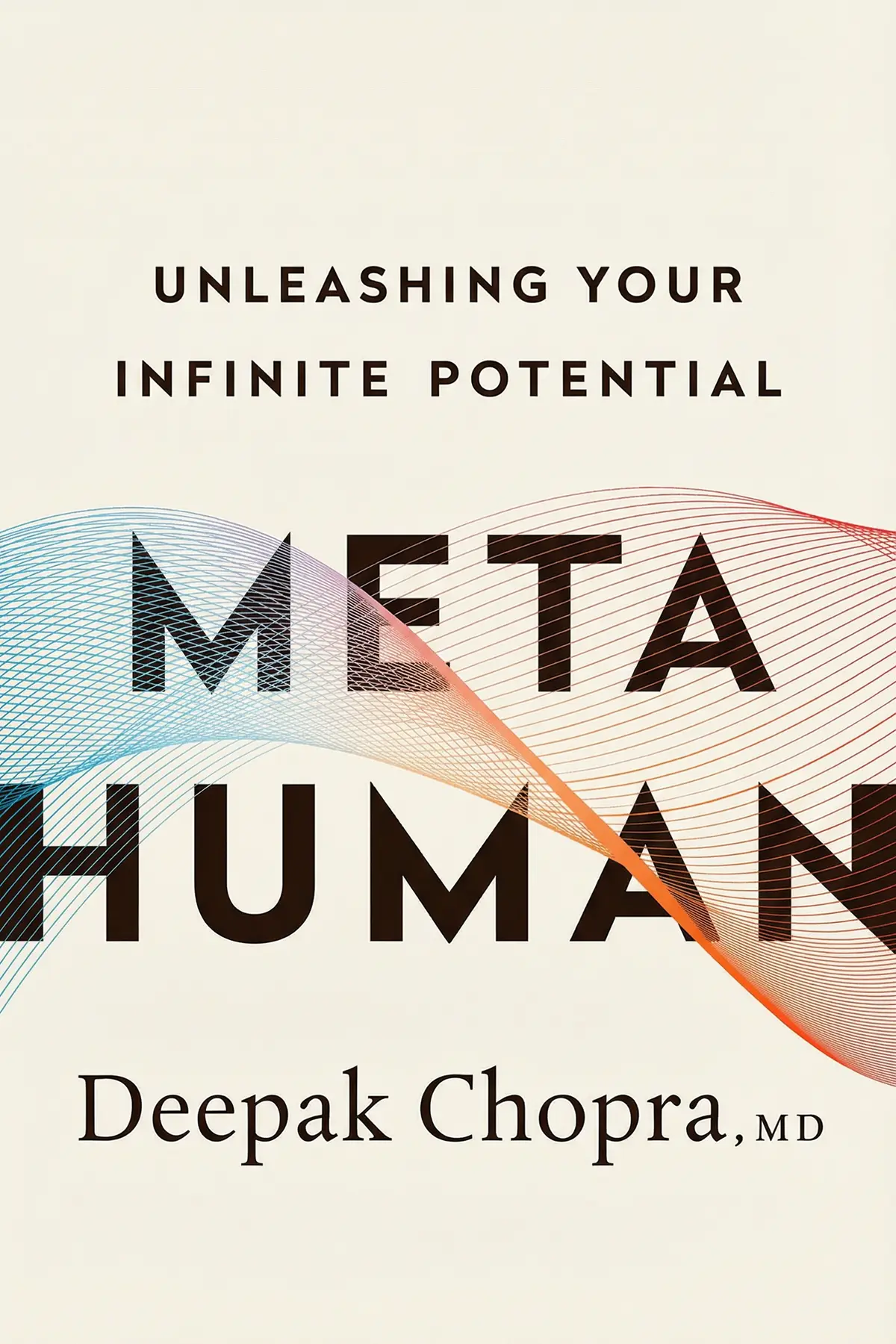
If your days feel like a loop of commuting, cooking and paperwork, Deepak Chopra starts with a bold claim: the world you treat as solid is a picture your own mind assembles. In Metahuman, the physician and wellness author argues that this mind-made reality is also what holds you back. Every label you inherited, from your nationality to your sense of time, narrows what you notice and what you believe you can do.
Behind those filters, he says, lies metareality, a pure awareness without limits, and anyone can learn to reach toward it. His case runs through a tree outside a window, a Norse sea serpent and a pianist who suddenly grasped music theory in a flash. Each idea removes one more filter, and each comes with a small practice to try: walking through a dark house, studying a button, and attempting a single thought that is truly your own.
1 min 31 sec
A tree outside your window seems like the most solid thing in the world. Follow what actually happens between the tree and your awareness of it, and the word real starts to look less certain.
1 min 41 sec
Medieval Norse people believed something about the earth that sounds absurd today. Chopra uses it to make an uncomfortable point about your own beliefs, and about the identities you were handed before you could speak.
1 min 30 sec
If colors, cars and even brightness are categories your mind invents, is anything really out there? Chopra answers with the image of a polluted river and a spring high upstream.
1 min 33 sec
A pianist with ordinary skills sat down one day and suddenly understood the whole of music theory. Chopra uses his case to challenge the idea that genius belongs to a gifted few.
1 min 31 sec
Neuroscience can map the brain in remarkable detail, yet it still struggles with some very simple questions. Chopra turns to near-death reports, soldiers and yogis to propose a startling answer.
1 min 35 sec
Most people meet mindfulness as a way to calm down after a hard day. Chopra thinks that use wastes most of its strength, and he offers an exercise with nothing more than darkness and your hands.
1 min 35 sec
People turn love into a ring and money into a printed bill without thinking twice. Chopra argues we do the same thing to our own identity, and he offers a hard test to reveal it.
1 min 35 sec
The Greeks credited goddesses and the Romantic poets credited lucky flashes. Chopra offers a third answer, and a strange little exercise with a button, a shoelace and a mirror.
1 min 17 sec
Metahuman makes one large wager: what feels like the hard edge of reality is mostly packaging, and we made the packaging ourselves. Senses, labels, stories about money and nations, and the frozen picture of who we are all come from the mind, Chopra argues, so all of them can be loosened. Beneath them he places pure awareness, the clear spring at the top of the river, which he believes Mozart, Feynman and a pianist called K.A. reached, and which he insists is open to anyone.
Whether or not you accept every claim, the book’s exercises are small enough to try this week. Turn off the lights at night and try moving from room to room. Try to have one original thought that comes from no book, film or memory. Attempt one original thought, and pay attention to how hard it is.
Chopra adds a final habit: step out of clock time. Saying you were born in 1973, or that World War Two ended in 1945, freezes continuous change into beginnings and endings, which he calls mental constructs. Each time you catch yourself measuring life that way and let the frame drop, you are standing a little further upstream.
Many people sense there should be more to life than commuting, cooking and paying bills, yet daily routine keeps that something more out of reach. Deepak Chopra's answer in Metahuman is that the routine world is not as solid as it looks. In his view, what we call reality is a simulation assembled by the senses and then sorted through beliefs, identities and collective models such as money, nations and clock time. Beyond that mind-made layer, Chopra describes metareality: pure awareness, free of concepts, which he presents as a source of unlimited possibility. He points to Mozart, Richard Feynman and Bobby Fischer, to a pianist known as K.A. who suddenly grasped music theory, and to near-death and out-of-body reports as signs that consciousness is not confined to the brain or the body. The book then turns practical. Readers get exercises that use mindfulness for more than stress relief, a challenge to produce one original thought, a meditation on everyday objects as ideas made physical, and advice for stepping outside clock time. The promise is a wider view of perception, identity and creative ability.
Meditators who use mindfulness only for stress relief and suspect it can offer more.
Creative professionals who feel stuck inside the conventions of their field.
Readers drawn to spiritual ideas about consciousness, identity and human potential.
Deepak Chopra was born in New Delhi in 1946 and studied medicine in India before moving to the United States in 1970, where he trained in internal medicine and endocrinology. He co-founded the Chopra Center for Wellbeing in 1996, founded The Chopra Foundation, a non-profit supporting well-being research and humanitarian work, and hosts the podcast Daily Breath. His books have been published in more than forty-three languages. Some of his ideas about health have been criticized by medical and scientific professionals.
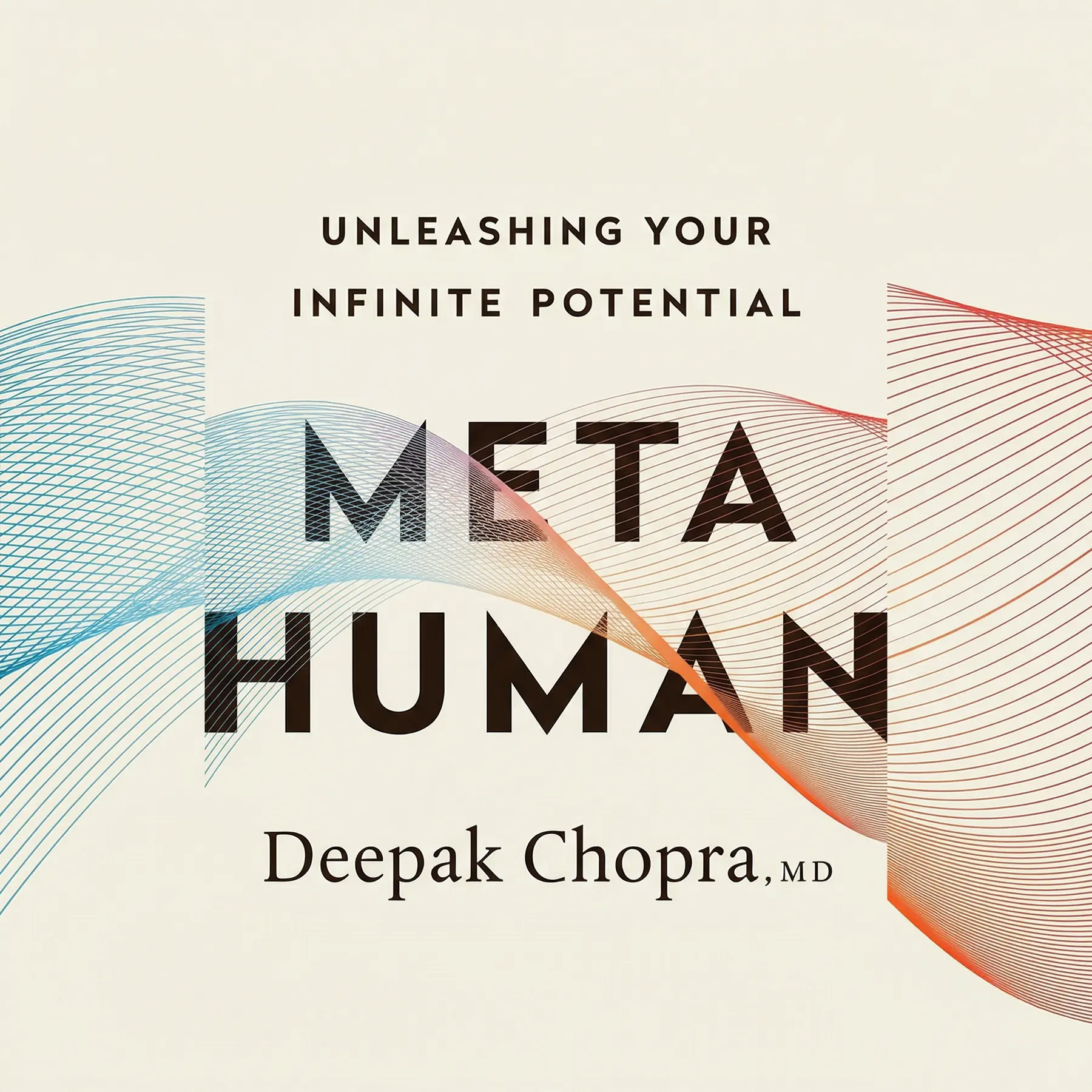
Listeners find the book mind-blowing and profoundly impactful, as the author breaks down complicated theories into simpler terms. They value the expert insights and the intellectually stimulating material, with one listener remarking on how it brings freedom to the soul. The work is well-received for its creativity, with one review noting how it defines intriguing concepts. Listeners have mixed opinions on its ease of use.
Wow. This book feels like a total breath of fresh air for anyone feeling suffocated by the daily grind. Chopra explores the idea of 'metareality' in a way that truly brings freedom to the soul, challenging us to look past our mental conditioning. While some might find the heavy focus on consciousness a bit abstract, I found the breakdown of how we construct our own 'virtual reality' deeply powerful. It's more than just a self-help guide; it’s a creative exploration of what happens when we stop living by the clock and start tapping into infinite potential. Not everything is easy to grasp on the first pass, but the core message about our inherent genius is mind-blowing. Truly transformative stuff.
Show moreFinally got around to reading this latest installment from Chopra, and it is easily his most ambitious work yet. The way he simplifies the matrix of human-made mental models helped me realize how much I’ve been limiting myself based on social frameworks. Personally, the section on 'clock time' was a total game-changer for my daily anxiety. It’s a deeply powerful read that demands you participate rather than just consume the words. He’s an expert at making you question your own senses, and while the writing style is occasionally long-winded, the payoff is a profound sense of clarity. Truth is, this book provides the essential tools to unlock a higher state of awareness and creative potential.
Show moreI really wanted to find a book that challenged my perception of reality, and this delivered beyond my expectations. Chopra’s expertise shines as he guides us beyond space and time into what he calls metareality. It’s mind-blowing to think about how our brains 'reify' the world around us, turning pure potential into the solid objects we see. While the writing is definitely complex, the core message is deeply powerful and offers a sense of freedom to the soul that you don't find in typical self-help. It’s a creative masterpiece that defines what it means to be truly awake in a world that often feels like an illusion. Highly recommended for seekers.
Show moreMetahuman is a brilliant roadmap for anyone feeling trapped by the rigid structures of modern society. Chopra’s expertise shines when he discusses the mind-body connection and how to activate our infinite potential. I felt a genuine sense of freedom while reading the chapters on moving beyond the 'conditioned' self. The book is mind-blowing because it doesn't just ask you to think differently; it asks you to actually be different. Some of the concepts are definitely complex, but the author has a way of presenting them that feels deeply personal and powerful. It’s the kind of book you want to highlight on every single page and return to whenever you feel lost.
Show moreChopra takes a massive swing at the nature of existence here, and for the most part, he connects. He defines complex concepts like 'non-symbolic experience' with surprising clarity, making the high-level philosophy feel accessible to a casual reader. I loved the examples of geniuses like Mozart and Bobby Fischer—it really helps ground his theories about the metahuman state. However, the first half of the book can be a bit of a slog through scientific terminology that feels somewhat loosely cited. If you can push through the dense opening chapters, you’ll find some incredibly thought-provoking insights about the mind-body connection that stay with you long after you close the cover. It's an expert-level deep dive.
Show moreThe way this book deconstructs our daily 'virtual reality' is actually quite elegant. I found the premise that we are essentially living in a simulation of our own making to be very thought-provoking. Chopra does an excellent job of defining the limitations we place on ourselves and offers a creative path toward 'waking up' from our habitual patterns. My only gripe is that the middle section gets a little circular, repeating the same points about consciousness being the only reality. Still, the practical exercises for stripping away mental conditioning are useful, and I appreciate how he encourages us to move beyond fear into a state of unconditional love. It’s a solid addition to his bibliography.
Show moreAs someone who appreciates a good philosophical deep dive, I found this to be a truly fascinating, if occasionally dense, read. Chopra is clearly an expert in his field, and he has a unique way of making very high-level concepts feel somewhat simplified, even when he’s talking about things like 'non-symbolic experience.' I especially enjoyed the breakdown of how we become conditioned by our social frameworks. While I think some of his scientific arguments regarding 'reverse causation' are a bit of a stretch, the overall message about tapping into our creative potential is very inspiring. It’s definitely a book that requires your full attention to appreciate the nuance.
Show moreEver wonder if the physical world is just a high-res illusion? This book dives headfirst into that question, exploring the idea that we can transcend our human limitations to become something 'meta.' I loved the focus on living in the present and ignoring the artificial constraints of clock time. However, I struggled with the writing style. Got to say, the prose is incredibly wordy and repetitive, making it a bit of a chore to finish for a casual reader. There are some deeply powerful insights buried in here about our mind-body connection, but you have to dig through a lot of convoluted logic and questionable science to find them. It’s a mixed bag.
Show moreLook, I enjoy a good meditation guide, but this was far too convoluted for my taste. The author meanders from one analogy to another without ever really coming to a solid point. One minute we’re talking about electrons, and the next we’re being told that the body is just a mental construct. It’s hard to find the 'ease of use' that some other reviewers mentioned when the prose is this long-winded and repetitive. While I agree that humans should be more self-aware and less greedy, I don't think we need to deny the existence of the physical world to get there. It felt more like a collection of random claims than a coherent philosophical work.
Show moreIs it possible to write the same book ninety times? I’ve followed his work before, but Metahuman feels like a repetitive collection of old ideas with a new, confusing label. The core ideas are thin and, frankly, incoherent in places where he tries to use science to prove that the physical world doesn't exist. He tells us reality is an illusion, but then gives us a 31-day plan to change it—if it’s not real, why does the plan matter? The lack of proper academic footnotes for his sweeping claims about 'researchers' makes the whole thing feel like a series of random assertions rather than a grounded philosophy. It was an exhausting slog that never actually arrived at a point.
Show moreChopra argues that the reality we experience is a simulation built by our senses and then filtered through beliefs, identities and shared models like money, nations and time. Beyond this mind-made layer lies what he calls metareality, a pure awareness without limits. By seeing through the filters, he says, anyone can reach greater perception, creativity and potential, and become what he calls metahuman.
Metareality is Chopra’s name for reality free of human concepts and stories. He compares everyday experience to a river polluted by weeds, silt and trash, and metareality to the clear spring at its source. Meta comes from the Greek for beyond. In his account, metareality is pure awareness, and he presents it as a source of unlimited possibility open to everyone.
It is a phenomenon identified by physician Darold Treffert, in which a person suddenly gains exceptional ability. Chopra cites an Israeli man known as K.A., a pianist of basic skill who one day grasped all of music theory in a flash and became a highly accomplished musician. Chopra interprets such cases as a brush with metareality and as evidence that genius is not reserved for a few.
Chopra offers several exercises. Return to the five senses, then dim one by covering your ears or walking through a dark house, and notice how perception expands when it returns. Try to produce one truly original thought to see how conditioned your thinking is. Reflect on everyday objects as ideas made physical. And practice stepping out of clock time, which he treats as a mental construct.
It suits readers interested in spiritual perspectives on consciousness and human potential, meditators who want to take mindfulness beyond stress management, and creative people who feel limited by convention. The book presents Chopra’s own views on perception, the self and creativity, along with simple practices built on awareness, such as sensory exercises and the challenge of one original thought.


Daniel Goleman


Eckhart Tolle

Marianne Williamson
Deepak Chopra

Pico Iyer

Alcoholics Anonymous World Services

Beth Moore
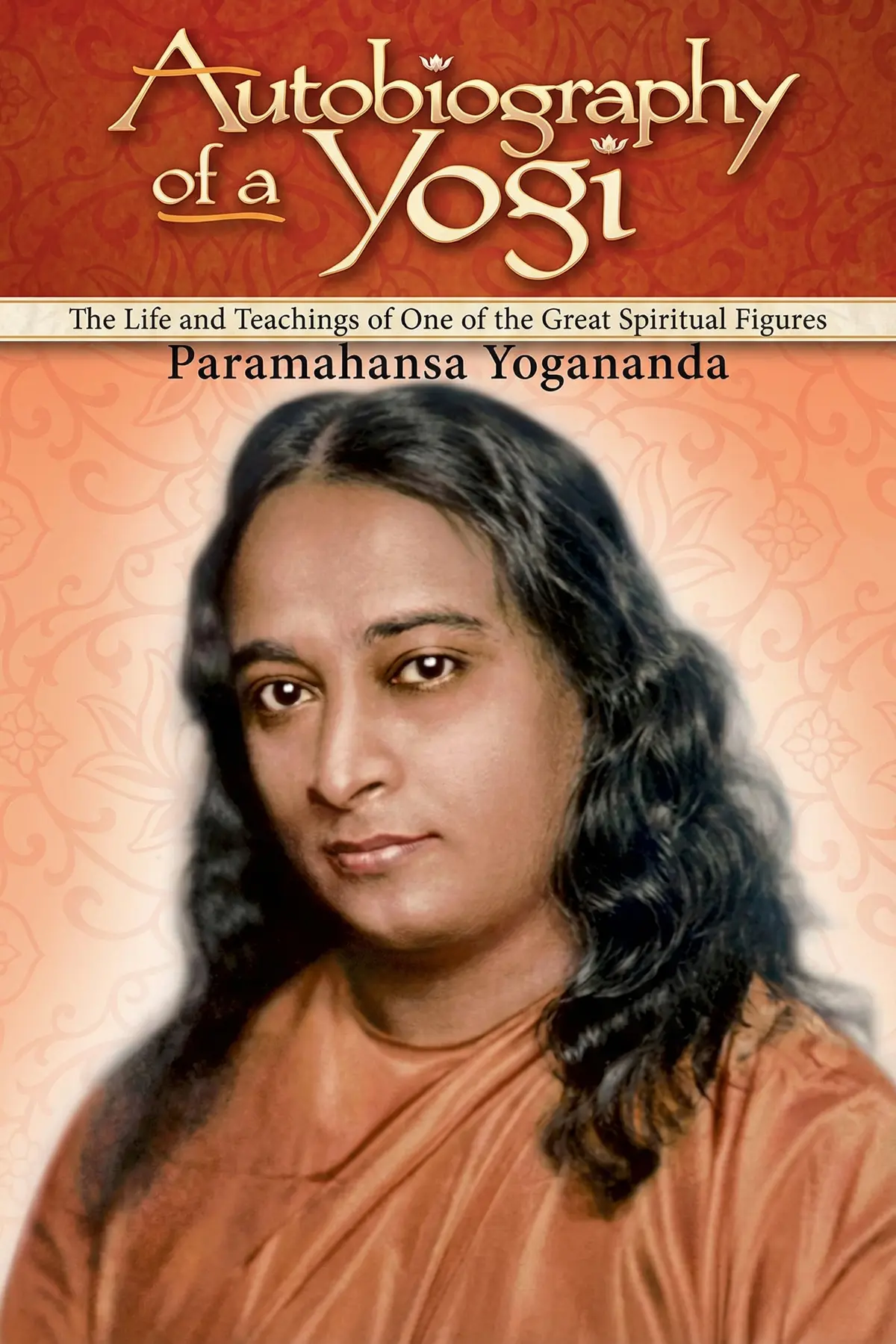
Paramahansa Yogananda
AUDIO SUMMARY AVAILABLE
Get the key ideas from Metahuman by Deepak Chopra, plus 5,000+ more nonfiction titles.