
13 min 42 sec
Available in: English
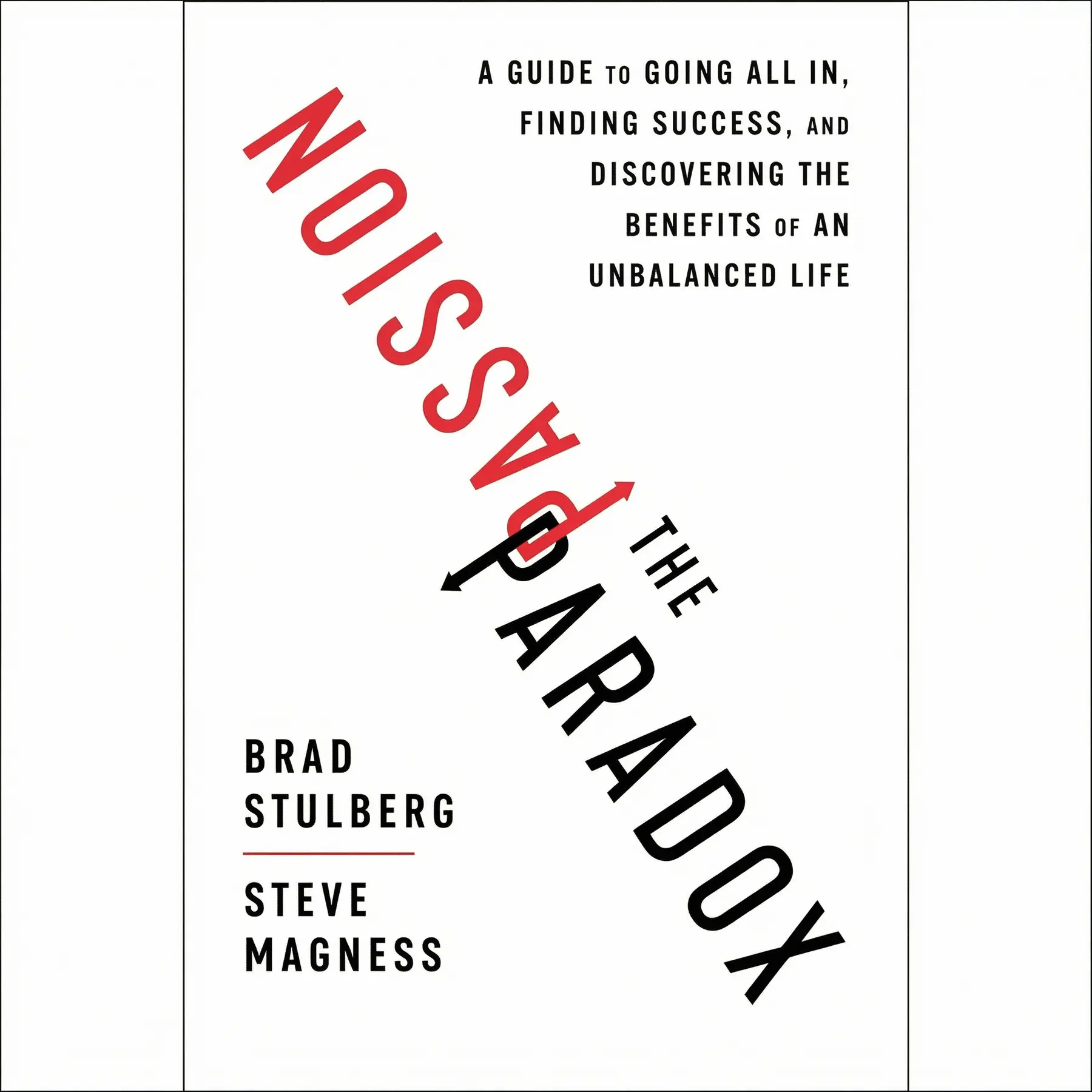
The Passion Paradox: A Guide to Going All In, Finding Success, and Discovering the Benefits of an Unbalanced Life
Explains why passion runs on the same brain chemistry as addiction, and how to commit fully to your work or craft without sliding into obsession, fear, burnout or a painful crash when it ends.
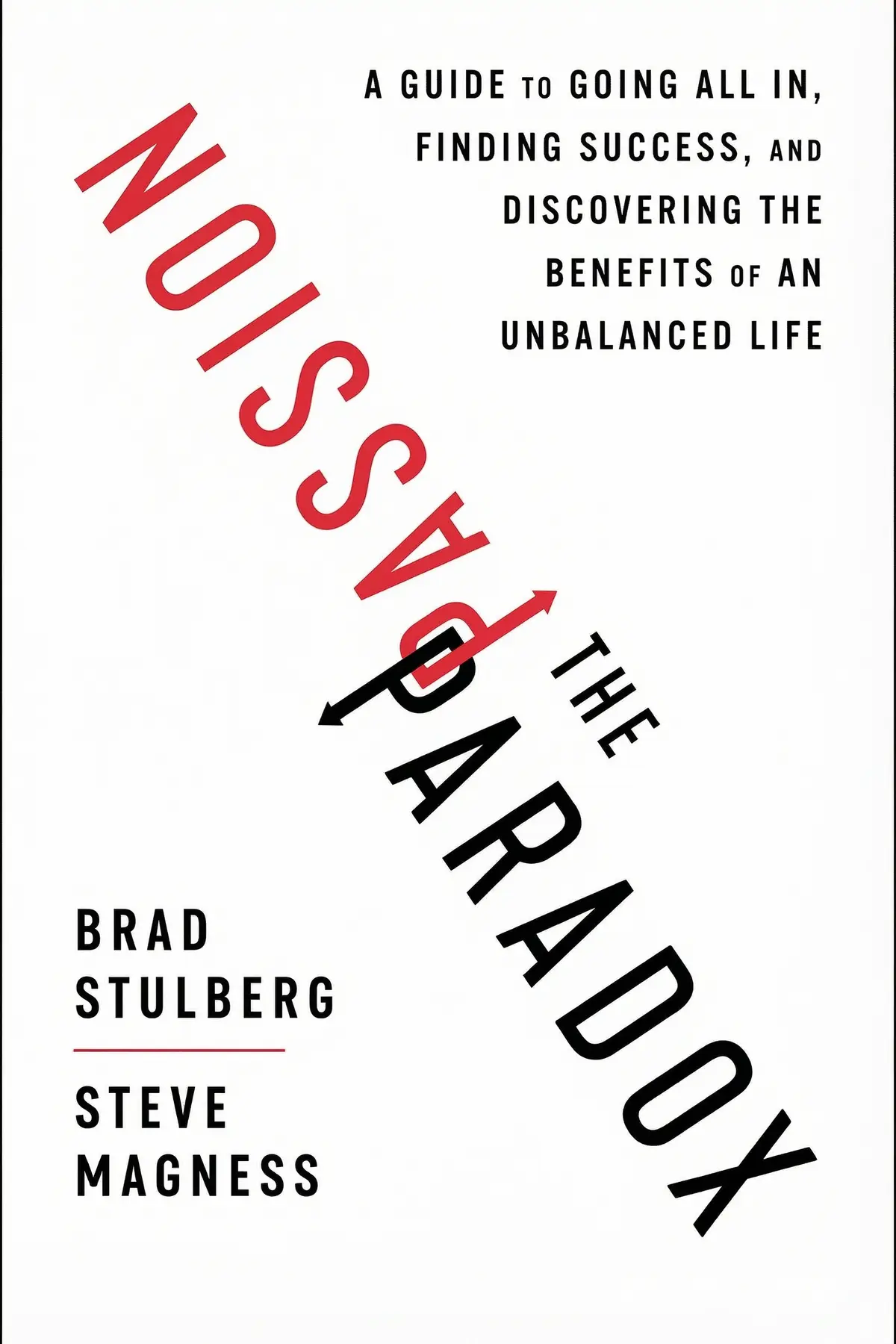
Table of Content
1. Introduction
1 min 01 sec
Follow your passion is the advice everyone gives, yet the brain chemical that drives a passionate person is the same one that pulls a drug addict toward the next dose. In The Passion Paradox, writer and coach Brad Stulberg and Steve Magness, who has coached athletes to Olympic and world championship level, argue that this shared wiring explains why passion can carry people to mastery or leave them burned out, depressed and, in one famous case, in prison.
Their case is that passion is a force that needs handling. It stays healthy when you grow it gradually, love the work more than the prizes, accept that it will tip your life out of balance and keep watching what it does to you and the people around you.
Along the way come a collapsed energy giant, a revealing statistic about soulmates, an uncomfortable fact about Gandhi and a simple rule for handling wins and losses. The aim is practical: to commit fully to something you care about without letting it consume you.
2. Know the chemistry that drives your passion
1 min 55 sec
The word passion once meant something most people would run from. Its modern meaning hides a biological engine that powers both the dedicated athlete and the addict, and it explains why reaching a goal can feel so strangely empty.
3. Grow a passion slowly instead of searching for it
1 min 52 sec
Most people believe the right job, hobby or partner should feel perfect from day one. That belief is extremely common, and it may be the very thing that keeps them restarting and never getting good at anything.
4. Spot the moment passion turns obsessive
1 min 57 sec
A company famous for hiring only the most passionate people was once worth 60 billion dollars. Its story shows how the drive that builds success can quietly change its target, and what happens when it finally fails.
5. Loving the work wins you the rewards
1 min 52 sec
The people most likely to win prizes, money and recognition are often the ones who stopped chasing them. The authors explain this odd result and offer a one-day rule for handling every success and every failure.
6. Trade the balance myth for honest self-awareness
1 min 53 sec
Decades of advice promise that you can chase your dream at full speed and still give everything else equal time. The authors think that promise is false, and they point to one of history’s most admired leaders as proof.
7. Leave a passion without losing who you are
2 min 04 sec
Retired athletes take special classes and friends suggest travel or volunteering, yet the authors think the usual advice for life after a passion misses the point. Their alternative starts somewhere far less obvious.
8. Conclusion
1 min 08 sec
The Passion Paradox ends up describing passion as a force more than a feeling. The same dopamine that makes a pursuit thrilling also makes it hungry, so the real question is never whether to have passion but how to keep it pointed at the work itself. Grow it slowly, love the doing more than the prizes, accept the imbalance it brings and keep an honest eye on what it costs. Handled that way, the authors argue, it offers the deepest satisfaction a life can hold, and the outside rewards tend to follow. Handled badly, it slides back toward the old Latin word it came from.
Two practices from the book are worth starting now. When a win or a loss arrives, give it twenty-four hours of attention and then return to the work. And when your passion leaves you overwhelmed or stressed, sit or lie down, follow your breath and let your thoughts pass without judging them. The authors suggest that even 20 minutes a day prepares you for whatever challenges come along the way.
Enron had passion in abundance. What keeps passion healthy is loving the work on the days when no prize is waiting.
About this book
What is this book about?
Follow your passion is the most common career and life advice there is. Brad Stulberg and Steve Magness argue that it leaves out the most important part. Passion is driven by dopamine, the same chemical that keeps an addict chasing the next dose, and that means it can lift a person toward mastery or drag them into obsession, fear, burnout and depression. The authors trace the word back to its Latin root, which meant suffering, and use cases from the collapse of Enron to the private life of Mahatma Gandhi to show how passion goes wrong. They then lay out a healthier path: growing a passion step by step instead of waiting for a perfect fit, loving the work more than the rewards, accepting that a passionate life will never be balanced, and using self-awareness as the safeguard. Readers get practical tools along the way, including the twenty-four-hour rule for handling wins and losses, a third-person journal, a short daily meditation habit and a way to move on with dignity when a passion has to end.
Book Information
Who it's for
Driven professionals and founders
Professionals and founders who pour everything into their work and worry about burnout or obsession.
Tempted to switch careers
Career switchers tempted to quit everything for a new interest that still feels exciting.
Facing a pursuit's end
Athletes, artists and anyone facing the end of a pursuit that shaped who they are.
About the Author
Brad Stulberg
Brad Stulberg is the best-selling author of The Practice of Groundedness and Master of Change, writes regularly for the New York Times and is on faculty at the University of Michigan, and he separately coaches founders, executives, doctors and athletes on mental skills and well-being. Steve Magness has coached athletes to Olympic and world championship level, advised professional teams, executives and the US military, wrote Do Hard Things and co-hosts two podcasts. Together they also wrote Peak Performance.
Ratings & Reviews
Ratings at a glance
What people think
Listeners find the material deeply educational and expertly crafted, with one reviewer observing that it lends a sense of organization and focus to the theme. Beyond this, they value its clever simplicity and regard it as a superb sequel to Peak Performance, while one listener points out its utility in side-stepping burnout. Finally, they prize its clarity and utility, with one person mentioning it is particularly useful to hear while driving.
Top reviews
Zoe
Stulberg and Magness have delivered a brilliant follow-up to Peak Performance that feels both timely and necessary for our hustle-obsessed culture. Instead of the typical 'follow your dreams' fluff, they offer a grounded, structured look at how intense drive can actually lead to burnout if it isn't managed with care. I found the biological breakdown of dopamine particularly fascinating because it explains why the 'high' of achievement is so fleeting and dangerous. The writing is direct and devoid of the usual filler, making it a very quick but high-impact read. It provided me with a clear direction on how to cultivate a 'harmonious passion' rather than letting my work consume my entire identity. Truth be told, this should be required reading for any entrepreneur or athlete who feels like they are constantly on the edge of a crash.
Show moreTakeshi
Listening to this in the car during my morning commute was the best decision I’ve made all month. The audiobook narrator is excellent, and the direct, clear prose makes the complex psychological concepts easy to digest while driving. I specifically appreciated how the authors tackled the 'illusion of balance,' arguing that greatness often requires periods of being un-balanced, provided you have the self-awareness to return to center. This book gave me the permission I needed to go all-in on my projects while also giving me the safeguards to prevent total exhaustion. It’s a paragon of brevity that packs more punch than books twice its length. If you are struggling with the dark side of your own ambition, please pick this up immediately.
Show moreRiley
Finally got around to reading this and I’m kicking myself for waiting so long. As a former competitive athlete who struggled to find a new identity after retiring, the final chapters on 'moving on' resonated with me on a deeply emotional level. They describe the 'grace and grit' required to transition away from a passion with such empathy and clarity. The book is short, direct, and completely free of the fluff that usually plagues this genre. It’s rare to find a book that is both intellectually stimulating and practically useful, but Stulberg and Magness hit the nail on the head here. It has completely changed how I view my new hobbies and my career. Truly a great follow-up that stands on its own merits.
Show moreWorawit
After hearing about this on a podcast, I picked it up hoping for a way to manage my work-life balance better. What I got was a much deeper understanding of how my brain works when I'm chasing a goal. The authors explain the 'passion paradox' with such brilliant simplicity that it's easy to start applying the lessons immediately. I loved the emphasis on mastery and the long-term pursuit of excellence rather than short-term external validation. It's incredibly well-written and flows logically from the history of the word passion to the modern psychological reality of it. This book provides the perfect structure for anyone who wants to be great at what they do without sacrificing their health or happiness. Highly informative and highly recommended for any high-achiever.
Show moreJack
Ever wonder why the things you love most end up making you miserable? This book dives deep into that paradox, exploring how our greatest strengths can become our biggest liabilities when our ego gets involved. I loved the distinction between obsessive and harmonious passion, as it gave me a vocabulary for the burnout I’ve been feeling lately. The authors use a great mix of scientific research and anecdotes from various fields like art and sports to keep things engaging throughout. My only minor gripe is that the book is quite short, and I would have loved more depth on the 'discovery' phase of finding one's interests. Still, it’s an incredibly useful tool for anyone looking to sustain their drive over the long haul without losing their mind.
Show moreEmma
The chapter on ego and identity was worth the price of the book alone. Stulberg and Magness explain how failure becomes an attack on the 'self' when your entire identity is fused with your results, which is a trap I fall into constantly. By framing passion through the lens of addiction, they provide a sobering look at how our biological drives can lead us astray if we aren't careful. I liked that the tone was analytical rather than overly 'cheerleader-y,' which made the advice feel much more authentic and actionable. It’s a very quick read, but I found myself highlighting dozens of passages to revisit later. I'm taking off one star because some of the historical anecdotes felt a bit rushed, but the core message is vital for anyone in a high-pressure field.
Show moreDivya
Gotta say, I wasn't sure I needed another book about 'finding my why,' but this isn't that kind of book. It’s more of a manual for how to keep your fire burning without burning your whole life down in the process. The focus on 'process over outcome' isn't necessarily new, but the way they link it to dopamine and hedonistic adaptation makes it feel much more scientific and less like a Pinterest quote. I particularly enjoyed the discussion on the 'prevention mindset' versus the 'promotion mindset.' It’s a very readable, practical guide that offers a lot of structure to a subject that usually feels very abstract. I’ll definitely be recommending this to my colleagues who are starting to show early signs of career fatigue.
Show moreZanya
While I appreciated the structure of the 'Passion Practices' at the end of each chapter, I felt like a lot of the core concepts were recycled from other popular self-help titles. The authors do a great job of synthesizing the research, but if you’ve already read a lot of Dweck or Gladwell, you might find the insights here a bit redundant. I also struggled with the sheer repetition of the word 'passion'—it started to lose its meaning by the halfway point of the book. To be fair, the section on 'moving on' and how to transition away from a lifelong pursuit was quite moving and offered a perspective I haven't seen elsewhere. It’s a solid, readable book for someone new to the genre, but seasoned readers might find it a bit too simple.
Show moreSavannah
Look, the science is solid and the advice is sensible, but I didn't find much here that felt truly groundbreaking. The authors spend a lot of time explaining things that feel like common sense, such as the idea that being obsessed with something can be bad for your relationships. I did enjoy the sections on 'self-distancing' to gain perspective, which offered a few interesting techniques I hadn't tried before. However, the book as a whole felt a bit repetitive, and I think I got the gist of the argument by page 50. It’s a pleasant enough read and I don't regret it, but it's not a book I’ll be shouting about from the rooftops. It serves as a decent reminder of things we often lose sight of in daily life.
Show morePetch
Not what I expected after the high bar set by Peak Performance. Frankly, most of the 'revelations' in this book could have been condensed into a single long-form article or even just the title itself. It felt like a generic self-help book that relied too heavily on referencing other, better books rather than providing truly novel insights or original data. I was looking for more sport-specific examples like their previous work, but this felt a bit too broad and watered down for a general audience. While the writing style is fine and the book is easy to get through, I didn't walk away with any 'tidbits' that I haven't heard a thousand times before. It’s not a bad book, just a very unoriginal one that didn't justify the price of a full hardcover for me.
Show moreQuestions about this book
What is the main idea of The Passion Paradox?
Brad Stulberg and Steve Magness argue that passion runs on dopamine, the same chemical involved in addiction, so it can lead to mastery or to obsession and burnout. The paradox is that people who pursue an activity for its own joy are more likely to win the external rewards than those who chase the rewards directly. Passion stays healthy when it is grown gradually, enjoyed for itself and watched with self-awareness.
What is the fit mind-set in The Passion Paradox?
The fit mind-set is the belief that the right partner, job or activity should feel perfect immediately. The authors cite studies showing 78 percent of people think this way. It leads people to quit at the first obstacle and restart elsewhere for the rush of something new. The book recommends an incremental approach instead: explore interests slowly, expect early mistakes and increase your investment as your skill grows.
What is the twenty-four-hour rule?
It is one of the habits of what the authors call a mastery mind-set. When a success or a failure arrives, you allow yourself 24 hours to think about it, and then you return to the work. The rule keeps you from becoming too attached to outcomes, since setbacks and the lure of money will appear on any road to mastery and are best treated as bumps along the way.
Does The Passion Paradox say you should live a balanced life?
No. The authors argue that deep passion and a balanced life pull against each other, and that even the most admired figures, such as Mahatma Gandhi, lived unbalanced lives. Instead of chasing balance, they recommend self-awareness: regularly checking how your passion affects others and yourself, keeping a journal written in the third person, and stepping outside your passion through nature, music or noticing small acts of kindness.
How do you move on when a passion ends?
The authors warn that losing a passion can leave a dopamine void that leads to substance abuse or gambling. They find advice from others, like travel or volunteering, only partly helpful. Their alternative is to reflect inward on what the years of pursuit gave you, craft your own story of what you loved and will miss, then redirect the qualities that fueled the passion into new endeavors.
Readers also enjoyed


A High-Performing Mind: Strengthen Your Mind and Live Your Best Life
Andrew D. Thompson


Abundance: The Inner Path to Wealth
Deepak Chopra


59 Seconds: Change Your Life in Under a Minute
Richard Wiseman




AUDIO SUMMARY AVAILABLE
Listen to The Passion Paradox in 15 minutes
Get the key ideas from The Passion Paradox by Brad Stulberg, plus 5,000+ more nonfiction titles.
- 5,000+ titles
- Listen as much as you want
- 7-day free trial
- Cancel anytime









