
14 min 39 sec
Available in: English
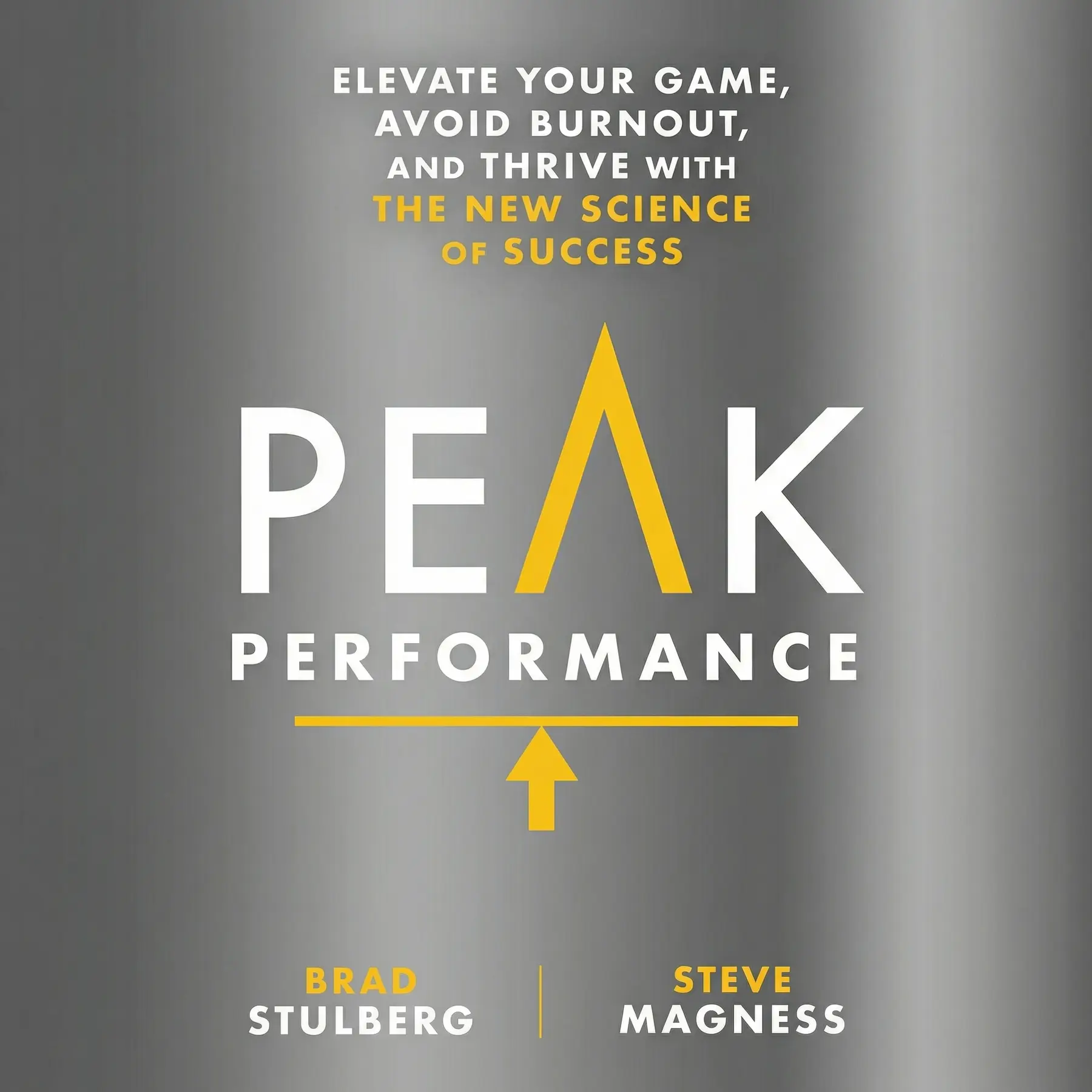
Peak Performance: Elevate Your Game, Avoid Burnout, And Thrive With The New Science of Success
Explains why longer hours and less sleep lead to burnout, and how top athletes, musicians and executives improve instead: they balance stress with rest, focus on one task at a time and work toward a purpose.
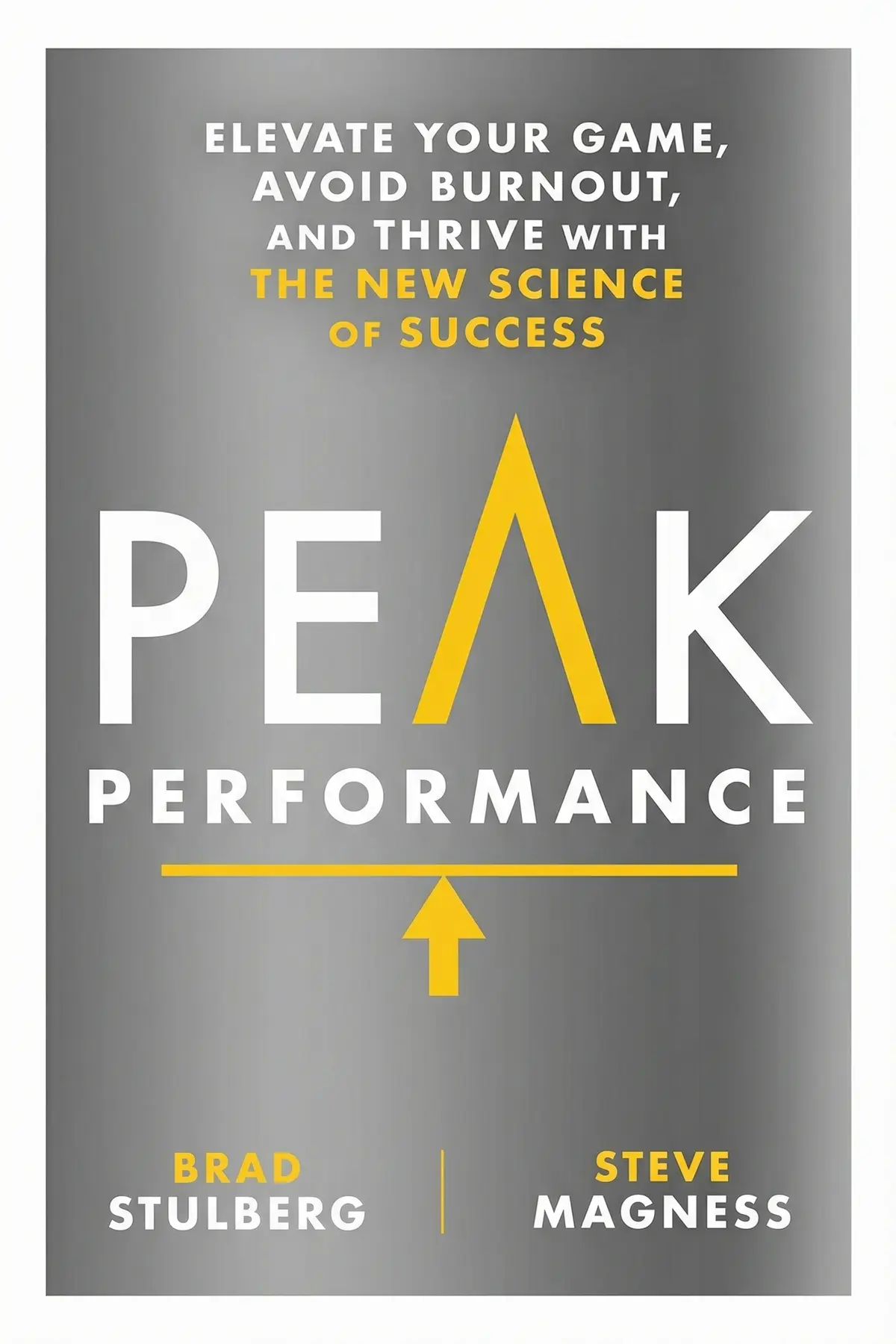
Table of Content
1. Introduction
1 min 05 sec
If your answer to pressure at work is to push longer and sleep less, Brad Stulberg and Steve Magness have unwelcome news: that habit ends in burnout. In Peak Performance, the writer and the coach argue that the best people in sport, music and business grow in a cycle. They stress themselves hard, then rest just as seriously, and the real growth happens during recovery.
Their evidence ranges from a runner who credits her recovery between training sessions for her success to a record mile run after two weeks of hiking in the mountains. The case they build is easy to say and hard to live by. Sustainable high performance comes from balancing stress with rest, giving one task your full attention, preparing deliberately and working for something larger than yourself.
Follow it through and the grind looks different. You get clear reasons why working longer fails, plus habits you can try this week, from a short walk outside to a warm-up routine before the moments that count.
2. Avoid burnout by learning why grinding harder backfires
2 min 24 sec
Rivals are everywhere now, standards keep rising and stimulants are spreading through campuses and offices. The data on where that race ends is grim, and even the people who care for us are affected.
3. Grow stronger by pairing stress with recovery
2 min 08 sec
A scientist who thought he had found a new hormone had actually found something far more useful. His rats, a runner’s sleep schedule and a study of how people think about stress all point to the same surprising rule.
4. Rest well and your best ideas will find you
2 min 01 sec
Two plates of food in a room that smelled of cookies changed how long people kept trying at a puzzle. A famous runner’s unusual taper and a simple walk show what real rest gives back.
5. Do one thing at a time and get more done
1 min 50 sec
Every violinist in a Berlin study practiced about the same number of hours, yet only some became international soloists. What separated them is something you can change in your workday tomorrow.
6. Set up routines that save energy for what counts
1 min 57 sec
A stadium drummer, a Mayo Clinic researcher and a brain scanner at Northwestern each show a different way to get ready before the moment arrives. Their methods are small, and none depends on luck.
7. Find a purpose that carries you past your limits
1 min 57 sec
An ordinary paint-shop supervisor lifted a car off a teenager. A grieving professor turned his loss into his best teaching. Both stories suggest our limits sit somewhere other than where we assume.
8. Conclusion
1 min 17 sec
Peak Performance argues that excellence is a rhythm. The pressures are real, from rivals around the world to stimulants passed around offices. The people the authors admire respond with cycles of hard effort and deliberate recovery. Kastor’s long nights of sleep, Bannister’s two weeks in the mountains and the soloists’ practice on one goal at a time all show the same pattern. Strain sets off growth. Rest, focus and purpose do the building.
That changes what a good day looks like. A packed calendar and a short night start to look like warning signs. A walk in the middle of a hard problem starts to look like part of the work.
The book supports a few concrete moves. Treat your hardest work as a training session, and plan the recovery afterward as firmly as the work itself. When a problem will not move, step outside and walk. Give one task or one person your whole attention, with the phone out of sight. Before the moments that matter, run a short routine that settles your body and mind, and remind yourself whom the effort is for.
Tom Boyle never trained to lift a car. He had a reason, and the strength came.
About this book
What is this book about?
Competition for jobs has gone global, standards keep rising and machines are taking over more work. Many people respond by pushing harder, sleeping less and even taking stimulants. Brad Stulberg, a writer and performance coach, and Steve Magness, a coach of Olympic athletes, argue that this approach ends in burnout. Surveys of overwhelmed employees and exhausted doctors back them up. Their alternative comes from what the best performers actually do. Growth happens in a cycle: you put body or mind under stress, then rest so it can rebuild stronger. The authors back this with Hans Selye's rat experiments, Roy Baumeister's cookies and radishes study, a Stanford study on walking and creativity, and stories such as Roger Bannister's hiking trip in the two weeks before his record mile. The book goes on to the habits that make this rhythm work. They include doing one task at a time, building routines before big moments, saving willpower for work that matters and finding a purpose that pushes you past what feel like fixed limits. The result is a practical way to do better work without burning out.
Book Information
Who it's for
Professionals near burnout
Professionals working long hours who feel close to burnout and want a better way to perform.
Leaders wary of multitasking
Founders and managers who suspect their teams' constant multitasking costs more than it saves.
Athletes, students and creatives
Athletes, students and creatives who want to train, study or practice harder without breaking down.
About the Author
Brad Stulberg
Brad Stulberg wrote the bestsellers The Practice of Groundedness and Master of Change. He writes regularly for the New York Times, teaches at the University of Michigan and coaches founders, executives, doctors and athletes on mental skills and well-being. Steve Magness has coached athletes to Olympic and world championship level and has advised professional teams, executives and the US military. He wrote Do Hard Things, co-wrote The Passion Paradox and co-hosts the podcasts The Growth Equation and On Coaching with Magness and Marcus.
Ratings & Reviews
Ratings at a glance
What people think
Listeners find this book a superb resource that offers a solid, research-backed perspective and useful strategies for succeeding. The content encourages self-motivation for reaching higher goals and maintaining long-term excellence, with one listener mentioning how it specifically helped raise their 'A game'. Listeners appreciate the clear prose and return on investment, with one listener highlighting the co-reinforcing relationship between stress and rest.
Top reviews
Phimwan
After hearing several friends rave about this, I finally picked it up to help manage my chaotic schedule. As a mother of three with a side hustle, I'm constantly exhausted. This isn't just another productivity guide; it's a blueprint for sustainable success that emphasizes the co-reinforcing relationship between stress and rest. Truth is, I was doing everything wrong. I particularly loved the section on chronotypes, as it turns out I’m a morning lark trying to work like a night owl! Some of the science feels a bit recycled—you’ll recognize names like Dweck and Ericsson—but the way Stulberg and Magness synthesize it is incredibly practical. It helped me realize that my 'overnighters' were actually killing my creativity. I’ve already started implementing the 50-90 minute work blocks. The difference is night and day.
Show moreNora
Wow, what a game-changer for anyone feeling like they’re constantly redlining without actually getting anywhere. Stulberg and Magness have written a masterpiece on achieving sustainable top performance. I’ve been struggling with 'pre-race jitters' in my professional life, and the advice on reframing stress as a challenge rather than a threat was huge. The book teaches you how to systematically grow by alternating between stress and rest. It’s not just about working harder; it’s about working smarter and having the courage to actually sleep. Frankly, reframing sleep as a productive activity was the permission I needed. I’m already seeing a boost in my motivation. This is required reading for my entire team from now on.
Show moreNoah
Finally got around to reading this and I’m already planning to make it required reading for my kids. The advice on 'becoming a minimalist to be a maximalist' is exactly what our over-scheduled society needs. I’ve always been someone who felt guilty for taking breaks, but this book proves that rest is actually part of the work. The authors' blend of sport psychology and exercise physiology creates a unique perspective that feels very grounded. I loved the chapters on building a routine and 'showing up' even when you don't feel like it. It’s well-written, informative, and encouraging. If you feel like you're burning the candle at both ends, get this book. It might just save you from a total collapse.
Show morePla
Ever wonder why some people seem to excel effortlessly while you’re grinding your gears? This book has the answer. It’s all about the rhythm of your life. The stress and rest cycle is the most important thing I learned. I’ve been using the warmup regimens for my most important tasks and it has totally changed my mindset. I’m no longer just 'busy'—I’m actually being productive. The writing is succinct and never feels like it's just 'filling pages.' I appreciated the variety of examples, from professional athletes to creative artists. It shows that these principles apply to everyone. This is a five-star book for anyone serious about reaching their full potential. It’s easily one of the best books I’ve read this year.
Show moreSelin
The central premise of this book—that growth occurs when stress is followed by restorative periods—is simple yet incredibly profound. It provides a nice science-based overview for anyone looking to raise their 'A game' without burning out. I appreciated the specific tips on creating a 'place of your own' to condition the brain for deep focus. While the authors are a journalist and a physiologist rather than neuroscientists, their ability to translate complex ideas into actionable steps is impressive. My only gripe is that it feels a bit repetitive if you’ve already read books like 'Grit' or 'Flow.' However, the summary at the end is worth the price of admission alone. It’s a solid resource for anyone needing to optimize their routine. Definitely a value-for-money purchase.
Show moreJavier
As someone who has struggled with burnout in the corporate world for years, Stulberg and Magness offer a refreshing framework for longevity. The writing quality is top-notch, making it an easy and engaging read. They do a great job of explaining how to align your actions with your personal values. I found the section on 'transcendental goals' particularly moving, as it explains how focusing on something beyond yourself can actually enhance your own performance. My only minor criticism is the inclusion of power posing, which has been largely debunked. Regardless, the core advice on 'just-manageable challenges' and deep focus is gold. It’s a practical guide that helps you self-motivate for greater achievements. Definitely worth your time if you're feeling stuck.
Show moreMarco
Frankly, I didn't think I needed another performance book, but the way they explain the neurophysiology of 'just-manageable challenges' really clicked for me. The concept of the 'ego' as a central governor that holds us back is fascinating. I’ve started using a mantra based on my core purpose, and it really does help when the going gets tough. The book is an excellent read that provides a nice science-based overview. I did find some of the social media-friendly 'factoids' a bit thin, but the overall message is strong. It’s about more than just grit; it’s about the environment and the people you surround yourself with. A solid 4-star read for anyone looking to level up.
Show moreHenry
This book provides a solid, science-backed overview of what it takes to perform at your best without sacrificing your health. The authors move beyond the typical 'hustle' culture to talk about the importance of meditation and 'calm conversations' during stressful periods. I really liked the practical tips on how to divide work into discrete blocks. It has helped me stay focused during my peak energy hours. While I agree with other reviewers that some of the cited scientists are controversial, the general framework of the book is still incredibly helpful. It’s a great tool for self-motivation. I've already recommended it to several colleagues who are on the verge of burnout. It’s a very practical, well-organized guide.
Show moreNong
To be fair, I expected a bit more depth from authors with these backgrounds. While it’s a decent survey for beginners, those familiar with the field will find it’s mostly a compilation of stuff we’ve read a hundred times before. They lean heavily on the usual suspects like Angela Duckworth’s grit and Carol Dweck’s growth mindset. Some of these studies have faced serious replication issues lately, which the authors seem to gloss over. The content could have easily been a long-form blog post. That said, the summary at the end is quite useful. If you haven't read 'The Power of Full Engagement,' you might get more out of this. It’s a shallow dive into deep topics. Not bad, but not revolutionary either.
Show moreWanida
Look, if you’ve already read 'Flow' or 'Deep Work,' you might find yourself skimming large portions of this text. It felt like a bit of a regurgitation of the same studies we've seen everywhere for the last decade. The authors are clearly enthusiasts, but I found the lack of original research a bit disappointing. For a book claiming to be the latest on peak performance, it relies heavily on sound bites. However, I will admit the structure is excellent. They break down the 'Stress + Rest = Growth' equation in a way that is very easy to digest. It’s a useful read for someone who hasn't run across these ideas before, but seasoned self-help readers won't find much new here. It's fine, just not groundbreaking.
Show moreQuestions about this book
What is the main idea of Peak Performance by Stulberg and Magness?
The authors argue that top performance comes from a balance of stress and rest, not from working as hard as possible. Pushing body or mind sets off growth, and recovery is when that growth happens. They add focus on one task at a time, routines that prepare you for key moments and a purpose beyond yourself as the other parts of performing well over the long term without burning out.
Why do the authors say rest improves performance?
Recovery is when the body and mind rebuild stronger after stress. The runner Deena Kastor credited her success to what happened between training sessions, including 10 to 12 hours of sleep a night. Roger Bannister went hiking for two weeks before his record mile. Rest also helps creativity: in a Stanford study, even people who walked indoors came up with 40 percent more ideas than people who sat still.
What does Peak Performance say about multitasking?
The authors say it hurts both the quality and the amount of work. They cite University of Michigan research showing that multitasking can use up to 40 percent of productive time. K. Anders Ericsson found that the Berlin violinists who became international soloists spent their practice on one specific goal at a time. Venture capitalist Bob Kocher works the same way, giving each task and person his full attention.
How can I apply Peak Performance at work?
Plan recovery after your hardest work, and walk, outside if possible, when you get stuck. Block time for a single goal with your phone out of reach. Build a short warm-up before important moments, as drummer Matt Billingslea does before every show. Cut small daily decisions, as Michael Joyner does by packing his gym bag in advance. And help someone, which the authors say lifts energy and motivation.
Who should read Peak Performance?
It suits people who feel they must work longer and sleep less to keep up, and who sense that this road leads to burnout. Knowledge workers, founders, managers, athletes and students all get practical habits backed by studies and stories, from Roy Baumeister’s willpower experiment to the routines of a stadium drummer and a Mayo Clinic researcher.
Readers also enjoyed






A Guide to the Good Life: The Ancient Art of Stoic Joy
William B. Irvine


A High-Performing Mind: Strengthen Your Mind and Live Your Best Life
Andrew D. Thompson


Abundance: The Inner Path to Wealth
Deepak Chopra
AUDIO SUMMARY AVAILABLE
Listen to Peak Performance in 15 minutes
Get the key ideas from Peak Performance by Brad Stulberg, plus 5,000+ more nonfiction titles.
- 5,000+ titles
- Listen as much as you want
- 7-day free trial
- Cancel anytime









