

11 min 06 sec
Available in: English
 ไทย
EnglishไทยThe Fire Next Time
Baldwin's two open letters show how to face a deeply unjust society honestly, keep anger from turning into hatred, and reject both the comfort of patient waiting and the pride of reversed supremacy.
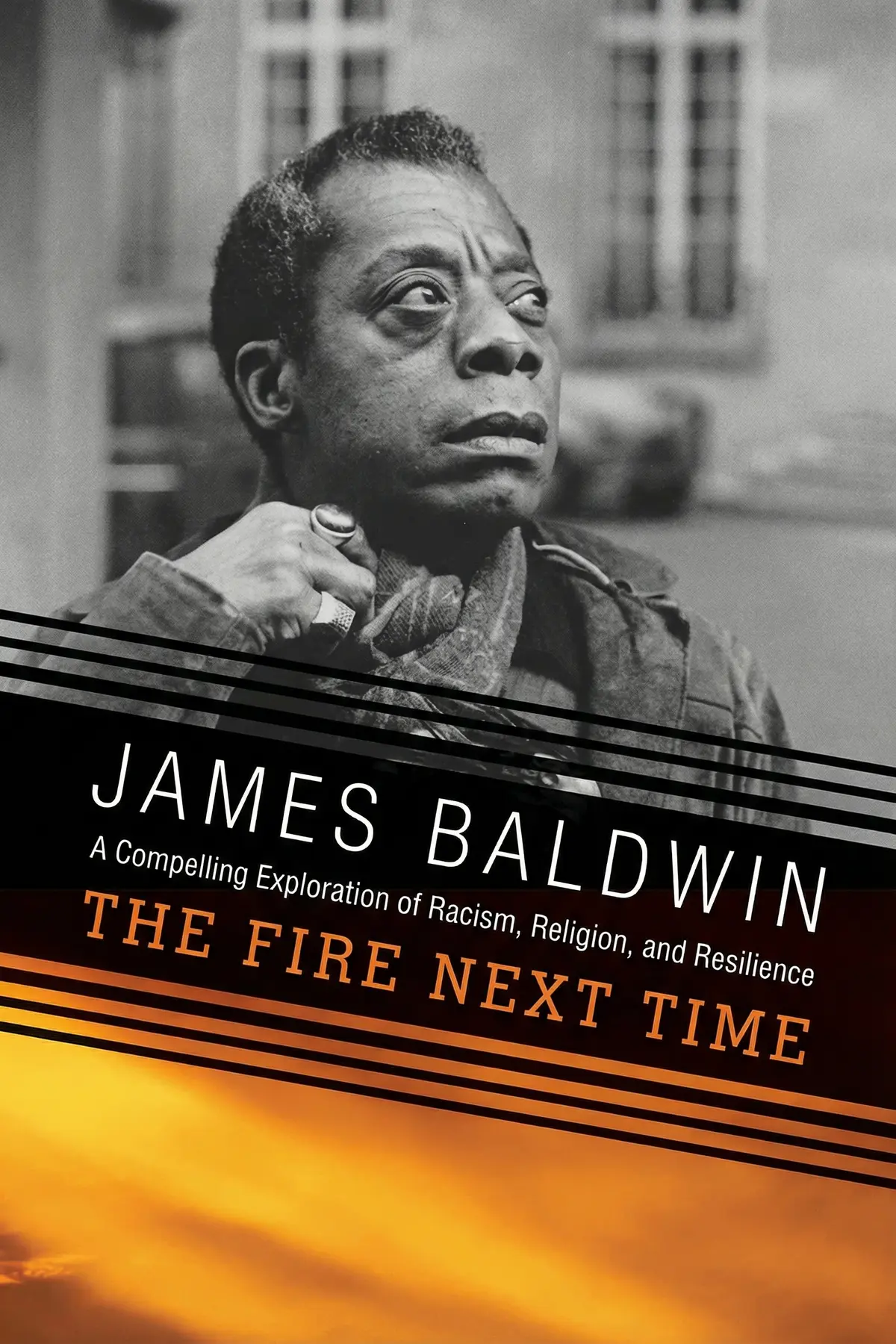
Table of Content
1. Introduction
1 min 06 sec
When a system treats you unfairly, the usual choices are poor ones: swallow the anger, or let it harden into hatred. In The Fire Next Time, James Baldwin rejects both. Writing in 1963, he argues that hatred destroys the person who carries it, and that a faith which teaches patient waiting does its own kind of damage.
That year was violent. On the night of May 11, bombs exploded in Birmingham, Alabama, aimed at civil rights leaders, and months of rioting and clashes with police followed. Into that moment Baldwin sent two essays shaped as open letters, one to his teenage nephew and one to the nation.
The case they make together is that racism has to be named in full and answered without hatred, because only honest truth told with love can change anything. Along the way you meet the writer who learned this in Harlem churches and in Paris, and you gain a way to speak about injustice that is honest enough to hurt and generous enough to be heard.
2. See why Baldwin's argument carries a life's weight
1 min 48 sec
A poor boy in Harlem, an abusive preacher at home and a pulpit of his own at 14. The life behind these essays explains why readers could not dismiss what Baldwin said.
3. Answer injustice without letting hatred consume you
1 min 47 sec
Baldwin tells his teenage nephew that his anger at America is fully justified. Then he warns him about the one thing that anger could cost him, and it is not what the boy expects.
4. See the people harming you as trapped too
1 min 41 sec
The boldest request in Baldwin’s letter is also the most uncomfortable. He asks a young Black man in 1963 to look at those who wrong him in a way almost nobody around him would.
5. Spot the comforts that keep people from acting
1 min 55 sec
Baldwin once preached from a pulpit. In his second essay he turns preacher again, this time against the church itself, and against the Nation of Islam and Black nationalism as well.
6. Speak hard truths so people can still hear them
1 min 45 sec
A book of two letters sold over a million copies and changed the mood of a movement. Its staying power comes from a balance most angry writing never manages to strike.
7. Conclusion
1 min 04 sec
Baldwin warned of a fire, and more than half a century on, the fire he warned of has not gone out. His response to that danger is unusual because it asks for two things people rarely hold together. He wants the truth about racism told in full, with no promise of heaven to dull it and no reversed supremacy to replace it. And he wants that truth told by people who refuse to hate. The loving uncle writing to a teenager and the prophet preaching to a nation are making one case in two voices.
What the book supports is a discipline you can practice. When you are wronged, let your anger stay anger at the wrong, and keep your sense of your own worth out of the hands of the people who harmed you. When you look at those people, look for the ways they are trapped as well. And when anyone offers you comfort or a new ranking of who matters, check whether it moves you toward justice or away from it.
Baldwin wrote to one boy named James, and through him to everyone who would grow up after.
About this book
What is this book about?
In 1963, a hundred years after the Emancipation Proclamation and in the year bombs aimed at civil rights leaders exploded in Birmingham, Alabama, James Baldwin published two essays written as open letters. Together they ask how a person can face a deeply unjust society without being destroyed by it. The first, addressed to his teenage nephew James, is tender and direct. Baldwin calls the boy's anger justified but warns that hatred will consume him, and he asks him to see that white Americans are trapped by segregation as well. The second essay speaks like a prophet to the whole nation. It accuses American Christianity of teaching Black Americans to wait patiently for heaven, and it rejects the Black supremacy preached by the Nation of Islam as racism turned upside down. Readers get Baldwin's case for a humanism beyond race, rooted in his poor childhood in Harlem, his years in the pulpit as a boy and his move to Paris. They also get a model for telling hard truths in a way that still leaves room for reconciliation.
Book Information
Who it's for
Curious about civil rights
Readers who want to understand the moral argument at the heart of the American civil rights era.
Team leads, teachers, parents
Team leads, teachers and parents who must talk about injustice without turning the conversation into a fight.
Wronged by unfair systems
Anyone wronged by an unfair system who wants to stay angry at it without letting hatred take over.
About the Author
James Baldwin
James Baldwin was born in Harlem, New York, in 1924, the eldest of nine children. He preached at a small Pentecostal church at 14, then turned from religion to literature in the early 1940s. From 1948 he lived mainly in France, returning to the United States to lecture and teach. His works include Go Tell It on the Mountain, Notes of a Native Son and Giovanni's Room. A prominent public speaker during the civil rights era, he received a Guggenheim Fellowship and was nominated for the National Book Award.
Ratings & Reviews
Ratings at a glance
What people think
Listeners consider this masterpiece to be filled with beautiful, eloquent writing that offers numerous nuggets of wisdom. They describe the work as both powerful and deeply moving, with one listener highlighting how it breaks and mends hearts and souls. Regarded as a must-read for everyone worldwide, especially for Afro Americans, listeners value the book’s brutal honesty and its thought-provoking nature.
Top reviews
Nannapat
Wow. James Baldwin has this incredible way of making you feel like he's sitting right across from you, whispering the most painful truths imaginable. This book is a masterpiece of American literature that somehow feels like it was written just last week rather than in 1963. The letter to his nephew is so intimate it almost feels like we shouldn't be reading it, yet it's essential for everyone to hear. Truth is, his prose is so eloquent it manages to break your heart and mend your soul at the same time. I found myself highlighting nearly every other sentence because every word carries so much weight. It’s a brutal look at race and identity that doesn’t pull any punches, yet it’s filled with a strange, enduring kind of love.
Show moreJib
Ever wonder why some books stay on 'must-read' lists for decades? After finally finishing 'Down at the Cross,' I completely get it. Baldwin’s analysis of religion in the Black community is incredibly sharp, reflecting his own time as a boy preacher with a mix of nostalgia and searing critique. He captures the 'power and the glory' of the church while exposing how it can also be a cage. Frankly, the way he describes his meeting with Elijah Muhammad and the Nation of Islam provides such a nuanced look at the different paths toward liberation. It is a thought-provoking deep dive into the psyche of a nation that is still struggling to define itself. This isn't just a book about the 60s; it’s a manual for understanding the human condition.
Show moreKamol
This book is quite simply a gut-punch of brilliance. Baldwin doesn’t just write; he conducts a symphony of rage, grace, and terrifyingly accurate predictions. I was deeply moved by his ability to name 'whiteness' not just as a skin color, but as a specific kind of psychological delusion that prevents people from seeing reality. The prose is so beautiful that you almost forget how heavy the subject matter is until you’re three pages in and realize you’ve been holding your breath. It’s a slim volume, but it contains more insight than most five-hundred-page history books I’ve encountered. Look, if you haven’t read this yet, you are doing yourself a massive disservice. It’s a necessary, soul-shaking experience.
Show moreKaen
Picked this up on a whim after seeing it referenced in a documentary, and it’s easily the most impactful thing I’ve read all year. The section where Baldwin recounts his childhood in Harlem is harrowing but also contains moments of such vivid beauty. He has this way of describing the 'fire and excitement' of a church service that makes you feel the heat in the room. I especially appreciated his take on the limitations of both Christianity and the Nation of Islam, showing how both can fail to offer true freedom. My only gripe is that it’s so short; I wanted him to keep going for another hundred pages. It’s a masterpiece of social commentary that feels dangerously relevant in our current political climate.
Show moreArthit
The chapter on Baldwin’s meeting with Elijah Muhammad really changed how I think about the civil rights era. Most history books give you a sanitized version of these events, but Baldwin offers a visceral, first-person account that is both respectful and deeply critical. He challenges the very foundations of American identity with a level of courage that is frankly staggering for 1963. Personally, I found his commitment to naming the truth—no matter how dangerous—to be the most inspiring part of the entire collection. It is a work of high-level political analysis disguised as personal letters. Every page is dripping with a sense of urgency that makes it impossible to put down until you’ve reached the final, haunting warning.
Show moreElla
Unforgettable. That’s the only word I have for the way Baldwin writes about the 'merciless nature of power.' He speaks with a confidence that is both intimidating and deeply comforting. You can tell he spent his life really looking at people—not just what they said, but what they were afraid to say. This book is a masterclass in empathy and observation. To be fair, it’s a very painful read at times, as it forces you to look at the worst parts of our history and our present. But it also offers a way forward through love and a refusal to be spineless in the face of injustice. Truly a must-read for anyone with a pulse.
Show moreYothaka
Finally got around to reading this classic and it’s chilling how little has changed in the decades since it was published. Baldwin’s warning about the 'fire next time' feels less like a threat and more like a logical conclusion to a society that refuses to face its own past. The way he addresses his nephew about the 'fixed stars' of the white man’s world is one of the most poetic things I’ve ever read. It’s a small book that leaves a massive footprint on your conscience. Not gonna lie, it’s a heavy burden to carry, but it’s one that feels necessary for understanding America. Every sentence is a nugget of wisdom that I'll be thinking about for a long time.
Show moreZoey
After hearing Ta-Nehisi Coates mention this as his primary inspiration, I knew I had to pick it up. Baldwin’s writing is definitely eloquent, and there’s a raw, unadorned honesty here that you just don’t find in modern essays. The first part, 'My Dungeon Shook,' is short but packs a massive punch regarding how white supremacy damages the oppressor as much as the oppressed. To be fair, I found the second essay a bit dense in parts, especially when it veered deep into theological territory. Sometimes the pacing felt a little slow compared to the urgency of the opening letter. Still, it’s a powerful read that offers many nuggets of wisdom for anyone trying to navigate race relations today.
Show moreSam
Gotta say, I wasn't prepared for how much Baldwin's critique of the church would resonate with me. He describes the 'shabbiness' of his own motives for becoming a boy preacher with such brutal honesty that it makes you question your own reasons for everything you do. The way he links the religious experience to the social condition of Black Americans is just brilliant. It’s not just an essay; it’s a sermon, a memoir, and a political manifesto all rolled into one. Some of the transitions between his personal story and his broader sociological points felt a little abrupt to me, but that’s a minor complaint. Overall, it’s a deeply moving work that demands your full attention.
Show moreWillow
As someone who usually sticks to fiction, I found Baldwin's style surprisingly accessible, though the content is quite heavy. There is no denying the power of his voice or the eloquence of his prose. However, I’ll admit that some of the specific references to 1960s politics felt a bit dated to me, making it harder to connect with every single argument he made. It’s clearly a foundational text for a reason, but it requires a lot of mental energy to unpack. I appreciated the 'My Dungeon Shook' letter more than the longer essay, as it felt more focused and direct. It’s an important historical document, but perhaps not the 'easy read' some people make it out to be.
Show moreQuestions about this book
What is The Fire Next Time by James Baldwin about?
Published in 1963, it contains two essays written as open letters. The first, to Baldwin’s teenage nephew, urges him to keep his justified anger from becoming hatred and to see that white Americans are trapped by segregation too. The second, written like a sermon to the nation, accuses American Christianity of preaching patient waiting and rejects Black supremacy as racism reversed. Both argue for a humanism beyond race.
Who is the letter My Dungeon Shook written to?
It is addressed to James, Baldwin’s teenage nephew, the eldest son of his brother David and named after his uncle. Baldwin wrote it on the hundredth anniversary of the Emancipation Proclamation. He tells the boy he is loved, calls his anger justified, warns that hatred leads to self-destruction and asks him never to accept racist ideas about his own worth.
What does Baldwin criticize about religion in The Fire Next Time?
Baldwin argues that American Christianity failed Black Americans by teaching them to endure racism patiently and wait for a reward in heaven, which he saw as a drug that kept people from demanding justice now. Black nationalism and the Nation of Islam draw his criticism too, since they invert the racist hierarchy rather than abolish it. In his view, church and mosque both abandon the work of justice.
How can I apply the ideas in The Fire Next Time?
Baldwin’s letters suggest a few practices. When you are mistreated, protect your sense of your own worth and keep anger from hardening into hatred. Look for how the people who wrong you are constrained by the same system. Test any comforting promise or rallying pride by asking whether it helps you act against injustice. And when raising a painful subject, tell the full truth from your own experience while leaving room for reconciliation.
Readers also enjoyed

A Biography of Loneliness: The History of an Emotion
Fay Bound Alberti

A Force for Good: The Dalai Lama's Vision for Our World
Daniel Goleman


A Room of One’s Own
Virginia Woolf

Abolish Rent: How Tenants Can End the Housing Crisis
Tracy Rosenthal

Abortion: Our Bodies, Their Lies, and the Truths We Use to
Jessica Valenti



Afropean: Notes From Black Europe
Johny Pitts
AUDIO SUMMARY AVAILABLE
Listen to The Fire Next Time in 15 minutes
Get the key ideas from The Fire Next Time by James Baldwin, plus 5,000+ more nonfiction titles.
- 5,000+ titles
- Listen as much as you want
- 7-day free trial
- Cancel anytime









