
14 min 24 sec
Available in: English
 ไทย
EnglishไทยThe Art of the Start: The Time-Tested, Battle-Hardened Guide for Anyone Starting Anything
By Guy Kawasaki
A practical guide to getting a new venture off the ground: find a purpose worth repeating, describe and pitch it clearly, stay alive on cash flow, hire well and spot customers you never expected.
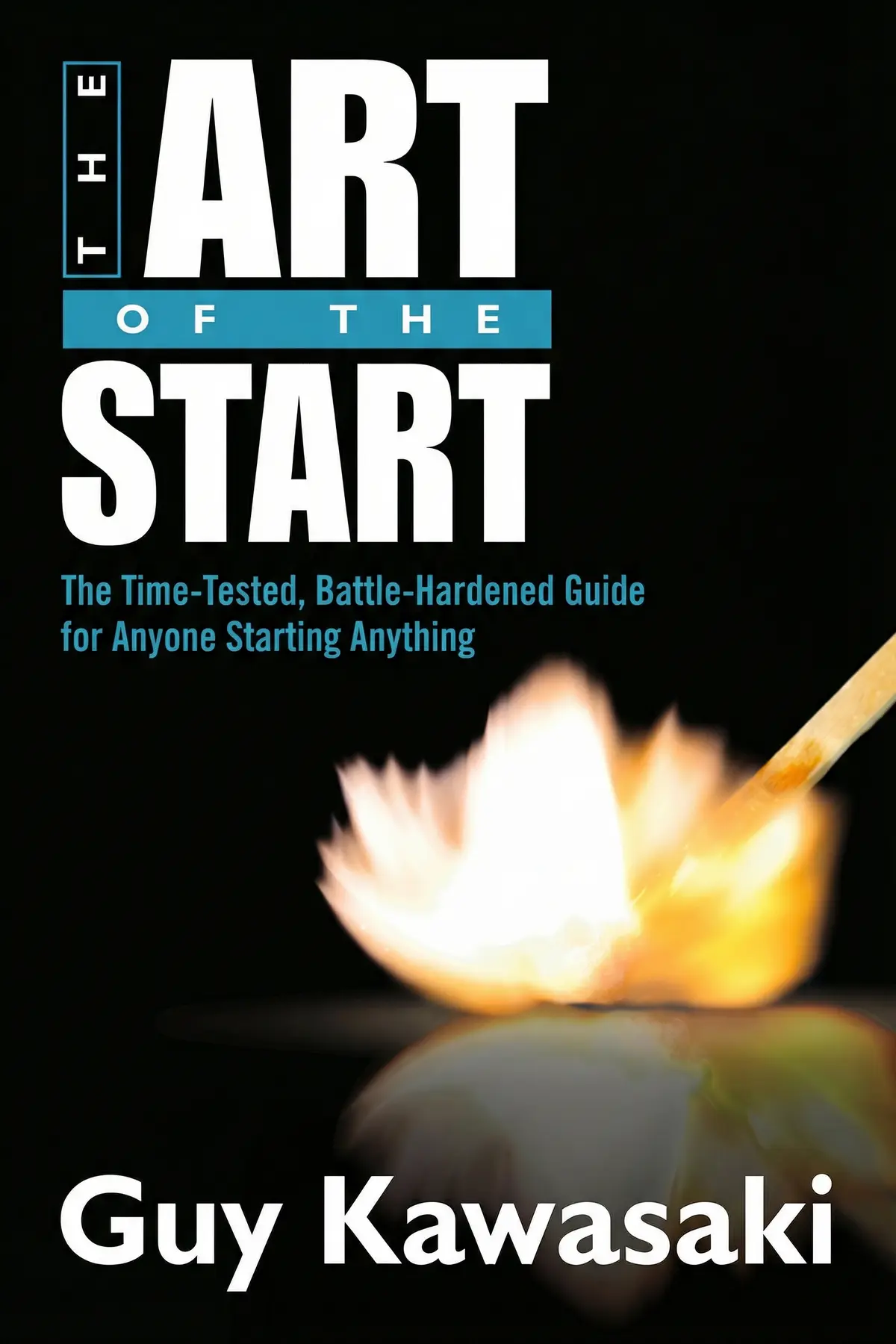
Table of Content
1. Introduction
59 sec
Plenty of people with a good idea never start, because they are busy planning step fifty before they have taken step one. In The Art of the Start, Guy Kawasaki, who promoted the Macintosh to software developers at Apple, argues that a new venture needs far less than that: a reason to exist that matters beyond money, and a few habits that keep it alive long enough to grow. His first point lands hard. If getting rich is the main motive, he says, founders and staff run short of drive, while a company trying to make the world a little better keeps people pushing.
His case comes down to one line. A start-up survives by being clear about why it exists and what it does, by getting paid early, and by staying open to customers it never planned for. Along the way come a test for any pitch, a way to grow without investors, a rule for hiring and a warning from a computer maker almost nobody remembers.
2. Build your start-up on a short mantra
1 min 31 sec
Coca-Cola’s official statement of purpose is hard to remember after one reading. Kawasaki shows what a start-up should write instead, and why the reason you found a company shapes how hard everyone in it works.
3. Describe what you do so customers care
1 min 29 sec
Two companies can sell the same software, and only one of them gets the call from the bank. The difference sits in a single sentence, and most founders write that sentence for themselves.
4. Win over investors in the first minute
1 min 38 sec
Investors stop listening fast when a founder talks like an engineer. A two-word question, asked after every line of a pitch, turns technical boasts into something a stranger at a party would understand.
5. Keep cash flowing when investors say no
1 min 36 sec
A promising six-month contract can bankrupt a company that has eight weeks of money left. Kawasaki explains how to grow with no investors at all, and the one flaw you must never ship to anyone.
6. Catch a broken assumption before it sinks you
1 min 36 sec
A tailoring shop’s fabric bill doubles after one message from a supplier. Kawasaki shows how a simple three-part habit turns that kind of surprise, and start-up chaos in general, into decisions you can make in time.
7. Hire people better than you, and partners who pay
1 min 42 sec
A team that hires only people weaker than itself gets worse with every round. Steve Jobs had a name for where that ends, and early Apple found a partner that made two companies stronger.
8. Make a product people rush to share
1 min 29 sec
Some products travel from person to person while equally good ones sit unnoticed. The iPod, TiVo and the Hummer share a pattern, and loyal Coca-Cola fans show what has to come after it.
9. Your best customer may be one you never expected
1 min 24 sec
One company once owned the computer business and is now almost forgotten. Its rival saw a buyer it had ignored, and the same blind spot can hide the best market for your own product.
10. Conclusion
1 min 00 sec
Kawasaki’s book is a short argument against waiting. The founder who plans fifty steps before the first one may never begin. The one who knows why the company matters, can say what it does in a line and keeps cash coming in can afford to learn the rest along the way. Even without investors, he argues, a start-up can thrive if it chases cash flow and stays alert to opportunities nobody predicted.
The habits he offers are small enough to begin this week. Write a mantra your team could recite from memory. Run every sentence of your pitch through the so what test, and replace jargon with a scene, like the friend heard clearly across a noisy party. Before accepting a slow-paying project, count how many weeks of money you have left. And pay attention to the customers who show up by surprise.
Univac had the lead, the machines and the expertise. What it lacked was the willingness to notice who else wanted a computer, and that willingness costs a start-up nothing.
About this book
What is this book about?
Many would-be founders never begin because they are busy planning every step except the first. Guy Kawasaki's guide gives just enough to take that first step and keep going, whatever you are starting. His foundation is purpose. A company built to make meaning, by improving the world in some way, motivates its people more than one built to get rich. Kawasaki shows how to compress that purpose into a mantra the whole staff can repeat. From there he moves to the practical work: positioning that tells a specific customer what you do and why it matters to them, pitches that answer so what after every claim, executive summaries worth reading, and a plan built on milestones, assumptions and tasks. He also covers survival without investors, by chasing cash flow and shipping early. He adds hiring people better than yourself, choosing partners with real financial upside, making products contagious and spotting customers you never expected, as IBM did when Univac ignored business buyers.
Book Information
Who it's for
First-time founders still planning
First-time founders who keep planning and have not yet taken the first step.
Building on customer revenue
Bootstrappers building a company on customer revenue instead of investor money.
Leading a new launch
Managers and team leads launching a new product, team or partnership who need to pitch it clearly.
About the Author
Guy Kawasaki
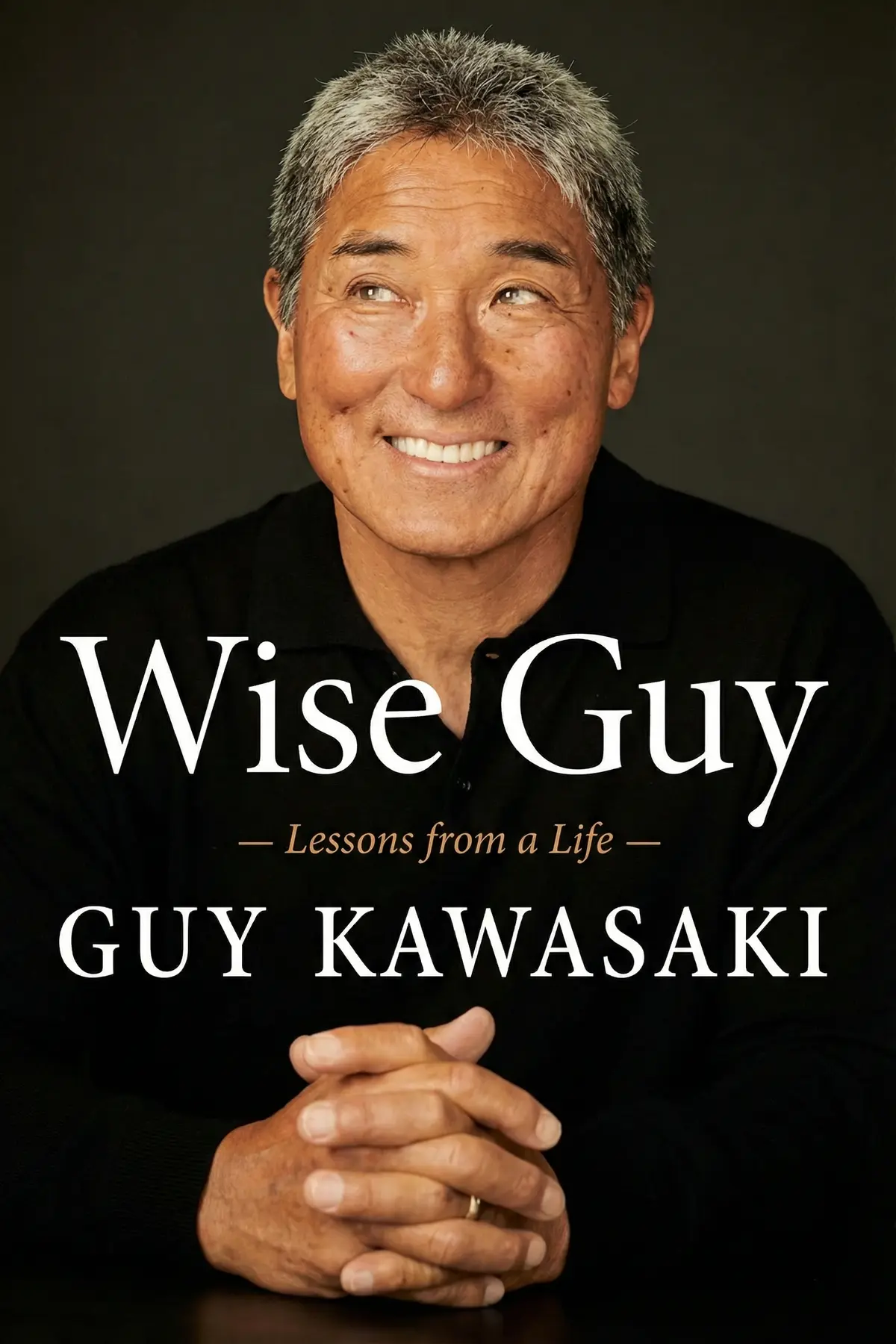
Guy Kawasaki promoted the Macintosh to software and hardware developers at Apple, where he helped bring the word evangelist into everyday marketing. He later helped start Garage.com, first set up as a matchmaking service for angel investors, served as chief evangelist of Canva and hosts the Remarkable People podcast. Born in Honolulu in 1954, he studied at Stanford and earned an MBA from UCLA. His other books include Enchantment and Wise Guy.
Ratings & Reviews
Ratings at a glance

What people think
Listeners find this business title remarkably easy to read and pragmatic, delivering actionable strategies and guidance for launching a startup. The chapters are filled with ingenious concepts and address a broad spectrum of themes, serving as a comprehensive handbook for entrepreneurs. Listeners also praise the clear writing and smooth flow, with one listener highlighting how the content inspires them to take their ambition to new heights.
Top reviews
Nikolai
Picked this up during my first week of launching a small service business, and it was exactly the fuel I needed. Kawasaki emphasizes the importance of 'making meaning' rather than just chasing a paycheck, which is a refreshing pivot from the usual greed-driven business manuals. The utilitarian advice on bootstrapping and avoiding the bloat of traditional business plans kept me focused on actual product delivery. While some mentions of specific technology feel slightly dated, the core philosophy of 'getting going' remains timeless and immensely digestible. It is a rare business book that values your time by keeping chapters concise and packed with action items. This is essentially a field guide for those who prefer doing over dreaming.
Show moreJom
Wow. This is the kick in the pants that most aspiring founders need when they are stuck in the conceptual phase. Kawasaki's 'The Art of the Start' isn’t just about making money; it’s about creating a contagion of passion for your product. The chapter on positioning was particularly enlightening because it forces you to use plain English instead of hiding behind annoying industry jargon. I loved the emphasis on being a 'mensch' and building a business that actually contributes something positive to the world. It’s not some theoretical slog that makes you want to nap in the middle of a chapter. Every page is designed to move you toward a concrete milestone or a finished task.
Show moreJai
Finally got around to reading this staple of the startup world and I can see why it’s a classic. The pace of the writing is excellent, and it drives ambition to new heights with every successive chapter. I especially liked the 'weave a MAT' concept, which focuses on milestones, assumptions, and tasks to keep progress measurable. Kawasaki manages to take complex corporate concepts and distill them into something that feels attainable for a regular person. Even if you don't agree with every single point, the book forces you to think critically about your business model. It is an essential 'pump you up' guide for anyone standing on the edge of a new venture.
Show morePensri
Kawasaki really gets the adrenaline pumping with his no-nonsense approach to the tech startup ecosystem. I found the 10/20/30 rule for pitching to be an absolute game-changer for my own presentations to potential investors. Personally, I think the section on 'The Art of Raising Capital' is where the author’s venture capital background shines the brightest. However, to be fair, the book does lean quite heavily toward the Silicon Valley model of explosive growth and external funding. If you are starting a local bakery or a small consultancy, some chapters might feel less applicable to your specific journey. Still, the writing is fresh, witty, and avoids the dry, academic tone that plagues most entrepreneurship literature.
Show moreIff
As someone who has struggled with the paralysis of over-planning, I found Guy’s mantra-driven approach to be incredibly liberating. The book argues that you should spend your energy building a prototype rather than drafting a thirty-page business plan that no one will read. I particularly enjoyed the segments on recruiting, especially the idea of only hiring people you’d actually enjoy meeting at a grocery store. To be fair, some of the advice on evangelizing feels a bit repetitive if you’ve already read Seth Godin’s work on marketing. But Kawasaki brings a unique, cynical-yet-optimistic energy that makes the pages fly by quite quickly. It is a solid resource for anyone who needs a push to finally launch their idea.
Show moreAnawin
To be fair, the subtitle claiming this is for 'anyone starting anything' is a bit of a marketing stretch. The book is undeniably skewed toward tech-heavy startups looking for venture capital rather than nonprofit founders or solo craftsmen. That being said, the sections on pitching and building a brand are universal enough to offer significant value to any leader. Kawasaki’s writing style is punchy and entertaining, which makes even the dry topics like business models feel approachable. I found myself highlighting several pages in the bootstrapping section, despite having read similar advice in other popular entrepreneurship books. It serves as a fantastic, high-energy refresher for veteran founders and a solid roadmap for the uninitiated.
Show moreGun
The chapter on 'The Art of Being a Mensch' alone is worth the price of admission for this book. In a world of 'hustle culture' and 'fake it till you make it,' Guy’s focus on ethics and social contribution is vital. He provides a practical framework for networking that is based on generosity rather than just seeing what you can get from others. My only gripe is that the book occasionally glosses over the 'how-to' in favor of high-level 'what-to-do' bullet points. You might find yourself needing a more technical manual once you actually start the legal and financial setup of your company. Regardless, it’s a great tool for shifts in mindset and perspective.
Show moreGung
Ever wonder why some business books feel like a collection of blog posts rather than a cohesive guide? This volume unfortunately suffers from that disjointed feeling, hopping between deep philosophy and surface-level tips on writing emails. It is certainly a decent introduction for a complete novice, but it lacks the intellectual depth found in works by Eric Ries or Peter Thiel. Truth is, many of the 'battle-hardened' tips, like the 48-hour email response rule, feel like common sense that didn't need a dedicated chapter. I did appreciate the focus on adoption over scaling, which is a nugget of wisdom I will definitely carry forward. It’s an okay read for a flight, but don't expect it to redefine your entire world.
Show moreSuvannee
Frankly, this felt like a mix of genius and filler that could have been summarized in a long essay. While the advice on creating a 'mantra' instead of a boring mission statement is brilliant, other parts felt outdated. Who spends time worrying about the specific layout of business cards in the digital age we live in now? The book contradicts itself at times, advocating for bootstrapping while simultaneously giving detailed instructions on how to court venture capitalists. It’s a fast read with some funny anecdotes, but it doesn't quite reach the 'must-read' status of Ben Horowitz’s work. Use it as a secondary resource rather than your primary startup bible.
Show moreSook
In my experience, books that try to cover everything from email etiquette to venture capital funding often end up being too shallow. This book is nothing but a summary of facts that most people in the industry already know by heart. The worst thing is that a significant portion of the advice feels trapped in the early 2000s tech bubble. If you want a book with real meat and modern strategies, you are better off reading 'The Lean Startup' instead. Guy is a charismatic writer, but this felt like he was just stating the obvious for two hundred pages. It's a fine conversation topic for a dinner table, but not a serious manual for 2024.
Show moreQuestions about this book
What is the main idea of The Art of the Start?
Kawasaki argues that companies should be started to make meaning, a product or service that improves the world, rather than to make money fast. Founders who are clear about why they exist and what they do, who focus on cash flow and who watch for unexpected markets can thrive even without outside funding. The book covers mantras, positioning, pitching, planning, bootstrapping, hiring, partnerships and building a brand.
What is the so what test for a pitch?
After every statement in a pitch, ask yourself so what, then answer with a clear benefit and a vivid example. Kawasaki’s case is a hearing aid that uses digital signal processing, which means nothing to investors. The answer is that it makes sound clearer, and the example is hearing the person you are talking to perfectly at a loud party.
How do you bootstrap a start-up according to Guy Kawasaki?
Bootstrapping means running a company with no outside investment, so cash flow comes first. Rank projects by how quickly they pay, decline slow ones or ask for money up front, and negotiate longer payment terms with suppliers. Sell before the product is perfect and improve it as feedback arrives, but launch in a small market to limit damage, and never compromise on safety.
What is the MAT framework in The Art of the Start?
MAT stands for milestones, assumptions and tasks. Milestones are key events such as a proof of concept, a working prototype and funding for a first batch. Assumptions are the beliefs those milestones rest on, like a tailoring shop expecting fabric to cost $1,000 a month, and they must be checked regularly. Tasks are the everyday jobs, from renting an office to paying employee insurance, that keep the business running.
Who should read The Art of the Start?
It suits anyone starting something, as the subtitle promises: first-time founders, people building a company without investors, and those preparing a pitch or a business plan. The advice is concrete, from writing a short mantra and a sharp executive summary to setting a 90-day review for new hires and naming one champion to own each partnership.
Readers also enjoyed



7 Powers: The Foundations of Business Strategy
Hamilton Helmer



Alibaba: The House That Jack Ma Built
Duncan Clark

Bad Blood: Secrets and Lies in a Silicon Valley Startup
John Carreyrou
AUDIO SUMMARY AVAILABLE
Listen to The Art of the Start in 15 minutes
Get the key ideas from The Art of the Start by Guy Kawasaki, plus 5,000+ more nonfiction titles.
- 5,000+ titles
- Listen as much as you want
- 7-day free trial
- Cancel anytime









