
13 min 09 sec
Available in: English
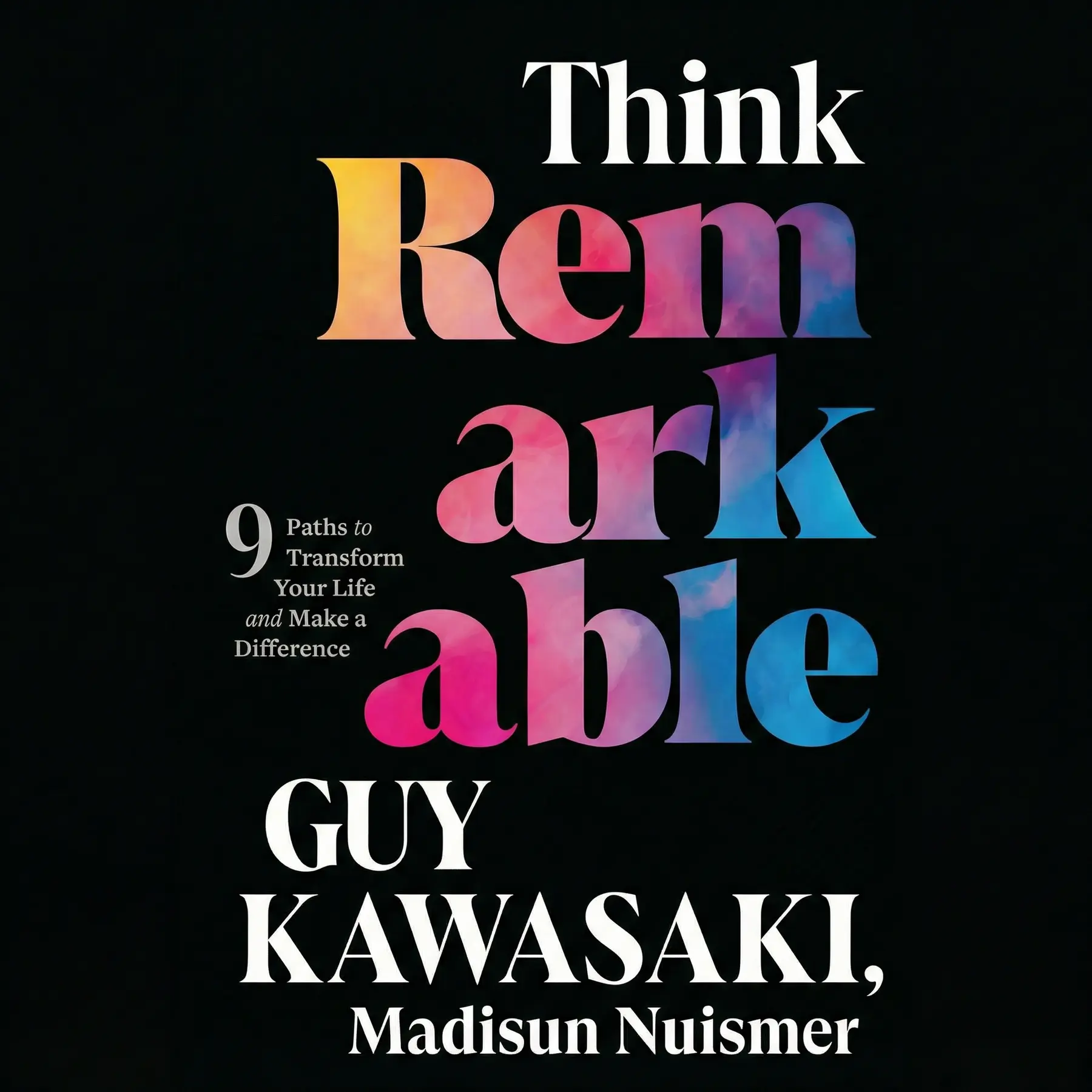
Think Remarkable: 9 Paths to Transform Your Life and Make a Difference
Shows how to grow a meaningful life from many small interests, keep going through rejection with written goals and steady routines, and lead with humility by measuring success through the people you help.
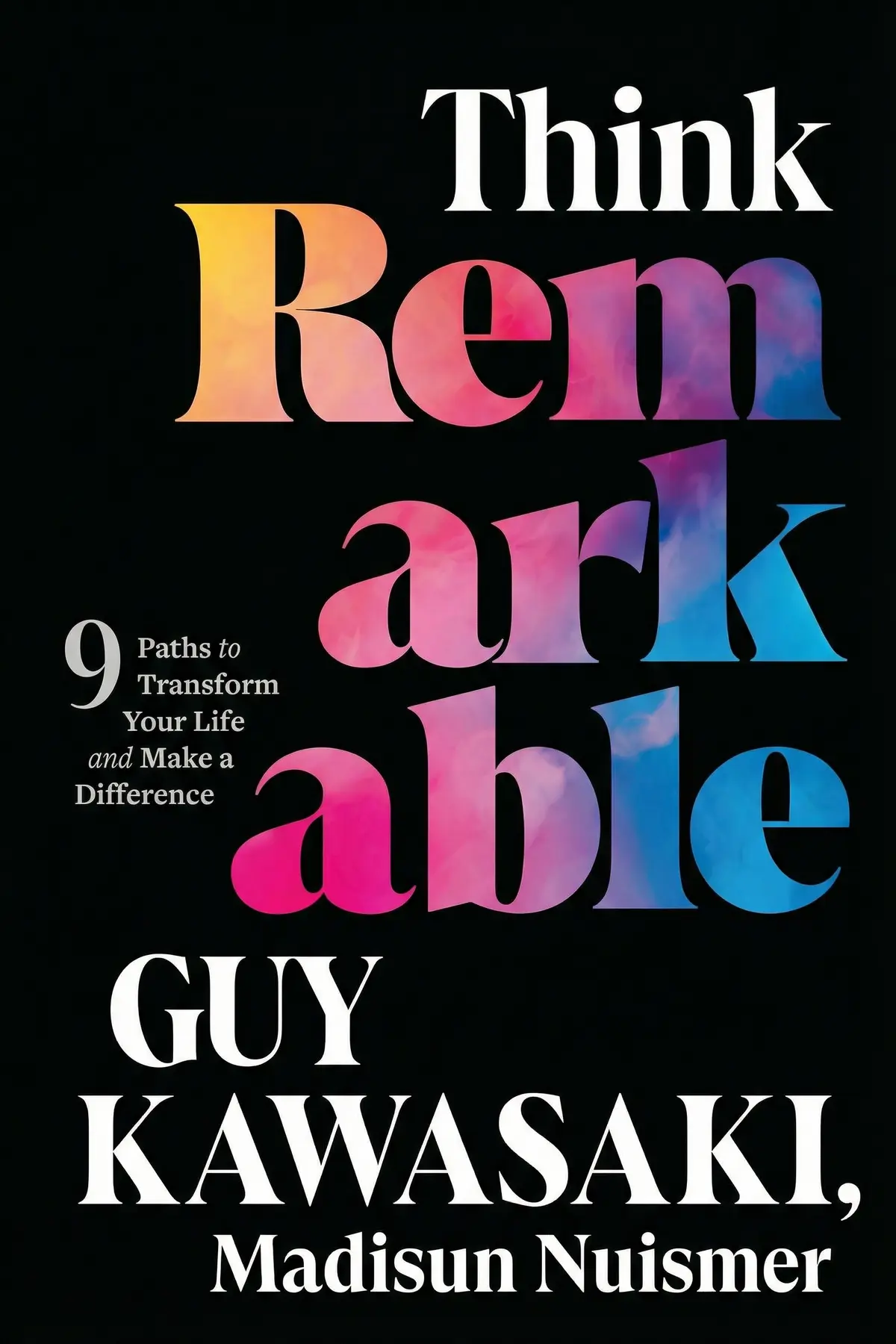
Table of Content
1. Introduction
1 min 02 sec
If you feel behind because you still haven’t found your one true passion, this book offers a more forgiving map. In Think Remarkable, Guy Kawasaki and Madisun Nuismer argue that passions are overrated early in life, and that a calling grows slowly out of many small curiosities, the way an oak forest grows from a handful of acorns. Their evidence comes from interviews on Remarkable People, the podcast Kawasaki hosts and Nuismer produces.
The argument moves in three stages. First you plant widely: books, strangers, odd jobs. Then you protect what sprouts with written goals, steady routines and a tougher way of hearing no. Finally you choose a scoreboard worth playing for, one that counts the people you help. Along the way you meet a physicist who discovered libraries, a teenage guitarist at a pig show and a founder who survived 299 rejections, and each one leaves a habit you can start using this week.
2. Grow a calling from many small interests
1 min 25 sec
Being told to find your passion can leave you feeling behind before you start. A handful of acorns and a bucket of water suggest a slower, kinder way that most people never try.
3. Teach yourself beyond the classroom walls
1 min 12 sec
A boy who would later win a MacArthur grant was astonished by something most adults take for granted. His discovery points to the kind of education no school schedules for you.
4. Turn chance conversations into new opportunities
1 min 19 sec
A phone repair and a morning in the surf led to meetings with a world champion, a former defense secretary and a shark expert. The habit behind those meetings costs nothing.
5. Say yes to the unglamorous first job
1 min 26 sec
A teenage guitarist accepted $75 to play at an event most musicians would refuse. What followed shows why the job you think is beneath you may be the one that counts.
6. Turn a vague wish into a daily map
1 min 24 sec
Most goals die somewhere between the head and the calendar. Two simple tools, one on paper and one before breakfast, turn a fuzzy wish into something you move toward every day.
7. Turn every rejection into a detour, not a stop sign
1 min 28 sec
One founder heard no from investors hundreds of times before anyone agreed. The sentence she and other gritty people tell themselves after a rejection changes what they do next.
8. Admit what you don't know and gain trust
1 min 18 sec
Many people in charge would rather bluff than admit a gap. The authors argue that three honest words, used well, can make a leader more trusted, provided two things follow them.
9. Measure success by impact and make it last
1 min 24 sec
Money and status are easy to count and hard to enjoy. The founder of a global learning platform keeps a different score, and the authors think it holds the key to feeling content.
10. Conclusion
1 min 11 sec
The oak forest is a useful image to keep, because it holds the whole book. Nobody plants a single acorn and stands over it demanding a tree. You plant many, you water them through dry seasons, and you accept that most will fail. The ones that take root grow for generations, and they shade people the gardener will never meet.
That last part is what Kawasaki and Nuismer care about most. Grit and routine get your seeds to grow, but what they grow into depends on the scoreboard you choose. Counting children taught or friendships deepened gives a motivation that keeps renewing itself, long after the thrill of a raise has faded.
So start small and wide. Follow one curiosity this week without asking it to become a career, and talk to one stranger you would usually pass by. Write down a goal, and when your next rejection arrives, restate it as a detour. When you are the one in charge, say I don’t know, then go and find out.
A remarkable life is rarely discovered. It is planted, tended and given away.
About this book
What is this book about?
Many capable people feel stuck because they have never found the one passion they were told to follow. Guy Kawasaki and Madisun Nuismer argue that this advice puts too much pressure on people, especially early in life. Drawing on interviews from the Remarkable People podcast, they describe a calling as something that grows slowly from many small curiosities, the way an oak forest grows from acorns. The book follows that growth in three stages. First comes planting widely: reading beyond school, talking to strangers and saying yes to small, unglamorous work. Then comes grit: writing goals down, building a simple morning routine and treating each rejection as a detour, the way Canva's Melanie Perkins kept pitching through hundreds of refusals. Last comes grace: the confidence to admit what you don't know and the choice to keep score by impact, as Sal Khan does with the children Khan Academy has helped to learn. Readers get permission to stop searching for one perfect path, plus practical habits for turning scattered interests into lasting work that matters to others.
Book Information
Who it's for
Students and new professionals
Students and early-career professionals who feel behind because they have not found one passion.
Career changers and founders
Career switchers and founders who need a steadier way to handle rejection and keep going.
Managers wanting humble leadership
Managers who want to lead with humility and measure success by the people they help.
About the Author
Guy Kawasaki
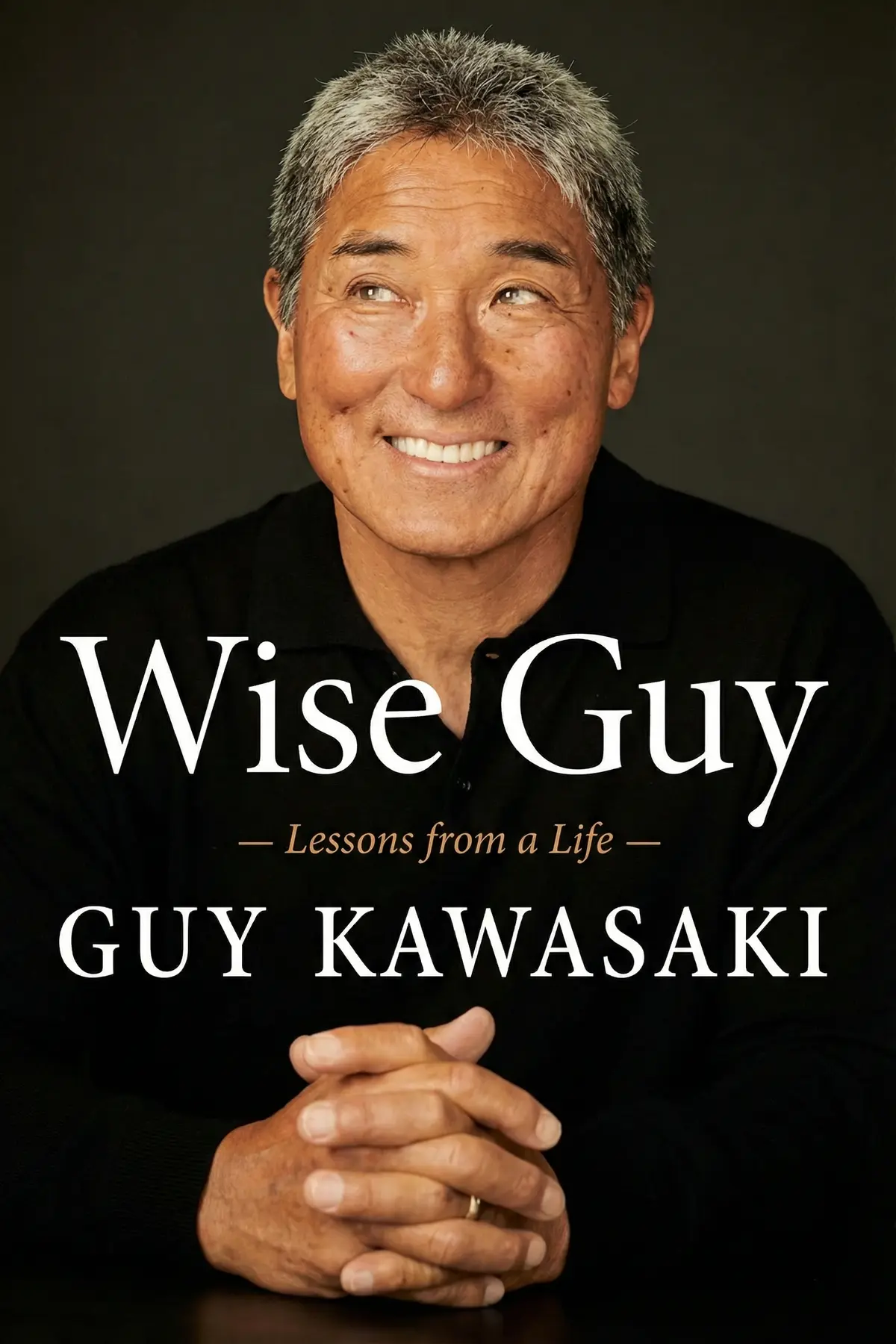
Guy Kawasaki studied at Stanford University and earned an MBA from UCLA. At Apple he promoted the Macintosh to software and hardware developers and helped make the word evangelist part of everyday marketing. He later helped start Garage.com, served as chief evangelist of Canva and hosts the Remarkable People podcast. His books include Enchantment, The Art of the Start and Wise Guy. Madisun Nuismer produces the Remarkable People podcast. She holds a bachelor's degree in public health from the University of Nebraska at Omaha and trained as a health coach at the Institute of Integrative Nutrition.
Ratings & Reviews
Ratings at a glance
What people think
Listeners find this work to be a high-impact manual that provides an excellent distillation of lessons and actionable suggestions. They enjoy the book’s accessibility and tone, with one listener highlighting how effectively the interview-based structure adapts to the written word. The content receives praise for its uplifting perspectives, including one listener who shared that it helped them stay driven to attend the gym and lose weight. Listeners prize the emphasis on cultivating a growth mindset, grit, and grace, finding the concepts straightforward to implement.
Top reviews
Suthinee
Guy Kawasaki has a way of making complex success stories feel accessible through his “Remarkable People” podcast, and this book captures that magic perfectly. I was particularly moved by the deep dives into figures like Jane Goodall, whose life of service is distilled here into actionable steps for the rest of us. The book focuses heavily on the triad of growth, grit, and grace, offering a blueprint for anyone looking to transition from a standard career to a truly meaningful existence. Each chapter feels like a targeted mentorship session. While some might find the brevity of the anecdotes a bit light, I found the directness incredibly refreshing in a world of 400-page business tomes that say half as much. It’s the kind of guide that stays on your desk for daily reference rather than gathering dust on a shelf. Highly recommended for those who want to turn inspiration into actual results.
Show moreKwan
Think Remarkable is a breath of fresh air for anyone tired of the usual corporate leadership jargon that fills the business section. This book is a powerful call to move beyond the ordinary, using the lives of extraordinary people to prove that anyone can make impactful changes with the right mindset. The standout feature here is the tangible, actionable guidance provided in every chapter—there is no guesswork involved in how to apply these lessons. Whether you’re looking for personal growth or professional success, the tools provided are practical and easy to implement immediately. I especially loved the focus on making a “meaningful contribution” rather than just chasing a paycheck. It’s an essential guide that I’ve already recommended to several colleagues who are looking for a transformative journey in their own lives.
Show moreKomsan
Picked this up after hearing Guy speak at an event, and I was pleasantly surprised by how well the interview format translated to the written word. This isn't just a collection of quotes; it's a genuine attempt to map out what it means to be “remarkable” in the modern age through the lens of grit and grace. I actually found myself applying the “growth mindset” tips to my personal life, even using the motivational bits to stay consistent with my gym routine and weight loss goals. The advice is direct and the anecdotes are short enough to keep your attention without drifting. Some sections are a bit crammed with information, making it feel a little dense at times, but the sincerity in the writing keeps you going. It’s a powerful guide for anyone who feels stuck in a rut and needs a clear, practical path forward.
Show moreAurora
The chapter on grace was a standout for me, providing a much-needed perspective in a genre that usually only focuses on “the hustle.” Madisun Nuismer and Guy Kawasaki have crafted a book that is easy to apply to everyday life, primarily because they distill complex industry lessons into small, manageable takeaways. I really liked the unique structure where they intersperse their own life experiences with the wisdom of people like Stacey Abrams. The book functions like a highlights reel of the most important self-help themes of our time. While it doesn't always reinvent the wheel, the way it organizes the information makes it incredibly functional for professional growth. It’s a quick and effective listen if you go the audio route, though the print version is better for highlighting the specific action items they suggest.
Show moreNikolai
As someone who follows the podcast religiously, I wasn't sure if a book would add much value, but I was wrong. The authors have done a great job of distilling hundreds of hours of interviews into a cohesive manual for living a better life. It’s a very quick read, sticking to Guy’s core principles of doing good things and staying true to one's values. I appreciated the numerous recommendations for other books and talks, which makes this feel like a gateway to a larger world of learning. There are moments where it feels a little bit like a “best of” compilation, but the way it’s framed makes the guidance feel useful in a way that the audio sometimes doesn't. It’s a solid addition to any self-help library, even if you’re already familiar with the source material.
Show moreJackson
Finally got around to finishing this, and I have to say that the emphasis on “grit” really resonated with my current career path. The authors managed to take stories from high-profile figures and make them feel relevant to the average person’s daily struggles. I enjoyed the simple, direct writing style, which makes the book feel like a conversation with a mentor rather than a lecture from an expert. To be fair, some of the sections on “Remarkable People” were people I already knew a lot about, so those parts felt a little redundant. However, the way the book is structured allows you to skip ahead to the parts that are most relevant to your situation. It’s an effective tool for small or large changes, and the sincerity of the authors shines through every page.
Show moreAnawin
Is this book groundbreaking? Truthfully, no, as much of the advice feels like a “cliff notes” compilation of leadership strategies we have seen elsewhere over the last decade. Guy even admits that he is pulling from his podcast guests, and while the curation is excellent, the lack of original framework left me wanting a bit more depth. It is a quick read, perfect for a flight or a busy weekend, but it often reacts against common narratives without offering a truly “new” alternative. I appreciated the “If you want X, do Y” format because it makes the content skimmable, yet I couldn't shake the feeling that I'd heard these stories before. It’s a solid 3-star effort—useful for a quick motivational boost, but seasoned self-help readers might find it a bit repetitive or surface-level.
Show moreEmily
Frankly, I expected more original insights from someone as legendary as Kawasaki, but this felt more like a summary of other people's brilliance. The book relies heavily on guests from the podcast, and while their stories are undeniably inspiring, the authors’ synthesis often feels a bit thin. Look, the format is great for busy people because you can jump straight to the advice you need most without wading through fluff. However, I found the content to be a bit too “dense” in terms of how many ideas are packed into short chapters, which sometimes prevents a deep emotional connection to the material. It’s a helpful resource if you need a quick leadership refresher, but don’t go in expecting a radical new philosophy. It is a competent, well-organized collection of existing wisdom that serves as a nice narrative for fans of Guy’s voice.
Show moreCharlotte
Not gonna lie, it's a bit of a mixed bag for me. On one hand, the anecdotes are incredibly short and the advice is very direct, which I appreciate as someone with a limited attention span. On the other hand, it often feels like a cliff notes version of better books, and I didn't feel like the ideas were particularly revolutionary. The book is true to Guy’s voice—sincere, witty, and optimistic—but it lacks the deep-dive analysis I was hoping for. It’s more about the “how” than the “why,” which is fine if you just want a list of instructions, but less so if you want to understand the underlying psychology. Still, for a quick motivational boost, you could do a lot worse than this.
Show moreLucas
To be fair, the title is a bit of a reach considering most of what is in here is recycled leadership tropes from the last twenty years. I generally like Guy’s perspective, but I got about halfway through this and just couldn't find a reason to keep going. It felt more like a marketing tool for the podcast than a standalone book with its own unique thesis. The advice is so “crammed” that nothing really has the space to breathe or leave a lasting impact on the reader. If you’ve never read a self-help book before, you might find this revolutionary, but for the rest of us, it’s just a collection of nice stories that don't offer much in the way of new thinking. It’s not a bad book, just a very derivative one that didn't frame the guidance in a way I found useful.
Show moreQuestions about this book
What is the main idea of Think Remarkable?
Guy Kawasaki and Madisun Nuismer argue that a remarkable life is grown rather than found. Like an oak forest raised from many acorns, it starts with trying lots of interests, reading widely, meeting strangers and taking small jobs. Grit, written goals and routines help those seeds survive rejection, and the most fulfilled leaders measure success by the impact they have on others.
Does Think Remarkable say you should follow your passion?
Not at first. The authors say passions are overrated early in life and that young people face too much pressure to find a calling. What they suggest instead is sampling broadly, experimenting with unfamiliar activities and paying attention to whatever keeps you engaged. Real passion, in their view, emerges gradually from a series of curiosities that you keep nurturing over years.
How does the book suggest building grit?
It offers three habits. Write your goals down so they become concrete targets you can check daily. Build a small morning routine, such as a few minutes of reading or meditation, where repetition matters more than the activity. And reframe rejection as a detour, the way Canva’s Melanie Perkins kept pitching to more than 300 investors before one said yes.
What do Kawasaki and Nuismer say about leadership?
They describe remarkable leaders as having grace: poise, kindness and thoughtfulness carried with quiet confidence. Such leaders openly say I don’t know, then commit to finding the answer and offer hope to their team. They also keep score by impact, fulfillment and relationships, as Sal Khan does by counting the children Khan Academy has helped to learn.
Who should read Think Remarkable?
It suits students and young professionals worried about finding their calling, career switchers looking for permission to explore, and founders facing repeated rejection. Managers will find its section on grace useful, especially the advice on admitting uncertainty and redefining success around the people they help rather than wealth or status.
Readers also enjoyed


A High-Performing Mind: Strengthen Your Mind and Live Your Best Life
Andrew D. Thompson


Abundance: The Inner Path to Wealth
Deepak Chopra


59 Seconds: Change Your Life in Under a Minute
Richard Wiseman




AUDIO SUMMARY AVAILABLE
Listen to Think Remarkable in 15 minutes
Get the key ideas from Think Remarkable by Guy Kawasaki, plus 5,000+ more nonfiction titles.
- 5,000+ titles
- Listen as much as you want
- 7-day free trial
- Cancel anytime









