
14 min 52 sec
Available in: English
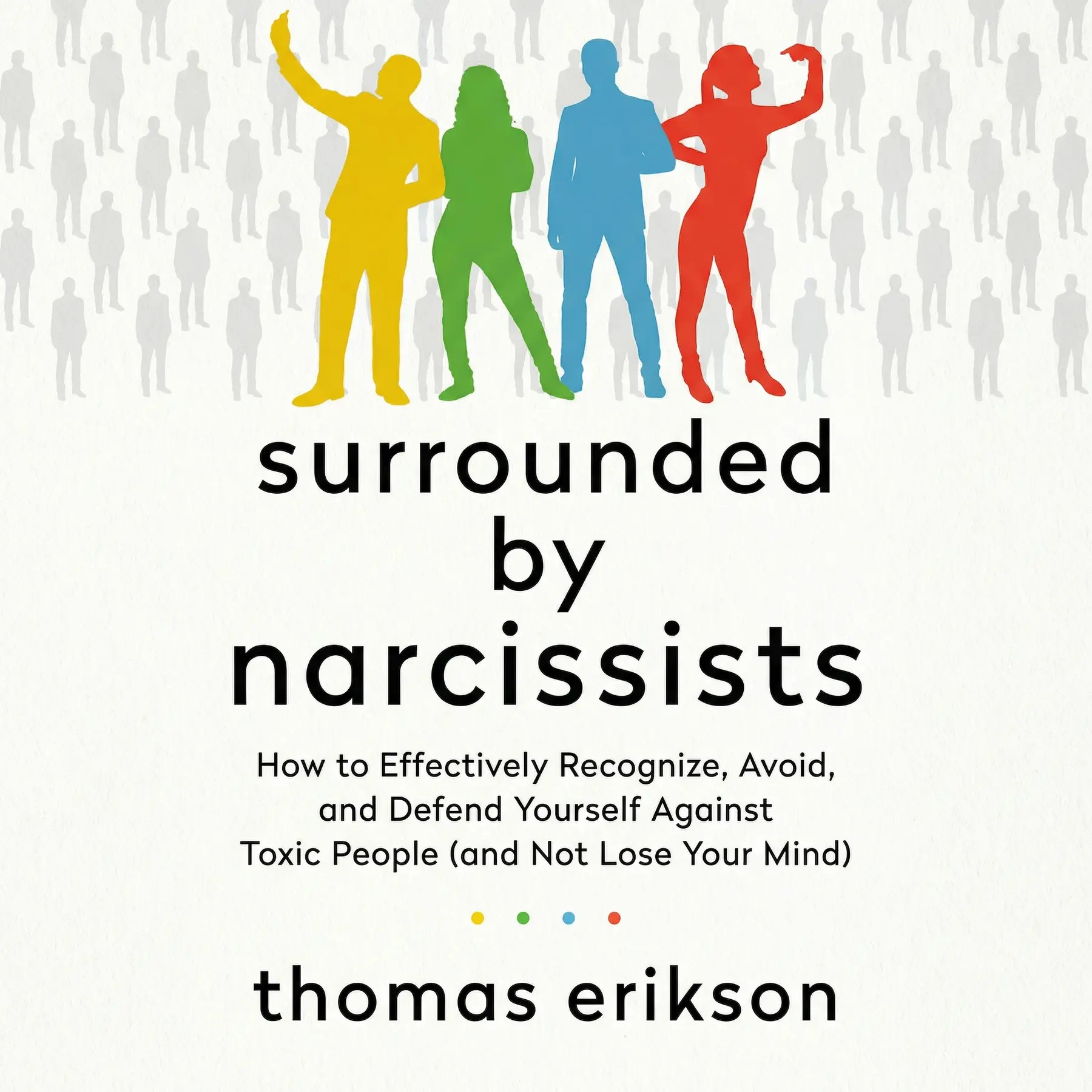
Surrounded by Narcissists: How to Effectively Recognize, Avoid, and Defend Yourself Against Toxic People (and Not Lose Your Mind)
Shows how to recognize narcissistic behavior in coworkers, friends and partners, why such people rarely change, and how to protect yourself by pausing conversations, setting boundaries and, when needed, walking away.
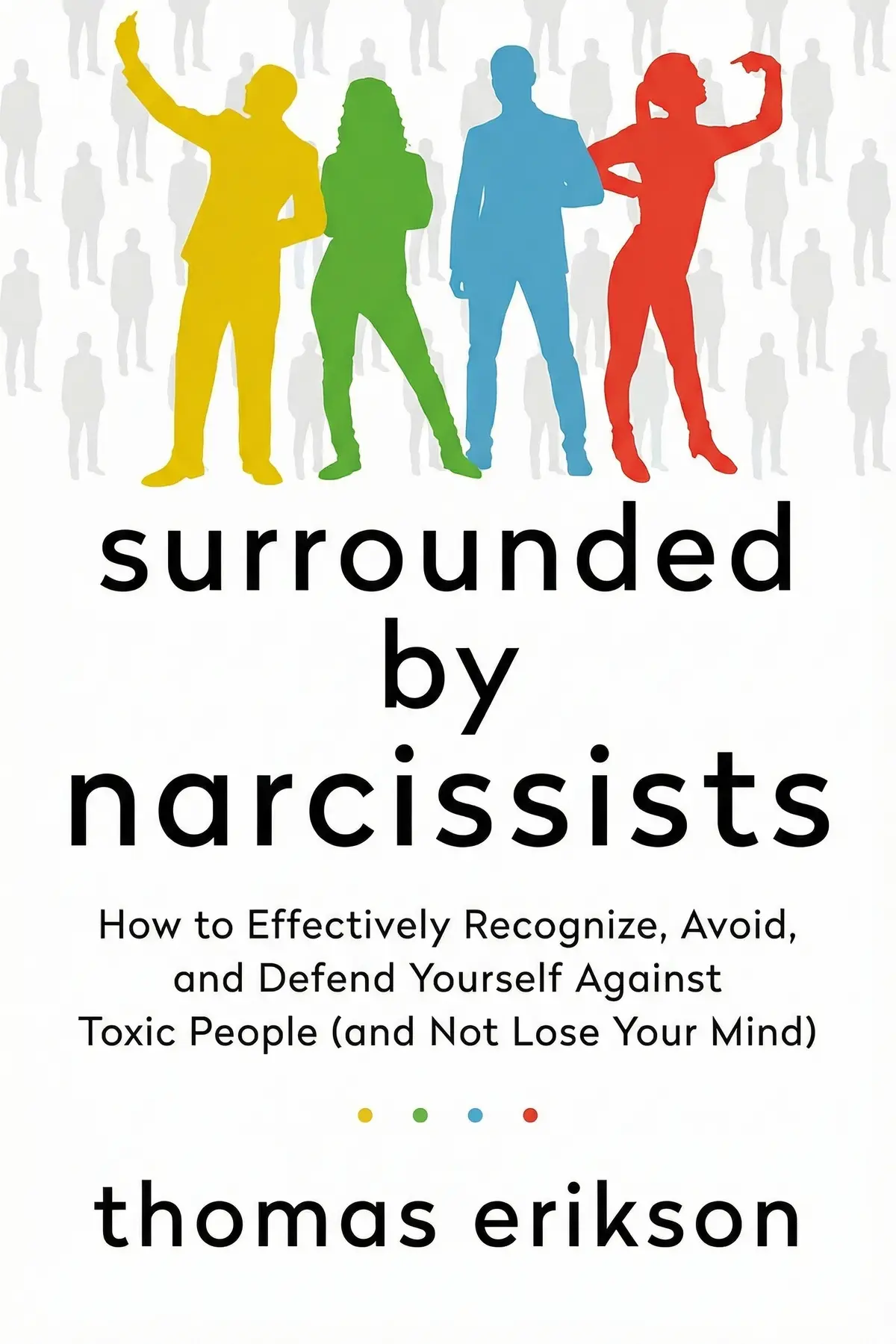
Table of Content
1. Introduction
1 min 02 sec
If someone in your life keeps turning every disagreement into a story about your flaws, arguing harder will not fix it. In Surrounded by Narcissists, Swedish behavior writer Thomas Erikson starts from a blunt premise: people who are truly narcissistic almost never change, so the one thing you can reliably change is how you respond.
That idea carries the whole book. Erikson shows how to recognize narcissistic behavior beyond simple vanity, why your own temperament decides where a manipulator will push, and how to defend yourself in three places: in the moment, inside the relationship and, when needed, by leaving it. He also widens the lens to groups, and to a culture that seems to reward self-obsession.
By the end, you will have a few calm sentences ready for when a conversation starts to twist, a clear test for when a relationship deserves one more try, and permission to walk away when it does not.
2. Spot the narcissist hiding in plain sight
2 min 04 sec
The person draining your energy is probably not admiring themselves in a mirror. Erikson’s everyday examples reveal a double standard that is easy to miss and, once you see it, hard to forget.
3. Stop waiting for a narcissist to change
2 min 04 sec
Pleading, explaining and hoping feel like the decent response to a difficult person. Erikson explains why that instinct usually backfires, and what a narcissist tends to say when asked about getting better.
4. Know your color before they find your weakness
2 min 08 sec
Even a trained researcher handed his car keys to the wrong person. Erikson’s four-color system shows which of your traits a manipulator is most likely to press, before the pressing starts.
5. Pause the talk when it turns against you
2 min 06 sec
You raise a fair complaint, and three minutes later you are the one apologizing. Erikson breaks down how that switch happens, and offers two responses that take the steering wheel back.
6. Draw a line once, then be ready to leave
2 min 12 sec
There is a point where giving someone another chance stops being generous and starts being harmful. Erikson offers a short conversation that marks that point, and a clear rule for what follows it.
7. Guard yourself against a culture of self-obsession
2 min 13 sec
You can leave a partner or a job, but not a whole society. Erikson looks at why narcissistic behavior seems to be spreading, and at a study where the truth failed to calm anyone down.
8. Conclusion
1 min 03 sec
Erikson’s book is, in the end, a lesson in where to put your effort. The narcissist in the next office or the next room will probably stay exactly as they are, and every hour spent hoping otherwise is an hour they still control. What can move is you: how fast you spot the double standard, how well you know the button your color leaves exposed, how readily you end a conversation that has turned into a trial of your character.
So the next time a talk about their behavior becomes a talk about your temper or your nerves, say you need time and leave the room, or bring a third person in, since someone who craves admiration behaves better with an audience. If the relationship matters, have the boundary conversation once, clearly, and then watch what follows. If nothing changes, distance and even a clean break are what Erikson means by defending yourself, and they need no apology.
You may be surrounded. You do not have to stay within reach.
About this book
What is this book about?
Most people have met at least one: the coworker who criticizes everyone but explodes at feedback, the friend who only talks about themselves, the partner who twists every argument. Thomas Erikson argues that narcissism is far more than vanity. It is a personality disorder that can do real psychological damage, and the people who have it almost never change. So Erikson shifts the focus to the one thing you control: your own response. Drawing on the four-color personality system from his earlier books, he shows how a manipulator aims at the weak spot of your particular temperament, then gives concrete tools for the moment of manipulation, a script for setting boundaries in a relationship, and a clear test for when distance or a clean break is the right answer. He also widens the view to a culture that seems to reward self-obsession, from social media to groups that demand admiration and attack outsiders. Readers come away able to spot the pattern sooner, keep their footing in difficult conversations and leave without guilt when nothing else works.
Book Information
Who it's for
Always blamed in arguments
People with a partner, relative or friend who twists every argument back onto them.
Criticized at work
Professionals stuck with a coworker or boss who criticizes freely but cannot take feedback.
Generous with second chances
Kind, accommodating people who keep giving second chances and want to know when to stop.
About the Author
Thomas Erikson
Thomas Erikson was born in Sweden in 1965 and wrote for about twenty years before his first book was published. That book, Surrounded by Idiots, came out in 2014 and became one of the best-loved non-fiction titles in Sweden. His Surrounded by series, which also includes Surrounded by Setbacks, has sold more than 8 million copies. He aims to help people understand themselves and communicate better, and he also gives talks and offers online courses and an app on human behavior.

Ratings & Reviews
Ratings at a glance
What people think
Listeners consider the work to be an excellent read. That said, the level of detail gets conflicting reviews, as one listener describes the material as well-researched while another finds it redundant in its various descriptions and explanations.
Top reviews
Lek
Finally, someone explains why my boss acts the way he does without using dry, academic jargon that puts me to sleep! Erikson has a real talent for making complex human behavior accessible to the average person. I loved the return of the four-color model from his previous work; it makes it so much easier to categorize the personalities in my life. The section on how narcissists use specific strategies to dominate conversations was a massive 'aha' moment for me. I’ve spent years feeling like I was the crazy one, but this book gave me the validation I needed. It’s written in a very friendly, conversational tone that makes you feel like you’re getting advice from a smart friend. I particularly appreciated the advice on when to just walk away—especially the 'just quit' tip for toxic workplaces. It’s a fast, eye-opening read that I’ll be recommending to everyone.
Show moreSun
Have you ever met someone who makes everything about themselves, even when you're the one going through a crisis? Reading this book felt like Erikson was describing my sister-in-law on every single page! For years, she has controlled our family events and refused to admit when she’s wrong, even with proof. This book finally gave me the tools to understand what makes her tick. The way Erikson breaks down narcissistic behavior in the age of social media is incredibly relevant. I actually bought a copy for her for Christmas—hopefully, she takes the hint, though a narcissist probably won't! The writing is sharp, funny, and very easy to digest. It’s not just about the extreme cases; it’s about the everyday narcissism we all encounter. I feel much more equipped to keep my cool now. Highly recommended for anyone dealing with high-conflict personalities!
Show moreSumalee
Erikson has a real knack for breaking down complex human behaviors into these simple, color-coded categories that actually make sense in the real world. I’ve read a lot of books on this topic, and many of them are so academic that they’re hard to apply to your daily life. This one is different. It’s practical, engaging, and honestly quite entertaining. The examples he uses—like the airplane seat hog—are things we see every day. It helped me realize that I’m not just being sensitive; some people really do have disordered ways of thinking. The focus on how to handle narcissists in the workplace was especially valuable for me. If you’ve ever felt drained by a 'me-me-me' person, this book will be a breath of fresh air. It’s a fast-paced read that delivers exactly what the title promises.
Show moreTak
As someone who has struggled with a toxic family member for years, I found Erikson’s conversational tone very accessible and even a bit therapeutic. He uses a great analogy about people leaning their airplane seats all the way back, showing how a lack of consideration for others is becoming a societal norm. It’s a perfect illustration of the 'me-first' attitude he describes. While it isn't a clinical textbook, it provides a solid framework for identifying people who might have Narcissistic Personality Disorder versus those who just have annoying traits. I did find the chapter on car designs a bit strange and off-topic, but the core advice on handling daily interactions is quite helpful. Just remember the author’s warning: don’t go around playing amateur psychiatrist and diagnosing everyone you meet! It’s a good tool for self-protection, not a weapon.
Show moreKaen
Picked this up on a whim after seeing it trending, and it’s a solid introduction to how narcissistic traits are leaking into our everyday culture. Erikson argues that modern society is essentially a narcissism-generating machine, and it’s hard to disagree with his points on social media influencers. While the book leans heavily on anecdotes rather than hard data, those stories are very relatable. You’ll definitely recognize people you know in his descriptions. I liked the distinction he made between someone having narcissistic traits and someone having the actual disorder. It’s an important nuance that many people miss. The narrator of the audiobook version was also excellent, which made the 'conversational' style work even better. It’s a bit repetitive in the middle, but the practical tips on how to protect your own mental health are worth the price of admission.
Show moreAndrei
After hearing so much buzz about the 'Surrounded by' series, I decided to dive into this one to help navigate some tricky office politics. Frankly, it was much more useful than I expected. The breakdown of how different personality colors (Red, Yellow, etc.) interact with a narcissist was very enlightening. It helped me see why I, as a 'Green' personality, often get steamrolled by certain colleagues. I do agree with other reviewers that it can be a bit repetitive, and the author definitely likes to hear himself talk, but the core message is sound. The advice to 'run' or 'quit' if you’re dealing with a true narcissist might seem extreme, but having been in that position, I think it's often the only realistic solution. It’s a good, practical guide for the layperson, even if it lacks some scientific rigors.
Show morePaisley
The truth is, this book sits right in the middle for me—it has some lightbulb moments, but it's bogged down by a lot of filler. On one hand, the four-color behavioral model is a fun way to look at personality types, and it helped me understand my own reactions to difficult people. On the other hand, the author’s lack of formal research is glaringly obvious at times. He makes big claims about social media and 'young people' but then uses Kim Kardashian as a bizarre counter-example that didn't quite land for me. It’s an easy read, but I wouldn’t call it a definitive guide. If you want a casual introduction to the topic, this is fine. If you’re looking for deep, evidence-based psychological strategies, you might want to look elsewhere. It’s informative enough for a plane ride, but don't expect it to change your life.
Show moreSupranee
I really wanted to like this after 'Surrounded by Idiots,' but I ended up putting it down halfway through because it felt like a broken record. To be fair, the first few chapters are quite engaging and offer a decent overview of narcissistic traits. However, it quickly devolves into a repetitive rant about how much narcissists suck without providing much in the way of actual coping strategies. The author spends way too much time talking about psychopaths, which felt like he was just trying to plug his other book. I also struggled to keep the 'colors of people' straight as the book progressed. It became confusing trying to map the red, green, blue, and yellow personalities onto narcissistic behaviors. If you’ve already read his other work, you’ve basically read this. It lacks the depth needed for such a serious topic.
Show moreSkylar
Look, if you’re searching for actual clinical data or peer-reviewed studies, you are going to be severely disappointed by this particular volume. The author relies almost entirely on 'gut feelings' and fictional characters to prove his points. I found his dismissive attitude toward social media 'survivor forums' to be quite off-putting, especially since he didn't bother to provide any actual resources for people who are hurting. The book feels more like a long blog post than a researched non-fiction work. One minute he’s criticizing kids for wanting to be famous, and the next he’s rambling about the 'aggressive' look of modern cars. It’s just very disjointed. There's some okay advice hidden in there about setting boundaries, but you have to wade through a lot of fluff and anecdotal tripe to find it. Not the best use of my time.
Show moreGin
This book is essentially a collection of unsubstantiated opinions masquerading as psychological insight. Erikson openly admits that his findings are based on 'improvised and intuitive explorations,' which is just a fancy way of saying he’s making it up as he goes along. There are zero credible citations or academic footnotes to be found anywhere in these pages. Instead, we get bizarre tangents about how slanted car headlights are a sign of a narcissistic culture. Seriously? It feels like reading a frantic, last-minute college essay where the student just kept typing to hit the word count. Most concerningly, some of the advice on confronting narcissists is genuinely dangerous for anyone in an abusive situation. It’s lazy, pretentious, and lacks any real substance beyond the author's own ego. Do yourself a favor and find a book written by a licensed professional instead of this pseudo-science.
Show moreQuestions about this book
What is the main idea of Surrounded by Narcissists?
Thomas Erikson argues that narcissism is a personality disorder that causes real psychological harm, and that true narcissists almost never change. Since you cannot fix them, he focuses on what you can control: recognizing their behavior, knowing your own weak spots, pausing manipulative conversations, setting boundaries, and keeping your distance or cutting ties when nothing else works.
Can a narcissist change, according to Thomas Erikson?
Erikson is pessimistic. He says Narcissistic Personality Disorder, estimated to affect 1 to 2 percent of people, cannot be cured, and that there is no evidence treatments such as psychotherapy or cognitive behavioral therapy work. People with milder narcissistic traits might change in theory, but only if they want to, and since manipulation benefits them, most see nothing to fix.
How do you respond when a narcissist manipulates you in a conversation?
Erikson suggests two moves. Calmly tell them you think they are trying to manipulate you, which shows you see what they are doing. Or simply pause the conversation: end a call with an excuse, step out of the room, or say you need time to think. He also recommends drawing other people in, since narcissists want admiration and manipulate less in front of witnesses.
What does the color system have to do with narcissists?
Erikson uses the four DISC colors from his earlier books. Reds need control, yellows fear rejection, greens avoid conflict and blues fear public humiliation. Narcissists exploit whichever weakness your type carries, for example telling a heated red that they always yell. Knowing your color in advance helps you recognize when that button is being pressed.
When should you cut a narcissist out of your life?
Erikson recommends a clear boundary conversation first with partners, friends or family: state your needs, name the behavior you will not accept and ask for a commitment to change. If the bad treatment continues, walk away. With a boss, where setting terms is hard, use distance. As a last resort, quit, break up or stop replying, without guilt.
Readers also enjoyed



A Liberated Mind: How to Pivot Toward What Matters
Steven C. Hayes


Acting with Power: Why We Are More Powerful Than We Believe
Deborah Gruenfeld


Age of Propaganda: The Everyday Use and Abuse of Persuasion
Anthony Pratkanis



AUDIO SUMMARY AVAILABLE
Listen to Surrounded by Narcissists in 15 minutes
Get the key ideas from Surrounded by Narcissists by Thomas Erikson, plus 5,000+ more nonfiction titles.
- 5,000+ titles
- Listen as much as you want
- 7-day free trial
- Cancel anytime









