
11 min 22 sec
Available in: English
 ไทย
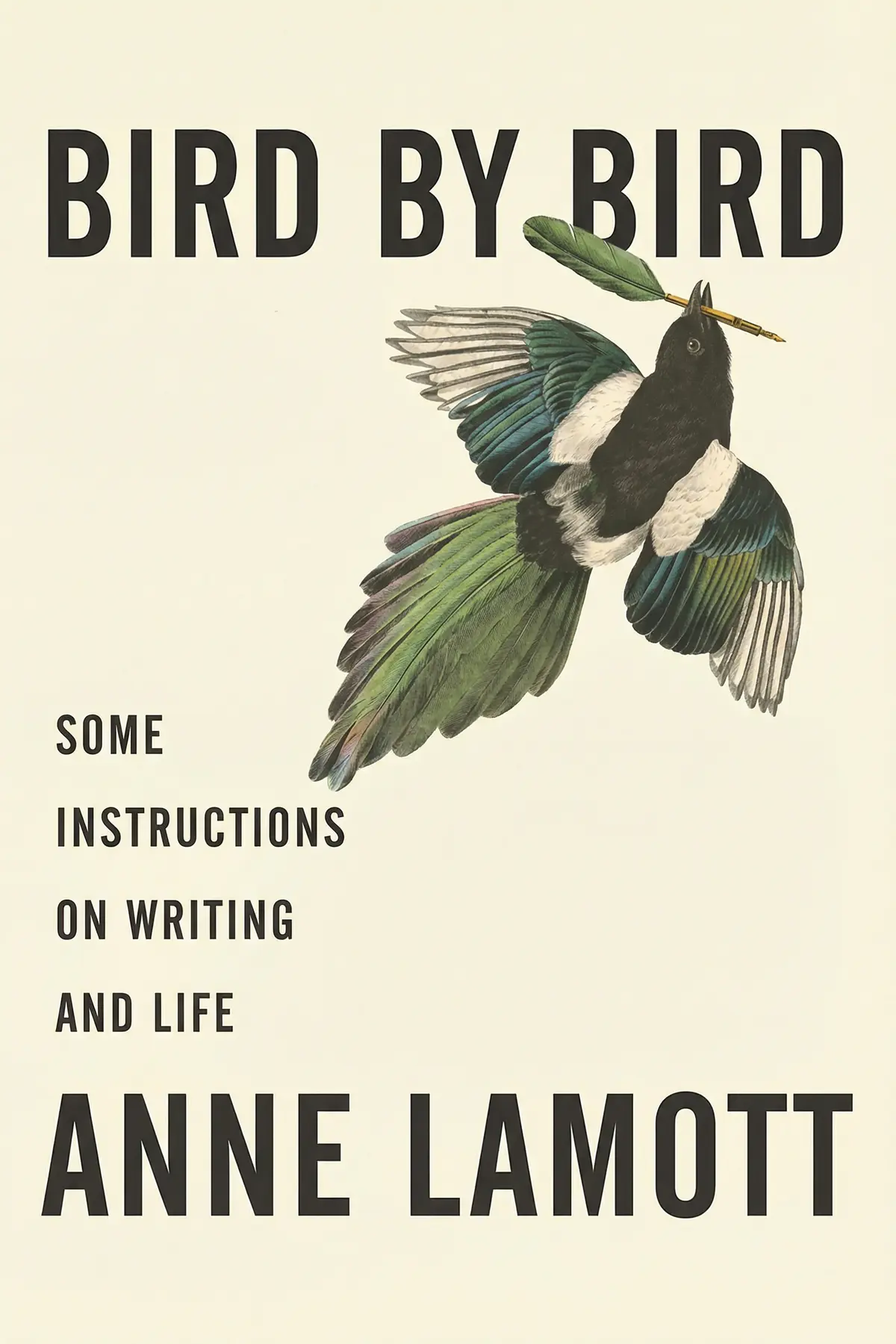
EnglishไทยStitches: A Handbook on Meaning, Hope and Repair
By Anne Lamott
Anne Lamott shows how to find meaning when life falls apart: hold your losses instead of hurrying past them, trust your sensitivity, and let friends and community carry part of the weight.
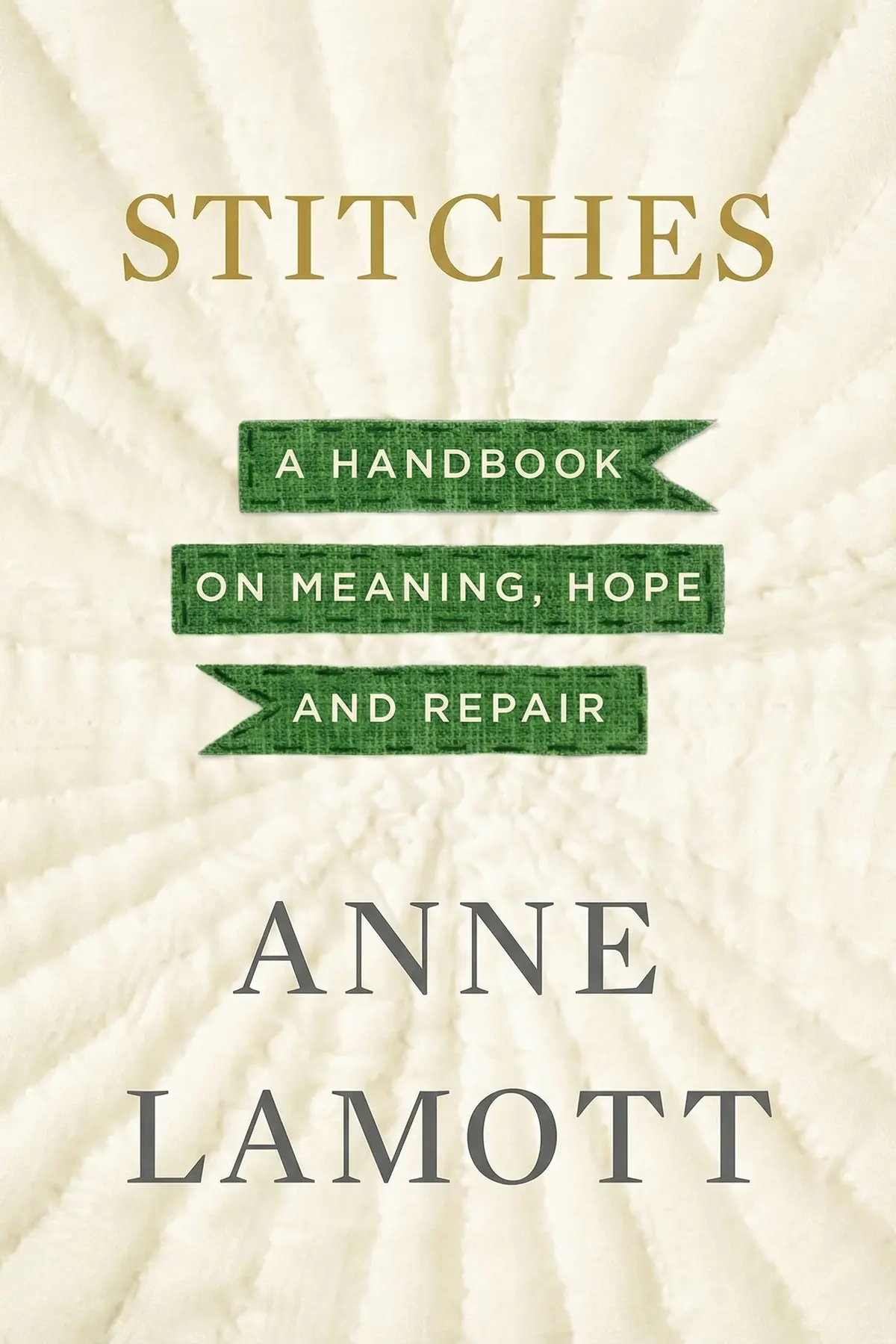
Table of Content
1. Introduction
56 sec
When life breaks, most of us try to hurry past the pain and keep it to ourselves. In Stitches, the novelist and writing teacher Anne Lamott makes a gentler case: the hard times belong to a meaningful life just as much as the good ones, and people get through them together. Her image for this is a quilt, pieced from bright and dark moments and held in shape by small stitches of love and community.
That is the thread running through this short book. Lamott looks at why meaning feels so easy to find when things go well and so far away when they don’t, why a stranger’s tragedy can hurt you, and why being called too sensitive is nothing to feel bad about. She also shows what a friend can do just by staying in the room. Listen through and you’ll have a different response to the next loss, yours or someone else’s, than gritting your teeth until it passes.
2. Keep your sense of meaning when plans fall apart
1 min 30 sec
Good seasons seem to explain themselves, and life feels like a story with a point. Then something breaks, and the point disappears. Lamott traces that collapse to a habit most of us never notice we have.
3. Make sense of grief for people you never met
1 min 24 sec
A disaster far away or a death in the headlines can darken your whole day, even with no personal link. It is tempting to call that overreacting. Lamott offers a more demanding explanation.
4. Stop expecting your life to climb a straight ladder
1 min 35 sec
Almost everyone carries a script for school, career and family, and almost nobody is taught what to do when the script bends. Lamott replaces it with an older, messier image that turns setbacks into something else.
5. Carry a loss with you and let it shape you
1 min 28 sec
Friends often say it is time to move on. Lamott answers with a single piece of clothing from her dying best friend, and a reason to stop trying to get over the losses that matter most.
6. Treat your sensitivity as a strength worth keeping
1 min 44 sec
Being told you are too sensitive can sting for years. Lamott traces the label back through parents, schools and a culture of status, and finds a cost that falls hardest on children who are told their pain is imaginary.
7. Let others help carry what you cannot carry alone
1 min 45 sec
Sitting with someone who is suffering costs the visitor almost nothing. Lamott argues it can change the whole experience for the person in pain, and that the same force grows movements and rebuilds towns after disaster.
8. Conclusion
1 min 00 sec
Stitches answers an old question in a modest way. Lamott does not claim to have found the meaning of life. She suggests where it tends to turn up: in the whole quilt, dark patches included, and in the hands of the people who help sew it. Meaning pinned only to our plans is fragile, because plans break. Meaning that comes from being present to one another holds when they do.
The book supports a few small acts. When a loss comes, give it a place in your life, the way Lamott gave Pammy’s shirt a place on her own shoulders, instead of rushing to get over it. When someone calls you too sensitive, hear it as a sign that you are paying attention. And when a friend is struggling, show up and sit there. It asks little of you and can change a great deal for them.
No life is made in one clean piece. It gets mended, a stitch at a time, and rarely by one pair of hands.
About this book
What is this book about?
When things go well, life seems to make sense. When a loved one dies, a job disappears or disaster strikes, that sense can collapse, and many people respond by burying the pain and pushing on alone. Anne Lamott wrote Stitches for those moments. Her argument is short and humane. Life, she suggests, is a patchwork quilt of good and bad moments, mended and improvised as it goes. The meaning we attach only to our plans is fragile, because plans break. Lamott traces why we expect a neat, ladder-like life, how pressure from parents, schools and a culture fixed on achievement and status trains us to deny pain, and why being called too sensitive may say more about that culture than about us. Readers come away with a different way to hold grief, using the story of a shirt from Lamott's dying best friend, a reason to stop apologizing for deep feelings, and a plain case for showing up beside someone who is suffering, because shared pain is where she believes life's meaning is found.
Book Information
Who it's for
Grieving and feeling rushed
People grieving a death, a layoff or a broken plan who feel pressure to move on quickly.
Still apologizing for feelings
Adults who were called too sensitive as children and still apologize for deep feelings.
Fearing the wrong words
Friends and caregivers who want to support someone in pain but fear saying the wrong thing.
About the Author
Anne Lamott
Anne Lamott is a New York Times bestselling novelist and nonfiction writer based in Marin County, California, who also teaches writing, speaks publicly and works as a progressive political activist. Her largely autobiographical nonfiction, known for its self-deprecating humor, covers alcoholism, single motherhood, depression and Christianity. Her books include Bird by Bird. She has received a Guggenheim Fellowship, been inducted into the California Hall of Fame, and was the subject of a 1999 documentary by Freida Lee Mock.
Dusk, Night, Dawn: On Revival and Courage
Anne Lamott
Hallelujah Anyway: Rediscovering Mercy
Anne Lamott
Somehow: Thoughts on Love
Anne Lamott
Ratings & Reviews
Ratings at a glance
What people think
Listeners find this work to be an ideal selection for the right moment, offering deep reflection along with a sanctuary of significance and optimism. Furthermore, they value the author's candid and distinct prose; one listener specifically highlights how she handles difficult topics with both elegance and wit. The work also provides useful advice and a sense of solace, with listeners mentioning its ability to nourish the spirit and quiet an anxious mind.
Top reviews
Mia
Finally got around to reading Stitches after a particularly rough month, and it was exactly the balm I needed for my weary soul. Lamott has this incredible gift for taking the jagged, broken shards of our existence and somehow finding a way to thread them back together with grace. I was particularly moved by the story of the boys who caused the fire; it’s a stunning meditation on forgiveness and community that stayed with me long after I closed the book. While some might find her 'I don’t know' attitude a bit repetitive, I found it refreshing because, frankly, who actually has all the answers? She doesn’t pretend to be a guru, just a fellow traveler who’s okay with the mess. It’s a short read—you can finish it in an hour—but the insights into human vulnerability are deep. If you’re overthinking everything right now, this will calm your mind and remind you that you're not alone in the struggle.
Show morePrinya
Wow. Anne Lamott has done it again by providing an oasis of hope in what often feels like a desert of cynicism. She explores that 'Something'—that extraterrestrial connection we feel through art or nature—in a way that feels both grounded and mystical. Personally, I found her honesty about her own self-centeredness and confusion to be the most comforting part of the whole experience. Life is agony sometimes, and she doesn't try to sugarcoat that with empty aphorisms. Instead, she offers us a way to mend our feelings through small acts of community and faith. The writing is pithy, insightful, and frequently hilarious despite the dark subject matter. If you’re looking for soul-searching guidance that doesn't feel like a lecture, pick this up immediately. It’s a beautiful, short, and punchy reminder that we are all just trying to get through the day together with whatever stitches we can manage.
Show moreBond
Not what I expected, but exactly what I needed. Lamott has this uncanny ability to grok the deepest, most vulnerable parts of the human experience and put them into words. The story about Pammy’s blouse was weirdly moving to me; it captured that sense of 'magic' we find in the objects left behind by those we love. Gotta say, her honesty about finding faith and how it doesn't solve everything, but just makes the day-to-day bearable, is so refreshing. This book provides a genuine oasis of meaning in a world that often feels chaotic and senseless. It’s short, punchy, and filled with the kind of soul-searching insights that make you want to highlight every other sentence. If you feel like you're falling apart, this book will help you find the thread to start sewing yourself back together. Truly a gift for the overthinker.
Show moreWeera
As someone who grew up in a household where emotions were meant to be suppressed, Lamott’s writing feels like a permission slip to finally breathe. This isn't a complex theological treatise, but rather a collection of small, victorious moments that highlight how we survive the 'raunchy and violent' experience of being alive. I’ll admit, the story about Pammy’s magic blouse felt a little disjointed and rambling at first, but I think that’s just Anne’s style—tangential yet somehow centered. Truth is, her vulnerability is what makes her so relatable to those of us who feel things perhaps too intensely. It’s a bit thinner than Traveling Mercies, and some points feel like they’ve been stitched together from her previous essays, but the humor remains intact. It’s a solid four-star read for anyone needing a little light in the dark. It offers a sense of extraterrestrial connection to something larger than our own grief.
Show moreJai
Ever wonder why some authors can make you laugh and cry within the same paragraph? Lamott has mastered that balance, and Stitches is a testament to her unique ability to tackle the heaviest of subjects with a sense of humor. In my experience, most inspirational books feel clinical, but this feels like talking to a non-judgmental friend over coffee. She isn't afraid to admit she has no clue what she’s doing, which is exactly the kind of honesty I crave. The book is quite slim, and yes, it does feel a bit repetitive if you’ve read her recent work like Help, Thanks, Wow, but the message of finding solace in small victories is timeless. It’s a perfect read for when you're feeling overwhelmed by the world's vicissitudes. Not quite a masterpiece, but a very comforting companion that helps quiet the noise in your head.
Show moreSureerat
Picked this up during a particularly stressful week and found it to be a wonderful way to calm my overthinking mind. Lamott’s prose is like a soft blanket on a cold day; it’s soothing and remarkably easy to digest. She writes about the 'Something' that connects us all—whether through music, reading, or just being in nature—and how those connections help us survive the 'raunchy' parts of life. Not gonna lie, some of the anecdotes felt a bit like they were pulled from a scrap heap of her earlier work, but her voice is so distinct that I didn't mind much. It’s a fast read, maybe ninety minutes total, which makes it perfect for a quick reset. While it doesn't offer a step-by-step guide to happiness, it offers something better: the realization that it’s okay to be a bit broken and to find meaning in the repairs.
Show morePrasarn
After hearing so much about Anne Lamott’s unique voice, I finally dove into this short volume. It’s a very intimate look at how we piece our lives back together after loss, using community and faith as our needle and thread. I loved her description of life as a violent experience that can be agony to get through—it’s dark, but it’s true, and her humor makes it palatable. My only real gripe is that it feels a bit slight; it's almost more of a long essay than a full book. However, the way she calms the reader’s overthinking through her own admissions of confusion is a rare gift. Frankly, it’s just nice to read someone who doesn’t have it all figured out but still manages to find beauty in the mess. It’s a hopeful little book that I’ll likely revisit when things get tough again.
Show moreJoe
This book is essentially a patchwork quilt of ideas, some of which feel a little too familiar if you’ve followed Lamott’s work for years. I enjoyed the signature wit and the way she tackles heavy subjects like grief with a light touch, but it didn't quite hit the heights of Help, Thanks, Wow. To be fair, it’s a very quick read, which is great for a Sunday afternoon, but I wanted more depth. The constant 'I don't know' theme started to feel a little like an easy out rather than a profound realization after the fifth or sixth time it was mentioned. It’s sweet and hopeful, certainly, but it didn't leave a lasting impression on me the way her earlier memoirs did. It’s a decent choice for die-hard fans, but newcomers might find the meandering nature of the prose a bit perfunctory. Still, it’s hard to dislike a book that encourages such kindness toward oneself.
Show moreManika
The chapter on the boys and the fire was the clear highlight for me, offering a rare moment of profound clarity in an otherwise meandering book. I’ve always appreciated Lamott’s grit, but Stitches felt a bit like she was treading water. To be fair, her writing style is always engaging, but the 'patchwork' structure here felt a little too literal, like a collection of b-sides from her previous essays. It’s a sweet enough book for a rainy afternoon, but if you’re looking for the raw intensity of Traveling Mercies, you might be disappointed. It’s more of an affirmation than a deep spiritual awakening. The 'I don't know' mantra is a bit wearisome after a while, though her humor remains a saving grace. It’s a decent three-star read that offers some comfort, but it lacks the weight I was expecting from such a celebrated author.
Show moreThawee
Honestly, I struggled to connect with this one, even though I’ve heard such glowing reviews about Lamott’s perspective. By the first few chapters, I was already losing patience with the pervasive sense that every global tragedy—from 9/11 to Katrina—is somehow filtered through her own personal neuroses. It feels incredibly self-centered, a constant 'me-me-me' narrative that obscures the actual suffering of others. When she asked, 'But what if your perfect child becomes sick, obese, an addict...?' I felt a physical recoil at the judgment baked into that sentiment. Look, I get that she’s trying to be vulnerable, but it comes across as rambling and largely directionless. There are many writers with more talent and less ego who deserve the platform she has. I found the 'stitching' metaphor to be thin and the advice to be little more than weak platitudes that don't offer real solutions for those in deep pain.
Show moreQuestions about this book
What is the main idea of Stitches by Anne Lamott?
Lamott argues that meaning does not disappear when life goes wrong. Life is a patchwork quilt of good and bad experiences, and the painful ones shape us as much as the happy ones. What holds the pieces together is community and love: being present for one another, sharing pain openly and refusing to suffer in isolation.
Does Stitches say you should get over grief?
No. Lamott argues that our greatest losses can never be fully gotten over, because the pain becomes part of who we are, and she does not see that as a bad thing. After her best friend Pammy died, she wore a shirt Pammy had given her, which kept her connected to her friend while admitting how much the loss hurt.
Why does Anne Lamott defend being too sensitive?
She sees the label as a product of cultural pressure. Parents, teachers and bosses push people toward smooth paths, schools prize achievement, and a focus on money and status makes asking for help shameful. The result is denial of real pain, as when alcoholic parents tell children the terrible things they saw were imagined, leaving the problems unresolved.
How can I apply Stitches in daily life?
Give a loss a visible place in your life, such as an object or a ritual, instead of hiding it. Treat your strong reactions as attention rather than weakness. Above all, show up for someone who is struggling: Lamott argues that sitting with a person in pain costs you little and changes how their suffering feels.
Readers also enjoyed


ADHD an A-Z: Figuring It Out Step by Step
Leanne Maskell






Alcoholics Anonymous
Alcoholics Anonymous World Services


A Force for Good: The Dalai Lama's Vision for Our World
Daniel Goleman
AUDIO SUMMARY AVAILABLE
Listen to Stitches in 15 minutes
Get the key ideas from Stitches by Anne Lamott, plus 5,000+ more nonfiction titles.
- 5,000+ titles
- Listen as much as you want
- 7-day free trial
- Cancel anytime









