
11 min 37 sec
Available in: English
 ไทย
EnglishไทยDusk, Night, Dawn: On Revival and Courage
By Anne Lamott
Anne Lamott shows how to hold onto hope when the news is grim and old wounds resurface, by coming back to the present, letting others see you and noticing what still works.
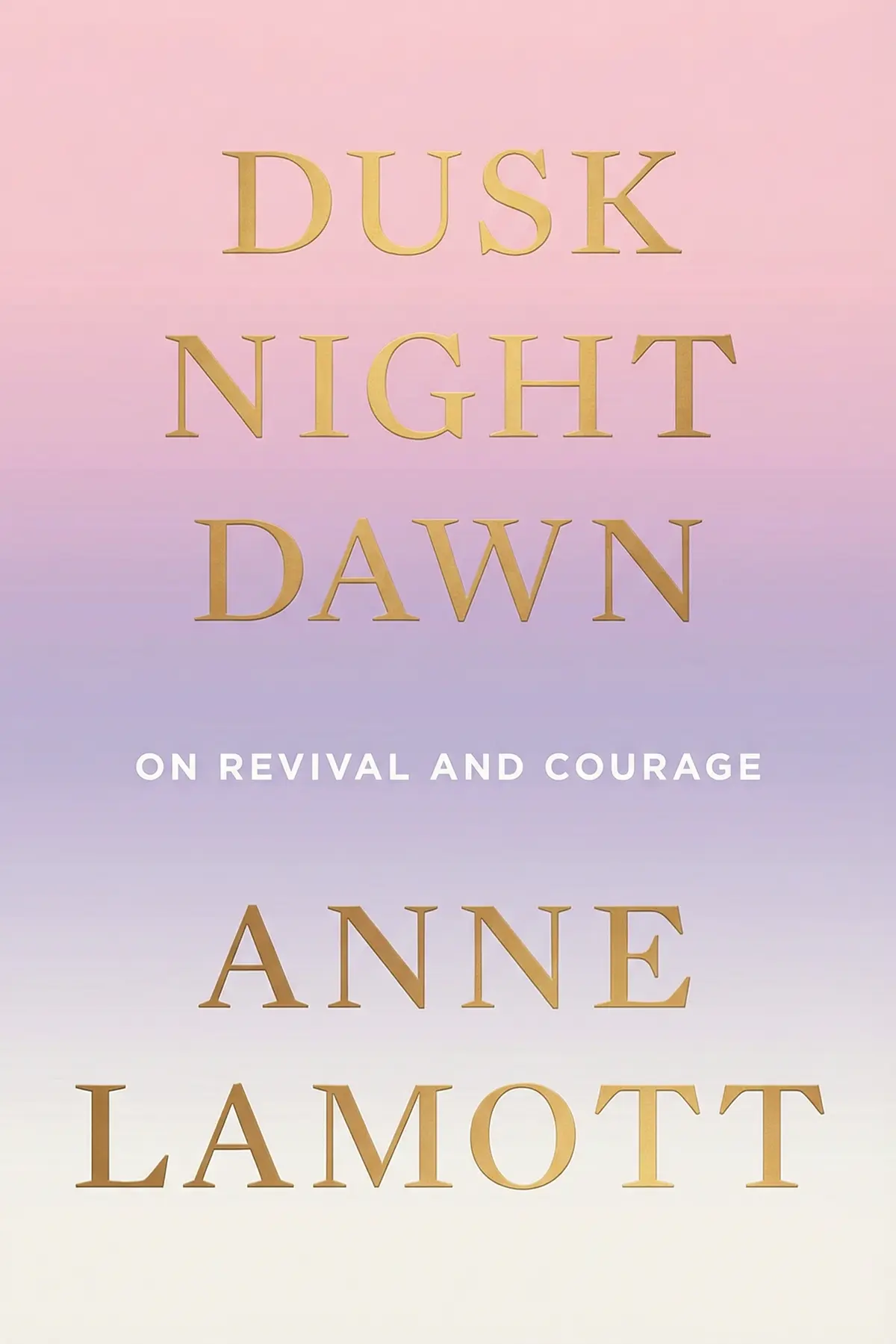
Table of Content
1. Introduction
1 min 01 sec
If the news leaves you braced for the next disaster and old hurts surface at the worst moments, Anne Lamott offers a smaller, steadier place to stand. In Dusk, Night, Dawn, the writer argues that hope rarely arrives through big answers. It shows up in the present moment: a bowl of cherries, a sink of clean dishes, a friend’s voice on the phone.
Her path runs inward first. Accept your flaws, let yourself be seen, and the love you learn to give yourself starts to flow outward, where it protects everyone. Drawing on her own sobriety, her marriage, a scare at the doctor’s office and four nights without power during California’s wildfires, Lamott builds a case for courage that ordinary people can actually practice. What follows are five habits of attention for hard times, from savoring a single morning to finding comfort in the dark itself.
2. Find your footing in the next small task
1 min 53 sec
An entire marital fight once played out almost entirely inside Lamott’s head. Getting out of it, and out of a much deeper hole years earlier, took something far less dramatic than you might expect.
3. Let the people who love you see you
1 min 55 sec
Lamott held out her aging, sunburned arms half hoping her husband would flinch. His reaction stunned her, and it points to why being truly seen feels so dangerous and matters so much.
4. Turn your attention to ease old shame
1 min 57 sec
A painted toenail and a passing remark from a doctor sent Lamott into certainty that she was dying. A priest friend’s short reply changed how she thinks about getting over anything at all.
5. Keep going on just enough faith
1 min 50 sec
A mother whose young son has incurable cancer still loves her life. Lamott wanted to know how, and the question connects to the story of Elijah, who lay in the desert praying for death and was fed instead.
6. Find comfort and connection in the dark
1 min 52 sec
Four nights without electricity during California’s wildfires gave Lamott candlelit walls, a church with no microphones and a fallen redwood. Together they changed how she sees the dark seasons everyone dreads.
7. Conclusion
1 min 09 sec
Lamott’s courage is made of ordinary things: dishes, cherries, a phone call to a friend, a candle in a dark house. What the book adds up to is a claim that hope is practiced in small acts of attention, and that the love you finally extend to yourself is the same love that holds families and neighborhoods together when the lights go out.
She speaks from experience. Gratitude, love and an open heart were her first steps out of alcoholism, and over time they helped her notice how much she already had, which loosened the grip of her fears.
The practice she offers is modest. When the news or an old memory pulls you under, do one small task and give your full attention to something good in front of you. Let someone close see the part of you that you would rather hide. And when you feel near the end of your rope, do what the angel did for Elijah: eat, rest, and listen for a whisper.
The redwood fell, and its roots showed what had been holding it up all along.
About this book
What is this book about?
Crisis seems to arrive daily now, on the front page and in every phone alert, and old hurts have a way of surfacing at the worst possible moment. Anne Lamott asks how a person keeps believing life has purpose, and keeps going, when everything feels like too much. Her answer begins at home, with the self. Drawing on her recovery from alcoholism, her marriage, a frightening moment at a yearly physical and four nights without power during California's wildfires, she argues that hope grows from small things: a washed dish, a bowl of cherries, a friend's voice, a candle in a dark room. Accepting your own flaws and letting people see you lets love move outward, where it protects everyone. Readers get a gentle, often funny set of practices for hard seasons: how to return to the present, why intimacy feels frightening and how to allow it anyway, how shifting attention eases shame, what it means to live on just enough faith, and why darkness can be a place of rest rather than dread.
Book Information
Who it's for
Wanting to stay hopeful
People worn down by grim news who want a gentle, practical way to keep hoping.
Learning to accept themselves
Those in recovery or carrying old family shame who are learning to accept themselves.
Looking for simple prayer
Readers of faith, or curious about it, looking for simple prayer and presence in hard seasons.
About the Author
Anne Lamott
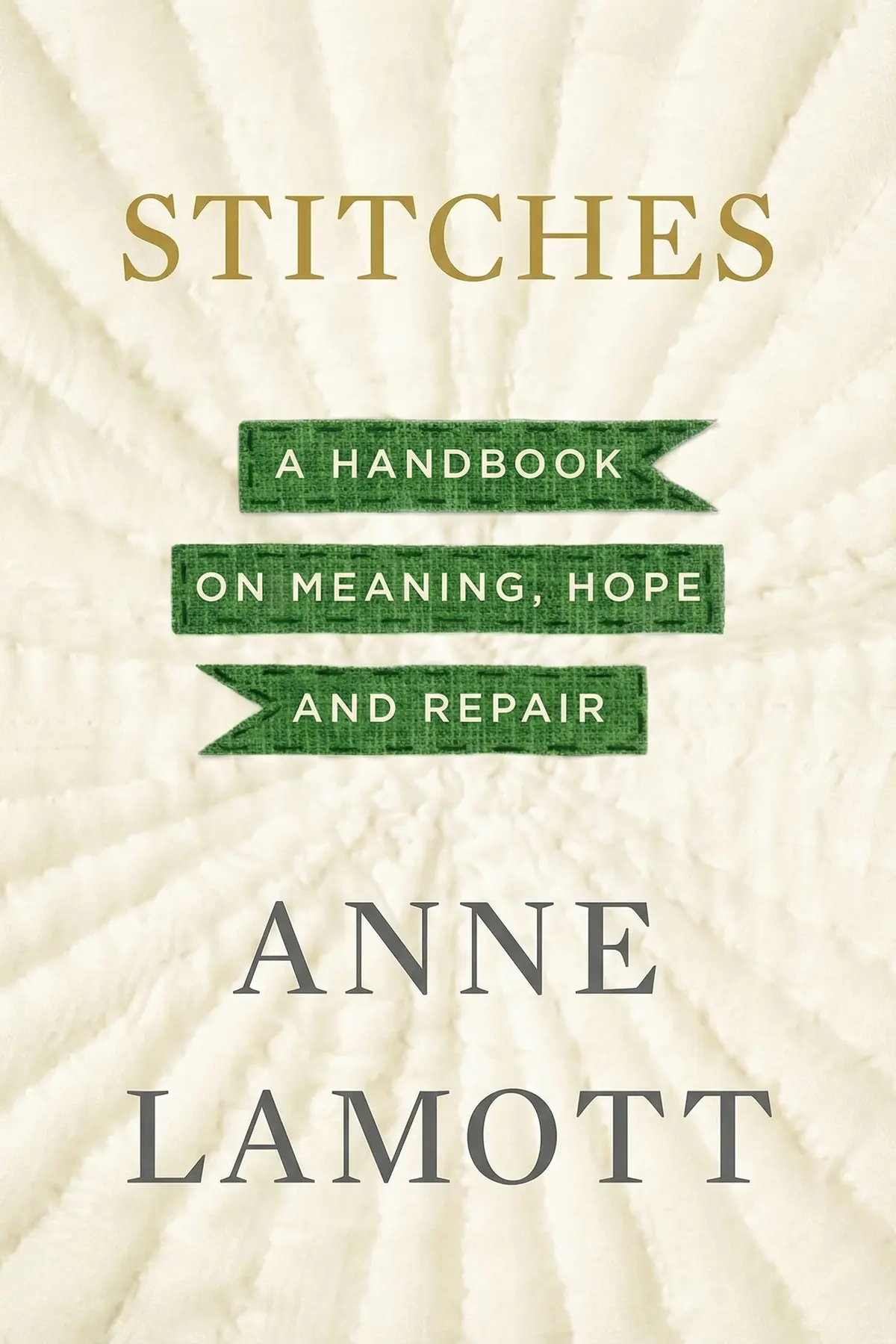
Anne Lamott is a novelist, essayist, writing teacher and public speaker based in Marin County, California, and a New York Times bestselling author. Her largely autobiographical nonfiction, known for its self-deprecating humor, has long explored alcoholism, single motherhood, depression and Christianity, which gives her writing on hope and recovery a lived authority. She has received a Guggenheim Fellowship and been inducted into the California Hall of Fame, and her other books include Bird by Bird and Stitches.
Ratings & Reviews
Ratings at a glance
What people think
Listeners find this book heartening, with one noting that it nourishes their soul, and they value the humor that moves them to both laughter and tears. Furthermore, the work is commended for its wisdom, incredible sincerity, and prose, with one listener remarking that the author communicates like a friend. However, the tempo receives varied feedback, as several listeners find the narrative structure somewhat disjointed.
Top reviews
Oksana
Finally got around to Anne Lamott’s latest, and it was exactly the spiritual hug I needed this week. Her voice feels like a long-distance call with an old friend who isn't afraid to mention the messy parts of getting older. While some might find her tangents a bit wandering, I find that her disjointed pacing actually mirrors how my own brain functions during stressful times. Hearing her talk about being a newlywed at sixty-six gives me so much hope for the future, even with the climate crisis looming over us like a dark cloud. The 'kitten isn't dead' mantra has basically become my new internal screensaver for when anxiety kicks in. To be fair, her brand of Northern California liberalism is thick here, but her honesty about her own neuroticism makes it palatable. It’s a beautiful reminder that we can still find light in the dusk.
Show moreSara
After hearing so many wonderful things, I finally dove into this and I’m so glad I did. Lamott writes like a friend who is sitting across from you at a kitchen table, drinking tea and admitting she’s just as lost as you are. Her reflections on marriage at sixty-six are so tender and funny; it’s refreshing to hear about romance that isn't aimed at twenty-somethings. Look, the world feels pretty bleak right now with everything going on, but this book is a genuine balm for a tired spirit. I found myself highlighting passages on almost every page, especially the parts about how kindness can change our internal chemistry. It’s an inspiring guide for anyone trying to restore a little joy in their life without ignoring the reality of the 'ghastly behavior' out there. Absolutely loved it.
Show moreZoey
This book arrived at exactly the right moment in my life when I was feeling particularly jaded. Lamott has this gift for finding the sacred in the mundane, whether she's talking about a power outage or her relationship with Neal. The truth is, her writing is so incredibly honest that it makes you feel less alone in your own 'outlandish, anxiety-ridden thoughts.' I laughed out loud at several sections, but I also found myself tearing up at her descriptions of the kindness of strangers. It’s a book that feeds the soul by acknowledging the grime of the world while still insisting on the existence of light. Some call it disjointed, but I think it’s just authentic to how we experience hope—in fits and starts. A truly beautiful read.
Show moreSau
Not what I expected, but exactly what I needed to hear right now. Lamott’s amazing honesty about her own faults is what makes her so readable; she never pretends to have it all figured out. The 'kitten isn't dead' mantra has honestly changed how I deal with my morning anxiety spikes. It’s a book full of small victories and quiet faith, even when the news is shouting about climate change and political disaster. In my experience, her writing style feels less like a sermon and more like a conversation with a wise, hilarious aunt. The disjointed nature of the essays actually makes it easier to pick up and read a few pages when you need a quick boost. Highly recommend for anyone feeling a bit frayed at the edges.
Show moreRosa
Wow, she really captured the specific vibration of post-pandemic anxiety in these pages. Lamott has this uncanny ability to make you laugh about the end of the world while simultaneously reminding you to be kind to your neighbors. I’m still thinking about that image of 'butterfly soup' inside the cocoon—it's such a visceral metaphor for the messy middle of personal growth. Not gonna lie, the pacing is a bit all over the place, and some essays definitely land harder than others. However, her take on how we hire 'dread as our governess' when we’re kids hit me right in the gut. Even when she’s complaining about her health or the political climate, there’s a thread of stubborn hope that keeps the book from becoming depressing. It’s not perfect, but it’s real.
Show moreLuke
The chapter on her missing kitten alone makes this worth the price of admission. It’s such a perfect illustration of how our brains spiral into the worst-case scenario over the smallest things. Personally, I think her humor is what saves this book from being just another 'liberal lament' about the state of the world. She manages to tackle climate breakdown and political division without losing her sense of the absurd. The structure is a bit loose—it feels more like a series of blog posts than a tightly edited narrative—but that’s part of the charm. If you’re looking for a rigid roadmap to revival, you might be disappointed. But if you want some company in the dark while you wait for the dawn, Lamott is the perfect companion.
Show moreJonathan
As someone who has followed Lamott for years, I found 'Dusk, Night, Dawn' to be a solid addition to her canon. She’s still the queen of the unexpected metaphor, and the 'butterfly soup' analogy is one I’ll be using for a long time. There is a specific kind of wisdom here that only comes from living through several decades of your own mistakes. Gotta say, the bit about meeting someone's 'bodyguard' for the first time really made me reevaluate my own social interactions. While the prose can get a bit overwrought in the middle chapters, the emotional payoff in the final essays is significant. It’s not quite as punchy as her earlier stuff, but it feels more contemplative and grounded. A very human book for a very difficult time.
Show moreAmara
Is it just me, or does this feel a lot like her previous three books? I’ve always appreciated her amazing honesty, and the section about meeting someone's 'bodyguard' instead of their true self was brilliant. But after a while, the self-deprecating neuroticism starts to feel a little bit like a performance. Truth is, I found the references to her faith a bit thinner this time around compared to her earlier works like 'Traveling Mercies.' The book moves from climate change to her new husband Neal to kitten stories with very little transition, making the experience feel somewhat fragmented. It’s a decent read for a rainy afternoon, but it didn't quite feed my soul the way I expected it to. I’ll always read her work, but this wasn’t her strongest outing.
Show moreHannah
Ever wonder if an author is just writing for their own social circle? At times, this book felt a bit like that, steeped in a very specific Northern California brand of liberalism that can be a little off-putting. I did get a chuckle out of her hating the poetry readings in chapter seven, mostly because it felt like the first truly relatable moment in the book. However, the rest of the essays felt somewhat random and lacked a strong through-line to connect the themes of 'revival and courage.' To be fair, her prose is always elegant, but the 'potted wisdom' moments felt a bit forced this time. It’s a pleasant enough read, but it lacks the grit and transformative power of her earlier work. Good for a fan, maybe not for a newcomer.
Show moreAdam
I wanted to love this because 'Bird by Bird' is a classic, but this felt like a collection of random thoughts without a cohesive center. Frankly, the author’s perspective feels incredibly insulated within a specific kind of upper-middle-class bubble that I struggled to relate to. When she described her disdain for listening to people read their poetry in chapter seven, I realized I was feeling that exact same impatience with her prose. There are moments of genuine humor, sure, but they are buried under layers of what I can only call 'potted wisdom' that sounds profound but says very little. It’s too disjointed for a self-help guide and too repetitive for a memoir. I respect her long career, but this particular volume felt like it was rushing toward a deadline rather than speaking from the heart.
Show moreQuestions about this book
What is Dusk, Night, Dawn by Anne Lamott about?
It is a book about holding onto hope and courage when the world feels frightening. Lamott argues that the place to start is yourself: returning to the present, accepting your flaws and letting others see you. Once you can love yourself, that love moves outward. She draws on her sobriety, her marriage, a health scare and four nights without power during California’s wildfires.
What does Anne Lamott mean by lunch-money faith?
Lamott takes the idea from a friend whose son, aged 22, has brain cancer that cannot be cured. Asked how she keeps going, the friend said something inside will not let her quit, because she loves life however hard it is. Lunch-money faith is simply enough faith to get through the day, rather than a grand certainty about everything.
Why does Lamott say darkness can be good?
During a wildfire power outage, candlelight, a church service without microphones and a fallen redwood showed her that light and dark are both precious. Darkness ends, so it can be treated as rest. Hard times also bring out people’s best selves, revealing what still works: candles, cake, friendship and love.
How can I apply the ideas in Dusk, Night, Dawn?
Lamott’s practices are small. When you feel lost, do one simple task, like paying a bill or washing dishes, and savor something in front of you. Let people close to you see your flaws. Focus your attention on being more patient and understanding, which she says makes forgiveness easier. When exhausted, eat something nice, keep prayer simple and listen.
Readers also enjoyed

A Return to Love: Reflections on the Principles of a Course in Miracles
Marianne Williamson

Abundance: The Inner Path to Wealth
Deepak Chopra

Aflame: Learning from Silence
Pico Iyer

Alcoholics Anonymous
Alcoholics Anonymous World Services


A Force for Good: The Dalai Lama's Vision for Our World
Daniel Goleman


A New Earth: Awakening to Your Life’s Purpose
Eckhart Tolle
All My Knotted-Up Life: A Memoir
Beth Moore
Autobiography of a Yogi
Paramahansa Yogananda
AUDIO SUMMARY AVAILABLE
Listen to Dusk, Night, Dawn in 15 minutes
Get the key ideas from Dusk, Night, Dawn by Anne Lamott, plus 5,000+ more nonfiction titles.
- 5,000+ titles
- Listen as much as you want
- 7-day free trial
- Cancel anytime









