Dusk, Night, Dawn: On Revival and Courage
Anne Lamott
 English
 ไทย
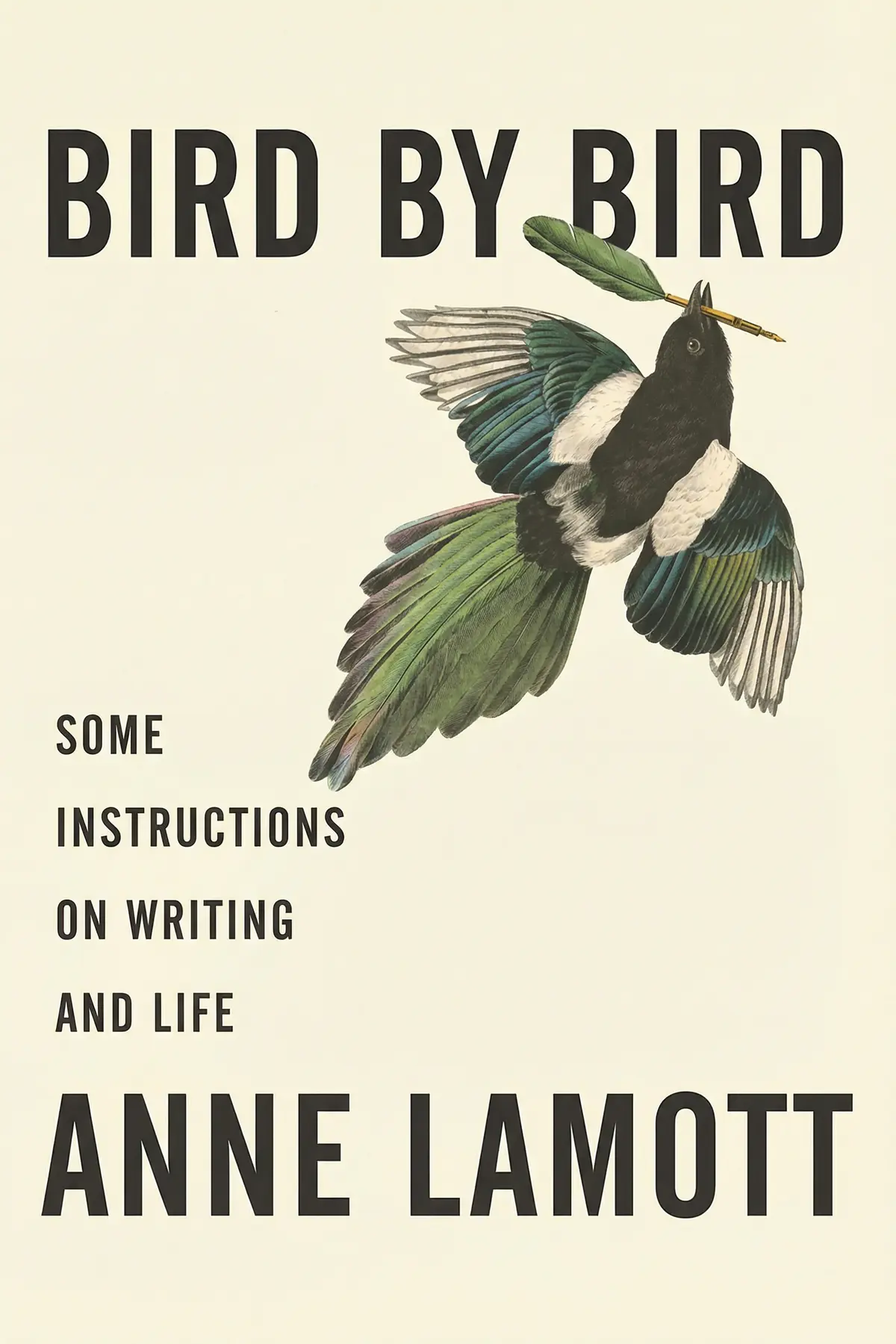
A warm, funny guide to writing regularly and honestly. It covers sitting down at the same hour, drafting badly on purpose, noticing details, building characters, getting past blocks and keeping publication in perspective.
1 min 00 sec
Plenty of people want to write and keep waiting for the day they feel ready, gifted or inspired enough to begin. In Bird by Bird, novelist and memoirist Anne Lamott argues that the day never comes, because good writing has no secret formula and no special gift is needed to start. What it needs is a set of small acts you can repeat: sitting down at the same hour, letting the first version be bad, watching the world closely and telling the truth about what you feel.
Lamott writes with humor about her own struggles, and her advice fits a novel, a memoir or a difficult letter. Her case, followed through every idea below, is that steady attention and honesty make a writer, and that the real reward is the writing life itself rather than a book deal. By the last idea, the blank page should look less like a judge and more like a place you return to every morning.
1 min 48 sec
Most people picture writers waiting for a spark before they begin. Lamott looked closely at the strong writers she knew and found a much plainer habit, one that sounds dull and works in a surprising way.
1 min 53 sec
Even seasoned authors wince at how weak their early pages look. Lamott turns that embarrassment into a deliberate stage of the work, with a crude name and a dentist’s eye waiting further down the line.
1 min 54 sec
The guest who stands in the corner at a party may be doing more work than anyone in the room. Lamott explains what that person is collecting, and why a staircase can make a character real.
1 min 55 sec
Voice sounds like a mysterious gift that some writers simply have. Lamott ties it instead to something uncomfortable, and her hardest example is the envy you feel when a close friend succeeds first.
1 min 49 sec
Writers often build the plot first and squeeze people into it. Lamott reverses the order, starting with a patch of land inside each character, and warns against one kind of kindness that kills a story.
1 min 59 sec
Some days the words simply stop, and the emptiness feels like shame. Lamott’s way out starts with an admission most writers avoid, and sometimes it ends with letting a story go.
1 min 37 sec
Getting published looks like the finish line that proves you are a real writer. Lamott describes what usually happens after the book comes out, and it is far smaller than most people imagine.
1 min 05 sec
Lamott’s advice adds up to a writer built from ordinary materials: a fixed hour, a notebook, a bad first page and the courage to look at what you feel. None of it depends on talent or on a secret, which is the humbling part and also the freeing one. The habits that fill a page change the person holding the pen as well, because paying attention and telling the truth are ways of living, not only ways of writing.
Start where the book is most practical. Give your writing a chair and an hour, and keep the appointment on the days it feels useless. Let the first version be awful on purpose, then fix it up and check it tooth by tooth. Carry something to note a stranger’s walk or the number of stairs in a grand hall. And when envy or grief arrives, write it down before you try to make it go away.
Think of that Polaroid again. You cannot hurry the picture, and at first you cannot see it clearly. You can only keep holding it while it develops.
Many would-be writers wait to feel talented or inspired before they begin, and many stop after one clumsy page. Anne Lamott argues that there is no hidden formula to wait for. Good writing grows from ordinary habits that anyone can practice. Lamott, a novelist and memoirist, writes about her craft with humor and candor. She asks writers to keep a daily routine in one place at one hour, to accept a rough first version and improve it through later drafts, and to observe people, settings and their own memories closely. She ties a writer's voice to emotional honesty, even about grief, anger and jealousy. She also gives practical tools for building characters, writing dialogue and checking a plot. Readers get a calm method for writer's block, advice on finding supportive critics, and a frank view of what publication does and does not bring. Her conclusion is that the daily practice of writing, and the person it makes you, matters more than any book deal.
Aspiring novelists and memoirists who wait for inspiration and rarely finish a page.
Professionals who write reports or pitches and freeze when the first draft looks bad.
Writers stuck on a project, stung by a friend's success or chasing publication who want a steadier way to work.
Anne Lamott is a novelist and nonfiction writer who teaches writing, speaks publicly and is a New York Times bestselling author. Born in San Francisco in 1954 and based in Marin County, California, she writes largely autobiographical nonfiction with self-deprecating humor about alcoholism, single motherhood, depression and faith. Her father, the writer Kenneth Lamott, inspired her first novel, Hard Laughter. She has received a Guggenheim Fellowship and been inducted into the California Hall of Fame.
Anne Lamott
Anne Lamott
Anne Lamott
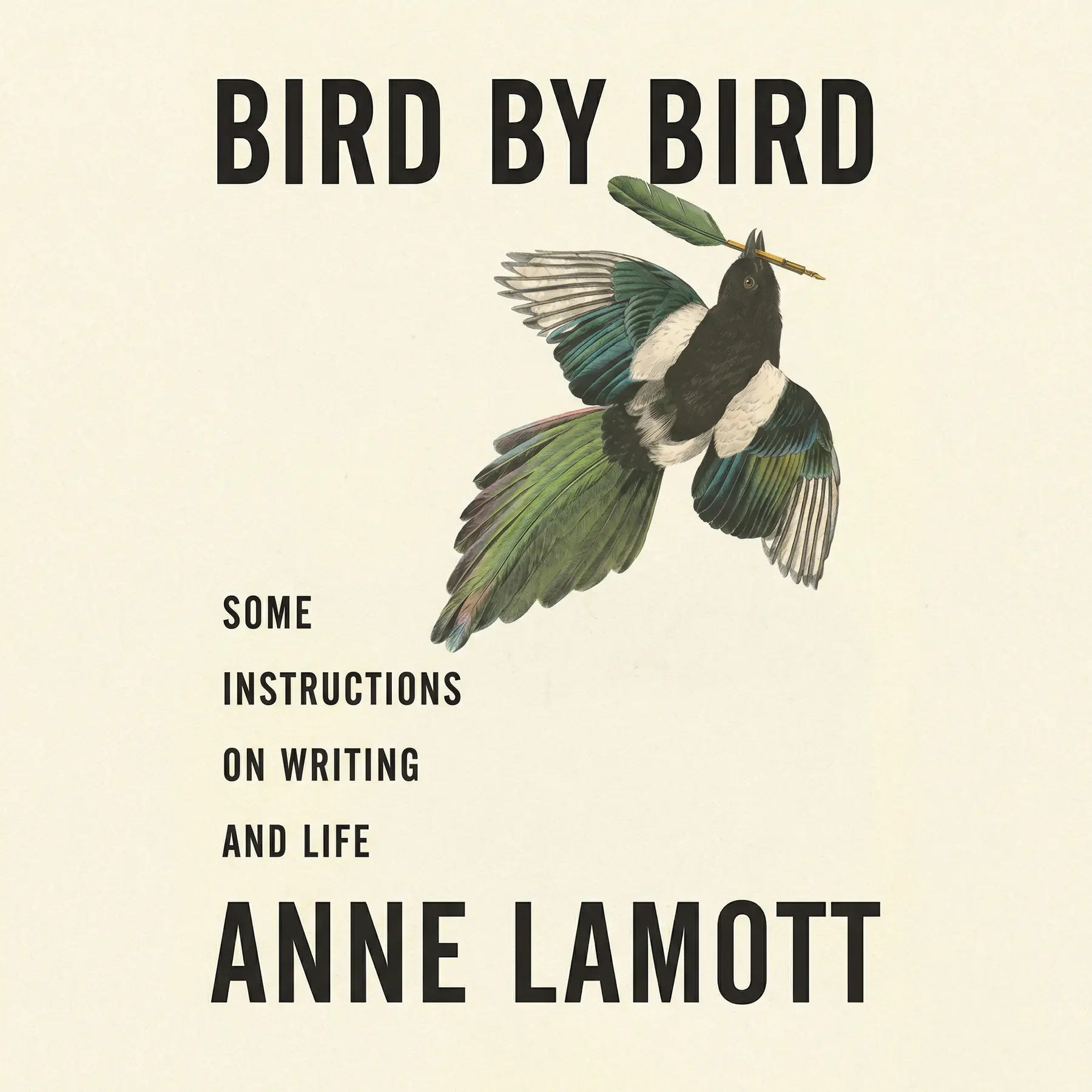
Listeners consider this work an invaluable tool for writers regardless of their experience level, admiring the inviting prose and comprehensive guidance provided. The content is as engaging as a well-crafted novel, enriched by a blend of uplifting personal stories and meaningful life insights. Listeners value the humor woven throughout—one listener pointed out its refreshingly sincere delivery—as well as the authentic way it captures deep emotions and everyday realities.
Finally got around to reading this classic, and I feel like I've just sat down for coffee with a very wise, very anxious aunt. Lamott doesn't just give you a checklist for plot structures; she gives you permission to be a total disaster on the page. The core message—taking things 'bird by bird'—is something I’ve started applying to my laundry and my taxes, not just my half-finished novel. Truth is, her humor is what keeps you turning the pages because it’s so grounded in the messy reality of being a human who wants to create something beautiful. I loved the section on index cards; it’s such a practical way to capture those fleeting moments of brilliance. It's rare to find a writing guide that feels this intimate and supportive without being saccharine.
Show moreAs a long-time procrastinator who treats blank Word documents like mortal enemies, this book felt like a much-needed intervention. I was struck by how Lamott treats writing as a spiritual practice rather than just a career path or a hobby. She captures that specific brand of writerly despair—the kind that makes you want to lie on the floor because a sentence won’t work—with such biting accuracy. I’ve read plenty of technical manuals on dialogue and pacing, but none of them touched on the sheer vulnerability of telling your truth like this one does. Not gonna lie, I teared up during the section about her father and the birds. It’s a warm, funny, and deeply profound look at why we bother to tell stories in the first place.
Show moreWow. This is easily the most entertaining book on craft I have ever picked up. Lamott has this incredible ability to make you laugh out loud at the most depressing aspects of the creative process. She doesn’t rely on sarcasm; instead, she uses a kind of raw, naked honesty that makes you feel less alone in your own head. The advice on using 3x5 index cards to capture observations is a total game-changer for my workflow. I found myself underlining entire paragraphs just because of how perfectly she expressed the feelings of inadequacy that plague every artist. It reads more like a novel than a textbook, which is probably why it stays with you so long after you close the cover. Truly a masterpiece.
Show moreAfter hearing so much hype for years, I finally dove in and I’m so glad I did. This isn’t just a book about how to write; it’s a book about how to live. Lamott’s voice is so distinctive and funny—she manages to talk about God, jealousy, and libel lawsuits in a way that feels totally cohesive. The specific story about her brother and the bird report gave me a new mantra for when I feel overwhelmed by a project. It’s a very human book. It reminds us that even the most successful authors are just people struggling to put one word after another. If you need a gentle nudge to get back to your desk, this is exactly the medicine you need to keep going.
Show morePicked this up during a particularly bad bout of writer's block and it was like a breath of fresh air. Anne Lamott is the patron saint of the neurotic and the perfectionistic. She doesn’t sugarcoat the process or promise fame and fortune; instead, she promises that the work itself is the reward. I found the chapter on 'Broccoli' and listening to your intuition to be particularly thought-provoking. Her writing style is so engaging that I finished the whole thing in two sittings. It's rare to find an instructional book that you actually want to read for the prose alone. Every aspiring author needs a copy of this on their shelf, if only to remind themselves to take it one bird at a time.
Show moreThe chapter on 'Shitty First Drafts' should be mandatory reading for every human being alive, regardless of whether they ever intend to publish a book. Lamott’s prose is undeniably thick with neurosis, and her self-deprecating style might rub some people the wrong way, but I found it refreshing. She demystifies the 'genius' myth and replaces it with the reality of hard work, jealousy, and the occasional alcohol-fueled breakdown. To be fair, some of the cultural references feel a bit like a time capsule from the early 90s, and her disdain for certain types of students can feel a little sharp. However, the emotional core of the book is solid. It’s about more than just craft; it’s about how to pay attention to the world around you with a kinder, more observant eye.
Show moreLook, I know this is considered the 'Bible' for writers, but I went in expecting something a bit more technical. What I found instead was a deeply personal collection of essays that happen to be about the writing life. Frankly, the advice on character development and plot is a bit vague, but the psychological insights are worth their weight in gold. She tackles the monster of perfectionism head-on and wins. My only real gripe is the occasional mean-spirited jab at certain groups or the weirdly specific advice about making characters you hate have embarrassing physical traits. It’s a product of its time. If you can move past the 90s-era 'edgy' humor, there is a wealth of wisdom here about resilience and the importance of hope in fiction.
Show moreNot what I expected, but in a good way. I thought this would be a dry manual on grammar and structure, but it’s actually a very funny, very dark memoir about the messiness of creativity. I loved her take on 'shitty first drafts' because it finally gave me permission to stop editing every sentence as I go. However, I did find her attitude toward her workshop students to be a bit dismissive at times. She describes them as 'mewling and puking,' which felt unnecessarily harsh for someone who preaches about the vulnerability of the craft. Still, the overall message is one of persistence and the necessity of finding beauty in the mundane. It’s a solid four stars for the psychological breakthroughs alone.
Show moreEver wonder why every writing workshop teacher sounds exactly like a variation of Anne Lamott? After finally finishing this, I see the source code, but I’m not sure it all aged well. While the 'bird by bird' anecdote is genuinely touching, much of the remaining advice felt a bit stale to me. Write every day? Find your voice? It’s the standard fare you’d find on any writing blog nowadays. Personally, the constant self-flagellation and 'sob story' vibe got a bit exhausting after the first fifty pages. I appreciate her honesty about the industry not being a magical ticket to happiness, but the level of cynicism regarding her own students was off-putting. It’s a decent memoir of a writing life, but as a practical guide, it’s a bit thin on actual technique.
Show moreThis book was a massive disappointment for someone looking for actual inspiration. I felt like I was trapped in a room with someone who refused to stop talking about their own therapy sessions and self-esteem issues. Lamott spends so much time wallowing in her 'shitty first drafts' and general misery that it actually made me want to stop writing altogether. Where is the joy? Where is the sense of accomplishment? Instead of encouraging excellence, she basically tells you it’s okay to suck forever. That might be a comforting lie for some, but I found it incredibly demotivating. Her tone is so overwrought and neurotic that the few gems of actual advice get lost in a sea of writerly drama and narcissism.
Show moreLamott argues that good writing has no secret formula and grows from small, repeated habits. Write in the same place at the same hour every day, accept a rough first draft and improve it through later passes, observe people and details closely, and be honest about your feelings to find your voice. She treats the daily writing life, not publication, as the real reward.
It is her blunt name for the roughest first version of any piece. She asks writers to welcome it as play, letting ideas wander without judgment, since no one will judge a first draft. The second pass is the up draft, where you fix it up, and the third is the dental draft, where you check every line closely, like a dentist inspecting each tooth.
First admit that you are blocked. Then keep your routine and write at least one page a day, however hard it feels. Hold on to confidence that the words will return, and if it fades, stay calm, breathe and listen to your intuition. Sometimes intuition says the story itself is weak, and Lamott says that message deserves respect too.
Lamott ties voice to honesty with the reader about what you really feel. That means facing emotions such as grief, anger or jealousy and being present in them, not just thinking about them from a distance. Describe the feeling with a writer’s eye, look for what is beautiful or funny in it, and use it later for your characters.
It suits anyone who wants to write but keeps waiting to feel ready, from aspiring novelists and memoirists to professionals who dread the blank page. It also helps writers dealing with blocks, jealousy of other writers or a fixation on getting published. Its tools are small and concrete, such as carrying a notebook, reading dialogue aloud and listing every chapter’s events.
AUDIO SUMMARY AVAILABLE
Get the key ideas from Bird by Bird by Anne Lamott, plus 5,000+ more nonfiction titles.