
15 min 16 sec
Available in: English
 ไทย
EnglishไทยHallelujah Anyway: Rediscovering Mercy
By Anne Lamott
A warm, honest look at how to treat yourself and others with mercy when life feels like a mess, from letting go of expectations to comforting the grieving and forgiving your own mistakes.
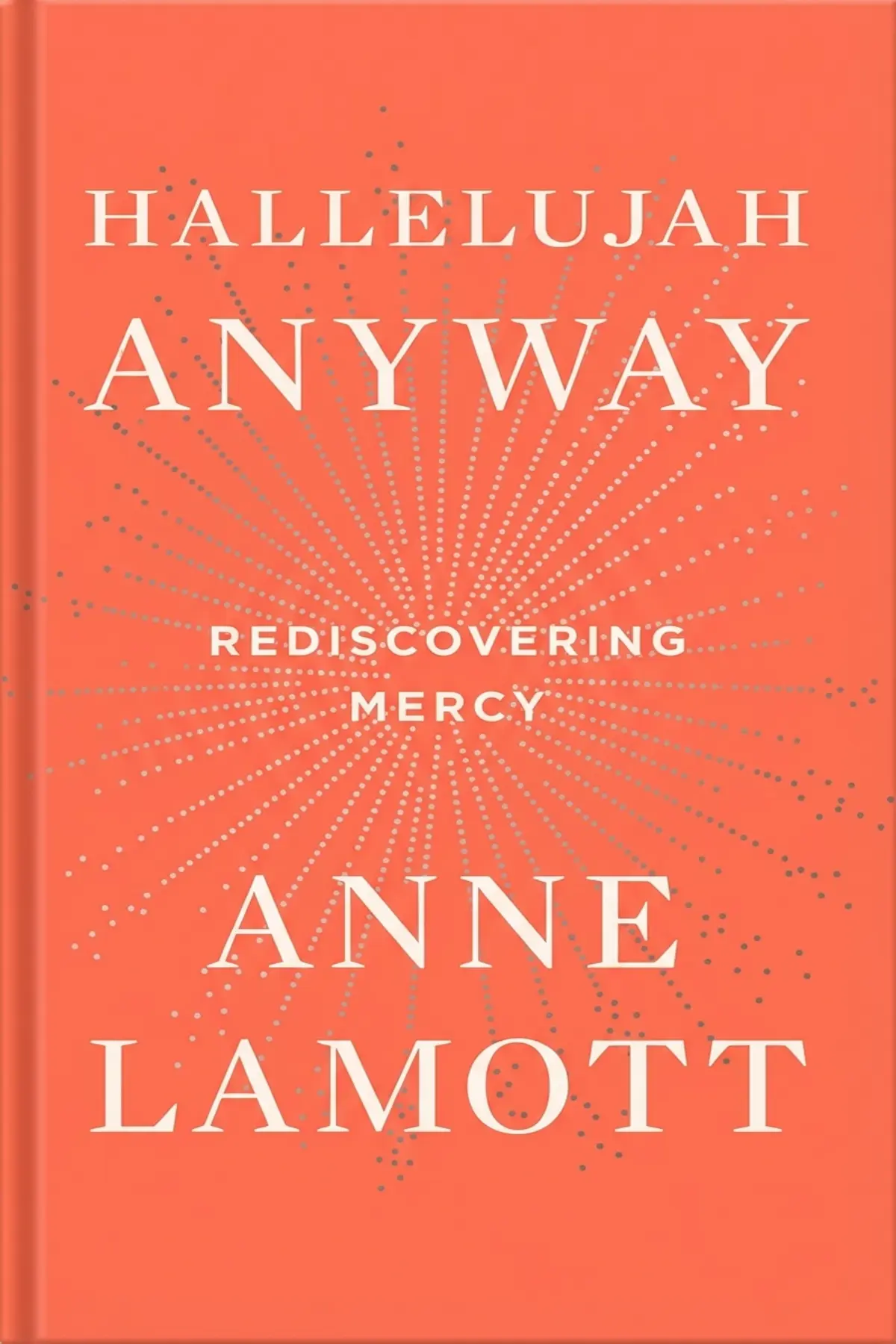
Table of Content
1. Introduction
1 min 07 sec
When life feels like a tangle you cannot get out of, Anne Lamott’s Hallelujah Anyway offers an unexpected way forward: mercy, a radical kindness turned toward yourself as well as everyone else. Her shortest guide to it comes from Micah, an Old Testament prophet, who says all God expects of us is that we be merciful, just and humble. That sounds easy. Lamott, a novelist and writer of funny, frank memoirs, spends the book showing why it is not, and how to get there anyway.
Her case runs like this. We start life open and loving, then get hurt, and we spend years folding ourselves up to please parents, chase approval and buy our way out of pain. Mercy returns when we accept life’s hardness and our own flaws, and when we relearn a child’s way of living in the moment. Expect a handful of small, human practices: a memory to hold on to, a shirt to put back, a friend to sit with, and a kinder way to treat your own mistakes.
2. Find the humility that mercy grows from
1 min 26 sec
Everyone agrees humility is a good thing, yet it is strangely hard to spot anywhere, even in people trying their best to practice it. Lamott traces the shortage back to a wound almost everyone shares.
3. Reconnect with a memory from before the hurt
1 min 33 sec
Searching for happiness can feel like hunting for lost keys when you are already late. Lamott believes the search goes better once you know roughly when you last had it.
4. Unfold from other people's expectations
1 min 42 sec
A German poet once described feeling folded up and closed in certain places. Lamott finds the same tight bundle in high achievers everywhere, along with a catch most of them never notice.
5. Stop shopping to fill the hole in your heart
1 min 39 sec
During a hard stretch with her son, Lamott stood in a designer store holding an expensive shirt. What made her put it back was an old saying about who gets into heaven.
6. Comfort someone in despair by showing up
1 min 50 sec
Two sisters lost their brother and nearly lost their faith. Bible translations disagree about how Jesus responded to their doubt, and Lamott’s choice between the versions says a lot about helping people who grieve.
7. Live by the rule of love again
1 min 38 sec
Every night, Lamott’s grandson calls out the same verdict on the day he just had. His habit holds a lesson that busy adults, eating dinner without tasting it, have mostly forgotten.
8. Let mercy take its time
1 min 35 sec
Forgiveness after a bitter falling out rarely comes when you want it. Lamott compares it to something that happens to your body without your noticing, and an Indian philosopher explains what to do while you wait.
9. Learn mercy from illness and unlikely teachers
1 min 36 sec
A frightening diagnosis can turn a cold person warm almost overnight. Lamott describes that shortcut, and a gentler one that may be living next door in a form you would never expect.
10. Conclusion
1 min 10 sec
Hallelujah Anyway is a book about getting back something you once had. Lamott’s picture of a human life starts with an open, loving child, then shows the hurts, expectations and distractions that fold that child up tight. Mercy is the unfolding. It comes slowly, like a healing cut, and it comes from odd places: a prophet’s short sentence, a shirt left on the rack, a grandson certain that today was the best day yet.
Her advice is modest and specific. Do small, random acts of kindness. Then attempt the tougher version: show generosity toward a person who irritates you, be it their temper or their politics, and check whether love and empathy for them are still within reach. Lamott’s reason is simple. They are probably suffering in a way you know very well. Turn the same patience inward the next time you fall short, and let tomorrow be another day.
None of this removes the pain. Life stays hard, and Lamott’s point is that you can still say hallelujah anyway.
About this book
What is this book about?
Many people feel their lives have become a tangle they cannot fix: too much pressure to perform, too little joy, too many old hurts. Anne Lamott's answer is mercy, a deep kindness that points inward as well as outward, and she starts from a short line by the prophet Micah about being merciful, just and humble. Lamott argues that we begin life open and loving, then get hurt and build defenses. We fold ourselves up to meet parents' expectations, shop to escape pain and punish ourselves for every slip. She draws on the Bible, the poet Rilke, Buddhist teaching, the philosopher Krishnamurti and her own family, including a near-purchase of an $89 shirt and a grandson who declares each day the best yet. Readers get small, human practices: returning to a happy memory, accepting their flaws, sitting with people who grieve, slowing down at meals, being patient with healing and learning from unexpected teachers.
Book Information
Who it's for
Tired of self-criticism
People who feel their life is a mess and are tired of being hard on themselves.
Pleasing parents, retail therapy
Adult children still trying to meet parents' expectations, and anyone who shops to escape a bad day.
Supporting grieving loved ones
Friends and family wondering how to comfort someone who is grieving.
About the Author
Anne Lamott
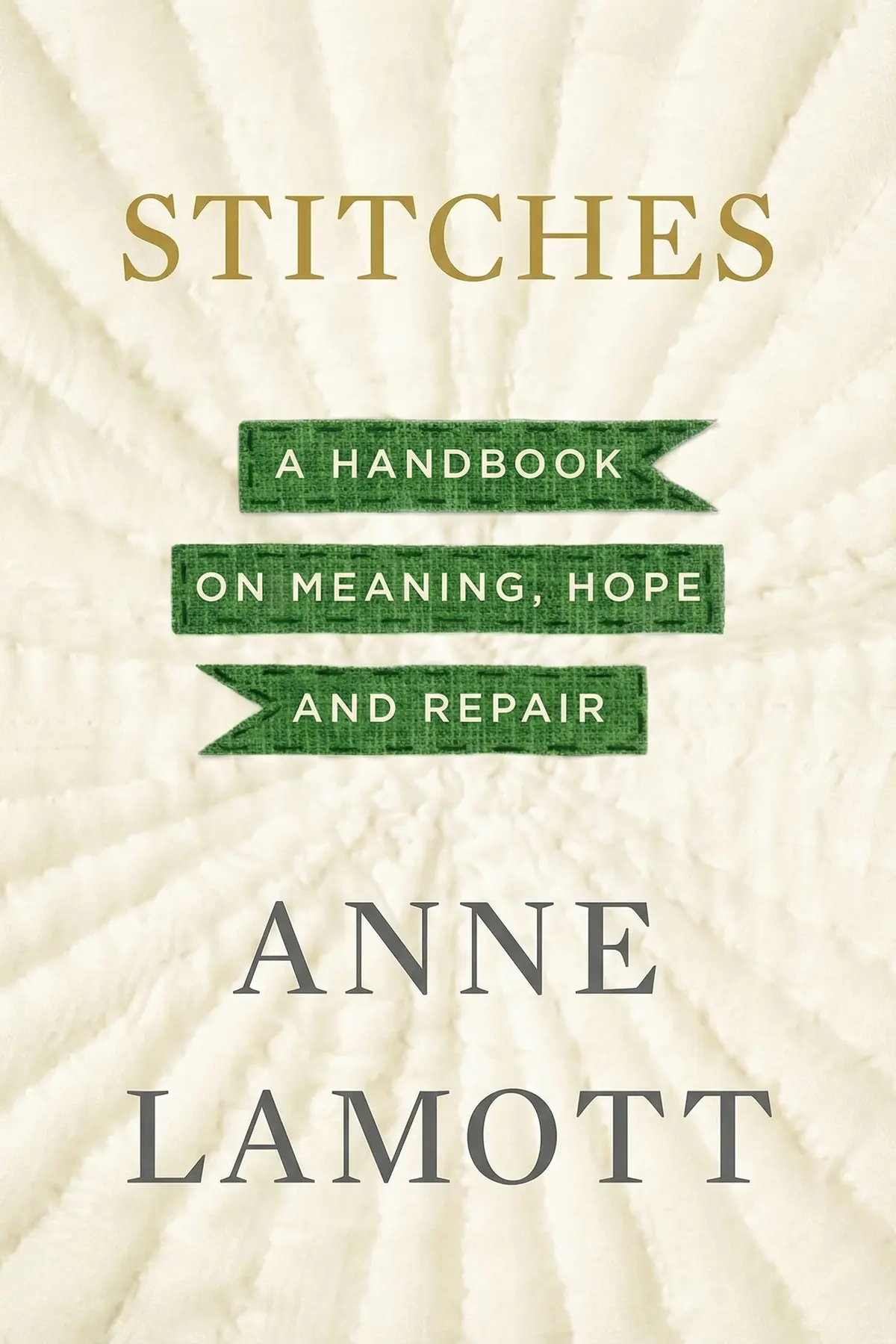
Anne Lamott is a novelist, nonfiction writer, writing teacher, public speaker and progressive political activist based in Marin County, California, and a New York Times bestselling author. Her largely autobiographical nonfiction uses self-deprecating humor to write about alcoholism, single motherhood, depression and Christianity, which makes her an honest guide to mercy. Her other books include Bird by Bird and Stitches. She has received a Guggenheim Fellowship, been inducted into the California Hall of Fame, and was the subject of a 1999 documentary by Freida Lee Mock.
Ratings & Reviews
Ratings at a glance

What people think
Listeners find this work both spiritually deep and accessible, with one listener noting the way it turns ordinary life dramas into moments of spiritual awakening. The writing style receives favorable marks; one listener points to the author's trademark vulnerability, while others enjoy the humor and relatable stories. Listeners value the writer's sincerity and consider the book a fast, pleasant read. Opinions on the pacing are split, as some find the flow engaging while others characterize it as rambling.
Top reviews
Ava
Wow. This was exactly what my soul needed this week. Personally, I think this might be some of the most profound wisdom Lamott has ever shared. She doesn't offer easy answers or religious jargon; instead, she gives us raw, unfiltered honesty about how hard it is to be a human being. The way she defines mercy—as something radical and undeserved—really hit home for me. It’s about accepting the 'great big mess' of ourselves and others without the need to fix everything immediately. I’ve been struggling with some old resentments, and her words about how we only hurt ourselves by holding onto anger were a necessary wake-up call. It's a short book, but I found myself underlining something on almost every page. Highly recommended for anyone who feels a bit battered by the world right now and needs a reminder that they are still worthy of love.
Show moreJoshua
The world is currently such a loud, angry place that reading these pages felt like a cooling balm for a fevered mind. Lamott’s central message is simple: mercy is the only thing that actually works. Whether she’s talking about the tragedy of suicide or the simple act of listening to a friend, she reminds us that connection is our greatest prize. I loved the quote about how mercy 'blocks the terror' and allows us to breathe again. It’s a quick, enjoyable read that manages to be both funny and devastatingly sad. Not gonna lie, I teared up during the section on the funeral. She captures the complexity of grief and faith in a way that very few authors can. This is a book I’ll be gifting to several friends this year who are going through their own personal storms.
Show moreJong
Finally got around to reading this during a particularly rough month, and I'm so glad I did. Lamott’s honesty is such a gift. She talks about 'bad brain' and mental health in a way that feels incredibly relatable to those of us who have lived it, even if her phrasing is a bit unorthodox. To me, this book is about the miracle of apology and the relief of being seen in all our brokenness. It’s funny, biting, and incredibly wise. I particularly loved the Japan stories and the way she explores the idea of 'sneaky grace' entering our lives when we least expect it. It’s not a long book, but the impact it had on my perspective was huge. In a world that demands perfection, she offers us the permission to be flawed and still shout hallelujah. Hallelujah, indeed.
Show moreYaowaluk
Anne Lamott has this uncanny ability to make you feel like you're sitting at her kitchen table sharing a bowl of ice cream while she tells you the most embarrassing things about herself. This book is a masterclass in 'sneaky grace,' showing how kindness can slip past our armor when we finally stop trying to be perfect. I loved the story about the disagreement with her son; it was a refreshing reminder that even the most 'enlightened' among us struggle with pride and the need to be right. While some parts of the narrative felt a little thin, her insights on how mercy protects us like a cloak were beautiful. It’s a great reminder that life is a mess, but we can say 'hallelujah anyway' because love is still present in the muck even when we are failing to be our best selves.
Show moreKae
After hearing so much about her 'signature vulnerability,' I finally dove into this short volume on mercy. Look, it isn't a traditional theological treatise, and if you're looking for academic rigor, you'll be disappointed. But if you want a book that speaks to the heart, this is it. Lamott transforms the mundane—like an argument about a comment she made or a trip to a funeral—into something holy. I appreciated her willingness to admit that she doesn't always have it together. The pacing can be a bit slow in the middle, and she does ramble, but that’s part of the charm. It feels like a real conversation. It’s a book for those of us who are tired of being 'good' and just want to be real. Her humor keeps the heavier topics from becoming too much to handle, though I wish there was more of it.
Show moreOscar
Ever wonder why it's so much harder to forgive yourself than to forgive a stranger? This book dives deep into that struggle with all the humor and vulnerability I've come to expect from Anne Lamott. While I'll admit the layout is a bit weird—it really is a very short book disguised as a longer one through some clever editing—the quality of the insights makes up for the lack of quantity. She has a way of sanding down the sharp edges of life with her wit. I appreciated that she doesn't pretend that being kind is easy; she admits she fails at it constantly. That kind of honesty is rare in spiritual nonfiction. It’s a quick read, but one that lingers in your mind long after you finish the last chapter. It reminds us that mercy isn't just a feeling; it's a practice.
Show morePranee
Picked this up because the title promised a sense of hope I desperately needed during a rough patch. Truth is, it’s a bit of a mixed bag. On one hand, Lamott’s writing is undeniably approachable; she has a way of turning everyday dramas into spiritual awakenings that feels very grounding. On the other hand, the book is incredibly rambling. I often found myself rereading paragraphs just to figure out how the author got from point A to point B. One minute she’s talking about an expensive sweater she wants to buy, and the next she's diving into the theology of the cross. It’s a quick read, and fans of her specific style of vulnerability will likely find enough gems to make it worth their time, but it lacks the punch of her earlier work. A nice, light read, but not her best.
Show morePloy
Is it her best work? Probably not. Is it still worth reading? Yeah, mostly. To be fair, if you’ve read everything else she’s written, you might find this a little redundant. It feels like a 'greatest hits' collection of her usual themes: grace, recovery, and the absurdity of being alive. The writing is witty and tender, but the structure is loose—almost to a fault. I enjoyed the personal anecdotes, particularly the ones involving her son, but I wanted more of them and fewer generalities about 'us' and 'we.' It's a bit scattered, but Lamott’s voice is so distinct that it carries you through the weaker sections. It’s a thoughtful book about compassion, even if it feels like it could have used one more round of editing to tighten the focus. Plus, referencing that Candi Staton song was a nice touch.
Show morePia
As a longtime fan of Lamott, it hurts to say that this one missed the mark for me. While I usually adore her signature blend of humor and grit, this volume felt scattered and, frankly, a bit lazy. Many of the anecdotes about her family and her recovery felt recycled from her previous memoirs, and the central theme of 'mercy' never quite coalesced into a meaningful argument. I also found myself deeply uncomfortable with the way she describes mental illness as 'bad brain' and her insensitive portrayal of a 'common' alcoholic as someone not housebroken. It felt elitist and out of touch with the very people she claims to advocate for. There are brief moments where her brilliance shines through—like the chapter on her trip to Japan—but they are few and far into the background of a book that feels rushed and repetitive.
Show moreTakeshi
Maybe it’s just me, but I found this collection of essays to be incredibly frustrating. I came looking for a deep theological exploration of mercy, but instead, I got a series of thin platitudes that felt more like a social media feed than a published book. To be fair, the formatting makes it look substantial, but the double-spacing and wide margins hide the fact that there isn’t much content here—maybe 50 pages of actual text. The author's frequent jabs at men and her dismissive tone toward those who disagree with her specific brand of spirituality felt abrasive rather than enlightened. I was especially bothered by her take on Jesus, which seemed to strip away anything sacred in favor of a comfortable, self-serving narrative. It felt less like a book about divine forgiveness and more like a manifesto on feeling good about your own flaws without any real accountability.
Show moreQuestions about this book
What is Hallelujah Anyway by Anne Lamott about?
It is about rediscovering mercy, meaning deep kindness and forgiveness toward yourself and others. Lamott starts from the prophet Micah’s call to be merciful, just and humble, then explains why that is hard: we get hurt young, build defenses, fold ourselves up to meet expectations and distract ourselves with shopping. Mercy returns as we accept pain and our flaws and relearn how to live in the moment.
What does Anne Lamott mean by the rule of love?
Lamott uses the phrase for a child’s way of living in the present, where joy happens. At bedtime her grandson announces to her that today has been the best day so far. For adults, the rule of love means noticing how we are cared for every day, by food, water, sunlight and the people who raised us, and feeling grateful instead of worrying about losing it.
How can I practice mercy toward myself?
Lamott suggests doing less and accepting yourself, flaws included. Look honestly at where you are hurt instead of ignoring it. Give yourself the same advice to relax that you would give a friend. When you snap at someone or break a promise to yourself, such as a diet, skip the guilt: you are human, and tomorrow is another day.
How does Lamott suggest comforting someone who is grieving?
Show up. Lamott draws on the story of Lazarus, preferring the version in which Jesus weeps with the grieving sisters rather than scolding their doubt. People in despair need consolation. Listening, a hug, sympathy and some warm food help far more than telling someone to get over it and move on.
Who should read Hallelujah Anyway?
It suits people who feel stuck or overwhelmed, who are harsh with themselves, or who carry hurts from a difficult childhood. It also helps anyone wanting to support friends through loss. Readers comfortable with Christian references will find them throughout, though Lamott also draws on Buddhist teaching, the poet Rilke and the philosopher Krishnamurti.
Readers also enjoyed


A Force for Good: The Dalai Lama's Vision for Our World
Daniel Goleman


A New Earth: Awakening to Your Life’s Purpose
Eckhart Tolle

A Return to Love: Reflections on the Principles of a Course in Miracles
Marianne Williamson

Abundance: The Inner Path to Wealth
Deepak Chopra

Aflame: Learning from Silence
Pico Iyer

Alcoholics Anonymous
Alcoholics Anonymous World Services

All My Knotted-Up Life: A Memoir
Beth Moore
AUDIO SUMMARY AVAILABLE
Listen to Hallelujah Anyway in 15 minutes
Get the key ideas from Hallelujah Anyway by Anne Lamott, plus 5,000+ more nonfiction titles.
- 5,000+ titles
- Listen as much as you want
- 7-day free trial
- Cancel anytime









