

12 min 13 sec
Available in: English
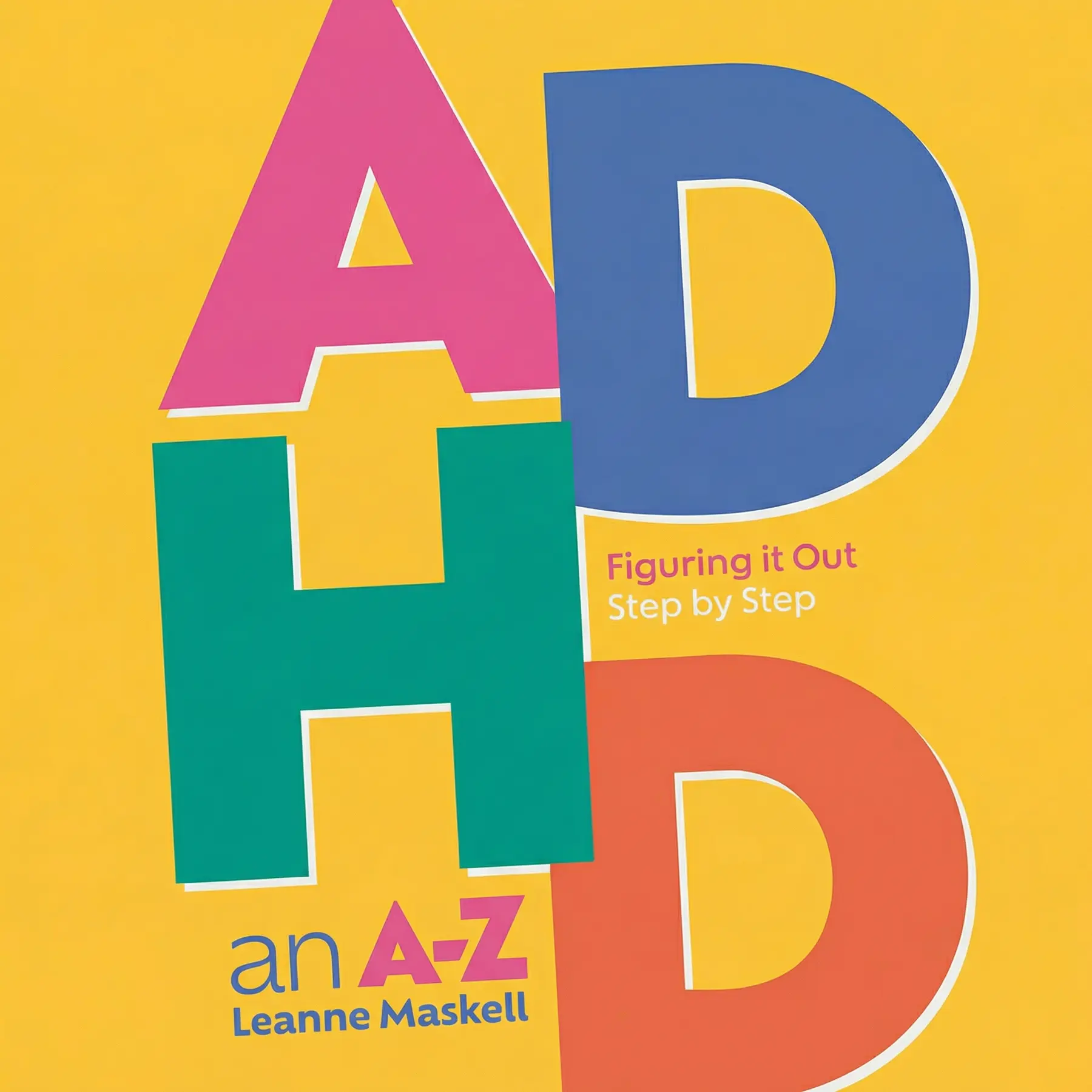
ADHD an A-Z: Figuring It Out Step by Step
A practical guide for adults with ADHD that turns self-blame into self-knowledge. It then shows how small structural changes can steady your spending, shape a career that suits you and calm restless nights.

Table of Content
1. Introduction
1 min 03 sec
If your days feel like a fight against your own head, with half-finished tasks, impulsive spending and nights of racing thoughts, a name for the pattern can change everything. In ADHD an A-Z, coach and advocate Leanne Maskell argues that ADHD comes from a brain wired differently, and that seeing the wiring clearly is the first step to working with it. Maskell knows the struggle firsthand. She was diagnosed only in her thirties, after years of being told nothing was wrong.
Her throughline is simple and practical. Once you understand how your particular ADHD brain works, you can stop fighting it and shape your money, work and nights around it. The book moves from self-understanding to small structural fixes, such as cards you cut up, accounts you cannot easily reach and a phone that spends the night outside the bedroom. What it offers is a clearer picture of your own mind and a handful of changes you can make this week.
2. Stop treating your symptoms as character flaws
1 min 32 sec
A bright law graduate kept losing jobs, relationships and her footing, and doctors told her nothing was wrong. When the real explanation finally arrived, it changed the question she had been asking about herself for decades.
3. Recognize the calm-looking kind of ADHD
1 min 33 sec
The familiar picture of ADHD is a child who cannot sit still. That picture hides a large group of adults, many of them women, who look perfectly composed while something very different happens inside.
4. Draw your personal map of strengths and struggles
1 min 31 sec
General lists of ADHD traits can only take you so far, because no two ADHD brains behave the same way. Two simple exercises, one of them borrowed from the people closest to you, fill in the rest.
5. Put friction between your impulses and your money
2 min 05 sec
A handy credit card, a harmless free trial, a one-click checkout. Each feels small, yet together they explain why so many adults with ADHD watch their finances slip away despite every attempt to budget.
6. Choose work that runs on your natural energy
1 min 44 sec
Some people with ADHD only come alive with a deadline in sight, or bounce from idea to idea. Maskell reads those traits as clues, pointing toward the kinds of jobs and workplaces where they turn into advantages.
7. A bedroom that tells your brain to rest
1 min 43 sec
Racing thoughts at midnight and repeated waking are common with ADHD, and one study found that as many as 75 percent of adults with it had faced insomnia. The fix starts with a routine many of us last followed as children.
8. Conclusion
1 min 02 sec
Maskell’s book adds up to a change of question. For years she asked what was wrong with her and heard nothing useful back. The diagnosis let her ask something better: how does this brain work, and what does it need? Every practical idea in the book follows from that second question, whether the subject is a credit card, a job in a noisy office or a phone glowing on the nightstand.
The tools are modest on purpose. Structure takes the place of constant self-blame. Friction goes where impulses run, and ease goes where talents live.
If you want a place to begin, write your two lists, the things you love and the things you dread, and ask one person close to you what you are good at. Then pick a single point of friction to add this week, such as removing a saved card from a shopping app or moving the phone charger out of the bedroom.
Maskell spent decades thinking she was broken. What she found instead was a different brain that had been running all along without its manual.
About this book
What is this book about?
Many adults with ADHD spend years believing their scattered focus, impulsive choices and swinging moods are personal failings. Leanne Maskell was one of them. She crammed her way through school, drifted after law school and was turned away by doctors. A diagnosis in her thirties finally explained why. In ADHD an A-Z, Maskell argues that ADHD reflects how a brain is wired, especially an underactive prefrontal cortex. She shows that it takes different forms, including a calm-looking inattentive type that often goes unnoticed in women. She also insists that it brings strengths such as creativity, resilience and compassion. The book then moves from understanding to action. Readers learn to map their own profile of strengths and struggles. They get ways to put friction between impulses and money, ideas for finding work and workplace adjustments that suit an ADHD mind, and a bedtime routine and bedroom setup that make sleep easier. Throughout, the aim is to work with your brain instead of fighting it.
Book Information
Who it's for
Adults new to ADHD
Adults recently diagnosed with ADHD, or who suspect they have it, and want a clear first map of their own mind.
Women never assessed
Women who seem calm on the outside but feel scattered inside and were never assessed.
Facing everyday ADHD struggles
People with ADHD struggling with impulsive spending, a poor job fit or restless nights.
About the Author
Leanne Maskell
Leanne Maskell began her career as a model and law graduate and wrote The Model Manifesto about exploitation and rights in the modeling industry. After her own ADHD diagnosis she became an advocate for others with the condition. Using her Executive Functioning Coaching Framework, she has trained more than 450 ADHD coaches worldwide. She has spoken to the World Health Organization about neurodiversity, has trained teams at Google and Microsoft, and built the ADHD Champions program for Disney. She has been named National Specialist Coach of the Year.
Ratings & Reviews
Ratings at a glance
What people think
Listeners describe this book as an approachable and deeply affirming tool, especially admiring the ADHD-friendly A-Z layout that simplifies finding particular subjects. Furthermore, they value the actionable advice for handling everyday issues such as sleep and professional life, with one listener pointing out the usefulness of the "artificial bricks" concept for curbing impulsive behavior. They also remark that the author’s own experiences offer a reassuring feeling of connection, while another listener emphasizes its specific importance for neurodivergent women. Additionally, although some listeners believe certain tips are tougher to apply without a versatile schedule, the majority agree it serves as a thorough and authentic manual for living with ADHD.
Top reviews
Thanakorn
Finally, a guide that doesn't feel like a medical textbook or a lecture from someone who doesn't get it. Maskell’s conversational tone makes the heavy lifting of understanding a neurodevelopmental condition feel like a chat over coffee with a friend. As a woman who was diagnosed late, finding this felt like discovering a secret manual for my own brain that I should have been given decades ago. The way she describes the 'predominantly inattentive' experience—outwardly calm but inwardly chaotic—hit me right in the chest. It’s incredibly validating to see your specific struggles with zoning out and restlessness written down so clearly. While some of the self-employment advice didn't apply to my 9-to-5, the sheer relief of being understood outweighs any minor disconnect. It’s a comprehensive resource that truly empowers you to embrace your unique strengths instead of just mourning your struggles.
Show moreChatchai
After years of feeling 'lazy' or 'crazy,' reading this book was the deep exhale I didn't know I needed. Maskell does a fantastic job of explaining that we aren't broken; we just have a brain that operates uniquely and requires a different set of tools. I particularly appreciated the sections on money management and career building, as those are often the areas where we feel the most shame. The advice to use voice recorders for meeting notes has already saved my skin twice this week at work. Truth is, the book creates a wonderful sense of community for neurodivergent individuals, especially women who may have been overlooked by traditional diagnostic criteria. It’s well-researched yet highly accessible, making it an essential read for anyone suspecting they might be on the spectrum or living with an ADHD diagnosis.
Show moreSombat
Look, the way Maskell describes the 'predominantly inattentive' experience hit me like a ton of bricks because it was so accurate. For the first time, I didn't feel like I was just failing at being an adult; I felt like I was finally seeing the blueprint for how my mind actually works. The A-Z structure is perfect for my short attention span, allowing me to jump straight to the sections on money or sleep without feeling guilty. I love the emphasis on self-acceptance and the idea that we can leverage our innate gifts, like hyperfocus, once we stop trying to fit into a neurotypical mold. It’s an incredible resource that manages to be both informative and deeply personal at the same time. If you’re tired of ADHD books that feel like they were written by someone who has never missed a deadline, buy this one instead.
Show moreAudrey
As someone who isn't even officially diagnosed yet, I found this book incredibly relatable and full of ideas I could immediately implement. Maskell’s writing style is neurodiverse-friendly, meaning it’s punchy, clear, and doesn’t get bogged down in unnecessary fluff or academic jargon. The concept of creating a supportive environment that allows us to thrive rather than just survive is a powerful shift in perspective. I especially liked the practical advice on using checklists and daily routines to build a sense of accountability. It’s a well-researched guide that offers a comforting sense of community to those of us who have always felt a bit 'different.' Honestly, it’s probably the most helpful and comprehensive guide on the subject I’ve come across so far. Highly recommended for anyone looking to understand their ADHD profile better.
Show morePensuda
Incredible book by Leanne that manages to turn a complex condition into something manageable and even positive. The 'artificial bricks' concept for curbing impulsive behavior was a major 'aha' moment for me, providing a visual for a mental process I couldn't quite grasp before. I found the tips on sleep hygiene and creating an ADHD-friendly career to be particularly valuable, even if I have to tweak them to fit my specific job. It’s a highly accessible read that encourages you to stop fighting your brain and start working with it. The validation alone is worth it—knowing that 4% of adults worldwide are in this same boat makes the 'inwardly chaotic' days feel much less lonely. This is a must-have for your bookshelf if you want to move past the clinical symptoms and into real-life solutions.
Show moreRotjanee
The alphabetical layout is a stroke of genius for anyone with a brain that refuses to focus on a linear narrative or a dense table of contents. I love that I can just dip in and out based on whatever crisis I’m facing that Tuesday, whether it’s money struggles or the dreaded insomnia. One of the major 'aha' moments for me was the concept of 'artificial bricks'—that missing pause between a thought and an action. Understanding that my impulsivity stems from a literal lack of these mental buffers was a game-changer for my self-esteem. I’ve already started charging my phone in the kitchen to help with my sleep hygiene, and it’s actually making a dent in my morning brain fog. It’s not a perfect cure-all, but the practical tips are far more grounded in reality than most of the stuff you find on social media.
Show moreFord
Ever wonder why you impulsively say 'yes' to things before your brain can even catch up to the consequences? Maskell’s chapter on creating a pause—those 'artificial bricks'—is worth the price of the book alone for anyone struggling with impulsivity. I found the section on sleep hygiene especially relevant, as racing thoughts at bedtime are my biggest hurdle to functioning the next day. The suggestion to make the environment communicate 'sleep' instead of 'stimulate' sounds simple, but the way she breaks down the science of why our brains resist it was very enlightening. I do wish there was a bit more depth on navigating social boundaries for those of us with severe rejection sensitivity. However, as a general guide for figuring life out step by step, this is one of the more practical and less 'shame-y' books on the market today.
Show moreSara
Picked this up on a whim after seeing so many neurodivergent friends recommend it, and I’m definitely glad I did. It covers pretty much every aspect of life that ADHD touches, from career paths to hygiene, and it does so without making you feel like a patient in a clinic. The focus on the 'predominantly inattentive' subtype was a highlight for me, as it explains why so many women are left undiagnosed until their thirties. My only real gripe is that some of the social exercises feel a bit 'just do it,' which is the exact thing people with executive dysfunction struggle with most. That said, the tips on using noise-cancelling headphones and checklists for multi-step tasks are solid, actionable pieces of advice. It’s a very validating read that I’d even recommend to partners or family members of ADHDers to help them understand our 'inward chaos' a bit better.
Show moreGun
To be fair, while the insights here are quite brilliant, I struggled with the practical application as a standard corporate employee. Maskell is an ADHD coach and self-employed, which gives her a level of freedom to 'build structure' and 'outsource tasks' that most of us simply don't have. Many of the exercises suggested are things I physically cannot do within the constraints of my rigid workplace environment. Frankly, the book offers plenty of great suggestions but lacks a roadmap for how to actually implement them when you have zero control over your schedule. The author mentions maintaining boundaries, yet offers no strategy for overcoming the paralyzing social anxiety that prevents those boundaries from being set in the first place. It is a good surface-level plan, but you might need significant external therapy or a very lenient boss to make the career advice work for you.
Show moreAkira
Not what I expected based on the hype, particularly when it comes to the audio version which I found nearly impossible to follow. The narration pacing felt incredibly off, with odd emphasis and moments where the author seemed to be holding back laughter, which was distracting for my auditory processing issues. I eventually had to switch to the physical book just to absorb the information. Beyond that, I found a lot of the advice to be quite privileged and out of touch for the average working-class person. Suggesting that we just 'outsource tedious administrative tasks' or 'mimic office hours' while being self-employed isn't helpful for someone struggling to pay rent on a minimum-wage shift job. While the A-Z format is organized, the content itself felt like a mix of personal anecdotes that don't always translate to a universal experience. It’s a decent resource if you share the author’s lifestyle, but otherwise, it feels a bit hollow.
Show moreQuestions about this book
What is the main idea of ADHD an A-Z by Leanne Maskell?
Maskell argues that ADHD comes from differences in brain wiring, especially an underactive prefrontal cortex, and is not a personal failing. Once you understand your own profile of strengths and struggles, you can build structures that suit your brain. She applies this to money, careers and sleep, drawing on her own late diagnosis in her thirties after years of being dismissed by doctors.
What are the types of ADHD described in the book?
Maskell describes three subtypes. The predominantly hyperactive type involves trouble staying still, lots of talking, task switching and impulsive behavior. The predominantly inattentive type looks like zoning out, mind wandering and difficulty finishing tasks, often with a racing mind beneath a calm surface. The combined type has both. She notes that women often show the inattentive type and are frequently left undiagnosed.
How can people with ADHD manage money better, according to Maskell?
Her approach is to add friction between impulses and spending. She suggests paying more than the minimum on balances, cutting up tempting cards, deleting saved payment details from apps, setting alerts before free trials renew and purging subscriptions monthly. She also recommends keeping most money in hard-to-reach savings with automatic bill payments, plus a modest monthly allowance in a separate spending account.
How does the book suggest improving sleep with ADHD?
Maskell points to a study which found that insomnia has affected as many as 75 percent of grown-ups who have ADHD. She recommends a calm, consistent evening routine, such as caffeine-free tea, a gratitude journal or gentle yoga in dim light, tried for a week. She also advises a very dark bedroom, a bed used only for sleep and intimacy, a phone charged outside the room and a plain alarm clock.
What kind of job suits someone with ADHD?
Maskell suggests matching work to your nature. People who thrive under pressure might suit emergency response or crisis management, those who crave variety a fast-paced startup, and those energized by people hospitality, sales or counseling. Restless people might try fitness coaching or adventure guiding. She also recommends supportive colleagues and simple adjustments like checklists, voice recorders and noise-cancelling headphones.
Readers also enjoyed







Alcoholics Anonymous
Alcoholics Anonymous World Services

A Liberated Mind: How to Pivot Toward What Matters
Steven C. Hayes
AUDIO SUMMARY AVAILABLE
Listen to ADHD an A-Z in 15 minutes
Get the key ideas from ADHD an A-Z by Leanne Maskell, plus 5,000+ more nonfiction titles.
- 5,000+ titles
- Listen as much as you want
- 7-day free trial
- Cancel anytime









