

All About Love: New Visions
bell hooks
 English
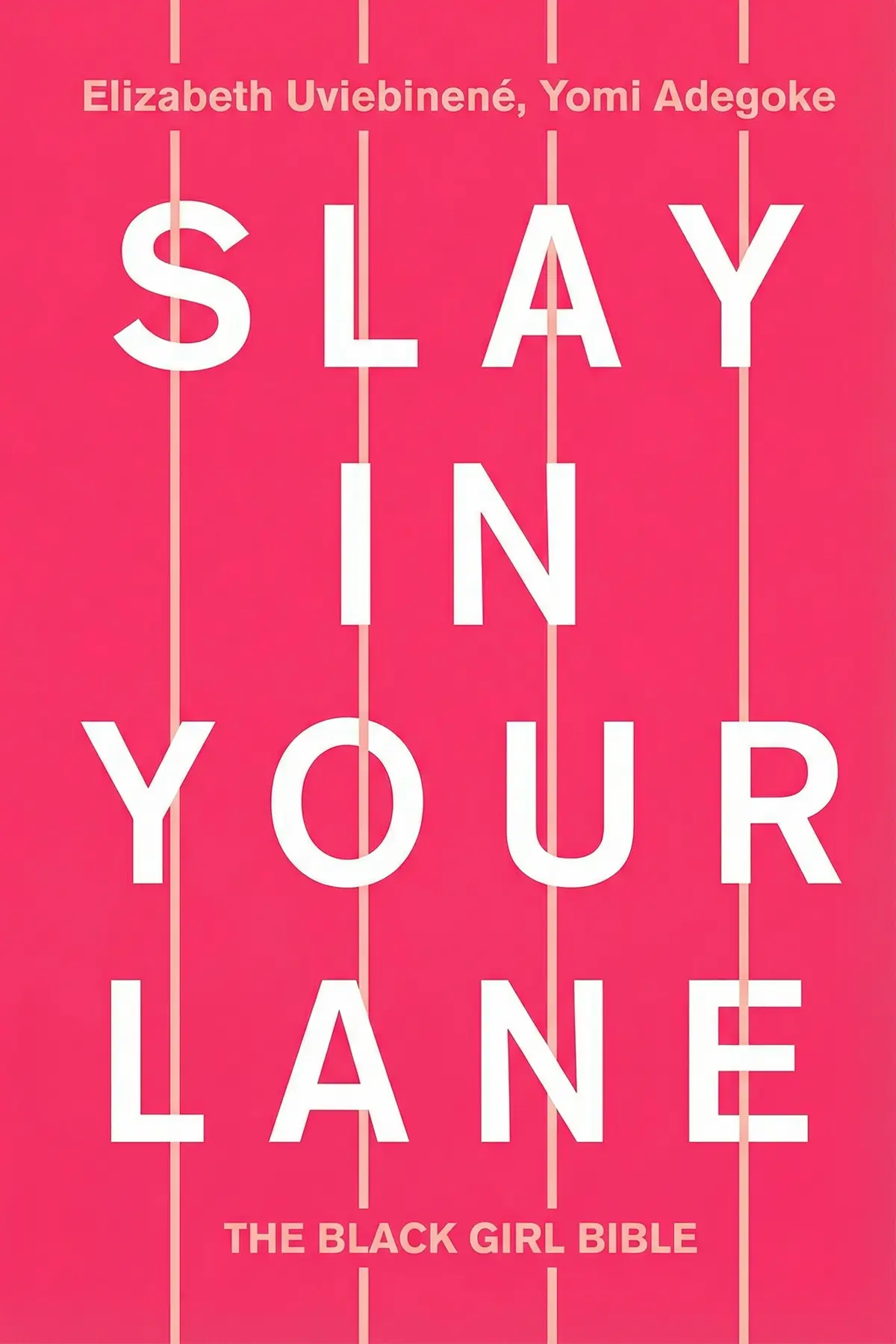
Shows Black women how to recognize the barriers British life puts in their way, at school, on campus, at work and in the shops, and how to answer them with savings, enterprise, community and self-care.
1 min 01 sec
Being told to work twice as hard for half the reward is a warning many Black women hear early, usually with no map attached. In Slay in Your Lane, journalist Yomi Adegoke and brand strategist Elizabeth Uviebinené draw one, starting from a blunt claim: Britain’s institutions were built to serve white men, and they still do. Open racism may be rarer now, but the barriers have moved into school reports, job searches, office small talk and pay slips.
The authors have met this prejudice themselves, and they insist it can be beaten once it is seen clearly. Their case is practical. Name each hurdle, then answer it with a deliberate move, from choosing the right university to saving hard, starting a business and treating rest as part of the work. Along the way come a fake LinkedIn colleague, a hair shop in Southeast London and the reason a first name can decide who gets an interview.
1 min 39 sec
Long before any job interview, Black girls receive a message about which careers are meant for them. The authors trace where that message comes from and what it does to a talented student’s sense of what she could become.
1 min 53 sec
A top university can look like the finish line. The authors describe parties, welcome-week events and doorways where Black students are told they do not belong, and a dropout figure that shows the cost.
1 min 40 sec
Two applicants send the same qualifications and get very different replies. One award-winning entrepreneur found a bold way around the problem, and her trick reveals exactly what the people reading her messages were responding to.
1 min 53 sec
No single remark seems worth a complaint, and that is exactly what makes them so damaging. The authors explain how tiny daily insults can leave a capable woman doubting her own judgment.
1 min 35 sec
A famous actor meant his remark to a singer as flattery. The authors explain why it landed as something else, and why liking a group of people offers no protection against treating them as less than human.
1 min 45 sec
Black women can be spotlighted at work one day and missing from every screen and shop shelf the next. Yet one space has given them a reach that television never offered, with results felt far beyond it.
1 min 39 sec
One estimate of how long the pay gap will take to close is long. The figure for ethnic minority women is far longer. The authors offer two ways not to wait, and one began in a hair shop.
1 min 42 sec
The pressure to overachieve can feel like the only way forward. The authors look at what it costs the body and the mind, and challenge the expectation that Black women should always be the strong ones.
1 min 08 sec
Slay in Your Lane carries a double message. The rules of British life, from the school report to the pay slip, were written without Black women in mind, and the authors refuse to pretend otherwise. They are just as firm that seeing those rules clearly is what lets a woman move through them her own way, with strength, discipline and a vision of where she is headed.
That vision begins with specific choices. Before accepting a university place, look at who studies there and whether a lively Black students’ society exists. When a remark at work leaves you uneasy, give it its proper name and trust your instinct. Ask for the salary review, put money aside, and notice whether your own frustration as a customer points to a business nobody has built yet, as it did for Sandra Brown-Pinnock. Then guard the person doing all of this, because the authors put self-care at the heart of lasting success.
Clare Anyiam-Osigwe needed an invented name to get a reply. The book works toward a day when her own is enough.
Open racism may be rarer in Britain than it once was, but Elizabeth Uviebinené and Yomi Adegoke argue that British institutions were designed with white men in mind and still work that way. For Black girls and women, that means stereotypes in the classroom, racism on campus, job applications ignored because of a name, daily microaggressions and a pay gap that could take generations to close. The authors know the numbers and have lived the prejudice themselves, yet their book is a hands-on guide more than a complaint. They show how to spot a microaggression and why a compliment can be an insult. They explain why girls are steered toward nursing instead of engineering and how an entrepreneur used a fake LinkedIn colleague to get replies. And they show how a hair shop in Southeast London grew out of one woman's frustration. Readers get a clear map of the hurdles and concrete ways to clear them: choosing a university with care, asking for a salary review, saving, starting a business, finding community online and treating rest and therapy as part of long-term success.
Black women students and graduates choosing universities, applying for jobs or starting careers.
Professionals worn down by daily slights or a stalled salary who want language and options.
Managers, teachers and colleagues who want to see the barriers they may never notice.
Yomi Adegoke is a British journalist and author of Nigerian heritage, born in East London in 1991 and raised in Croydon. She studied law at the University of Warwick and has written for The Guardian, The Independent and the Pool. The Evening Standard named her among London's most influential people in 2018, she made the Forbes 30 under 30 list in 2021, and her debut novel, The List, appeared in 2023. Elizabeth Uviebinené is a British author who also works as a brand strategist. The two co-wrote Slay in Your Lane in 2018.
Listeners view this work as an indispensable manual for navigating life as a Black woman, though some feel the material is best suited for a younger demographic or those new to the subject. They value the actionable guidance and deep research provided on topics spanning from office culture to mental health. Additionally, listeners appreciate the varied interviews with high-achieving women, with one listener remarking that the book offers "affirmation and validation" for their personal journey. They also highlight the perceptive look at Black British identity, as another listener describes the writing as a "proud celebration of black excellence."
Wow, I really wish this had been around when I was navigating university or my first corporate job. Reading through these pages felt like a massive 'You are Not Alone' sign flashing right in front of my face. The authors tackle everything from the struggle of finding suitable beauty products to the heavy burden of the 'strong black woman' trope. I loved how they balanced their own perspectives with the experiences of other successful women across music and academia. It’s an essential guide that validates the daily microaggressions we face while providing practical steps to move forward. Truly, it’s a proud celebration of black excellence that left me feeling seen and incredibly inspired.
Show moreThe chapter on workplace dynamics alone makes this entire book worth the purchase for any professional woman of color. It meticulously breaks down how systemic disenfranchisement works against us and offers a toolkit for navigating those treacherous waters. I was blown away by the lineup of women interviewed; hearing from experts in television and business added so much credibility to the authors' arguments. The writing style is informative and punchy, managing to balance cold hard facts with a conversational warmth that makes it easy to digest. It’s not just a collection of grievances, but a strategic roadmap for anyone looking to excel despite the odds being stacked against them. I found the section on 'tokenism' particularly enlightening and relatable.
Show moreFinally got around to reading this and I’m kicking myself for waiting so long to dive in! There is something so incredibly affirming about seeing your own frustrations about hair, dating, and education laid out so clearly. The authors capture that specific 2nd generation experience perfectly, highlighting the complex pressure of cultural influences and family expectations. It’s a bold and overt look at racism that doesn't pull any punches, yet somehow remains a joyful read. I felt a real sense of inclusive solidarity with every chapter, especially when they discussed the lack of representation in mainstream media. This isn't just a book; it’s a necessary resource for every Black girl who has ever felt like an 'other' in her own country.
Show moreLook, if you’re a Black woman in the UK, you need this on your shelf immediately. It is a powerful, proud celebration of our excellence that manages to be both heartbreaking and incredibly motivating at the same time. The way they weave together the real-life experiences of dynamic women into their discussion makes the advice feel grounded and achievable. I felt a massive weight lift off my shoulders reading about the unique stigma we face when seeking physical or mental health care. It’s a thorough, well-written piece of work that offers both affirmation and a sense of unity. We can never be tired of speaking our truth because living it is exhausting, and this book gives us the words to do just that.
Show moreThis book serves as a vital compass for navigating a landscape that often feels indifferent or outright hostile to Black women. Uviebinené and Adegoke write with a sharp, wicked sense of humor that makes even the most disheartening statistics feel manageable. I particularly appreciated the focus on the specific nuances of being Black and British, as so much of this discourse is usually dominated by American perspectives. While some of the career advice felt a bit familiar, the way they weave in interviews with high-achieving women provides a much-needed sense of solidarity. It’s less of a traditional self-help book and more of a manifesto for survival and excellence. Even when the data gets bleak, the tone remains aspirational and deeply empowering.
Show moreAs someone trying to be a better intersectional feminist, I picked this up to educate myself on the specific challenges Black women face in Britain. Even though I’m clearly not the intended audience, the insights into the beauty industry and the 'Becky with the good hair' phenomenon were eye-opening. The authors do an incredible job of explaining how sexism and racism are inextricably interlinked in ways that I hadn't fully considered before. It’s a sharp, observant look at society that should honestly be required reading for anyone who questions the reality of modern racism. The inclusion of diverse resources and support groups at the end of chapters adds a very practical, grounded element to the theory. I walked away with a much deeper appreciation for the resilience required.
Show moreAfter hearing so much about the 'Black Girl Bible,' I was impressed by how well the authors balanced personal anecdotes with hard data. The discussion surrounding the apparent oxymoron of being both Black and British was particularly poignant and well-articulated. They manage to document how institutional racism plagues public bodies without ever sounding like they are just complaining; instead, they focus on constructive ways to thrive. I loved the section on beauty and the sheer frustration of the market's failure to provide for us until very recently. The tone is consistently informative and backed up by statistics, which makes the arguments feel undeniable. It’s an insightful glimpse into a world that is too often ignored by the mainstream publishing industry.
Show moreTo be fair, I think the 'Black Girl Bible' subtitle set my expectations a bit too high for the actual depth of the content. While the book is undeniably thorough and well-researched, I didn't find a lot of groundbreaking information that I hadn't already encountered elsewhere. It feels primarily geared toward a younger audience or perhaps those just beginning to unpack these systemic issues. The statistics are certainly eye-opening, but at times the sheer volume of depressing data overshadowed the actionable advice I was looking for. I enjoyed the mental health section the most, as it offered some unique insights into seeking help within our community. It’s a good introductory text, but seasoned readers might find it a little repetitive.
Show moreEver wonder why there are so few resources tailored specifically to the Black British experience? This book tries to fill that gap, and while it mostly succeeds, it sometimes feels like it’s trying to cover too much ground at once. The sections move quickly from education to dating to health, meaning some complex issues don't get the deep dive they deserve. I was particularly interested in the mental health discussion and why 'praying it away' is a common suggestion in our community. However, the advice in other chapters felt a bit generic, almost like a collection of blog posts stitched together. It’s an interesting attempt at a comprehensive guide, but I hope the authors go even deeper in their future work.
Show moreFrankly, I found this to be a bit of a letdown considering the massive hype surrounding its release. While I understand the importance of documenting our struggles, the book felt overwhelmingly focused on depressing stats rather than the 'slaying' promised in the title. I was hoping for more deep dives into the success stories of the interviewees to provide a blueprint for achievement. Instead, the narrative often looped back to how the system is rigged, which left me feeling more drained than empowered. The career chapter had a few useful tidbits, but they were buried under a lot of sociological commentary I already knew. Maybe I’m just outside the target age bracket, but it didn't offer the practical experience I wanted.
Show moreYomi Adegoke and Elizabeth Uviebinené argue that British institutions were built to serve white men and still do, which leaves Black girls and women facing stereotypes at school, racism at university, name bias in hiring, microaggressions and a wide pay gap. Their book is a practical guide to recognizing those barriers and getting past them through careful choices, saving, entrepreneurship, community and self-care.
The authors define them as discrimination that falls short of open abuse, whether subtle or direct, deliberate or not. Examples include touching a Black woman’s hair, refusing to try an African surname, assuming she is a hip-hop expert or will lead diversity work, and microinsults like calling someone the whitest black person you know. Over years, they warn, these slights can make a woman doubt her own judgment.
The authors stress saving because financial security brings independence, and they encourage readers to ask their boss to renegotiate their salary. They point to estimates that the pay gap would take ethnic minority women 158 years to close. They also present entrepreneurship as a way around workplace discrimination, using Sandra Brown-Pinnock as an example, who opened the only Afro-Caribbean hair shop in Southeast London that is Black-owned.
It is written above all for Black girls and women in Britain who are choosing a university, looking for work, building a career or starting a business. It also helps teachers, managers and colleagues understand barriers they may not see, from harsher school discipline to job applications ignored because of an African or Caribbean-sounding name.
Research a university’s student life and demographics, including whether it has a thriving Black students’ society. Learn to name microaggressions so you trust your instincts. Save regularly, ask for a salary review and consider whether a frustration you have as a customer could become a business. Above all, treat rest, sleep, good food and, where needed, therapy as part of long-term success.
bell hooks


Fay Bound Alberti

Daniel Goleman


Virginia Woolf

Robin Ryan

Tracy Rosenthal


Jessica Valenti
AUDIO SUMMARY AVAILABLE
Get the key ideas from Slay in Your Lane by Elizabeth Uviebinené, plus 5,000+ more nonfiction titles.









