
14 min 14 sec
Available in: English
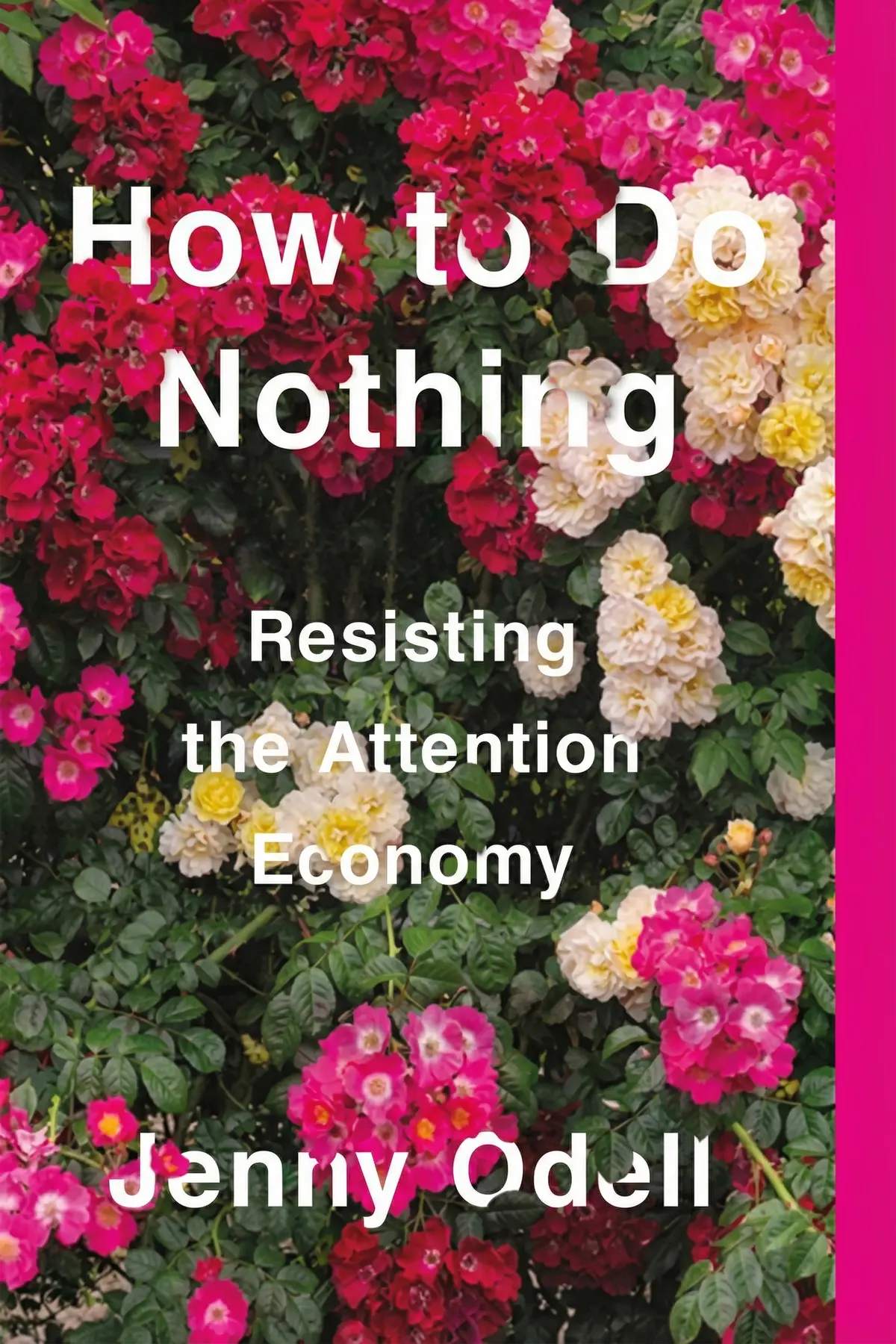
Saving Time: Discovering a Life Beyond the Clock
By Jenny Odell
Explains where clock time came from, why the promise that everyone has the same 24 hours fails so many people, and how to stop chasing more time and live more fully in the time you have.
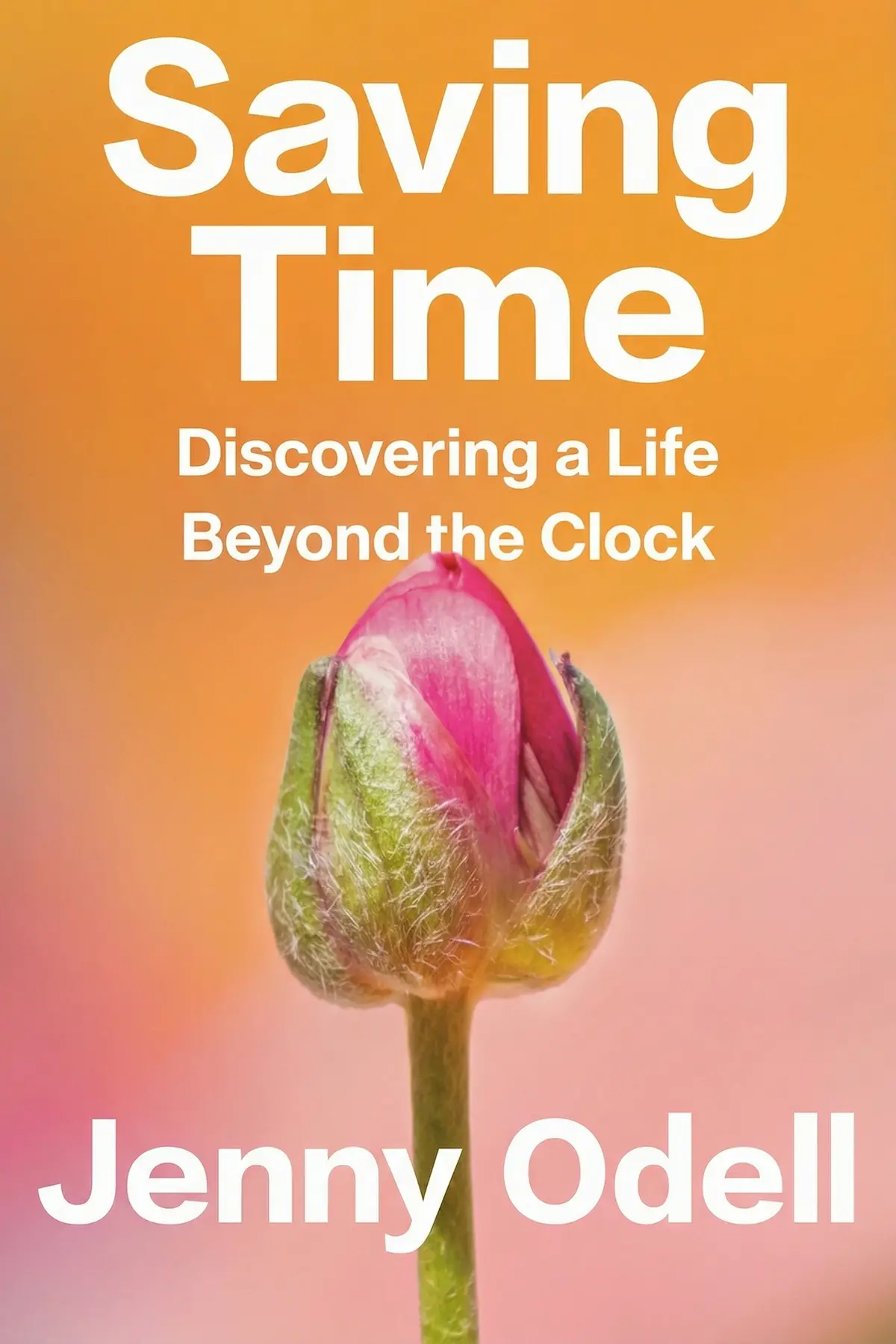
Table of Content
1. Introduction
1 min 03 sec
If you have tried every calendar trick and still feel short of hours, Jenny Odell suggests the problem may be the clock itself. In Saving Time, the Oakland artist and writer argues that the minutes we try to manage were shaped by monasteries, railways, empires and employers, and that they have never been shared out equally. Her way out does not go through another productivity system. It goes through history and philosophy.
The argument is simple to say and harder to live. Time pressure eases when we stop treating time as a currency to hoard and start seeing it as something shared, uneven and alive. Odell moves from medieval bell towers to Charlie Chaplin’s factory, and from home office surveillance to an image of moving lava that illustrates a French philosopher’s view of time. Along the way she gives a new answer to the old question of how to get more time, and it has nothing to do with squeezing more into a day.
2. See the clock as something people built
2 min 09 sec
The hours on your screen feel as natural as sunrise. Odell traces them back to praying monks, trading towns and a British empire that needed every train and ship to agree, and that history changes how a packed calendar feels.
3. Spot the price tag placed on your hours
2 min 00 sec
A group of nuclear physicists revolted against a time clock, and Charlie Chaplin’s on-screen tramp was battered by a lunch machine. Both stories ask the same uncomfortable question about what your employer is really buying.
4. See why your 24 hours differ from others
2 min 11 sec
A favorite slogan of online productivity gurus sounds fair and motivating. Ask a carer, a chronically ill worker or whoever does most of the housework, and it starts to look like something much less kind.
5. Picture time as a flow of moving lava
1 min 41 sec
During lockdown, millions joked that time had stopped meaning anything. A French philosopher writing more than a century earlier would have said they had finally noticed something true, and his image for it is unforgettable.
6. Face the climate clock without despair
1 min 55 sec
Dread about the planet’s future can make anyone feel alone and frozen. Odell offers two ways of thinking that ease the weight, and one of them comes from people whose world has already ended more than once.
7. Live fully in the time you already have
1 min 58 sec
A children’s story about a golden thread that makes time run faster, found among her mom’s old books, turns out to be slightly terrifying. It explains why tracking your hours so closely can make your life feel shorter.
8. Conclusion
1 min 17 sec
Saving Time ends somewhere unexpected for a book with that title. Odell does not offer a method for saving minutes. She shows that the minutes themselves are a fairly recent arrangement: built in monasteries and rail yards, priced by employers and shared out unevenly. A calmer relationship with time begins once you stop treating that arrangement as the whole truth.
Her answer works on three levels. Society needs to share time more fairly, whatever a person’s gender, race or income. Communities can remind one another that nobody carries fear about the future alone. And each person can change how they perceive time, letting go of the urge to measure it and simply experiencing it.
That last level is the place to start this week. When someone tells you everyone has the same 24 hours, think of the carer, the colleague with a chronic illness, the parent doing most of the housework. When a blurred week makes you feel behind, look back along the lava’s path before you look at the clock. And when you are tempted to pull the golden thread, leave it alone. In Odell’s telling, the aim was never a longer life with more done in it. It is to be more awake inside each moment you get.
About this book
What is this book about?
Most advice about time pressure offers a new system: better planners, tighter routines, more tracking. Jenny Odell thinks the trouble starts further back, with the clock itself. In Saving Time she traces how monks, merchants, railways and a rising British empire turned the day into equal units that could be counted, priced and sold. From there she looks at what that history does to people today. She covers a 1998 revolt by Italian physicists against clocking in, Charlie Chaplin's feeding machine in Modern Times, and keystroke tracking during the pandemic. She dismantles the popular claim that each of us gets an identical 24 hours, arguing that time is really a matter of power: who controls whose days. The book then turns to philosophy and to the future. It draws on Henri Bergson's picture of time as an ever-creating duration, on an Indigenous writer from a community that has survived many kinds of annihilation, and on the ancient Greek idea of kairos. The result is a different answer to the question of how to get more time, one that rests on being present in the time you already have instead of stretching it.
Book Information
Who it's for
Professionals still feeling rushed
Professionals who have tried every productivity system and still feel short of time.
Tired of same-24-hours talk
Carers, parents and people with chronic illness tired of hearing that everyone has the same 24 hours.
Burned out or climate-anxious
Readers weighed down by burnout or climate dread who want a calmer way to think about the future.
About the Author
Jenny Odell
Jenny Odell is an American artist, writer and educator based in Oakland, California, born in 1986. She has taught Internet art and digital and physical design at Stanford University. Her writing has appeared in the New York Times, The Paris Review and The Believer, and her art has been shown around the world, including a mural at a Google data center in rural Oklahoma. She has held residencies at the Internet Archive, the San Francisco Planning Department and Recology SF, the city's dump. She is also the author of How to Do Nothing.
Ratings & Reviews
Ratings at a glance
What people think
Listeners find the work highly evocative, with one listener highlighting it as a fantastic meditation on time. There are varied opinions among listeners concerning the book's readability and how engaging the material is.
Top reviews
Sombat
Ever wonder why we are all so obsessed with productivity even as the planet feels like it’s ending? Odell provides a fantastic meditation on how our rigid clock-time is a tool of colonial domination rather than a natural law. I found the sections on 'moss time' and 'geological time' deeply moving and strangely comforting in an era of constant climate anxiety. Truth be told, it’s not an easy read and the academic depth might alienate some, but the payoff is a radical reimagining of the future. She successfully argues that time isn't just money; it's a shared social fabric we can actually re-weave if we try. This is a vital, hopeful assault on modern nihilism.
Show moreKomsan
Wow. This is probably the most important thing I’ve read this year regarding my own mental well-being and climate dread. Odell doesn't just diagnose the problem of late-stage capitalism; she offers a different way to inhabit the world. By looking at 'moss time' and the rhythms of the natural world, she reminds us that the future isn't deterministic. I love the idea of 'gardening' time rather than hoarding it like a resource. Personally, I didn't find the structure messy; it felt more like the very rhizomatic growth she describes throughout the chapters. It’s a dense, beautiful, and deeply sincere work of art that demands your full attention.
Show moreGrace
Picked this up expecting a self-help guide on time management, but what I got was a dense intellectual exercise on the nature of existence. Odell deconstructs the 'work and refreshment' cycle of capitalism with surgical precision. I loved the way she connected the Protestant work ethic to our current burnout culture. To be fair, the book is quite sprawling and could have benefited from a much tighter edit to keep the momentum going. Still, the core message about stepping down from the ambition ladder is something I’ll be thinking about for a long time. It’s a challenging read that rewards patience with genuine shifts in perspective.
Show morePornpimon
Finally got around to this, and it’s basically my exact aesthetic in book form. Who else is going to reference a Tim Robinson sketch and the climate crisis in the same breath? The way she explores alternative perceptions of time in marginalized communities is exactly the kind of radical hope we need right now. I’ll admit the structure is a bit elliptical and some of the points feel a little tired if you’ve been on 'Left Twitter' lately. But as a panoramic look at how we might reclaim our lives from the clock, it’s undeniably powerful. It’s a book that asks you to be more alive in the present moment.
Show moreFang
As someone who struggles with the constant pressure to optimize every waking second, this was the balm I needed. Odell’s critique of the 'experience economy' hit me right where it hurts. We’ve turned even our leisure into a form of work, and this book is a loud, poetic 'no' to that trend. The connections she draws between colonial history and modern time management are eye-opening and deeply researched. Look, it’s a heavy lift and you’ll probably need your notes app open the whole time. But if you want to understand why you feel so tired and how we might start to fix it, buy this book. It’s a masterpiece of modern social critique.
Show moreGift
To be blunt, this is not an easy book to get through, but it is worth the effort. It’s a collage of quotes that occasionally makes your brain feel like it’s short-circuiting from the sheer volume of information. Reading it feels like scrolling through the library of a very anxious, very brilliant philosopher who is trying to save the world. While there is no traditional narrative, the sea of references creates a vivid picture of our broken relationship with the clock. I wanted a book that challenged me, and this delivered, even if the lack of a cohesive thesis made the experience feel like a chore at times. It’s a dense, necessary dive into why we are so burned out.
Show moreSofia
After hearing so much buzz about this follow-up, I found myself stuck in a bit of a love-hate relationship with the text. There is no denying that Odell is brilliant, but the book suffers from a serious lack of a central thesis. You’re essentially swimming through a sea of references to art, philosophy, and ecology without a life jacket. Some parts, like the discussion of 'crip time' and the history of plantation accounting, are absolutely mind-blowing. However, other sections feel like a rambling stream of consciousness that goes nowhere slowly. It’s thought-provoking, sure, but the readability is a major hurdle for anyone not already steeped in leftist theory.
Show moreWatcharin
The chapter on the history of the clock was fascinating, but the rest of the book felt like a series of disparate thoughts. As someone who enjoyed her previous work, I was disappointed by how unfocused this felt. The writing is beautiful at times, yet the 'temporal weirdness' she describes often bleeds too much into the narrative structure itself. You end up with a lot of interesting quotes from better books without a strong enough thread to pull them all together. It’s a good time capsule for the pandemic era, but maybe not the definitive work on time I was hoping for. It’s an okay read if you have the patience for academic wandering.
Show moreSuthinee
This book felt more like a curated Twitter thread than a cohesive piece of non-fiction. While I appreciated the anti-capitalist sentiment, the structure is essentially a collage of other people's brilliance without much original synthesis to hold it together. Odell relies so heavily on quotes that it becomes an exhausting, too-rich experience that left my mind feeling cluttered. Frankly, the constant privilege-checking and 'please don't cancel me' tone felt defensive and distracting from the actual message about time. I loved her first book, but this one lacks that same grounding and clarity. It’s a 400-page bibliography disguised as a manifesto.
Show moreJiraporn
Not what I expected after the relative accessibility of 'How to Do Nothing.' This book is an absolute mess of intellectual fodder that feels performative rather than insightful. Odell seems paralyzed by a fear of being misunderstood, leading to constant, clunky interruptions to check her own privilege. The anecdote about the dead bird and the 'stinging sight' was where she truly lost me. It’s okay to feel things without a five-page disclaimer about your social standing! I agree with her politics, but the delivery is so fragmented and exhausted that it’s hard to stay engaged. Just read the bibliography and skip the actual commentary.
Show moreQuestions about this book
What is the main idea of Saving Time by Jenny Odell?
Odell argues that clock time is a human invention, shaped by monks, merchants, railways and a rising British empire, and later priced by employers as money. Because time is shared out unequally, she says managing it harder will not relieve our pressure. Her answer is to relate to time differently: as something shared, uneven and alive, and to focus on living fully in the time we have.
Why does Jenny Odell reject the notion that each of us has the same 24 hours?
She says the slogan rests on treating every second as equal and interchangeable. In practice, people who care for loved ones, live with chronic illness or do most of the housework have far less control over their hours. Some people control other people’s time too, and the price an hour fetches depends on age, gender and economic background. The philosopher Robert E. Goodin calls the supposed equality a cruel joke.
What are chronos and kairos in Saving Time?
They are two ancient Greek words for time. Chronos is linear time, the steady march of events into the future. Kairos, roughly translated as crisis, is about seizing the moment. Odell argues that kairos is the better way to face an uncertain future, because it opens room to imagine something different and lets us accept that we cannot control time.
How can I apply the ideas in Saving Time?
Odell’s ideas suggest a few habits. Notice how time plays out for the people around you before judging how they use it. When a week feels blurred, look back at what has changed instead of counting tasks finished. Share worries about the future with others instead of carrying them alone. And question any hack that helps you rush through life without being present in it.
Is Saving Time a time-management book?
Not in the usual sense. Odell suggests that time-management methods often make things worse, citing Oliver Burkeman’s point that tracking time closely makes you more aware of how little you have. In place of techniques, she offers history, philosophy and a political view of who controls whose time, plus personal shifts in how you perceive and live in time.
Featured in
Readers also enjoyed


A Room of One’s Own
Virginia Woolf


Abolish Rent: How Tenants Can End the Housing Crisis
Tracy Rosenthal

Abortion: Our Bodies, Their Lies, and the Truths We Use to
Jessica Valenti



Afropean: Notes From Black Europe
Johny Pitts


All About Love: New Visions
bell hooks
AUDIO SUMMARY AVAILABLE
Listen to Saving Time in 15 minutes
Get the key ideas from Saving Time by Jenny Odell, plus 5,000+ more nonfiction titles.
- 5,000+ titles
- Listen as much as you want
- 7-day free trial
- Cancel anytime









