

14 min 34 sec
Available in: English
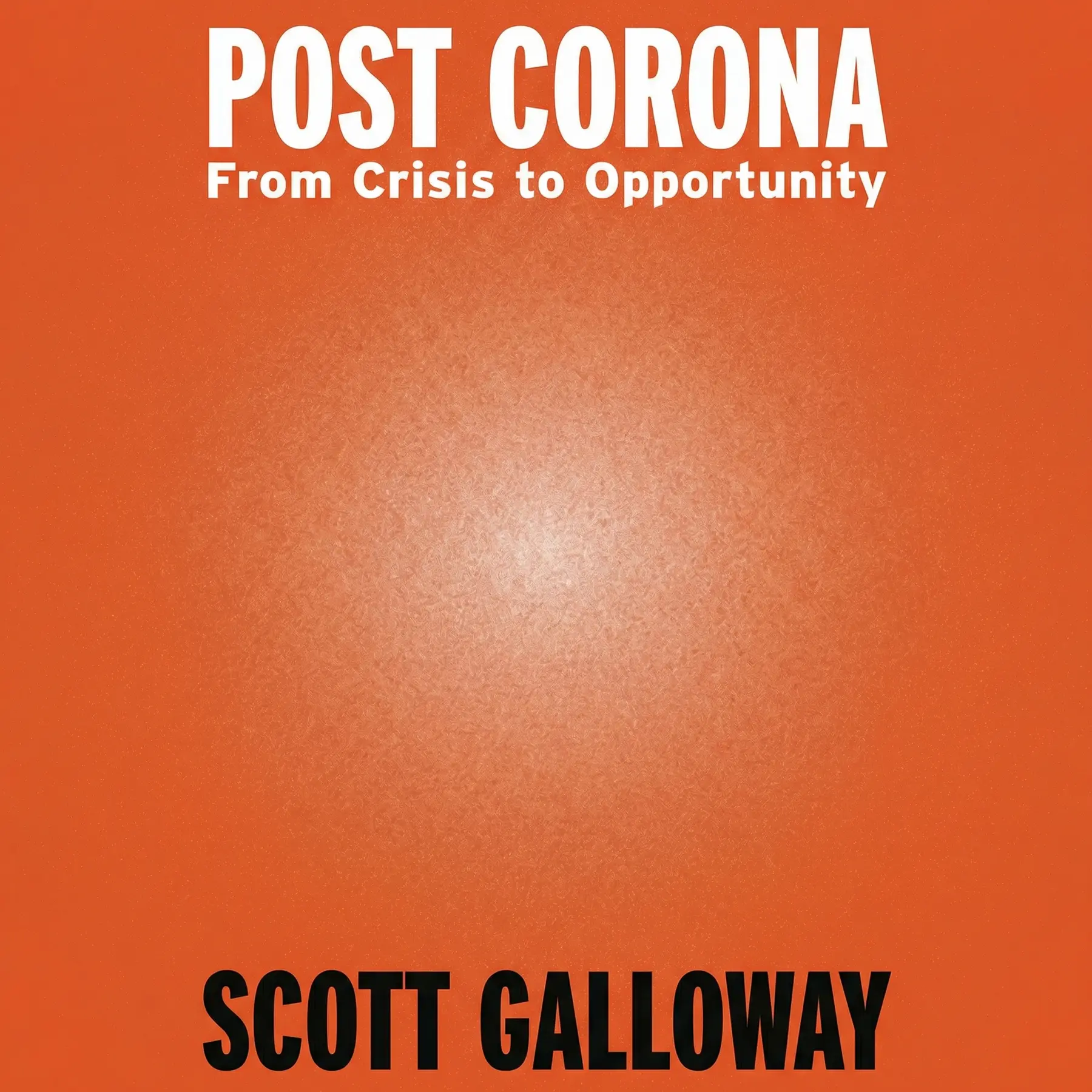
Post Corona: From Crisis to Opportunity
Shows how the pandemic sped up changes already under way, why a few tech giants won big while weaker firms, colleges and workers suffered, and how to read any crisis for its opportunities.
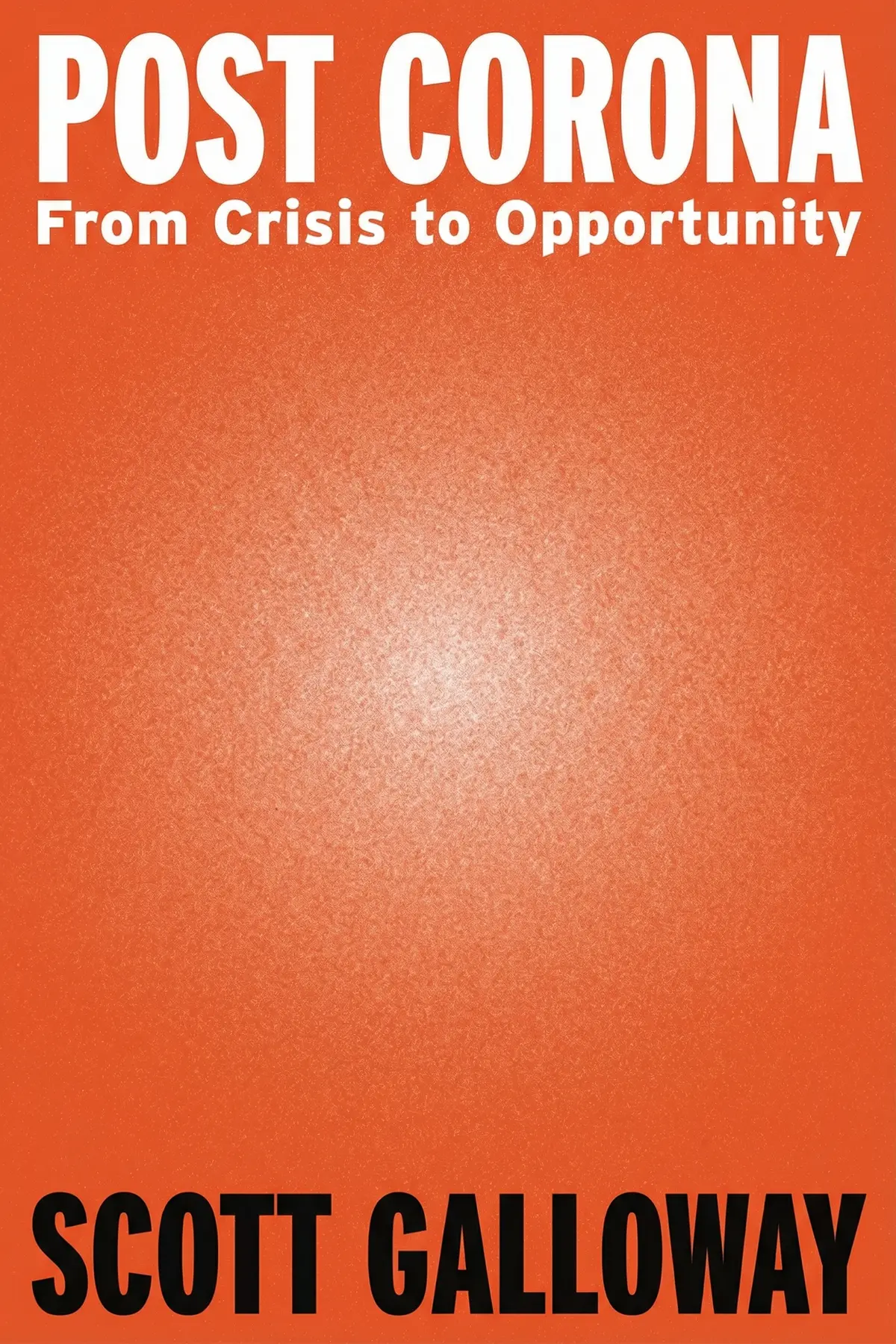
Table of Content
1. Introduction
58 sec
If 2020 felt like the year the world broke, Scott Galloway offers a calmer and more useful way to see it. In Post Corona, the New York University marketing professor argues that the pandemic invented very little: it pressed fast-forward on changes already under way. Online shopping had crept up for two decades to about 16 percent of retail, then nearly doubled in eight weeks.
That single pattern explains who won and who lost. Strong companies, above all the biggest tech firms, grew stronger, while weak businesses, struggling workers and stale institutions were pushed over the edge. Galloway follows the acceleration through the stock market, start-up hype, university campuses and the American government, and he finds opportunity as well as damage.
What you gain is a lens for any shock to your work or your industry: ask which trend it speeds up, who was strong enough to ride it, and who was already too fragile to last.
2. Read any crisis as a fast-forward button
1 min 51 sec
Masks, closed offices and video classes all looked brand new in March 2020. Galloway argues the rules were new but almost nothing else was, and that difference decides who gets hurt.
3. Understand how the market rose as famous brands failed
2 min 07 sec
Familiar names went bankrupt by the hundreds, yet investors ended the summer of 2020 slightly ahead. The explanation reveals three forces that decide which companies survive a shock and which ones vanish.
4. Spot where the tech giants will expand next
2 min 07 sec
While the pandemic’s death toll climbed, a handful of companies added nearly two trillion dollars in value. What they are doing with that money hints at which industries will face them next.
5. Tell real growth from yogababble
2 min 07 sec
Billion-dollar start-ups were once rare enough to be called unicorns. Now there are hundreds, and some lose money on every sale. Galloway offers three tests for separating the lasting ones from the hype.
6. Judge which industries are ripe for disruption
2 min 04 sec
Tuition has soared for decades while the classroom barely changed. Then the campus experience vanished overnight. A simple index explains why universities were exposed, and what could still save them.
7. Build the reserves that carry a society through
2 min 09 sec
The virus hit hardest those with existing health problems. Galloway argues nations work the same way, and compares how Germany, South Korea and the United States protected, or failed to protect, their people.
8. Conclusion
1 min 11 sec
Galloway’s book works like a stress test. The pandemic pressed on everything at once, and whatever was already cracked gave way: sluggish chains, low-wage jobs, overpriced degrees, an underfunded health agency. Whatever was already strong grew stronger, sometimes at startling speed, as when five tech companies came to hold a fifth of the American stock market while the death toll climbed. The crisis did not write a new story. It skipped ahead to later chapters of one already being written.
That gives you a way to judge your own position. Take the trends you could already see in your field before 2020 and assume they have arrived early. When a company or founder talks about revolution, check whether it makes money on each sale and whether customers keep paying. When prices in an industry rise while quality stands still, expect disruption and pick your side of it. And in any group you belong to, build up the savings, trust and habits of service that let people help each other, the way Germany’s wage support kept families steady.
Shocks rarely pick winners at random. They mostly reward whoever was ready before they began.
About this book
What is this book about?
The year 2020 looked like the moment the world broke. Offices became kitchens, classes moved to Zoom and familiar brands went bankrupt. Scott Galloway, a marketing professor at New York University, argues that the pandemic created far less than it seemed to. Mostly, it sped up trends that were already moving. That one idea explains the strange economics of the crisis. Online retail nearly doubled in eight weeks. The stock market rose while hundreds of companies failed, because a handful of giants such as Amazon, Apple and Tesla soared. Venture money kept chasing hyped start-ups, universities charging ever higher tuition suddenly had to justify their price, and a United States weakened by an underfunded health agency and lopsided relief suffered more than it needed to. Galloway pairs the diagnosis with tests you can reuse: a disruptability index for spotting industries ready to be shaken up, three traits that separate real growth companies from yogababble, and examples from Germany and South Korea of how a society can cushion the next shock. Readers come away with a clear lens for judging who wins and who loses when the world speeds up.
Book Information
Who it's for
Professionals after the pandemic
Professionals wondering whether the pandemic changed their industry for good or only sped it up.
Founders and investors
Founders and investors who want simple tests for telling durable growth from start-up hype.
Students and parents
Students and parents weighing the rising cost of a degree against what it now delivers.
About the Author
Scott Galloway
Scott Galloway, born in 1964, is a professor of marketing at New York University's Stern School of Business, where he teaches brand strategy and digital marketing to second-year MBA students. In 2012, Poets and Quants named him one of the world's top 50 business school professors. He has founded nine firms, including L2, Red Envelope, Prophet and Section4, hosts the Prof G and Pivot podcasts, and writes the weekly No Mercy / No Malice blog.
Ratings & Reviews
Ratings at a glance
What people think
Listeners find the book an outstanding, essential read that is simple to follow and entertaining, with one listener noting how it aids in thinking about the future. Furthermore, the writing is considered superb and clever, and listeners value its honesty. However, several listeners feel it was a poor investment.
Top reviews
Suthinee
The Prof is back with another punchy, data-driven look at our weird new reality. While many authors spent 2020 just panicking, Galloway was busy mapping out how the pandemic served as a massive accelerant for existing societal shifts. He argues that we didn’t necessarily enter a new world, but rather fast-forwarded ten years into a future where Big Tech eats everything in sight. I found his breakdown of the "culling of the herd" particularly insightful because it explains why some legacy brands vanished while others thrived. His writing is incredibly witty and moves at a breakneck pace that keeps you engaged through the drier economic stats. Truth is, you might not agree with his hyper-capitalist lens, but you can’t deny his foresight. This is a must-read for anyone trying to navigate the wreckage of the old economy.
Show moreNatalie
After hearing so much hype about the "Great Reset," I wanted a perspective that actually focused on the numbers. Galloway delivers exactly that with a style that is as entertaining as it is informative. His take on the "Uber-ization" of healthcare and education is provocative and likely to ruffle some feathers in those industries. As a professor myself, I found his critique of university endowments and rejection rates to be spot-on and incredibly brave. He manages to weave together complex economic trends without ever sounding like a boring textbook author. The truth is, this book isn't just about a virus; it's about the fundamental flaws in our economy that the virus simply exposed. It’s a brilliant, fast-paced manual for anyone trying to understand where the money is moving next. I've already recommended it to several colleagues who are worried about the future of their departments.
Show moreRapee
Wow, Galloway really doesn't hold back when it comes to the failures of our modern institutions. This book is a masterclass in trend analysis, showing how the pandemic widened the gap between the "haves" and "have-nots" in the corporate world. His writing is vibrant and filled with the kind of dark humor that makes even the most depressing statistics digestible. I loved the section on how brands are becoming less important as consumers get more direct access to product data through tech platforms. It’s a wake-up call for anyone working in traditional marketing or retail. To be fair, the book is quite short, but every page is packed with insights that made me stop and rethink my own investment strategy. It’s rare to find a business book that is this honest about the role of luck and government in personal success. Definitely a five-star effort for its transparency and wit.
Show moreChloe
The chapter on higher education alone makes this book worth the price of admission. Galloway exposes the "prestige" trap that universities have fallen into, prioritizing their endowments over their mission to educate the masses. It’s a refreshing take that balances his usual market analysis with a genuine concern for the next generation. The book is short and pithy, which I appreciate in an era where most business authors try to stretch a 20-page idea into 300 pages. He moves quickly through topics like telehealth and the gig economy, providing just enough data to support his bold predictions. In my experience, his "no-nonsense" approach is exactly what we need right now to cut through the noise of corporate PR. Even the biographical elements at the end feel earned, giving the reader a sense of who the man behind the data actually is. Highly recommended for any professional trying to spot the next big disruption.
Show moreDome
Scott Galloway has a knack for making complex market dynamics feel like a high-speed car chase. If you’ve read The Four, you’ll recognize his signature style here, though this feels like a much-needed update for the post-2020 era. I was especially gripped by his critique of the higher education system and its refusal to adapt to modern technology. He calls out the "luxury brand" status of elite universities with a brutal honesty that feels long overdue in academic circles. However, I did feel like some of the chapters toward the end felt a bit rushed, almost like he was racing to meet a publishing deadline. It’s a short, pithy book that manages to pack a lot of punches in a small package. Not gonna lie, some of his predictions feel a bit bold, but his track record makes them worth considering.
Show moreNarongrit
Picked this up on a whim after seeing Galloway on a news segment, and I’m glad I did. The way he describes the intersection of technology and the "low-touch" economy is both terrifying and illuminating for a business owner. He doesn't sugarcoat the fact that the middle class is being squeezed by these massive monopolies. I particularly appreciated the final chapter where he pivots to a more personal narrative about his own upbringing and the importance of public infrastructure. It added a layer of humanity to a book that is otherwise very focused on cold, hard market caps. Frankly, we need more business leaders who are willing to admit that their success wasn't just due to "grit" but also to a functional society. My only gripe is that it’s a very fast read that could have used more depth in the healthcare section.
Show moreDimitri
Finally got around to reading this, and the "acceleration" thesis is definitely its strongest point. Galloway argues that the pandemic didn't change the direction of the economy so much as it acted as a giant engine, pushing us faster down paths we were already taking. It’s essentially a sequel to The Four, so if you enjoyed his breakdown of big tech, you’ll love this update. The prose is snappy, often funny, and he isn't afraid to call out the absurdity of the current market valuations. Personally, I think he’s a bit too bullish on online education replacing the physical campus experience entirely. There’s a social capital to university life that technology simply cannot replicate, and he seems to brush that aside too easily. Despite that, the book is incredibly thought-provoking and serves as a great conversation starter for any business strategy meeting.
Show moreSomrutai
Ever wonder why Amazon and Apple seemed to come out of the global crisis stronger than ever? Galloway does an excellent job explaining the mechanics of the "Great Acceleration" and how the winners took it all. His analysis of the gig economy is sharp, though I found his disregard for environmental impacts a bit jarring in this day and age. He sticks strictly to the capitalist playbook, which makes the book feel a bit one-dimensional at times. Look, the guy is brilliant when it comes to brand strategy and market cap, but he misses the human element occasionally. The chapter on the "culling" was fascinating, even if it left a bitter taste in my mouth regarding the future of small businesses. It’s a solid 3-star read for the data alone, even if the tone is a bit cynical.
Show moreSuwit
Not what I expected, though I suppose I should have anticipated the heavy focus on Big Tech given the author. While the insights are sharp, if you follow Scott’s podcast or newsletter, a lot of this will feel like a retread of his weekly rants. He covers the same ground regarding Amazon’s dominance and the bubble in higher education that he’s been talking about for years. The capitalist framing is also very narrow, ignoring broader societal shifts like the climate crisis or international relations. Gotta say, I was hoping for something a bit more visionary or "out of the box" rather than just a summary of current events. It’s a decent primer for someone who hasn’t been paying attention to the markets, but for the well-informed, it might feel a bit thin. Still, it's a quick read and his writing style is undeniably charismatic.
Show moreChatri
This felt more like a collection of repurposed blog posts and podcast transcripts than a cohesive book. While I usually enjoy Galloway’s takes, Post Corona suffers from being written way too early in the pandemic’s lifecycle. A lot of the "projections" he makes about the future of work and retail have already been contradicted by real-world data. It’s hard to take a strategic guide seriously when the foundational assumptions feel like they were scribbled down in a frantic weekend. Furthermore, the analysis of the healthcare industry felt surprisingly superficial for someone with his credentials. To be fair, he’s an entertaining writer, but this specific volume feels like an opportunistic cash-grab rather than a definitive business text. If you already listen to his podcast, you can probably skip this one without missing any new insights.
Show moreQuestions about this book
What is the main idea of Post Corona by Scott Galloway?
Galloway argues that the pandemic created little that was new. Instead it accelerated trends already under way. Online retail, at about 16 percent of sales before 2020, nearly doubled in eight weeks. Strong firms such as Amazon and Apple grew stronger, while weak businesses, low-income workers, costly universities and an underprepared United States government were hit hardest.
Why did the stock market rise during the pandemic while companies went bankrupt?
In Galloway’s view, a few strong firms carried the market. Amazon’s stock was up 67 percent by July 2020 and Tesla’s 242 percent, while brands like California Pizza Kitchen failed. He points to three forces: investors fleeing to safe, well-funded companies, government bailouts such as $25 billion for US airlines, and businesses like Netflix and Shopify that fit a stay-at-home world.
What is yogababble?
Yogababble is a name sometimes given to the grand, vague talk of innovation and disruption that founders use to raise money. His example is Casper, which describes reinventing the sleep economy while losing more than $300 on each mattress. He contrasts it with real growth companies, which pair fast growth with high revenue, earn subscription income and offer products that become more useful over time.
What is the disruptability index in Post Corona?
It is Galloway’s simple test for spotting an industry ready to be shaken up: disruptability rises when prices climb but the product barely improves. Higher education is his main case. Tuition rose 1,400 percent over four decades while classes changed little, and the pandemic exposed that gap when students paid thousands for hastily built online courses.
How can I apply the ideas in Post Corona?
Treat any crisis as a fast-forward button and ask which trend in your field it speeds up. Test start-ups, employers or stock tips on whether they earn money per sale, keep customers paying and improve with use. Watch for industries where prices rise and quality stalls. And build reserves and trust in your groups before the next shock arrives.
Readers also enjoyed


A Splendid Exchange: How Trade Shaped the World
William J. Bernstein



Adults in The Room: My Battle With Europe’s Deep Establishment
Yanis Varoufakis


1929: Inside the Greatest Crash in Wall Street History--and How It
Andrew Ross Sorkin

23 Things They Don’t Tell You About Capitalism
Ha-Joon Chang
AUDIO SUMMARY AVAILABLE
Listen to Post Corona in 15 minutes
Get the key ideas from Post Corona by Scott Galloway, plus 5,000+ more nonfiction titles.
- 5,000+ titles
- Listen as much as you want
- 7-day free trial
- Cancel anytime









