

15 min 40 sec
Available in: English
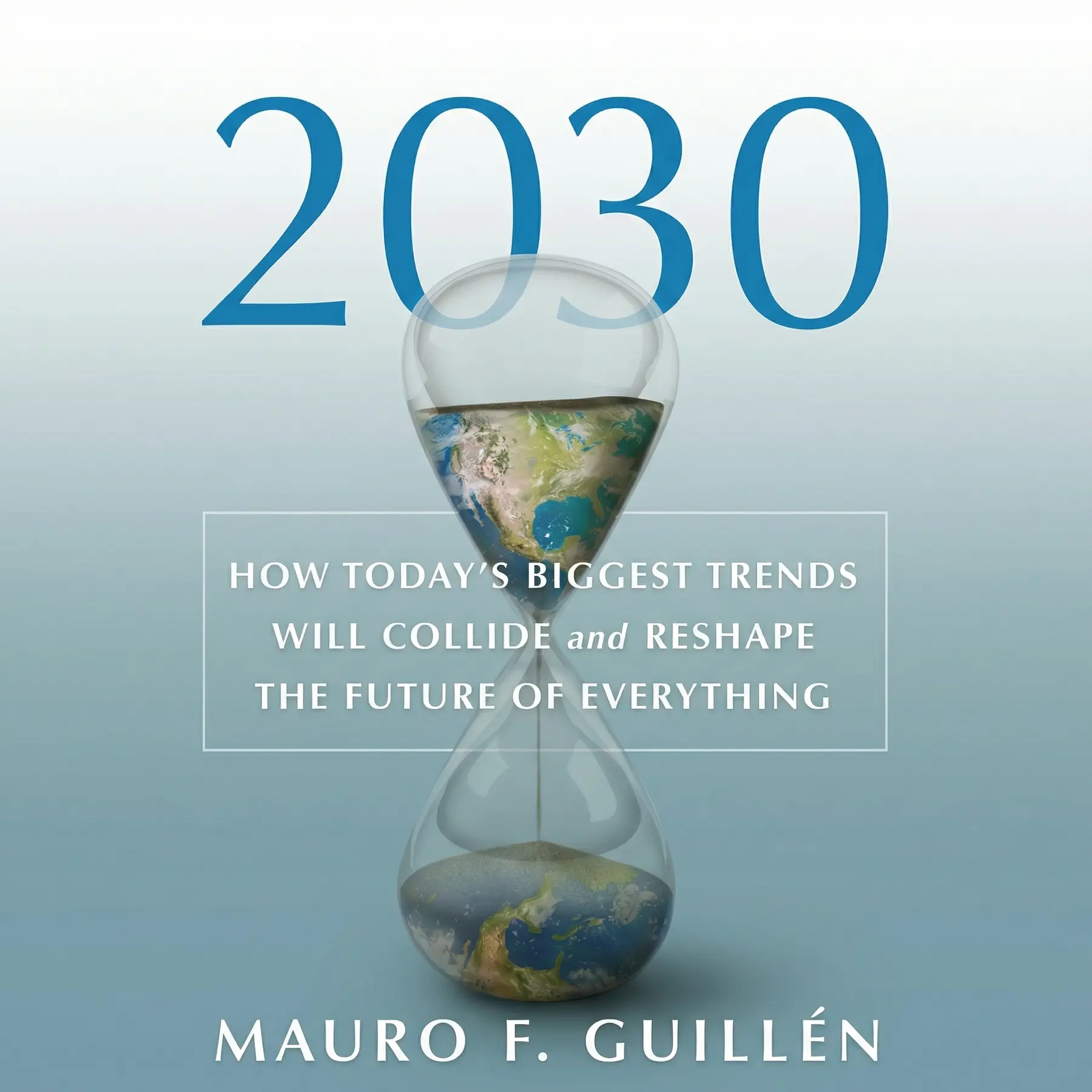
2030: How Today's Biggest Trends Will Collide and Reshape the Future of Everything
Shows how falling birth rates, aging wealth, Asia's rising middle class, women's growing fortunes, hotter cities and new ways of sharing and paying will reshape markets and careers by 2030.

Table of Content
1. Introduction
56 sec
Most plans for the next ten years quietly assume the world will look like this one. Wharton professor Mauro F. Guillén points to a reversal that shows why they shouldn’t: in 1968 people feared a population bomb, but by 2030 the bigger worry may be too few babies. In 2030, he takes trends already visible in the data and follows them a decade forward.
His central point is that these shifts feed one another. With fewer births, societies grow older. Older people hold most of the wealth. Shrinking workforces pull women into better-paid work. Meanwhile, warming cities, new machines and new ways of sharing and paying change what people buy. Read together, the trends show where the threats and the openings will be. Seven of those shifts follow, each with a story from the book and one question to put to your own work or business.
2. Plan for a world with fewer babies
1 min 58 sec
For half a century the great fear was too many people. Guillén argues the numbers now point the other way, and that the bill for the change will land on pensions, borders and a very different continent.
3. Sell to the over-sixties everyone ignores
1 min 53 sec
A century-old electronics giant nearly went bankrupt, then found its future in a group of customers most companies barely notice. Guillén explains why that group is so valuable and why it is so hard to win.
4. Win the new middle class on its terms
1 min 56 sec
The middle class is shrinking in some places and exploding in others. One of the world’s biggest retailers walked into the growing markets with the wrong assumptions, and its mistakes were almost comic.
5. Prepare for women to hold most of the world's wealth
1 min 52 sec
A bank failure, a salary penalty for mothers and a labor shortage in Japan all point to the same shift. By 2030 the person deciding where money goes is increasingly likely to be a woman.
6. Make the green choice the easy one in cities
1 min 50 sec
Cities cover a sliver of the planet yet drive most of its emissions, and most of them sit where the seas are rising. Guillén’s answers are smaller and cheaper than you might expect.
7. Judge new technology by the lives it changes
1 min 54 sec
Robot surgeons and printed houses grab the headlines. Guillén suggests the invention with the deepest effect on the coming decade may be far less glamorous, and it starts with something most readers never think about.
8. Get ready to share, rent and pay in code
2 min 15 sec
Younger buyers would rather use a car than own one, and money itself is drifting away from banks. Guillén sees both trends cutting out familiar middlemen, with real gains and some uncomfortable costs.
9. Conclusion
1 min 06 sec
Guillén’s 2030 works like a map of pressures pushing on one another. Fewer babies make older societies. Older people hold the wealth and need the care. Thinner workforces pull women into better pay, while crowded coastal cities heat up and new ways of making, sharing and paying arrive in the middle of it all. Some of these are threats, some are openings, and preparation decides which is which.
His closing warning is about how to adapt. Lego tried to secure its future in the 1990s by expanding beyond toys into clothing and lifestyle goods, and the move went very badly. It recovered only when it went back to the brick, improving its core toys and widening the range in step with the times.
That is the habit worth taking from the book. Pick the shifts closest to your work and test your plans against them: who your customer will be at 75, whether a woman will hold the budget, whether a buyer would rather rent than own. Then change what you offer, and keep the brick.
About this book
What is this book about?
Most business plans and career bets assume the next ten years will look like the last ten. Mauro F. Guillén, a Wharton professor of sociology and political economy, argues that they won't. In 2030 he takes trends already showing up in the data and projects them a decade forward to see what kind of world they produce. He finds a set of forces that feed one another. Birth rates are falling across much of the world, while Africa's population is booming. People over 60 already hold more than half of global wealth. The middle class is shrinking in the West and growing fast in Asia. Women are on course to control a majority of the world's wealth. Crowded coastal cities face a warming climate, and robots, 3D printing, sharing platforms and blockchain are changing how people work, own and pay. Each trend comes with concrete cases, from Philips' turnaround and Walmart's failed expansion to vertical farms in Singapore and a waterless toilet that turns waste into electricity. Readers get a working map of the decade ahead and a set of questions for testing their own plans against it.
Book Information
Who it's for
Choosing markets and customers
Founders and managers deciding which markets and customers to bet on over the next decade.
Planning a long career
Professionals planning a long career who want to know where money, work and demand are moving.
Wanting the big picture
Curious readers who want a clear picture of how demographics, climate and technology connect.
About the Author
Mauro F. Guillén
Mauro F. Guillén is a Spanish-American sociologist and political economist who teaches at the Wharton School of the University of Pennsylvania, where he has won several teaching awards. From 2007 to 2019 he directed the Lauder Institute. In 2021 he became Dean of the Cambridge Judge Business School, and he returned to Wharton in 2023. More than 100,000 people have taken his online courses. 2030 became a Wall Street Journal bestseller and was named a Financial Times Book of the Year.
Ratings & Reviews
Ratings at a glance
What people think
Listeners find the work thoroughly researched and an engaging read, offering a superb look at upcoming global trends. They value how easy it is to digest and consider the content quite impactful. However, the specific prose style receives mixed reactions from listeners.
Top reviews
Wei
This was a fascinating look into the near future. The statistic that we will soon have more grandparents than grandchildren really stuck with me. It’s a fundamental shift that will change everything from housing to healthcare. Guillén writes in a way that is very impactful without being overly academic or dry. I personally felt that his 'lateral thinking' approach is exactly what we need in a world that’s changing this fast. The book is well-researched and covers a lot of ground, including some great insights into the 'sharing economy.' It really made me rethink how I'm planning for my own retirement and what the world might look like for the next generation. Highly recommended for anyone who wants to stay ahead of the curve.
Show moreRungrat
Wow. Just wow. I didn't realize how much the world was changing right under our noses. The chapter on the 'sharing economy' and 'Neo-Marxism' was provocative in all the right ways. Guillén uses clear, simple language to explain really complex global shifts. I loved the focus on the three T’s: Talent, Tolerance, and Technology. It’s a very optimistic book, which I think we need right now. It might not be for everyone, especially if you hate economics, but I found it incredibly impactful. It has totally changed how I look at my career and my investments. The clock is ticking, and this book gave me the tools to start preparing for 2030 today.
Show moreSing
Guillén has undertaken a daunting task and succeeded in making it accessible. The way he explains the collision of these trends—how aging populations in the West will rely on the growth of the middle class in the East—is brilliant. I personally appreciated the 'lateral thinking' advice at the end. It's practical stuff for entrepreneurs and anyone trying to navigate a gig-heavy world. Some might say it’s too optimistic, but I found the perspective refreshing. It’s a well-researched, interesting read that doesn't get bogged down in too much technical jargon. Definitely one of the better 'future' books I've read in a long time. It really makes you think about the legacy we're leaving.
Show moreHugo
I honestly found 2030 to be a pretty eye-opening read, even if some of the concepts felt familiar. Guillén does a fantastic job of weaving together diverse threads like declining birth rates and the massive shift in wealth toward women. It’s not just about tech; it’s about the human element of economics. I particularly liked the section on how the middle class is exploding in Asia and Africa while stagnating here in the West. It makes you realize how much our worldview is still stuck in the 20th century. The writing style is very accessible, which I appreciated, although it occasionally felt like he was rushing through complex topics to keep the pace up. If you're looking for a solid overview of where we're headed, this is a great starting point.
Show moreSuwit
A very timely and thoughtful contribution to the genre. What I liked most was that Guillén doesn't just focus on the 'flashy' stuff like AI and robots. Instead, he looks at the quiet shifts in demographics and wealth that are going to hit us like a tidal wave. The postscript about the pandemic was especially helpful; it shows how COVID-119 acted as an accelerator for many of these trends. I did feel that some chapters were a bit repetitive, and he relies heavily on anecdotes that don't always feel fully fleshed out. Still, it’s a very readable book that provides a great overview of the challenges we’re about to face. It’s a solid 4 stars from me.
Show moreUraiwan
I received this as a gift and I'm glad I read it. The author makes a compelling case for why the 'rules of the game' are changing permanently. The shift of the global market toward Asian and African consumers is something we really need to start paying more attention to in the West. I found the writing style to be punchy and engaging, though some sentences were a bit long-winded. Honestly, it’s a bit scary to think that 2030 is only a few years away and we are still arguing about old-world problems. This book is a much-needed wake-up call. It’s not perfect—some of the claims about women’s happiness seemed based on shaky data—but the overall message is very powerful.
Show moreWit
As a market researcher, I might not be the target audience for this book. Most of the demographic trends regarding the aging population and declining fertility are things I deal with daily. That said, I did find the section on cryptocurrency and blockchain applications to be quite well-researched. Guillén’s take on how blockchain could help with things like gun control or protecting endangered species was a creative touch I hadn't considered. However, the book's reliance on 'lateral thinking' felt a bit like a self-help gimmick by the end. It’s a decent overview for a casual reader, but if you’re already immersed in global economics, you probably won’t find many 'aha!' moments.
Show moreChamp
Eh. This wasn't exactly what I expected. I was hoping for more of a 'crystal ball' look at daily life in 2030, but it felt more like a textbook on global economics. Personally, I found the chapters on fertility and the middle class a bit slow, though the section on women owning more than half of the world's wealth by 2030 was definitely interesting. I felt like the author was a bit of a 'cockeyed optimist,' which is fine, but it occasionally felt like he was ignoring the massive downsides of these trends. The mention of Airbnb as a disruptor felt a bit dated given everything that’s happened recently, but I suppose that’s the risk with books about the future. It’s okay, just not my favorite.
Show moreApichat
I wanted to like this, but it felt incredibly US-centric and a bit disorganized. The title promises a deep dive into the year 2030, but it mostly feels like a collection of current events and buzzwords like the 'gig economy' and 'AI' thrown into a blender. Honestly, reading it felt like being at a party where everyone is slightly drunk and trying to sound smarter than they are by quoting headlines. He compares urbanization numbers from 1969 to 2020 without adjusting for the global population doubling, which felt like bending statistics to fit a specific narrative. I also found the constant personal testimonials a bit distracting and superficial. It might work for someone who doesn't follow the news at all, but for me, there was nothing truly revolutionary here.
Show moreLillian
This book felt rushed. The author bombards you with viral buzzwords—nanotechnology, gender pay gap, climate change—without ever really going deep into any of them. I felt like I was reading a collection of LinkedIn articles rather than a cohesive book. There were moments where he would jump from talking about urbanization to suddenly discussing cancer treatments, and the connection just wasn't there. Also, as someone living outside the US, the American-centric bias was pretty distracting. He ignores a lot of the great work done by people like Hans Rosling or Yuval Noah Harari, which makes his own conclusions feel less authoritative. If you want a real analysis of the future, look elsewhere.
Show moreQuestions about this book
What is the main idea of 2030 by Mauro Guillén?
Guillén takes trends already visible today and projects them to 2030, arguing that they feed one another. Falling birth rates create older societies, older people and women end up holding more wealth, Asia’s middle class booms while the West’s stagnates, cities face climate pressure, and robots, sharing platforms and blockchain change how people work, own and pay. Reading these trends together, he says, lets people prepare for the challenges and seize the opportunities.
Why does Guillén say women will hold more wealth by 2030?
He argues that aging populations and low birth rates shrink the pool of qualified workers, so employers need working mothers more than ever. Japan shows the effect: 71 percent of its working-age women now work full time, a record high. He expects women to control a majority of global wealth by 2030, with more spending on education, health care and insurance and more money in safer investments such as index funds.
What does 2030 say about older consumers?
People aged 60 and over already hold more than half the world’s wealth, and 400 million more will join that group by 2030. Yet 96 percent of people over 50 in the United Kingdom feel ignored by companies. Guillén cites Philips, which recovered by moving into health-care technology, and urges firms to design products such as stylish orthopedic shoes and easy-to-use appliances for this group.
How can businesses apply the ideas in 2030?
Guillén’s examples suggest testing plans against each trend: design for customers in their seventies, learn local habits before entering new markets as Walmart failed to do in South Korea and Brazil, and consider whether customers would rather share than own. His closing advice comes from Lego, which failed when it diversified into fashion and recovered by going back to the brick, improving its core product in line with new trends.
Readers also enjoyed



1929: Inside the Greatest Crash in Wall Street History--and How It
Andrew Ross Sorkin
23 Things They Don’t Tell You About Capitalism
Ha-Joon Chang
A Little History of Economics
Niall Kishtainy


A Splendid Exchange: How Trade Shaped the World
William J. Bernstein

AUDIO SUMMARY AVAILABLE
Listen to 2030 in 15 minutes
Get the key ideas from 2030 by Mauro F. Guillén, plus 5,000+ more nonfiction titles.
- 5,000+ titles
- Listen as much as you want
- 7-day free trial
- Cancel anytime









