
14 min 32 sec
Available in: English
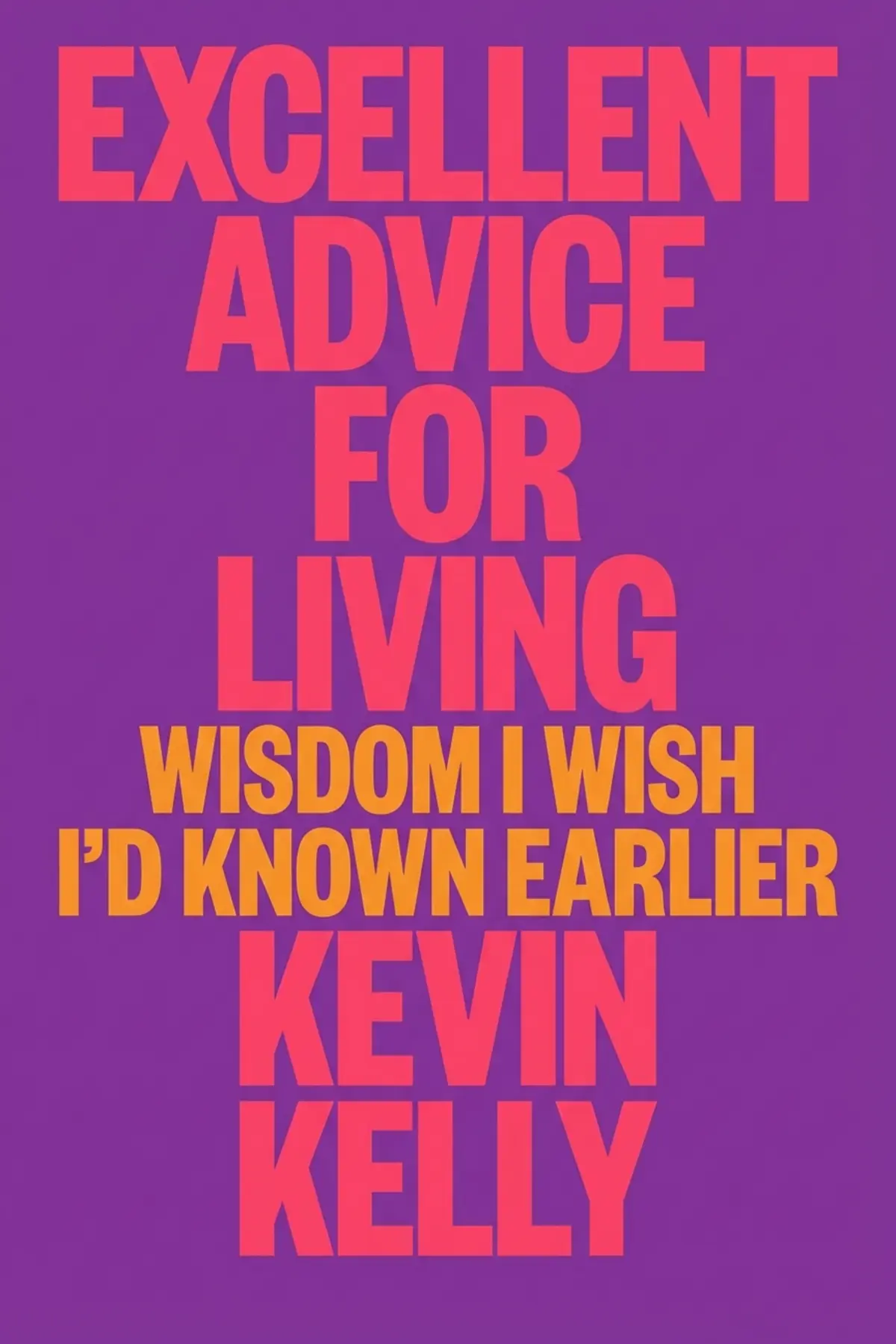
Out of Control: The New Biology of Machines, Social Systems and the Economic World
By Kevin Kelly
Kevin Kelly explains why beehives, the internet, prairies and evolving software all work best without a boss. He also shows what giving up control means for technology, the economy, privacy and forecasting.
Table of Content
1. Introduction
1 min 00 sec
When a team, a market or a network won’t behave, most people grip it harder. Kevin Kelly’s Out of Control argues that this instinct is backward. The most capable systems on Earth, from beehives to brains, run without a boss, and Kelly argues our machines are starting to work the same way. Kelly was the founding executive editor of Wired, and he wrote with the world of 1994 in view, before social networks or camera phones existed.
His throughline is simple to state and hard to accept. As the natural and the artificial merge, the systems that thrive will grow from the bottom up, and humans will have to trade command for guidance. The evidence moves from bee swarms to an economy of one-person companies. It takes in a failed prairie in Wisconsin and computer programs that evolve, and it ends with a sober limit on how far ahead anyone can see. By the end you can judge which systems to steer and which to let grow, and how long to trust any forecast.
2. Tell machines that repeat from systems that learn
1 min 48 sec
A factory robot can do one job perfectly forever, and that is exactly its weakness. Kelly describes a second kind of logic, found in brains and beehives, that he thinks our machines will need.
3. Guide the flock instead of every sheep
1 min 48 sec
Every technology we know demands close supervision, and that habit feels like responsibility. Kelly argues it is becoming the obstacle, and his alternative comes from one of the oldest jobs there is.
4. Build networks that keep working when parts fail
1 min 38 sec
Kill a few bees and the swarm flies on. Take down a website and the internet barely notices. One simple drawing on paper shows why such systems get tougher the bigger they grow.
5. Make networks serve buyers and protect their privacy
1 min 50 sec
Picture buying a chair from five strangers who may never work together again. Kelly thinks such an economy would waste less and favor buyers, but only if one problem with shared information is solved first.
6. Let messy processes build what plans cannot
1 min 48 sec
A famous ecologist had the right climate, the right soil and the right species, and still could not make a prairie. The missing ingredient was something any careful planner would have kept out.
7. Watch evolution at work by growing it in software
1 min 55 sec
If evolution produced the human mind, could a program running the same rules produce another one? Kelly finds both a reason for fear and a chance to test whether Darwin told the whole story.
8. Trust rules of thumb only for the near term
1 min 36 sec
An untied balloon and a stock chart both look random, yet with practice you can partly predict them. Kelly explains why that skill feels like understanding and why it always expires.
9. Conclusion
1 min 09 sec
Out of Control asks for a change of posture. Kelly looks at a beehive, an internet that routes around damage, a prairie that needed fire and a balloon no one can catch for long, and draws one lesson from all of them. The most capable systems grow from many small parts acting on their own. Whoever tries to command every part ends up with something brittle. As machines learn and nature is engineered, that lesson stops being about bees and starts being about us.
It changes what good stewardship of a system looks like. Steer the flock and stop managing each sheep. Build so that losing one piece does not stop the whole, and keep the disruptions that look messy but hold things in balance, the way Leopold’s prairie needed its fires. Protect personal information with encryption instead of hoping someone else will delete it. And when you forecast, use your rules of thumb for the next move only, because none of them last.
Kelly’s wager is that the future will be grown. The skill worth practicing now is knowing when to lift a hand off the wheel.
About this book
What is this book about?
Most of our machines do exactly what they are told and nothing more. Most of our organizations try to run the same way, with someone at the top directing every part. Kevin Kelly argues that this habit of control is reaching its limit. Machines are starting to learn, and nature is being engineered. The systems that will matter most behave less like clockwork and more like living things. Kelly builds his case from nature. A bee swarm has no leader and survives the loss of individual bees. A network grows stronger with every node added. Aldo Leopold could not build a working prairie until he allowed for fire. From these examples Kelly draws lessons for networked economies and for privacy through encryption. They also apply to artificial intelligence that might evolve on its own, and to forecasting in chaotic markets. The book was reportedly required reading for the cast of The Matrix. Readers come away with a clear way to tell which systems to steer and which to let grow. They also learn why encryption matters in a connected world and how far ahead any prediction can be trusted.
Book Information
Who it's for
Wary of tight control
Managers and founders who suspect tight control is making their teams or products fragile.
Curious about new technology
Readers curious about AI, networks and biotechnology who want the ideas behind them.
Investors and planners
Investors and planners wondering how far ahead any forecast can be trusted.
About the Author
Kevin Kelly
Kevin Kelly, born in 1952, is a writer, photographer and conservationist. He was the founding executive editor of Wired. Before that, he published and edited the Whole Earth Review from 1984 to 1990. He co-founded the Hackers' Conference, helped launch the WELL online service in 1985 and is a founding editor of the Cool Tools website. His books include The Inevitable, a New York Times and Wall Street Journal bestseller, and What Technology Wants.
Ratings & Reviews
Ratings at a glance
What people think
Listeners find the work full of stimulating concepts, with one listener explaining how it reshaped their perspective on the ecology of everything. Furthermore, they characterize the text as a deeply engaging and comprehensive experience, with one reviewer drawing attention to the author’s focus on the collective behavior of dynamical systems. The title also earns praise for its treatment of evolution, as one listener points to its examination of co-evolution and spontaneous emerging symbiosis.
Top reviews
Suthida
Few books manage to fundamentally rewire your brain, but Kelly’s exploration of the "ecology of everything" did exactly that for me. He crafts a compelling narrative about how technological systems mimic natural growth, making the world’s chaos feel less like a threat and more like a biological necessity. Truth be told, his take on the collective behavior of dynamical systems is what stuck with me long after I closed the cover. While some of the hardware references are definitely products of the early nineties, the underlying philosophy regarding spontaneous emerging symbiosis remains incredibly relevant. You start seeing these patterns everywhere, from social media algorithms to the way your own garden grows. It’s a dense read that demands your full attention, yet the payoff is a completely refreshed perspective on what progress actually means in a connected world.
Show moreRatchada
The way this explores the collective behavior of dynamical systems is nothing short of masterful and should be required reading for anyone in the tech space. Kevin Kelly manages to extrapolate developments that were deemed fringe science back in the 90s and turns them into a coherent vision of our future. I was particularly fascinated by the sections on co-evolution and how disparate parts of a system begin to work together in a spontaneous emerging symbiosis. It’s a mind-expanding exploration that forces you to reconsider the boundary between living organisms and human-made machines. Even though some chapters stand a bit isolated, the overall impact is a profound understanding of how complexity arises from simple rules. It’s the best of an important genre, and I find myself returning to its concepts whenever I feel overwhelmed by the pace of change.
Show moreNoo
What if the distinction between the born and the manufactured is actually a lie? This is the central question Kelly tackles, and his overview of evolutionary biology is comprehensive enough to make you a believer. I love how he focuses on the "means" of development, showing that the most successful systems are those that embrace an organic style of growth rather than rigid top-down control. It’s a disturbing and reassuring perspective at the same time because it suggests we aren't in charge, but the system knows what it’s doing. The book is a massive mixture of technology, philosophy, and social sciences that offers enough inspiration to last for several academic careers. It’s truly a foundational work on interdisciplinarity and cooperation that feels more important now than it did twenty years ago.
Show moreJom
Ever wonder how a hive of bees and a network of computers are essentially doing the same thing? Kelly dives deep into this connection, offering a quirky kind of philosophical outlook that helps make sense of world chaos. He highlights the importance of spontaneous emerging symbiosis, proving that our greatest inventions often mirror the complex patterns we see in nature. I found the book to be packed with thought-provoking ideas about how we can build better systems by mimicking biological evolution. It has fundamentally changed the way I see the world, which is about the best recommendation I can give any piece of writing. Even with its age, the core message about the power of decentralized networks is more relevant than ever in our hyper-connected age.
Show moreCharlotte
Is it dated? Absolutely. Some of the tech Kelly describes feels like a relic from a museum, but the way he bridges the gap between evolutionary biology and the realm of the made is still inspirational. I found his quirky philosophical outlook on the "hive-mind" to be particularly refreshing even if his predictions didn't all hit the mark. Frankly, he offers a method to dissect trends that most modern writers completely overlook because they’re too focused on the next quarterly earnings report. My only real gripe is that he glosses over the fallout of these systems, ignoring the risks of power dynamics in favor of pure techno-optimism. Despite that oversight, the core idea—that science is displaying an organic style of development—is a neat way to analyze the messy state of modernism.
Show moreWanida
Picked this up on a recommendation after hearing it was a major influence on the actors in The Matrix, and I can totally see why. Kelly presents this idea that we’re moving toward a world that is "out of control" in a good way, where systems manage themselves through decentralized logic. In my experience, the chapters on how we can learn from models that have functioned for eons are much more valuable than the specific tech forecasts. There’s a certain beauty in his description of the hive-mind as a metaphor for the new economy, even if it feels a bit idealistic at times. Some parts are definitely worth skipping if you aren't interested in outdated anecdotes about 90s software. Still, for a beginner looking to understand the intersection of biology and technology, this remains a very thorough and interesting read.
Show moreKamol
Look, some of the specific predictions about 90s tech are almost laughable now, but you’re missing the point if you stop there. The real meat of the book is Kelly's analysis of how science is displaying an organic style of development that we can't fully control. I particularly enjoyed the parts where he discusses the "ecology of everything" and how human-made systems are becoming increasingly indistinguishable from natural ones. Not gonna lie, it’s a bit of a dense slog at points, and Kelly definitely allocates no effort to the notion of upholding existing quality-of-life. However, the intellectual payoff from understanding his "nine laws of God" for complex systems is well worth the struggle. It’s an essential text for anyone trying to wrap their head around the logic of the modern world.
Show moreNarumon
As someone who spends a lot of time thinking about decentralized systems, Kelly’s work feels like a foundational text that was decades ahead of its time. His discussion of the hive-mind as a metaphor for the new economy predicted so much of what we see in modern internet culture and collaborative research. While critics argue he leaves us without a critical approach to social power, his focus on the collective behavior of dynamical systems provides a unique lens for analysis. The writing style is engaging, though he does have a tendency to get wrapped up in his own positivist viewpoint. It’s a thorough read that rewards those who can look past the outdated references to find the timeless principles of complexity. I’d suggest pairing it with more recent books on social media's effects to balance out the techno-optimism.
Show moreElias
To be fair, Kelly’s relentless techno-optimism feels like a time capsule from a more innocent era before we realized how damaging social media could be. He suggests we just click our heels and trust in the whirlwind of progress, but I think he’s far too comfortably wrapped in a positivist viewpoint that ignores actual human fallout. While the analogies between science and nature are cleverly drawn, they don't quite account for the ways computers are now running the world in ways that aren't "natural" at all. The book is packed with thought-provoking ideas, yet the lack of a critical approach to politics and social power leaves a bit of a sour taste. It’s a good starting point for understanding complexity, but you definitely need to pair it with more recent works to get the full picture.
Show moreTalia
Not what I expected given the hype, mostly because the chapters feel isolated without enough metacontext to bridge the gap between them. Kelly is clearly a brilliant thinker, but his "get with the program" attitude towards technological change ignores the importance of preserving existing traditions and customs. To be honest, seeing him compare science to nature so concretely feels like a reach when you consider the actual environmental impact of the electronics boom. His examples just don't go far enough in addressing the byproduct of our rapid progress or the risks involved in letting machines run the world. It’s a very interesting read for the historical context, but the optimism feels misplaced in today's landscape of digital surveillance. I'd recommend it for the biology sections, but take the techno-prophecy with a massive grain of salt.
Show moreQuestions about this book
What is the main idea of Out of Control by Kevin Kelly?
Kelly argues that nature and technology are merging into networks and systems that behave like living things. Bee swarms, the internet and natural ecosystems all work without a central boss. To benefit from such systems, humans must give up tight control and act more like shepherds guiding a flock than managers directing each individual.
What is the difference between clockwork logic and vivid logic?
Clockwork logic describes machines that do only what they were programmed to do, like a robot that builds car doors and nothing else. Vivid logic describes systems such as the human brain, which gather experience, learn and change. Kelly argues that better artificial intelligence means building machines with vivid logic.
What does Kelly say about artificial intelligence and evolution?
Kelly suggests a computer program running under evolution-like rules could evolve intelligence, much as natural selection produced ours. Because we do not control how a brain develops, such a system could turn out good or evil, which he sees as a reason for concern. He also suggests artificial evolution could be run by some force other than natural selection, and that whatever first set Earth’s conditions might as well be called God, an idea known as postdarwinism.
Why does Out of Control say ecosystems cannot be designed?
Kelly points to ecologist Aldo Leopold, who tried in the 1930s to recreate a prairie on a University of Wisconsin farm. Even with the right climate and species, it failed until fire was included. Kelly concludes that stable ecosystems, and future complex machines, emerge from partly random processes and cannot be planned in full.
How can I apply the ideas in Out of Control?
Steer systems as a whole instead of policing every step. Check whether losing one person or part would stop everything, and build in alternative paths. Protect your information with encryption. Treat forecasts as short-lived rules of thumb, the way Kelly’s oil investor should have, and review them before the trend turns.
Readers also enjoyed










AUDIO SUMMARY AVAILABLE
Listen to Out of Control in 15 minutes
Get the key ideas from Out of Control by Kevin Kelly, plus 5,000+ more nonfiction titles.
- 5,000+ titles
- Listen as much as you want
- 7-day free trial
- Cancel anytime









