

15 min 04 sec
Available in: English
Algospeak: How Social Media Is Transforming the Future of Language
By Adam Aleksic
Shows how platform algorithms decide which words people invent, repeat and drop, from coded terms like unalive to viral slang like rizz, and what that pressure costs our attention and the world's languages.
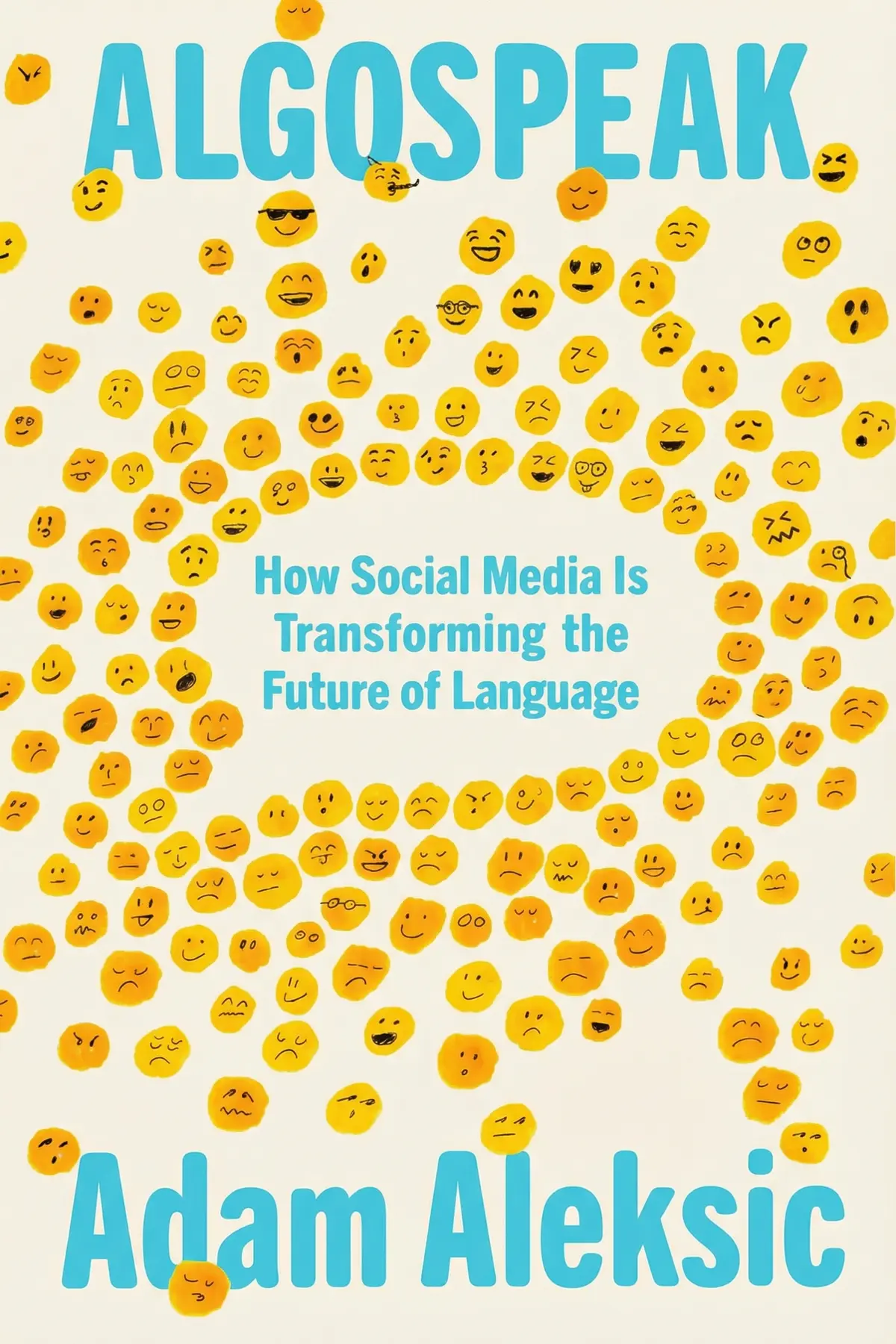
Table of Content
1. Introduction
1 min 03 sec
If online slang has started to sound strange to you, or to show up in places where it does not belong, there is a mechanical reason. In Algospeak, Adam Aleksic, who studied linguistics at Harvard and is known online as Etymology Nerd, shows that every platform has its own accent. YouTube creators race through their sentences with almost no pauses, because any silence gives a viewer a moment to leave. TikTok creators stretch out words like soooo to hold you for a few more seconds.
These habits are adaptations to the way each platform measures and rewards attention. Aleksic argues that algorithms now shape language from two sides. People rename whatever moderation filters punish, and they repeat whatever recommendation engines reward, until the results leave the screen entirely. Once you can see that pressure, slang starts to make sense and you can spot how a headline was built. You also see the price paid by your focus and by the world’s smaller languages.
2. Trace a strange new word back to its filter
2 min 01 sec
A museum honoring a dead rock star used a teenage internet word on its wall, and visitors were outraged. The real story behind that word begins far from Seattle, inside a company’s keyword list.
3. Read the hidden code creators use to dodge moderation
2 min 12 sec
A corn emoji, a misplaced asterisk and the word wife can all carry meanings their writers dare not spell out. Coded speech is ancient, but something about today’s version has no precedent.
4. Learn what changed when feeds became personal
2 min 12 sec
Aleksic once figured out an early ranking formula well enough to climb to the top of a site with hundreds of millions of users. Then the rules disappeared from view, and everyone began guessing.
5. Predict which new slang will fade and which will stay
2 min 12 sec
Some words sweep through a generation and vanish within a year, while others settle in for decades. A biologist’s idea from the 1970s explains the difference, and gives you a test for any new term.
6. Spot slang that was packed in for the algorithm
2 min 00 sec
One nonsense song crammed every trending word it could into its lyrics, and the gamble paid off far beyond its target audience. Aleksic saw in it a new kind of content with two audiences.
7. Protect your attention from feeds tuned for outrage
2 min 10 sec
A study of shared newspaper articles found that one quality mattered more than whether a story was good news or bad. That same quality now shapes headlines, attention spans and the survival of entire languages.
8. Conclusion
1 min 14 sec
Aleksic’s book adds up to a simple picture with large consequences. Language has always changed under pressure, from Roman persecution to a publisher’s censor. The difference now is that the pressure comes from software built for engagement, acting on millions of people at once and out of sight. A keyword filter at ByteDance put unalive on a museum wall in Seattle. A feed hungry for trends put rizz into the vocabulary of four in five American parents. The same logic rewards the angriest headline and leaves most of the world’s languages without a home online.
None of this means you have to stop talking the way your friends do. It means listening with a second ear. When a strange word appears, ask whether it was made to dodge a filter or to please a feed. When a new term catches on, check whether it names something real, the way side-eye does, or only signals belonging. And when a scroll leaves you angry or scattered, remember that the content was engineered to produce exactly that.
The label beside Kurt Cobain’s photograph was not one curator’s slip. It was a preview of a language partly written by machines, and the first defense is learning to hear them in it.
About this book
What is this book about?
Online slang seems to come from nowhere and then turn up everywhere, even on a museum wall. Adam Aleksic, known online as Etymology Nerd, argues that this is no accident. The software running social media now acts on language from two directions. Moderation filters push people to invent coded words, and recommendation engines reward whatever terms keep viewers watching. Aleksic follows this pressure from TikTok's keyword censorship to Spanish-speaking teenagers, and from his own climb up the early Reddit rankings to the secret, personalized feeds that replaced them. He borrows Richard Dawkins's idea of the meme to explain why some words spread and fade while others last. He shows how the Rizzler song packed trending terms together to please an algorithm, and how those words then reached four in five American parents. The book also counts the costs: feeds that reward the most emotionally intense framing, attention spans broken up by ever more stimulating content, and online platforms that support only a small share of the world's languages. Readers learn to recognize these forces in the words around them.
Book Information
Who it's for
Puzzled by internet slang
Parents, teachers and managers puzzled by slang like unalive, rizz or seggs.
Wanting to understand algorithms
Creators and marketers who want to understand how algorithms reward and punish particular words.
Worried about online culture
Curious readers worried about attention spans, outrage headlines and disappearing languages.
About the Author
Adam Aleksic
Adam Aleksic is known online as Etymology Nerd. He began writing about word origins on a blog in 2016, and his videos explain where words come from, especially slang and the new words of digital culture. He holds a bachelor's degree in Government and Linguistics from Harvard University. He has written for the Washington Post, lectured at universities and given a TEDx talk hosted at the University of Pennsylvania. His work focuses on where language and technology meet.
Ratings & Reviews
Ratings at a glance
What people think
Listeners find the book well-researched and informative, with one listener noting how it combines academic studies with TikTok trends. The quality of the writing and general readability are also appreciated, with one listener pointing out the engaging style. Additionally, the conversational tone makes for an enjoyable experience. However, there is mixed feedback regarding the clarity of the language, with some listeners finding it easy to understand while others disagree.
Top reviews
Maria
Ever wonder why everyone on your For You Page sounds exactly the same? Aleksic’s breakdown of the “influencer accent” is absolutely brilliant and worth the price of admission alone. I love how he bridges the gap between stuffy academic papers and the chaotic reality of modern TikTok trends. It’s incredibly readable and flows like a long, fascinating conversation with a friend who just happens to have a Harvard degree in linguistics. The chapters on euphemisms like “seggs” and “corn” really opened my eyes to how much the algorithm dictates our very thoughts. It’s a must-read for anyone who spends more than an hour a day scrolling.
Show moreWyatt
Picking up this book felt like unlocking a secret decoder ring for the modern internet. I’ve been a fan of Aleksic’s work for a while, and seeing him expand his thoughts into a full narrative was a treat. The research is well-integrated with current trends, making it feel prescient and urgent rather than just a dry history of words. I particularly loved the section on "algospeak" and how corporate censorship is inadvertently creating a whole new dialect of euphemisms. Thanks to the publisher for the advanced copy; this is definitely going on my "best of 2025" list for non-fiction.
Show moreVarinee
Adam Aleksic has delivered a total game-changer for anyone working in digital media or just trying to understand their kids. He isn't just complaining about "the kids these days"—he's actually explaining the structural reasons why language is changing so fast. The actionable items included at the end were a great touch; I actually tried one of his tips for navigating social media algorithms and saw a difference in my feed within days! It’s witty, insightful, and doesn’t talk down to the reader. My mind was blown multiple times by the connections he drew between ancient etymology and modern memes.
Show moreMontri
Algospeak is the kind of book that makes you look at every text message and TikTok caption differently. I loved the deep dive into the "influencer accent" and the weird ways we’ve adapted our speech to please the digital gods. The conversational tone made it an incredibly fast read, but the ideas have stayed with me long after I put it down. Even if you aren't a linguistics nerd, the social commentary on how we form identities online is worth it. It’s easily one of the most engaging non-fiction books I’ve read in years. Five stars!
Show moreSamart
After hearing so much hype about @etymologynerd, I finally picked this up and I’m mostly impressed. The way Aleksic traces the appropriation of AAVE into mainstream digital slang is handled with a lot of nuance and care. He doesn’t shy away from the political implications of our vocabulary, which I appreciated. To be fair, the book can feel a bit repetitive when he keeps coming back to the same examples like 'rizz' or 'gyat.' However, the insights into how social media shifts our identities through things like 'cottagecore' were genuinely fascinating. It’s a solid 4 stars for being informative without being boring.
Show morePla
Finally got around to finishing this, and I’m pleasantly surprised by how much I actually learned. Aleksic has a gift for making complex sociolinguistic concepts feel accessible and fun, even if the organization of the book is a little bit messy. Some sections feel like they were pulled straight from a screenplay, but the information about the “millennial pause” and how we use language to bypass filters is top-tier content. Truth is, we are living through a massive shift in how humans communicate, and this book provides a decent roadmap for navigating it. I wish it went a bit deeper into the AI side of things, but it's a great starter.
Show moreNitaya
Not what I expected given the author's social media presence. While I enjoy his short videos, the long-form format seems to struggle here, as the same points about algorithms boosting certain words are repeated almost every single chapter. I stayed for the interesting nuggets about ASL evolution and digital accessibility, but those were few and far between. It’s a very high-level overview that will likely delight people who aren't online much, but for those of us already deep in the trenches of internet culture, it feels a bit basic. It’s fine, just not the deep dive I was craving.
Show moreElise
As someone who is fascinated by the evolution of language, I had high hopes for this analysis. The reality is a bit of a mixed bag. On one hand, the author is clearly passionate and has a deep understanding of how platforms function. On the other hand, the writing feels a bit like a high school essay at times, with broad statements that lack citations or evidence. For example, claiming incels are a 21st-century invention feels historically inaccurate and ignores a lot of social history. It's a breezy, fun read if you don't take it too seriously, but don't expect a scholarly masterpiece.
Show moreRohan
This book feels more like a guide for aspiring TikTokers than a serious work of linguistics. I was expecting a rigorous etymological study, but Aleksic spends far too much time recounting his own viral moments and the stresses of being an influencer. While the conversational tone makes it a quick read, the analysis is incredibly shallow, often citing memes without digging into their actual linguistic roots. He mentions 'delulu' and 'brainrot' but barely scratches the surface of how these terms actually function in broader culture. It’s frustrating because the topic is vital, yet the execution feels like a collection of blog posts stitched together. If you want depth, look elsewhere.
Show moreIce
The chapter on Roman fashion was the first red flag, but the rest of the book didn't improve much. Frankly, calling this a book about linguistics is a stretch when it’s mostly just anecdotal cultural commentary. I found the writing style to be quite choppy, with short, punchy paragraphs that felt like they were written for someone with a thirty-second attention span. He misses the mark on several definitions—like the origin of 'foid' or the meaning of 'aegyo'—which makes it hard to trust the rest of his "expertise." It lacks the intellectual rigor of Gretchen McCulloch’s 'Because Internet' and feels like a rushed attempt to capitalize on a trend.
Show moreQuestions about this book
What is Algospeak by Adam Aleksic about?
Algospeak argues that social media algorithms now shape human language. Moderation systems push people to invent coded words such as unalive, and recommendation engines reward trending terms such as rizz. Those words then spread offline into classrooms and museums. Aleksic also looks at the costs: emotionally extreme content gets amplified, attention spans are breaking up, and platforms support only a small share of the world’s languages.
Where does the word unalive come from?
According to Aleksic, unalive spread around 2019 as an ironic substitute for kill or die. When the Chinese Communist Party tightened its censorship, ByteDance, the company behind TikTok, began screening for violent keywords, so users found a workaround. Spanish speakers made a parallel word, desvivir. In 2024 the term caused an uproar when the Seattle Museum of Pop Culture used it on a label about Kurt Cobain.
Why do some slang words last while others disappear?
Aleksic borrows Richard Dawkins’s idea of the meme and treats words like viruses under selection pressure. Social cachet makes words feel cool, but coolness fades, as it did for bae once advertisers overused it. Attention-grabbing words like gyat and skibidi spread fast and burn out. Words that last have an endurance factor, usually because they name something that lacked a term, like side-eye.
What harms does Algospeak say algorithms cause?
Aleksic names three. A 2010 Wharton study of shared New York Times articles found that emotional intensity drives sharing, so headlines turn to words like slammed and destroyed. Competition for attention pushes content toward constant stimulation, which he links to shorter attention spans and to fears of social media addiction. Platforms also support few languages: Google covers 240 and YouTube 80, out of roughly 7,000.
How can I apply the ideas in Algospeak?
When you meet an odd word, ask whether it was invented to dodge a filter or to please a feed. Read codes like SA or ED as a sign that someone is raising a sensitive subject. Test any new term by asking whether it fills a real gap in the language. When a headline says destroyed, translate it back to criticized before you react.
Readers also enjoyed








AUDIO SUMMARY AVAILABLE
Listen to Algospeak in 15 minutes
Get the key ideas from Algospeak by Adam Aleksic, plus 5,000+ more nonfiction titles.
- 5,000+ titles
- Listen as much as you want
- 7-day free trial
- Cancel anytime









