

13 min 55 sec
Available in: English
Love Unfu*ked: Getting Your Relationship Sh!t Together
A blunt guide to fixing your love life by working on the only person you control. It covers dropping fixed expectations, keeping your word, living your values and naming your deal breakers.
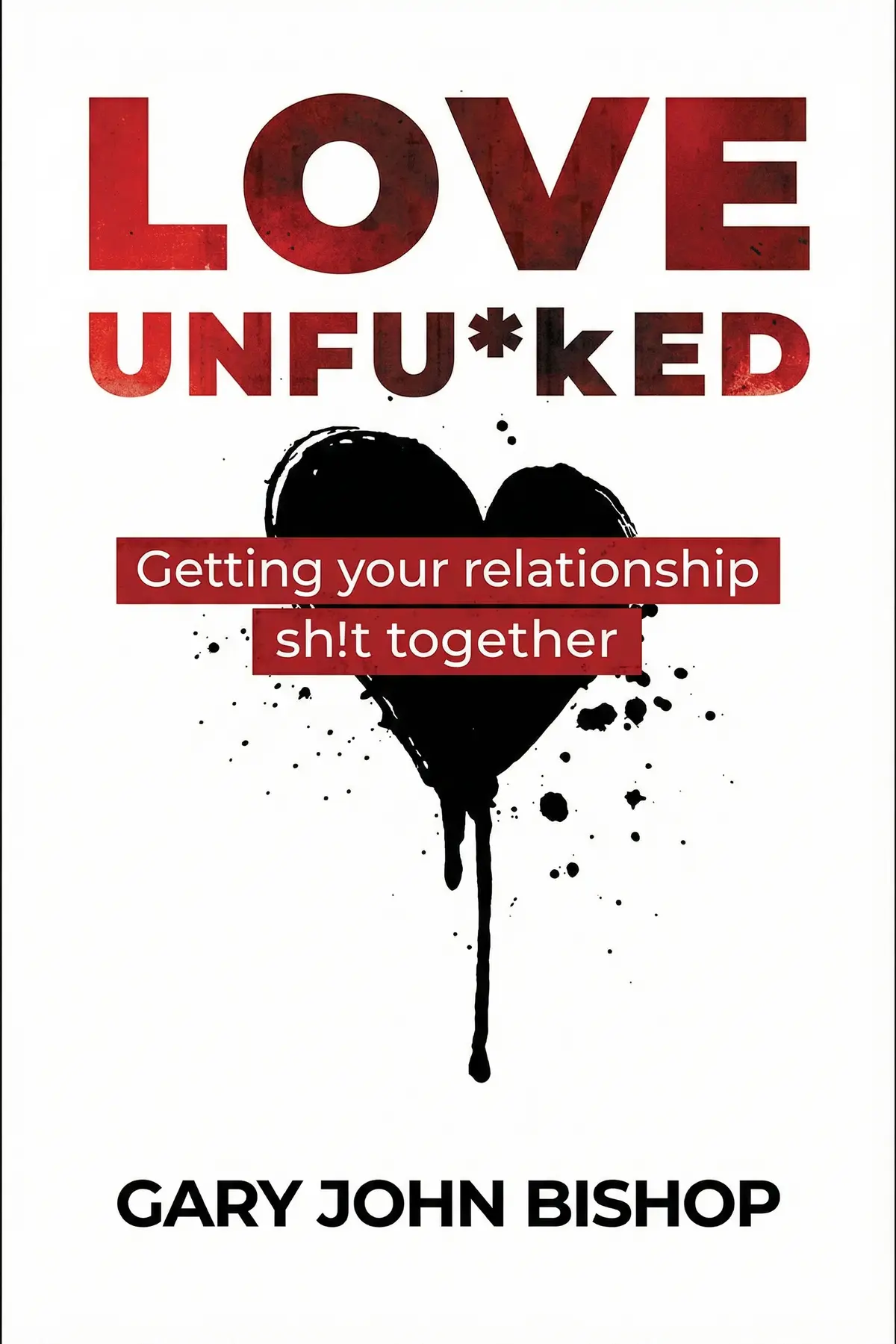
Table of Content
1. Introduction
58 sec
If your relationship looks fine from the outside but feels flat, or you keep waiting for the right person to fill what feels missing, Gary John Bishop has an uncomfortable answer. In Love Unfu*ked, the Glasgow-raised coach argues that most of us are badly prepared for the love we say we want, and that the only part of it we can repair is ourselves.
This is not a book about winning arguments or reforming an irritating partner. Bishop skips communication tips and forgiveness exercises entirely. His case is that a relationship improves when one person takes full ownership of it: their expectations, their promises, their values, their own behavior and even the way they would leave.
Follow his reasoning and you get a handful of plain tests to run on your current or next relationship, from rewriting the promises you actually live by to naming your deal breakers out loud before anyone crosses them.
2. Fix the slow leak instead of refilling it
1 min 48 sec
Plenty of couples are not breaking up, and not exactly happy either. Bishop uses an everyday bicycle chore to show how a relationship can keep rolling for years while something underneath keeps getting worse.
3. Own the only person you can control
1 min 59 sec
Many people carry a picture of how love should look, and quietly cast their partner in a role. Bishop argues that this picture, however reasonable it seems, may be the very thing standing between them and love.
4. Make your word worth trusting again
1 min 53 sec
Trust feels like an emotion, yet Bishop treats it as a kind of contract that most couples break without noticing. The wedding vow, he argues, shows exactly how far our words have fallen.
5. A relationship that grows from what you give
2 min 03 sec
Most couples assume love should be split evenly, each partner doing half. Bishop throws out the fifty-fifty deal entirely and replaces it with a surprising third party that both people tend to forget.
6. Dance your own steps when your partner stumbles
2 min 00 sec
Two ballroom dancers look like a single performance, yet each is really doing something alone. Bishop uses that picture to answer the most common excuse in any struggling relationship.
7. Clear deal breakers make a relationship stronger
2 min 03 sec
Nobody boards a plane expecting to crash, yet everyone hears the safety talk. Bishop asks why couples refuse to prepare for something far more likely, and what that preparation could do for love.
8. Conclusion
1 min 11 sec
Bishop’s book keeps putting the listener back in one uncomfortable seat, the driver’s. A relationship that drifts, a promise that fades, a partner who never plays the part you wrote for them: all of it leads back to the person doing the complaining. That sounds harsh, and he means it to. It is also freeing, because the one variable you can change is the one you have been ignoring.
His tools are small enough to try tonight. Notice the weekly pump of air you give a problem you have never fixed, and look for the leak. Make a promise you intend to steer by, and keep it when your mood argues otherwise. Write down what you believe a relationship should be about, then act on one item for the relationship’s sake, without counting whether your partner returns it. And tell your partner, in plain words, where your lines are.
Bishop admits this is a struggle, and he asks readers to learn to love it, since being in a relationship is among the most basic parts of being human. His closing claim is the one worth carrying out of the room. The relationship you want is possible, and the only person blocking it is you.
About this book
What is this book about?
Most people know what they want from love: passion, romance and a partner who understands them completely. Very few know what it takes to build that, so they hope for the best and feel let down when the shine fades after a few months. Gary John Bishop argues that most of us are badly prepared for the relationship we say we want. His answer is not a set of communication techniques or a plan to change an irritating partner. It is personal responsibility, pushed as far as it will go. Bishop asks readers to stop topping up a leaking relationship, to drop the script they wrote for their partner, to treat their promises as something to steer by and to give everything to the relationship itself instead of keeping score. He also takes on the topic most couples avoid, which is how a relationship might end. Clear deal breakers, spoken out loud, can make a bond stronger, and the values that keep love alive can tell you when it is time to leave with dignity. Readers come away with plain tests to apply to a current or future relationship.
Book Information
Who it's for
Long-term partners feeling stuck
People in a long relationship that feels stuck, flat or full of the same old fights.
Singles with recurring patterns
Singles who keep repeating patterns and want to see their own part in them.
Partners tired of waiting
Anyone tired of waiting for a partner to change who wants a direct, no-frills push.
About the Author
Gary John Bishop
Gary John Bishop grew up in Glasgow, Scotland, and once worked as a senior program director at a large personal and professional development company. His coaching and writing follow an approach he calls urban philosophy, which is direct and has no frills. He is a best-selling author whose book Unfu*k Yourself brought him wide recognition, and he has also written Do the Work.
Ratings & Reviews
Ratings at a glance
What people think
Listeners find the work insightful, and one listener remarks that it delivers tools for managing modern relationships. Additionally, the prose is straightforward and functional. However, the standard of the writing receives a mixed response, as several listeners find it poorly written.
Top reviews
Supranee
Listening to the audiobook version of this was probably the best decision I made this month because Gary’s Scottish accent adds a level of grit you just don’t get on the page. It feels less like a self-help manual and more like a heart-to-heart with a grizzled bartender who has seen it all and is tired of your excuses. Bishop hammers home the idea that you are the only variable you can actually control in a relationship, which is a tough pill to swallow but incredibly liberating once it sinks in. He doesn’t waste time with fluff or toxic tropes that keep people stuck in cycles of misery. While the writing is definitely casual and might feel a bit unpolished to some, the raw honesty is what makes it work for me. If you’re tired of being babied by therapists who just want to validate your feelings, this is the wake-up call you need to start owning your own performance.
Show moreDarawan
Ever wonder why you keep dating the same person in different bodies? Bishop suggests it’s because you haven't unfu*ked your own internal narrative yet, and he isn't afraid to call you out on your nonsense. I love how he strips away the Hollywood myths about "The One" and forces you to look at your own contribution to the chaos in your life. This isn't a book about fixing your partner; it’s about fixing the person in the mirror so that you can actually show up in a relationship with some integrity. Not gonna lie, some of his tone can be abrasive, but that’s exactly the point of the whole Bishop brand. It’s designed to shake you out of your complacency and make you take ownership of your romantic future. This is hands-down some of the most practical advice I’ve read in years, and I’ll definitely be going back to it.
Show moreSaengdao
After hearing Gary on a podcast, I knew I needed to grab this book to help navigate my recent breakup and get my head back in the game. Even though much of the text targets people already in relationships, the core message about self-honesty is completely universal and applies to anyone looking to grow. Gary reminds us that love isn't some magical schema; it's a daily choice that requires us to be awake and present in our own lives. I found the sections on starting with yourself to be particularly helpful because they stopped me from dwelling on my ex's faults and forced me to look at my own patterns. The tone is aggressive, yes, but it’s the kind of aggression you’d want from a personal trainer who actually wants to see you succeed. This is a must-read for anyone who is tired of the same old cycle of failed connections.
Show moreAim
The chapter regarding whether you want to be 'right' or be in a relationship really hit a nerve for me during a particularly tense week with my partner. Bishop has this uncanny ability to strip away all the layers of ego we build up in our romantic lives and leave us standing there with nothing but the truth. It isn’t always a pretty sight, but focusing on my own performance rather than keeping a tally of my spouse’s failures has already changed the dynamic in our house. Truth is, the prose is a bit repetitive and the swearing feels a little forced at times just to maintain his tough-guy brand. However, the core message about taking absolute responsibility for your side of the street is solid enough to overlook the occasional clunky sentence. It’s an accessible, no-nonsense guide for anyone who is actually ready to do the work instead of just complaining about their partner.
Show moreOlivia
Finally got around to finishing this, and I have to say it’s a refreshing change from the usual flowery relationship books that dominate the self-help section. Bishop doesn't care about your feelings as much as he cares about your actions, and that’s exactly why his advice tends to stick in your brain long after you close the cover. He argues that you are the only person you can fix, which sounds simple but is actually the hardest thing to implement in a long-term partnership. The book is short and accessible, making it a great pick for people who don't usually read personal development stuff but need a quick kick in the pants. My only real gripe is that some of the exercises felt a bit tacked on, as if they were trying to fill space in an already slim volume. Still, if you want a blunt, practical tool for navigating relationships, this is worth your time.
Show moreKamol
Look, I really enjoyed Bishop's earlier work, but this one felt like a bit of a step down in terms of actual substance. The "urban philosophy" style starts to wear thin when the advice boils down to just "stop being a jerk" over and over again for two hundred pages. In my experience, he makes a few decent points about not trying to change your partner, but most of it felt like he was just shouting common sense into a void. The writing quality is also pretty hit-or-miss, with some sections feeling like they were transcribed directly from a rough podcast episode without a proper edit. I finished the book feeling like I hadn’t actually learned many new tools for my relationship, just that I’d been scolded. It’s a quick read, sure, but quick doesn’t always mean valuable when the content is this thin.
Show morePita
As someone who has followed Bishop's work for a while, I found this to be a bit of a mixed bag compared to his earlier books. On one hand, his stance on personal agency is incredibly clear and responsible, which I appreciate in an industry that sometimes skirts around the edges of victimhood. On the other hand, the writing style can be genuinely frustrating; it’s overly casual to the point where it feels like he’s just talking in circles without a clear destination. I did pick up a few good ideas about commitment and word-keeping, but I had to dig through quite a bit of fluff to find them. It’s not a bad book, but it lacks the punch that made his first book such a success. It’s decent for a quick afternoon read, just don’t expect a life-altering epiphany on every single page.
Show moreSirirat
This book is basically the literary equivalent of a cold bucket of water to the face. It’s jarring and unpleasant at first, but it definitely wakes you up to the reality of how much you sabotage your own happiness. To be fair, I think a lot of this could have been condensed into a long-form article rather than a full-length book. Bishop repeats himself a lot, and his street style of writing can sometimes come across as more performative than authentically profound. I liked the focus on intentionality and being a more thoughtful partner, but I struggled with the lack of depth in the actual how-to part of the advice. It's a solid 3-star read for me—useful for a quick mindset shift, but it lacks the structural integrity of a truly great piece of non-fiction. Pick it up if you want a fast read that challenges your ego.
Show moreMint
Not what I expected from an author who usually hits the mark with such precision. While I appreciate the basic premise that we are responsible for our own happiness, the execution in this volume felt a bit lazy. The urban philosophy vibe felt slightly forced here, as if the author was trying too hard to maintain a brand rather than delivering fresh insights into the complex world of human relationships. Personally, I found the constant use of profanity to be a bit of a distraction from the actual message, making the whole thing feel more like a gimmick than a serious guide. There are some okay ideas buried in there about not being a victim in your own life, but they are surrounded by so much repetition that it’s hard to stay engaged. I’d suggest it for beginners in self-help, but long-time fans might find it lacking.
Show moreViolet
Maybe I’m just not the target audience for this brand of tough-love coaching, because I felt like I was reading a lot of words that ultimately said nothing at all. The author leans so heavily into his irreverent persona that he forgets to provide actual, actionable psychological insights that go deeper than a motivational poster. It felt very "bro-science" for relationships, filled with aggressive platitudes that don't account for the complexity of real human attachment issues. Frankly, calling this philosophy is a stretch; it’s more like a collection of rants that you’d hear from a guy at a pub who thinks he’s wiser than he actually is. I didn't find the tools useful, and the writing was so fragmented that it made it difficult to maintain focus for more than five minutes at a time. I was hoping for a fresh perspective on modern love, but I just got a headache.
Show moreQuestions about this book
What is the main idea of Love Unfu*ked by Gary John Bishop?
Bishop argues that most people are poorly prepared for the relationship they want, and that the fix lies entirely with themselves. Instead of trying to change a partner or win arguments, readers are asked to own their expectations, keep their word, live their values, focus on their own behavior and be clear about their deal breakers.
Does Love Unfu*ked say relationships should be fifty-fifty?
No. Bishop rejects the idea of equal shares. In his view you get nothing back from a relationship; you only give. Neither partner is giving to the other. Both are giving to the relationship itself, a third party that is easy to forget, and every date, gift or kind word should come from the values you hold for it.
How does Bishop suggest handling deal breakers?
He says to treat them as lines on a playing field rather than an on and off switch. Crossing a line does not automatically end things, but it does demand a serious conversation. He cites a figure that 40 percent of marriages face infidelity and about half continue afterward. The key is to tell your partner your deal breakers clearly, in words.
Does the book tell you to stay in a bad relationship?
No. Bishop’s advice to focus only on your own part does not apply to physical harm, controlling behavior or other toxic treatment; in those cases he says to get help. He also argues that staying where you cannot be yourself helps nobody, and that leaving with dignity is sometimes the best choice.
How can I apply Love Unfu*ked right away?
Start by naming the problem you keep patching instead of fixing. List what you believe a relationship should be about and act on one value without tracking your partner’s effort. Make a promise you will actually steer by. When you catch yourself saying my partner always, switch to what you will do differently.
Featured in

Readers also enjoyed

AUDIO SUMMARY AVAILABLE
Listen to Love Unfu*ked in 15 minutes
Get the key ideas from Love Unfu*ked by Gary John Bishop, plus 5,000+ more nonfiction titles.
- 5,000+ titles
- Listen as much as you want
- 7-day free trial
- Cancel anytime









