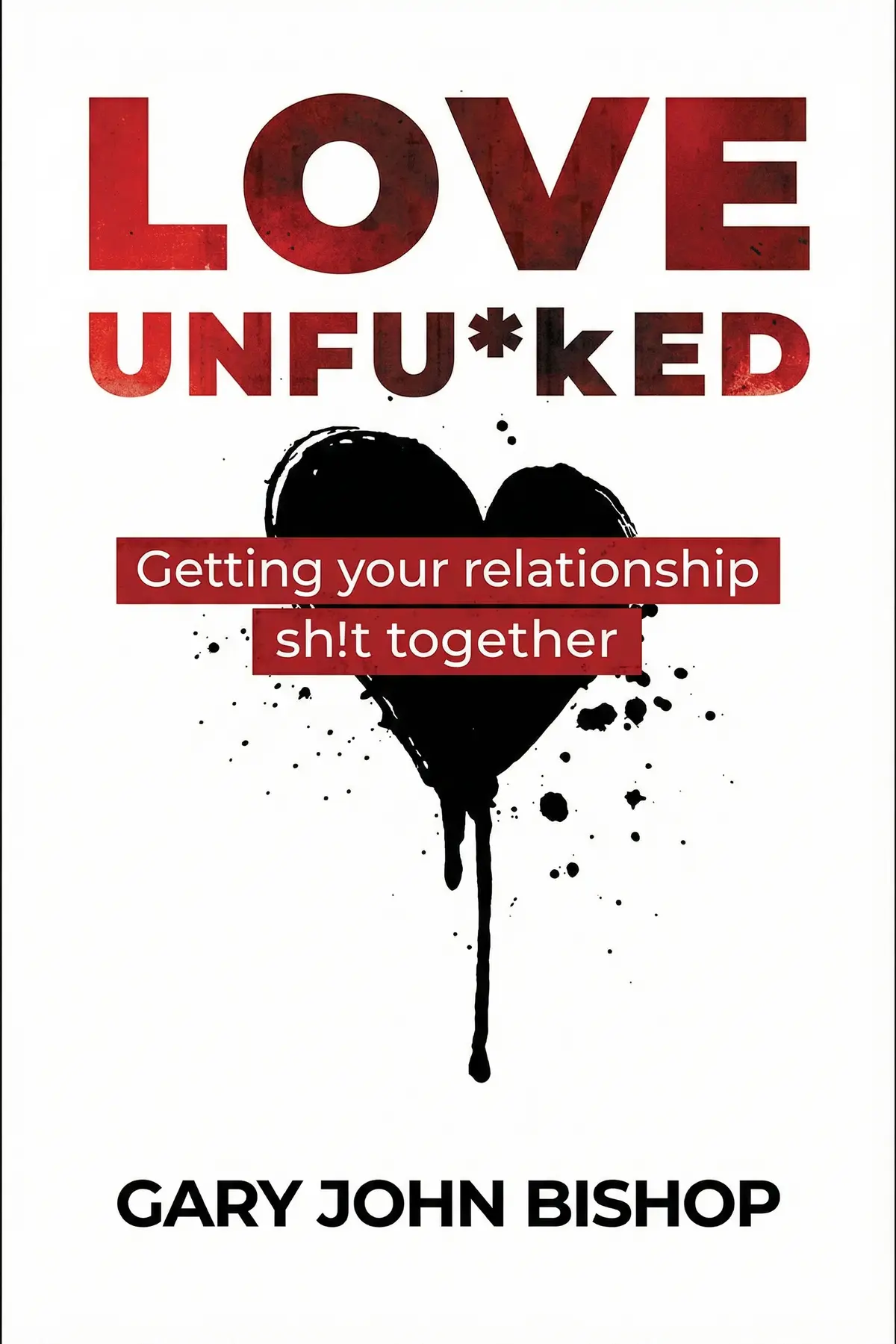
Love Unfu*ked: Getting Your Relationship Sh!t Together
Gary John Bishop
 English
A blunt guide to finding the excuses you have built your life around, in yourself, your relationships and your sense of purpose, and replacing them with written promises and deliberate action.

59 sec
Most people who feel stuck blame something outside themselves: too little money, bad luck, nobody giving them a break. In Do the Work, coach Gary John Bishop argues that the real block is inside, in the excuses we repeat and the habits we have quietly arranged our lives around. The book is a hands-on companion to his earlier best seller, and it demands brutal honesty from the reader.
Bishop’s case is simple to state. The life you have right now reflects what you have been willing to put up with, and it changes only when you name those tolerated patterns and act against them. He works through three areas, the self, other people and purpose, then closes with seven exercises meant to carve new habits of thought through action. Expect to finish with a trait to challenge, a written promise to keep, a fresh way to read a tense relationship and one specific day this week to break your routine.
1 min 46 sec
Most of us know our weak spots well. Bishop’s charge is that we have done something worse than ignore them, and it explains why the same problems keep returning year after year.
1 min 36 sec
Insight feels good on Sunday and is gone by Tuesday. Bishop’s fix borrows from the world of contracts, with one twist that keeps it from becoming another broken resolution.
1 min 50 sec
A boss ignores your idea in a meeting, and the sting is far bigger than the moment deserves. Bishop traces where that feeling really comes from, and what to do the next time it rises.
1 min 40 sec
Waiting to discover your calling can keep you stuck for years. Bishop argues the popular advice about purpose gets the process backward, and offers a test you can run on your own week.
1 min 41 sec
Bishop claims that even your repeated failures are paying you something. Spotting what that payment is, he argues, is the first step toward deciding whether you still want it.
1 min 42 sec
Waiting to feel ready, confident or certain can last a lifetime. Bishop’s final four exercises reverse the usual order, and each one fits inside a single ordinary week.
1 min 08 sec
Bishop’s book adds up to a hard but freeing claim. Nobody else is going to hand you a better life, because the current one was built from your own choices and from everything you agreed to tolerate. That sounds like blame. It works as permission, since whatever you have tolerated, you can also stop tolerating.
The method passes through the same three rooms each time: yourself, your relationships and your sense of purpose. In each one you look honestly for the excuse holding the old pattern in place, and then you do something different, because in his view thinking on its own rarely shifts anything.
If you carry one thing into this week, make it a written promise about a single trait, with a deadline and a real stretch built in. Pick the day you will break your routine. And the next time someone’s reaction stings more than it should, ask whose voice from the past you are really hearing, then answer the person in front of you instead.
Change, for Bishop, is less a feeling you wait for than a job you start.
Many people who feel stuck blame money, luck or other people. Gary John Bishop disagrees. In Do the Work, a hands-on companion to his earlier best seller, he argues that the real obstacle sits inside: the clutter in our heads, the harsh way we talk to ourselves and the self-sabotaging patterns we have accepted as normal. Bishop works through three areas. The first is the self, where he exposes self-toleration, the habit of treating a flaw as fixed and arranging your whole life around it. The second is other people, where reactions shaped in childhood keep replaying with bosses, partners and family. The third is purpose, which he treats as something you design and revise rather than something you stumble upon. Readers get pointed questions to answer, a way to turn insight into personal contracts with goals and deadlines, and seven exercises built on Bishop's view that repeated choices reshape the brain's pathways. It asks for brutal honesty, and it suits anyone tired of waiting to feel ready.
People who feel stuck and keep blaming money, luck or other people for it.
Professionals whose old reactions flare up with bosses, partners or family.
Anyone waiting for a clear calling who wants a practical way to define their purpose and act now.
Gary John Bishop grew up in Glasgow, Scotland, and once worked as a senior program director at a large personal and professional development company. His coaching and writing follow an approach he calls urban philosophy: direct and free of frills. He is a best-selling author whose book Unfu*k Yourself brought him wide recognition, and his other books include Do the Work and Love Unfu*ked.
Gary John Bishop
Gary John Bishop
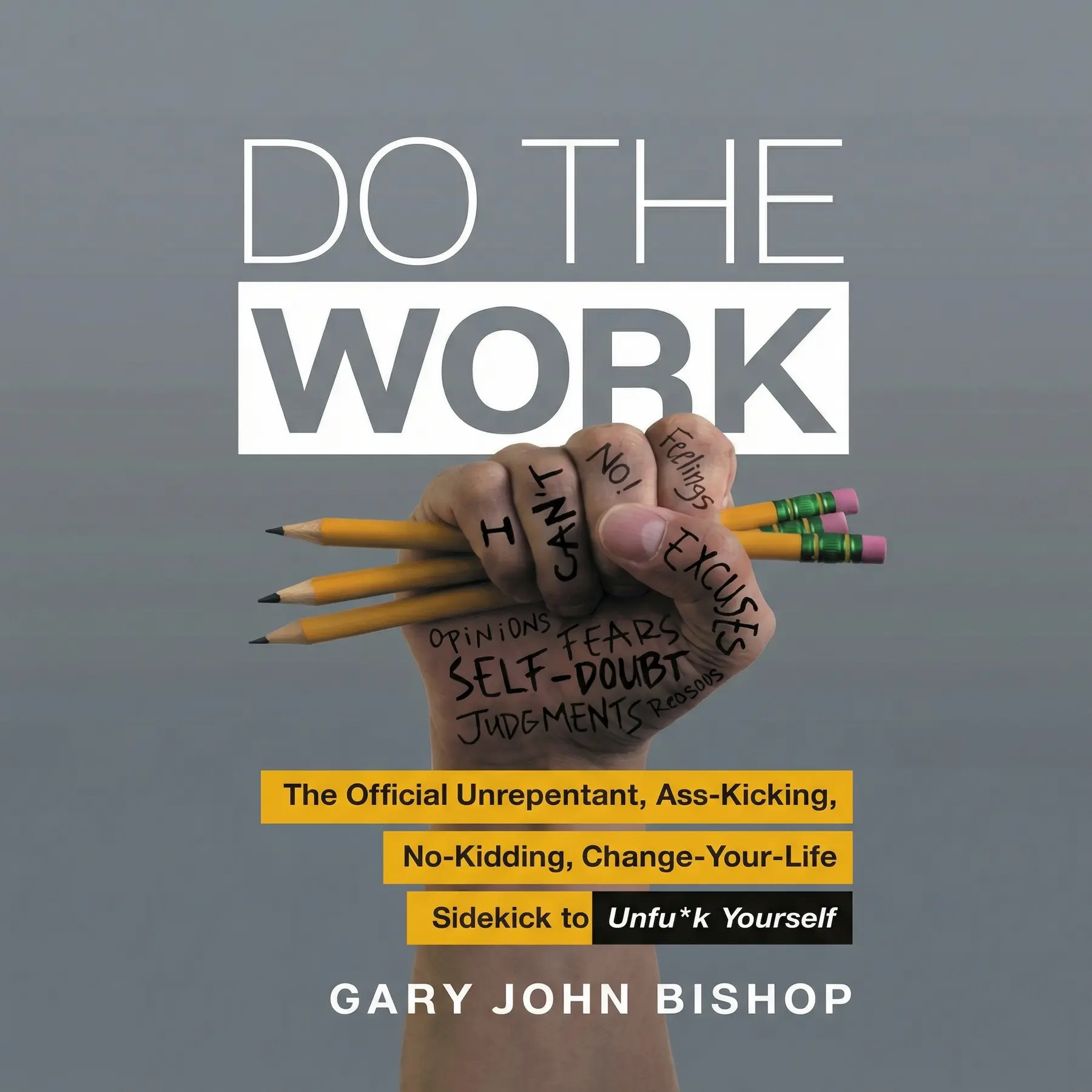
Listeners find the workbook beneficial, with one listener describing it as a no-nonsense roadmap for achieving results. The content is inspiring, with one listener mentioning that it assisted them in maintaining their perspectives, and they value its direct style.
Finally got around to Gary John Bishop’s second book after loving 'Unfu*k Yourself,' and it hits just as hard. This isn’t your typical flowery self-help; it’s a no-nonsense guide that demands you stop making excuses and start taking personal responsibility for your life. Truth is, many people will hate the aggressive tone, but his 'tough love' approach is exactly what I needed to snap out of a months-long slump. Bishop cuts to the chase, reminding us that no one is coming to save us. We have to do the work ourselves. I found the workbook-style questions incredibly helpful for digging into my own internal bullshit. If you want to feel coddled, go elsewhere. But if you’re ready to be the architect of your own miracles, this is the manual. The messaging is crisp, clear, and utterly relentless.
Show moreWow, Bishop really doesn't pull any punches in this follow-up, and I am here for it. I’ve been feeling stuck for a while, and his no-nonsense approach really worked for me. He reminds you that you are a moment, a loud bang in time that eventually disappears, so why waste it being miserable? That perspective shift alone was worth the price of the book. I don't mind the cursing at all; in fact, it helps strip away the fluff that usually bogs down these kinds of books. You have to hold yourself to account because no one else will lift you up. It’s a straightforward, aggressive, and deeply motivating read. I felt like I was in the corner during a prizefight with a trainer yelling truth into my face. This is definitely one I'll revisit when I start making excuses again.
Show moreThe chapter on being a 'space for life to happen' really shifted my perspective on daily anxiety and the noise in my head. Gary John Bishop has this way of saying things you already know deep down, but he says them so clearly that you can’t ignore them anymore. I didn't want to waste my life worrying about how I look to others, and this book gave me the push to stop. It's an intense experience, especially if you listen to the audio version. Not to be dramatic, but it can radicalize you into changing for the better if you're actually willing to listen. He doesn't offer any magic pills, just the truth that you are responsible for your own magic. It’s loud, it’s crude, and it’s absolutely brilliant for anyone who is tired of their own excuses.
Show moreGotta say, I wasn't sure if I needed another Bishop book, but this one proved me wrong. It functions as a perfect no-excuses guide for anyone who feels like they’re stuck in a constant conversation about why they can’t succeed. He identifies that conversation as the 'altar' at which we sacrifice our lives, and man, that hit home. The book is short, punchy, and doesn't waste time with long-winded anecdotes or fake science. It’s just direct communication from one human to another. I appreciated the workbook format because it kept me engaged and helped me retain my views while making actual progress. No one is coming to save you, and Bishop makes sure you understand that by the end of chapter one. If you're ready to actually live your best life, just buy it and do the work.
Show moreAs someone who struggles with overthinking, the bluntness here was exactly the wake-up call I needed to stop stalling. Bishop’s philosophy is built on the idea that we are the ones holding ourselves back through constant, self-defeating internal conversations. Personally, I appreciated how he frames us as a 'space for life to happen.' It’s a wild, sometimes scary thought, but it’s empowering. The book is structured more like a workbook, which helps with retaining your views while challenging the excuses you’ve built your life around. My only gripe is that some of the relationship advice felt a bit inconsistent—one minute it’s about fixing yourself, the next it’s about cutting people off. Still, for a no-excuses guide to getting things done, it’s a very solid four-star read that will get your mind in the zone.
Show morePicked this up because I felt like I was spinning my wheels, and frankly, it felt like being yelled at by a very aggressive personal trainer. Bishop's style is very specific—lots of 'f-bombs' and a total lack of sympathy for your problems. While it might turn some readers off, I found it refreshing compared to the usual 'you're perfect the way you are' garbage. He asks questions that force you to expose your own internal nonsense. I do think he holds back slightly to stay market-friendly, which prevents it from being a true masterpiece. But even with that slight 'mainstream palatability,' there are some serious gems hidden in here. It's a great workbook for anyone who needs to stop talking about their problems and start actually solving them. It really helped me maintain focus during a particularly stressful month.
Show moreEver wonder why you keep making the same mistakes even though you know better? This book dives straight into that gap between knowing and doing. I gotta say, Bishop's method of self-responsibility is a tough pill to swallow, but it's effective. He cuts to the chase and gives it to you straight without any mystical nonsense or 'positive vibes only' fluff. The workbook elements are what really make this stand out from his previous work. It forces you to interact with the text rather than just nodding along. Some of the messaging regarding toxic relationships felt a bit rushed and lacked qualifiers, which is my main criticism. However, as a straightforward guide to getting your life together, it’s hard to beat. It demands reflection and, more importantly, it demands action. Do the work or don't—the choice is yours.
Show moreThe audiobook experience is definitely where this content shines, mostly because that Scottish snarl makes the advice feel more urgent than it actually is. However, reading the physical text reveals some flaws. The truth is, Bishop is a coach, not a scientist, and it shows in his lack of evidence for some of his more radical claims. I liked the focus on self-responsibility, but at times, it felt like a less mystical but just as problematic version of 'The Secret.' He makes everything sound so simple—just stop being a baby and do it. But life is rarely that black and white. While it’s a motivating kick in the pants for a hectic week, I’m not sure the insights are deep enough to create long-term change once the initial rush of the 'tough love' fades away.
Show moreIs it just me, or are we now giving book deals to anyone who can swear in a thick accent? I found the content here to be incredibly derivative. To be fair, Bishop has a way with words, but he has no real credentials or background in psychology to back up these broad claims about human nature. He takes basic existentialist ideas, waters them down until they’re unrecognizable, and then covers the lack of depth with profanity. If you want a book called 'Do the Work,' you should honestly just read the one by Steven Pressfield instead. This felt more like a Nike ad expanded into a book, preaching a 'just do it' mentality without providing any novel insights into the 'how.' It’s a lot of loud noise without much substance behind the curtain.
Show moreLook, I wanted to like this, but it’s basically a Nike ad stretched out over 200 pages with a lot of unnecessary f-bombs. I found the writing to be quite poor and the advice to be a rehash of every other self-help book on the shelf. You can change your life? Define your purpose? Yada-yada. We’ve heard it all before from people with actual credentials. Bishop seems to think that swearing makes his advice more authentic, but it just feels like a gimmick to cover up the fact that there’s nothing new here. Not gonna lie, I felt like I was being scammed by a coach who just wants to market his 'brand' rather than provide real psychological tools. Save your money and just look at a motivational poster for five minutes; you’ll get the same result without the headache.
Show moreBishop argues that what holds most people back is internal: negative self-talk, excuses and self-sabotaging patterns they have accepted as normal. He calls this self-toleration, the habit of treating a flaw as fixed and organizing life around it. Change comes from naming those patterns honestly in three areas, the self, relationships and purpose, then committing in writing to act differently.
Start by choosing one trait you have been tolerating, such as passivity or low confidence. Write a promise to yourself with a specific goal, a deadline and a stretch challenge, and revise it as circumstances change. Then pick one day this week to break your routine, either by taking an opportunity you would usually skip or by setting a boundary.
He argues that early relationships with parents, siblings, classmates and teachers shape how we react as adults, so a boss ignoring your idea can trigger an old feeling of being overlooked. Repair rests on acceptance, understanding and forgiveness, plus the courage to behave differently in familiar settings. He asks readers to treat themselves with the same three principles.
Bishop’s seven exercises are to be willing to challenge your status quo, celebrate every outcome including failures, recognize your resilience, make peace with uncertainty, put action ahead of thought, keep going when enthusiasm fades and let go of expectations. He presents them as ways to build new mental pathways through repeated deliberate choices.

Richard Wiseman





William B. Irvine


Andrew D. Thompson


Deepak Chopra
AUDIO SUMMARY AVAILABLE
Get the key ideas from Do the Work by Gary John Bishop, plus 5,000+ more nonfiction titles.