
13 min 22 sec
Available in: English
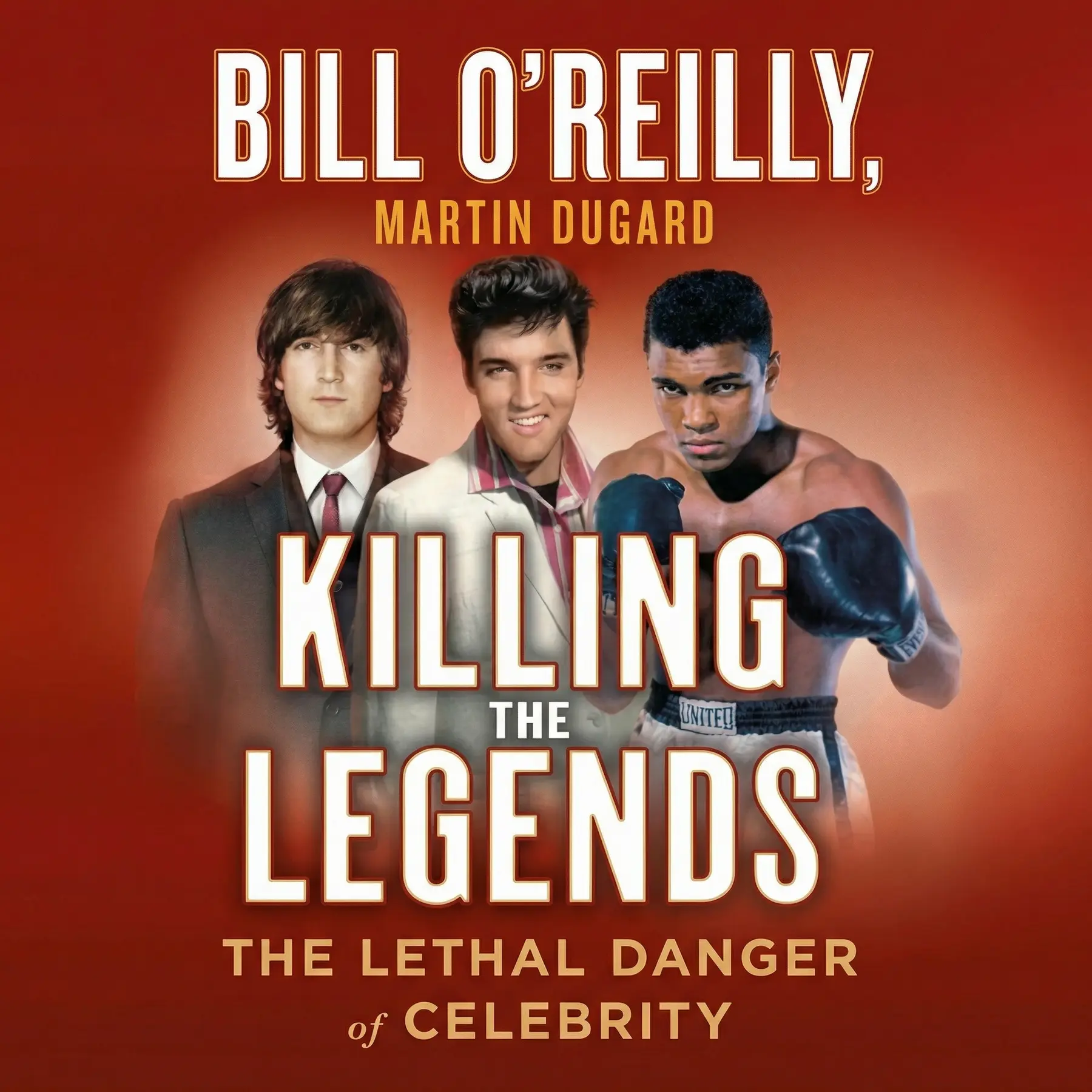
Killing the Legends: The Lethal Danger of Celebrity
Follows Elvis Presley, John Lennon and Muhammad Ali through their final years to show how fame isolated each man and left his money, choices and body in the hands of one trusted insider.
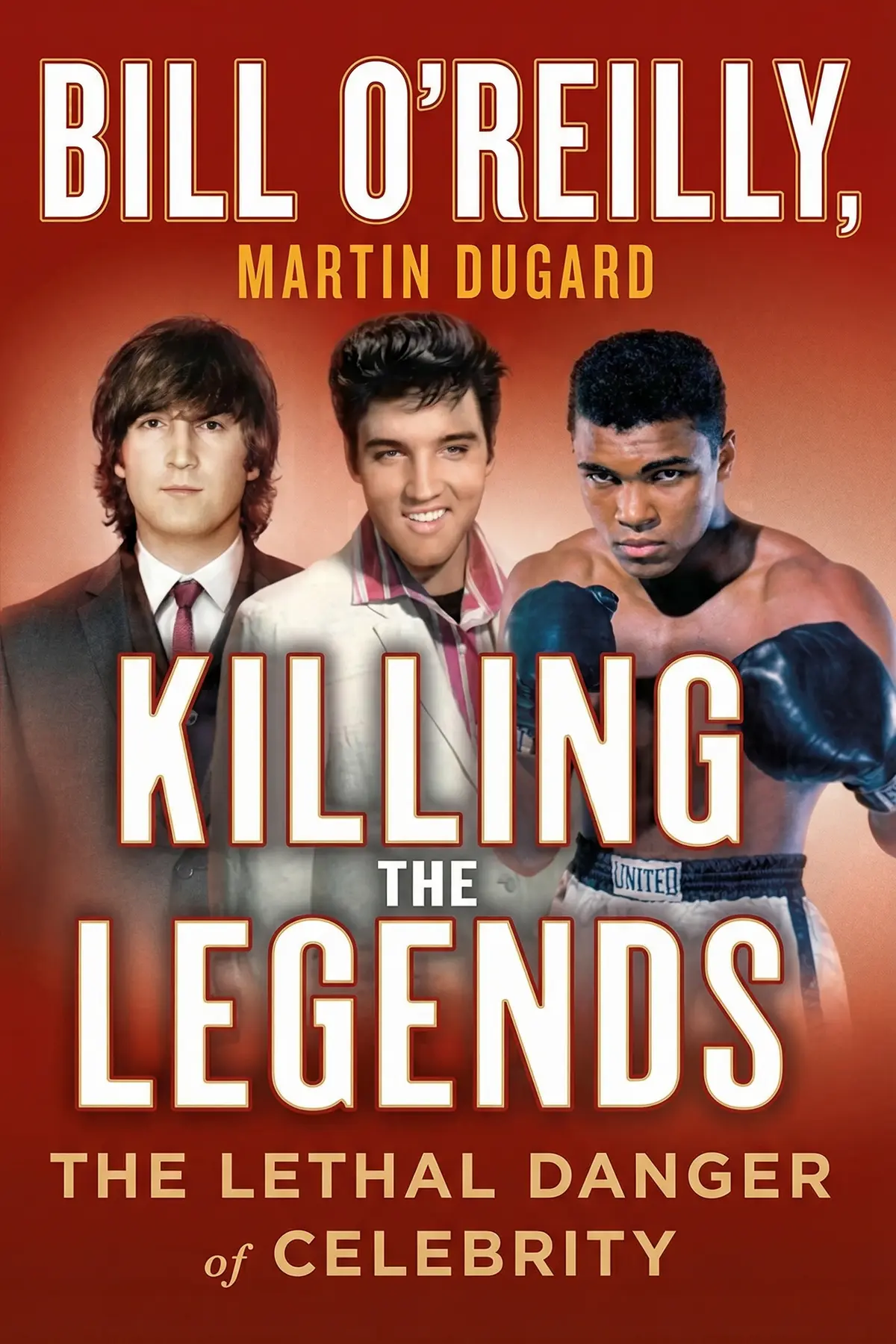
Table of Content
1. Introduction
1 min 03 sec
Fame looks like the best protection a person could have, yet three of the most celebrated men of the twentieth century ended up with less control over their lives than an ordinary office worker. In Killing the Legends, Bill O’Reilly and Martin Dugard follow Elvis Presley, John Lennon and Muhammad Ali through their final years and find the same pattern each time. Enormous success cut them off from normal life, and that isolation handed power to one person standing very close. For Elvis it was his manager, Colonel Tom Parker, who took half of everything the singer earned. For Lennon it was his wife, Yoko Ono. For Ali it was Herbert Muhammad, who kept booking fights long after the body had paid enough.
The authors’ case is blunt: the real danger of celebrity is the trust a lonely star places in the wrong hands. Their three stories show that trust being spent, contract by contract and fight by fight, and they sharpen your eye for who holds the pen when your own big decisions get made.
2. Follow the money to see who steers
1 min 57 sec
The manager who made Elvis a superstar also held a contract that rewarded one thing above all. Watch how that single number shaped the songs he sang, the films he made and even the books he read.
3. Spot the deal that signs away your future
1 min 52 sec
In 1973 Elvis put his name to a contract he had every reason to refuse. He signed anyway, for a reason most of us would recognize, and it cost him far more than money.
4. See how one close voice can steer a life
1 min 50 sec
A smiling fan, a double bed in a recording studio and a stolen biscuit. The strange last days of the Beatles reveal how a star under pressure shrinks his world down to a single person.
5. Recognize influence that feels like your own choice
1 min 48 sec
Lennon’s wild years apart from his wife look like a rebellion. Yoko Ono’s own account suggests something stranger, involving the couple’s assistant, a hypnotherapy session and a missed flight to work with Paul McCartney.
6. Learn how a manager pushed a champion past his limit
1 min 50 sec
After a fight so brutal that doctors feared someone might die, the heavyweight champion needed rest. His manager saw something else entirely, and described the boxer in terms usually saved for an oil company.
7. Protect the rights to your own life story
1 min 51 sec
Ali won back his title and retired to a star-filled tribute. Then came two more fights, a slow decline and a court ruling that exposed what had been sold without his knowledge.
8. Conclusion
1 min 11 sec
Elvis, Lennon and Ali started with little, rose on extraordinary talent and reached a level of success few people ever see. O’Reilly and Dugard argue that this success is exactly what made them vulnerable. The higher they climbed, the smaller their circle became, until one person held the keys: Parker with half of every dollar, Yoko with the power to send John away and call him back, Herbert with a calendar full of fights. The authors admit we can never know what these men, or the people around them, truly thought. The pattern they describe is still hard to ignore.
The stories reach well beyond fame. Whenever one adviser, partner or boss controls your money, your schedule or your contracts, read what you sign, ask who gains from each choice, and keep a few people close enough to tell you the truth. Loyalty is a good quality, but it cannot replace checking.
Elvis signed because he trusted. Ali kept fighting because he was told to. The danger of celebrity, as these three lives show it, is less the fame itself than the one person a lonely star stops questioning.
About this book
What is this book about?
Elvis Presley, John Lennon and Muhammad Ali reached a kind of fame few people will ever know. Each found his talent young, changed music or sport for good, and became a legend in his own lifetime. Bill O'Reilly and Martin Dugard look past the peak, to the years when the applause faded and the hard realities of that fame set in. What they find is one repeating pattern. Success cut each man off from ordinary life, and that isolation handed power to someone standing very close. For Elvis it was Colonel Tom Parker, the manager who took half of every dollar and signed away his catalog. For Lennon it was Yoko Ono, who shaped even the timing of his affairs and his return home. For Ali it was Herbert Muhammad, who kept booking fights after doctors urged rest. Readers get three tightly told life stories, full of dates, contracts and fights, and a clear warning about what happens when trust replaces scrutiny.
Book Information
Who it's for
Into music and boxing
Music and boxing fans who want the untold final years of Elvis, Lennon and Ali.
Killing series fans
History readers who enjoyed the Killing series and its fast, date-by-date storytelling.
Artists, athletes and founders
Artists, athletes and founders who rely on one manager or partner and want a warning worth heeding.
About the Author
Bill O’Reilly
Bill O'Reilly anchored Inside Edition and then hosted The O'Reilly Factor on Fox News until 2017; for 16 years it was the top-rated cable news show. He holds a history degree from Marist College and master's degrees from Boston University and Harvard. Martin Dugard is a historian and journalist who covered the Tour de France for a decade and wrote the Taking series. Together they wrote the Killing series, including Killing Lincoln.
Ratings & Reviews
Ratings at a glance
What people think
Listeners find this title to be an engrossing experience filled with fascinating details and thorough research, proving a solid addition to the "Killing" series. The craftsmanship of the writing is lauded, and listeners note the narrative successfully maintains their focus throughout. Although the three different stories are appreciated, the accuracy is met with mixed reviews; some find it reliably factual while others point out sloppy fact checking. The pacing also draws mixed reactions, with some considering it the weakest book in the series.
Top reviews
Sophia
Picked this up because I’ve followed the Killing series since the beginning, and this might be my favorite one yet. The way O’Reilly and Dugard weave together the lives of Elvis, Lennon, and Ali is nothing short of masterly. You get this sense of impending doom from the very first page of the Elvis section, which starts right at the end in that bathroom at Graceland. It’s a tragic look at how these massive icons were basically bled dry by the people they trusted most, especially the Colonel. I never realized the extent of the financial siphoning that occurred behind the scenes. The writing is incredibly fast-paced, almost like watching a high-budget documentary unfold in your mind. While some people complain about the present-tense narrative, I think it adds a level of urgency that makes the history feel alive. It’s a sobering reminder that even the biggest stars are often the most vulnerable.
Show moreJune
Wow. I wasn’t expecting to feel so much for Elvis by the end of his chapter, but the authors really humanize him in a way most biographies don't. The description of his final hours is haunting and vivid. You see this man who has everything but is essentially a prisoner of his own fame and his manager's greed. The transition into the John Lennon section provides a sharp contrast, focusing more on the suddenness of his loss just as he was finding his footing again in New York. The Ali section was the real sorpresa for me, though. Seeing the decline of 'The Greatest' into a state where he was being manipulated into fights he had no business being in was heartbreaking. This book isn't just about death; it's about the loss of dignity that often precedes it. I couldn't put it down.
Show moreSuthee
This book is essentially 'Dateline' in print form, and I mean that as a total compliment. It is visceral, direct, and unyieldingly interesting. I loved how they branded each legend—The King, The Walrus, and The Greatest. It gives the book a cohesive theme even though the subjects are so different. The detail about Elvis giving away Cadillacs while his manager took 50% of his earnings was just wild. It makes you realize that fame is often a gilded cage. Lennon’s story is always a gut-punch, but the way they frame his move to America and his eventual assassination feels fresh here. I finished the whole thing in two sittings because the pacing is just that good. If you enjoy the previous Killing books, this one definitely belongs on your shelf. It's a high-octane look at the dark side of the American dream.
Show moreWittaya
Exploring the tragic outcomes of these three icons was a riveting experience. This book is well-organized and holds your attention from start to finish. I particularly appreciated the focus on the business side of their careers, which often gets overlooked in favor of the gossip. Seeing how much money was stolen or squandered is eye-opening. The authors have a way of making history feel like a thriller. Even though I knew how all three stories ended, I found myself hoping for a different outcome. It's a powerful look at the intersection of talent, greed, and tragedy. The Ali section alone is worth the price of the book. Highly recommended for anyone who loves pop culture history told with a sense of urgency and drama. Truly a great addition to the series.
Show moreOlivia
The storytelling in this installment remains top-notch, though the title 'Killing' feels like a bit of a stretch for Ali and Elvis since their deaths weren't exactly assassinations. However, the authors argue that they were 'killed' by their lifestyles and the parasites surrounding them, which is a compelling angle. I found the Muhammad Ali section particularly enlightening because I didn't know much about his later years or the sheer volume of people living off his physical sacrifice. The book captures the 'Thrilla in Manila' with such grit you can almost smell the sweat and blood. My only real gripe is that the Lennon section felt a bit rushed compared to the other two. Still, the prose is lean and the chapters fly by. It's a great choice for anyone who wants a punchy, journalistic look at 20th-century pop culture without getting bogged down in a 900-page biography.
Show moreNang
Ever wonder how the biggest legends of our time ended up in such tragic circumstances? This book attempts to answer that by looking at the common threads of addiction, exploitation, and the heavy price of celebrity. The writing is punchy and very cinematic, which kept me engaged through all three parts. I think the Ali segment was the strongest, offering a detailed look at his medical struggles and the financial vultures that circled him until the end. To be fair, if you've read a dozen biographies on these guys, you might find some of the material repetitive. But for a general reader, it’s a fantastic overview. I did notice the weird tense jumps that some other reviewers mentioned, but they didn't ruin the experience for me. It’s a solid 4-star read that makes history feel very accessible.
Show moreUraiwan
Finally got around to reading O’Reilly’s latest, and the co-authoring with Dugard definitely brings a specific energy to these tragedies. They have a knack for picking the most dramatic moments to focus on. The way they describe the 'Thrilla in Manila' made my heart race. You really feel the physical toll those hits took on Ali. The theme of 'Svengalis' riding the coattails of talent is the real heart of the book. Whether it was the Colonel or the handlers around Ali, the exploitation was rampant. My only complaint is the finger-wagging tone in the conclusion where they suggest how these men could have avoided their fates. It felt a little bit pompous. Aside from that, it’s a very solid addition to the series that provides a lot of 'did you know' moments.
Show moreJoe
As someone who grew up during the peak of these three icons, seeing their lives laid out like this was incredibly sobering. The book doesn't shy away from their flaws, but it places the blame squarely on the shoulders of the people who manipulated them for profit. Elvis was especially tragic; the description of his physical decline is almost hard to read at times. The Lennon section, despite a few factual hiccups, effectively captures the shock of 1980. It’s a very readable book that doesn't require a lot of prior knowledge. The short chapters and dramatic style make it a real page-turner. Not gonna lie, I learned more about Muhammad Ali’s fourth wife and his final years than I ever knew before. It's a gripping, if somewhat flawed, retrospective on three men who defined an era.
Show moreManika
After hearing so much buzz about this book, I was eager to dive into the Lennon section, but frankly, the factual errors are hard to ignore if you’re a real Beatles fan. Claiming that Don McLean invented the 'Walrus' nickname in 'American Pie' is just sloppy research when John literally wrote 'I Am the Walrus' years earlier. There is also a photo of Julian that is labeled as Sean, which is a basic mistake for a book of this stature. That being said, the Elvis portion was actually quite gripping. I was fascinated by the deep dive into Colonel Parker’s gambling debts and how that drove Elvis into the ground. If you can look past the lack of fact-checking in the middle section, it’s an entertaining read, but I expected more precision from a veteran journalist like Bill O'Reilly. It feels like a missed opportunity to be a definitive work.
Show morePrae
To be fair, if you’re a die-hard Beatles or Elvis enthusiast, you probably won’t find much groundbreaking material here. Most of the Elvis info felt like a rehash of 'Elvis: What Happened?' and other well-known sources. Look, the writing is definitely 'easy' and aimed at a mass audience, which is fine, but it lacks the depth of a scholarly biography. The errors regarding John Lennon’s upbringing and his music are frustrating and take you out of the story. For instance, getting the album wrong for the rooftop concert is a rookie mistake. However, the Ali section was quite good and offered some details about the Nation of Islam that I hadn't encountered before. It’s a decent book for a plane ride or a beach read, but don't go into it expecting a masterclass in historical research.
Show moreQuestions about this book
What is Killing the Legends about?
Bill O’Reilly and Martin Dugard follow Elvis Presley, John Lennon and Muhammad Ali through their later years. They argue that enormous fame isolated each man and led him to hand control of his life to someone close: Colonel Tom Parker for Elvis, Yoko Ono for Lennon and Herbert Muhammad for Ali. Each story shows that trust being used for someone else’s benefit.
How did Colonel Tom Parker hurt Elvis Presley's career?
Parker took 50 percent of everything Elvis earned and kept him singing light love songs as music changed in the 1960s. In 1973, needing cash after gambling, he arranged an RCA deal paying Elvis half the royalties of other top artists, then sold his catalog. He also relied on drugs to keep Elvis touring and priced him out of a role in A Star Is Born.
What role does Yoko Ono play in Killing the Legends?
The authors do not blame her for the Beatles’ breakup, which they trace to band tensions, management fights and Lennon’s heroin use. They do show her shaping his life afterward. By her own account she proposed the 1973 separation and suggested their assistant May Pang date John, then drew him back in late 1974 through a hypnotherapy visit.
Why did Muhammad Ali keep fighting after the Thrilla in Manila?
His manager, Herbert Muhammad, kept booking fights because Ali was the biggest source of money for the Nation of Islam and for Herbert himself. Ali fought five times in the year after Manila and later came out of retirement to lose to Larry Holmes and Trevor Berbick. In 1999 a court voided their business relationship after Herbert sold Ali’s life story rights.
What lesson can readers take from Killing the Legends?
The book’s warning applies far beyond celebrity. When one person controls your money, your schedule or your contracts, isolation makes it easy to stop questioning them. Elvis signed a ruinous contract out of trust, and Ali fought on while injured because his manager insisted. Reading what you sign and asking who profits from each decision are the habits these stories support.
Readers also enjoyed


Ali: A Life
Jonathan Eig


A Life Decoded: My Genome: My Life
J. Craig Venter


A Splendid Exchange: How Trade Shaped the World
William J. Bernstein

A Long Way Gone: Memoirs of a Boy Soldier
Ishmael Beah

All Creatures Great and Small
James Herriot


AUDIO SUMMARY AVAILABLE
Listen to Killing the Legends in 15 minutes
Get the key ideas from Killing the Legends by Bill O’Reilly, plus 5,000+ more nonfiction titles.
- 5,000+ titles
- Listen as much as you want
- 7-day free trial
- Cancel anytime









