
14 min 41 sec
Available in: English
 ไทย
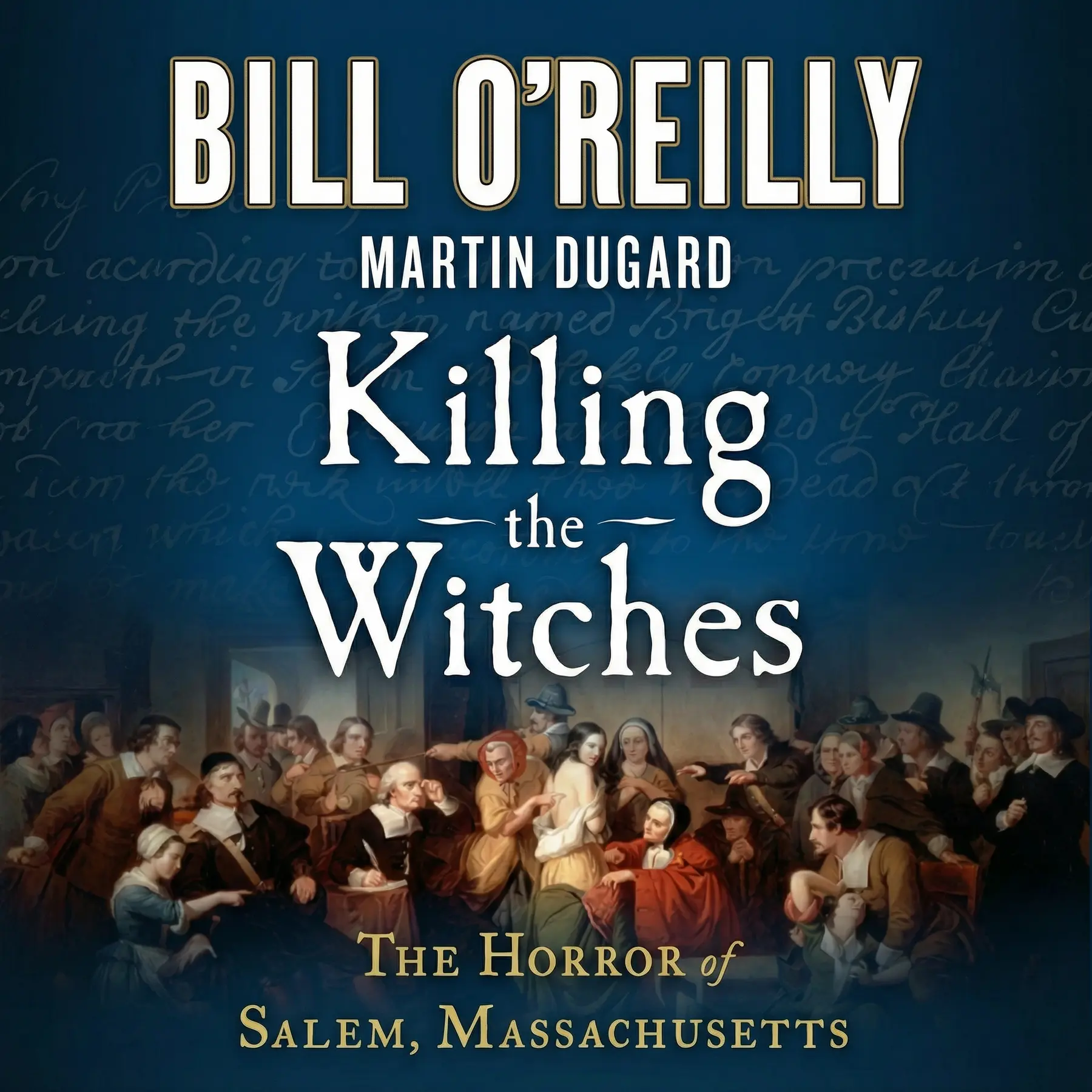
EnglishไทยKilling the Witches: The Horror of Salem, Massachusetts
A retelling of the 1692 Salem witch trials that shows how strict belief, frightened accusers and powerful ministers turned rumor into executions, and how that horror later shaped American religious freedom.
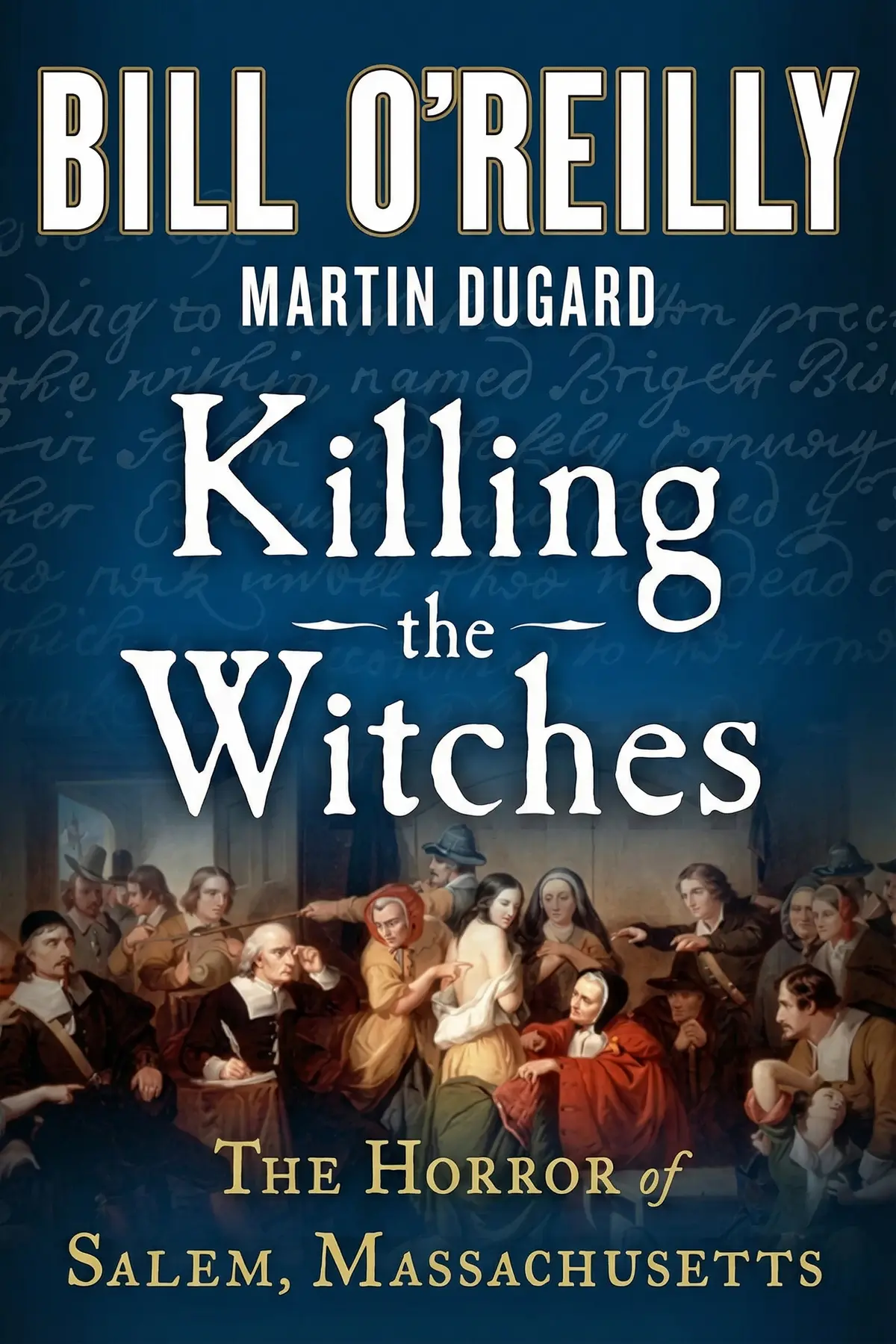
Table of Content
1. Introduction
1 min 01 sec
Most people know Salem only as another word for witch hunt. Killing the Witches, by Bill O’Reilly and Martin Dugard, shows how fast it really happened: between February 1692 and May 1693, a Puritan town accused more than 200 of its neighbors and hanged 19 of them on the word of frightened girls and their visions.
The authors read Salem as the story of what religious zeal does when it holds power and nothing checks it. They also argue that the horror did not stay in 1692. It shaped Benjamin Franklin’s push for religious freedom, and the old dread of the Devil came back in a 1949 exorcism that became The Exorcist.
Follow the story from the strict colony to the gallows and beyond, and the signs of a moral panic start to stand out. Feelings get treated as proof, and doubts stay private. After this, you can recognize those signs wherever they appear next.
2. Spot the conditions that let a panic grow
2 min 06 sec
The town that hanged its neighbors was named after the word for peace. Its founders built something that made the coming horror almost predictable, and the warning signs had been there for decades.
3. See how one confession turned rumor into hangings
2 min 05 sec
An enslaved woman said what a terrified village wanted to hear, and a widow with a taste for bright clothes paid for it. Her trial shows exactly how a courtroom stops working.
4. Watch how a trusted voice silences doubt
2 min 15 sec
At one hanging, a condemned minister did something everyone believed no witch could do. The crowd wavered, until a famous preacher found the words that let the execution go ahead.
5. Learn what finally breaks a moral panic
2 min 02 sec
The executions stopped, then the governor who stopped them was arrested and a hanging judge took his place. Why the trials still never restarted says a lot about how frenzies lose their grip.
6. Learn how Salem shaped America's First Amendment
1 min 57 sec
Benjamin Franklin once had a pleasant meeting with Cotton Mather and admired parts of his science. Decades later, at eighty-one, he made sure the zeal Mather stood for could never again rule the country.
7. Recognize Salem's fear in a modern horror story
1 min 55 sec
A Maryland teenager, two Jesuit priests and a secret diary produced one of the most frightening films ever made. The boy behind it spent the rest of his life hiding from his own story.
8. Conclusion
1 min 20 sec
O’Reilly and Dugard tell Salem as a story with two endings. One is Gallows Hill, where 19 people, most of them women, were hanged after trials that leaned on scripture and broke every standard of justice. The other is a hall in Philadelphia, where an old man who remembered those trials helped make sure no single faith could rule the new country. The same horror produced both a warning and a principle.
Faith, in the authors’ view, can bring out the best and the worst in people, and the worst comes when zeal holds power and no one checks it. They see America today as a secular country that still struggles to balance belief with pluralism, though it is far from 1692.
The book offers a way to read moments of mass fear. Notice when emotion starts to count as proof, the way the girls’ fits did at Bridget Bishop’s trial. Watch for the respected voice that turns doubt into loyalty, as Cotton Mather did at the scaffold. And value the protections that seem dull, such as strict rules of evidence and a wall between church and state, because Salem showed what can happen without them.
The jury needed twenty minutes to condemn Bridget Bishop. That is how fast justice can disappear once a crowd has made up its mind.
About this book
What is this book about?
In the Salem hysteria, which ran from February 1692 to May 1693, over 200 people faced witchcraft accusations and 19 of them were sent to the gallows. Bill O'Reilly and Martin Dugard tell how a Puritan settlement founded on strict obedience reached that point, starting with fits in a minister's home and a confession made to escape death. The authors follow the people who drove the panic, from twelve-year-old accuser Ann Putnam to the minister Cotton Mather, who silenced doubters at the gallows. They also follow the events that finally stopped it: alarm in England, a governor whose own wife was accused, and accusers who began admitting they had lied. Then the book widens. O'Reilly and Dugard argue that Salem stayed in Benjamin Franklin's memory and helped push him to protect all faiths in the Constitution and the First Amendment. They close with a 1949 exorcism in Maryland that became The Exorcist, as proof that fear of the Devil never left American life. Readers come away with a clear account of how moral panics start, spread and end.
Book Information
Who it's for
New to Salem's trials
History readers who know the word Salem but not how the trials unfolded or ended.
Worried about online pile-ons
People worried about online pile-ons and moral panics who want a clear historical case study.
Curious about religious freedom
Readers curious how colonial religion shaped the First Amendment and American ideas of religious freedom.
About the Author
Bill O’Reilly
Bill O'Reilly reported for CBS News and ABC News, anchored Inside Edition and hosted The O'Reilly Factor on Fox News until 2017. He holds a history degree from Marist College and master's degrees from Boston University and Harvard. Martin Dugard is a historian and journalist who covered the Tour de France and wrote the Taking series. Together they wrote Killing Lincoln, published in 2011 and part of the Killing series that Dugard co-wrote.
Ratings & Reviews
Ratings at a glance
What people think
Listeners find the material captivating, with one individual mentioning that it makes history a pleasure to experience. The work is full of historical details, especially regarding the early American colonies, and listeners value the prose style, with one pointing out its straightforward approach to history. The narrative receives high marks, as one listener characterizes it as an amazing narrative about the Salem Witch Trials, and listeners generally find the content both informative and stimulating. Reactions to the tempo are varied; while some find it quick-paced, others feel it comes across as disjointed.
Top reviews
Samuel
Finally got around to reading the latest 'Killing' book and it didn't disappoint at all. O'Reilly and Dugard have a masterclass in making history accessible to the general public. This book is packed with information about the early American colonies that I never learned in school. I was particularly fascinated by the legal aspects of the trials—how 'spectral evidence' was actually allowed in a court of law. It’s terrifying to think about! The second half of the book, which links these events to the birth of our nation, was equally compelling. It shows that our freedoms weren't just random; they were a direct reaction to the horrors of the past. The writing is straightforward and the research seems very thorough. It’s an amazing narrative that kept me hooked from the very first page to the very last.
Show moreOoi
Ever wonder how a small group of girls could dismantle an entire community? This book explains that psychological descent into madness perfectly. The storytelling is top-notch, making you feel like you are standing right there in the meeting house during the examinations. I loved how the authors didn't just stop at 1692 but showed how the 'witch hunt' mentality has persisted throughout American history. The inclusion of the Founding Fathers section was brilliant because it provided the necessary 'antidote' to the Salem poison. It's a wonderful refresher on our history that feels incredibly relevant to what is happening in the world today. How accusations can ruin lives without proof is a timeless lesson we should all remember. This should be required reading in schools for its insights into human nature and the importance of due process.
Show moreSombat
Wow, what a rollercoaster of historical facts and gripping narrative! I've been a fan of this series for a long time, and 'Killing the Witches' might be one of my favorites yet. It reads like a Stephen King novel, but the fact that it's all true makes it even more chilling. The detail provided about the victims and the greedy motives of the accusers was eye-opening. I also appreciated the final section on modern exorcisms and the legacy of the 'Exorcist' story; it showed that our fascination with the supernatural hasn't changed much in 300 years. The book is comprehensive, fast-paced, and very thought-provoking. It really makes you stop and think about the dangers of groupthink and religious extremism. Another home run for O'Reilly and Dugard—I couldn't put it down!
Show moreAndrei
As a casual history buff, I found this incredibly easy to get through. I’ve always been fascinated by the Salem trials, and this book provides a very accessible gateway into that dark period. The authors do a great job of explaining the religious fervor that allowed such a tragedy to occur. While some reviewers complained about the sections on the Revolution and the Constitution, I actually liked seeing how those early failures in the justice system eventually influenced the Bill of Rights. It puts the trials into a larger context of American evolution. The writing style is very cinematic, almost like watching a documentary on the History Channel. It might not be the most academic source out there, but it’s certainly engaging and thought-provoking. It makes history feel alive rather than just a list of dates and names. Definitely worth a look for the narrative alone.
Show moreKasemsan
Picked this up on a whim and stayed for the excellent storytelling. The way they describe the accusations and the subsequent hangings is truly haunting and makes you realize how fragile a society can be when fear takes over. I found the parallels between the 17th-century hysteria and modern-day social media 'mobs' to be quite interesting, even if I didn't agree with every single point the authors made. The pacing is very fast, which I enjoyed, though I will admit the jump to the 'Exorcist' section felt a little out of left field. Still, the information about the Founding Fathers was a nice refresher, even if I’d heard some of it before. It’s a very informative read that doesn’t get bogged down in dry details. If you want a book that is both entertaining and educational, this is a solid choice for your shelf.
Show moreRoo
The chapter on the actual trials in Salem was haunting and very well-researched. It really highlights the plight of the innocent victims who were caught in a legal system that was rigged against them from the start. I’ve read a few of the 'Killing' books, and this one follows that same direct, fast-moving style that makes history enjoyable. I particularly liked the focus on the Mather family and their role in the madness. While the middle section about the Revolution felt a bit like a detour, it helped bridge the gap to why we have the protections we do today. It’s an enlightening look at how fear can be weaponized by those in power. My only minor gripe is the formatting; the present tense takes a little while to get used to. Overall, it’s a very comprehensive and thought-provoking addition to the series.
Show moreNannapat
The first hundred pages really grabbed me with the chilling atmosphere of 1692 Massachusetts. The descriptions of the Puritan lifestyle and the mounting hysteria among the teenage girls were quite engaging and read almost like a thriller. However, my excitement cooled off once the book shifted gears into the 18th century. I understand trying to show the long-term impact of these events on American law, but the detour into the life of Benjamin Franklin and King George III felt like a different book entirely. To be fair, the storytelling is straightforward and easy to digest, which I appreciate. It just lacked the cohesive structure I was looking for. It’s a decent enough 'lite' history for a beach read, but serious history buffs will likely find the disjointed pacing and lack of depth a bit disappointing. It's okay, just not great.
Show moreBank
Frankly, I have mixed feelings about this one. On one hand, O’Reilly and Dugard know how to tell a story that keeps you turning the pages; the prose is punchy and the short chapters make it a quick read. The section on the actual trials was enlightening and truly showed the horror of how land greed fueled the accusations. On the other hand, the book is incredibly non-linear. One minute you are in a courtroom in Salem, and the next you are learning about the production of a horror movie from the 1970s. It feels like a collection of interesting articles slapped together rather than a unified narrative. I also found the comparisons to modern 'witch hunts' in the epilogue to be a bit of a stretch. It’s an okay refresher on American history, but the title is definitely a bit misleading regarding the actual content.
Show moreTaweesak
Why on earth is half of this book about the Revolutionary War? I picked this up because the title promised 'The Horror of Salem,' but after a decent start, the narrative completely veers off track. The authors attempt to link the Salem trials to the Founding Fathers, but the connection is tenuous at best. It feels like they had leftover research from 'Killing England' and just decided to pad the page count. The transition into the history of modern exorcisms in the final chapters was even more baffling. While the writing is fast-paced, the lack of focus makes it a frustrating read. Truth is, if you’ve read any of O'Reilly's other history books, you've already read half of this one. It's formulaic and feels rushed, which is a shame because the Salem portion actually had some potential before it was abandoned for unrelated filler.
Show moreWit
This book is a total train wreck, and that is putting it nicely. I expected a deep dive into the Salem Witch Trials, but what I got was a disjointed mess that spent more time on the American Revolution and the filming of 'The Exorcist' than the actual subject matter. The present-tense writing style is incredibly jarring for a history book; it feels forced and amateurish. Even worse, the factual errors are glaring. To say five people died in the Boston Massacre and then list six names—or vice versa depending on the page—is just sloppy editing. It is clear that the authors value sensationalism over historical accuracy. The author's note at the end is the final straw, where O'Reilly pivots to a bizarre rant about cancel culture and J.K. Rowling. Honestly, it felt like a bait-and-switch. Do not waste your time if you want real scholarship.
Show moreQuestions about this book
What is Killing the Witches about?
Bill O’Reilly and Martin Dugard retell the Salem witch trials of 1692 and 1693, when more than 200 people were accused and 19 were hanged. They trace the panic from the strict Puritan founding of Salem through the accusers, judges and ministers who drove it, then follow its legacy into Benjamin Franklin’s defense of religious freedom and a 1949 exorcism that inspired The Exorcist.
Why did the Salem witch trials end?
The authors point to several forces acting together. News of the trials alarmed King William and Queen Mary in England. Governor Phips, after his own wife was accused, halted arrests, freed prisoners and dissolved the Salem court in October 1692. And the accusers lost credibility as some admitted they had lied for revenge or fame, so Judge Stoughton could not revive the trials.
What role did Cotton Mather play in the Salem witch trials?
In the authors’ account, Cotton Mather was the leading voice behind the trials. The influential minister preached that witches threatened Puritan society, calmed doubtful crowds at hangings such as that of Reverend George Burroughs, and wrote Wonders of the Invisible World defending the purge. His father Increase privately doubted spectral evidence but mostly backed him in public.
How does the book connect Salem to the First Amendment?
O’Reilly and Dugard argue that Benjamin Franklin, who grew up under Puritan influence and rejected Cotton Mather’s witch hunting, drew on the memory of Salem at the 1787 Constitutional Convention. Salem showed him the danger of a zealous government unchecked by individual rights, so he pushed for protection of all faiths and worked with James Madison on the First Amendment.
Who should read Killing the Witches?
It suits readers who want a gripping narrative history of Salem and its aftermath, anyone interested in how fear spreads through a community, and those curious about the roots of American religious freedom. The book also appeals to readers interested in the real 1949 Maryland case behind The Exorcist and how superstition has persisted in modern culture.
Readers also enjoyed

Alexander Hamilton
Ron Chernow

Alexander the Great
Philip Freeman

A History of Iran: Empire of the Mind
Michael Axworthy
A History of the World in 6 Glasses
Tom Standage

A Long Way Gone: Memoirs of a Boy Soldier
Ishmael Beah


AUDIO SUMMARY AVAILABLE
Listen to Killing the Witches in 15 minutes
Get the key ideas from Killing the Witches by Bill O’Reilly, plus 5,000+ more nonfiction titles.
- 5,000+ titles
- Listen as much as you want
- 7-day free trial
- Cancel anytime









