
Confronting Evil: Assessing the Worst of the Worst
Bill O'Reilly
 English
A brisk tour of American presidents, from George Washington to Donald Trump. It shows how restraint, resolve and attention, or their absence, decided who led the country well, and why a peaceful handover is the test that matters most.
58 sec
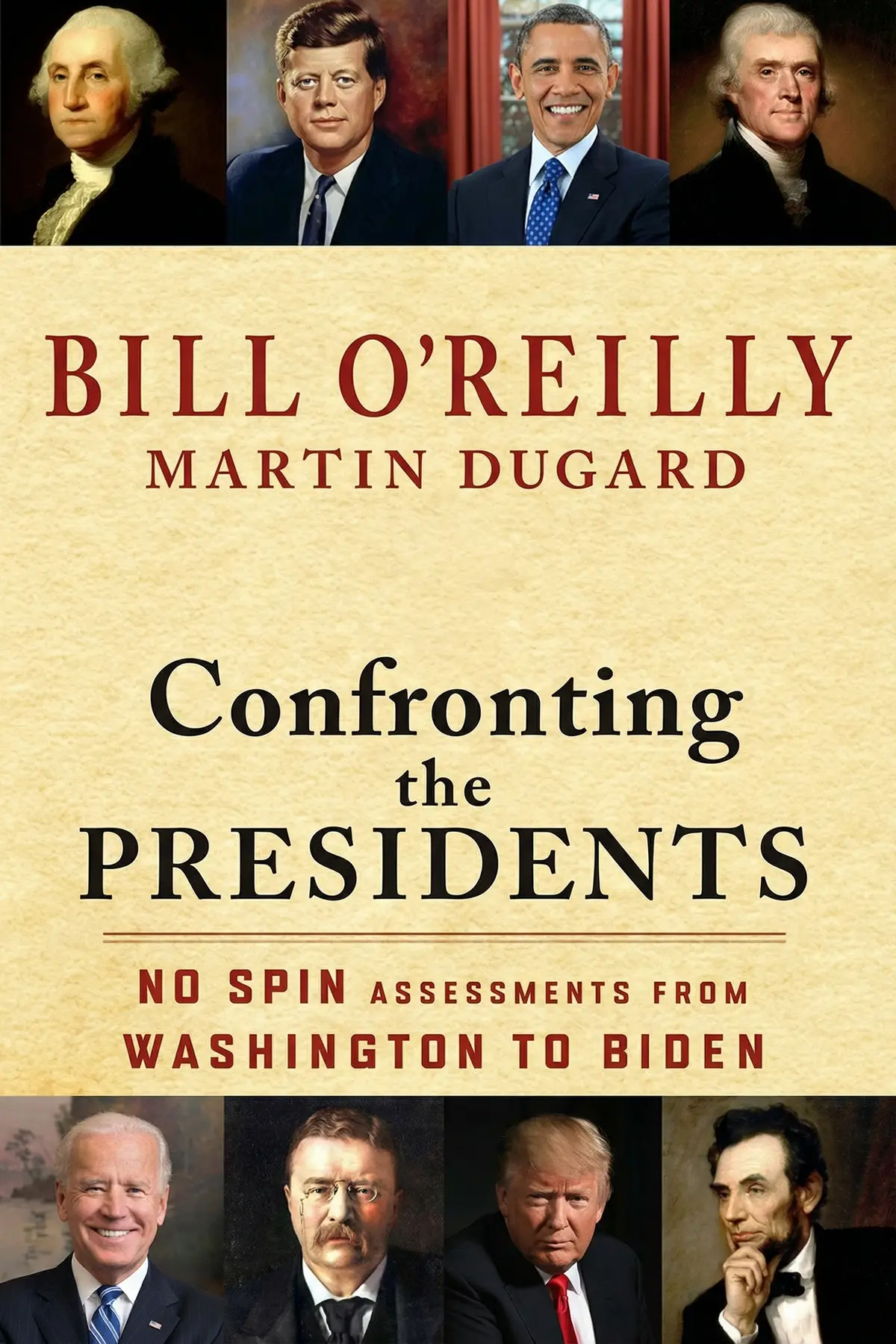
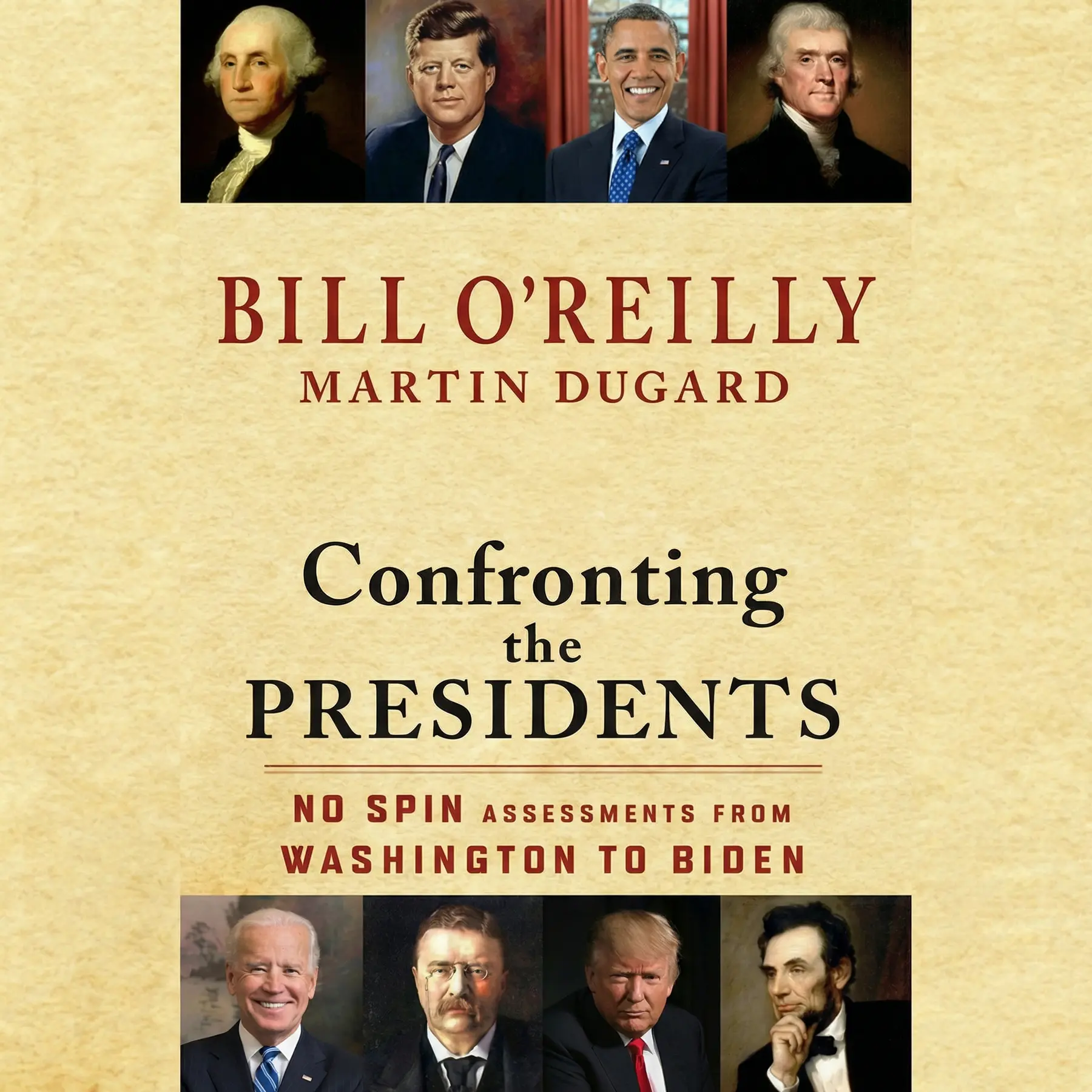
If presidents are mostly names on statues to you, there is a simpler way to judge them, and it starts with George Washington. In Confronting the Presidents, broadcaster Bill O’Reilly and writer Martin Dugard argue that Americans trusted their first president largely because he had already proved he would give power up. He retired to his farm and had to be persuaded to come back.
That idea runs through their assessments, from Washington to Biden. The leaders history praises or condemns differ less in background or charm than in how they handled power. Did they use it firmly in a crisis? Did they watch what was done in their name, and did they hand it back?
Five episodes carry the argument here, from a reluctant general and a poker game in the White House to a stock market crash and a riot at the Capitol. Each one gives you a test for judging any leader, including the ones you work for, or the one you are becoming.
2 min 29 sec
America’s first president was picked partly for something he chose not to do. A tense family dispute over money shows the same character in private, and where his sense of duty finally drew a line.
2 min 43 sec
Two presidents faced the same looming civil war one after the other. One called his concessions practical. The other refused to bend. Their eating habits differed almost as sharply as their results.
2 min 28 sec
A president tells his card partners to forget who he is, while White House china sits in the pot. Meanwhile his old friends are running the government, and he notices nothing until the investigators arrive.
2 min 34 sec
A self-made millionaire and a born aristocrat faced the same economic collapse. The one who had lived through hard times misjudged it badly, and the one who never had made a hundred days count.
2 min 33 sec
For more than two centuries, every American president gave up the office, whether gracefully or grudgingly. Then one afternoon in 2021 broke the pattern, and the authors explain why that day outweighs the rest of a mixed record.
1 min 26 sec
A reluctant general, a poker player in the White House and a riot at the Capitol have one thing in common. Each answers the question O’Reilly and Dugard keep asking: what did this person do with power? Background predicts surprisingly little. Lincoln came from a log cabin and Buchanan from money. Hoover built himself up from nothing and FDR never lacked anything, yet it was the aristocrat who rescued the economy and the self-made man who misjudged the crisis. Character showed in choices. Did they give power up, use it firmly and watch how others used it? And when the time came, did they let it go?
The authors also insist that presidents are human. Washington, carved into Mount Rushmore, still had to write an awkward letter about his own mother’s pension request. That is why checks on power matter, and why each leader’s habits matter too.
You can use the same tests closer to home. When you choose whom to trust with authority, watch what they do when power is optional. When a conflict grows, ask whether your concessions are buying time or wasting it. And when your turn ends, leave the way Bush did, rooting for whoever comes next.
The authors say it is finally up to the reader to decide how each president deserves to be remembered.
Presidents tend to be remembered as statues or as scandals. Bill O'Reilly and Martin Dugard set out to judge them as people who held enormous power and either used it well or let it slip. In their view, the early presidents saw themselves as guardians of a fragile experiment in liberty. Later ones carried decisions that reached hundreds of millions of lives around the world. The authors set leaders side by side. George Washington won trust because he had already shown he would walk away from power. James Buchanan tried to appease the slave-holding South and left the government unready for war, while Abraham Lincoln fought it with relentless resolve. Warren Harding played poker while his friends looted the government. Herbert Hoover clung to belt-tightening during the Great Depression, and Franklin Roosevelt rebuilt the role of government in his first 100 days. The book ends with Donald Trump and January 6, 2021, which the authors see as the single break in more than two centuries of peaceful transfers of power. Readers come away with a clear set of tests for judging any leader, along with the human details, from mothers to card games, that make presidents feel like real people.
History beginners who want the big American presidents explained through vivid, human stories.
Managers and team leads looking for clear lessons on restraint, resolve and paying attention.
Readers trying to place January 6, 2021, within two centuries of presidential handovers.
Bill O'Reilly, born in 1949, reported for CBS News and ABC News, anchored Inside Edition and hosted The O'Reilly Factor on Fox News, which led cable news ratings for sixteen years. He now hosts No Spin News. He studied history at Marist College and holds master's degrees from Boston University and Harvard's Kennedy School. Martin Dugard, born in 1961, is a journalist and historian who covered the Tour de France and wrote the Taking series. Together they wrote the Killing series, including Killing Lincoln and Killing Kennedy.
Bill O'Reilly
Bill O’Reilly
Listeners find the writing captivating and skillfully crafted, noting the accessible prose and fascinating anecdotes regarding the presidents. They also value the meticulous research and factual depth, which serves as an excellent tool for history fans. However, perspectives on accuracy are split; while some believe it is very factual, others view the content as biased.
Wow, this was exactly what I needed to brush up on my US history without feeling like I was back in a boring high school classroom. The authors have a knack for taking dense political events and turning them into engaging stories that flow naturally. I especially loved the focus on the personal lives and exercise habits of the presidents, like Theodore Roosevelt’s obsession with being active. It makes these legendary figures feel like actual human beings rather than just names on a statue. While some critics might find the ten-page chapters a bit short, I thought the pacing was perfect for a general overview. It functions like a high-end collection of snapshots that capture the essence of each administration. I’m definitely going to use this as a jumping-off point to read more about Lincoln and FDR. If you want a fun, fast-paced history lesson that doesn't get bogged down in academic jargon, this is the book for you.
Show morePicked this up because I’ve been a fan of the 'Killing' series for years, and I was curious how O’Reilly would handle a broader historical survey. This book is much more of a traditional biographical collection than his previous work, yet it retains that signature narrative drive. The authors do an excellent job of highlighting the 'good, bad, and ugly' of every single leader from Washington to the modern era. I found the trivia particularly addictive, especially the bits about Benjamin Harrison being terrified of electricity! It is rare to find a history book that manages to be this informative while remaining so accessible to the general public. Some might say it feels like a Wikipedia summary, but the storytelling quality here is much higher than any encyclopedia entry. It’s a great resource for students or anyone who wants a quick refresher on the people who shaped our nation.
Show moreAs someone who typically avoids dry history books, I found the personal anecdotes about the first ladies to be incredibly moving. The authors managed to weave the domestic lives of the presidents into the larger political narrative seamlessly. Learning about the resilience of these couples in the face of losing children while leading a nation was truly eye-opening. The book is well-written and moves at a clip that keeps you engaged from start to finish. I particularly enjoyed the 'no spin' approach to the earlier presidents, where the focus stayed on their character and the challenges of their time. The trivia regarding George H.W. Bush’s hatred of broccoli and Andrew Garfield’s tragic medical care added a lot of color to the reading experience. This is a perfect gift for anyone who likes history but doesn't have the time to commit to a 900-page tome.
Show moreEver wonder why Benjamin Harrison slept with the lights on or how Andrew Garfield’s medical care actually led to his demise? This book is absolutely packed with those kinds of fascinating nuggets that make history feel alive and vibrant. I listened to the audio version while running, and the chapters were the perfect length to keep me motivated and focused. O’Reilly and Dugard have a talent for identifying the most interesting parts of a person's life and highlighting them without getting bogged down in policy minutiae. It was refreshing to see the authors give credit to some of the lesser-known presidents who actually had a significant impact on the country. The research feels thorough, and the stories are told with a dramatic flair that keeps the reader hooked. This is definitely one of the most accessible history books I’ve picked up in years.
Show moreTruth is, I wasn't sure if I'd learn anything new from a book that only gives about ten pages to each president. I was wrong! Even as a history buff, I found several 'fun facts' and personal details that I had never encountered in more academic texts. The focus on the daily routines and physical health of the presidents was a unique angle that I haven't seen explored this way before. It’s clear that a lot of research went into finding these specific anecdotes to keep the reader engaged. The book is organized chronologically, which makes it easy to see how the office of the presidency evolved over the centuries. I think this would be an excellent resource for homeschoolers or students who want to get a broad overview of American history. It’s engaging, well-researched, and ultimately a very satisfying read for anyone who loves the story of our country.
Show moreFinally got around to finishing this one, and while it isn't a deep dive, it serves as a fantastic primer for anyone interested in the Oval Office. O’Reilly and Dugard provide a “flyover” view that is incredibly easy to digest during a busy week. You won't get the exhaustive detail of a David McCullough biography here, but that clearly isn't the goal of this volume. I did notice a couple of errors that should have been caught in editing, specifically regarding Prescott Bush’s name, which was a bit distracting. Despite that, the prose is crisp and the research into the first ladies added a layer of depth I wasn't expecting. It was fascinating to see how grief and personal tragedy shaped the policy decisions of men like Pierce or Lincoln. To be fair, there is a slight lean in the later chapters, but the overall historical context is solid enough for the average reader.
Show moreAfter hearing so much about the controversy surrounding O'Reilly's bias, I went into this book with a healthy dose of skepticism. Frankly, I was pleasantly surprised by how much of the book remained objective and focused on the historical records. Most of the chapters provide a balanced look at the achievements and scandals that defined each presidency without a heavy political slant. I did feel that the assessment of Ronald Reagan was a bit too glowing, failing to fully explore some of the complexities of his era. On the flip side, the sections on the more obscure 19th-century presidents were incredibly enlightening. I learned more about James K. Polk in ten pages than I ever did in school. The writing style is punchy and direct, which makes it very hard to put down once you start a new chapter. It is a solid four-star read for any history buff.
Show moreDirect and punchy, the writing style in this volume keeps things moving at a breakneck pace that highlights the triumphs and tragedies of our leaders. I appreciated how the authors didn't shy away from the flaws of even the most beloved figures in our history. They managed to paint a picture of these men as complicated individuals rather than just names on a list. My only real complaint is that the 400-page limit makes it impossible to give a truly comprehensive review of the more influential presidents. It feels a bit odd to give the same amount of space to William Henry Harrison as they do to Franklin D. Roosevelt. However, for a general reader looking for an entertaining and informative survey of the US Presidency, this book hits the mark. It’s a great addition to any library, provided you’re looking for a summary rather than a deep dive.
Show moreThe chapter on George H.W. Bush really frustrated me because of a glaring typo naming his father 'Preston' instead of Prescott. When you’re reading a book that claims to 'confront' history, you expect the basic facts to be triple-checked by the editorial team. While the book is an easy read, it often feels a bit superficial, covering only the broad strokes of each man’s life. If you’ve already read Chernow or Caro, you probably won’t find anything new or groundbreaking in these pages. It’s a decent introductory text for someone with very little background knowledge, but it lacks the analytical depth I was hoping for. The timeline occasionally jumps around in a way that can be confusing if you aren't already familiar with the era. Not a bad book by any means, but it definitely feels like a 'CliffsNotes' version of American history.
Show moreLook, if you are searching for a comprehensive, 800-page biography on every leader of the free world, you are going to be disappointed here. This book is exactly what it looks like: a brief, ten-page overview of each president. While the prose is engaging and simple to follow, the blatant bias starts to seep in once the authors reach the modern era. The treatment of the most recent administrations felt a bit out of touch with the factual, historical tone of the earlier chapters. I also found the focus on personal scandals and adultery to be a bit excessive at times, bordering on gossip. It’s an entertaining read if you take it with a grain of salt, but it shouldn't be your only source of historical information. It works as a light introduction, but the lack of depth on monumental figures like Lincoln is a major drawback.
Show moreBill O’Reilly and Martin Dugard assess American presidents from George Washington onward, judging them by how they handled power. They set leaders side by side: Buchanan’s appeasement against Lincoln’s resolve, Harding’s neglect, Hoover’s rigidity against Roosevelt’s bold New Deal. They close with Donald Trump and January 6, 2021, which they treat as the one break in more than two centuries of peaceful handovers.
Americans feared a would-be dictator above all. Washington had already shown he did not crave authority: after winning the war, he went home to farm his estate and had to be persuaded to return. The authors argue that this reluctance made him trustworthy. He then served two terms and set the precedent of handing power over peacefully.
The authors give a mixed verdict on most of his term. They criticize his extreme rhetoric, his incivility and his two impeachments. They also credit him with rising real wages, falling inflation, arming Ukraine, defeating ISIS and containing Iran. In their view, January 6, 2021, marks him as unique, since no other president has seriously challenged the peaceful handover of power.
The book points to four tests. Trust leaders who are willing to give power up, as Washington did. Do not appease a growing conflict, because Buchanan’s concessions only left the government unready for war. Watch what people acting in your name are doing, unlike Harding with his Ohio gang. Finally, drop an old approach when a crisis outgrows it, as Hoover failed to do and Roosevelt did.

Masaji Ishikawa

William J. Bernstein

John Rawls

Ben Macintyre




James Shapiro

Miles Taylor
Ben Macintyre
AUDIO SUMMARY AVAILABLE
Get the key ideas from Confronting the Presidents by Bill O'Reilly, plus 5,000+ more nonfiction titles.









