
15 min 56 sec
Available in: English
 ไทย
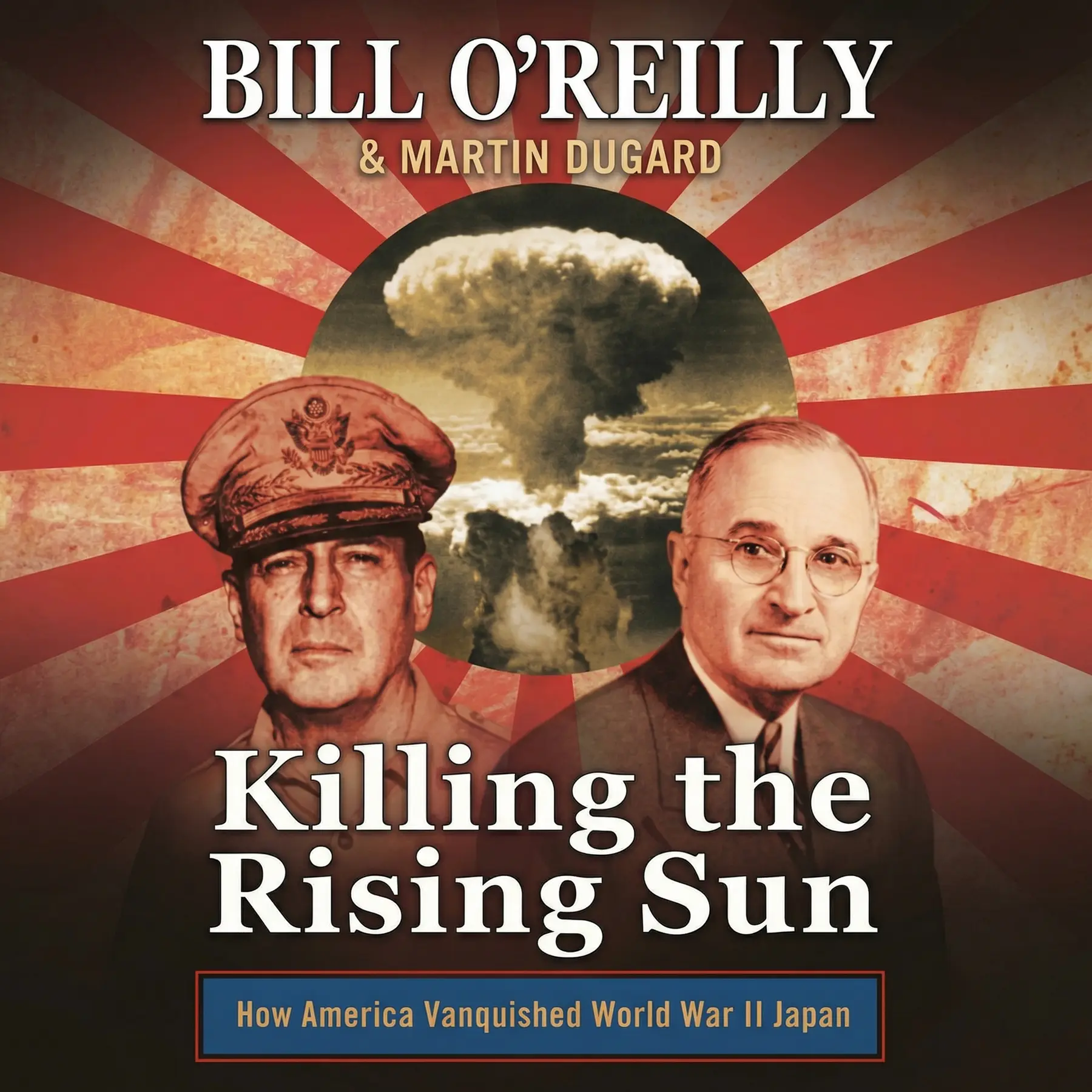
EnglishไทยKilling the Rising Sun: How America Vanquished World War II Japan
A tense account of the last year of the Pacific war. It explains why Japan refused to surrender through firebombing and Hiroshima, and how two atomic bombs and one bargain finally ended World War II.
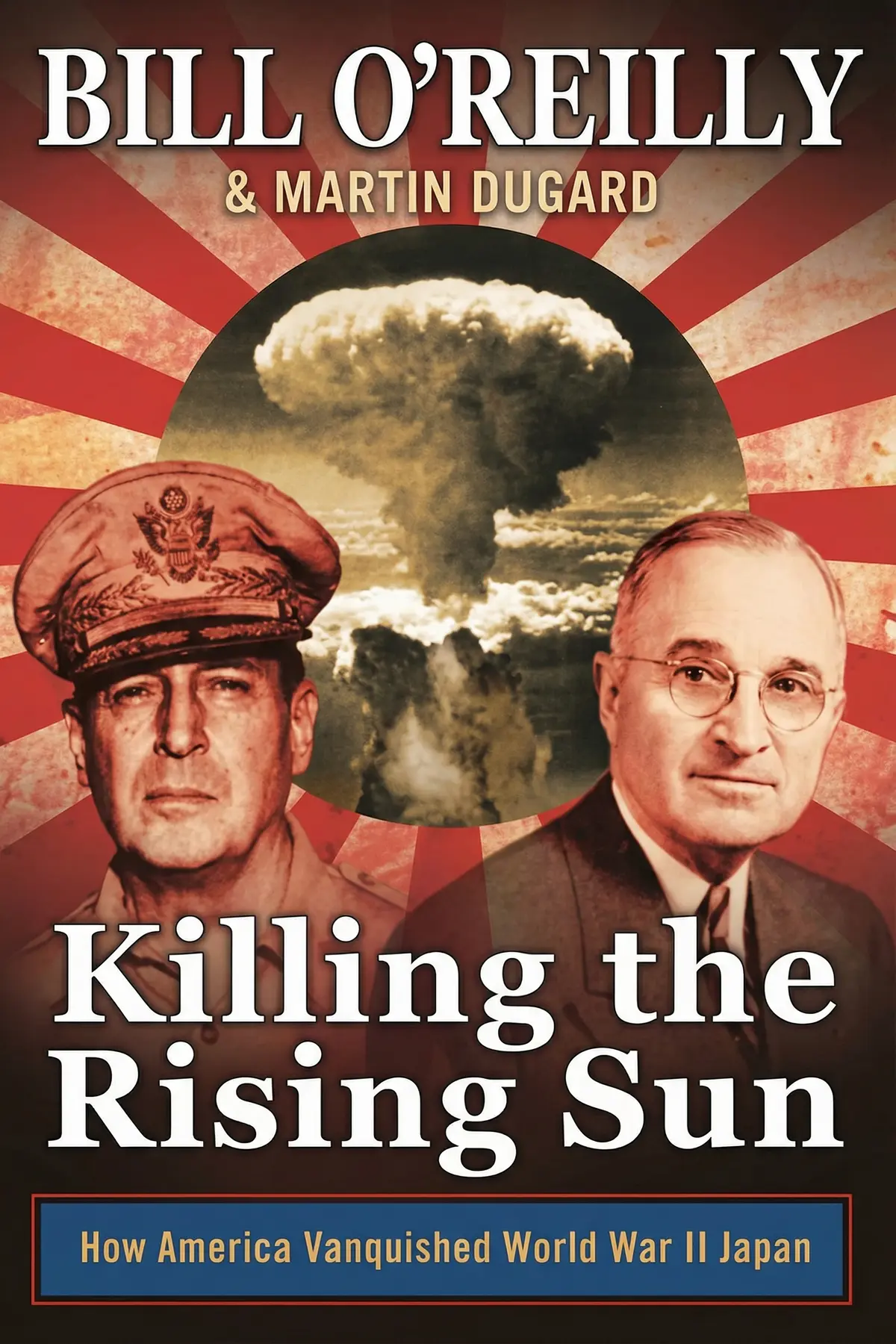
Table of Content
1. Introduction
1 min 10 sec
Most people know that the Pacific war ended with two atomic bombs, but few can explain why Japan kept fighting long after it had clearly lost. In Killing the Rising Sun, Bill O’Reilly and Martin Dugard trace that refusal from the jungles of the Philippines to a surrender letter delivered the day after Nagasaki. Their story turns on a hard fact: by 1945, Japan’s cities were in ruins and its army had no hope of victory, yet Emperor Hirohito would not give in.
The authors show three forces holding that line. Soldiers lived by a warrior code that treated surrender as disgrace. They revered an emperor they believed was divine. And Japan’s leaders feared the war-crimes trials already underway for the Nazis. Follow those forces through Peleliu, the firebombing of Tokyo, a desert test in New Mexico and one morning over Hiroshima, and the end of World War II becomes a story of escalation you can retell, along with the question the book leaves open: whether the bomb was the right choice.
2. See why Japanese soldiers chose death over surrender
1 min 57 sec
American planners expected a four-day battle on a tiny Pacific island and got twelve weeks of slaughter. The reason their estimates kept failing had nothing to do with weapons or numbers.
3. Understand the empire Japan's soldiers were fighting for
1 min 51 sec
A short phrase about cords and a roof carried a vast ambition. Following it across Asia exposes what that ambition cost the people in its path, and why even Pearl Harbor’s timing mattered.
4. Understand the limits of bombing cities to force surrender
1 min 46 sec
A single raid on Tokyo on March 10, 1945 killed 100,000 people and left 40,000 more badly burned. General LeMay hoped the bombing would break the will of the Japanese people, but Japan showed no sign of surrendering.
5. Follow the secret weapon from desert test to Pacific
2 min 14 sec
In a desert stretch of New Mexico called Jornada del Muerto, scientists set off a device whose full effects no one could predict. Thousands of miles away, a new president had to decide what it was for.
6. Picture what one bomb did to Hiroshima's morning
1 min 55 sec
The city had been warned twice, once by the president and once from the sky. What happened at 8:15 that morning, and the reply that followed, is the hardest moment in the book.
7. Weigh the cheers and fears the bomb set off
1 min 51 sec
Some Americans celebrated, others worried about what the world had just accepted. While they argued, Japan faced a new enemy on its border, and a second city waited under the flight path.
8. Learn what fear of war trials did to Japan's surrender
2 min 01 sec
Honor alone does not explain why Japan’s commanders held out so long. A courtroom in Germany was on their minds, and the final deal hinged on the fate of a single man.
9. Conclusion
1 min 11 sec
O’Reilly and Dugard tell a story of escalation meeting a wall. A four-day battle stretched to twelve weeks. Napalm killed 100,000 people in one raid on Tokyo. A single bomb erased 70,000 lives during a morning commute. Each time the palace answered with silence, because the men who could end the war were held by a code that called surrender disgrace, by faith in a divine emperor and by fear of a courtroom like Nuremberg.
The end came through a bargain as well as through force. Japan asked for one thing, its emperor, and Truman found a way to grant it without seeming to yield. Hirohito stayed, untried, while Tojo was sentenced to die.
The authors leave one question open: was the bomb the right choice? Keep both reactions in mind, the soldiers relieved to skip an invasion and the newspaper fearing a new normal for war, and notice how much turned on what a few leaders believed and feared. The bombs forced the surrender, and a promise about one man set its terms.
About this book
What is this book about?
By the autumn of 1944, the Allies were close to winning World War II, yet the Pacific war still had its bloodiest year ahead. Battles meant to last days ran for weeks, Tokyo burned, and a new kind of weapon was tested in the New Mexico desert. Still, Japan's emperor would not surrender. Bill O'Reilly and Martin Dugard follow that refusal from the Philippines and Peleliu to Okinawa, Hiroshima and Nagasaki. They show the forces that held it in place: a samurai code that treated surrender as disgrace, devotion to an emperor seen as divine, and leaders afraid of facing trials like the Nazis at Nuremberg. Along the way they set out Japan's wartime atrocities, the Manhattan Project, the Trinity test and the crews who flew the bombs. Readers get a clear, connected story of how the war in the Pacific ended, why it took two bombs and a compromise over Hirohito, and the question the authors leave open: whether dropping the bomb was the right choice.
Book Information
Who it's for
History listeners
History listeners who know the war ended with the atomic bomb but not why Japan held out so long.
Students and educators
Students and teachers looking for a clear, connected account of the Pacific war's final year.
Weighing the Hiroshima debate
Readers weighing the moral debate over Hiroshima and Nagasaki who want the events in order.
About the Author
Bill O’Reilly
Bill O'Reilly worked for CBS News and ABC News, anchored Inside Edition and hosted The O'Reilly Factor on Fox News until 2017, the top-rated cable news program for 16 years. He holds a history degree from Marist College and master's degrees from Boston University and Harvard. Martin Dugard has written history since 2000, including the Taking series, and covered the Tour de France as a journalist. Together they wrote books in the Killing series, including Killing Lincoln.
Ratings & Reviews
Ratings at a glance
What people think
Listeners find this book to be a compelling and fascinating experience that maintains their attention from beginning to end. Additionally, the work is thoroughly researched and composed in a historical style, offering a precise chronicle of the conflict. They value its informative nature, with one listener characterizing it as a detailed investigation, while another remarks that it is a captivating narrative which remains faithful to the actual events.
Top reviews
Game
Finally got around to picking up Killing the Rising Sun, and frankly, I was blown away by the narrative drive. O'Reilly and Dugard have this knack for taking historical facts and turning them into a gripping story that feels more like a thriller than a dry textbook. The details about the Manhattan Project and the internal struggles within the Truman administration provided an in-depth study I hadn't encountered before. While some might find the descriptions of Japanese atrocities hard to stomach, they are necessary to understand the context of the era. The pacing is relentless, keeping me interested from the first page to the final conclusion about the atomic bombs. It’s an educational experience that doesn't sacrifice engagement for accuracy. I appreciated the inclusion of maps and photos which really helped visualize the Pacific theater.
Show moreSkylar
As someone with family who served in the Pacific, this book hit home in a very emotional way. My grandfather was part of the forces preparing for a land invasion of Japan, and reading about the projected casualties for Operation Downfall made me realize just how precarious his situation was. This book is a riveting account that doesn't shy away from the horrific realities of war. The description of the conditions for POWs was deeply disturbing but essential to the narrative. O'Reilly's voice is clear throughout, and while it's definitely written for a general audience, the historical accuracy seems solid. The way it weaves together the lives of world leaders like Hirohito and Truman with the experiences of "grunts" on the ground is masterful. It’s a powerful, gripping story that stays true to the facts while honoring the sacrifices made.
Show moreRania
Wow, I couldn't put this one down. I started it on a Saturday morning and was finished by Sunday evening. It’s a page-turner in every sense of the word. The authors have a way of making history feel immediate and vital, rather than like something that happened decades ago. I especially liked the focus on the lesser-known figures, like the scientists behind the Manhattan Project and the individual sailors who witnessed the devastation. The book is well-researched and written like a history book, but with the soul of a novel. It’s a historically accurate account that managed to teach me things I never learned in school. Whether you agree with the ultimate decision to drop the bomb or not, this book provides the necessary context to understand why it happened. High-speed, high-impact reading.
Show morePatchara
This book doesn't pull any punches when it comes to the brutality of the Japanese occupation and the treatment of prisoners. It’s a visceral, often difficult read, but it’s an important one. I found the timeline of the atomic bomb development to be particularly fascinating. The authors managed to balance the technical aspects of the Manhattan Project with the human cost of the war. It's an engaging read that stays true to the facts while providing a narrative that is easy to follow. I’ve read a lot of WWII history, but the level of detail regarding the internal politics of the Japanese high command was new to me. This is a well-researched and gripping story that honors the veterans who fought in the Rising Sun. A must-read for any history buff.
Show moreVipawan
What struck me most about Killing the Rising Sun was the sheer scale of the tragedy it describes on both sides. The authors do a fantastic job of illustrating the horror of the firebombing of Tokyo and the subsequent atomic strikes. It’s an educational and in-depth study of a moment that defined the 20th century. I appreciated how the book ends by recommending visits to the memorials in Hiroshima and Nagasaki; it shows a level of respect for the victims that balances the "rah-rah" tone found in other sections. The research is clear, and the story is told with a sense of urgency that makes it hard to stop reading. It’s a riveting and engaging work that brings the past to life. If you want to understand the complexities of the Pacific theater, this is a great place to start.
Show moreNora
The chapter on General MacArthur was definitely a highlight for me, painting a portrait of a man with an ego as large as his military genius. I've read quite a bit about WWII, but this book managed to present some brand-new details about the Philippines that I hadn't known. Truth is, the authors clearly have a specific viewpoint regarding the necessity of the atomic bomb, and they lean into it heavily. While I found the research to be well-documented and the history factually accurate, the "Note to Readers" at the start felt a bit politically charged and unnecessary for a history book. However, once you get past that, the narrative is riveting. It’s a fast read that does a great job of explaining the harrowing stakes of Operation Downfall. It isn't a scholarly tome, but it’s a solid, engaging overview for anyone interested in the end of the war.
Show morePaiboon
Ever wonder what really goes through a president's mind when faced with a decision that will change the world forever? This book dives deep into Truman's dilemma, presenting the facts and figures behind the choice to use atomic weapons. To be honest, I expected a more biased take, but I found the discussion about the various peace offers and the Soviet influence to be quite nuanced. The research is obvious, and the storytelling is top-notch. My only minor gripe is that the authors sometimes use language that feels a bit one-sided when describing the combatants. Americans are "heroic" while the enemy is "creeping," which is a bit of a cliché in war writing. Still, the historical account of the sinking of the Indianapolis was heart-wrenching and brilliantly told. It’s a well-researched study that kept me hooked.
Show moreElise
To be fair, the opening note about modern politics almost made me put the book down before I even started. It felt out of place. But I’m glad I stuck with it because the actual historical narrative is excellent. The way O'Reilly and Dugard describe the final months of the war in the Pacific is truly gripping. They do an amazing job of showing the sheer desperation of the Japanese military and the impossible choices facing the Allied command. It's a quick read, but it feels like a very thorough, in-depth study of those final days. The maps were helpful, and the photos added a layer of reality that words alone can't convey. It’s a popular history that is both educational and entertaining, even if the author's personal opinions peek through the curtains every now and then.
Show moreRoo
After reading Killing Lincoln and Killing Kennedy, I had high expectations for this one, and it mostly delivered. The "Killing" series has a specific formula—fast-paced, personality-driven, and focused on pivotal moments—and it works perfectly for the end of WWII. Frankly, the writing is much more polished here than in some of the previous installments. The focus on the personal flaws and virtues of leaders like General MacArthur makes them feel like real people rather than just statues in a park. While the book definitely tries to lead the reader toward a certain conclusion regarding the A-bomb, it still presents enough data for you to form your own opinion. It’s a solid piece of pop journalism that provides a historically accurate account without being bogged down in academic jargon.
Show moreIsaiah
Look, I have mixed feelings about this one. On one hand, the material is undeniably interesting and the authors do a decent job of summarizing a very complex period of history. On the other hand, the writing style can feel a bit clumsy and repetitive at times, almost like it's trying too hard to be dramatic. I found the inclusion of current political commentary in the introduction to be a major distraction from the actual historical content. That being said, the section on the development of 'Little Boy' and 'Fat Man' was quite educational. It provides a quick, popular history sort of overview that some might enjoy as a starting point. If you’re looking for a deep, scholarly analysis, you might want to look elsewhere, but for a casual reader, it’s an okay way to spend a few afternoons.
Show moreQuestions about this book
What is Killing the Rising Sun about?
Bill O’Reilly and Martin Dugard recount the closing phase of the war in the Pacific, fought by America against Japan, beginning with the 1944 landings in the Philippines and ending with Japan’s surrender on August 15, 1945. They cover battles on Peleliu and Okinawa, the firebombing of Tokyo, the Manhattan Project, the Trinity test and the atomic bombings of Hiroshima and Nagasaki.
Why did Japan refuse to surrender in 1945?
The authors point to three forces. Soldiers followed Bushido, the samurai belief that surrender is a grave dishonor. They saw Emperor Hirohito as divine and were willing to die for him. And Japan’s leaders feared being tried for war crimes, as Nazi leaders were being tried at Nuremberg. Even after Hiroshima, Truman’s demand for surrender met only silence.
What condition did Japan set for its surrender?
Japan’s surrender letter, received by Truman on August 10, 1945, the day after Nagasaki, asked that Emperor Hirohito remain in power. Truman would not appear to give in but agreed to negotiate: Hirohito would get no immunity from prosecution, yet he could keep his position. He was ultimately never put on trial, whereas Koki Hirota, a former prime minister, and General Tojo received death sentences.
Does the book say dropping the atomic bomb was right?
The authors leave that question open. They describe the reactions at the time: the New York Times worried the bomb would become an accepted weapon of war, while other papers celebrated it and many soldiers were grateful that further ground combat was off. They also show how Japan kept refusing surrender through firebombing and Hiroshima before giving in after Nagasaki.
Readers also enjoyed


A History of Iran: Empire of the Mind
Michael Axworthy

A History of the World in 6 Glasses
Tom Standage

A Long Way Gone: Memoirs of a Boy Soldier
Ishmael Beah




A Splendid Exchange: How Trade Shaped the World
William J. Bernstein

A Spy Among Friends: Philby and the Great Betrayal
Ben Macintyre

AUDIO SUMMARY AVAILABLE
Listen to Killing the Rising Sun in 15 minutes
Get the key ideas from Killing the Rising Sun by Bill O’Reilly, plus 5,000+ more nonfiction titles.
- 5,000+ titles
- Listen as much as you want
- 7-day free trial
- Cancel anytime









